
Most people think communication is about saying the right words.
It's not.
The words are the smallest part.
Everything else
How you structure them
How you deliver them
How you read the room
determines whether people remember you or forget you the moment you stop talking.
Here are six frameworks that change everything.
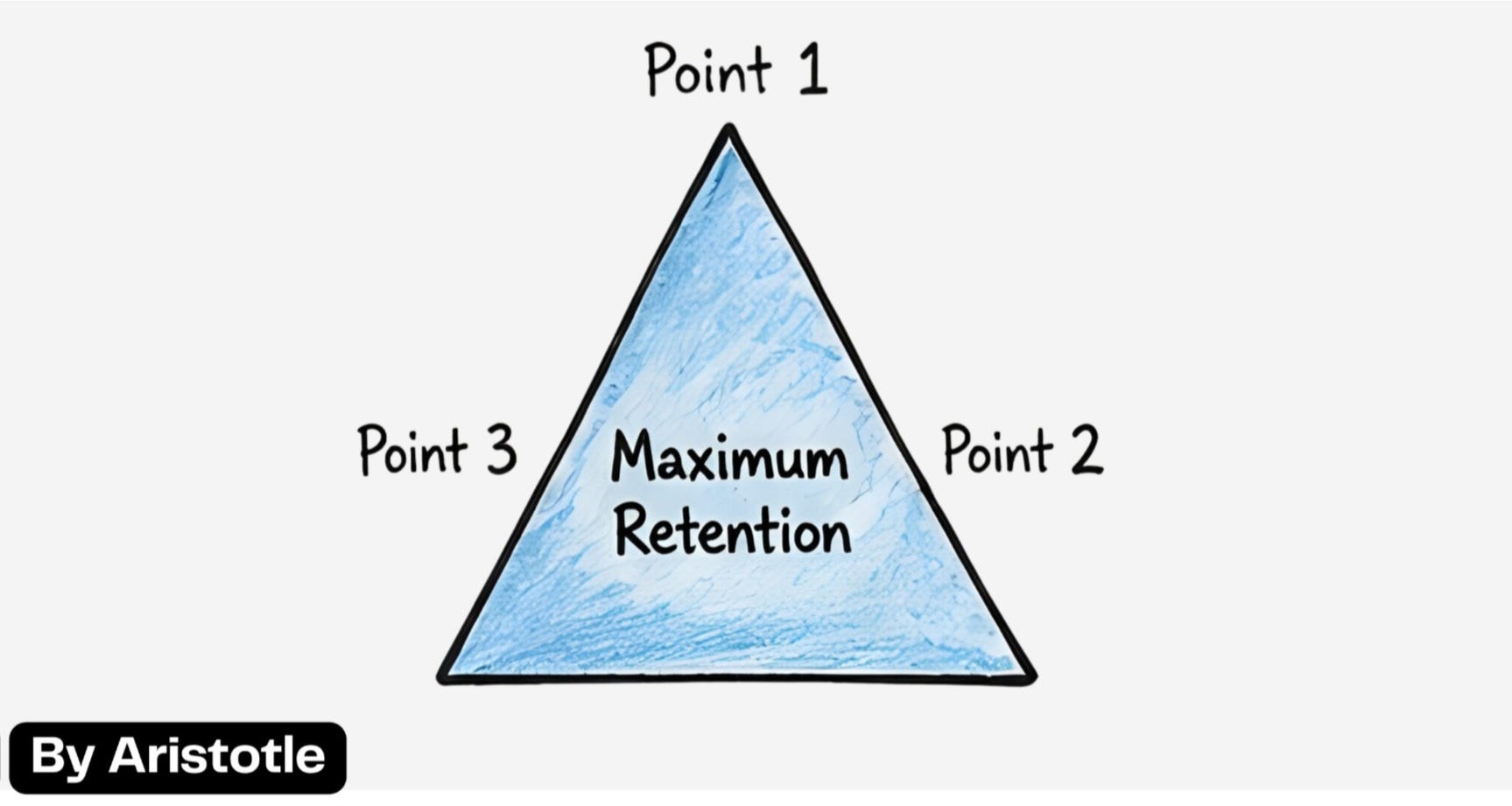
Your audience can’t remember ten things. They can barely remember five.
Three? They remember three.
This isn’t opinion, it’s how human memory works.
Our brains naturally organize information into patterns of three.
Beginning, middle, end.
Past, present, future.
Problem, solution, outcome.
Every time you communicate more than three key points, you’re guaranteeing most of it gets forgotten.
Next time you’re presenting a proposal, don’t give ten reasons it’ll work.
Give three:
The problem it solves
The solution it provides
The outcome it delivers
If people will only remember three things, you’d better choose those three deliberately - not let them pick randomly from your scattered list.
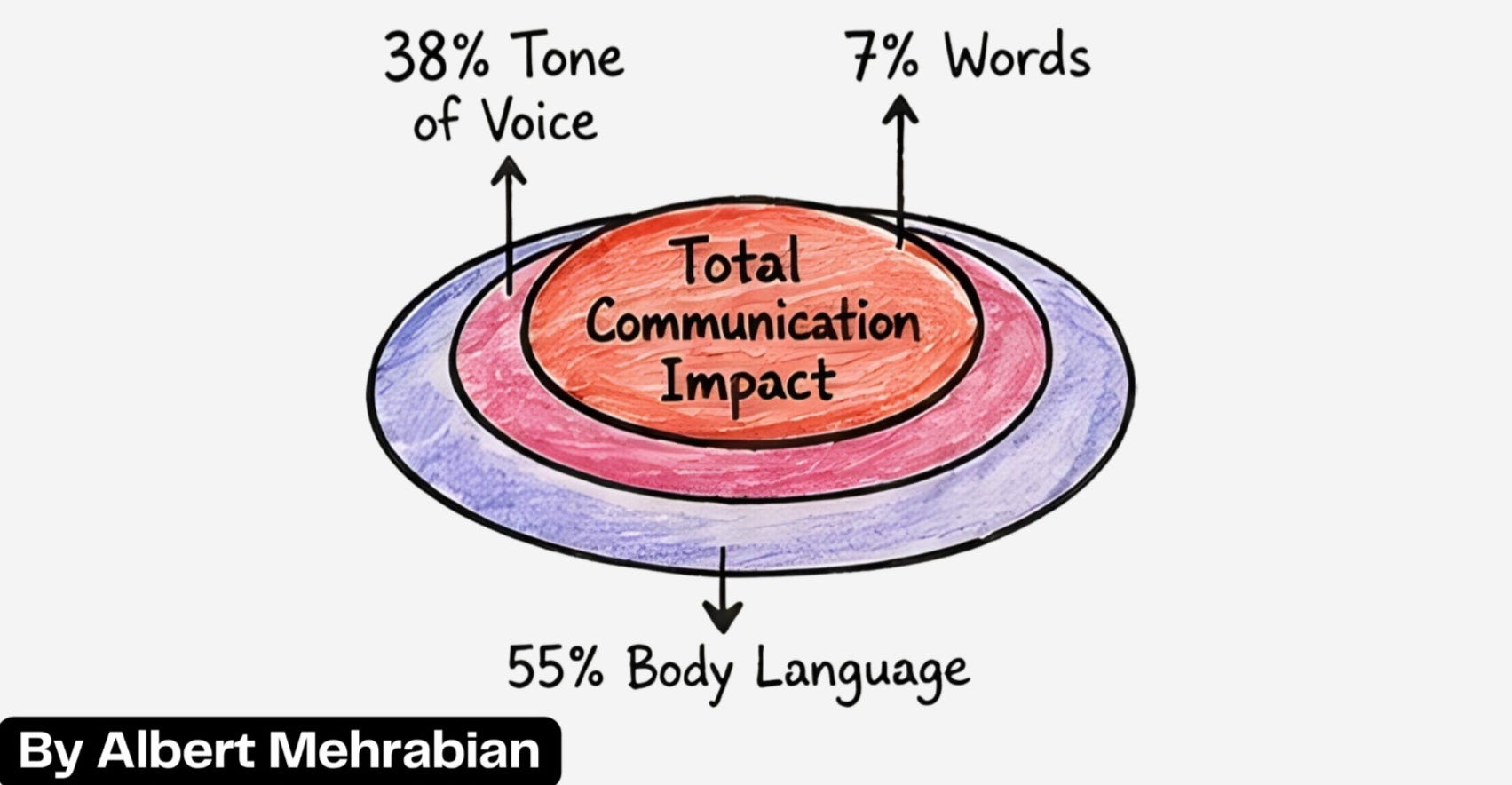
Here’s what’s actually happening when you communicate:
7% of your message comes from your words
38% comes from your tone of voice
55% comes from your body language
You can say exactly the right thing and still lose the room because of how you said it.
People decide if you’re confident, credible, and worth listening to before they process a single word.
They’re reading
Your posture
Your eye contact
Your facial expressions
The pace of your voice.
This is why someone can deliver a mediocre message with conviction and be remembered.
While someone with brilliant content mumbles their way through a presentation and gets ignored.
Most people obsess over what to say. They spend zero time on how they’ll deliver it.
That’s backwards.
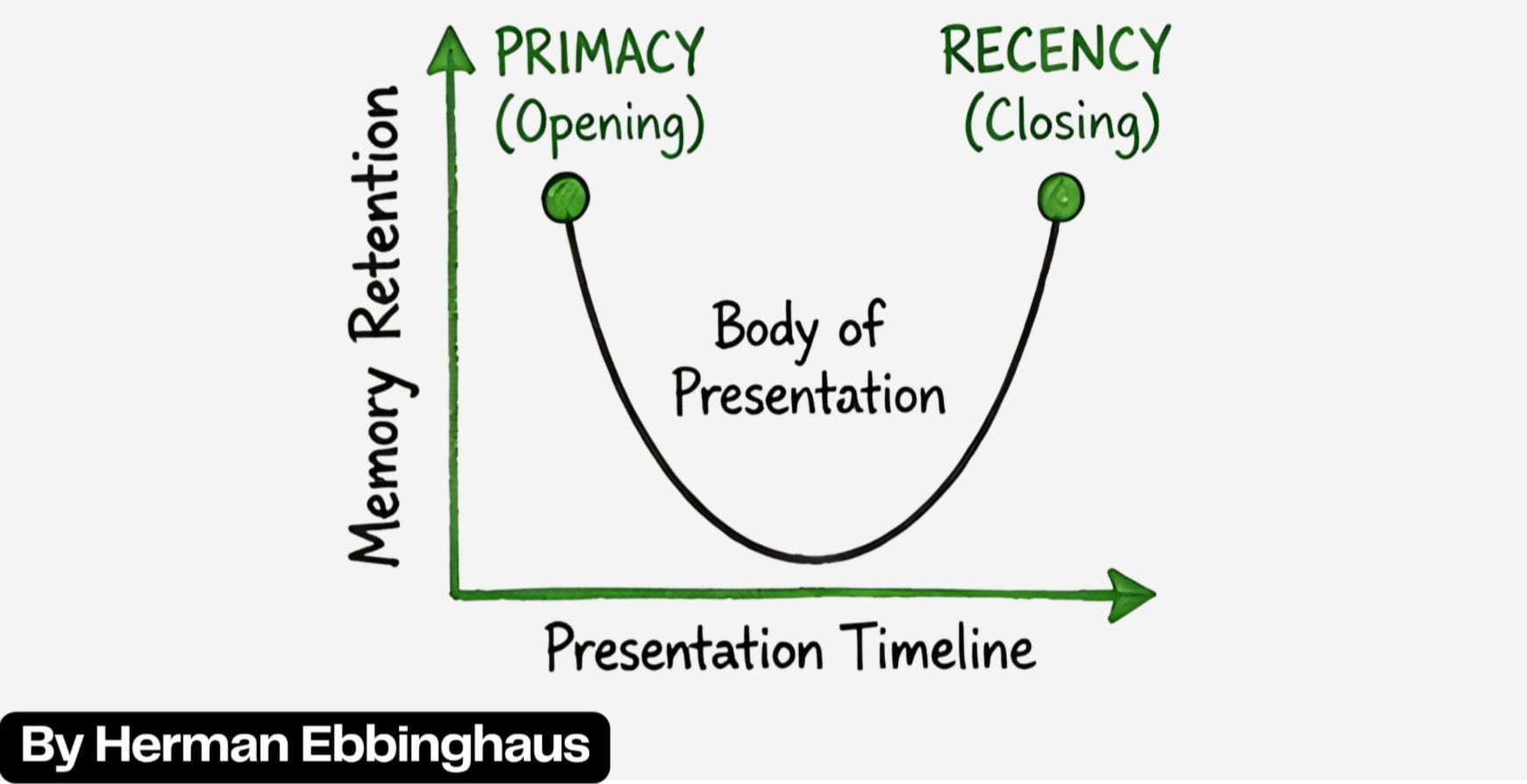
Your audience has terrible memory for everything except two moments:
The beginning. First impressions form immediately and stick.
The ending. The last thing they hear is the last thing they remember.
Everything in the middle? Mostly forgotten.
This is why most presentations fail.
Speakers spend 80% of their preparation on the content-heavy middle - the part people remember least - and wing the opening and closing.
The fix:
Spend disproportionate time on your first 60 seconds and your last 60 seconds.
Your opening should create immediate attention.
Your closing should leave a clear, memorable takeaway.
Start strong.
Finish stronger.
Everything in the middle just needs to connect the two.
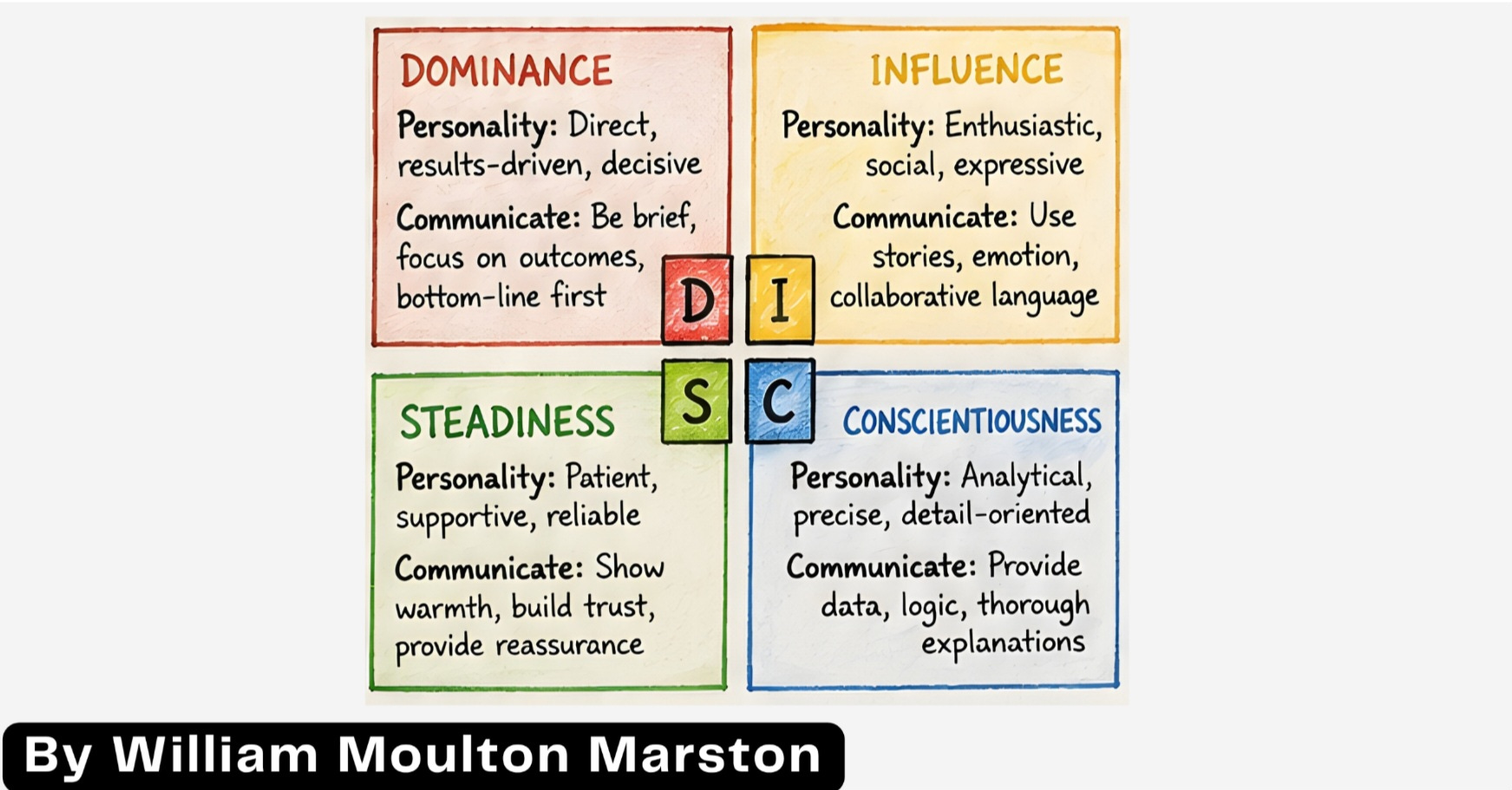
Here’s why the same message lands differently with different people:
They’re wired differently.
D - Dominance
Direct, competitive, results-focused. Gets impatient with small talk.
Communicate By
Being brief
Focusing on outcomes
Getting to the point quickly
I - Influence
Enthusiastic, social, expressive. Connects through stories and emotion.
Communicate By
Using stories
Showing emotion
Being collaborative
S - Steadiness
Patient, supportive, reliable. Values trust over speed.
Communicate By
Building trust
Showing warmth
Providing reassurance
C - Conscientiousness
Analytical, detail-oriented, precise. Needs evidence, not assertions.
Communicate By
Using data
Explaining logic
Providing evidence
Best Used For
Leadership
Sales
Team management
Negotiation
The mistake: Communicating in your style instead of theirs.
You walk into every conversation filtered through your own psychology.
A D-type talking to a C-type will frustrate them with vague assertions.
A C-type talking to a D-type will bore them with excessive detail.
Great communicators read the room and adapt. Everyone else just talks at people.
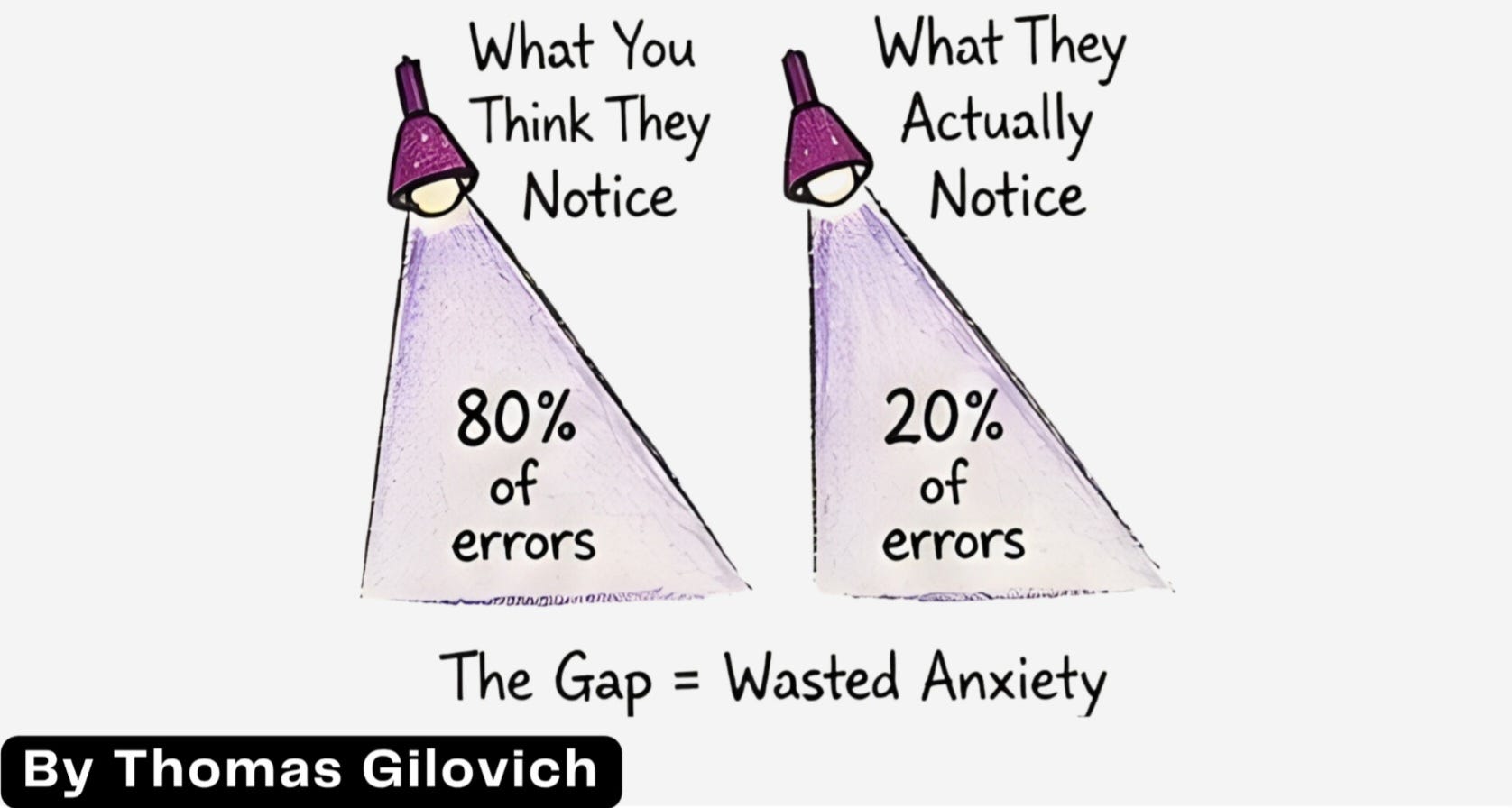
You think everyone noticed when you stumbled over your words.
They didn’t.
You think the awkward pause felt as uncomfortable to them as it did to you.
It didn’t.
The Spotlight Effect:
Your brain dramatically overestimates how much attention others pay to your mistakes.
“Everyone saw that. They’re judging me.”
Most people either missed it, forgot it in seconds, or were too busy thinking about themselves to register it.
This matters because the fear of being judged makes people:
Avoid speaking up in meetings
Over-rehearse to the point of sounding robotic
Spiral into anxiety after minor mistakes
Stay silent when they have valuable things to say
The spotlight you think is on you doesn’t exist. You built it yourself.
The audience is not watching you as closely as you’re watching yourself.
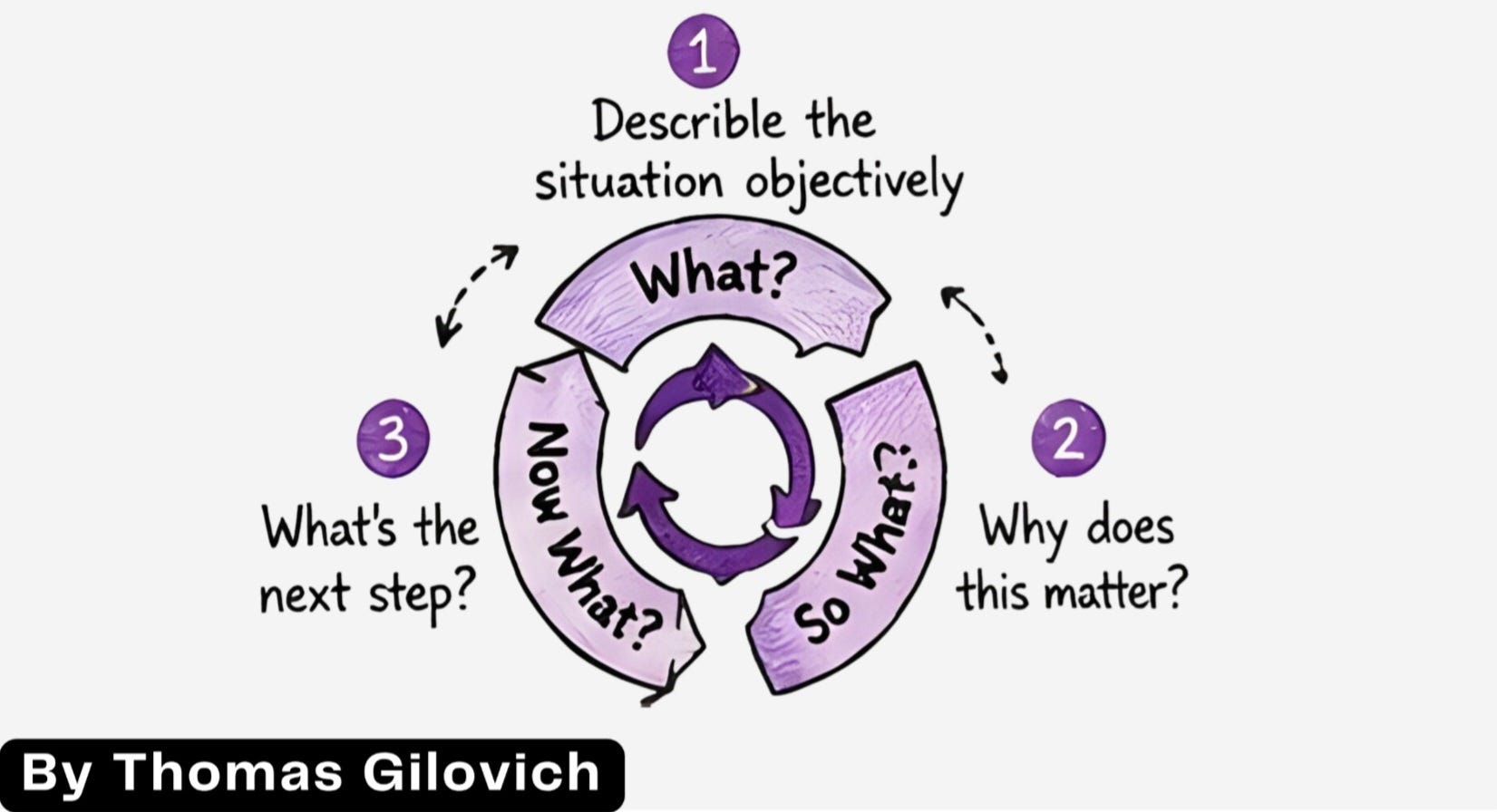
Most communication fails at the last step:
Telling people what to do with the information.
You share data.
You explain context.
Then you stop.
And your audience sits there thinking: “Okay... so what do we do?”
The three-step framework:
What?
State the situation objectively.
“Our sales dropped 15% last quarter.”
So What?
Explain why it matters.
“This threatens our revenue targets and market position.”
Now What?
Define the clear next action.
“We need to improve retention and launch a new acquisition campaign by Q2.”
Without the third step, you’re just distributing information.
Anyone can do that.
What separates memorable communicators is the ability to turn information into direction to answer the question your audience is already asking in their heads:
“What do I do with this?”
Great communicators aren’t naturally more articulate.
They’re not born with better voices or more charisma.
They understand one thing most people don’t:
Communication isn’t about what you say. It’s about what the other person receives, remembers, and acts on.
Structure it so they can follow.
Deliver it so they believe it.
Adapt it so it lands.
Close it so they know what’s next.
Everything else is just talking.
#1 Premium Newsletters FREE Access - Free access of the Premium Newsletters reading by top 1%, exclusive for Elevated Path readers.
#2 The Art Of Habits FREE GUIDE - A blueprint on how to Build Habits that Stick & Break Bad Ones.
Untill next letter
~ Elevated Path
No posts
Comments
Nothing yet. Say the first thing.
Sign in to join the conversation.