
Most people are fighting the wrong thing.
They think the problem is willpower. Discipline. Motivation.
The real problem is friction.
In the 2000s, people across Africa kept getting sick from contaminated drinking water.
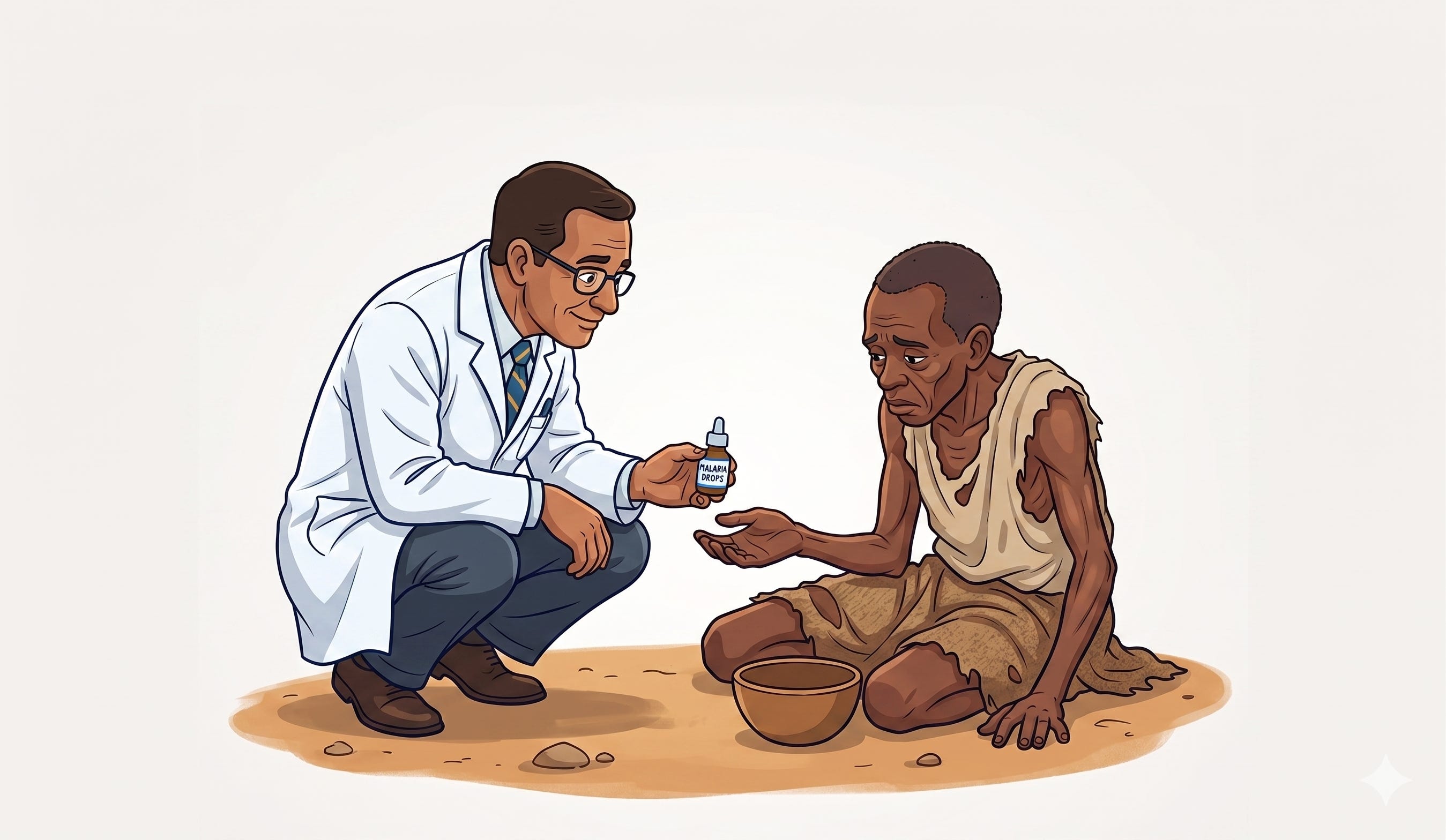
Researchers had the solution: chlorine drops. Simple chemistry. Proven effective.
The instructions:
Collect water
Bring it home
Add chlorine
Wait 20 minutes
Drink clean water
Almost nobody used it.
Researchers were baffled. “Do they not understand the instructions? Are they just resistant to change?”
Then they changed one tiny thing.
They moved the chlorine dispenser from homes to water sources.
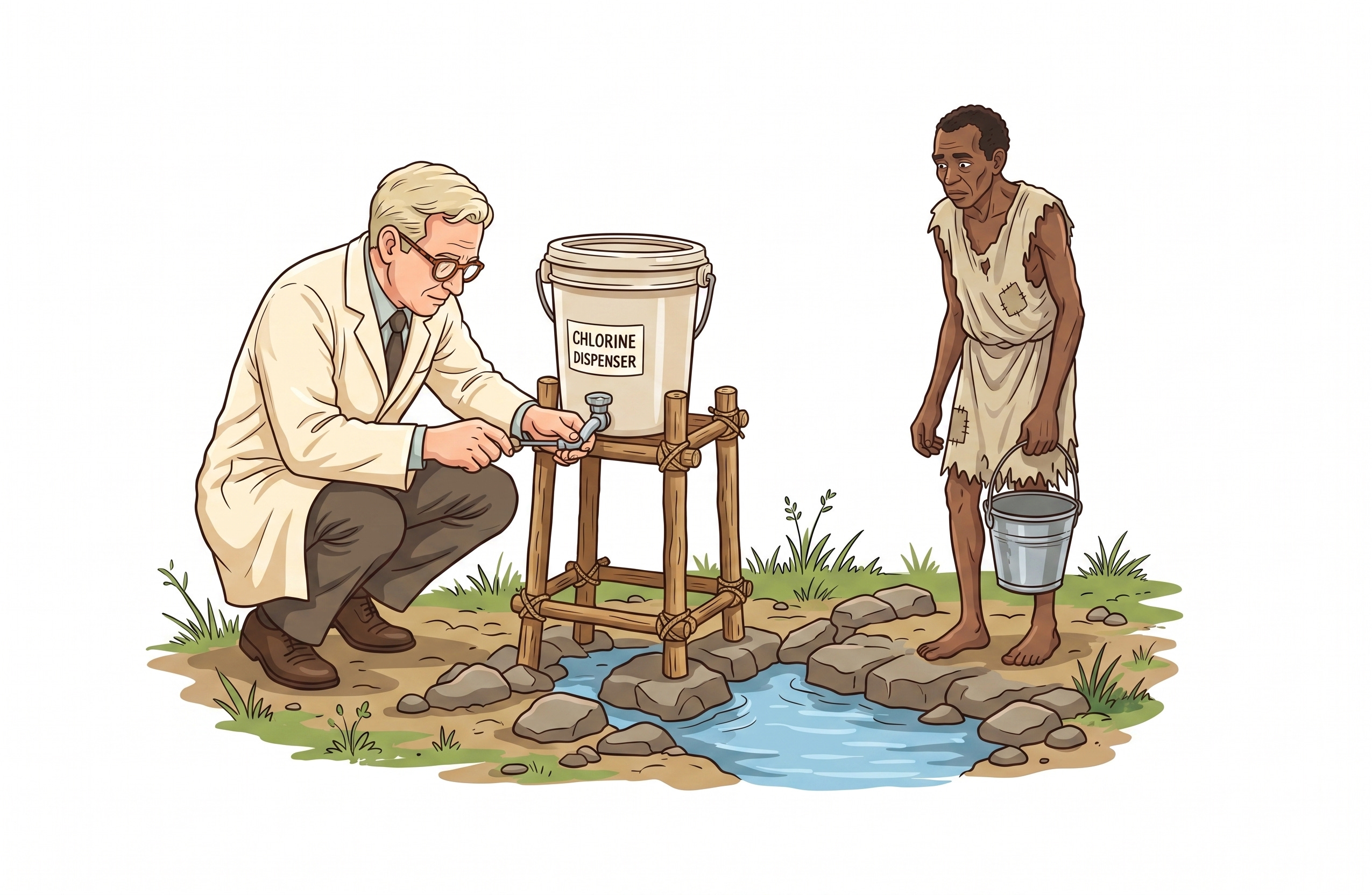
Same chlorine.
Same instructions.
Different location.
Now people added chlorine while collecting water.
The 20-minute wait happened naturally during the walk home.
Usage skyrocketed. Millions of lives saved.
Not because people suddenly became more disciplined. Because the friction disappeared.
You don’t have a willpower problem. You have a design problem.
Every behavior has friction - small obstacles between intention and action.
The more friction, the more willpower required. The less friction, the more automatic the behavior becomes.
Most people try to build stronger willpower. High performers reduce friction instead.
Look at the behavior you’re trying to build. Count the steps between decision and execution.
Want to exercise?
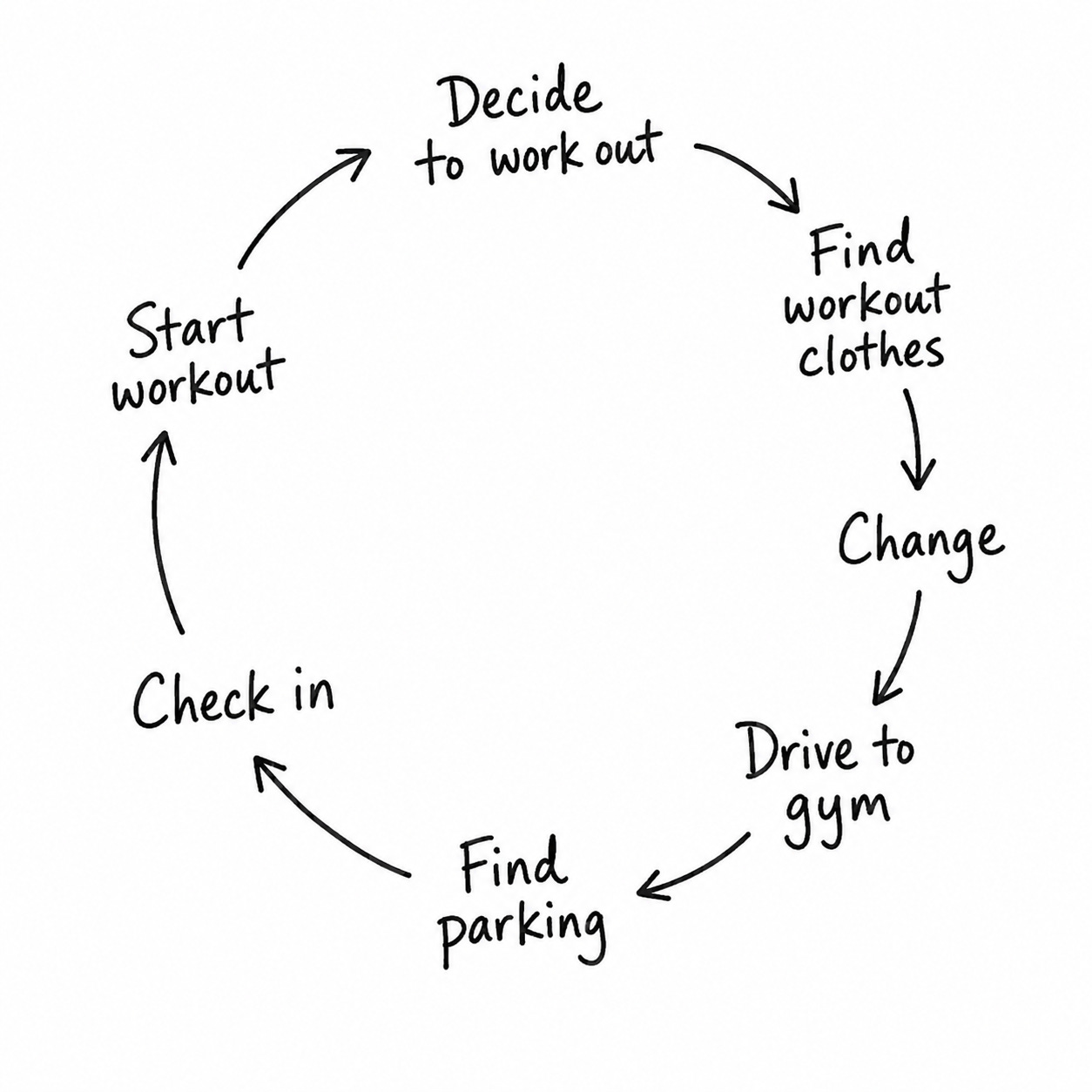
High friction: Decide to work out → Find workout clothes → Change → Drive to gym → Find parking → Check in → Start workout
Low friction: Wake up → Put on clothes already laid out → Walk to home gym setup → Start workout
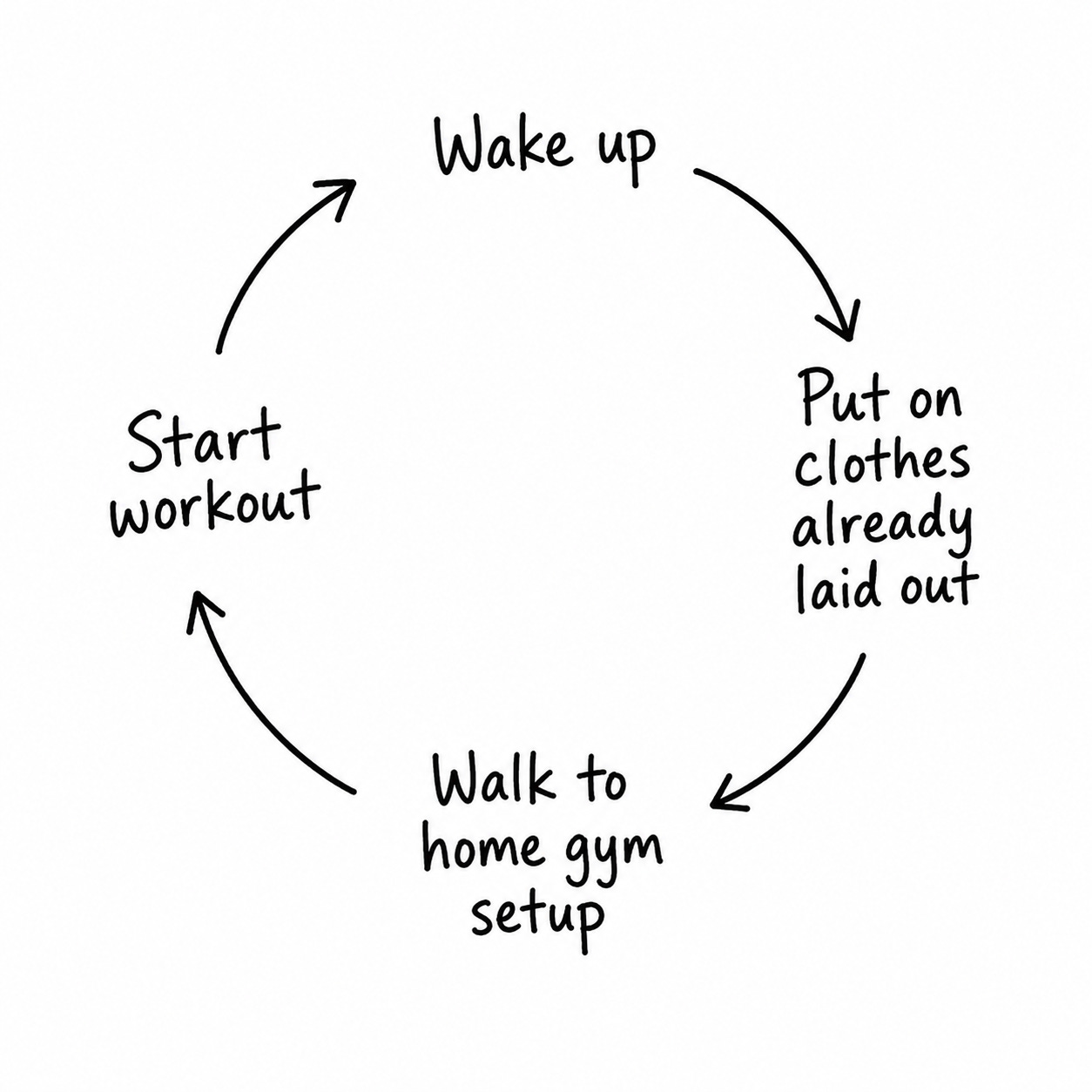
Same behavior. Completely different friction cost.
Every step is a decision point. Every decision point drains willpower.
Successful behavior change isn’t about trying harder. It’s about redesigning the path.
Not: “I need more discipline to save money.”
Instead: Automate transfers the day after payday. Money moves before you see it.
Not: “I need to drink more water.”
Instead: Keep a full bottle on your desk. Refill it every time you stand up.
Not: “I need to read more books.”
Instead: Leave the book on your pillow. You’ll see it every night before bed.
Your brain defaults to the path of least resistance.
When good behaviors require effort, you won’t do them consistently.
When bad behaviors require effort, you won’t do them as often.
The equation: Behavior = Motivation × Ability × Prompt
You can’t control motivation. It fluctuates.
You can’t always control the prompt. Life is unpredictable.
You can always control ability - by reducing friction.
Make it easier to do the right thing than the wrong thing, and your nervous system does the work for you.
Stop trying to be more disciplined in a poorly designed environment.
The question isn’t “How can I force myself to do this?”
The question is “How can I make this so easy I’d feel stupid not doing it?”
Want to stop scrolling social media?
Delete the apps.
Not “use them less.”
Delete them.
Friction to reinstall > friction to open.
Want to eat healthier?
Don’t keep junk food in the house.
Friction to drive to the store > friction to open the cabinet.
Want to write daily?
Open a blank document before you go to bed.
When you wake up, it’s already there. Zero friction to start.
This works in both directions.
Add friction to bad behaviors. Remove friction from good ones.
Every cigarette smoker who quit by leaving their pack in the car instead of their pocket used this principle.
Every person who stopped buying junk food by taking a different route home used this principle.
You’re not weak. Your environment is working against you.
Most failure isn’t from lack of willpower - it’s from excessive friction
Every step between decision and action is a decision point that drains willpower
High performers don’t have more discipline; they design environments requiring less
The Chlorine Dispenser Effect: Moving the solution closer to the problem changes everything
Behavior = Motivation × Ability × Prompt—ability (friction) is the only variable you fully control
Pick one behavior you’re trying to build or break.
Map the friction:
Write every step between decision and action
Identify which steps are necessary vs. which are just obstacles
Eliminate or relocate as many obstacles as possible
Example: “I want to go to the gym in the morning”
Current friction map:
Wake up (alarm across the room)
Decide if I feel like it (decision fatigue)
Find workout clothes (rummaging through drawers)
Pack gym bag (finding water bottle, towel, etc.)
Drive to gym (traffic, parking)
Check in (wait in line)
Find available equipment
Start workout
Friction reduction:
Sleep in workout clothes
Gym bag packed and by the door the night before
Alarm on phone (in hand immediately)
Join gym with no check-in required
Go at off-peak hours
New map: Wake up → Grab bag → Drive → Start
You don’t need a complete life overhaul.
You need one chlorine dispenser moved one inch closer.
What’s the single smallest change that would make the behavior you want slightly easier?
Not “transform my entire morning routine.”
Not “become a completely different person.”
Just:
What’s one step I can remove?
One tool I can relocate?
One decision I can eliminate?
The families in Africa didn’t need more education about chlorine. They needed the chlorine moved from their homes to the water source.
You don’t need more information about what to do. You need the path redesigned.
Discipline is real.
Willpower exists.
But relying on them is a losing strategy.
Because willpower is a depletable resource. Discipline requires constant effort.
Environment design is free.
One-time setup. Permanent reduction in friction.
High performers aren’t more disciplined than you.
They just put the chlorine dispenser in the right place and let physics do the work.
Stop fighting friction with force. Redesign the environment and let the behavior become inevitable.
#1 Premium Newsletters FREE Access - Free access of the Premium Newsletters reading by top 1%, exclusive for Elevated Path readers.
#2 The Art Of Habits FREE GUIDE - A blueprint on how to Build Habits that Stick & Break Bad Ones.
Untill next letter
~ Elevated Path
P.S. If you're thinking "I just need to be more consistent," you're proving the point. You're trying to solve an environmental problem with a willpower solution. Find the friction first. Remove it. Then watch consistency become automatic.
No posts
Comments
Nothing yet. Say the first thing.
Sign in to join the conversation.