
We often talk about what a game means. What it says about the world. About violence, morality, power.
But while we play, something quieter is happening, not as a question we ask, but as a movement we feel.
Attention settles. Habits form. Certain ways of acting begin to feel natural. Without quite noticing, we start inhabiting a point of view. Not the character’s, exactly. Not the one the story announces. But a way of being inside the situation. Because games don’t only simulate worlds. They simulate selves.
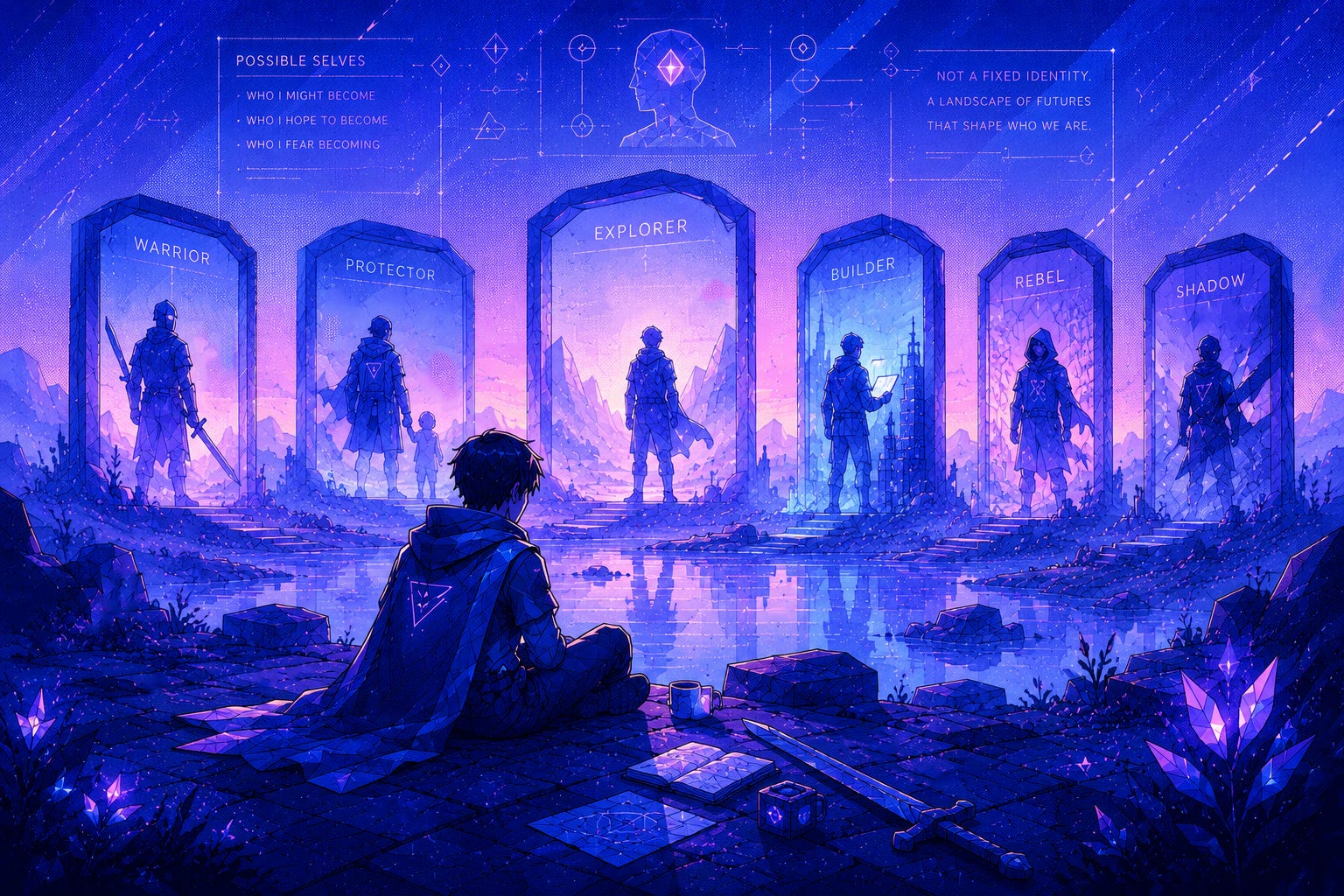
They place us inside structures of action and consequence, and invite us to move, choose, persist. Over time, those movements stop feeling hypothetical. They become familiar. What’s explored isn’t just the environment. It’s a posture. A temperament. A version of the self that forms through repetition. We aren’t asked who we are. We find out, slowly, by doing.
And that “doing” matters more than we like to admit. Social psychology has long suggested that we often infer who we are from what we repeatedly enact, especially when the situation is ambiguous, and we can’t lean on a ready-made script. The self isn’t only a story we tell; it’s also a pattern that settles.
Games are unusually good at creating those patterns, because they don’t offer a single choice and move on. They build a small gravity field. They reward certain reflexes. They make certain options feel elegant, efficient, clean. Then they ask you to live inside that shape for hours.
This is why play can feel like identity work without ever announcing itself as such. Hazel Markus and Paula Nurius called them possible selves: the felt images of who we might become, who we hope to become, who we fear becoming. Not a fixed identity. A landscape of futures with emotional charge. Games don’t just show that landscape. They let you walk around inside it.
In real life, experimenting with identity is expensive. Being ruthless costs you relationships. Being generous costs you time. Being authoritarian costs you the trust of others. Even small experiments leave marks.
Games lower the cost. Not the emotional cost, but the real-world consequence cost. They create a rehearsal room: you can try on a disposition and see what it feels like from the inside. Not as belief. As habit. As muscle memory. As a way of moving through a world. And that is the quiet potency: a game doesn’t only ask what you choose. It trains what you reach for when there’s pressure. When there’s temptation. When no one is watching. When the “optimal” path is sitting there, gleaming, and something in you hesitates.
Even our avatars matter here. Research on the “Proteus effect” suggests that the way we represent ourselves in virtual environments can shift our behavior, not because we’re tricked, but because the self is responsive to its own cues. We adapt to what we embody. We lean toward what we practice.
So over time, play becomes less like watching a character arc and more like learning a personal dialect: the particular ways you solve, harm, protect, dominate, sacrifice, endure. A game gives you a small life, and you start to recognize your own handwriting in it.
That’s the strange intimacy of games: they don’t just let us escape who we are. They let us try on who we could be, safely, repeatedly, in motion, until the posture starts to feel like it belongs to us.
Psychologists Hazel Markus and Paula Nurius once described identity not as a fixed trait, but as a landscape of imagined futures, possible selves.
Who we might become. Who we hope to become. Who we fear becoming.
These imagined selves quietly guide motivation, emotion, and behaviour. Often more strongly than the person we believe ourselves to be right now.
Games activate this system almost effortlessly. Because unlike books or films, they don’t ask, “What would this character do?” They ask something more intimate: What will you do, if this is who you are?
This is also why we are so often drawn to characters who are morally compromised. Not the clean heroes. Not the ones who always know the right thing to do. But the ones who hesitate. Who justify themselves. Who cross lines slowly, one reasonable step at a time.
The Joker. Walter White (Breaking Bad). Dexter Morgan (Dexter).
Games that do the same thing:
Joel (The Last of Us). Kratos (God of War).
Characters whose actions we may not approve of, and yet, somehow, recognize. It’s tempting to say we’re fascinated by them because they’re extreme, or transgressive, or shocking. But that explanation stays on the surface. A quieter truth is closer to home: most of us do not experience ourselves as pure heroes. We know our own contradictions. The small selfishnesses we excuse. The moments we stay silent when we should speak. The rationalizations we use to protect our pride, our comfort, our sense of control.
Morally ambiguous characters don’t ask us to admire them. They ask us to understand them. And in that understanding, something subtle happens: we are allowed to acknowledge parts of ourselves that don’t fit heroic narratives.
Games, in particular, are powerful here, because they don’t just show us compromised characters. They let us act from within their logic. They place us in situations where no option feels clean. Where every choice carries a cost.
The Last of Us Part II makes that cost bodily. It doesn’t just ask you to witness a conflict and take sides. It asks you to inhabit both. To move through the world first with Ellie, then with Abby, to feel how conviction hardens into tunnel vision, how grief turns into appetite, how “justice” becomes a story you tell yourself so you can keep going. One half of the game trains your allegiance so thoroughly that it feels like identity. Then it hands you the person you were primed to hate and says: walk. Not as a twist. As a method.
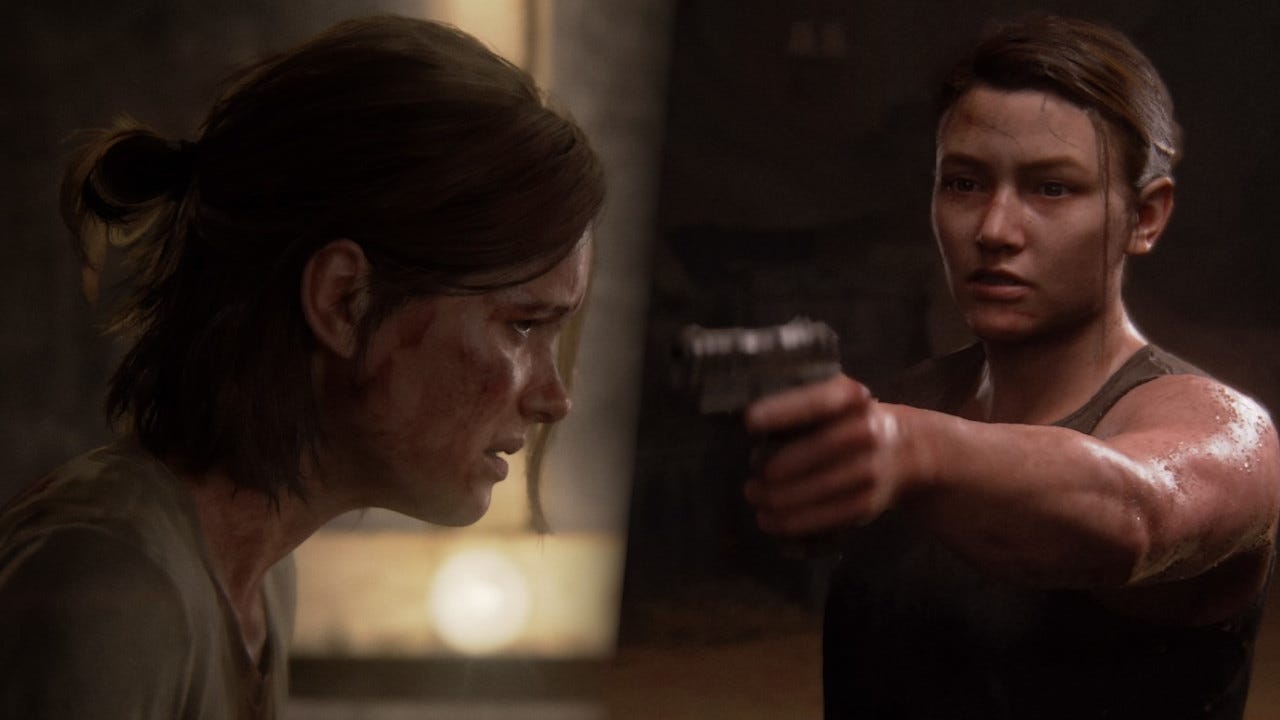
Because once you’ve spent hours moving as Abby, searching for friends, caring for someone weaker, flinching at the consequences of violence you used to cheer for, the moral geometry shifts. Not because the game suddenly declares anyone innocent, but because it makes the simplest truth impossible to ignore: everyone is the hero of their own survival. And when you have played that survival from the inside, the old comfort of “us versus them” stops fitting.
That’s the kind of discomfort only games can generate. Film can show you two perspectives. Games can make you perform them, long enough that empathy stops being an opinion and becomes a physical memory. Where “doing the right thing” depends on whose perspective we adopt. And because we are acting, not watching, identification runs deeper.
We don’t feel sympathy from a distance. We feel implication.
This is where identity rehearsal becomes most potent, not when we play at being virtuous, but when we explore the uncomfortable middle ground between intention and outcome. Not who we want to be seen as. But who we might become under pressure.
Morally questionable characters resonate because they mirror a truth we rarely say out loud: being human is less about purity than navigation. And games, at their best, don’t ask us to pretend otherwise.
Dishonored doesn’t ask you to choose between good and evil once. It asks you to inhabit a way of moving through the world. You can play Corvo as a shadow: patient, restrained, avoiding death whenever possible. Or as a force: efficient, terrifying, treating the city as expendable.
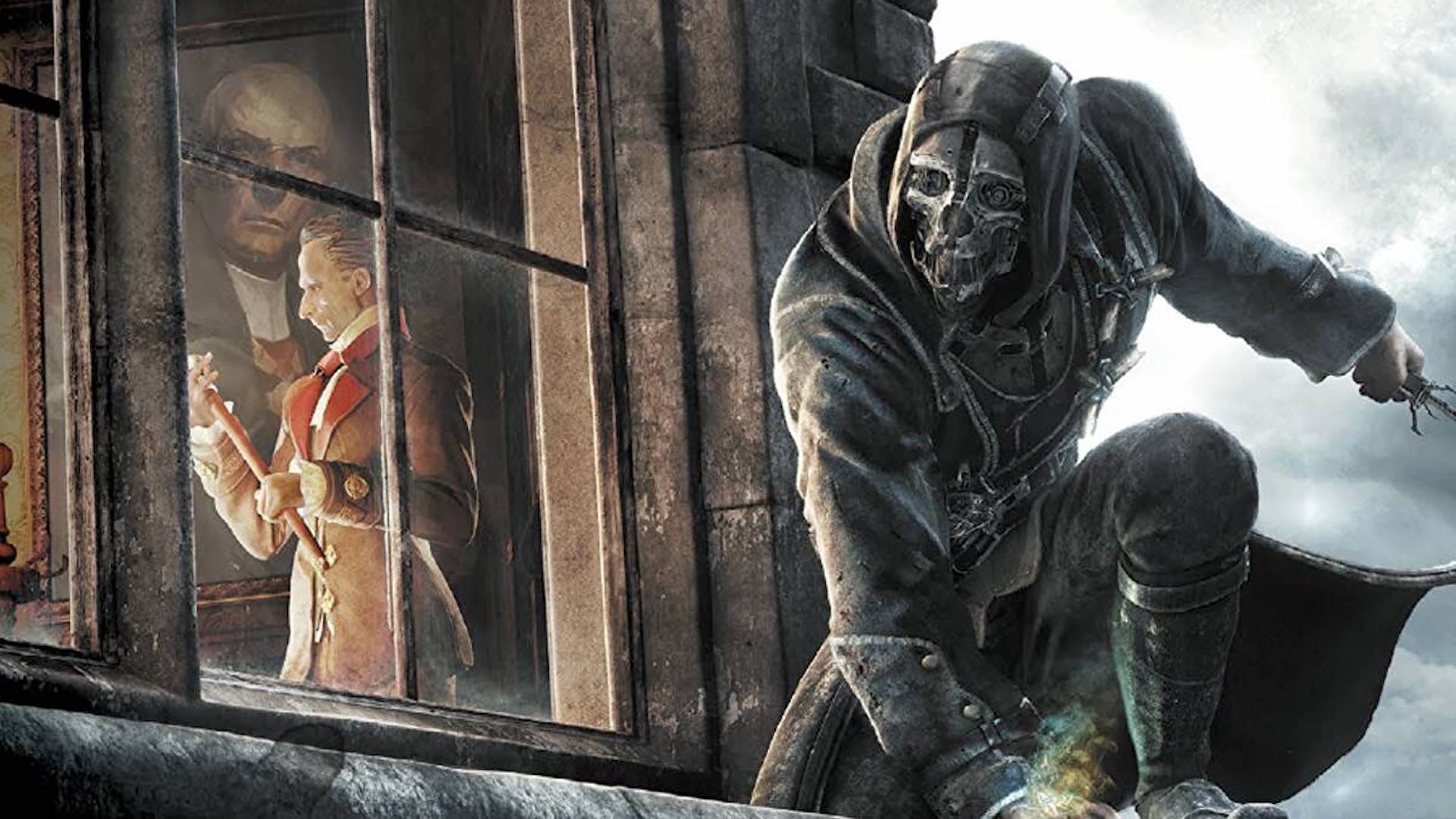
What matters isn’t the ending slide. It’s the repetition. Every non-lethal path trains patience. Every lethal shortcut trains dominance. Over hours, the game quietly poses a question: Is this who you are when no one is watching?
Players often describe feeling changed afterward, not because the game moralised, but because it trained a disposition. Identity here isn’t selected. It’s practiced.
Baldur’s Gate 3 makes that rehearsal social. You’re not only deciding what you believe. You’re deciding who you are around others. Companions react. Relationships deepen or fracture. Trust is earned, broken, leveraged.
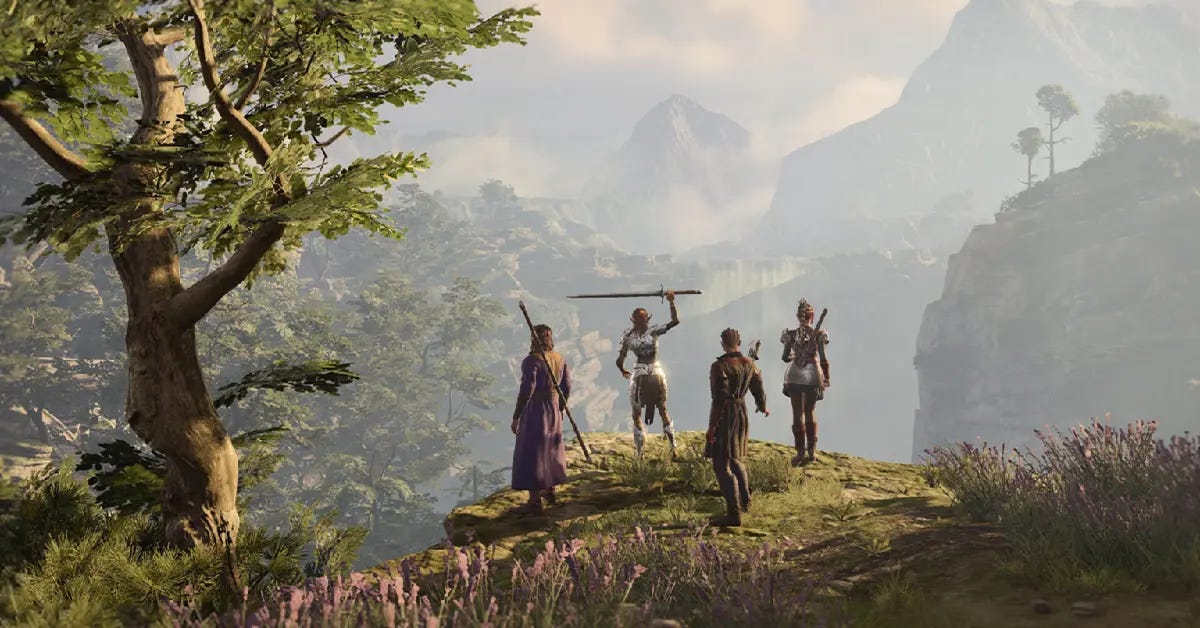
A player might begin with an abstract intention: “I’ll play a selfish character this time.” And then a companion looks disappointed. Or leaves. Or confronts them. Suddenly the experiment feels personal. The game becomes a rehearsal space for questions that rarely appear cleanly in real life:
How far does my ambition go when it costs me connection?
Do I value being right more than being trusted?
Who am I when loyalty conflicts with power?
These aren’t narrative themes. They’re identity stress tests.
Crusader Kings III dissolves the idea of a single self entirely. You don’t play a character. You play a lineage. Traits, values, compromises pass from one ruler to the next. You might begin as a compassionate leader, then inherit a paranoid tyrant, then guide a child shaped by the consequences of both.

Here, identity isn’t role-played. It’s systemic. The game teaches a quiet, unsettling lesson: values propagate, but so do compromises. And it sharpens something even more personal: the moment you realise your own beliefs don’t align with what the system pays out. You may want to rule with mercy, restraint, dignity, and then watch the world reward paranoia. Punish softness. Turn generosity into weakness. The incentives don’t just shape outcomes. They pressure your self-image.
That’s why so many players describe a kind of uncomfortable recognition: “I didn’t want to become this ruler. But the game rewarded me for it.”
The tension isn’t really about being “good” or “bad.” It’s about friction between the person you think you are and the person the environment makes easiest to be. About how, over time, repeated rewards don’t just change your strategy, they start negotiating with your values.
Meaning doesn’t arrive only as an interpretation of the world. It often arrives as a recognition of the self in motion. That is where games differ from most other media. They don’t just offer characters to understand or viewpoints to evaluate. They give us constraints and ask us to inhabit them. To move, decide, persist. And once a posture has been inhabited long enough: cautious, ruthless, merciful, impatient, loyal, the mind begins to store it less like a hypothetical and more like a lived pattern.
Psychology has a name for this dynamic: possible selves. Hazel Markus and Paula Nurius used the term to describe the imagined versions of ourselves we might become, hope to become, or fear becoming. These selves are not idle fantasies. They guide motivation and emotion precisely because they make futures feel reachable and personal.
Games intensify this mechanism because they don’t leave it abstract. They add repetition. Feedback. Consequence. You don’t just imagine being the kind of person who sacrifices power for care. You practice it, again and again, often under pressure, often when an easier or more efficient option is available. Over time, the question quietly shifts from What would someone like that do? to What do I do when I’m here?
There is another layer at work as well: self-perception through action. We often infer who we are by watching what we do, especially when the situation does not force our hand. Choices that feel optional but still cost something carry disproportionate weight. This is why moral friction in games can feel personal. You are not just learning what you believe in principle; you are discovering what you will do when belief has a price.
Sometimes, the system itself becomes part of that discovery. When a game rewards domination and penalizes care, players often feel a split emerge: this works, but it isn’t me. That tension between what is effective and what feels aligned, is where meaning frequently appears. Not as a lesson delivered, but as dissonance that refuses to settle. Festinger’s old insight still applies: contradiction demands resolution, because the mind wants coherence.
Games exert unusual force here because the self they invite us into is not only narrative. It is behavioral. Even small repeated actions: how we move through space, who we protect, what we exploit, what we leave untouched, … can begin to feel natural or alien. Research on the Proteus effect points to one facet of this: changes in self-representation can influence subsequent behavior, even outside the immediate play context.
None of this means games overwrite values or turn players into something they were not. The evidence doesn’t support that fear. What games do instead is subtler and more interesting: they let players rehearse ways of acting and notice which ones feel aligned, which feel hollow, and which create discomfort they can’t quite explain. Meaning often appears not when a system shapes behavior, but when the player resists it.
So when players say, “That game changed how I think,” they are often naming something very concrete. A pattern of action, repeated under constraint, emotionally charged, tied to consequence. Not indoctrination. Not replacement. But rehearsal quietly shifting what feels possible, permissible, or true.
If games are identity rehearsal spaces, then design choices carry quiet weight. Design isn’t only about balance, pacing, or fun. It’s about what dispositions are rewarded. What behaviours become effortless over time. What kind of player the system gently shapes.
Designers aren’t just building mechanics. They’re building practice fields for selves. The question shifts from “What does my game say?” to something more intimate: Who does my game let the player become: safely, repeatedly, and often without noticing?
Games don’t only give us stories. They give us temporary lives. Lives where we can try on values, test limits, fail without ruin, and return changed: sometimes subtly, sometimes deeply.
Meaning doesn’t always arrive as insight. Sometimes it arrives as recognition: “I didn’t know I would act like that.” And in that moment, play becomes something rare. Not escape. Not fantasy. But rehearsal for being human.
References:
Oliver, M. B., & Bartsch, A. (2010) Appreciation as audience response: Exploring entertainment gratifications beyond hedonism. Human Communication Research, 36(1), 53–81. https://doi.org/10.1111/j.1468-2958.2009.01368.x
Comments
Nothing yet. Say the first thing.
Sign in to join the conversation.