
Some of the most powerful moments in games don’t feel like victory. They feel like a pause. A hesitation on the edge of something you don’t yet understand. A strange structure in the distance. A symbol that keeps returning. A page, a ruin, a pattern, a machine, something that clearly means something, even if you can’t yet say what.
You’re not lost exactly. But you’re not oriented either. And somehow, that in-between state can feel more alive than certainty. We often talk about exploration as if it were mostly about movement. About openness. About freedom. About giving the player a world big enough to roam.
But the moments that stay with us usually aren’t just about where we went. They’re about what happened inside us while we were there: the slow tightening of attention, the pull of a question, the strange pleasure of sensing that the world knows more than we do.
That feeling has a name. Curiosity.
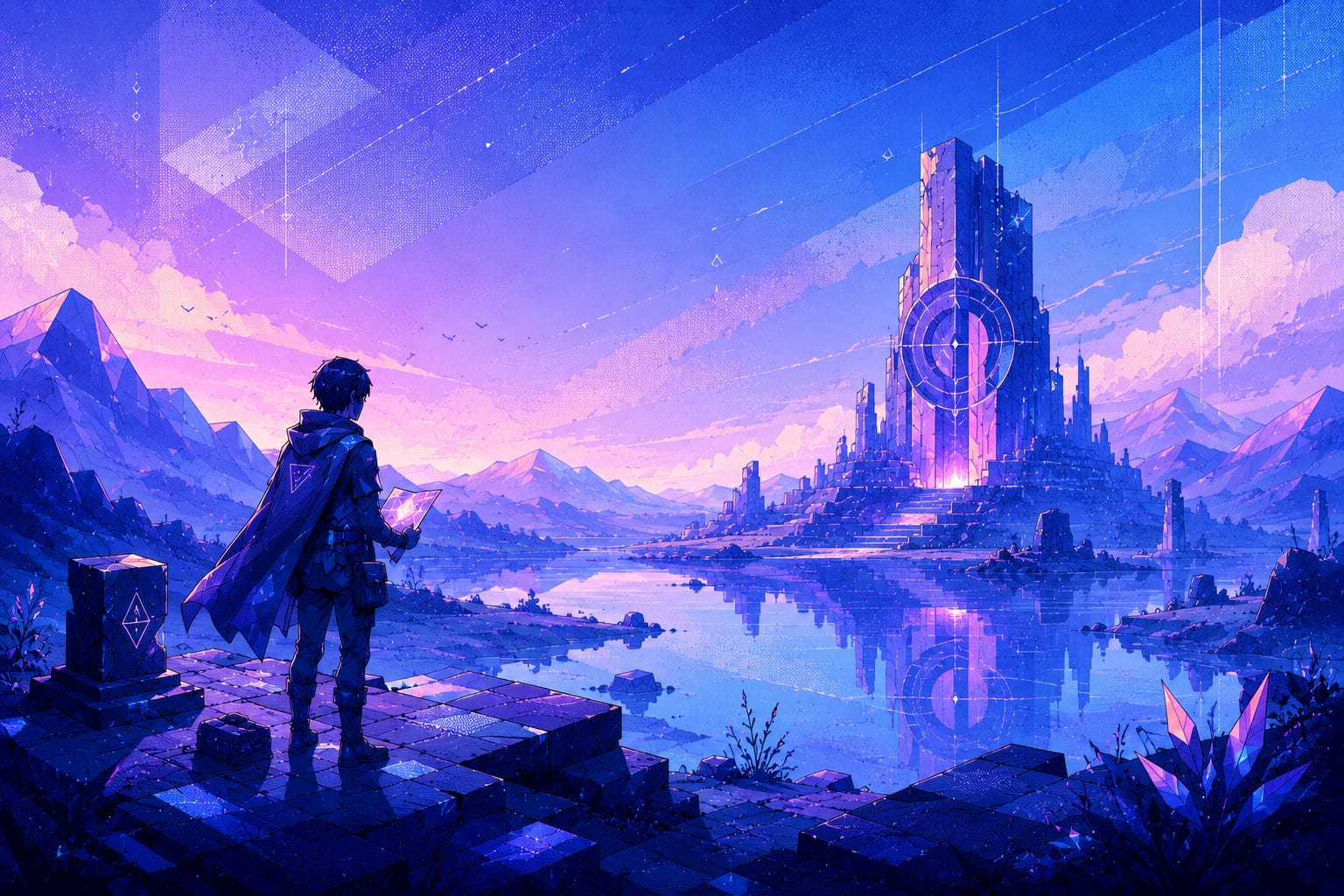
Not just the desire to see what’s over the next hill, but the desire to make sense of something that refuses to become obvious. The wish to stay with a mystery long enough for it to begin answering back.
Curiosity is not just a mechanic of exploration. It is an emotional architecture of not-yet-knowing, a way games turn confusion into attention, attention into understanding, and understanding into wonder.
And when a game gets that right, exploration stops feeling like content consumption. It starts to feel like a relationship.
Psychologist George Loewenstein described curiosity as what happens when our attention locks onto a gap in our knowledge, when we suddenly become aware that something is missing, and can almost feel the shape of it.
That sounds tidy on paper. But in experience, it feels much messier. More alive. A knowledge gap doesn’t stay abstract for long. Once we notice it, it starts to tug at us. The mind leans forward. A little tension forms. Not panic. Not even frustration, at least not at first. More like an ache. A cognitive restlessness. Something doesn’t fit yet.
And because it doesn’t fit, we want to keep turning it over. This is why riddles stay in our heads long after we stop trying to solve them. Why certain mysteries become more compelling the moment we catch only part of the pattern. Why “almost understanding” can feel so much more charged than simply being told.
What we want in those moments is not just information. We want coherence. We want the satisfaction of feeling the world become more intelligible beneath our attention.
And games are uniquely good at this because they don’t just present mysteries. They let us move inside them. They let us test ideas, notice patterns, get things wrong, circle back, and slowly build an understanding that feels like it belongs to us.
In most media, discovery is something you witness. In games, discovery can become something you do.
We often talk about curiosity as if it were purely cognitive. A mental process. A drive to learn. But curiosity also has a very distinct emotional texture.
Psychology sometimes groups feelings like awe, confusion, and anticipation under the label of epistemic emotions: emotions tied to knowledge, interpretation, and understanding. I’ve always found that framing helpful, because it captures something games do especially well: they make knowing feel emotional.
Awe appears when the world exceeds our mental model, when something feels larger, stranger, or more intricate than we expected.
Confusion enters when the model breaks, when what we thought we understood no longer holds.
Anticipation lives in that almost-there space, when meaning feels close enough to sense, but not yet to hold.
The most memorable games don’t rush to erase those feelings. They work with them. They let us sit, for a little while, inside that fragile, charged state where understanding is still forming. That’s part of why wonder feels so different from spectacle. Spectacle overwhelms us all at once, but wonder unfolds.
It asks something gentler, and maybe more demanding: attention.
Few games understand this as beautifully as Outer Wilds.
What makes it so special is not just that it contains mysteries. Plenty of games do. It’s that the game trusts knowledge enough to build almost everything around it. You land on a planet and find a city slowly disappearing under sand. Somewhere else, you pick up fragments of writing from a civilization that is long gone but somehow still present in the shape of everything around you. A strange experiment on one planet echoes something broken on another. A signal leads you somewhere, but only into a deeper question. Again and again, the game gives you pieces that feel partial, charged, unfinished.
Why did these people disappear?
Why is the solar system behaving this way?
Why does everything seem connected, even before you understand how?
The game never really says: here is your task, now go complete it.
It says something quieter: here are fragments. Stay with them.
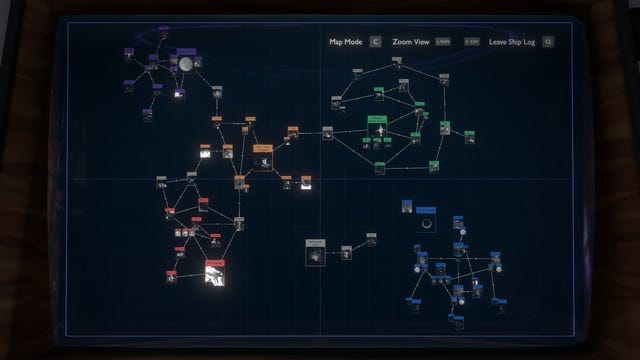
And slowly, almost without noticing, your motivation changes. You are no longer exploring to unlock the next reward or clear the next objective. You are exploring because you want to understand. Because each piece slightly rearranges the world in your mind, and that rearrangement becomes its own kind of progress.
That’s such a powerful shift. Knowledge itself becomes the progression system.
And because of that, discovery feels unusually intimate. The world is not handing itself over in neat pieces. It is asking you to listen, compare, remember, return. To build a relationship with what you don’t yet know.
That is a very different emotional rhythm from most progression systems. It doesn’t feel like accumulation. It feels like orientation.
This is also why so many games accidentally flatten curiosity while trying to be helpful. A marker appears. Go here. A trail lights up. Follow this. An NPC explains exactly what happened, why it matters, and what your next step should be.
Before a real question has time to form, the answer has already arrived in task form.
Of course, guidance has its place. Not every game wants mystery. Not every player wants to sit in uncertainty for long. Clarity matters. Accessibility matters. Momentum matters. But there is a real cost when explanation comes too early. It interrupts the emotional sequence that curiosity needs.
First, the player notices something they can’t fully explain. Then attention sharpens. Then a question forms. Then exploration becomes self-propelled, not because the game assigned it, but because the player now feels the pull of unresolved meaning.
Over-guidance cuts that sequence in half. It replaces the question with an instruction. And those are not the same thing. A task can keep a player moving. But only a mystery can make them lean forward.
That’s why some enormous open worlds end up feeling so strangely hollow. They are full of content, but very little of it remains meaningfully unknown. The map explains too much too early. The icons arrive before wonder does. Exploration becomes navigation. Discovery becomes route optimization.
The world may still be large. But it no longer feels deep.
Curiosity doesn’t come from total obscurity. A game that tells us nothing at all is rarely mysterious for long. It usually just becomes tiring.
What curiosity needs is something more delicate than hiddenness. It needs invitation. The player must feel three things at once:
that something is there,
that it matters,
and that it is not yet fully understood.
That balance is hard to get right. Reveal too little, and the mystery feels arbitrary. Reveal too much, and the question dies before it can breathe. The games that stay with us tend to understand this rhythm intuitively. They offer fragments, not blanks. They give just enough shape for attention to latch onto.
That’s part of what makes The Witness so absorbing. At first, the island seems to be full of elegant but separate puzzle spaces. But over time, something shifts. You start noticing that the world itself is participating. A branch, a shadow, a line in the landscape suddenly resembles a puzzle. A hill becomes legible. An accidental-looking arrangement becomes intentional. And the thrill of that moment is hard to overstate. Because you are not just solving what the game placed in front of you. You are learning to see differently. The world starts to feel less like a backdrop and more like a text you were previously walking past half-blind.
That’s one of my favorite forms of curiosity in games. Not the desire to get the answer. The experience of becoming able to notice the question.
Some of the richest forms of curiosity have almost nothing to do with physical exploration.
Return of the Obra Dinn is a perfect example. What pulls you through that game is not the promise of loot or spectacle, but the slow reconstruction of a catastrophe. A ship returns empty. Its crew is gone. You move through frozen moments of the past, trying to understand who these people were, how they died, and how all these separate tragedies fit together.
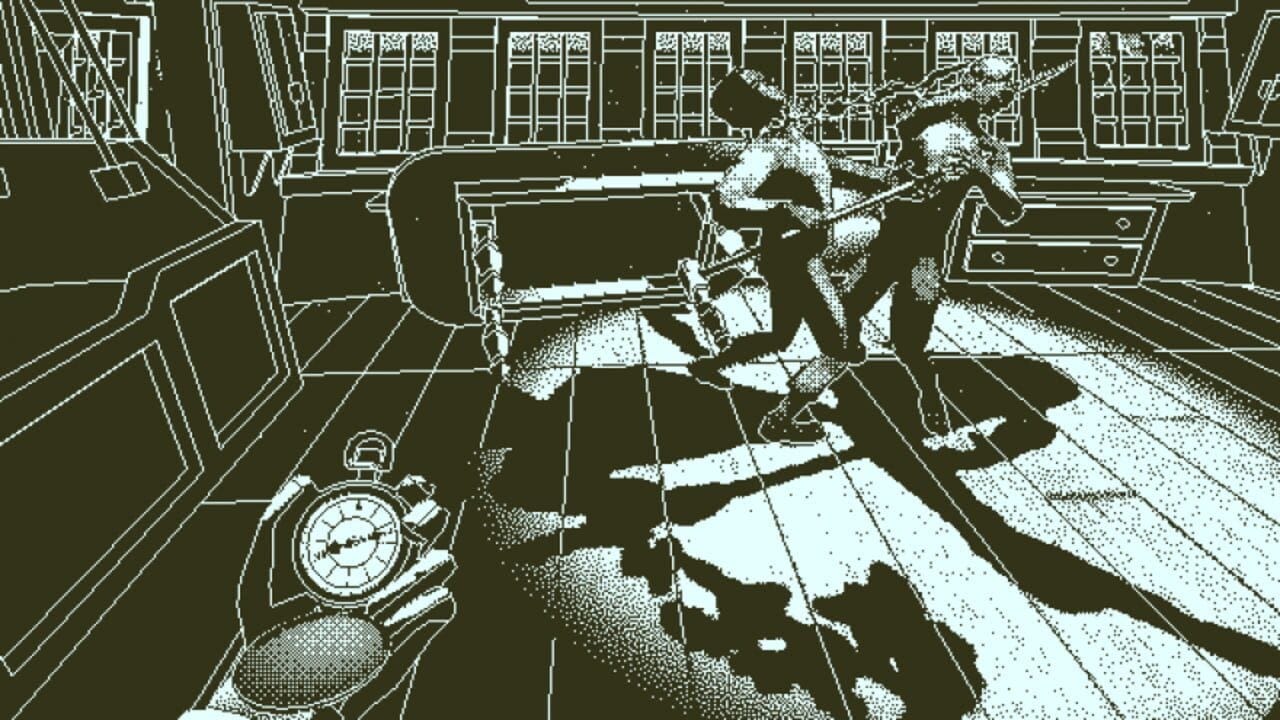
At first, it feels impossible. There are too many faces. Too many names. Too many details that don’t yet mean anything. But then one accent connects to one memory. One uniform clarifies a role. One relationship reshapes another scene. A person who was once just part of the noise starts to become distinct.
And that transformation, from chaos into legibility, is where so much of the pleasure lives. Not because the game “gives” you the truth, but because it asks you to build one carefully, attentively, and with enough humility to revise it when needed.
That’s a different kind of discovery. Less like uncovering treasure. More like earning understanding. And I think players feel that difference very deeply. Because understanding that comes through our own attention carries emotional weight. It feels less like information received and more like reality slowly becoming available to us.
There’s a quiet bravery in designing for curiosity. It means trusting that players can survive temporary uncertainty. That confusion, in the right amount, is not always a design failure. That not knowing can be productive before it becomes frustrating. It also means resisting the urge to explain the world before the player has had the chance to ask anything of it.
Tunic is lovely here. So much of its magic comes from the way meaning is present but incomplete. Its scattered manual pages feel like artifacts from a world that makes sense on its own terms, even if you haven’t earned access to those terms yet. The diagrams, symbols, hints, and half-legible instructions all create a specific feeling: that the game is not empty, not random, not withholding for the sake of obscurity, just waiting for you to grow into its language.
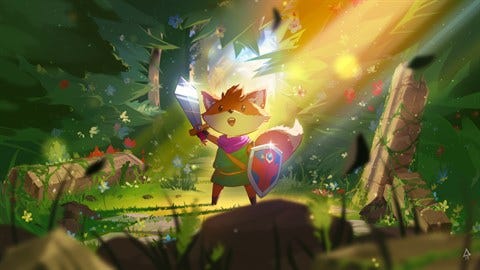
That feeling matters. Because curiosity doesn’t thrive in emptiness. It thrives in contact with something that seems to exceed us. A fragment. A pattern. A promise. Not an answer, but the sense that an answer exists, and that the world is coherent enough to be worth pursuing.
We often associate curiosity with exploration-heavy games, but really it can appear almost anywhere.
In strategy games, curiosity lives in systems: What happens if I try this? What hidden interaction have I missed? What kind of world emerges if I push here instead of there?
In mastery-driven games, it lives in mechanics: Why did that work? What rule am I only beginning to glimpse? What becomes possible if I approach this differently?
In multiplayer spaces, curiosity can become social: What is this person trying to do? Why did they hesitate? Why were they generous there, and ruthless here?
In narrative games, curiosity often becomes emotional or interpretive: What happened in this place? Why did this character say that? What truth is the story circling without naming yet?
So curiosity isn’t really about genre. It’s about meaningful uncertainty. More specifically, uncertainty that the player feels invited to resolve through their own attention.
I think curiosity matters so much because it changes the player’s relationship to the world. A heavily guided game says: here is what matters. A curious game asks: what are you beginning to notice? That’s a profound difference. In one, significance is assigned from the outside. In the other, significance emerges through attention.
The player doesn’t just consume a world. They slowly come into contact with it. They build a sense of what matters by staying with what they don’t yet understand.
And maybe that’s why curiosity can feel so resonant. It mirrors something larger than play: the human desire not just to control reality, but to orient ourselves inside it. To move from fragmentation toward coherence. To stand before something strange and, through patience, become a little less separate from it.
In that sense, curiosity isn’t only about finding answers. It is often the first form of relationship. We become curious about what we sense has depth. We keep looking because the world feels capable of answering back, not necessarily with words, but with pattern, implication, history, structure.
This is where curiosity begins to tip into wonder. Not when the world overwhelms us, but when it begins, slowly, to respond.
If curiosity is an architecture of not-yet-knowing, then designing for it means designing for tempo. For restraint. For trust. For the emotional pacing of uncertainty.
Games that create wonder often do a few things especially well:
They let questions arrive before answers do.
They distribute knowledge across spaces, systems, and fragments instead of packaging it all at once.
They make mystery feel meaningful rather than arbitrary.
They allow understanding itself to function as progress.
And they trust the player enough not to rush in and collapse ambiguity the moment it appears.
That doesn’t mean every game should be obscure. Or that clarity is the enemy. Only that wonder requires a certain amount of protected uncertainty. The unknown has to remain alive long enough for attention to gather around it. Because wonder is rarely born from perfect information. It is born from the feeling that the world is intelligible, but not yet exhausted.
In a medium so often organized around efficiency, progression, and reward, curiosity can seem almost fragile. It asks designers to do something counterintuitive. Leave room. Let some things stay unresolved a little longer. Trust that confusion does not always have to be immediately repaired. And when that works, something subtle changes in the player.
They stop asking: What do I do next?
And begin asking: What is this place? Why does it feel this way? What happened here? How does all of this fit together? What am I missing?
Those are different questions. They don’t come from obedience. They come from attention. And attention, when held open long enough by mystery, becomes a form of care.
That’s why curiosity matters. Because it turns exploration into interpretation. Interpretation into relationship. And relationship into wonder.
Comments
Nothing yet. Say the first thing.
Sign in to join the conversation.