
A theme of this ‘Stack is good macro, bad micro, meaning the overall economy has been doing better than a lot of people’s economic experiences. I’ve discussed this under the rubric of affordability, but that can be viewed as a dimension of economic inequality—the pie’s growing but most slices are not.
I’ve also, however, mentioned risks and fragilities facing the macroeconomy, and this AM, I’d like to take a tour of some of the financial-market forces—stocks, bonds, credit markets—that contribute to that assessment.
Wealth Effects: They Giveth and Taketh Away. One powerful source of growth has been the wealth effects that spin off of the booming stock market. There’s a robust empirical literature suggesting that for every extra dollar of stock-market wealth, spending goes up 3-4 cents, though not right away—there are lags in play. But the S&P market cap is up over $15 trillion over the past year, and 3.5% of that is over $500 billion, or 1.5% of GDP (again, not in any one quarter but over a number of years).
The problem is that this is a very narrow source of growth, and if the market stumbles for any of the reasons ticked off below, the wealth effect shifts into reverse.
Circular AI: A source of that stumble would be the deflation of the AI maybe-a-bubble that Ryan Cummings and I have worried about in various pieces. Investment in the sector continues to boom, likely to hit $1 trillion globally this year. But the critical gap that Ryan, myself, and many others have identified—between investment and expected profitability within a realistic time frame (maybe 5-7 years)—remains as wide as ever. Investor patience eventually wears thin, and the ascendency of much cheaper yet high quality Chinese open-source models is a potential pin-prick for what still looks like a bubble to us.
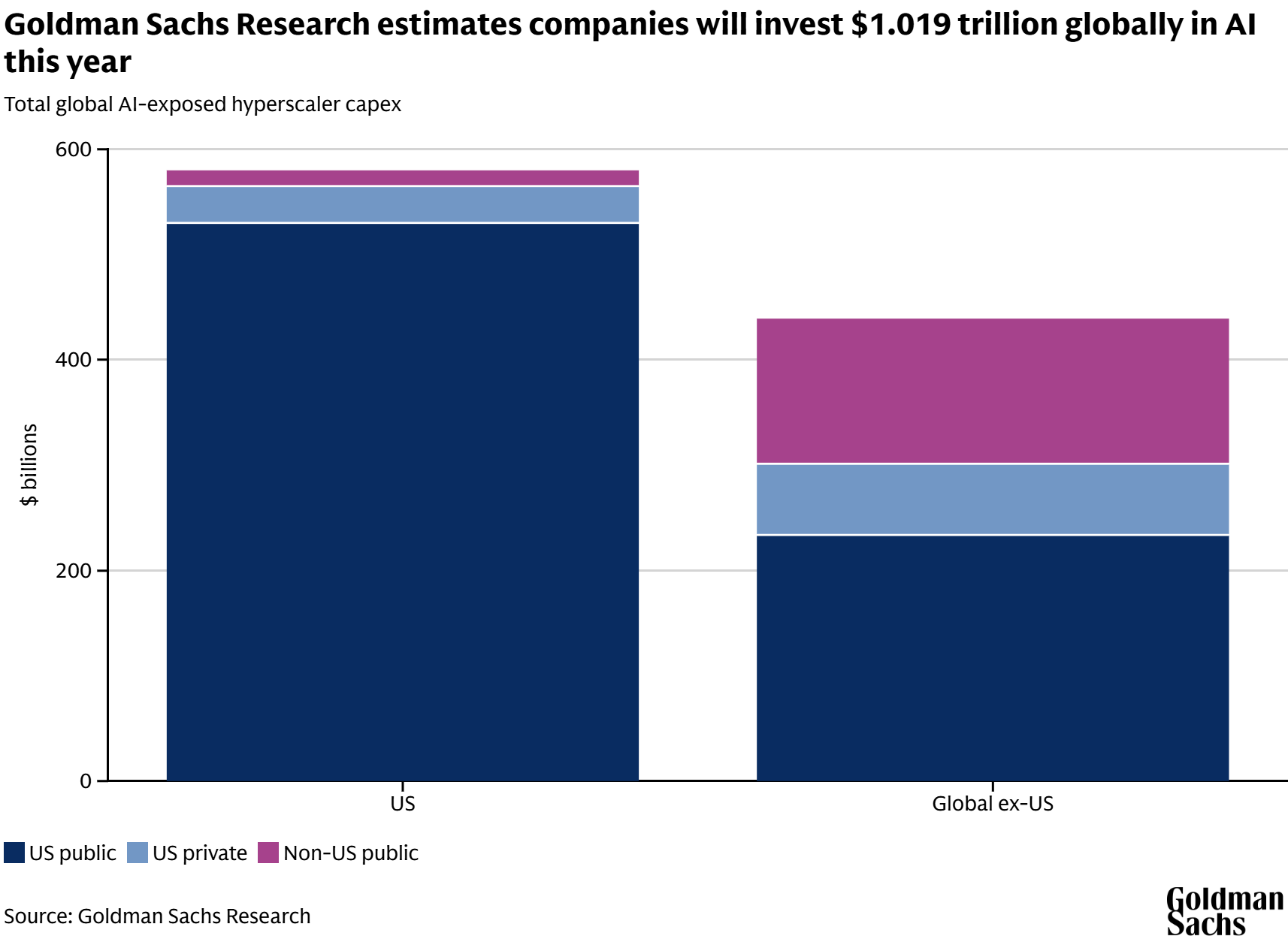
Then there’s the circular financing. Axios tells of a $500 billion loan from Nvidia to the AI firms whose models run on its chips.
The move could reignite fears about the circular nature of AI financing — in which a supplier like Nvidia provides financing or investment capital to some of its major customers…The fear is that if one major company runs into trouble, it could have a ripple effect through the AI ecosystem.
That’s another potential pin-prick. FTR, I’m officially blown away by some—not all—of what I’m seeing from AI, and I have little doubt that it will boost American productivity (read this great, new paper on that assessment). But that probability does not negate these bubble concerns.
Private credit warnings: I penned an explainer on private credit a few months ago, but private credit is what it sounds like: loans from financial institutions to private companies. The problem is these lenders are nonbanks with less transparency than traditional lenders, and they tend to lend to riskier ventures that can’t get plain vanilla bank loans. Such loans are made at higher-than-market rates, and, as the WSJ put it the other day:
Until recently, the hefty returns the funds delivered made them one of the hottest flavors on Wall Street.
Then, investors grew alarmed by several high-profile defaults caused by alleged frauds, and by loans made to software companies at risk of disruption by artificial intelligence. Many individuals who had been sold the funds asked for their money back.
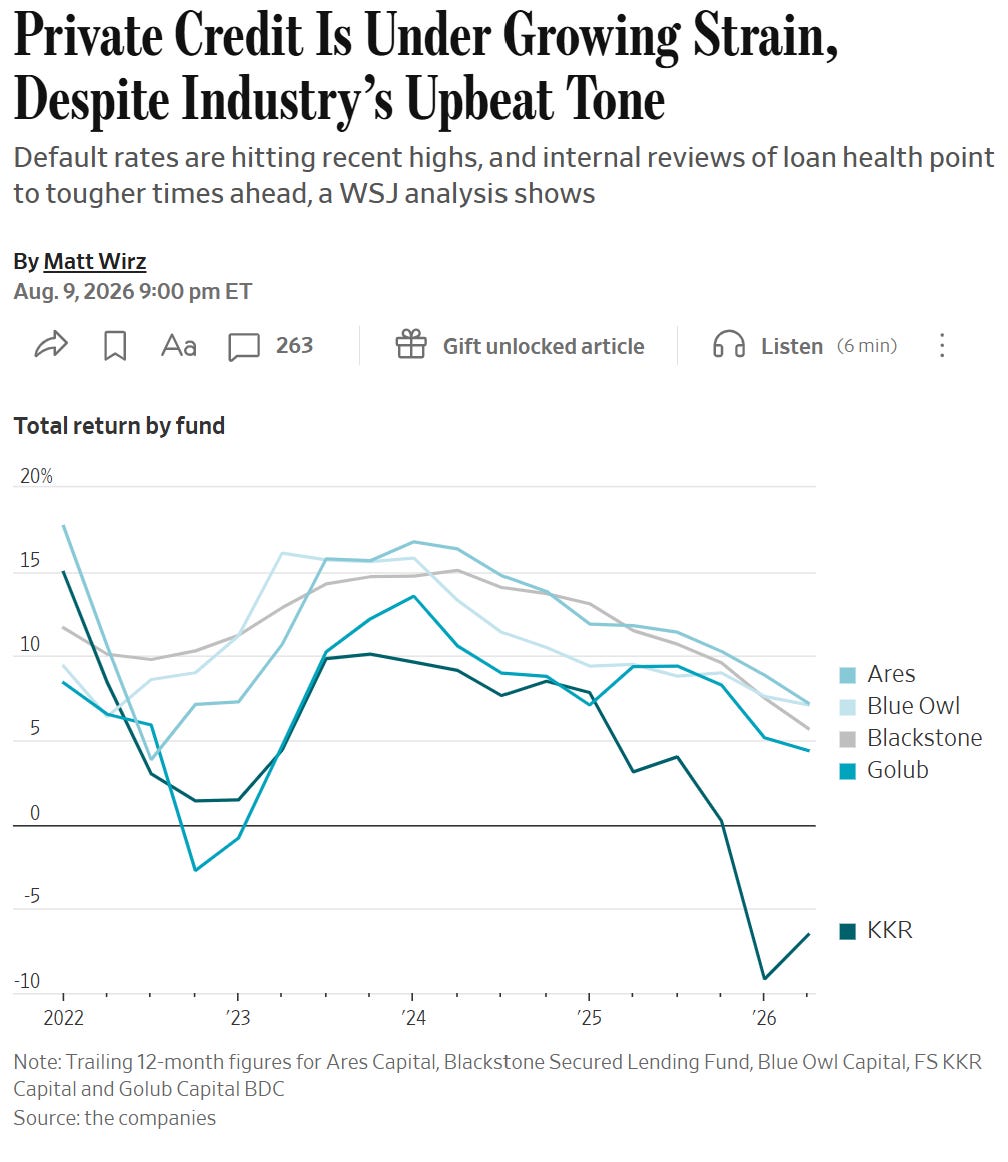
The stressors are coming from higher interest rates and the fact that at least 20% of these loans go to software companies, whose fates are threatened by AI’s growing capabilities in that space. In terms of macro risk, the consensus is that any contagion is likely contained by dint of private credit’s size (much smaller than public or corporate debt) and various controls that make it more of a slow burn. But the dynamics described in the WSJ piece suggest damage comes through constrained credit, not to the hyperscalers of course, but to middle-market, smaller businesses.
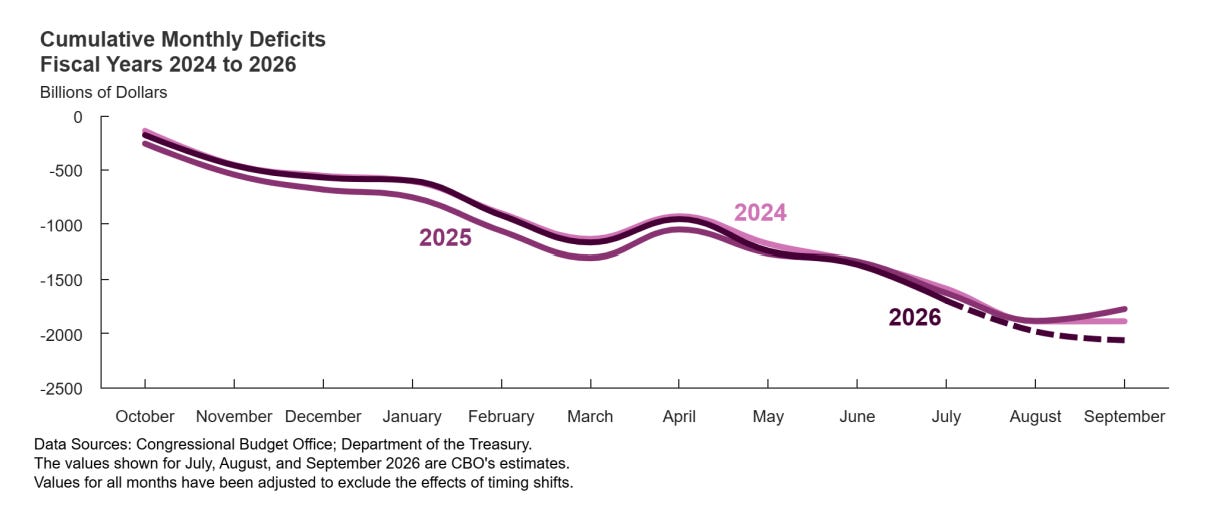
Public Debt and Rising Bond Yields: This last group is another one I’ve sweated a lot about, as I see little restraint on deficit-financed spending and tax cuts from either party. Yes, the Rs are much worse, as their high-end tax cuts and implicit condoning, if not encouragement, of tax evasion through gutting the IRS enforcement budget, have structurally damaged the linkage between economic growth and revenue flows to the Treasury. This figure, out yesterday from CBO, shows how monthly deficits have been accumulating over the last three years, with this year the biggest negative.
The problem for regular folks is not deficits that are 6-7% of GDP when they should be half that (based on growth). It’s their impact on interest rates. Rates are up over the past year over most of the yield curve (showing rates at various maturities), as is the 30-yr mortgage rate, 6.8% today versus about 6% before the war.
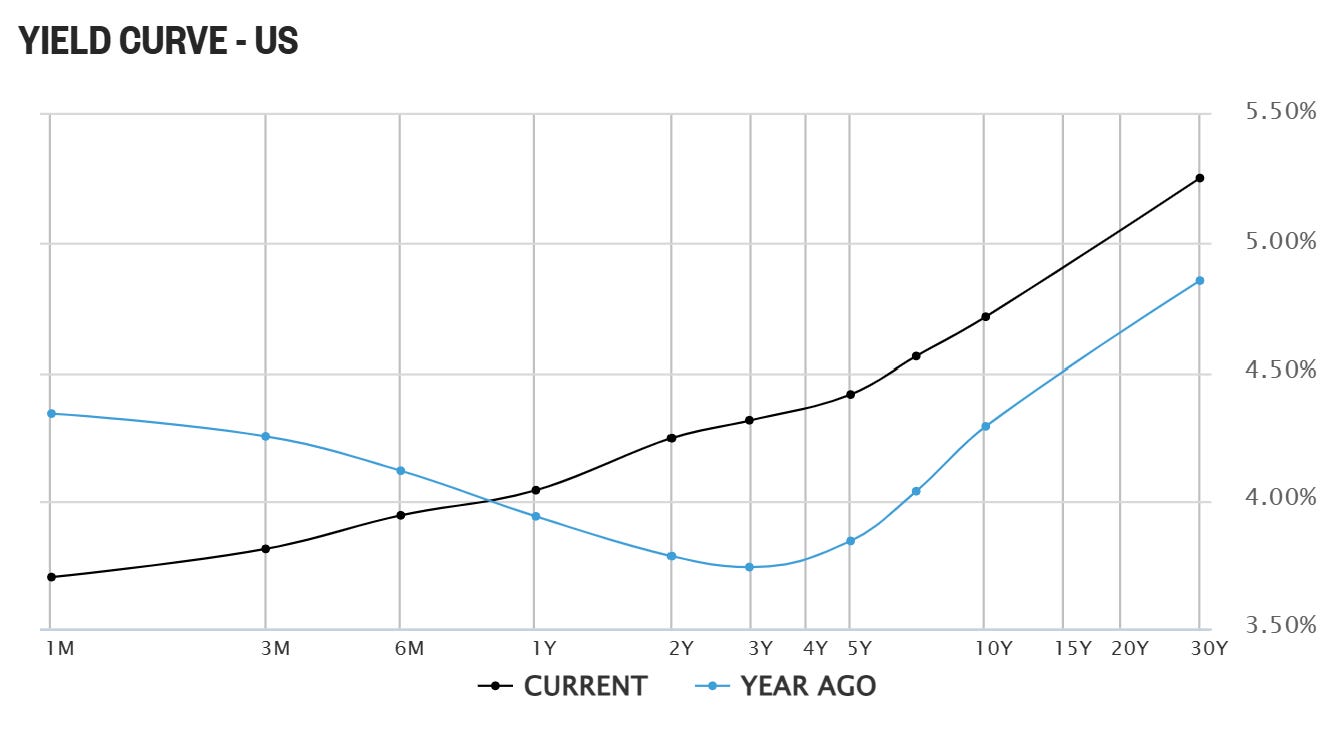
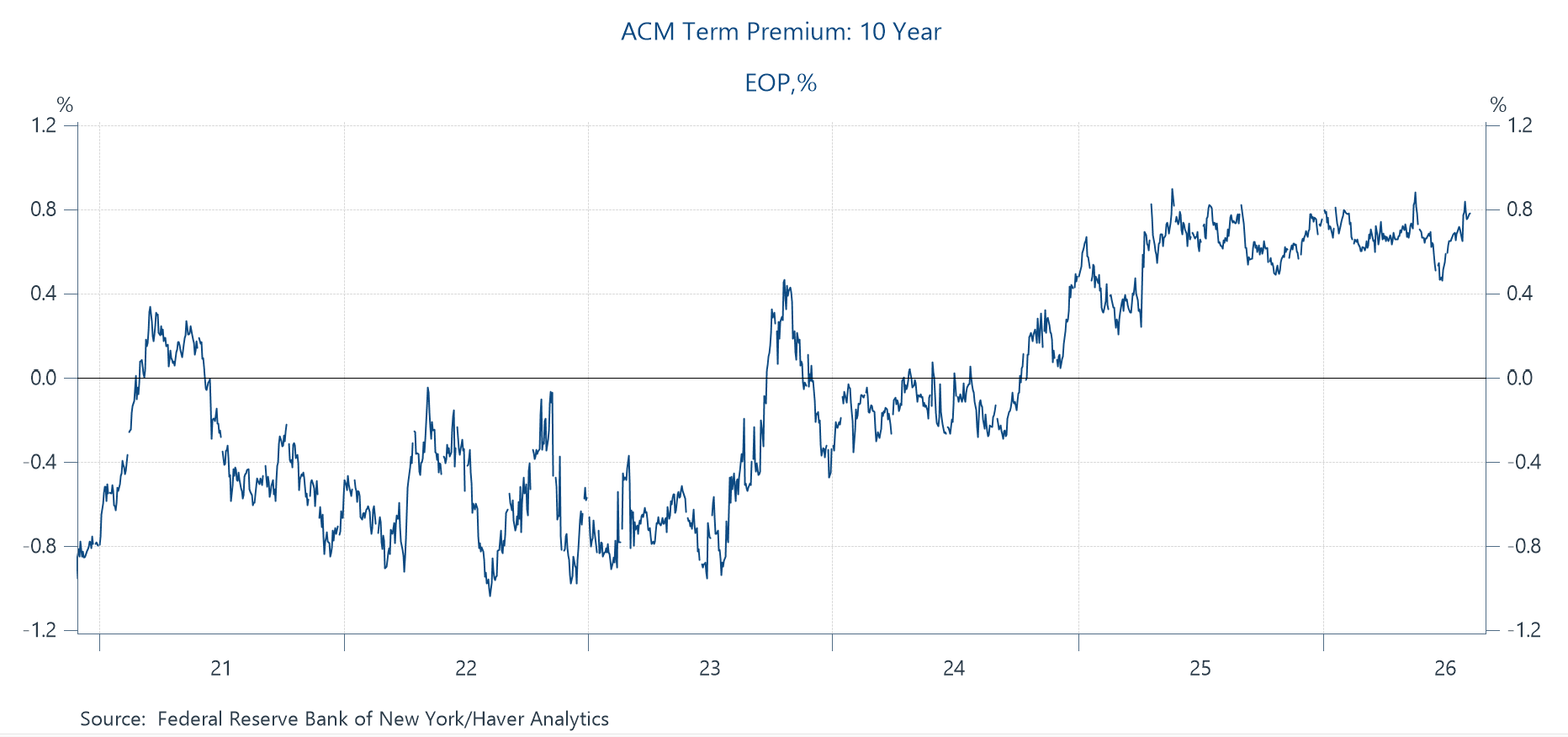
In fact, the Iran war is the more proximate cause of higher rates, as creditors demand an inflation premium—an extra return for higher expected inflation. But analysts widely agree that our unsustainable fiscal path is also pressuring rates. One place that shows up is in higher “term premia,” a cousin of the inflation version just mentioned, but this one adds higher compensation for holding a longer-term bonds, which better reflect sustainability concerns.
This premium, shown below, is still pretty low in historical terms, but it’s clearly elevated, and while I think the fiscal risk here is again more of slow burn than a sudden shock, it’s definitely another fragility source.
These financial sources are not the sole concerns re the macro outlook. More direct concerns include high and sticky inflation, the low-hire, low-fire job market (and the angst generated by the weak July jobs report), wage pressures on low/middle wage workers (and a reason why the wealth effect is playing an outsized role in spending growth), a potential monetary misstep by the Warsh Fed, and…you know…the fact that our nation’s leader is, simply put, deeply unhinged.
But when most people, myself included, cite the stock market these days, we define it as “booming.” There’s truth to that, but there are also fragilities not too far under the hood.
No posts
Comments
Nothing yet. Say the first thing.
Sign in to join the conversation.