
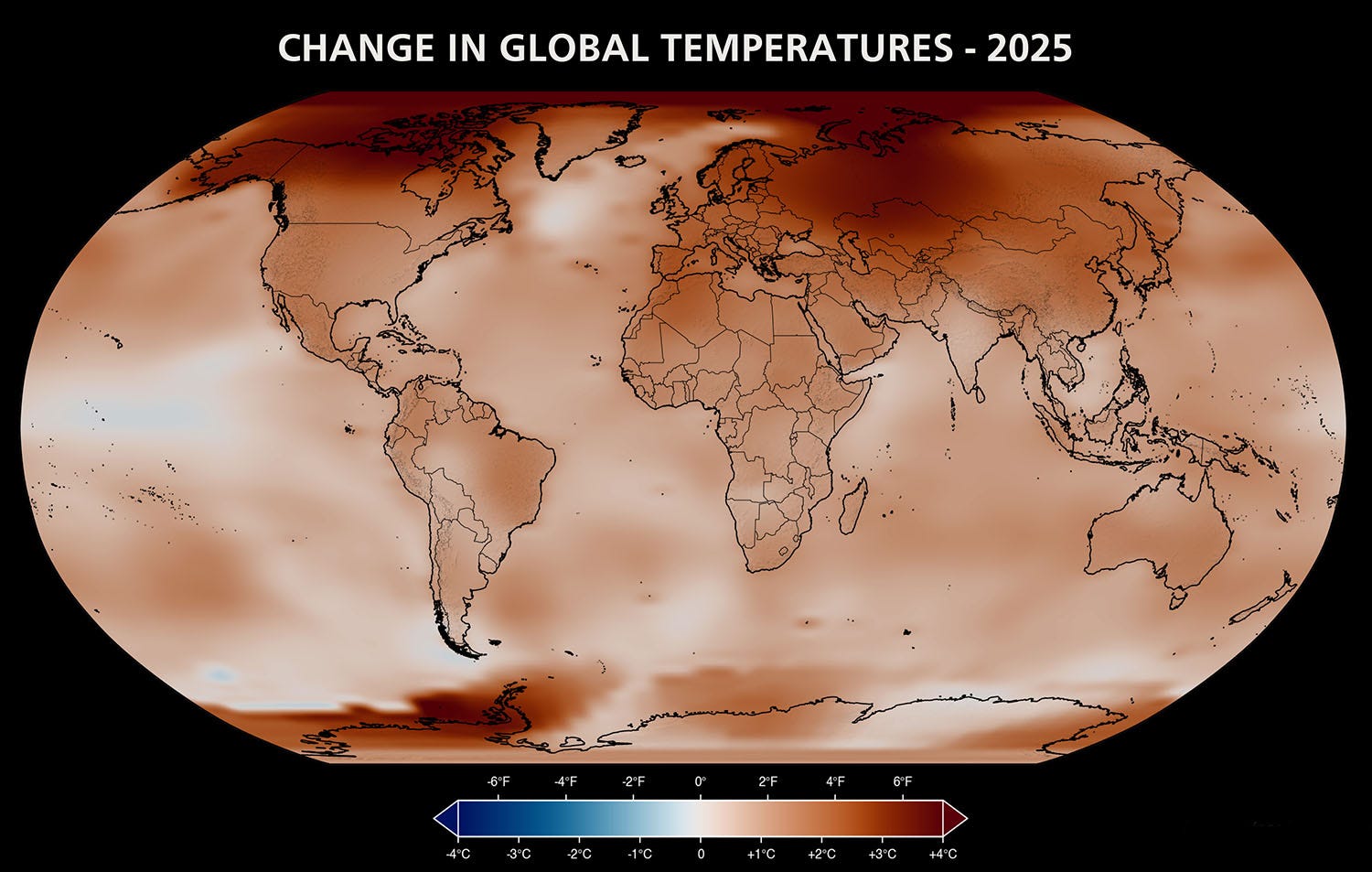
The planet is no longer warming at the relatively steady pace observed during the closing decades of the 20th century, according to new scientific analyses. The rate of heating has accelerated sharply, and the change remains visible even after temporary natural influences are removed from the analysis.
Researchers Stefan Rahmstorf of the Potsdam Institute for Climate Impact Research and statistician Grant Foster examined five leading global temperature records. They adjusted the data for the effects of El Niño, volcanic eruptions and changes in solar activity, all of which can temporarily raise or lower global temperatures.
Their peer-reviewed study found that warming accelerated from just under 0.36°F (0.2°C) per decade between 1970 and 2015 to about 0.63°F (0.35°C) per decade during the past 10 years. The shift emerged across all five datasets and was statistically significant at greater than 98% confidence.
The study was designed to detect the acceleration, not establish its precise cause. But the continued accumulation of greenhouse gases due to unbridled carbon emissions remains the dominant driver of rising temperatures.
Declining emissions of health-damaging sulfur pollution have also reduced the cooling effect of atmospheric aerosols that previously masked part of the greenhouse warming.
A separate international assessment by more than 60 scientists, published in June, estimated that human-caused warming is occurring at 0.49°F (0.27°C) per decade—the highest rate ever measured. It also found that Earth’s energy imbalance, the excess heat accumulating in the climate system, has more than doubled since the 1976–1995 period.
The two estimates differ because they measure warming in different ways, but both point in the same direction: Earth is heating faster.
If the unusually rapid rate of the past decade continues, Rahmstorf says the planet could move beyond the Paris Agreement’s long-term limit of 2.7°F (1.5°C) above preindustrial levels before 2030. How much faster temperatures rise after that will depend largely on how quickly humanity reduces carbon dioxide emissions from fossil fuels to net zero.

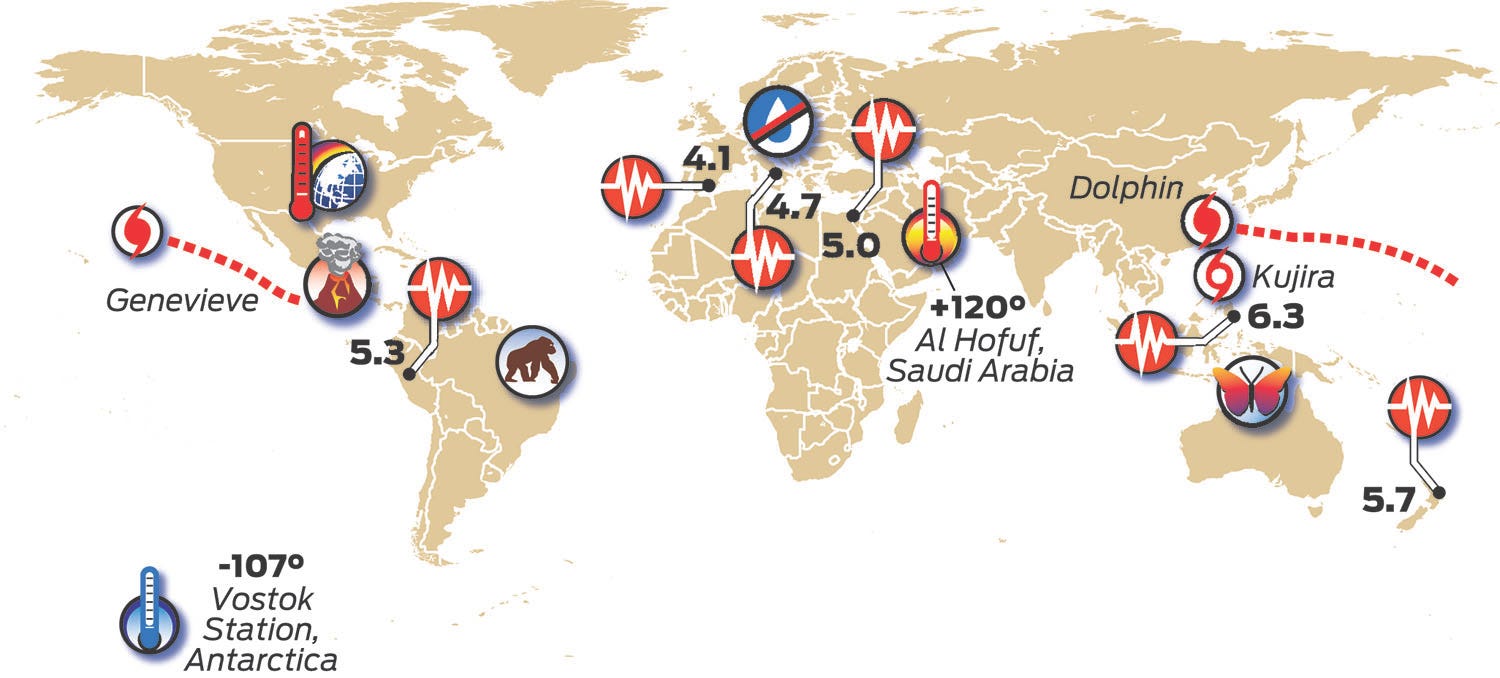
Macaques groom dogs in Thailand. Young snub-nosed monkeys play with domestic pigs in China. Langurs gently stroke giant squirrels in Sri Lanka. In Brazil, a group of wild capuchins adopted an infant marmoset and cared for it for months.
Such encounters may offer clues to why humans form powerful emotional bonds with animals, according to an international study led by Oxford University.
Researchers compiled 427 reported interactions involving 88 primate species and a wide variety of other animals. The evidence came from scientific studies, reports submitted by primatologists and documented accounts in the media.
Play and grooming were the most common behaviors. Young primates were especially likely to play with animals from other species, while adult females more often groomed them. Adult males were considerably less inclined to engage in friendly encounters.
Many cross-species associations in nature provide practical advantages, such as improved access to food or greater protection from predators. But the primates in this study frequently appeared to receive no obvious reward. They played, groomed, carried and curled up beside other animals, usually after initiating the contact themselves.
Researchers caution that this does not amount to pet-keeping in the human sense. Nor was every encounter affectionate. Rough handling sometimes followed apparent curiosity or caregiving, and the researchers recorded 13 cases in which the partner animal died. In Saudi Arabia, a male baboon appeared to kidnap a domestic puppy and carried it around for extended periods.
But the more peaceful encounters suggest that curiosity, tolerance and caregiving across species did not begin with humans. Those qualities may have been present deep within primate evolution, eventually helping our ancestors form the relationships with animals that produced domestication—and, much later, the household pet.
The findings could also help zoos and sanctuaries decide which species may live safely together. More broadly, they suggest that the impulse to befriend a creature unlike ourselves may be part of a much older primate inheritance.

Butterflies are moving across the planet as rising temperatures, extreme weather and disappearing habitats redraw the boundaries of where they can survive.
A global study published in Nature Ecology & Evolution compiled documented changes involving 1,758 butterfly species in 105 countries. It is the broadest attempt yet to examine butterfly movements across every inhabited continent.
Among the species with recorded changes, about 80% had expanded into new territory. Twenty-seven percent had disappeared from parts of their former range, while 22% shifted to higher or lower elevations. The percentages overlap because some butterflies underwent more than one change—expanding in one place while retreating in another.
Range expansion was especially common in tropical regions. Contractions occurred more frequently in Europe and North America, while changes in elevation were recorded almost entirely in the Northern Hemisphere.
Some butterflies moved with remarkable speed. The tawny coster, native to India, Bangladesh and Sri Lanka, arrived in Australia in 2012 and has since spread at an average of about 84 miles (135 kilometers) per year.
But occupying a larger area does not necessarily mean a butterfly is flourishing. A species may colonize newly suitable territory while losing populations elsewhere, and fragmented landscapes can prevent it from reaching the habitat it needs.
Climate change and severe weather were the most commonly identified drivers, although drainage, agriculture and other habitat alterations also played important roles. Germany’s cranberry fritillary has declined as its bog habitat disappeared, while intensive farming reduced the range of the Danube clouded yellow in Romania.
Butterflies are highly sensitive to temperature, moisture and seasonal changes, making them useful early-warning indicators of ecological disruption. Their movements can also reveal changes affecting flowering plants, insect-eating birds and the many other species connected to them.
The study does not show that every butterfly is moving, and large parts of Central Africa, Southeast Asia, New Guinea and the Amazon remain poorly monitored. It does show that changes once documented mainly in Europe and North America are occurring worldwide.
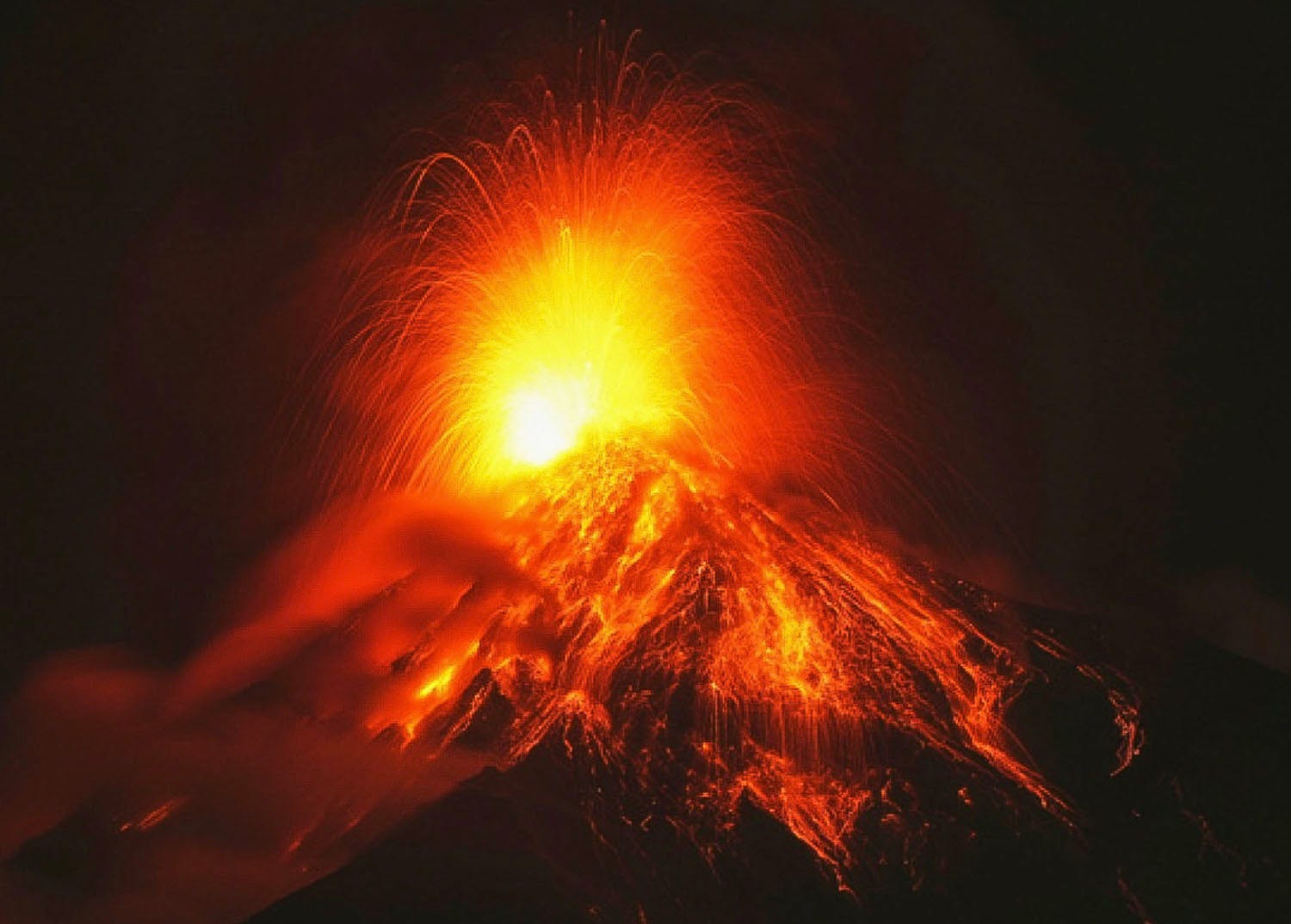
About 1,700 people sought refuge in shelters after Guatemala’s Fuego volcano erupted, sending clouds of ash and gas into the sky and dangerous volcanic material racing down its slopes.
The eruption intensified after beginning Monday, producing lava fountains rising as high as 980 feet (300 metres) above the crater while pyroclastic currents, fast-moving avalanches of extremely hot gas, ash and rock, cascaded down the mountain’s slopes.
Guatemala declared an orange alert nationwide and elevated the warning to red in the departments of Sacatepéquez, Escuintla and Chimaltenango. Authorities said about 29,000 people had been affected by ashfall, which can contaminate water supplies and cause respiratory problems. Residents were advised to wear masks and cover stored water.
Rain added another danger. Water mixing with ash and loose debris on the volcano’s slopes produced lahars, or volcanic mudflows, extending as far as 4 miles (7 km). Officials warned that additional rainfall could generate more of the destructive flows.
No deaths or structural damage had been reported in the latest updates. But the evacuations carry painful memories of Fuego’s catastrophic eruption in June 2018, when pyroclastic currents overwhelmed nearby communities, killing more than 200 people and leaving hundreds missing.
On Thursday, the volcano showed a significant decline in activity after 50 hours of nearly continuous eruptions. The country’s disaster reduction agency, CONRED, said the decrease had allowed evacuated families to return home.
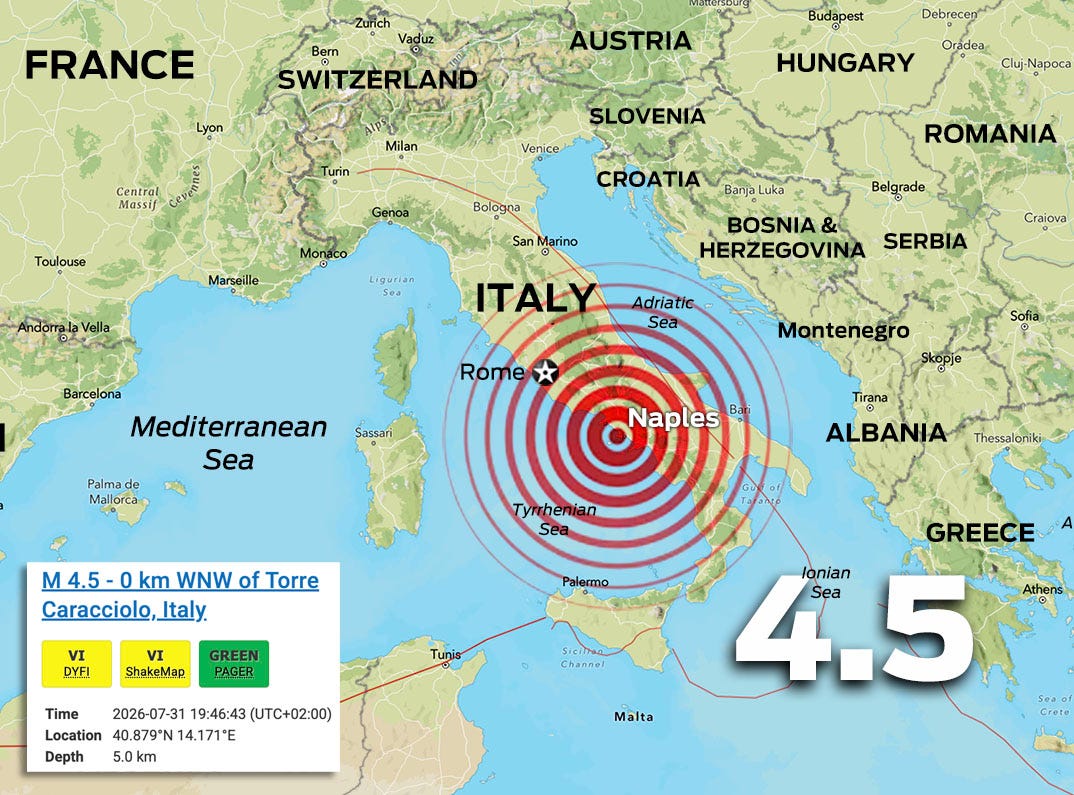
A magnitude-4.5 earthquake struck the volcanic area west of Naples, injuring 21 people and sending frightened residents into the streets.
The shallow quake occurred Friday evening beneath the Campi Flegrei, or Phlegraean Fields, at a depth of about 2 miles (3 kilometers). It was followed by numerous aftershocks, including one measuring magnitude 3.8.
Pozzuoli, a coastal city near the epicenter, suffered falling masonry, damaged building facades and rockslides. Power failures were reported, and rail and metro services were temporarily suspended for safety inspections. The port of Pozzuoli was closed after damage made its quay unusable.
Two people were reportedly seriously injured, and 18 families were evacuated from damaged buildings. Many residents spent the night outdoors as aftershocks continued.
Campi Flegrei is a vast volcanic caldera extending beneath western Naples and the Gulf of Pozzuoli. It has experienced increasingly frequent earthquake swarms as the ground slowly rises—a process called bradyseism, caused by changing pressure and movement of fluids beneath the surface.
The region endured a similar period of intense unrest during the early 1980s, when thousands of residents were evacuated from Pozzuoli. Renewed activity during recent years has prompted Italian authorities to strengthen monitoring, inspect vulnerable buildings and revise emergency plans for the densely populated area.
Scientists caution that increased earthquakes and ground uplift do not necessarily mean an eruption is imminent. They can indicate movement of volcanic gases and heated underground fluids rather than magma rising toward the surface. It remains impossible to predict whether the current unrest will culminate in an eruption, a stronger earthquake or another gradual decline in activity.
But even a moderate, shallow earthquake can cause significant damage beneath communities crowded with older buildings. Friday’s quake—the region’s strongest in roughly four decades—provided another reminder of the hazards facing hundreds of thousands of people living within one of Europe’s most closely watched volcanic systems.
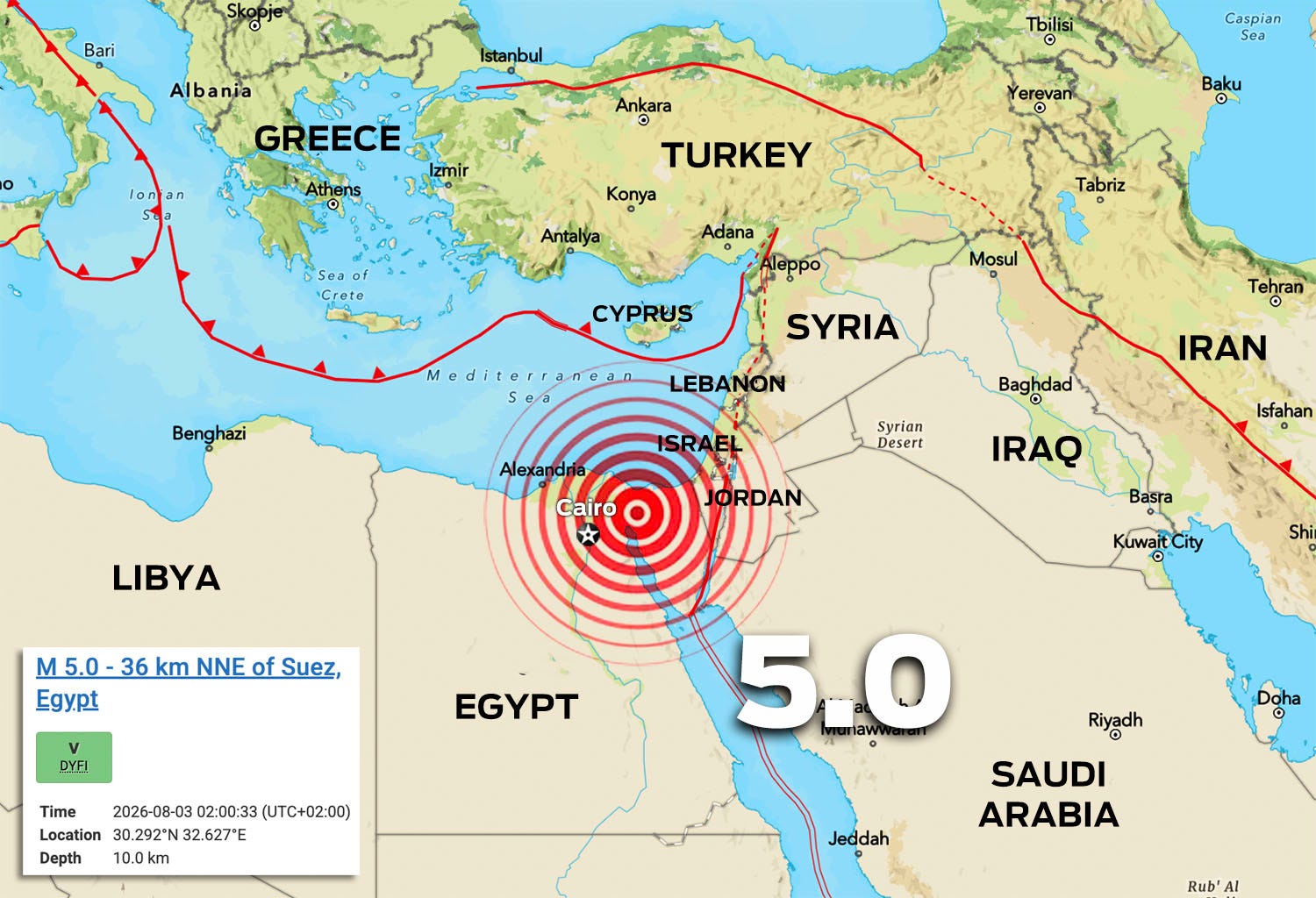
An earthquake struck near Egypt’s Suez region early Monday, shaking buildings across a broad area and prompting authorities to activate emergency plans nationwide.
Egypt’s National Seismic Network measured the quake at magnitude 5.6, while the U.S. Geological Survey calculated a magnitude of 5.0. Such differences can occur because monitoring agencies use different seismic stations and methods to estimate an earthquake’s size.
The shallow tremor struck at about 3 a.m. local time, with its epicenter approximately 25 miles (40 kilometers) north of Suez. Shaking was felt in Cairo and as far northeast as El-Arish, near Egypt’s border with the Gaza Strip. Five aftershocks were recorded.
Egypt’s Health Ministry reported one injury. The person was treated and later released.
Parts of three aging buildings reportedly collapsed in Cairo and Beheira Governorate. Three families were evacuated from a deteriorating building in Cairo’s Rod al-Farag district after sections of its walls fell, while part of a balcony collapsed from an unoccupied house in Beheira. No deaths were reported.
Health Minister Khaled Abdel Ghaffar placed ambulance and emergency services on maximum preparedness. The Egyptian Red Crescent advised residents to remain clear of old or damaged buildings in case aftershocks caused additional collapses.
The earthquake originated in the Gulf of Suez region, where active faults are associated with the slow pulling apart of the African and Arabian tectonic plates. Although small tremors occur there, earthquakes strong enough to cause widespread alarm are relatively uncommon in Egypt.
Monday’s shaking revived memories of Egypt’s devastating 1992 earthquake. That magnitude-5.8 event struck near Cairo, killing more than 500 people, damaging thousands of buildings and leaving many residents homeless.
Other earthquakes were felt in:
• Spain’s Murcia region (4.1)
• Far southern Philippines (6.3)
• New Zealand’s North Island (5.7)
• Central Peru (5.3)
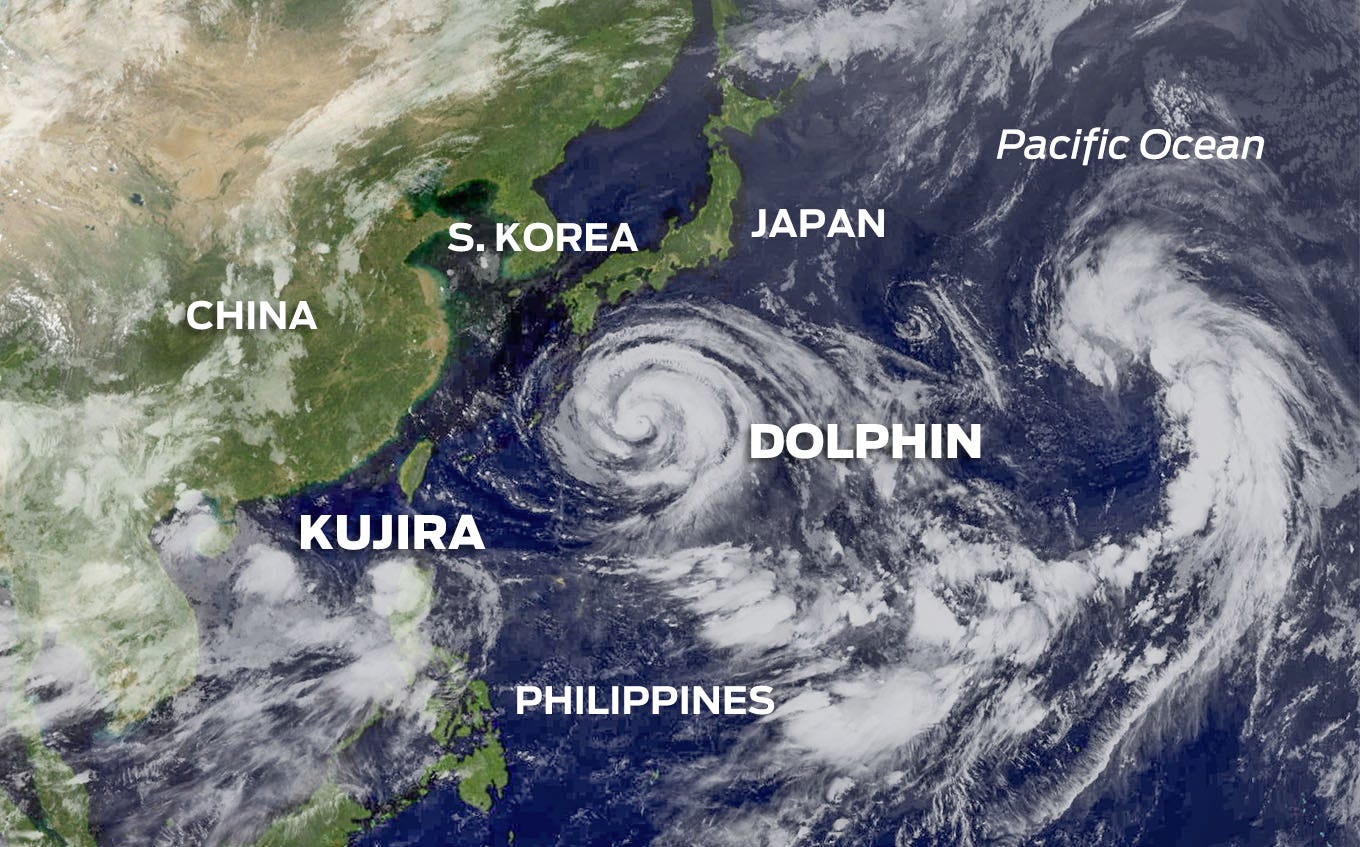
Former Category-5 Typhoon Dolphin passed directly over remote and uninhabited North Iwo Jima, the first time an eye of a typhoon was ever observed making landfall there.
The storm later raked Okinawa and other southern Japanese islands, and was taking aim at China’s Zhejiang coast on Friday.
• Slowly moving Tropical Storm Kujira drenched the northern Philippines during three stormy days over northern Luzon Island.

• The hottest temperature recorded this week by the World Meteorological Organization’s 7,600 land-based synoptic weather stations was 120° Fahrenheit (49° Celsius) at Al Hofuf, Saudi Arabia.
• The coldest temperature in an inhabited location was -107° Fahrenheit (-77° Celsius) at Russia’s Vostok Station, located in the middle of the East Antarctic Ice Sheet. The station normally hosts 30 scientists and engineers during the summer. In winter, their number drops to 15.
©MMXXVI Earth Environment Service
No posts
Comments
Nothing yet. Say the first thing.
Sign in to join the conversation.