
By Dr. David Traster, DC, MS, DACNB
Co-owner, The Neurologic Wellness Institute
Boca Raton • Chicago • Waukesha • Wood Dale
www.neurologicwellnessinstitute.com
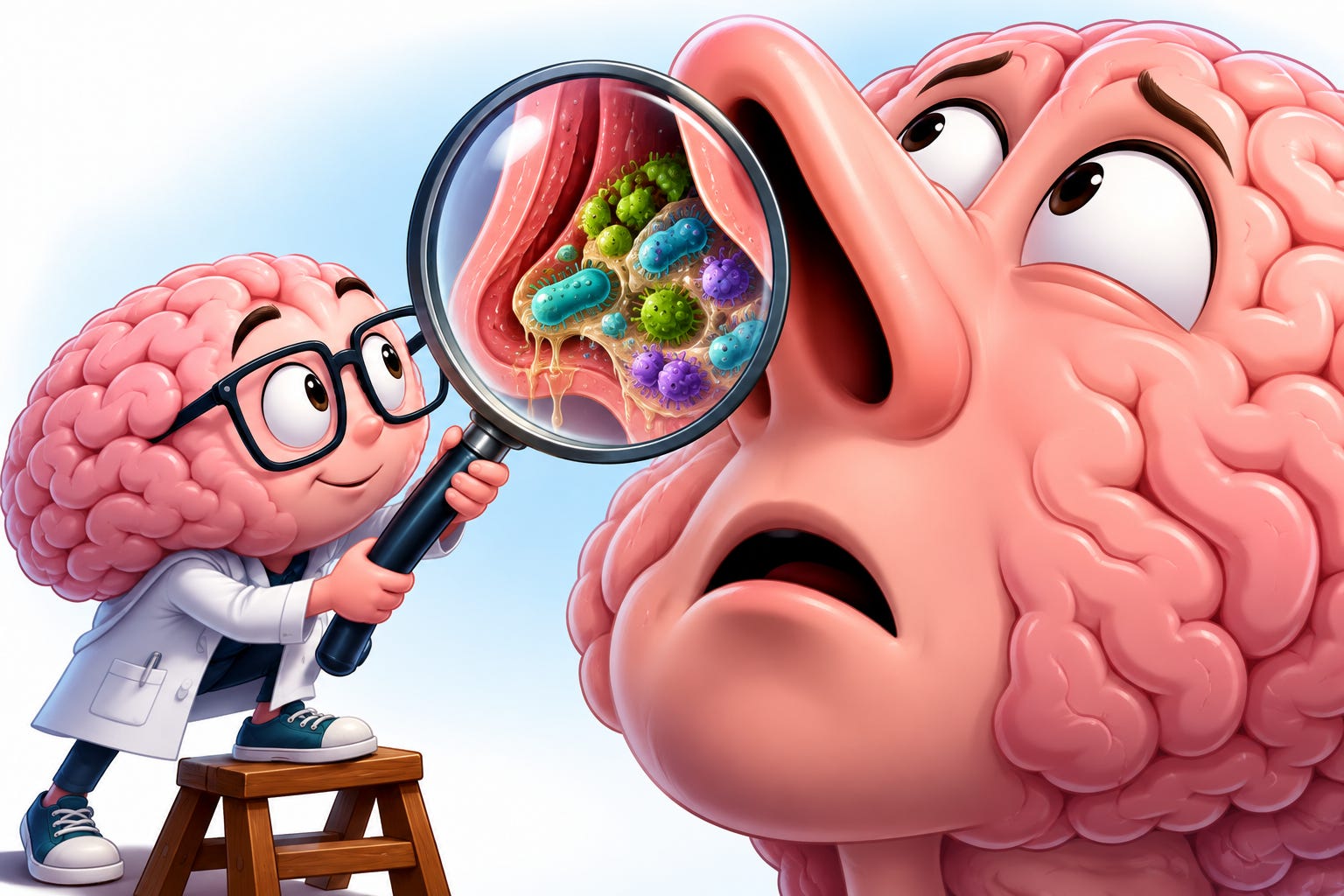
When we think about chronic inflammation, we often focus on the gastrointestinal tract, immune system, bloodstream, or brain. Yet one of the most important interfaces between the external environment and the human body sits directly behind the nose.The nasal passages and sinuses contain their own complex microbial ecosystem. Bacteria live along these mucosal surfaces throughout life, and many of them are normal inhabitants of the human body. Under healthy conditions, the immune system, mucosal barriers, and microorganisms exist in a relatively balanced relationship. However, this ecosystem can change. Certain bacteria can become resistant to antibiotics, form protective biofilms, and persist along mucosal surfaces. One organism pattern that has received increasing attention in patients with chronic inflammatory illness is known as MARCoNS.
MARCoNS stands for Multiple Antibiotic Resistant Coagulase-Negative Staphylococci. It is particularly discussed in patients with chronic inflammatory response syndrome, environmental exposure-associated illness, chronic sinus problems, and other complex multisystem conditions.But MARCoNS is also an area where it is important to separate what we know from what we suspect. Coagulase-negative staphylococci are well-established members of the human microbiome. Their ability to develop antibiotic resistance and form biofilms is also well established. What remains under investigation is whether MARCoNS represents an independent disease process capable of driving systemic illness, or whether it is more commonly a marker or contributor within a larger state of immune and microbial dysfunction.
Staphylococcus is not a single organism but a large group of bacteria. Most people have heard of Staphylococcus aureus, particularly methicillin-resistant Staphylococcus aureus, or MRSA. MARCoNS are different.The “CoNS” portion of MARCoNS refers to coagulase-negative staphylococci. This group includes species such as Staphylococcus epidermidis and several related organisms commonly found on the skin and mucous membranes.
Historically, many coagulase-negative staphylococci were viewed primarily as relatively harmless commensal organisms. We now understand that the story is more complicated. Certain strains can behave as opportunistic organisms, particularly when barriers are disrupted, foreign medical devices are present, immunity is impaired, microbial ecosystems are altered, or bacteria develop mechanisms allowing them to persist.
One of their most important survival strategies is the formation of biofilms. A biofilm is an organized community of microorganisms surrounded by a protective extracellular matrix. Instead of bacteria floating individually in their environment, they attach to a surface and create something resembling a microscopic protective neighborhood. Within a biofilm, bacteria may become considerably more difficult for immune defenses and antimicrobial agents to eliminate. This is one reason biofilm biology has become such an important area of research in chronic infections and persistent microbial colonization.
MARCoNS specifically refers to coagulase-negative staphylococci isolated from the nasal passages that demonstrate resistance to multiple antimicrobial agents. The precise operational definition can vary, which is important when interpreting a positive test.
This is where the subject becomes complicated. Coagulase-negative staphylococci themselves are extremely common. They are normal inhabitants of human skin and mucosal surfaces. Therefore, simply finding a coagulase-negative Staphylococcus species in the nose does not mean someone has a disease. The prevalence of the narrower MARCoNS phenotype in the general healthy population has not been established with the same level of large-scale epidemiological research available for organisms such as MRSA.
MARCoNS has primarily been studied and discussed within selected populations suffering from chronic multisystem illness, particularly patients evaluated within the Chronic Inflammatory Response Syndrome, or CIRS, framework. This distinction is extremely important. A positive MARCoNS culture should not automatically be interpreted as proof that the organism is causing someone’s fatigue, brain fog, dizziness, pain, or inflammatory symptoms. Colonization and disease are not necessarily the same thing. Instead, MARCoNS may be most useful clinically when interpreted as one piece of a much larger biological puzzle.
Antibiotic resistance is fundamentally an evolutionary survival mechanism. When bacterial populations encounter antimicrobial pressure, susceptible organisms may die while organisms carrying resistance mechanisms survive. Those organisms can subsequently reproduce and become increasingly dominant within the microbial ecosystem. Repeated antibiotic exposure can therefore contribute to microbial selection, although antibiotic exposure is certainly not the only factor determining which organisms colonize the nose.
Changes in the nasal microbiome, inflammation of the mucosal environment, impaired mucociliary clearance, chronic sinus disease, altered immunity, environmental exposures, competing microorganisms, and biofilm formation may all influence whether certain organisms successfully persist. From a systems perspective, the more interesting question may therefore be not simply, “Why is this bacterium present?” The deeper question is, “Why has this biological environment allowed this organism to persist?” That distinction changes how we think about chronic illness.
There is no single symptom that identifies MARCoNS. Patients reported within MARCoNS and CIRS-associated clinical populations may experience fatigue, impaired concentration, brain fog, memory difficulties, headaches, sinus congestion, facial pressure, altered smell, sleep disturbances, muscle aches, joint pain, exercise intolerance, mood changes, gastrointestinal complaints, temperature dysregulation, and other multisystem symptoms. The difficulty is that these symptoms are extraordinarily nonspecific.
Fatigue can occur with anemia, thyroid dysfunction, autoimmune disease, infection, sleep disorders, dysautonomia, metabolic disease, medication effects, depression, post-viral illness, and dozens of other conditions. Brain fog is equally nonspecific. This means symptoms alone cannot diagnose MARCoNS. Many patients carrying coagulase-negative staphylococci may have no symptoms whatsoever. Conversely, someone with significant chronic inflammatory symptoms may not have MARCoNS. The organism must therefore be interpreted within the context of the entire patient.
MARCoNS has become particularly associated with Chronic Inflammatory Response Syndrome, commonly abbreviated CIRS. CIRS is a proposed clinical framework describing persistent multisystem symptoms and abnormalities in inflammatory and neuroendocrine regulation following certain environmental or microbial exposures, particularly exposure to water-damaged buildings.
Patients described within this framework may demonstrate combinations of fatigue, cognitive dysfunction, pain, headaches, respiratory symptoms, sleep abnormalities, mood changes, gastrointestinal dysfunction, and autonomic symptoms. Some CIRS protocols include measurements of inflammatory and neuroendocrine biomarkers such as MMP-9, TGF-β1, complement-related markers, VEGF, vasoactive intestinal peptide, or VIP, and alpha-melanocyte-stimulating hormone, or α-MSH.
However, CIRS itself remains a debated and evolving area of medicine. Many of its proposed biomarkers and treatment algorithms have not been validated to the degree required for widespread adoption as standard diagnostic criteria. That does not mean the biology should be ignored. It means we need to investigate it carefully.
One particularly interesting area of MARCoNS research involves alpha-melanocyte-stimulating hormone, or α-MSH. α-MSH is much more than a pigmentation-related hormone. It participates in neuroimmune communication, inflammatory regulation, antimicrobial defense, pain processing, metabolic signaling, and mucosal physiology.
A 2026 retrospective observational study examined 188 adults treated within a CIRS-informed clinical framework who initially had positive MARCoNS cultures. Researchers compared patients who remained MARCoNS-positive with those who became MARCoNS-negative during follow-up. Patients who were MARCoNS-negative at follow-up demonstrated higher circulating α-MSH trajectories than patients who remained positive. Interestingly, comparable MARCoNS-specific relationships were not demonstrated for MMP-9 or VIP.
This does not prove that eliminating MARCoNS raises α-MSH or that MARCoNS causes systemic inflammatory disease. The patients were receiving multiple interventions simultaneously, and the study was observational rather than a randomized controlled trial. Nevertheless, it creates an intriguing biological question: could persistent alterations in the nasal microbiome interact with neuroendocrine pathways responsible for regulating mucosal immunity and inflammation? That question deserves considerably more research.
The nasal cavity occupies an unusual biological position. It continuously encounters microorganisms, allergens, pollutants, particulate matter, and environmental chemicals while sitting anatomically adjacent to the central nervous system. The nasal mucosa contains epithelial cells, sensory neurons, blood vessels, mucus-producing cells, antimicrobial peptides, immune cells, and an extensive microbial ecosystem. Signals generated here can interact with local inflammatory pathways and potentially influence broader immune signaling.
This does not mean bacteria living in the nose are directly “infecting the brain.” Rather, it illustrates an increasingly important concept in medicine: mucosal surfaces communicate with the immune and nervous systems. We routinely discuss the gut-brain axis. It is reasonable to recognize that respiratory and nasal mucosal environments also participate in neuroimmune communication.
Biofilm formation may provide another important piece of the puzzle. Bacteria within biofilms behave differently from free-floating bacteria. Their metabolism changes, gene expression changes, communication between organisms changes, and susceptibility to antimicrobial agents may decrease dramatically. Biofilms can also interact continuously with the immune system.
The result can theoretically create a biological stalemate. The immune system recognizes something abnormal and continues responding to it, but the microbial community is never completely removed. This type of persistent immune stimulation is one proposed mechanism through which chronic microbial colonization could contribute to ongoing inflammation. Yet we must again distinguish biological plausibility from demonstrated causation. Biofilms clearly contribute to certain chronic infections, but whether nasal MARCoNS biofilms independently generate systemic inflammatory illness remains incompletely established.
Comments
Nothing yet. Say the first thing.
Sign in to join the conversation.