
Light plays a very strong role in the proper function of our minds and bodies. In fact, recent studies have shown that we even convert light into energy. The ill-effects of not getting enough sunlight are well-known, but unfortunately, most people today spend most of their time indoors. As a result, many people are exposed to artificial light more than natural light.
With modern LED lights, we are now able to not only use less power, but we’re also offered a choice in the colour spectrum. When they were first introduced, these bulbs flickered, but the industry seems to have solved this problem. Most good quality LED bulbs now flicker much less. Choosing the correct lighting is essential for your well-being.
As the image above shows, the tone of the light we receive from the Sun is warmer when it’s closer to the horizon during sunrise and sunset, and brighter and more blueish during midday. We are naturally accustomed to feel calmer with these warmer tones, so it’s important to use “warm white” lighting at home, where you need to rest and recover.

This is well-known in the hospitality industry, which is why you are unlikely to find “cool white” lighting in a premium hotel or restaurant. On our last holiday, we stayed at four different hotels, but we all enjoyed our stay the most at the one that only used “warm white” lighting. I don’t think this was just a coincidence. We also only use “warm white” bulbs at our office, even for the light fixtures that previously used fluorescent bulbs, as it aids in calming our patients and clients, which will also aid in their recovery.
Most people today spend extended periods of time on their cell phones and computers, which also emit excessive levels of blue light. Fortunately, there are ways of reducing the amount of blue light, while increasing the red light emitted by these devices. Studies have shown that this does help with improving sleep quality, cognitive function, and may even reduce cancer risk.
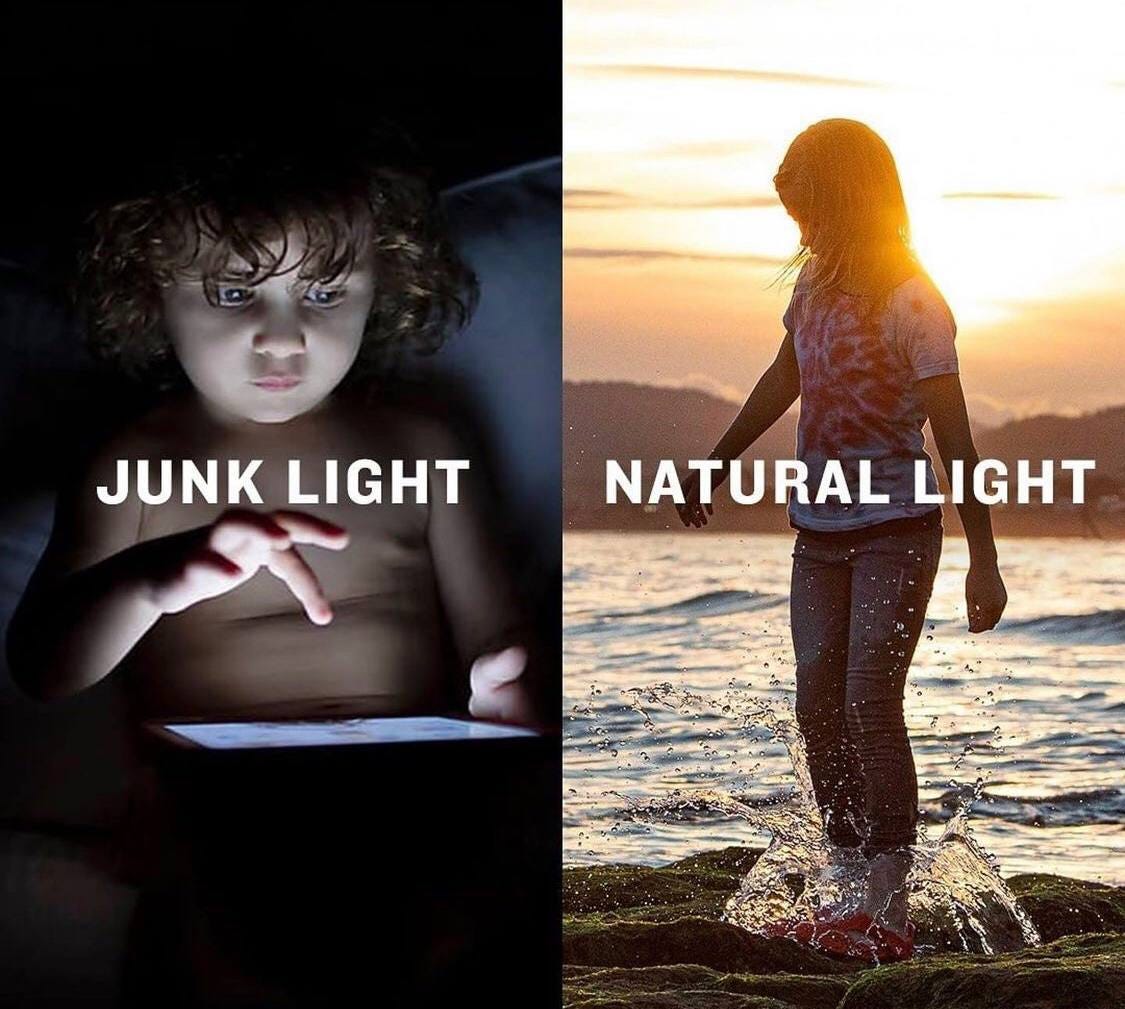
Ultimately, regardless of the lights you use, it’s vitally important to spend as much time outside as possible, especially if your indoor spaces don’t receive a lot of natural light. Remember, true health and healing begins outside.
by SJ NANA, DC / DrNana.co.za / Neuramaya.co.za
Please see my other articles for more information regarding this topic:
References:
Effect of warm/cool white lights on visual perception and mood in warm/cool color environments
Artificial light influences urban habitat use by insectivorous bats
Effects of blue light on the circadian system and eye physiology
Does Your Smartphone’s “Eye Protection” Mode Really Work? The Effects of Blue Light
Smartphone Users’ Guide: Turning Off Blue Light On Your Phone
No posts
Comments
Nothing yet. Say the first thing.
Sign in to join the conversation.