
This week I had the opportunity to join a show that I have loved and talked about for quite some time. They have hosted some incredible guests and discussions across the health space including the former head of ACIP, Jay Bhattacharya (NIH Director) and they even went to the Children’s Health Defense Conference and debated there (ballsy), so I was genuinely honored when they invited me to participate in a panel discussing President Trump’s recent vaccine executive order. Given how quickly any conversation containing the words “vaccines,” “Trump,” “Kennedy,” “CDC,” or apparently even “MMR” can turn the internet into a digital cage match, I was interested to see where the conversation would go.
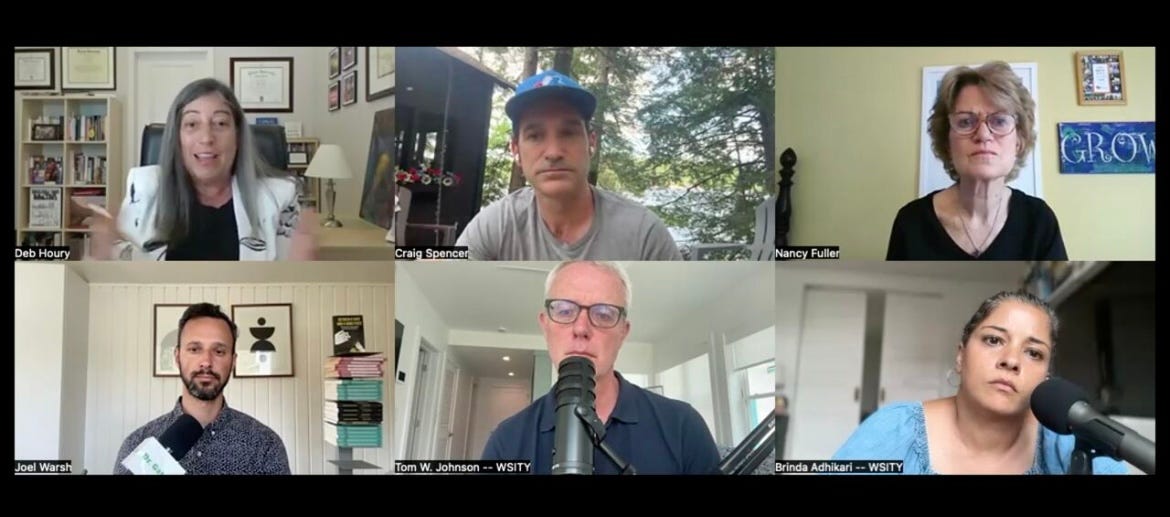
The panel brought together people with very different backgrounds and perspectives. Deb Houry MD, who left the CDC last year from her position as Chief Medical Officer and Deputy Director for Program and Science at CDC, joined me, along with Craig Spencer, an emergency physician who also writes for The Atlantic, a MAHA mom raising a child with autism, and others coming at the issue from very different places. On paper, this is exactly the type of group social media would tell you cannot possibly have a productive conversation. Surely someone would scream. Someone would storm off. At minimum, I expected a tomato to be thrown through my computer screen. Yet, once again, I remain undefeated in the category of “number of tomatoes thrown at me during vaccine debates”: zero.
Instead, we talked for more than an hour. People disagreed. People challenged one another. Nobody pretended we all saw every issue the same way, because we did not. But everyone listened, responded, asked questions, and tried to understand where the others were coming from. Most importantly, children remained at the center of the conversation. That should sound incredibly obvious in a discussion about childhood vaccine policy, but somehow in 2026 it feels almost revolutionary.
There was also fairly broad agreement that governing vaccine policy through sweeping executive orders is probably not the direction most of us would choose. That does not mean everyone agreed on what vaccine policy should ultimately look like. We certainly did not. But there is a difference between disagreeing over the answer and agreeing that the process matters. Strong-arming people from one direction, waiting for the courts or medical organizations to strong-arm back from the other direction, and then repeating the cycle every few months is not particularly productive. It mostly creates louder headlines, angrier doctors, angrier parents, more lawsuits, and approximately fourteen thousand additional posts on X.
Put the stakeholders in a room. Bring in people from CDC and public health. Bring in physicians who support the current schedule. Bring in physicians who have concerns. Bring in vaccine-safety researchers, parents, people affected by vaccine-preventable disease, people who believe they have been harmed by vaccines, and people who fundamentally disagree with one another. Then make everybody sit there long enough to actually listen.
If Secretary Kennedy had been able to build more of that infrastructure from the beginning—bringing people with competing views together, debating the evidence publicly, identifying areas of agreement, and slowly building reforms that a broader group could support—perhaps we would need fewer executive orders and fewer lawsuits now. You do not have to get everyone to agree on everything. Good luck getting four doctors to agree on where to order lunch. But you can create a process that people trust enough to participate in.
That was what I appreciated most about this conversation. Nobody surrendered their beliefs. Nobody had to. We simply demonstrated that disagreement does not require disrespect, and that people from very different backgrounds can still sit together for an hour and talk seriously about what is best for children.
That should not be remarkable.
Unfortunately, right now, it kind of is.
I encourage you to listen to the full discussion and tell me what you think. You may agree with some panelists and strongly disagree with others. That is fine. In fact, that is probably the point.
Maybe the future of vaccine policy does not begin with everyone finally agreeing.
Why Should I Trust You?
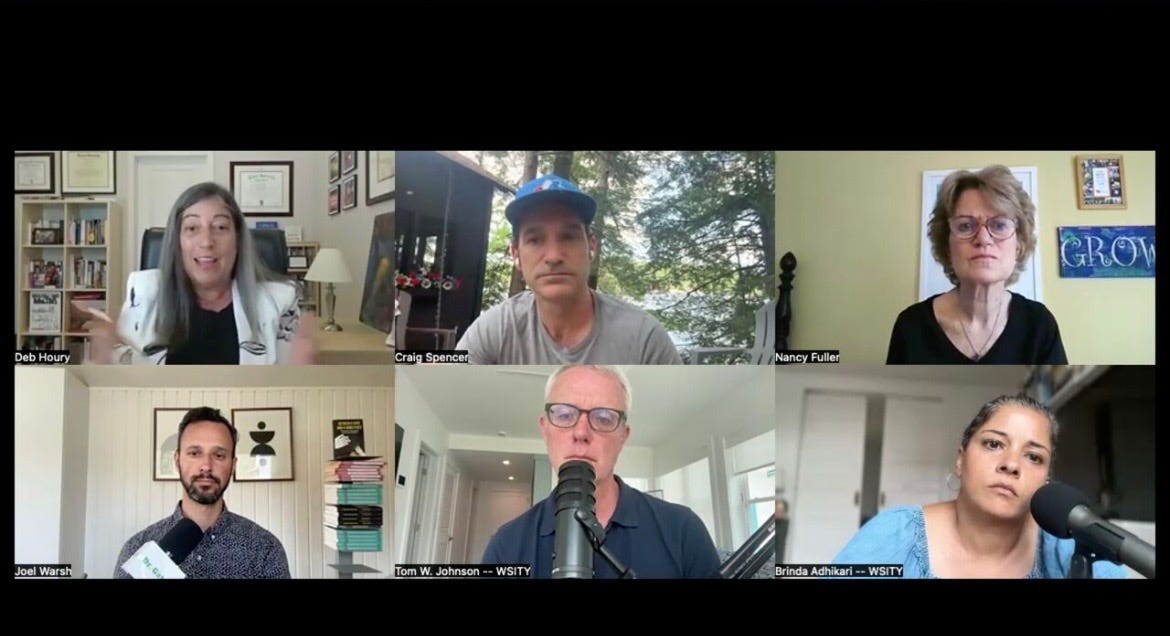
Bold, unfiltered, and uncompromisingly honest, Why Should I Trust You? is a weekly podcast that looks at the breakdown in trust for science and public health. It drops every Thursday, with occasional additional special episodes sprinkled in. Hosted by Brinda Adhikari, the former executive producer of “The Problem with Jon Stewart” and a former TV news journalist; Tom Johnson, the former executive producer of “The Circus,” and also a former TV news journalist; Dr. Maggie Bartlett, a virologist and assistant research professor at Johns Hopkins Bloomberg School of Public Health; and Dr. Mark Abdelmalek a skin cancer surgeon, a medical journalist and a dermatologist practicing in Philadelphia - each week we try to figure out what is behind this staggering collapse in trust and see if we can rebuild towards trust again.
Episode Guests Include:
Dr. Debra Houry. Dr. Houry served as Chief Medical Officer and Deputy Director for Program and Science at the CDC, AND as Acting Principal Deputy Director, making her one of the agency’s most senior leaders. She resigned last year over what she described as political and ideological interference at the agency. She now advises health departments and health companies and is a senior fellow at the Yale School of Public Health.
Dr. Craig Spencer. Craig is a regular on the show. He is an Emergency Medicine physician and Associate Professor of the Practice of Health Services, Policy and Practice at the Brown University School of Public Health. He writes for the Atlantic and the New York Times.
Nancy Fuller. Nancy is a mother of an adult son living with autism and epilepsy; she lives in Ohio and volunteered for the Kennedy campaign in 2024 and considers herself a MAHA mom.
And me of course haha.
Craig’s article mentioned in the podcast: Public Health Needs MAHA - The Atlantic
Thanks for reading Dr. Gator - Between a Shot and Hard Place! This post is public so feel free to share it.
No posts
Comments
Nothing yet. Say the first thing.
Sign in to join the conversation.