
I have no doubt that you’ve come across the subject of peptides. They sound like a miracle fix for a bunch of issues, but as always, there’s more to the story.
Today, I’m answering the most common questions about peptides and listing some of the more common.
A peptide is a string of amino acids that acts like a signaling agent inside your body. Think of amino acids as the letters of an alphabet and mix those letters together, you get a peptide that delivers a highly specific message to the cell.
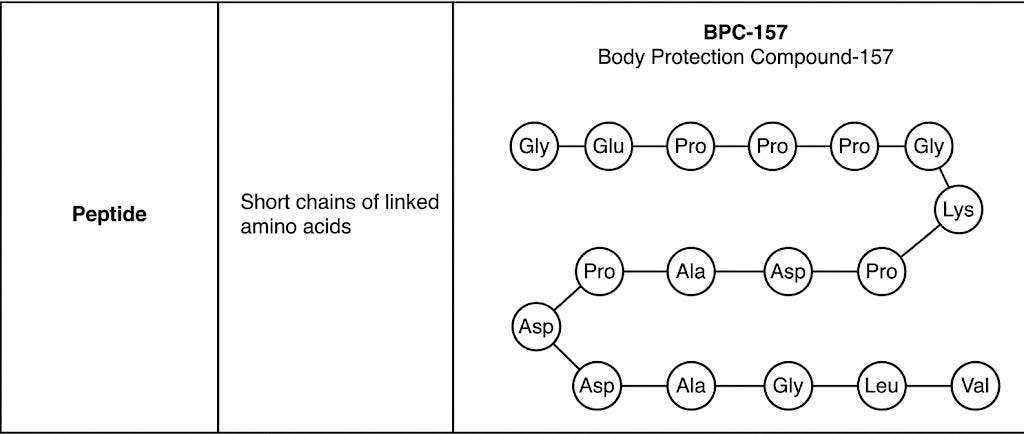
That message signals the cell to do something. After the delivery, the peptide quickly breaks down back into the individual letters, harmless amino acids.
Well, almost anything.
Different peptides target different systems through the cells they signal. Some signal your body to release more growth hormone, others accelerate tissue repair, some regulate your immune system, improve your sleep, or even change how your body handles sugar. Some peptides break down before they ever get to their targeted cell, so those do nothing.
For the most part, yes. Your stomach recognizes peptides as food and breaks apart those amino acids before they ever reach your bloodstream.
Oral or nasal peptides absorb through the mucosal layer and access your circulation, but injection remains the most reliable delivery system for peptides to reach their intended tissue.
Put simply, no.
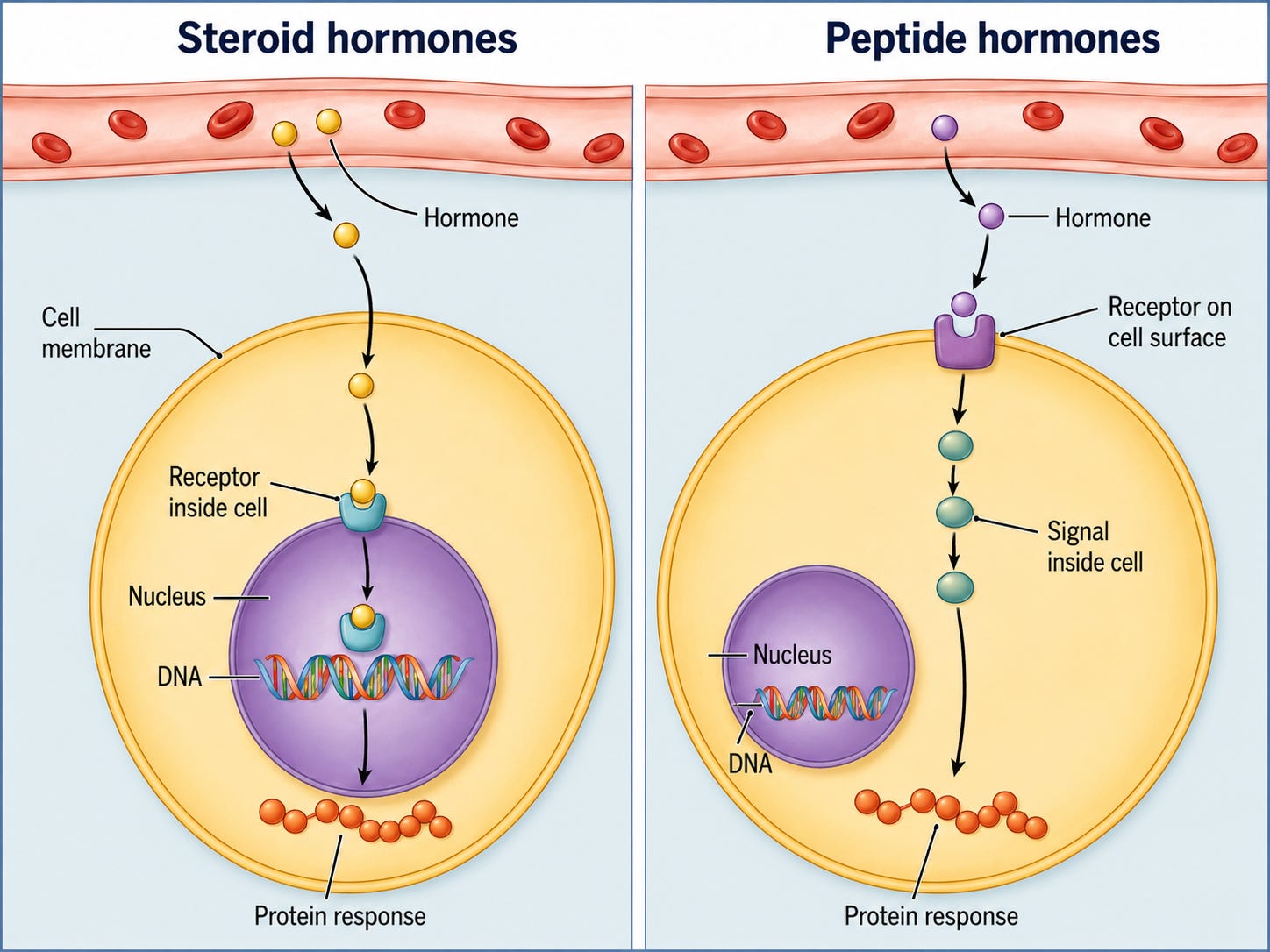
Peptides are tiny water-soluble particles that bind to cell membranes. Steroids are large, fat-soluble structures built from cholesterol that pass through the cell membrane and affect gene expression within the cell nucleus.
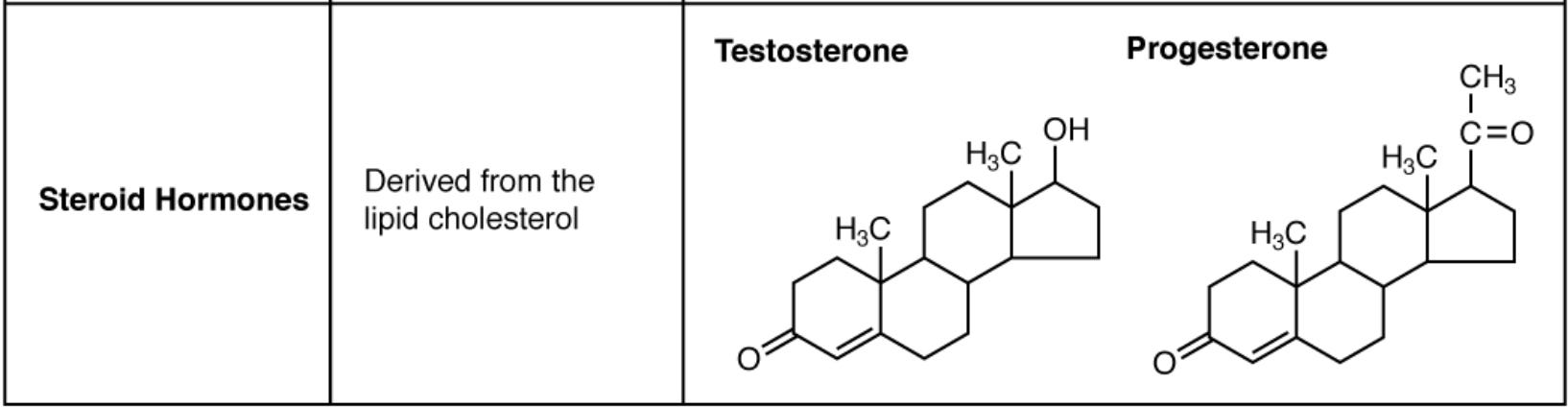
So, when people inject steroids, they’re replacing or mimicking hormones like testosterone or growth hormone. When people inject peptides, they signal cells to either increase or decrease the function of that cell by kind of knocking on the outside of the cell.
Testosterone-steroids supply testosterone hormone directly, whereas the peptide might increase the production of testosterone by telling the cell what to do. With peptides, your body still controls the output.
That depends on several different factors.
An FDA-approved peptide has gone through clinical trials with years of safety data behind it, making them pretty safe. We know the risks going in. Most peptides being discussed today have not gone through that process.
They’re sold as research chemicals, technically not for human use. But millions of people are using them. That doesn’t automatically make them dangerous, it makes it unknown.
Instead of the rigor of fact-check clinical trials, you’re relying on anecdotal experience by folks who might have ulterior motives.
That’s more complicated than a simple yes or no. Peptides sit in a gray area.
While most peptides can be purchased, the FDA forbids selling them for human use without approval. So, they get listed as “research chemicals” and sold in that legal gray zone.
Let’s run through the most popular peptides people are taking now and what they do.
BPC stands for body protection compound. It was discovered in and isolated from the human gastric juices. Kind of gross, but true.
Patients use this to accelerate the tissue repair of the slow-growing tissues like tendons or ligaments, deep muscle injuries, and have remarkable testimonies. Other folks with chronic gastrointestinal issues have found the reversal of these issues after several weeks of therapy.
They inject the peptide subcutaneously in the fat layer under the skin causing a systemic effect. People typically inject it at the site of their injury hoping for the blood to flood the area with healing cells linked to growth factor and the new blood vessels for these types of tissues.
TB-500 perfectly partners with BPC-157. While the BPC-157 is touted as targeting those localized healing for connective tissue, it’s TB-500 that links to muscle cells.
It promotes cell migration to damaged muscle cells, reduces the inflammation in that area, and improves the flexibility of the tissue. If you have a major injury, stacking these two together is widely considered the holy grail of recovery.
I’m most excited about this one. This peptide lingers just outside my reach in the late-stage clinical trials. It’s the most powerful weight loss drug I’ve ever seen.
Retatrutide hits GLP-1, GIP, and glucagon receptors simultaneously. The human trials have shown that the participants lose more weight with retatrutide and also catabolize less muscle mass.
It swiftly shifts their body into the maximum autophagy while increasing fuel to their brain.
My attraction to this research comes from what it seems to do in brains suffering from chronic metabolic diseases like Parkinson’s or Alzheimer’s disease. I can hardly wait to see what this does to my patients who are teetering on the edge of this problem.
Epitalon and Pinealon stacks together for anti-aging and brain health.
Epitalon regulates the pineal gland, it boosts some natural melatonin, and theoretically lengthens telomeres. Those caps on your DNA linked to biological aging.
Pinealon acts as a biological regulator that apparently protects the brain. It improves cognition, and together it’s claimed that they reset the circadian rhythm, improve deep sleep, and fight that cellular aging.
GHK-Cu, known as the beauty peptide. It’s a naturally occurring copper peptide famous for skin remodeling, collagen production, and even wound healing. It also tends to help hair grow. You’ll often see this one included in those high-end creams.
But, people also do inject it for a systemic full body anti-aging effect. Just know that injecting this one is notorious for feeling like a sting of a wasp.
Melanotan II. Often called the Barbie drug, Melanotan II mimics the hormone that stimulates melanin production. So, people use it to get a deep, dark tan without spending hours in the sun.
I would avoid this one. While you do get a good tan it stimulates melanocytes across your entire body, including the ones existing in your moles. With some case reports even progressing that mole into a melanoma, a serious form of skin cancer.
It also has the unfortunate side effect of causing spontaneous erections. This happens because Melanotan II binds to the central nervous system and inadvertently signals the lumbosacral spinal cord and brain centers responsible for erectile function.
In short this peptide activates a receptor system that affects multiple processes across the body. This undirected activation can cause problems from inappropriate erections to skin cancer.
Now, I obviously don’t recommend that you go out and inject peptides that you learn about on the internet. It’s easy to do damage if you don’t know what you're doing. If you're looking to improve your health try keto first.
No posts
Comments
Nothing yet. Say the first thing.
Sign in to join the conversation.