
GLP-1 medications such as Ozempic, Wegovy, Mounjaro, and Zepbound are the fastest-selling class of drugs in the history of medicine. Millions of people are on them right now, with millions more trying to get on them. The results in clinical trials are genuinely impressive. Patients lose weight, blood sugars normalize, cardiovascular risk drops, and I’m particularly impressed by what these medications appear to do in the brains of patients with addiction in their lives.
So what’s the problem?
What happens when you try to stop.
Study after study shows the same pattern: within a year of stopping a GLP-1 medication, the majority of the weight returns and the improvements reverse. Why? Because the drug was doing the work the whole time, while the metabolism underneath never changed.
And it’s not just in the medical literature. I see this with my patients all the time.
Let me tell you about a patient I’ll call The Trader.
In 2022, his blood sugar had climbed into diabetic territory. His doctors did what they were trained to do and pulled out the best tool in the modern diabetes arsenal: tirzepatide. They prescribed the highest dose available, 15 mg injected weekly.
But two years later, his blood sugar had not improved. It had actually gotten much worse. His average glucose climbed to 266. He didn’t lose any weight or experience a loss of appetite.
The strongest metabolic drug on the market, at the highest possible dose, made him measurably worse.
GLP-1 medications work by mimicking a hormone your gut is supposed to release after a meal. That hormone tells your pancreas to secrete insulin, tells your liver to stop dumping glucose, and most importantly, tells your brain that you are full. These medications slow stomach emptying so meals satisfy you longer. They also dampen the food noise, that background static in your mind that is always thinking about the next meal.
That last part is real. I’ve had patients tell me it is the first time in their adult lives they have eaten a meal and simply stopped eating without forcing themselves to stop.
But here’s what the drug is not doing: it is not fixing your mitochondria, it is not reversing the cellular damage that made your metabolism break down in the first place, and it is not teaching you the skill of being hungry but choosing not to eat.
It quiets the symptoms, but I contend that it does not heal your metabolism.
Back to The Trader.
His problems didn’t start in 2022, they started eight years ago with a diagnosis of colorectal cancer. After the following decade of chemotherapy, surgical bowel resection, and then a catastrophic fall that left him immobile for eight months, after all this his mitochondria were barely functioning.
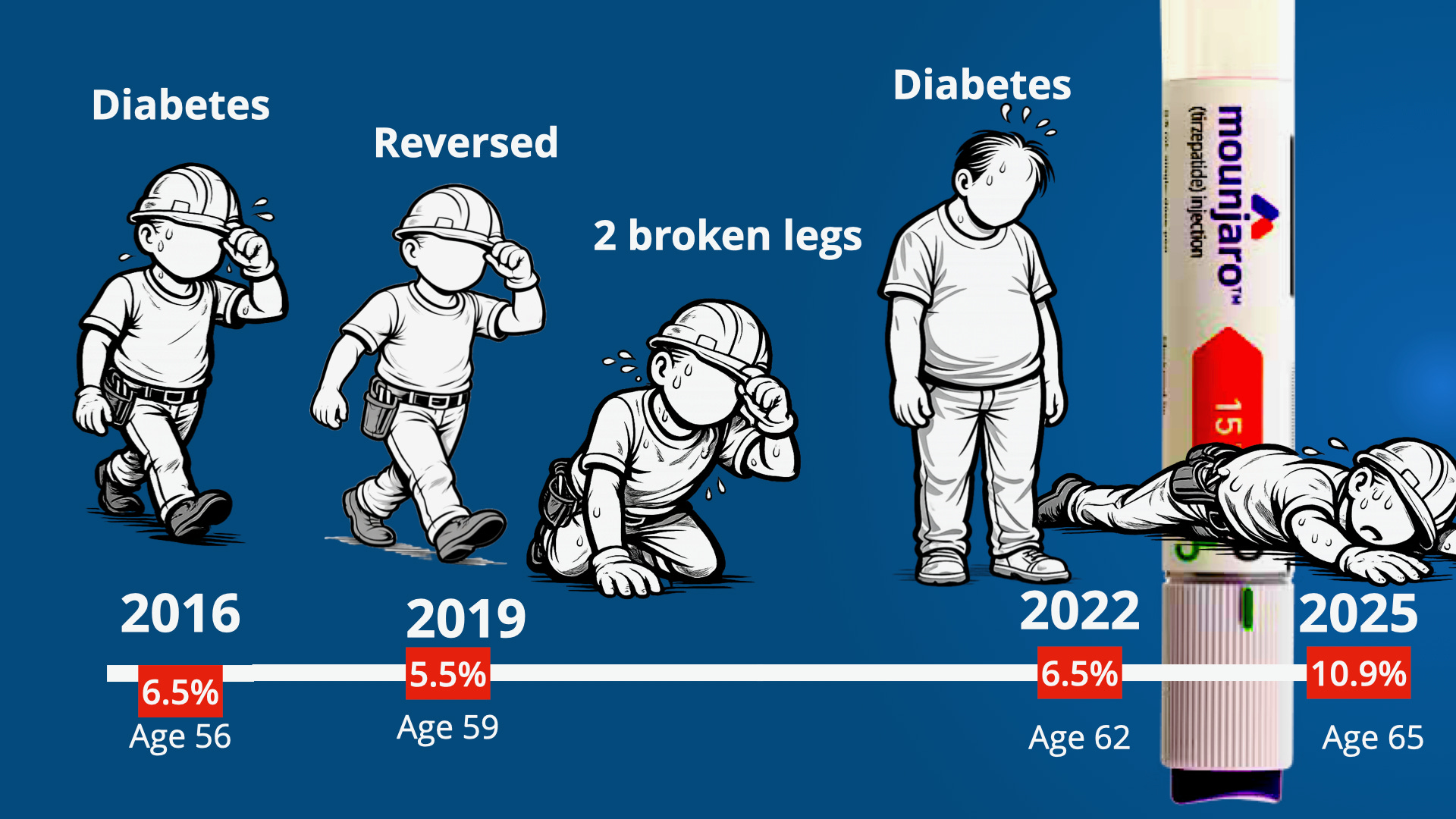
Healthy mitochondria inside your liver produce ketones. The mitochondria inside your muscle cells burn ketones and fat for fuel. When damaged, whether by chemo, trauma, or years of sugar toxicity, fat stays locked inside fat cells. Your body cannot access its own stored energy.
The Trader’s damaged mitochondria sabotaged the power of Tirzepatide. The drug attempted to optimize his crippled system, but it required significant repair before it could respond. He did not know that. So in a final attempt to fix his metabolism he gave up on the drug and water-fasted for 21 straight days. He tried as hard as anyone I’ve ever met. But his metabolism failed him. After 21 days of fasting, his glucose still smoldered at 108, and his ketones limped along at 0.7. Healthy patients achieve better results simply by skipping breakfast.
His cells could not access fat, so they consumed muscle instead. In my book, we call that starving. Fasting without a functional metabolism is just suffering. Stop that. Learn what The Trader did wrong.
When The Trader came to me, I did not impose a stricter protocol on him. I told him to eat.
Specifically, I told him to use a high-fat, low-carbohydrate ketogenic diet designed to trigger mitophagy, the cellular recycling process that clears out damaged mitochondria and builds new ones. If he wanted to get any results out of tirzepatide we had to get the basics working first.
Over the next three weeks, we tracked his glucose and ketones daily.
During week one his glucose dropped from 208 to 160, and he produced measurable ketones for the first time in years.
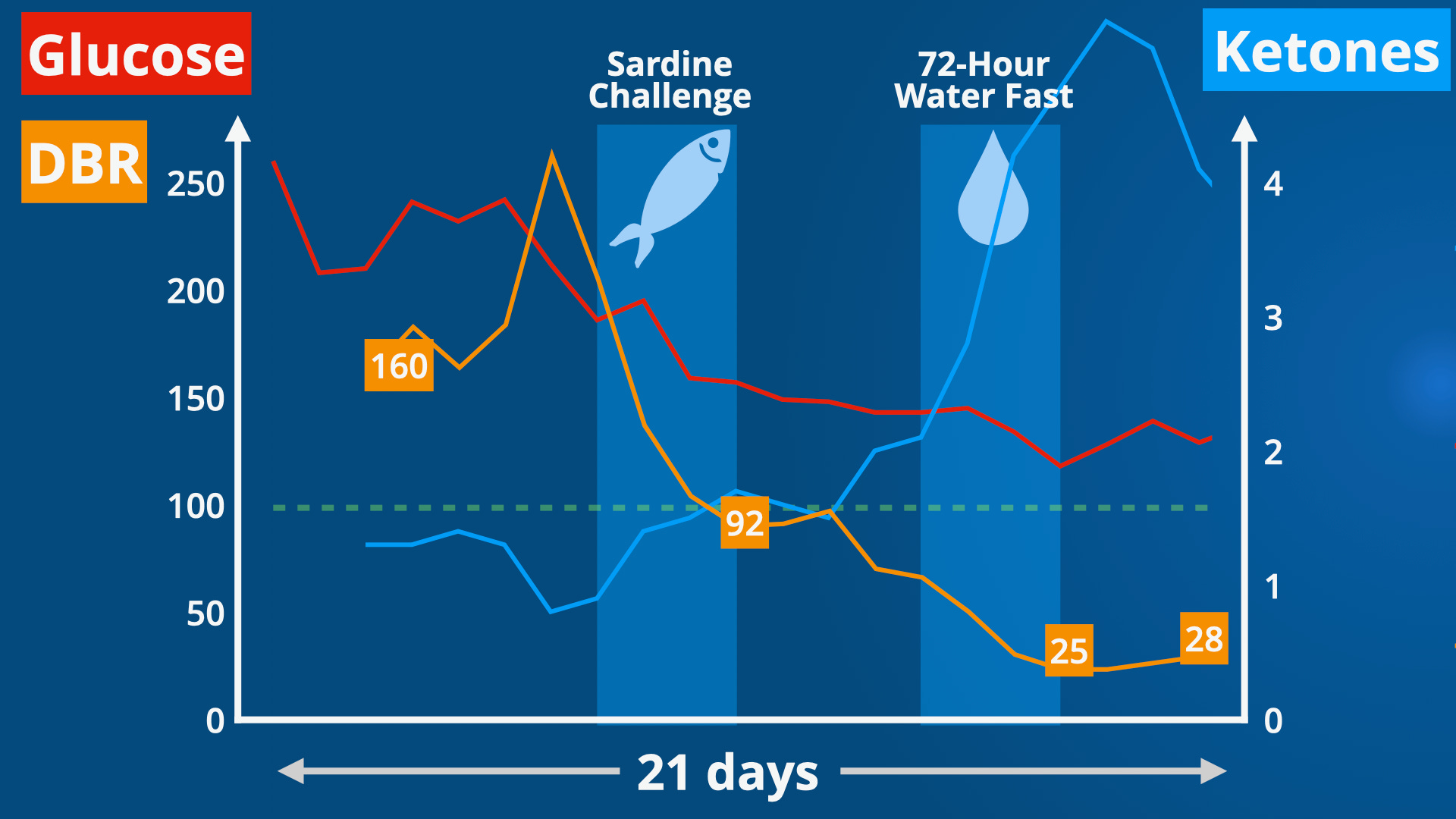
In week two, after three days of sardine fasting, his glucose dropped to 140 and his ketones rose to 2.0.
Think about that. One week of keto and three days of eating sardines produced three times the ketones that 21 days of water fasting had produced, because now the machinery could actually do its job.
In week three, after a 72-hour water fast his glucose dropped to 118 and his ketones surged to 4.7.
His mitochondria had been rebuilt. Now, when we applied the stress of fasting, it served as a stimulus rather than a trauma.
After three weeks of repairing his metabolism, I offered The Trader a 12-week extension with the same strict ketogenic diet, the same daily tracking, and one addition: tirzepatide.
At 0.6 mg per week, that was 4% of the dose that had done nothing for 2 years.
Over the next twelve weeks, The Trader lost 44 pounds. His food noise vanished. His ketones continued climbing. In December, his blood glucose dropped below 100 for the first time in years. His A1c went from diabetic to 6.0.
The drug did not change. His metabolism changed. Once the foundation was repaired, a microdose of the same medication that had completely failed him produced a transformation.
If you are currently on a GLP-1 medication: are you supporting the drug with an already heathy metabolism? Or are you riding the drug and waiting?
If it is the second one, I already know how your story ends. The drug stops, the weight returns, and you are right back where you started with a more expensive medical history.
The exit strategy from Ozempic is not a taper schedule. It is not a meal plan. It is not another medication.
Build a metabolism that no longer needs the drug.
That means building a bed of ketones and repairing your mitochondria before you stress them. The drug is a powerful tool. The Trader is proof of what is possible when it is used at the right moment in the right metabolic state. But that same tool, when used on a broken metabolism, does not fix it.
No posts
Comments
Nothing yet. Say the first thing.
Sign in to join the conversation.