
If you’re new to keto, you’ve probably heard advice that sounds completely contradictory.
“Eat more fat. Fat makes ketones and keeps you full.”
“Eat more protein. You’re getting older, and if you don’t, your body will lose muscle.”
“Don’t eat too much protein. It’ll turn into glucose and kick you out of ketosis.”
None of those statements are wrong. The mistake is assuming they all apply to everyone, all the time.
After treating hundreds of patients with obesity, autoimmune disease, cancer, epilepsy, and severe insulin resistance, I’ve learned that keto isn’t the same diet for everyone. It’s a progression. As your body chemistry changes, your healing plan should change accordingly.
The advice that gets someone through their first month isn’t necessarily the advice that helps them reverse twenty years of chronic disease. Likewise, what works for someone who’s metabolically healthy is not enough for someone trying to repair decades of damage.
There are a lot of highly motivated members in our community who make this mistake: they start keto, cut carbohydrates aggressively, and immediately add fasting without first teaching their body how to use fat for fuel. Incredible willpower, but this is the wrong approach.
During the early stages of keto, eating enough healthy fat gives your body energy while insulin falls and ketone production begins. Fat also provides the raw materials your body uses to make hormones such as cortisol, testosterone, and estrogen. Before your metabolism can efficiently burn the fat stored in your body, it has to learn to burn fat in the first place. This sounds simple: just eat a bunch of fat - indeed, it gets almost all of you into ketone production. However, the ability to burn fat for fuel depends on how excessive your insulin production was before you started Keto. Most of you in your 50s have been advancing your insulin resistance since your late teenage years. To reverse 30 years of this production surplus, you will need to keep the high-fat menu longer.
As your body becomes fat-adapted, important changes begin to occur.
Stored fat becomes available for energy.
Ketones start to fuel the body and calm inflammation.
Hormone production improves.
This is why the ketogenic diet can influence so many different symptoms at the same time. This stable energy production and rise in vital hormones affect every cell.
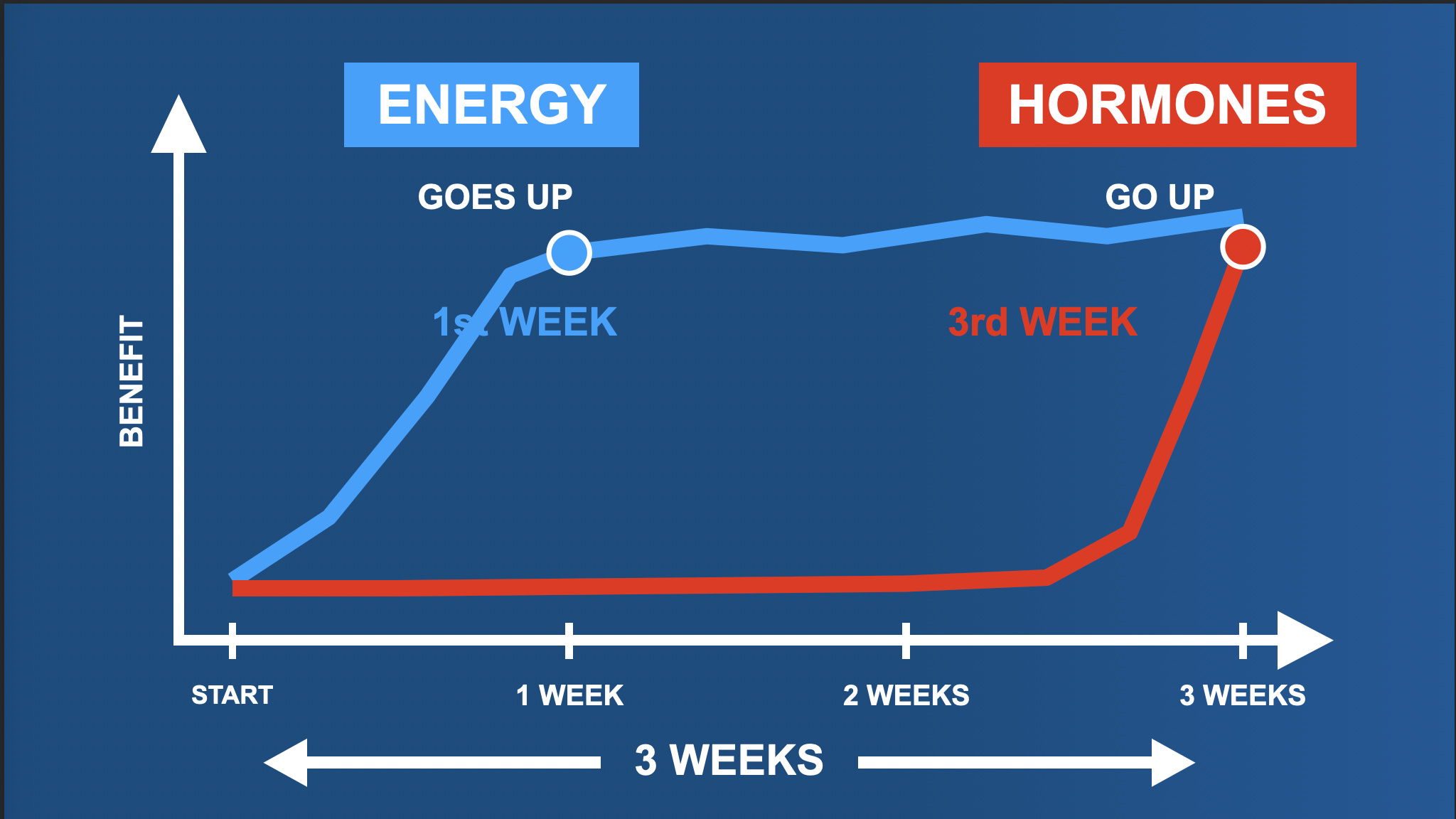
When fat intake is too low amid this transition, the warning signs appear quickly. Hair loss, dry skin, brittle nails, sluggish energy, depressed mood. These signs mean that the body is trying to adapt without enough fuel.
This stage of eating high fat triggered the first batch of cells in your body to begin burning it. Eating high fat to burn fat opened up the next stage of healing: using your own fat as fuel. The goal is to supply this powerful, superior fuel to all of your cells using your stored resources. Let’s move to the next stage of your Keto journey.
This is a common point of confusion: Will eating too much protein cause the body to convert it into glucose?
That process, called gluconeogenesis, is real. If you eat more protein than your metabolism can currently handle, your body can convert those amino acids into glucose, raise insulin, and lower ketone production. This is especially common in the carnivore world, where someone may eat only animal products yet still consume enough protein to interfere with ketosis.
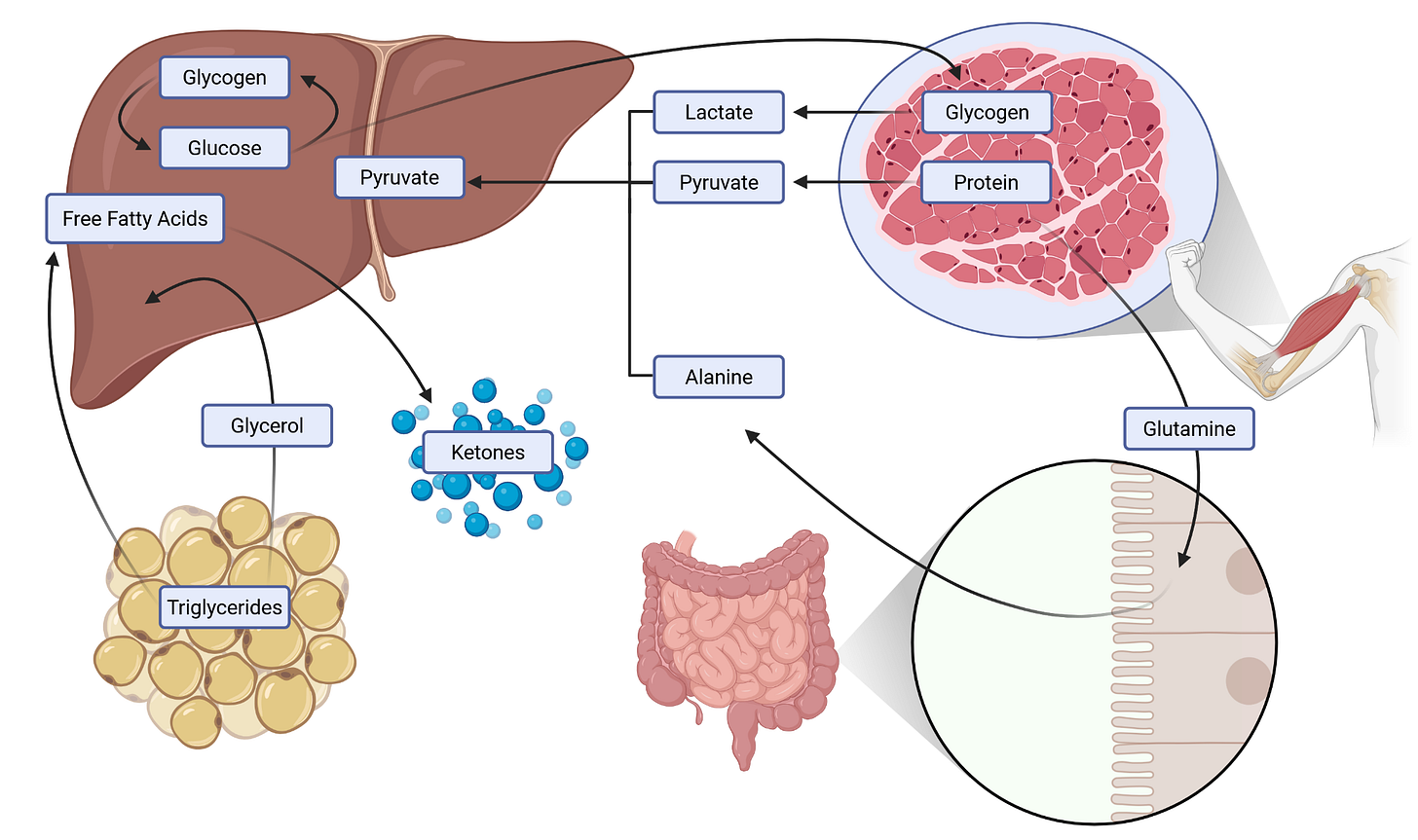
The right amount of protein depends on your current metabolism and your goal. Someone trying to reverse insulin resistance, autoimmune disease, or obesity may need to restrict their protein intake more than someone who is already metabolically healthy.
However, before I tell a patient to eat less whole-food protein, I like to get an overview of their current lifestyle.
Are they eating late into the evening?
Is their eating window too long?
Are they eating too often?
All three of these factors contribute to one big problem: they eat too much.
This problem prevents morning ketone production even when eating perfectly Keto food.
If morning fasting ketones remain low, excess food(including protein) is the problem.
Speaking of protein, we have to talk about protein powders. Just because the packaging says zero grams of carbohydrates does not mean the powder will have no insulin response. Powdered protein signals receptors in the upper digestive tract quickly and messages the endocrine system that food has arrived. These small, delicate particles of protein are unnatural. When nearly all of the receptors are saturated with powdered protein, this translates to a massive consumption of whole food protein.
1 scoop of powdered protein = 100% of the receptors filled → body converts excess amino acids into glucose (moderate to high insulin production)

20 oz of steak = 30% of the receptors filled → minimal insulin produced

If extra insulin still burns through your veins, you triggered massive disruption with that scoop of protein powder. Save your money. Don’t buy powdered protein.
As you get older, the quality of your protein becomes just as important as the quantity. Sarcopenia, the gradual loss of muscle mass and strength, threatens every aging person. Preserving muscle requires enough leucine, the amino acid that signals your muscles to repair and rebuild. Whole animal proteins, especially beef and other ruminant meats, provide abundant leucine, while collagen powders provide very little.
Your protein target is not the final authority. Your morning fasting glucose and ketones help determine whether your current intake supports healing or quietly sabotages your progress.
Let’s teach you how to eat enough protein to preserve muscles. This means you must produce ketones while you sleep.
Eventually, something interesting happens.
The food rules that helped you begin keto become less useful. That first crop of cells can no longer carry your body alone. You need more cells on the fat-burning side of the equation. Stop asking how many grams of fat or protein you ate. Start studying your metabolism first thing in the morning. This will predict what your body did while sleeping.
People make fun of me and call me a “number chaser,” but morning fasting glucose and ketone numbers matter.
Ketones measured later in the day mislead you. Once you start moving, exercising, or going several hours without eating, ketone levels fluctuate. Someone can also raise an afternoon reading by taking exogenous ketones or timing the test carefully. A good afternoon number does not necessarily tell me what the metabolism did overnight.
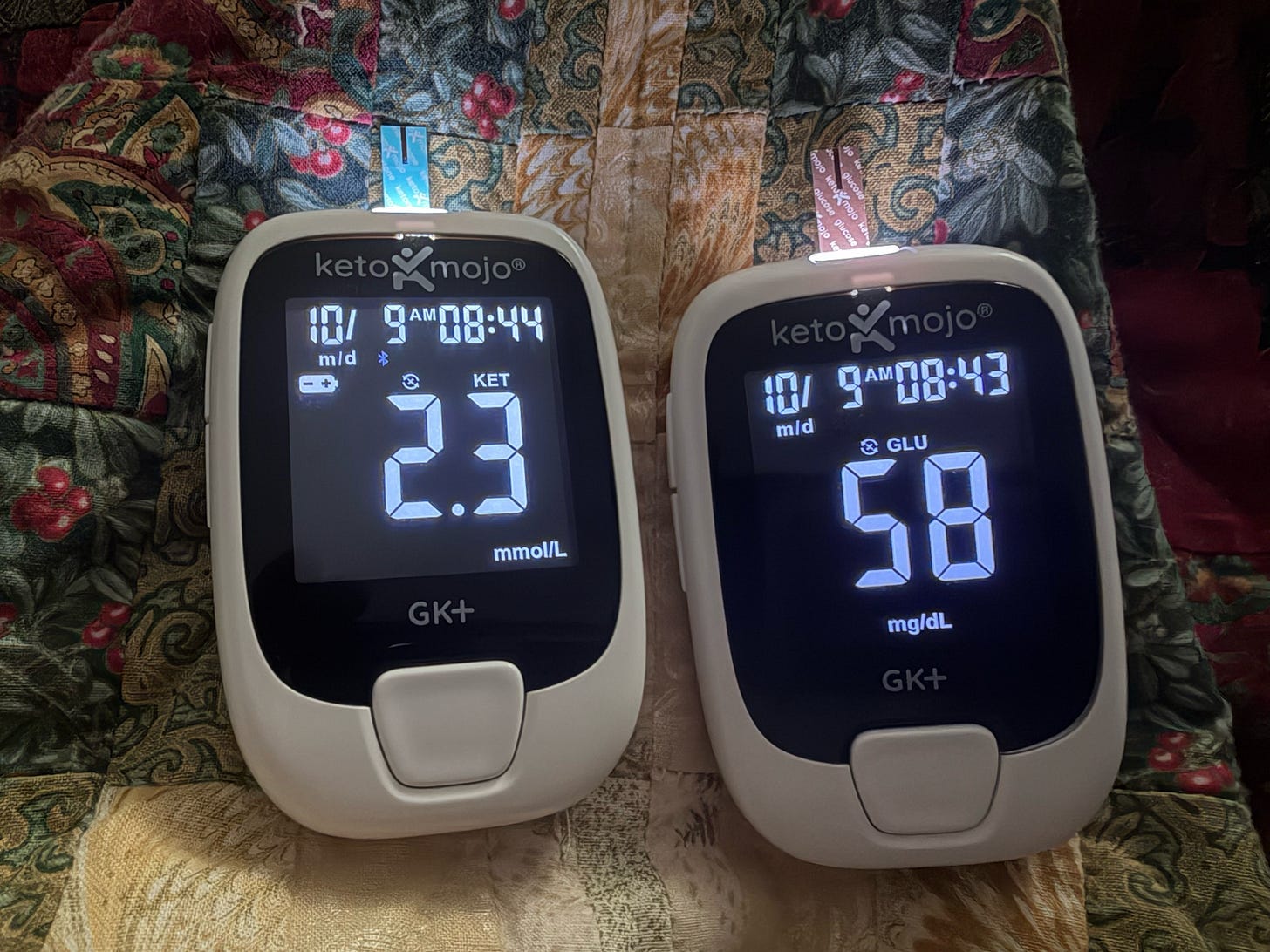
The morning fasting number tattletales on you. It reflects what happened during the hours you slept. In a healthy metabolism, glucose gradually settles overnight while ketones rise to cover the fuel gap. In a metabolically sick person, the decline in their glucose extends hours beyond a normal person. Some patients who eat at noon finally achieve their baseline blood sugar 7 hours later. This extended elevated glucose also kept their insulin high. Only when insulin returned to single digits could they make ketones.
Burning fat for fuel and recycling damaged proteins while you sleep is the holy grail to reverse chronic problems. We cannot directly measure autophagy at home, but morning fasting glucose and ketones provide the math to best estimate.
For people reaching for complete metabolic recovery, the morning numbers are essential. Losing the first twenty, fifty, or even one hundred pounds may happen quickly because carbohydrate intake drops and insulin improves. But reversing chronic metabolic problems requires more than the first easy win. The body needs enough time in ketosis to repair what took years to damage.
A morning ketone level of 0.7 or above indicates you were making ketones while you slept. Repeated morning readings of 0.2, 0.3, or 0.4 suggest the body fails to reach adequate ketosis consistently.
You don’t need to chase the highest possible ketone number every morning, but the morning numbers tell the truth about your metabolism. Just because you stick to keto doesn’t mean your body heals the way you’d like it to. Travel, poor sleep, late-night eating, frequent meals, and long stretches without metabolic stress can gradually reduce ketone production.
I use a press-pulse strategy. Most of the time, I maintain a sustainable ketogenic rhythm. Periodically, I press the metabolism harder. I pull a lever to stress my mitochondria. I fast longer, use a sauna, or exercise to use circulating ketones and move glucose. Then I return to my normal routine.

These periodic stressors remind the mitochondria how to produce ketones so the metabolism does not slowly slide backward.
For a metabolically healthy person, checking morning fasting glucose and ketones once weekly confirms your strong motors inside your cells. For someone treating cancer, seizures, autoimmune disease, or severe insulin resistance, you must study more closely.
I eventually tell patients to stop letting macro calculators make every decision. Two people can eat the same amount of fat and protein and produce completely different morning numbers. Check numbers every morning until you restore health.
Eating enough fat is important at the beginning of your Keto journey, but this stage should not last forever.
There is no single correct Fat-Protein intake ratio; it depends on how metabolically healthy you are. Check your numbers, then decide if you can have more protein.
Stay away from protein powders if you are metabolically sick - it will raise your insulin.
Morning numbers are the most important metric. Make sure your body makes Ketones while you sleep.
Create metabolic stressors on top of the usual Keto diet: fast, exercise, sauna.
Subscribe for the weekly articles and the Dr. Boz Office Hour - where you get to ask me in-depth questions about Keto and health!
No posts
Comments
Nothing yet. Say the first thing.
Sign in to join the conversation.