
One in three Americans have this deadly disease. I don’t need a lab or a tissue biopsy to diagnose you. I can spot insulin resistance from across the room.
What does insulin resistance mean? It means your body has grown resistant to the message insulin is sending. You’ve made way too much insulin, for way too long.
Insulin is required for life. Our privileged lives filled with abundant food make it really easy to make too much of it.
When insulin runs high for too long, it stimulates growth. It makes things grow that shouldn’t. That inappropriate growth causes strokes, heart attacks, and kidney failure. It ages the body at hyper speed, driving brain and memory problems like Alzheimer’s, Parkinson’s, and other kinds of dementia. Years of excess insulin feed arthritis and cancer. And most patients have no idea.
Lists of criteria help doctors diagnose insulin resistance. After 20 years of seeing these patients, I can spot them from across the room.
Let’s start with the easiest one. When insulin is high, the body fills its storage cells with fat, and parks that weight right around the belly button. As those cells fill, the weight climbs. Once someone packs on enough fat to push their body mass index over 25, they almost certainly have insulin resistance.
It’s a dead giveaway when there’s darkened skin on the back of the knees or in the creases of the elbows. If the skin on the back of the neck looks dark, it’s not dirt. It’s extra skin cells piled too high for too long, and they overgrew because of insulin. Let it go long enough and the skin star
ts making appendages, or skin tags. Biopsy that thickened skin, or one of those skin tags, and you’ll find sugar packed in between the cells. Insulin put sugar wherever it can find. And where there’s sugar, yeast grows, right in those dark, moist folds. That’s a yeast infection. From armpits to vaginas, a yeast infection is a dead giveaway of insulin resistance.
Healthy ankles show off with beautiful bony prominences and a slimming, tapering leg. Swollen ankles are a sign of poor health. When health problems leave fluid stuck in the ankle, the shape changes. You can’t see the bones that normally define it, because they’re buried under fluid. Sometimes there’s enough fluid to leave a sock line, or a crease across the front of the ankle. All signs of trouble.
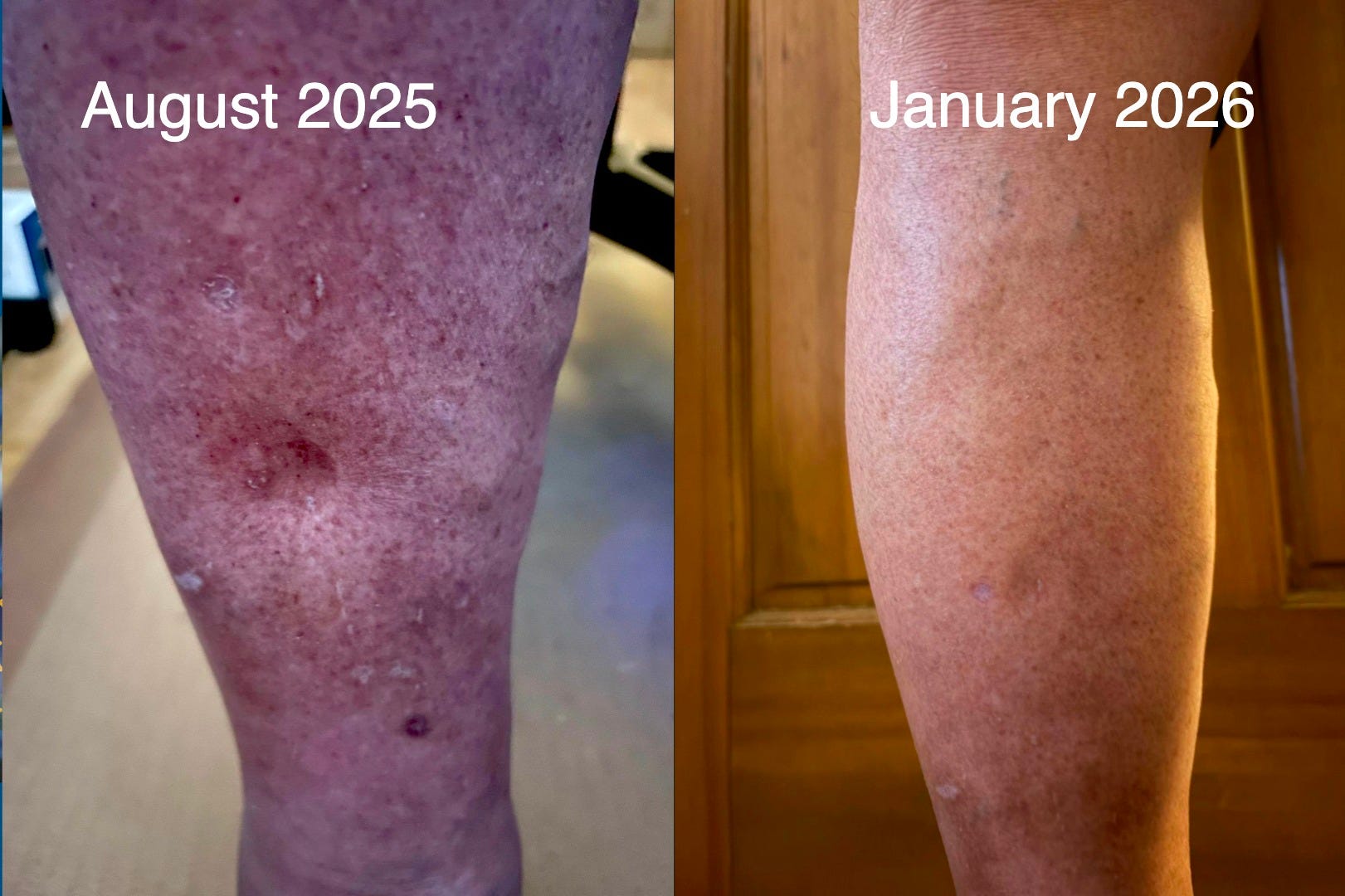
Check this one on yourself. Find your shin bone, then the spot about three inches north of your ankle. Push down really hard with your thumb and hold it there for 30 seconds. When you take your thumb off, a healthy shin has no impression. If you’ve got early insulin resistance, there’s a thumb print left on your shin.
Some signs don’t show from across the room. Insulin resistance drives blood pressure up, and it leaves people tired after they eat carbohydrates. But there’s one I can hear. About 30 to 40 minutes after someone swallows a plate of carbs, their speech changes. Listen to how they enunciate their words. A slight swelling in the brain sets in, and the cadence slows, almost a slur. It’s a solid clue about the health of their insulin.
If you’re still not sure, there’s one surefire way to know. It’s a test you do at home, and it’s cheap. Test your Dr. Boz Ratio.
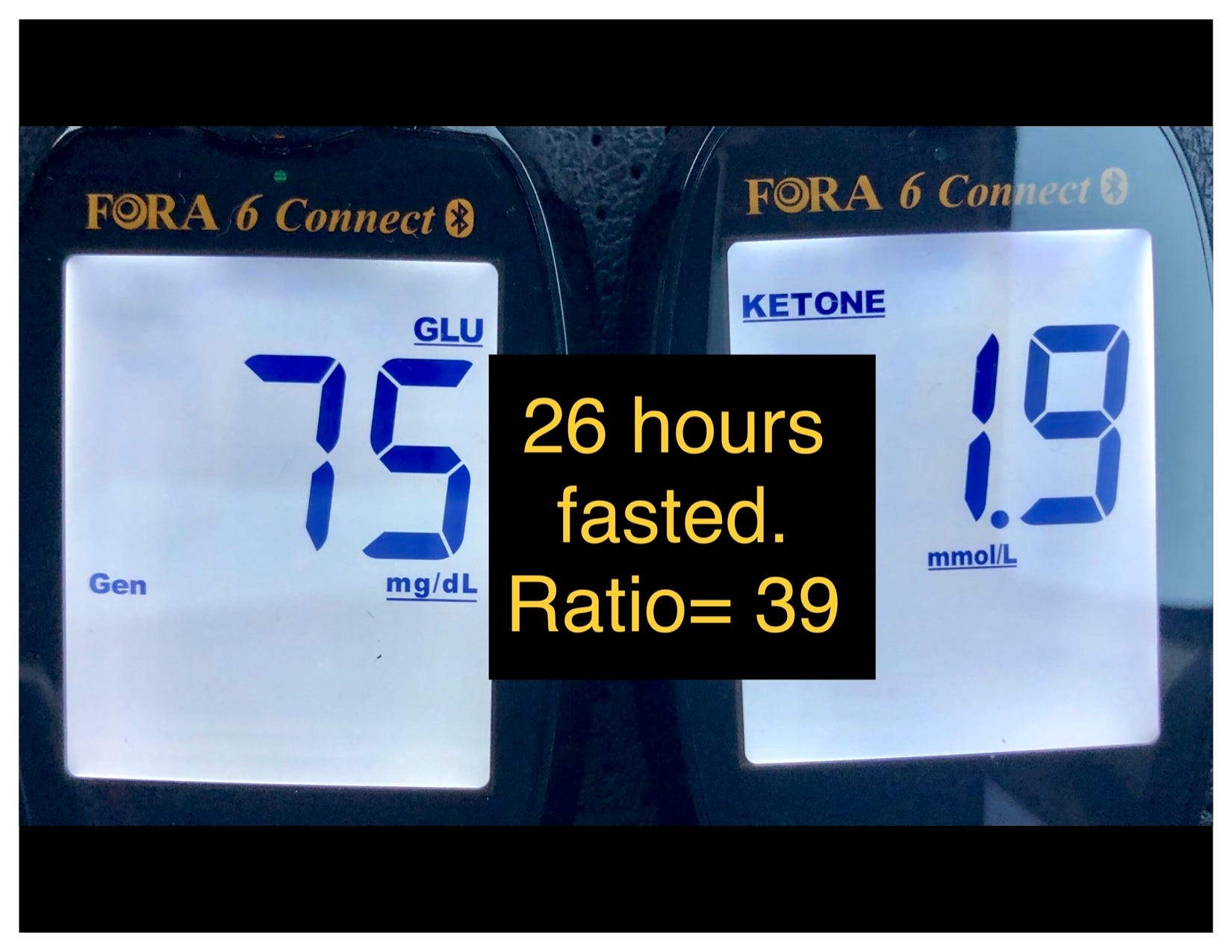
Insulin itself is a messy thing to measure. It’s very volatile. So instead of chasing insulin directly, we measure the Dr. Boz Ratio: Glucose/Ketone. The lower the Dr. Boz Ratio, the lower the insulin.
If your morning Dr. Boz Ratio is under 40, and it’s been at least 12 hours since your last bite, you don’t have insulin resistance. Between 40 and 80, I start to worry. Over 100, you’ve got it.
The best part of this number is that it does more than diagnose you once. It lets me watch your insulin change over time. A single insulin lab cannot do that.
The diagnosis of insulin resistance means the rules have changed in your body. You gain fat more easily, and the strategies that kept weight off in your younger years may not work the same way anymore. Luckily, the new rules do not require Navy SEAL discipline or an extreme exercise routine.
You may have heard me say that your body does not count calories. That is true. But that does not mean you are unaccountable for what you eat. It means calories are not the signal I want you obsessing over.
I want you watching insulin.
Before your body can efficiently store incoming energy as fat, insulin has to be elevated. Insulin is the hormone that tells your body what to do with the energy you just ate: move glucose into muscle, refill glycogen in the liver, or store excess energy in fat cells.
We can see how powerful that signal is by looking at what happens when insulin is missing.
People with Type 1 diabetes do not make enough insulin on their own. Without adequate insulin, glucose builds up in the bloodstream while the cells struggle to access that fuel. The body responds by breaking down fat at an extreme rate.
There is even a dangerous eating disorder called diabulimia, in which a person with Type 1 diabetes deliberately under-doses insulin to lose weight. Without enough insulin, they can eat enormous amounts of food and still lose weight because their body cannot properly store and use that incoming energy. This is life-threatening. Without enough insulin, ketones can rise uncontrollably and lead to diabetic ketoacidosis.
The problem in insulin resistance is the opposite. Instead of having too little insulin, your body is making far too much of it, too often. That persistent insulin signal keeps directing energy into storage and makes it harder to access the fat already sitting on your body.
For everyone trying to reverse insulin resistance, you need to ask: how much insulin does eating a meal require?
And three things about your food determine that answer: the type of food, the amount of food, and the timing of the food.
Here’s the secret. Every single morsel of food that you swallow stimulates insulin. Yep, that’s a fact. Stop eating food altogether and you produce no insulin. Before you go on a hunger strike, sort your food into three categories: carbohydrates, protein, and fat.
Of the three, carbohydrates squeeze the most insulin out of your pancreas. They cause the fastest, most robust rise there is. Protein comes in second, slower, and it doesn’t peak as high. Swallow fat, and your insulin rise is the slowest and the smallest of all.
So we eat fat first, and a lot of it. Don’t look at the calorie count. Fat has the lowest production of insulin, and it’s the best return on energy per bite. Eat fat while your insulin is low, and it really boosts your metabolism.
I’ve run experiments where I added a quarter cup of MCT oil, medium chain triglycerides, to my day. That’s 500 extra calories, and I still lost weight, because the low insulin let my metabolism run. So eat the fat, and keep those carbs low, under 20 grams per day.
Years of chronically elevated insulin will take years to reverse, so stay focused on the high fat. Oh, that’s the keto diet.
The type of food is only part of it. The size of the food matters too, and by size I mean the particle size of what you eat.
If you grind up your carbohydrates, protein, or fat, all of them stimulate insulin. Pulverize a carb and you get the biggest insulin spike of all. What’s a pulverized carb? Flour, cornbread, sugar.

If you’re insulin resistant, you’re already overproducing this hormone, and those protein shakes aren’t doing you any favors. Grind your protein into a powder, blend it into a shake, and you’ll spike your insulin as much as a handful of carbs.
Even fat does it. Anything made from coconut or almond flour will spike insulin. The label says low carb, high fat, high protein. Your body makes the insulin anyway, and if you’re insulin resistant, it stays high for hours.
Remove processed carbs from your menu. Chew your protein, and chew your fat. You can’t chew your food into the tiny particles found in that processed food.
Your pineal gland senses the sun coming up. It’s hardwired into us. That sunrise sets off a rise in cortisol, your brain reading the light, and cortisol tells your liver to release stored glucose into your blood. It’s a bump of fuel every morning, running on your circadian rhythm, meant for the first moments of the day.
If you’re insulin resistant, you top the charts. You and the diabetics put out the highest morning blood sugars of anyone. That high blood sugar squeezes your pancreas for insulin, and you never even swallowed a bite. That’s a dirty trick when you’re trying to reverse things.
You can’t get away from that rise in insulin. It’s linked to the rise in the sun. But you do control one thing: when you eat.
My insulin resistant patients do great when they only eat in the mornings. I know that’s a hard sell, so I start them with one rule.
Eat when the sun is up. If you get home at night and the sun’s already down, it’s too late to eat. Eat at that hour and you keep insulin and glucose high all night, which makes the next day even harder. That’s how the cycle feeds itself, and the whole thing turns into a nightmare.
Protect the dark hours from food. Leave time for your body to recover. Your timer restarts at sunrise. The more empty hours between your last bite and sunrise, the better you’ll do.
If you’re trying to reverse insulin resistance, stop making insulin. Eat mostly fat with a sprinkle of protein. Eat whole foods, not processed foods. And slide those calories as close to sunrise as possible.
Then keep checking that morning Dr. Boz Ratio, and watch the number fall as your insulin comes down.
Subscribe for the weekly articles and Dr. Boz Office Hours - where you get to ask me in-depth questions about keto and health!
No posts
Comments
Nothing yet. Say the first thing.
Sign in to join the conversation.