
Those of you who read last week’s edition might be surprised, after I proclaimed I was taking two weeks “off” to work from my family’s farm.
That I in fact… did not.
I made it 3 days, then I was called back to the UK for 24hrs for a board meeting that needed a body in the room, rather than a Zoom square. It’s for an incredibly exciting project I still have to keep quiet about, so it was worth it, but it was quite a process.
What I do need to record now, mostly as a warning to future me, is the trip itself…
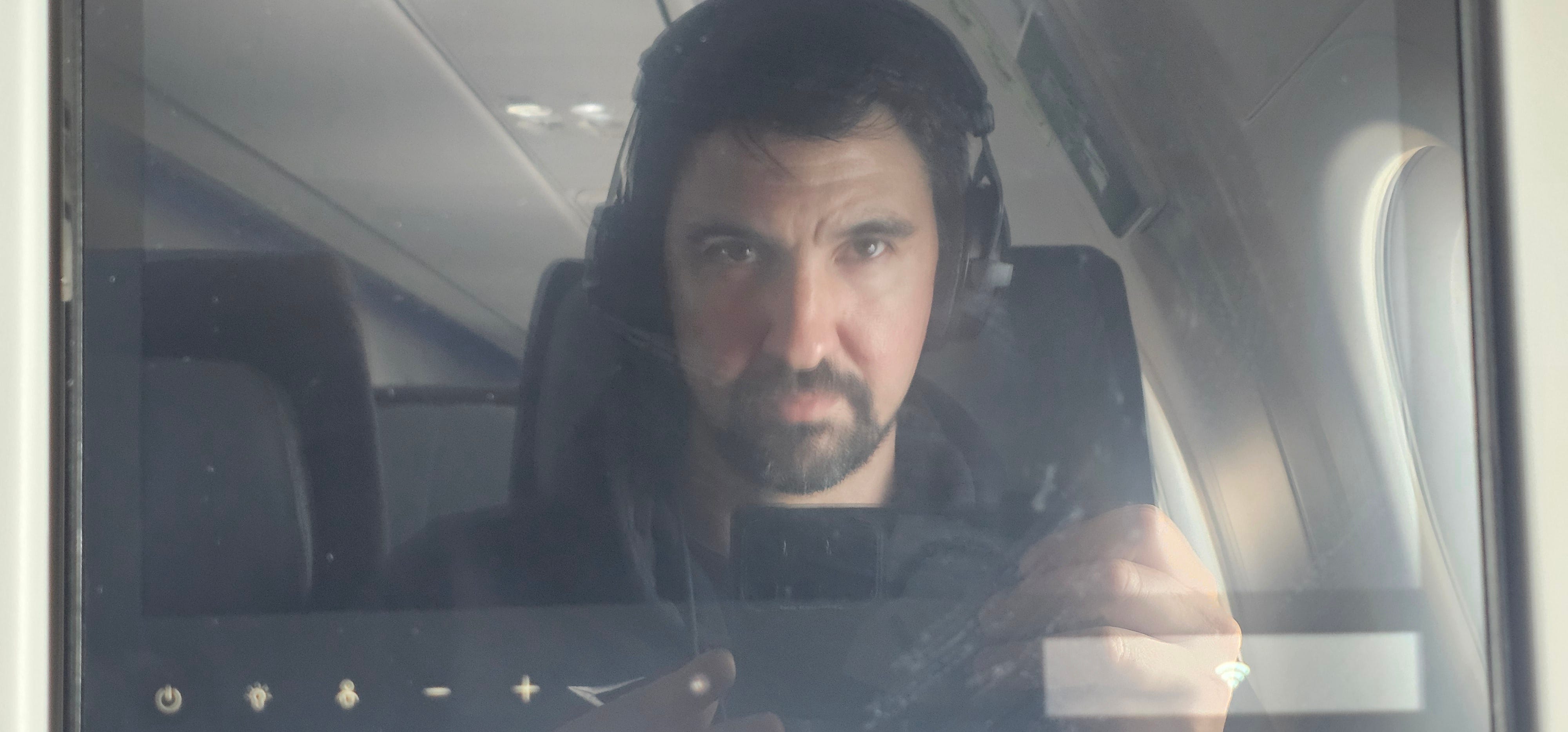
On Tuesday, I woke up at 5am - my normal wake-up in the USA, which conveniently syncs with a UK’s 10am (five hours ahead). Worked the full day, then took a 5pm flight from Dulles to Dublin.
I used the outbound leg to get last weeks video out, I did a solid seven hours of editing, because - according to my body clock - it’s still daytime at home.
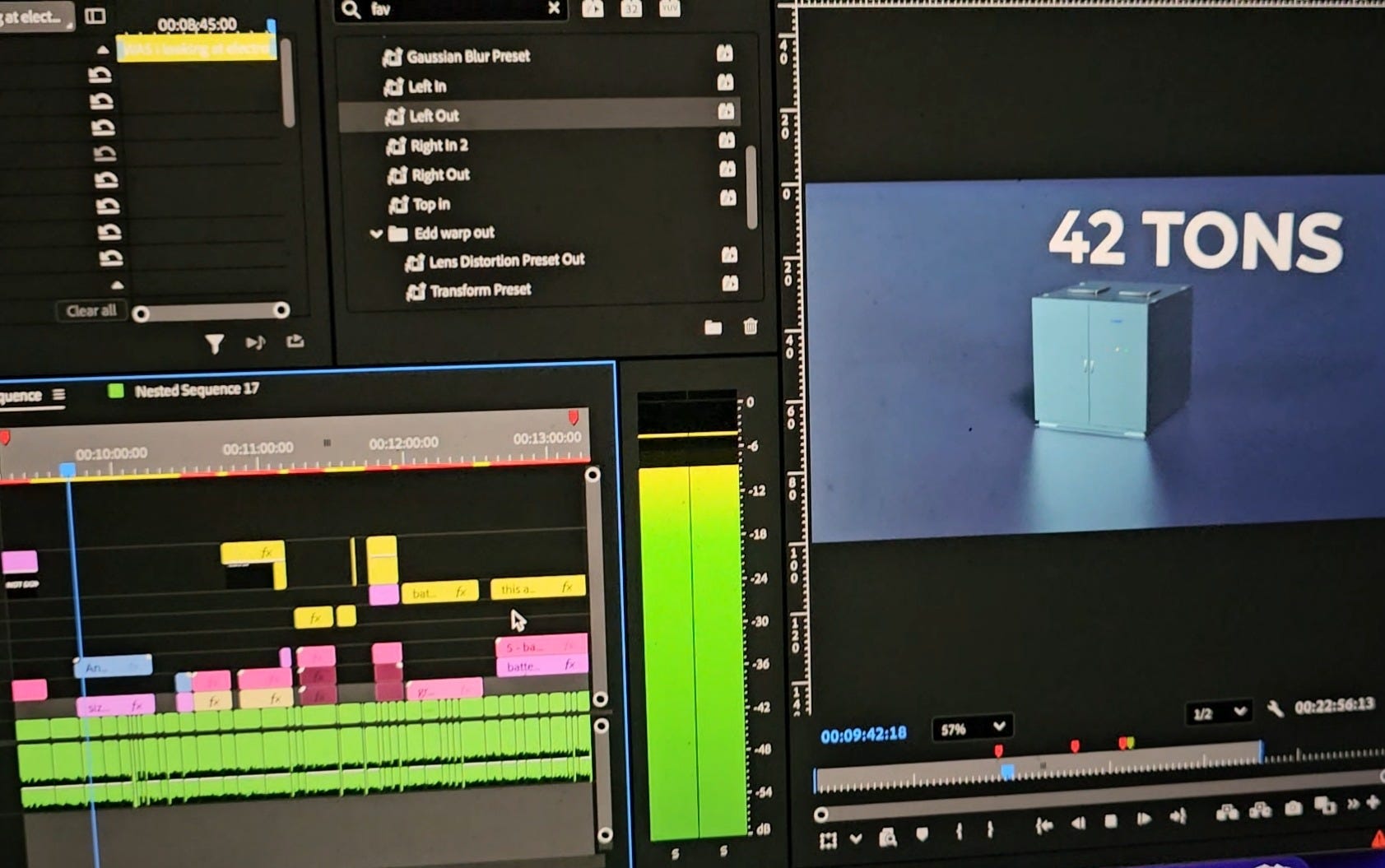
Then landed in Dublin around 11:30pm US time - which immediately became 4:30am UK time. And I immediately realised my mistake.
Now, the sun’s coming up, I make the transfer for the 40-minute hop over to Manchester for my meeting. I have to prep for the board meeting on the flight. We land a 7:30am.
Taxi gets me into the city for 8:45am, I nap for 20 minutes in the cab which might have saved me, shower in a local PureGym (not a sponsor), then straight into the board meeting that starts at 10am. It lasted six-hours…
(There was a break in the middle for photos which was a welcome reset)
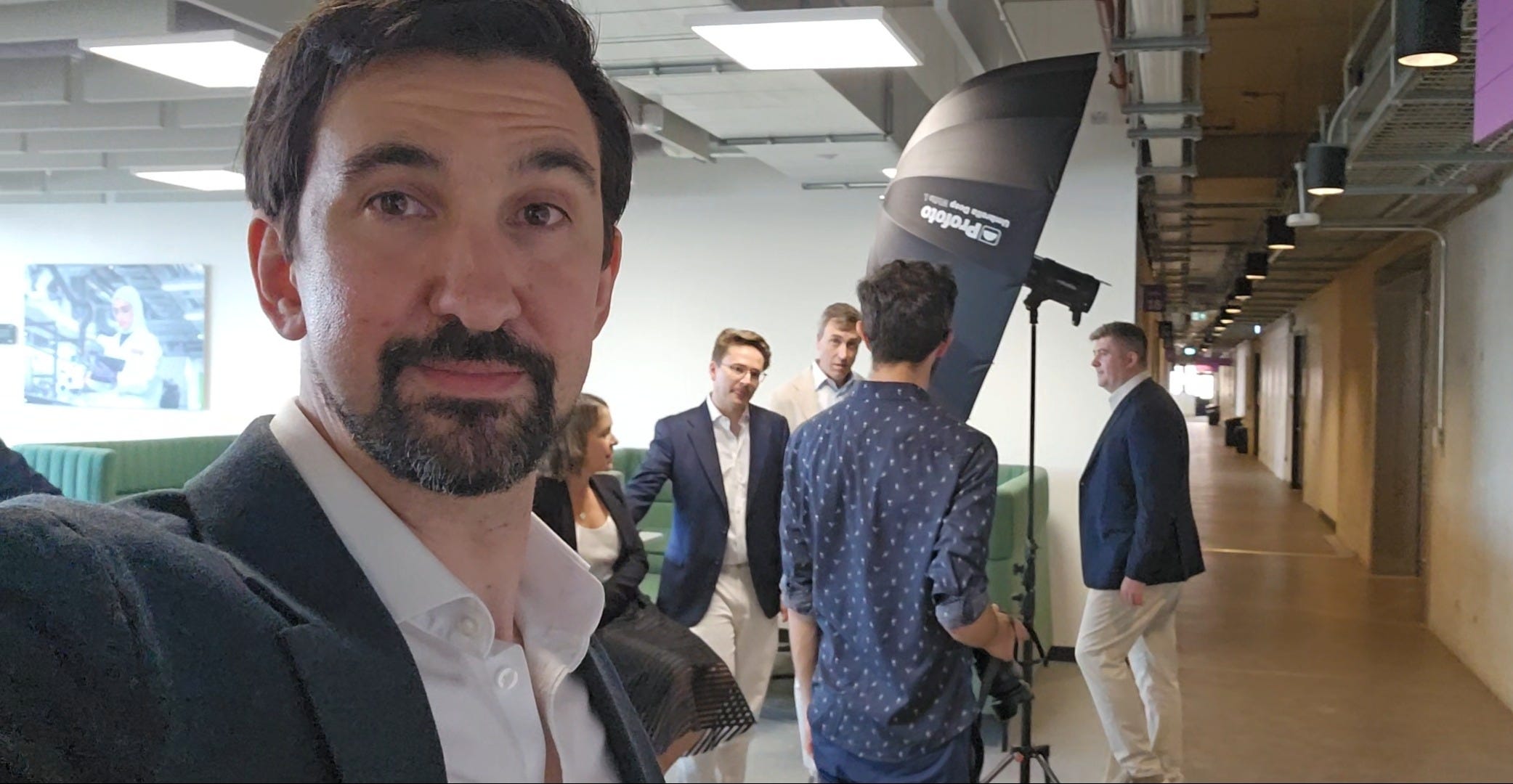
I checked into the hotel and took a quick shower because by that point my soul was visibly trying to leave my body.
Then headed straight into an evening editing shorts and thumbnails with my Manchester-based producer, in a venue that can’t decide if it’s a coworking space or a student bar. But you can buy pineapple juice for £1.50.
We wrapped at 7ish, when I realised it had taken me a solid five minutes of counting on fingers to work out I’d just run a ~32-hr working day, minus two twenty-minute naps.
Not a brag (I don’t recommend it to anyone) but it’s oddly useful to know it’s survivable. And, I hope to literally never test this again.
Europe’s biggest bet on the sun in a bottle
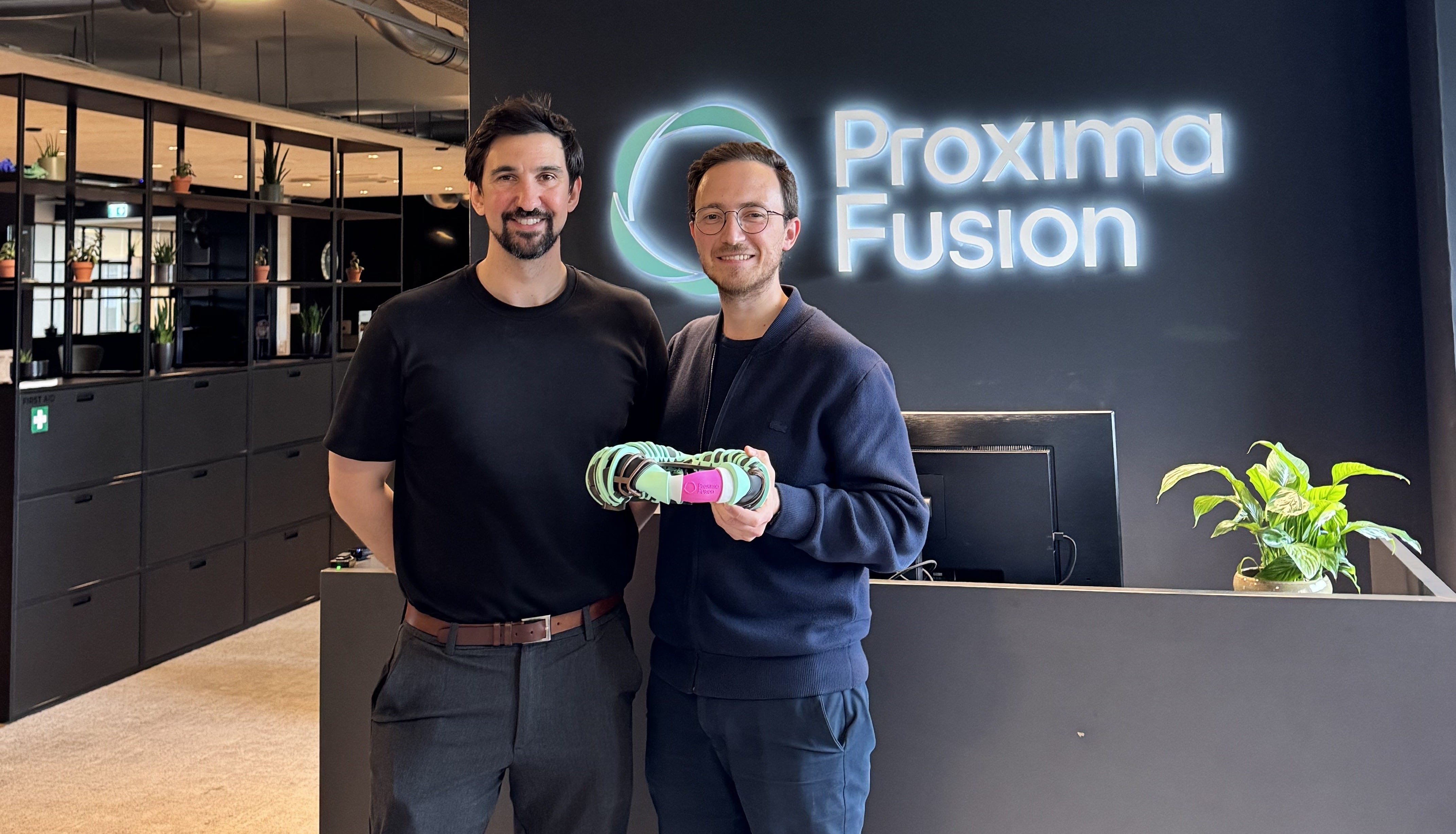
This week, Proxima Fusion closed a €411 million round, taking their total raised to over €650 million in under three years and pushing their valuation to €2.4 billion - the largest and best-funded fusion company in Europe.
I should say upfront that I’m not a neutral party here - I invested as part of this last round - (not about to do a Steven Bartlett and pretend I’m talking about this unbiased). But regardless let me tell you the story behind it and what impressed me, because the story is worth telling, regardless of my cap table position.
So what’s the story?
Most fusion companies you’ll have heard of are chasing tokamaks - the donut-shaped reactors that try to create the same conditions as inside the sun in order to fuse deuterium and tritium and produce clean power.
The plasma is where the actual fusion happens: heated past 100 million degrees, hot enough that nothing solid can touch it and survive. Controlling that plasma matters because if it drifts into the reactor wall, it cools instantly and the reaction stops (while also melting the wall of the reactor) - so you need a magnetic “bottle” strong enough to hold it.
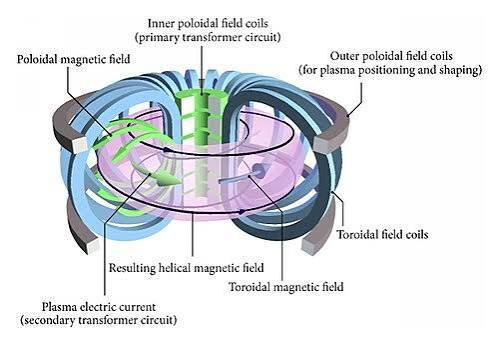
In tokamaks they control the plasma with a series of toroidal field coils around the outside as well as a central electromagnet. That central electromagnet continuously increases in strength in order to induce a circulating current in the plasma.
That circulating current then generates its own magnetic field, which when combined with the reactors outer toroidal field magnets keeps the plasma held in shape away from the walls.
But, there’s a catch.
A changing magnetic field, requires you to constantly keep changing it - by increasing the current through it.
At some point this current becomes so large it consumes more energy than the fusion reactor produces - so you stop it, reset, start again.
Meaning tokamaks are “pulsed” power systems. Less convenient to bolt this onto a power plant - but reasonably ‘easy’ to actually build.
Proxima are betting on something significantly harder. But, they’d argue, better behaved - a stellarator.
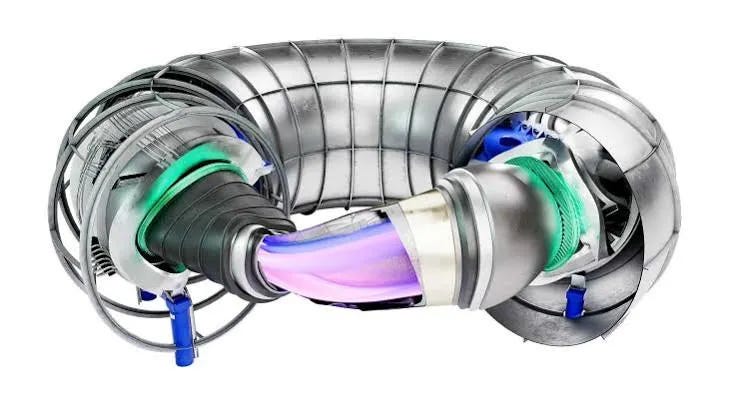
Instead of relying on current inside the plasma, a stellarator uses an intricately twisted external magnet system to contain the superheated gas in a stable three-dimensional continuous twisting shape - that continually steers it away from the side walls.
No central electromagnet, and no need for current running through the plasma means no need to ever ramp down the system. It can run continuously, forever.
Unfortunately, designing one was such a monstrous computational problem that it was genuinely unsolvable until the supercomputers of the 1980/90s.
It took a further 20+ years to actually build an effective design once one had finally been calculated - that was Wendelstein 7-X - which was successfully launched in 2015. In 2023, it ran continuously for 8 full minutes - the first design to prove this approach for viable continuous fusion. (It was a research model so it consumed more power than it generated and always will).
Proxima is a spinout from the team that delivered Wendelstein 7-X. Their goal is to turn this research instrument - into a power plant capable of providing the world with abundant clean energy.
That is a compelling starting place and positions Proxima as the team with some of the deepest experience and closest to the cutting edge on the planet.
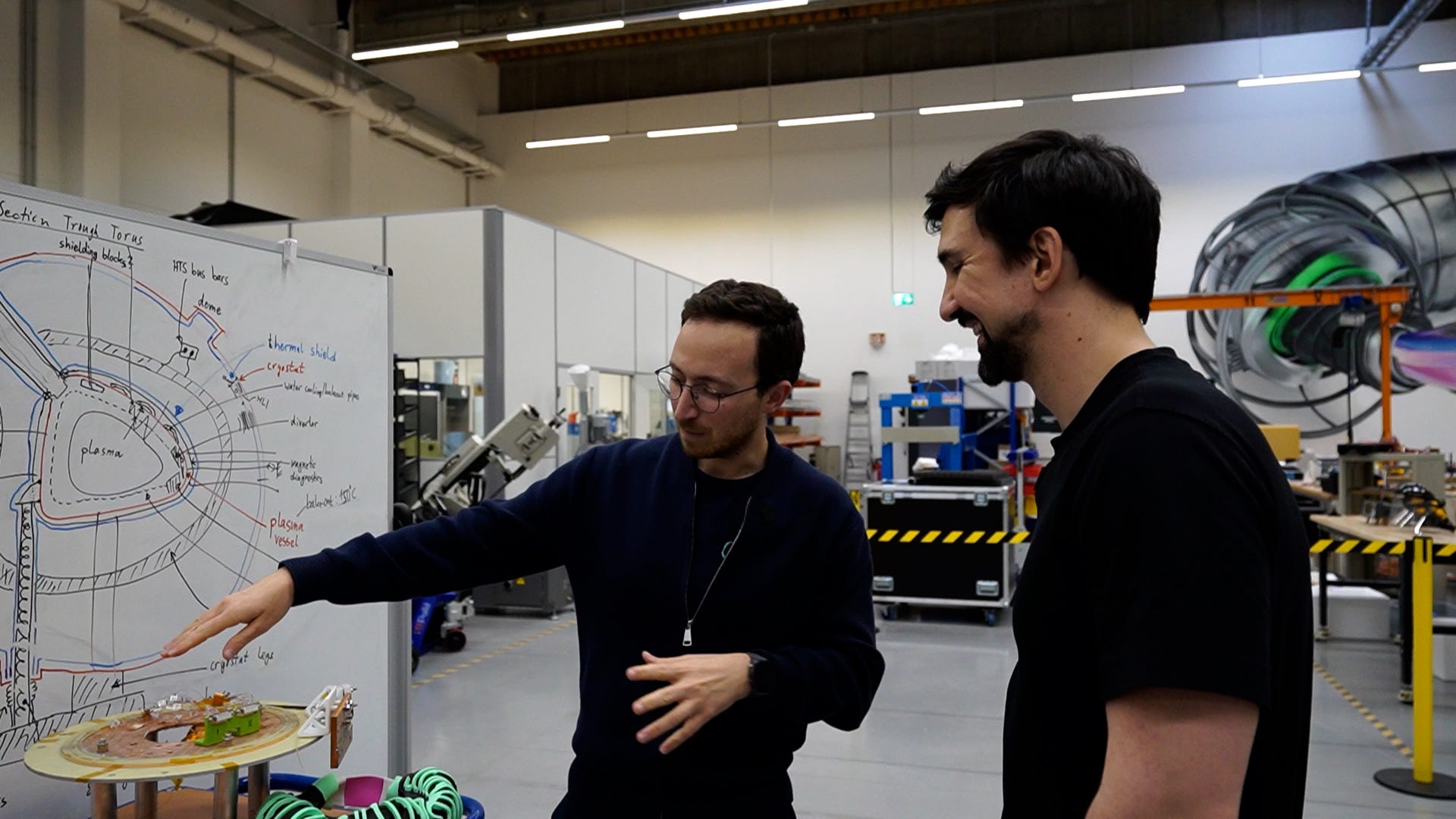
Earlier this year I took a tour of Proxima’s Munich lab and got to see, first hand the engineering needed to make this design work. I was impressed - but more on that in the video to come.
The named milestone to watch for is the Stellarator Model Coil, due to complete in 2027 - a hardware demonstration meant to de-risk the HTS magnet technology before it goes into Alpha. Proxima’s full net-energy demonstrator, planned for the early 2030s on the site of the former nuclear fission plant in Gundremmingen, Bavaria.
So that’s where we landed: Europe’s best-funded fusion company, betting that the harder-to-build reactor design is the one that actually works when you try to run it for decades, not seconds.
Neat.
Met - My team in the UK for 24 hours - a team I think might genuinely change the world. Exciting, but I can’t say more than that just yet. But I wanted to mark the moment before I forget exactly how it felt sitting in that room.
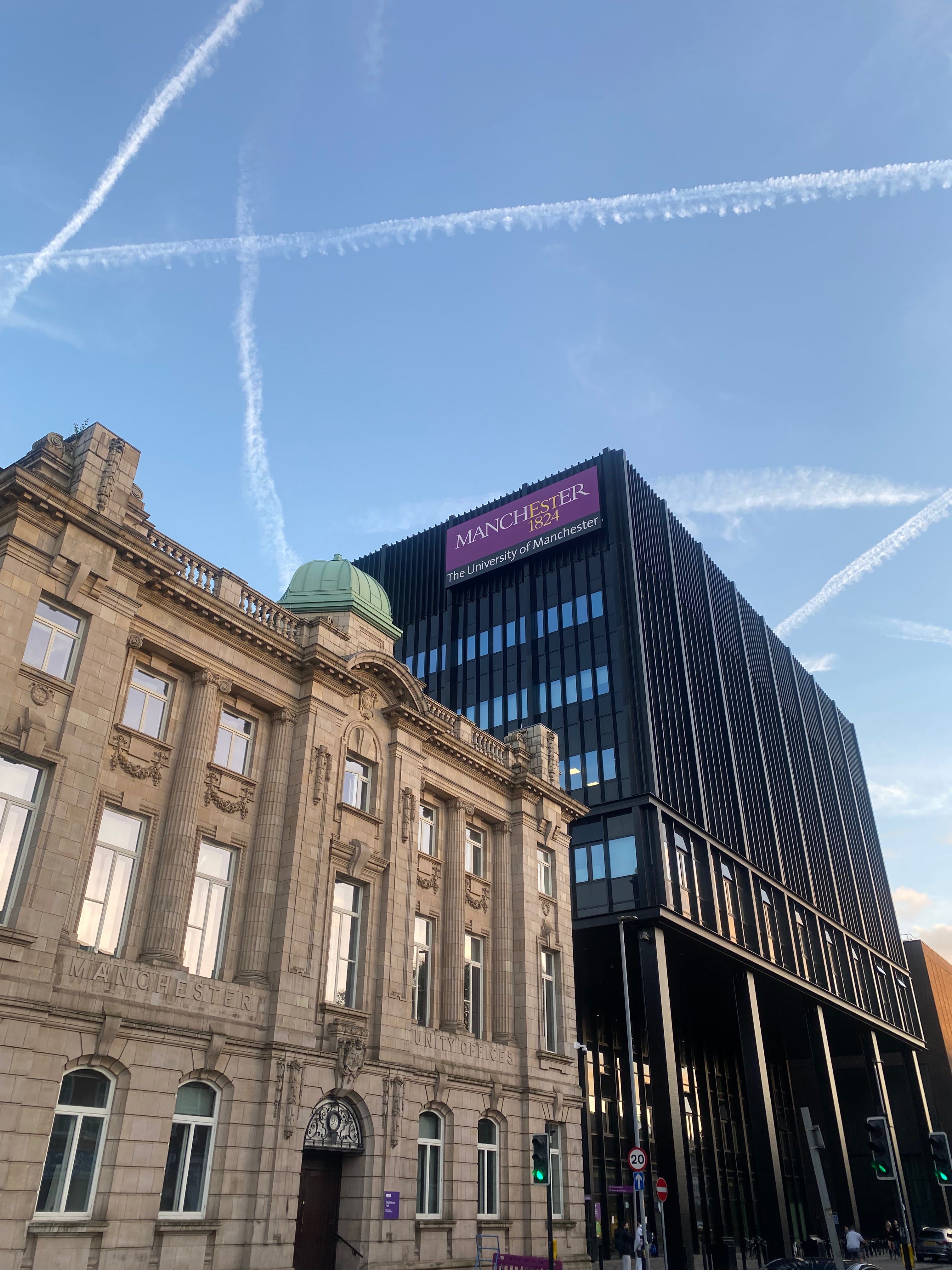
Saw - Manchester in a heatwave, which is not a sentence I expected to write. The city wears sun surprisingly well. I liked it more than I expected to.
Tasted - Pork kimchi pizza. And intercontinental fusion you’ve probably not heard of before. There’s probably a reason for that. Picked in the delierium after my 32hr work day. 2/10.

I keep this newsletter partly because I spend my life around people trying to turn impossible-sounding ideas into real things, and partly so I remember what a given week actually felt like, not just what happened in it.
This was a strange one - a good kind of strange.
Feedback always welcome.
Until next time
Dr Ben
No posts
Comments
Nothing yet. Say the first thing.
Sign in to join the conversation.