
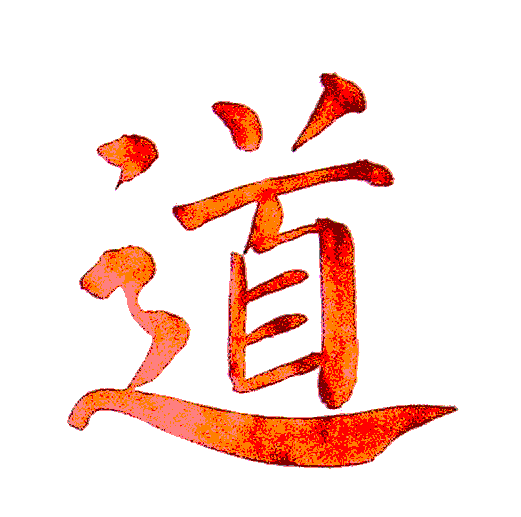
The Way (道) is the most important of Sun Tzu’s Five Factors of Warfare, but can sometimes be hard to define.
Let’s start with the Chinese text and its translation by Lionel Giles:
道者,令民與上同意也,可與之死,可與之生,而不畏危。
The Moral Law causes the people to be in complete accord with their ruler, so that they will follow him regardless of their lives, undismayed by any danger.
Giles translated 道 as The Moral Law, a term familiar to his English-speaking audience in 1910. In more recent translations, 道 is usually expressed in English as “The Way”, or “The Tao”.
We must be careful not to interpret The Way too broadly, as “the right side of history”, or “the arc of the moral universe”. There is no Good versus Evil narrative in the technical analysis of battles.
The key concept here is accord. The sovereign and the people need to be united in their purpose, but the purpose might be good or bad, depending on our own point of view.
The Battle of Plassey was fought in north-eastern India on 23 June 1757. Troops of the British East India Company, led by Robert Clive, came up against the forces of Siraj-ud-Daulah, the last Nawab of Bengal, and his French allies.
Note: The following account is adapted from the Battle of Plassey page at British National Army Museum website.
Lieutenant-Colonel Robert Clive (1725-74) commanded the British force. Formerly a writer (clerk), Clive had switched to the Company’s military service and his tactical flair and personal bravery had earned him rapid promotion and a great personal fortune.
Clive’s army was about 3,000-strong, including 2,100 Indian sepoys (infantry) and about 800 Europeans. The latter included the 1st Madras European Regiment and 600 Crown troops from the 39th Regiment. Clive had only ten field guns and two small howitzers.
Siraj-ud-Daulah (1733-57) commanded around 50,000 men, including 16,000 cavalry. He also had 50 field guns, a combination of 32-, 24- and 18-pounders. Officers on loan from the French commanded this artillery.
Clive won decisively. He had The Way. Siraj did not.
There was nothing mystical about this. Clive took advantage of internal divisions in the Bengal government. The accord between the Nawab and his subjects was not as strong as the Nawab thought.
Mahtab Rai, head of the Jagat Seth Bengal banking family, was concerned that the Nawab would seize the Seth's huge wealth for his own ends. The Jagat Seths and Clive therefore secretly offered to make one of Siraj’s army commanders, Mir Jafar, the new nawab of Bengal, if Siraj was defeated in battle.
At Plassey, Mir Jafar was in command of the Nawab’s cavalry,. When the tide turned against the Nawab’s forces midway through the battle, Mir Jafar refused to continue fighting.
Clive routed the Nawab’s army. Mir Jafar later killed Siraj and was appointed nawab in his place.
Casualties at Plassey were relatively light: 22 killed and 50 wounded in Clive’s force of 3000, and an estimated 500 total in Siraj’s force of 50,000. The new nawab would inherit the old nawab’s army, so neither side had an incentive to inflict heavy losses.
Mir Jafar was not able to rule Bengal independently. In the end, he was little more than a puppet ruler, forced to cede control of Bengal through the treaties he signed with the British.
However, Siraj’s defeat also meant that the French were no longer a force in Bengal. This was part of the larger imperial struggle between Britain and France, which we mentioned briefly in The Five Factors of Warfare, an earlier post in this series.
The Wikipedia gives a broader account of the battle and its aftermath, along with biographies of Clive, Siraj-ud-Daulah and Mir Jafar.
The Battle of Plassey was a turning point in British and Indian history. Many people have sifted the accounts in search of heroes and villains, but no one emerges with entirely clean hands.
Looking at the battle itself, however, it’s clear that no army can fight successfully when a third of its men are ready to go over to the other side.
Il Principe (The Prince), by Nicolo Machiavelli (1469-1527), was written as a kind of “instruction manual” for new princes. It has long been a controversial work.
In our first Sun Tzu Reading Project, we discovered that participants from outside Europe and the English-speaking world were largely unaware of Machiavelli, although Il Principe has been translated into many languages, and is actually one of Italy’s best-known and most translated works, along with Dante’s Divina Commedia (Divine Comedy) and Carlo Collodi’s Pinocchio.
Note: The cited article in NEWITALIANBOOKS is by Emanuele Cutinelli-Rendina, University Professor of Italian Studies at the University of Strasbourg. It’s rare to find Il Principe and Pinocchio on the same list, but discussions in a Sun Tzu Reading Project often lead to unexpected places.
Il Principe is Machiavelli’s most known work, but he is also noted for his Discourses on the First Decade of Titus Livius. These deal with the challenges of government in a more general way.
Machiavelli does not write about The Way in the same way as Sun Tzu, but the broad concept of strength through unity is close to universal.
The kanji used to represent The Way (道) has a broad meaning (the link is to Jisho.org). In Japan, it is often used to represent an administrative region, as in 北海道(Hokkaido), the large island region in the north. 道 is a basic kanji learned in grade 2 by Japanese children.
Some years back, my family hosted a young Japanese woman who was spending a year at my sons’s elementary school as an exchange teacher. One day, she asked me about a tattoo she had seen (likely on one of the parents): “Why does that man have the word for prefecture tattooed on his arm?”
Sun Tzu (or Sonshi as the kanji 尊子 are pronounced in Japanese), is relatively well-known in Japan, and “The Way” is an accepted meaning for 道. I explained the origin and she understood immediately, but I can no longer look at this kanji and not recall how funny this was.
This suggests that we shouldn’t just look up kanji and expect their meanings to align with those perceived by a native speaker.
A discussion of The Way typically brings out all kinds of ideas.
Most participants in a Sun Tzu Reading Project will have a general knowledge of history and its major armed conflicts. However, the person who facilitates the discussion must also have The Way, especially if the discussion moves onto current events and politics, with “current” meaning anything in the last five centuries.
Participants’ ideas have to be acknowledged and reframed for discussion in a way that allows the group discuss them objectively.
The Wikipedia is an excellent source for detailed information. Its entries are available in 72 languages, which is helpful for a multilingual discussion group with varying national perspectives.
Here, then, is a smattering of ideas from previous discussions:
In applying The Art of War to a business setting, we have to distinguish between The Way (道), which applies to an entire organization and its highest authority, and The General (將) applies to leadership at a slightly lower level. These are both different from Method and Discipline (法), which deals with the training and selection of officers in general. How large does an organization have to be for these three factors to be present?
Sun Tzu cannot help you if your primary conflict is with yourself. You can defeat opponents, but to apply this reasoning to internal issues is difficult. For an artificial intelligence, however, we could imagine a “theory of personality” based on multiple personalities at war with each other.
Shared understanding. Interpretation of kanji in the Chinese text. "The Path". Tao. The concept of "the way" existed before Taoism as an organized system of belief. The spiritual path can be pictured as a physical path. Lao Tze. Confucius refers to him. Fourth century BC. "Balance of the World".
Who is in charge here, anyway? Concepts of governance are different across nations. And does this matter in setting our terms of reference? The General has a responsibility to the Emperor, or to his equivalent in the modern state. But unless the soldiers are wholly mercenaries, we cannot separate the General and the army from the governance of the state. Nor is the loyalty of mercenaries entirely guaranteed.
What if the Emperor (almost) has the Way, and the problem is the General. What can be done about it? None of us have 100% agreed with our bosses at all times.
A strong bond must be forged through experience. Adversity tells you who your friends are. No one worries about betrayal until they are betrayed.
The concept of accord can also be seen as “government by the consent of the governed”, not just a demand for blind loyalty.
Our primary source is the Chinese Text Project (中國哲學書電子化計劃), edited by Dr. Donald Sturgeon (Chinese: 德龍).
https://ctext.org (for the project main page)
https://ctext.org/art-of-war (for The Art of War specifically)
Dr. Sturgeon has used the Giles translation, which is in the public domain, and available on Project Gutenberg at http://www.gutenberg.org/ebooks/132
English translations of individual kanji are from Jisho.org.
For more information on language resources, see [Week 1] We begin reading The Art of War.
For more information on Drawing Legs on a Snake and the new Sun Tzu Reading Project, see our guide to starting your own reading project.
Comments
Nothing yet. Say the first thing.
Sign in to join the conversation.