

Most people think they know London.
They know the landmarks. They know the Tube map. They know the familiar postcard images of Big Ben, Tower Bridge, and St Paul’s Cathedral. Yet beneath this modern city lies another London entirely: one shaped by rituals, ceremonies, traditions, and communities that have survived for centuries.
Recently, on A Curious Appetite, I had the pleasure of speaking with photographer Niki Gorick, whose work has spent decades documenting London’s hidden worlds. Her photographs reveal a city that many of us pass through every day without truly seeing, capturing ceremonies and communities that continue to shape London’s relationship with its past.
What emerged from our conversation was a portrait of a city that feels both ancient and strangely contemporary.
One of the most fascinating aspects of Niki’s current work is her project Ceremonial City in the Twenty-First Century, which explores the traditions of the City of London, the historic square mile that remains distinct from Greater London.
For many Londoners, these ceremonies remain almost invisible. Yet they continue all around us.
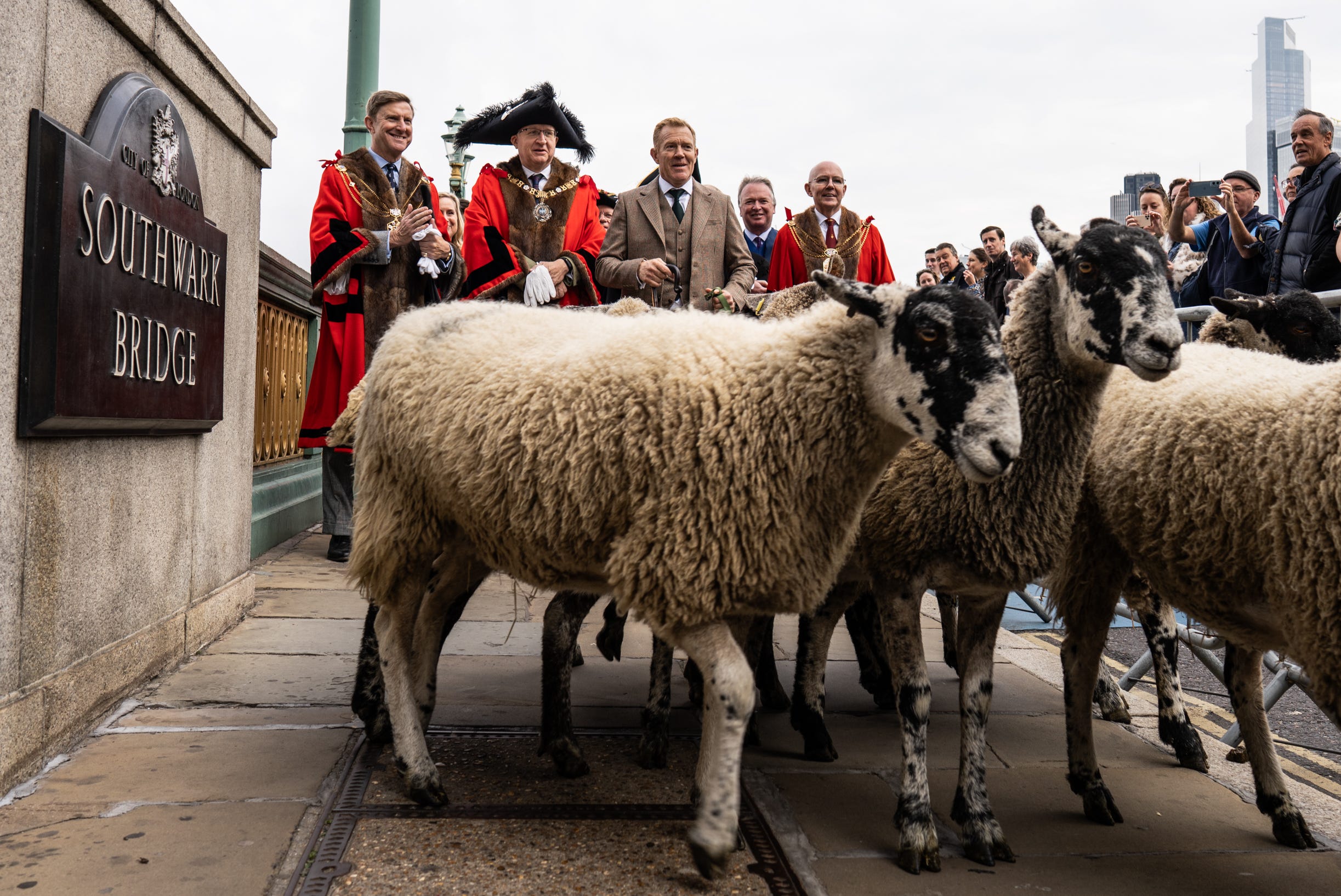
The Lord Mayor processes into council meetings accompanied by a sword-bearer and mace-bearer. Aldermen wear robes and observe rituals whose origins stretch back centuries. Ancient livery companies maintain traditions inherited from medieval guilds of bakers, masons, blacksmiths, vintners, and dyers.
What fascinated me most was the continuity of these traditions across centuries.
In an age obsessed with innovation and disruption, these communities have preserved customs that link present-day London directly to its medieval past. Yet they are not museums.
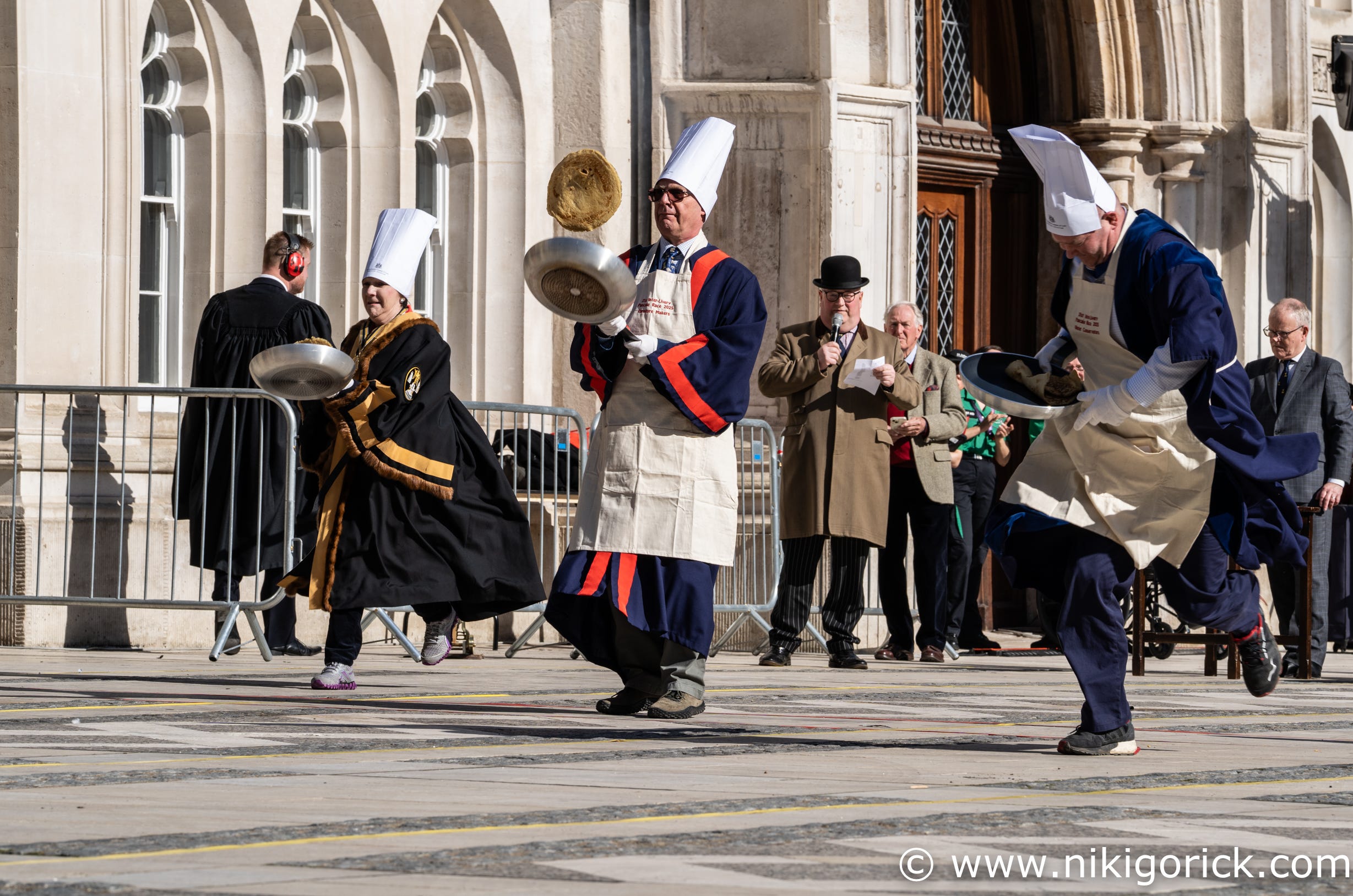
They continue to perform practical functions, supporting education, charitable projects, mentoring programmes, and civic life. Niki noted that the livery companies collectively donated more than £81 million to charitable causes in a single year.
In this context, tradition functions as an active form of cultural memory.
One of the most unexpected traditions Niki described was the annual Bubble Service at St Bride’s Church on Fleet Street.
Established through a seventeenth-century bequest, the service celebrates the fragility and transience of life. Each year, a speaker reflects upon life as a bubble, and the congregation famously sings I’m Forever Blowing Bubbles.
There is something wonderfully British about this combination of solemn reflection and gentle absurdity.
Yet beneath the humour lies a serious question. How do communities remember? How do traditions survive? Why do certain rituals endure while others disappear?
These are precisely the kinds of questions that have increasingly occupied my own work on food, memory and cultural history.
Naturally, our conversation eventually turned to food. This was to be expected!
Many of London’s ceremonial traditions revolve around communal meals. Livery companies gather for dinners that bring together members of particular professions and communities. Diplomats from around the world attend formal banquets at Mansion House. Hospitality functions as a mechanism for creating fellowship and continuity.
One tradition particularly captured my imagination: The Loving Cup.
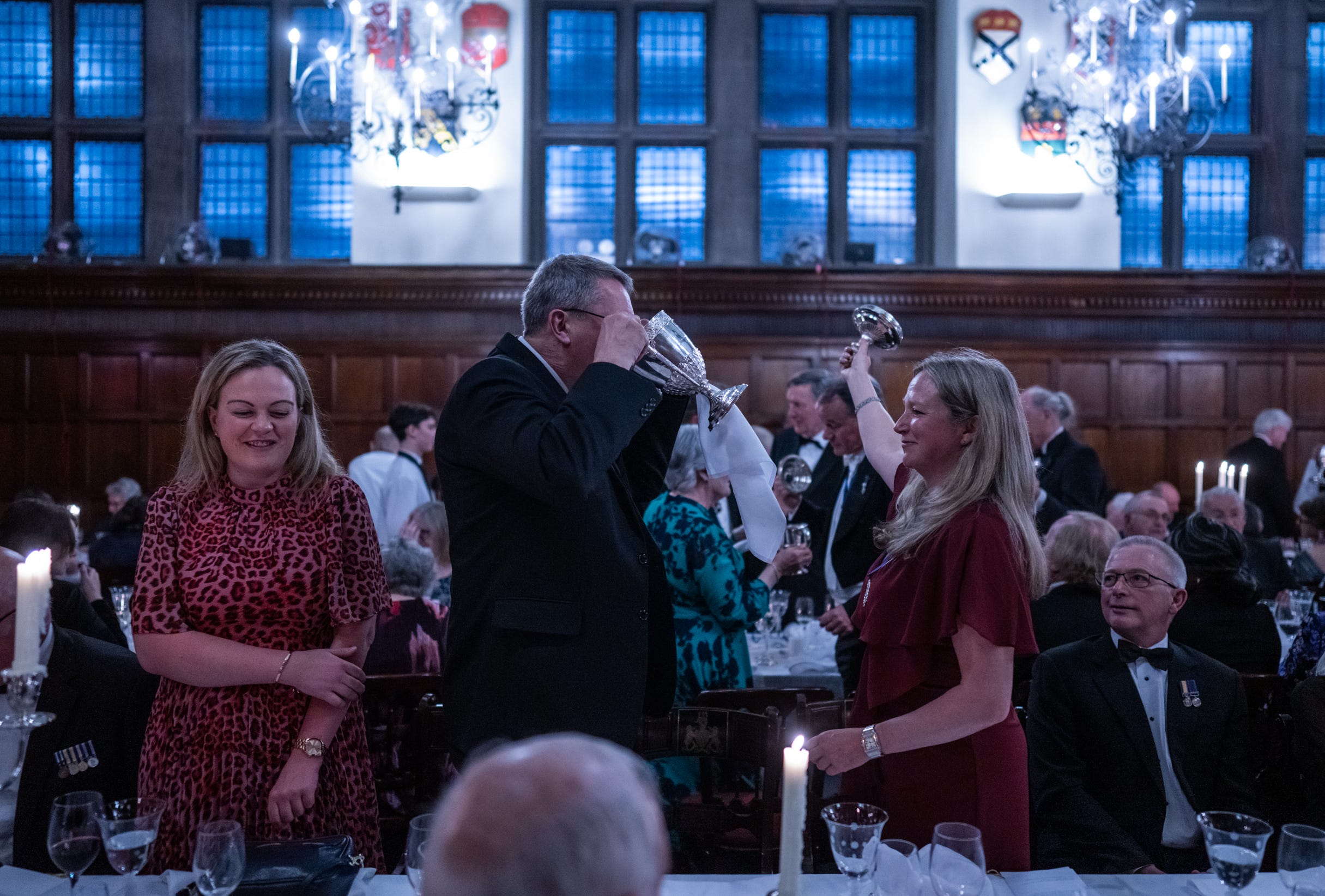
At the end of certain meals, a large cup filled with wine is passed around the table. The ritual is highly choreographed. One participant drinks while another symbolically guards their back. The custom originates from a time when sharing a drink could leave a person vulnerable to attack.
The practice survives today not because anyone expects assassination at dinner, but because it embodies trust.
Food historians often discuss meals as opportunities for nourishment or pleasure. Yet rituals like the Loving Cup remind us that communal eating also performs social work. Meals establish belonging. They reinforce relationships. They create memories.
In the case of London’s ceremonial communities, they also transmit history.
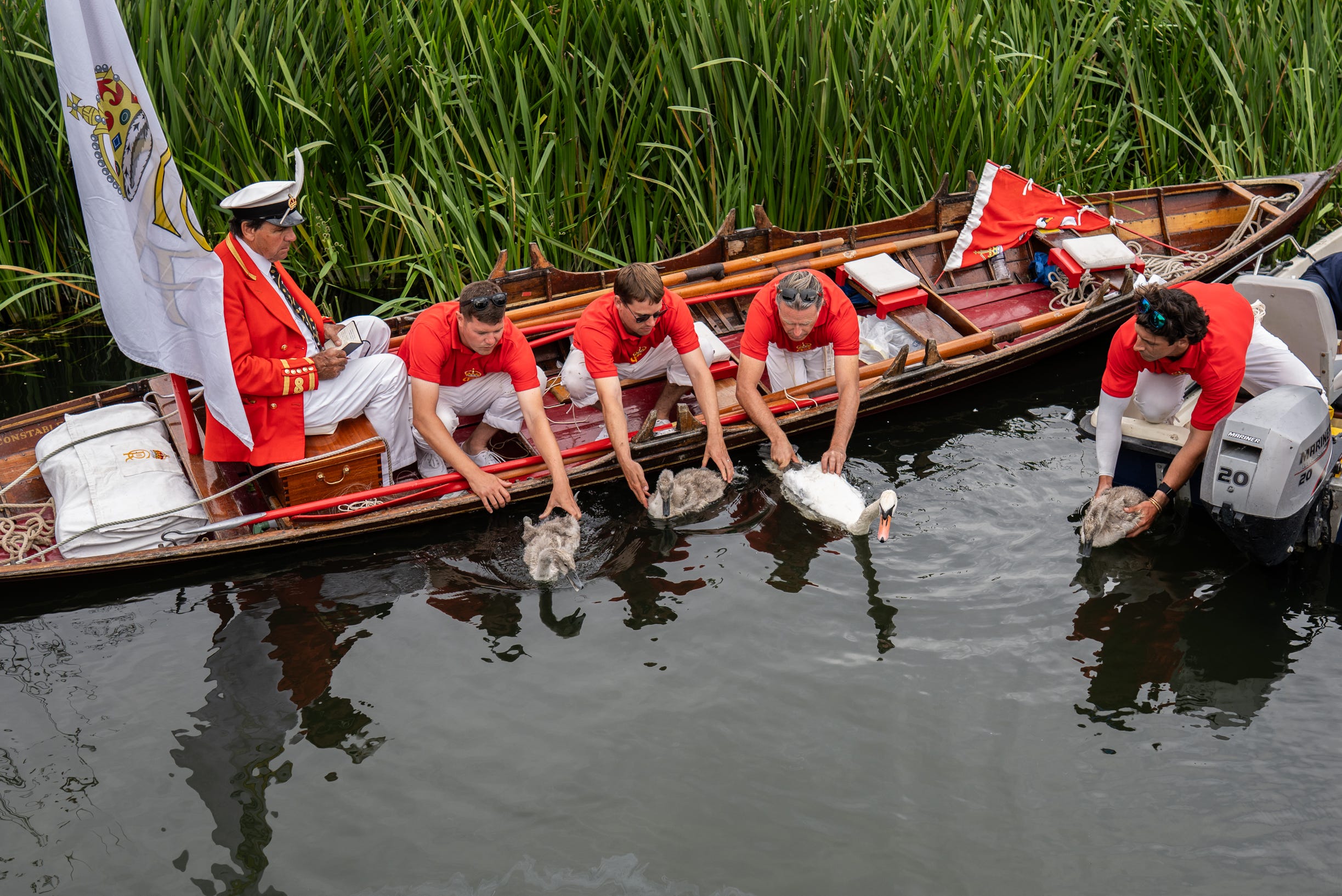
Every July, representatives of the Crown, the Worshipful Company of Vintners, and the Worshipful Company of Dyers travel along the Thames in traditional rowing skiffs, counting and examining swans. The custom dates back centuries, when ownership of swans carried legal and economic significance. Today, however, the emphasis is on conservation and welfare.
The images Niki described sound almost dreamlike.
Scarlet blazers. Navy uniforms. Traditional skiffs. Crews rowing upriver. Schoolchildren learning about river ecology. Signets being carefully weighed, examined, and recorded. Along the way, the Swan Markers educate local communities about river conservation, removing discarded fishing line and monitoring the health of the Thames’ swan population. What began nearly nine centuries ago as a means of asserting ownership has evolved into a programme of environmental stewardship.
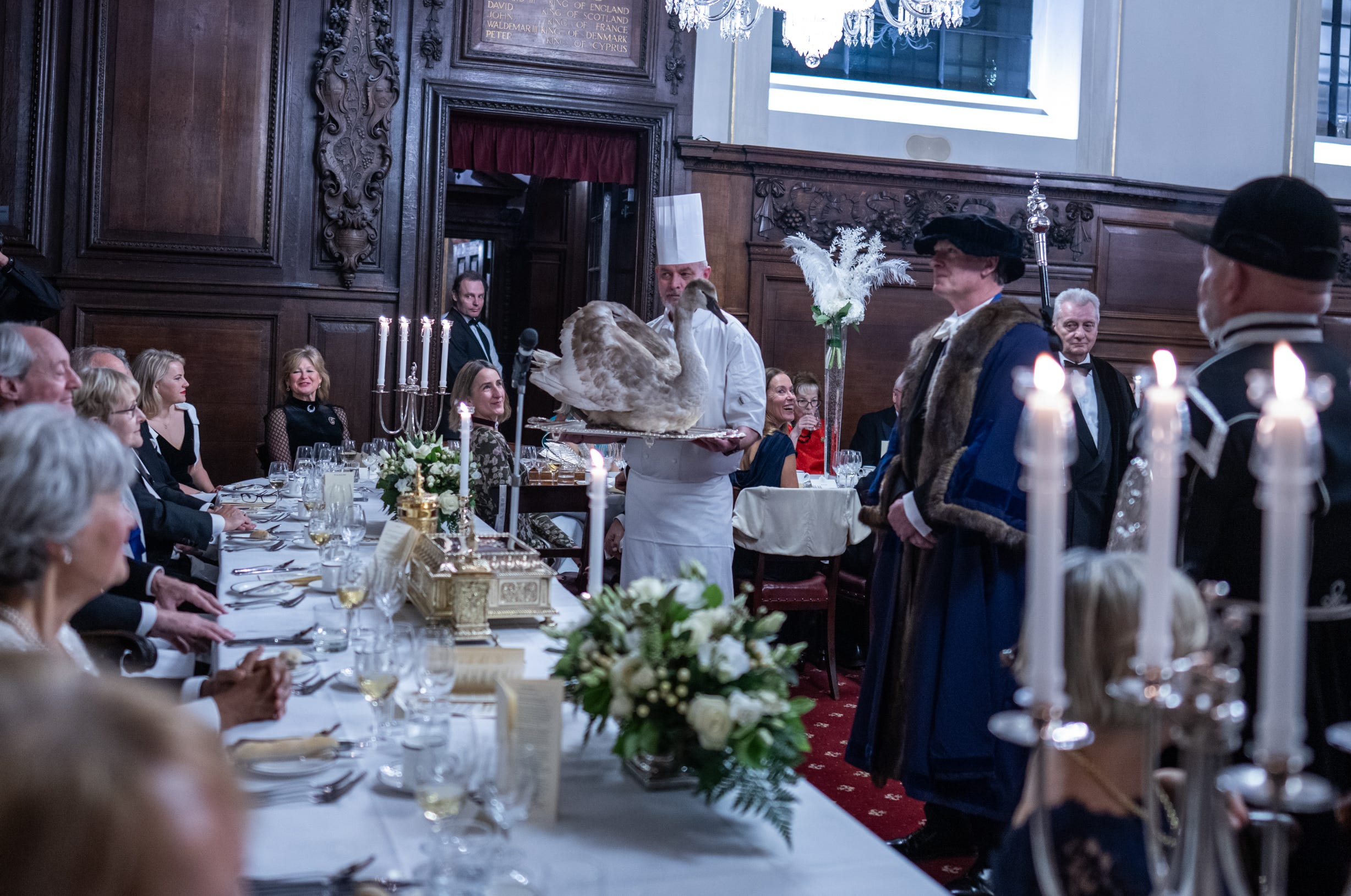
Yet Swan Upping is only one part of a wider ceremonial culture. Niki also described the annual Swan Feast held by the Vintners. During the feast, a preserved swan is brought from its case and ceremonially presented to the Prime Warden. Accompanied by musicians playing medieval pipes and other traditional instruments, the Swan Warden enters in full robes, carrying out a carefully choreographed ritual that has been repeated for generations. Behind him come members of the Watermen and Lightermen’s Company in their striking red uniforms, carrying ceremonial oars. The chef follows with the swan displayed on a platter before it is formally presented to the assembled company.
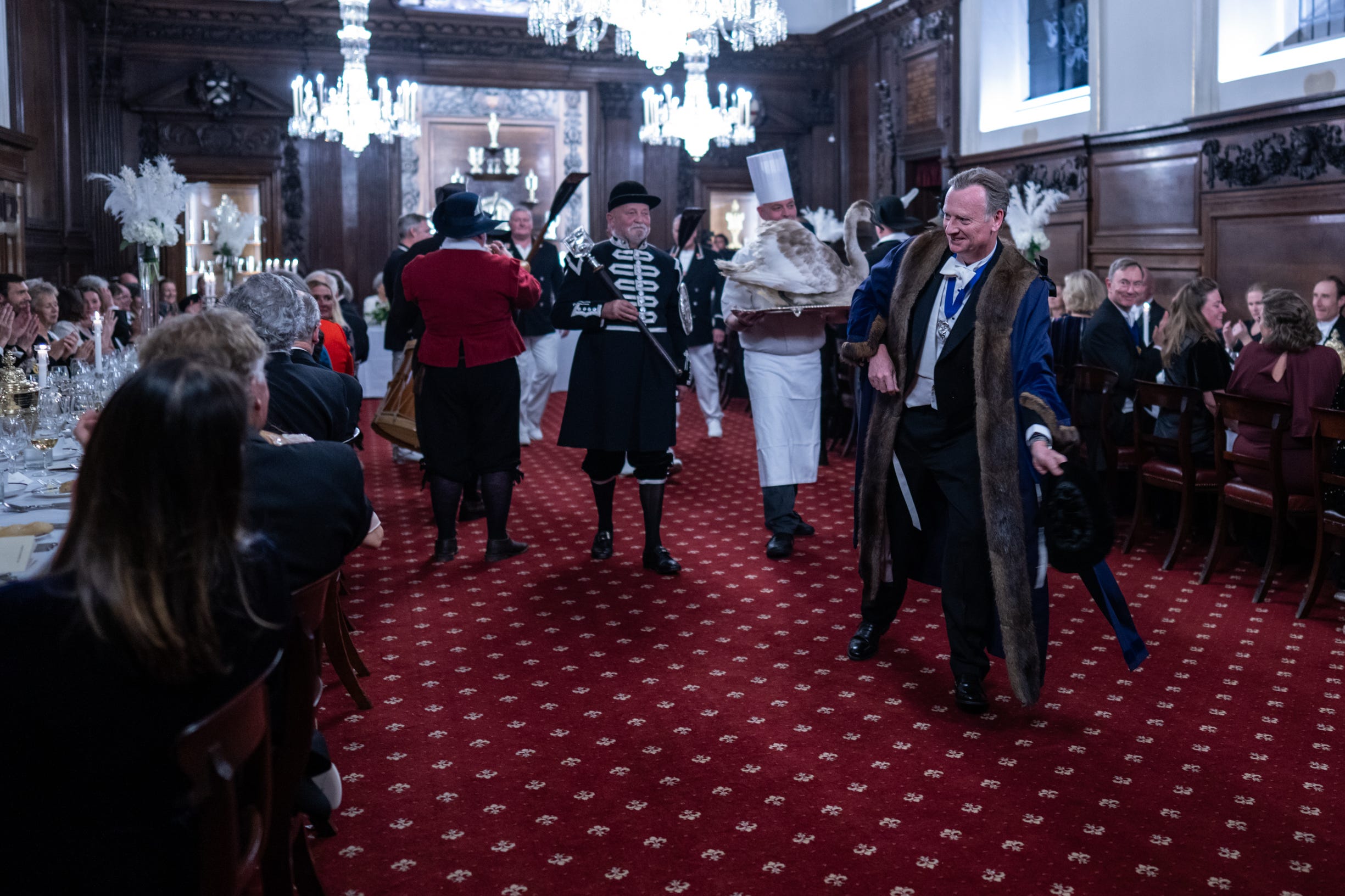
At first glance, Swan Upping and the Swan Feast appear quaint, even eccentric. Yet they embody something increasingly rare: traditions that have survived because they have adapted. The ceremonies still preserve centuries of pageantry, symbolism, and collective memory, while simultaneously serving contemporary purposes.
The rituals connect present-day Londoners with practices that stretch back hundreds of years, preserving continuity while allowing new meanings to emerge. What began as a system of ownership has become a practice of stewardship.
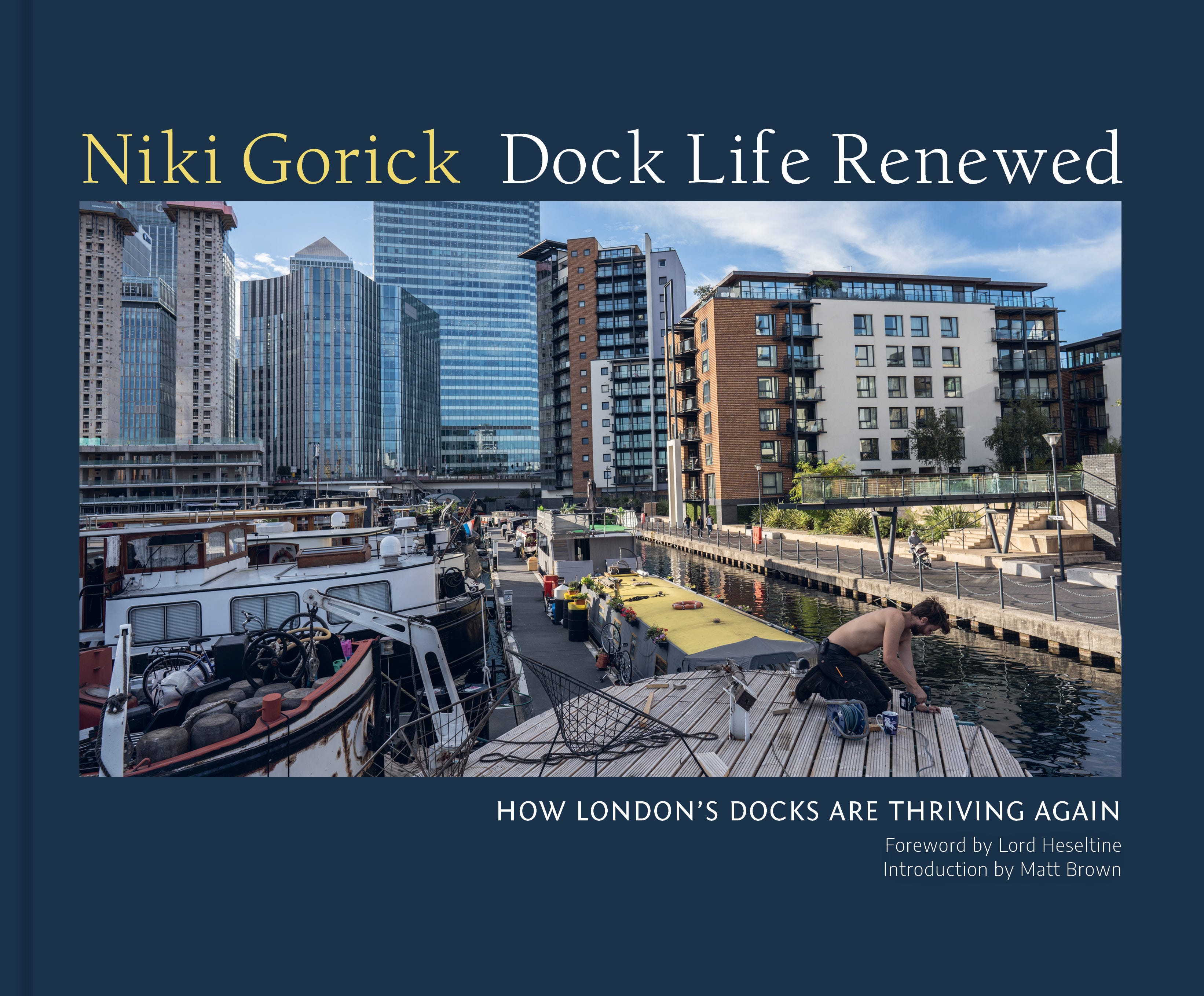
Niki’s work extends far beyond ceremonial London. The exhibition that first drew my attention to her photography, Dock Life at the Cutty Sark, explores another side of the Thames: the communities whose lives were shaped by the docks themselves. The conversation was particularly valuable for me because much of what Niki described resonates with research I have been conducting for The River Remembers, a forthcoming book I am writing with Dr Dan O'Brien. The project explores the cultural memory of the Thames through its foodways, industries, communities, and forgotten histories, tracing the ways in which the river continues to shape London life.
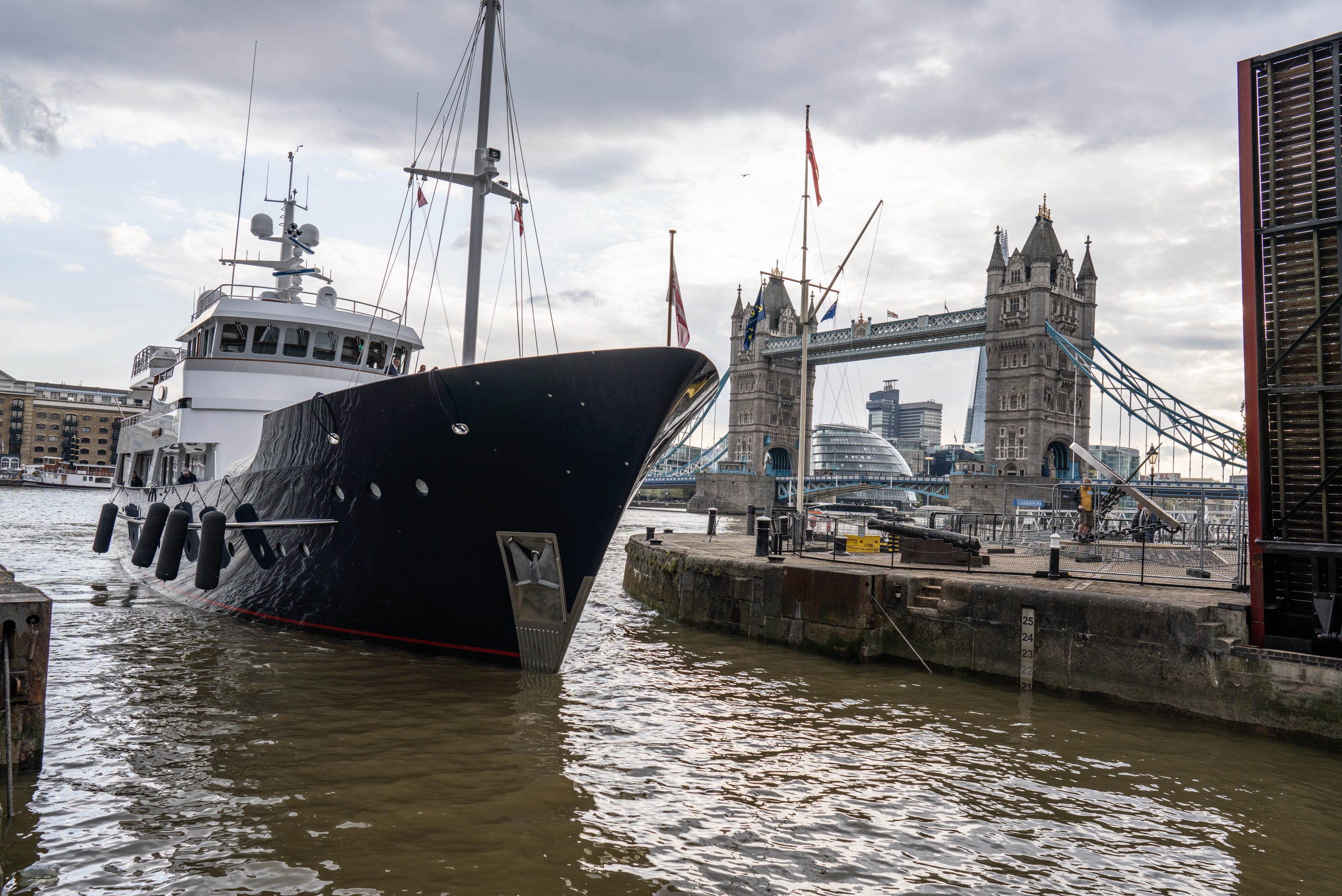
What makes Niki’s photographs particularly valuable is that they capture a world that disappeared with astonishing speed. For centuries London’s docks functioned as places of intensive human labour. Ships arrived carrying tea, sugar, timber, grain, spices, and countless other commodities from across the globe. Cargoes were unloaded by hand. Warehouses employed large numbers of workers. Entire neighbourhoods developed around the rhythms of maritime trade.
Then containerisation changed everything.
From the 1960s onwards, the introduction of standardised shipping containers revolutionised global commerce. Goods that had once been unloaded piece by piece could now be transferred rapidly between ships, trains, and lorries. The new container ships were far larger than the vessels for which London’s historic docks had been designed. Increasingly, cargo operations moved downstream to deeper-water ports such as Tilbury and Felixstowe.
The consequences for the Docklands were profound. Within little more than a generation, industries that had sustained communities for centuries disappeared. Warehouses fell silent. Wharves closed. Thousands of jobs vanished. The river remained, but many of the activities that had once defined everyday life along its banks were gone.
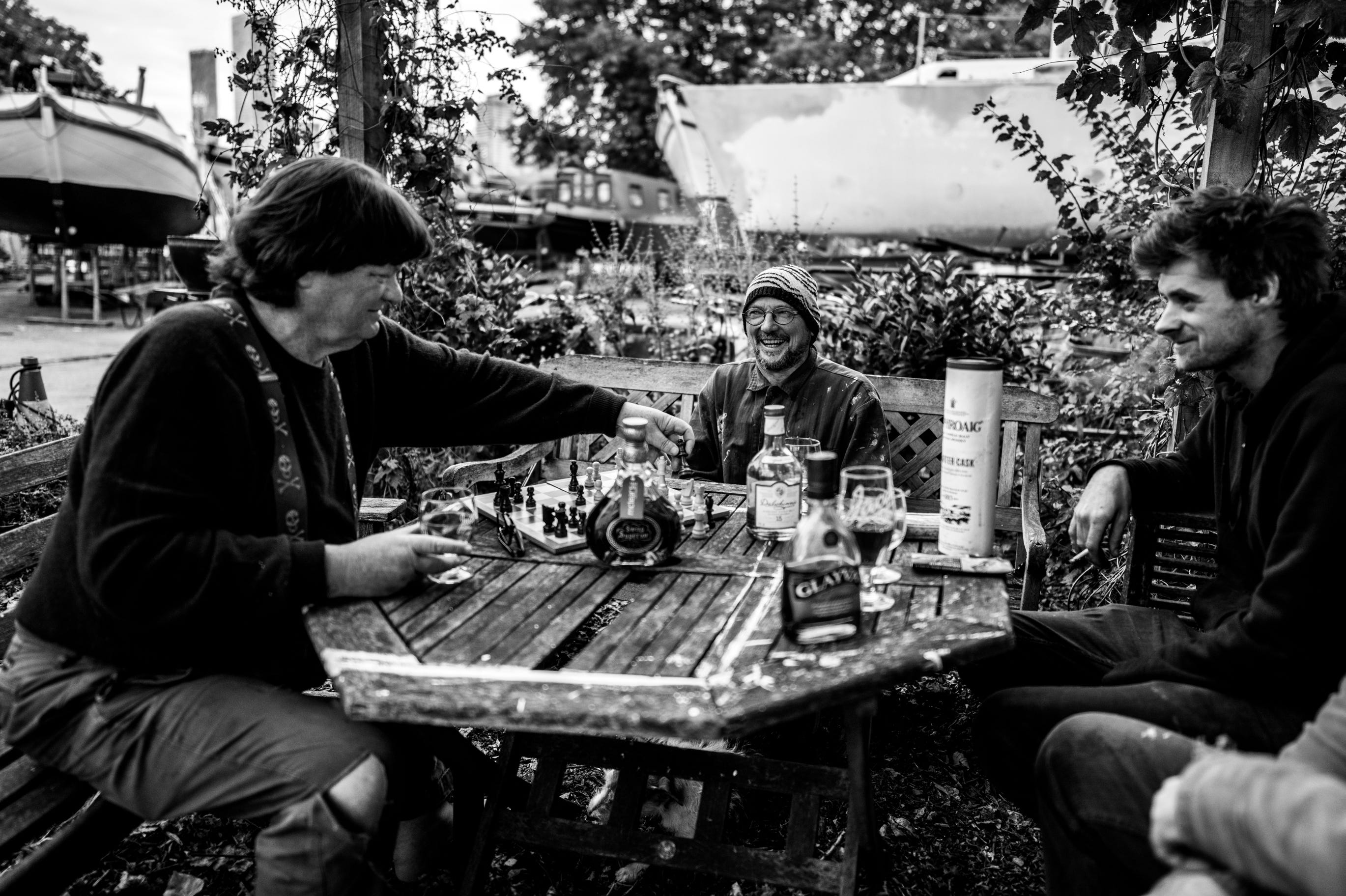
I think this is one reason why Niki's photographs matter so much. Perhaps they resonate particularly strongly with me because I live beside Regent's Canal, but they preserve far more than individual people or buildings. They record a moment of transition. They capture communities whose relationship with the Thames was being fundamentally reshaped by technological change, containerisation, and globalisation.
The Cutty Sark itself offers an intriguing counterpoint to this story. Visitors encounter the ship as a survivor from an earlier era of global trade, a vessel built for the movement of tea and wool long before the arrival of steel containers and automated logistics. Nearby, however, stand the redeveloped landscapes of modern Docklands, reminders of how radically maritime commerce has transformed.
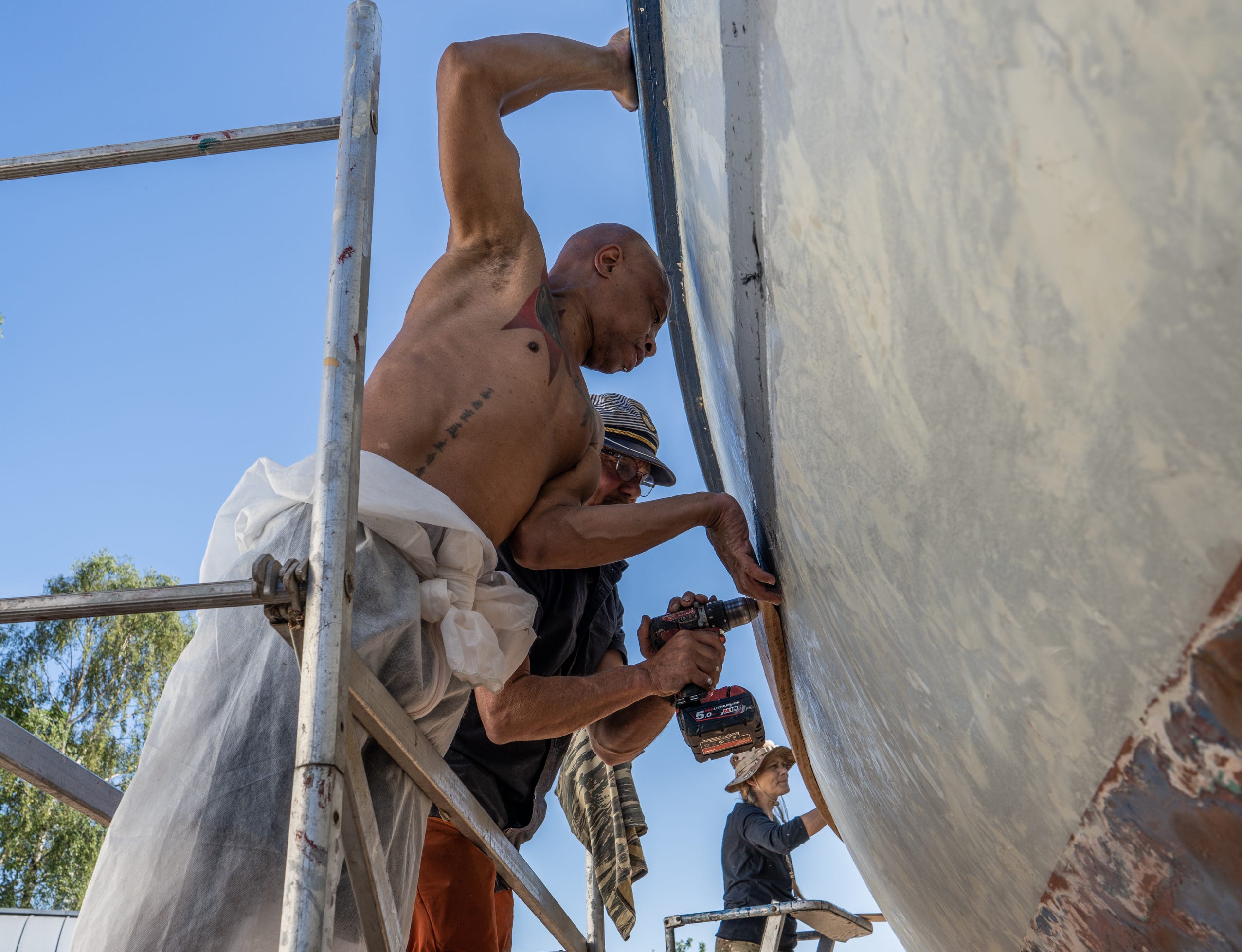
One of the most striking themes running through Niki’s work is the persistence of memory after physical change. The docks may have become apartments, restaurants, and office buildings, but traces remain. A preserved figurehead. A ceremonial gathering on the river. A photograph of a dock worker. A retired lighterman recalling the river as it once was. These fragments reveal how communities continue to remember places even after their original functions have disappeared.
The Thames has always been a working river. What changed was the nature of that work. Containerisation transformed the river’s economic role, but it also transformed its cultural memory. Niki’s photographs help us recover something of the world that existed before that rupture, preserving the human stories that might otherwise have vanished beneath redevelopment and glass towers.
As we spoke, I found myself returning repeatedly to the relationship between photography and memory.
Niki described photography as an attempt to capture fleeting moments that will never exist in exactly the same form again. A successful photograph, she explained, crystallises a particular convergence of people, place, and time.
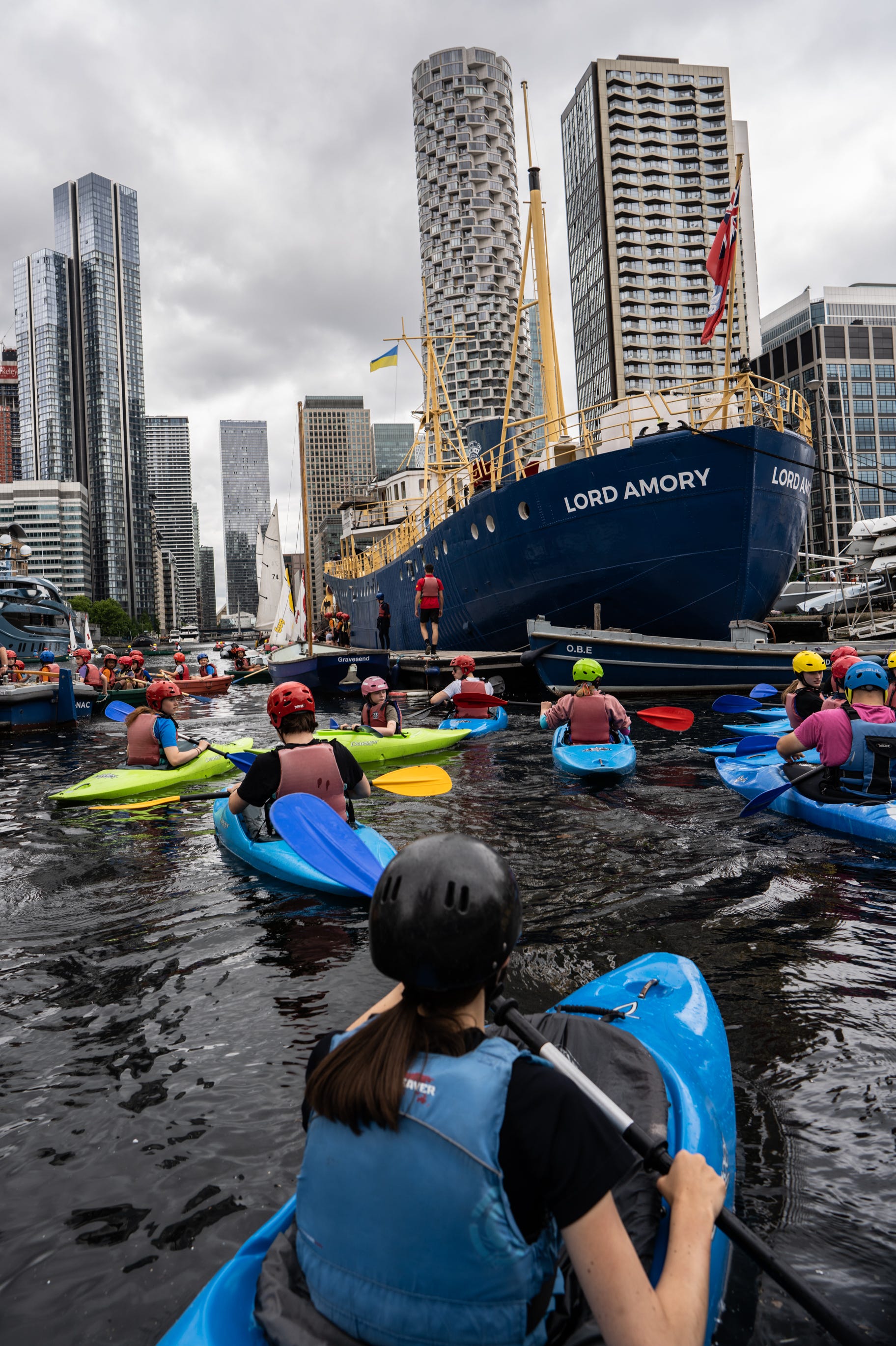
This struck me because it mirrors many of the questions that interest me as a historian.
Whether we are studying recipes, rituals, stories, or photographs, we are often trying to understand how communities preserve fragments of the past. We search for traces. We reconstruct meaning. We attempt to understand why certain memories endure.
The ceremonies Niki documents are, in many ways, living archives.
They preserve gestures, objects, meals, costumes, and practices that connect contemporary London to centuries of history.
One of the great gifts of speaking with Niki was the reminder that hidden worlds exist all around us. The next time I walk through the City of London, I suspect I will see it differently, aware that behind the office towers and financial institutions lie ancient halls, ceremonial dinners, riverside traditions, charitable networks, and communities quietly maintaining customs that stretch back hundreds of years. Most Londoners never encounter these worlds directly, yet they remain woven into the fabric of the city, continuing much as they always have. Like the Thames itself, they flow beneath the surface, carrying memory forward from one generation to the next.

Check out Niki’s website and keep up to date with her projects:
Visit Niki Gorick's exhibition, Dock Life, at Cutty Sark:
Cutty Sark: Niki Gorick – Dock Life
Niki Gorick Photography: www.nikigorick.com
No posts
Comments
Nothing yet. Say the first thing.
Sign in to join the conversation.