
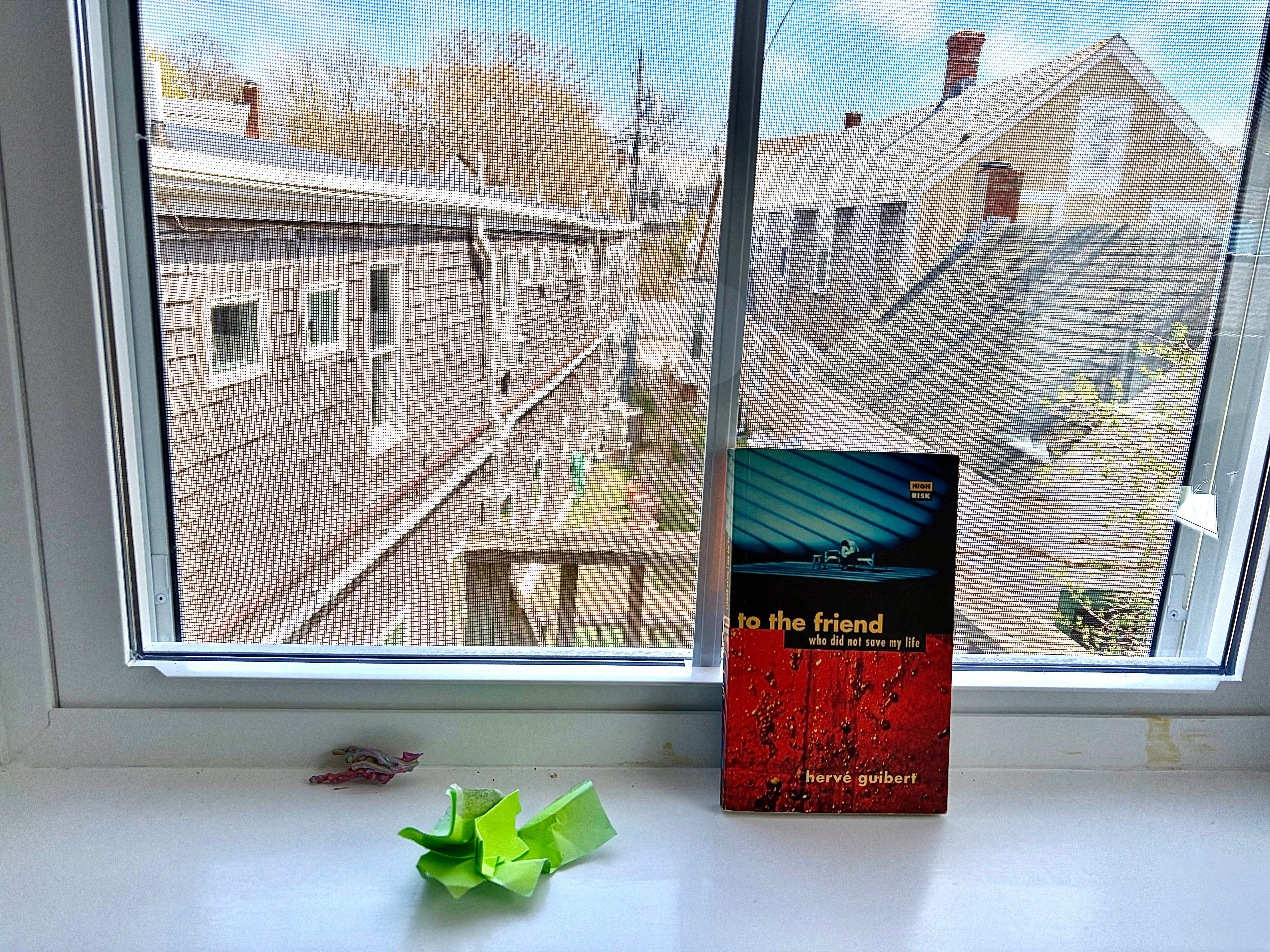
My time at the Fine Arts Work Center is coming to an end. While I’ll be happy to be back in NYC, I will miss the place enormously, and moreover the people. Thanks to everyone I worked with in Provincetown; love to all I met.
Did I do enough work? No. But such is (my) life.
The Work Center puts out a small book every year, not for sale, distributed just to proverbial friends and family. Usually it’s a simple compendium, but this edition was themed after an evocative happenstance. Walking through the snowy woods this winter by Shankpainter Pond (which gives the publication its name), some of the writers came across a half-buried, torn-open garbage bag of bills, postcards, 1970s snapshots, and other snippets of a life’s paper trail.
Thus ephemera, broadly speaking, became the journal’s theme—kind of perfect for something meant to commemorate a transient moment in a singular place.
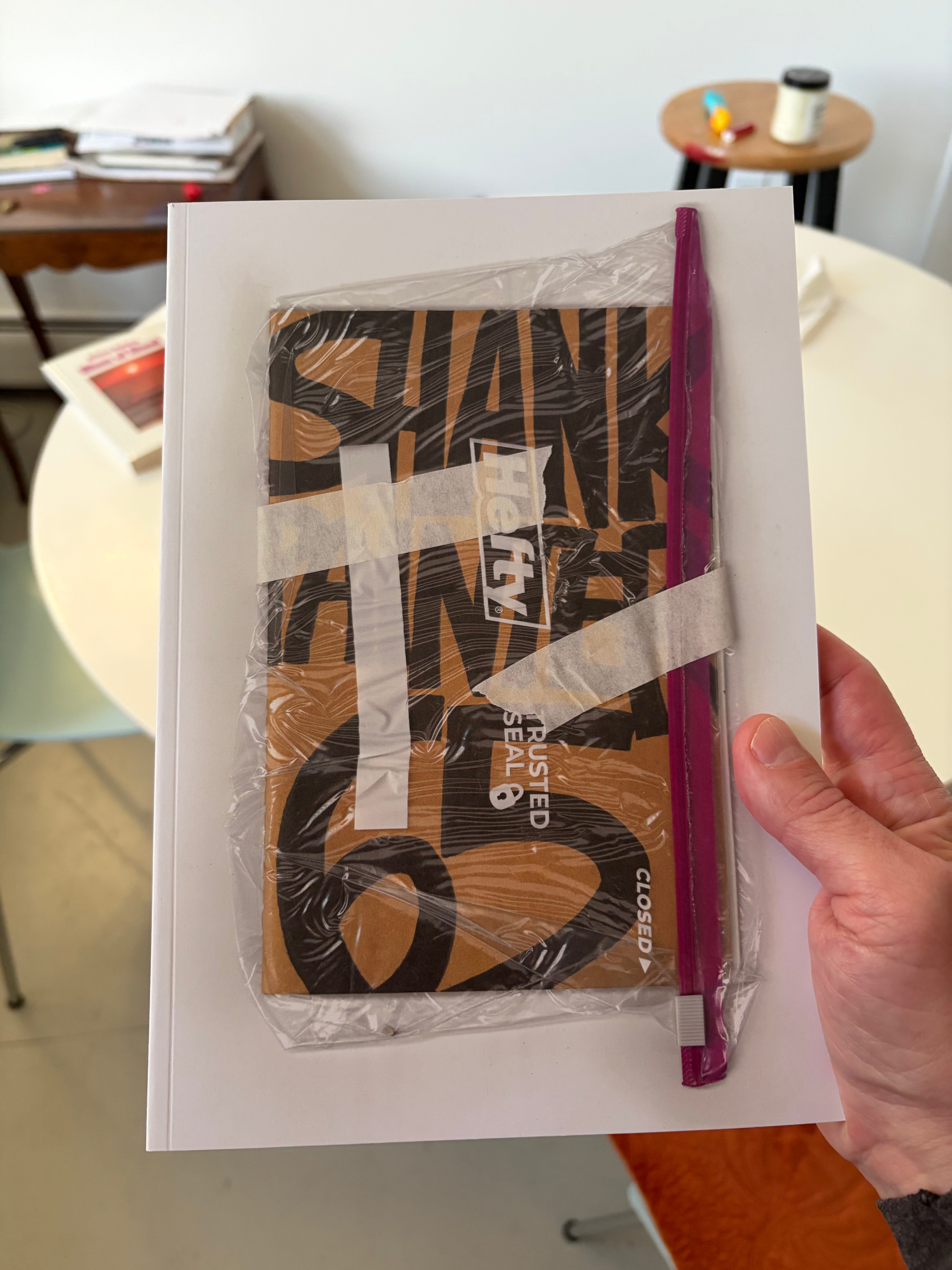
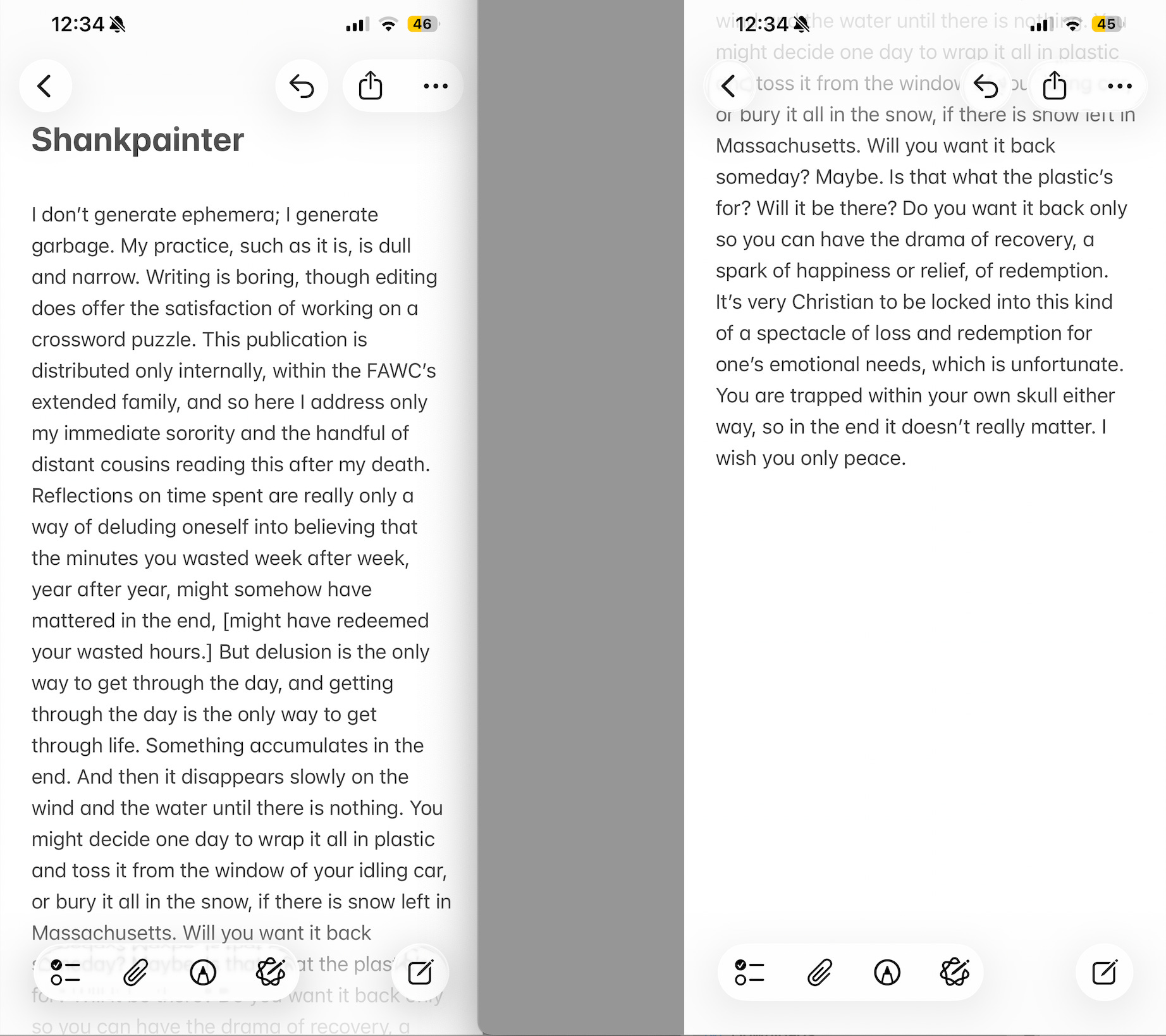
In my typical fashion, I waited until the last minute, wrote something for the publication, hated it, and failed to contribute.
Doubly typical was my reconsideration and regret. A few nights ago I glanced over what I had written and realized that it wasn’t bad. The real reason I hadn’t submitted it, I realized, was that it was a bit emotional and a bit bleak. The latter is fine, but probably not on a valedictory occasion. I try to avoid revealing the former side of myself whenever at all possible.
As a small capstone on my experience in an outright magical place, here I offer what I ought to have included as part of the historical record of my time at the Work Center had I not been a little bit of a coward a couple months ago.
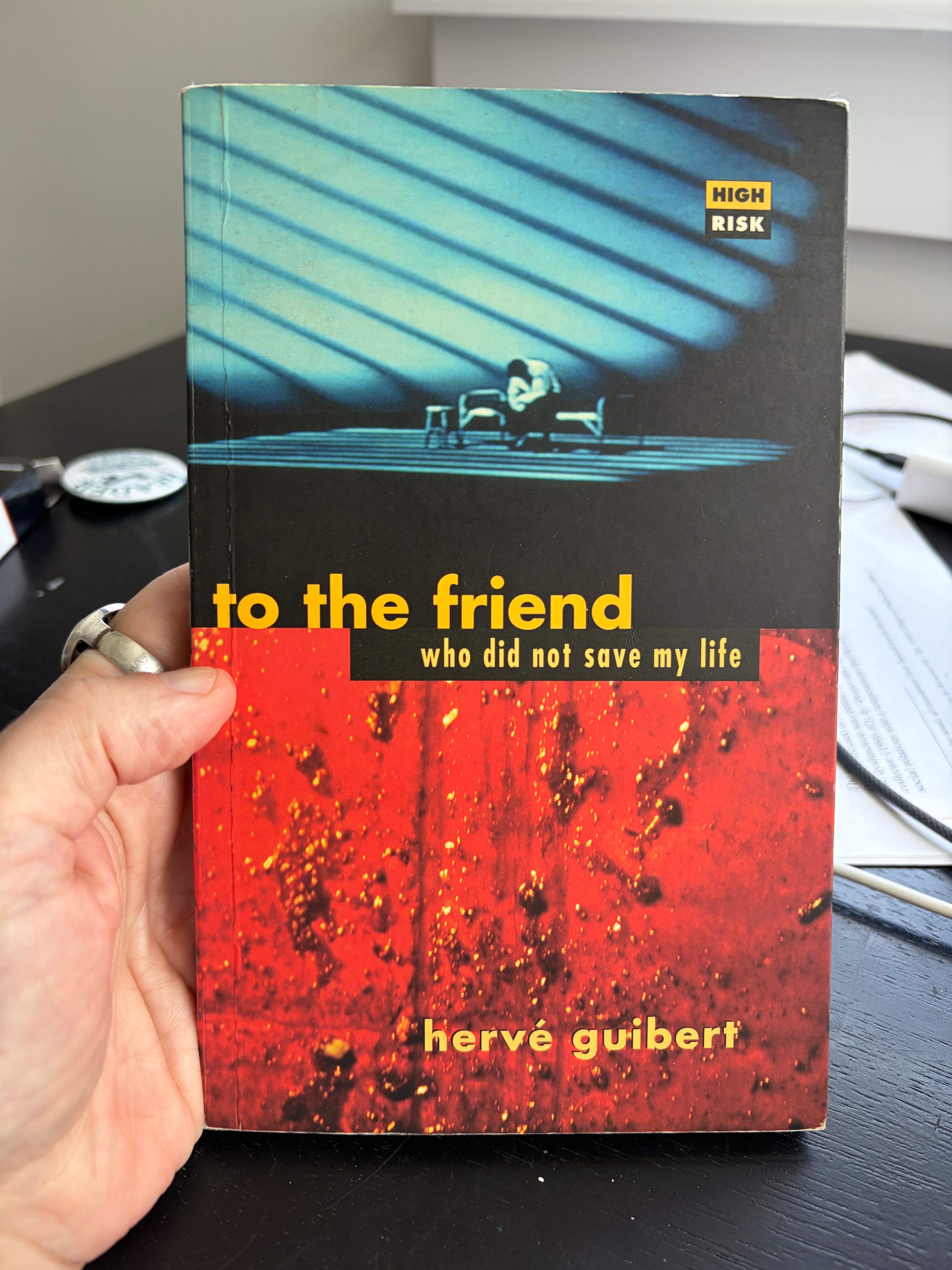
To the Friend Who Could Not Save My Life—Hervé Guibert. A lot of people probably know this book; it’s a bit of a cult item. It was first published in France in 1990 and in the US the following year. A Guibertaissance for the Anglophone world began when To the Friend Who Could Not Save My Life reemerged in 2020 in a new edition published by semiotext(e). The copy I just read, plucked from the Fine Arts Work Center library, was the edition I remembered, published in 1994 by High Risk, a semiotext(e) peer that didn’t manage to survive into the twenty-first century.
In the 1980s, Guibert was a popular writer of novels in France who worked in journalism and screenwriting. (He won a César in 1984 for a horny piece of work titled L’homme blessé, inspired by Genet’s The Thief’s Journal.) The only of his works to have much profile in English is To the Friend Who Could Not Save My Life. It’s a roman-a-clef (not autofiction, thanks!) about the AIDS epidemic, in particular the illness and death of people close to the author. Closest of all is Guibert himself: He died in 1991, barely a year after the book’s release revealed his diagnosis to the public. His cross-the-street neighbor and friend in the book—and a lover, per the internet—is another of the virus’s victims: the oddly named Muzil. A celebrity philosopher with a daily-shaved pate, he quickly comes into focus as Michel Foucault. The tale of his dying is pure dread, a swirl of emotional swells and abysses.
What makes To the Friend so amazing is that in spite of its grimness it’s also so human, which is to say bitter and funny and erotic and pecuniary while also sad and terrible. Guibert’s initial visits to doctors for various small, odd ailments are played for absurd laughs, with the médécins consistently reassuring him that it’s something minor or merely psychosomatic. His stormy friendship/collaboration with an actress (Isabella Adjani, the star of Possession, for you gossip hounds) is a glamorous, bitchy diversion. Accompanying her to an awards ceremony, he describes her as “tottering on too-high heels with her fur piece awry like a drunken Mae West, when she wasn’t even thirty years old yet, [in] a dress that screamed bad luck.”
Such camp mostly fades after Guibert becomes unmistakably ill. The narration maintains a carefully respirated, highly internal quality. To the Friend is written in 100 numbered sections whose progress heightens the sense of advancing toward an inevitable endpoint. Guibert brings as close as he can, describing his purchase of a drug that he eventually uses in real-life in a suicide attempt. When he imagines the moment he fatally poisons himself, he wonders, “Would I want to masturbate until my blood stops dead, until my hand flies off my wrist?” That line is more concise an argument for reading the book than anything I could make.
To the Friend’s slender chapters reminded me, idly, of Thomas Bernhard’s The Voice Imitator; my thinking had already been nudged in that direction by Guibert’s penchant for run-on sentences and often-acidic tone. When I reached Chapter 73, I was so excited by my perspicuity that I nearly sprained my own wrist jerking myself off: There, Guibert indulges in a full-on, The Loser-citing paean/diatribe that begins, “I hated this Thomas Bernhard, he was undeniably a much better writer than I was” and ends with “I, poor little Guibert, ex-master of the world who found himself bested by both Thomas Bernhard and AIDS.” As if that weren’t enough, the love/hate spree includes Guibert comparing Berhard’s insidious influence on his prose to the quiet invasiveness of HIV, an outrage that even the Austrian master might even have found worthy of himself.
The friend of the title appears to be the blandly named Bill, a pharmaceutical-research executive in Hervé’s social circles who dangles hope to his ailing Parisian friends about vaccine trials underway in the United States. Bill takes over the second half of the book, eventually telling Hervé that he’ll be able to get him vaccinated, double blinds be damned, even if he has to inject him himself.1
Bill’s defining features are self-absorption and the ownership of a fancy Jaguar that, from the way he lingers over it, may well have roused Guibert’s envy. On a trip back to Paris, Bill callously tells our ailing narrator, “Your eyes aren’t at all yellow the way I expected”; elsewhere, he leeringly describes some of the “guinea pigs” in the US vaccine study as “well muscled but, alas, sero-positive.” That word choice, that alas, is as viciously elegant a characterization that you could ever hope to write.
While Hervé waits for a call that could just maybe, possibly save his life, he drifts through Italy and France, despair and deeper despair. The book’s most atrocious scenario is revealed when Guibert and his lover Jules finally take the blood tests that confirm they have HIV, which forces them to admit to themselves that Jules’s wife, Berthe, is also quite possibly infected, and that the couple’s two children might be at risk as well. In medias res, Guibert makes the horrifying declaration, “Sometimes I still have hope that the children, or at least one of them, have been spared.” Their flus and fevers become ominous; meanwhile Hervé and Jules try to keep fucking in a denial of death that even they feel is bathetic, “too sublime, too wrenching, both eternal and threatened by eternity.”
In the end, Berthe and the children make it out physically unscathed. Guibert gets no vaccine, the victim of just another shitty power play in a group of friends that would be familiar to anyone who’s seen favors dangled to make them dance. The fact that this is basically everyone underscores the rare draw of To the Friend, which never loses sight of quotidian social theater when the real drama unfolding is starkly life and death. That makes Guibert’s experience a very distant cousin to the one we’re all always facing, when some event or quiet reflection drains the particulars away to the existential.
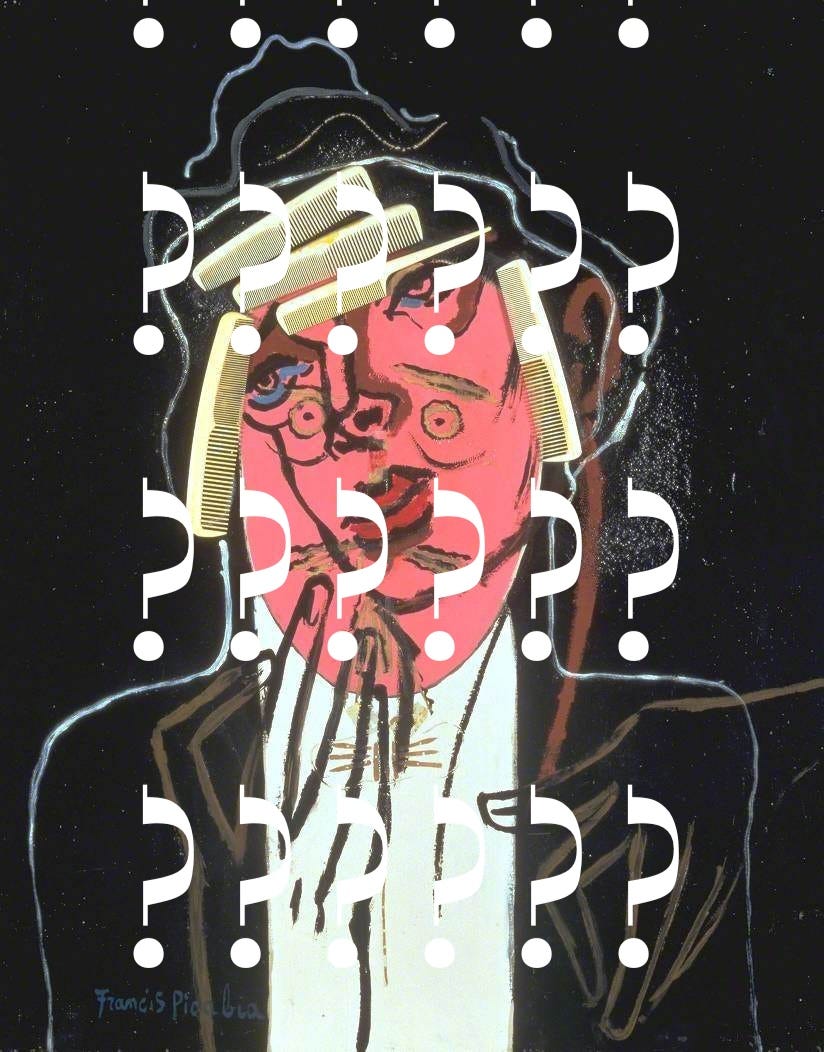
To the Friend Who Could Not Save My Life offers up a fascinating art-historical loose end in its Chapter 41, when Guibert surveys the late Muzil’s possessions and mentions among them a “drawing by Picabia that resembled Muzil.” It’s a lot less evocative (or sleazy, or droll) than Lacan owning L’origine du monde, but I’d still love to know what Picabia drawing Foucault owned, if any. Send all tips, please!
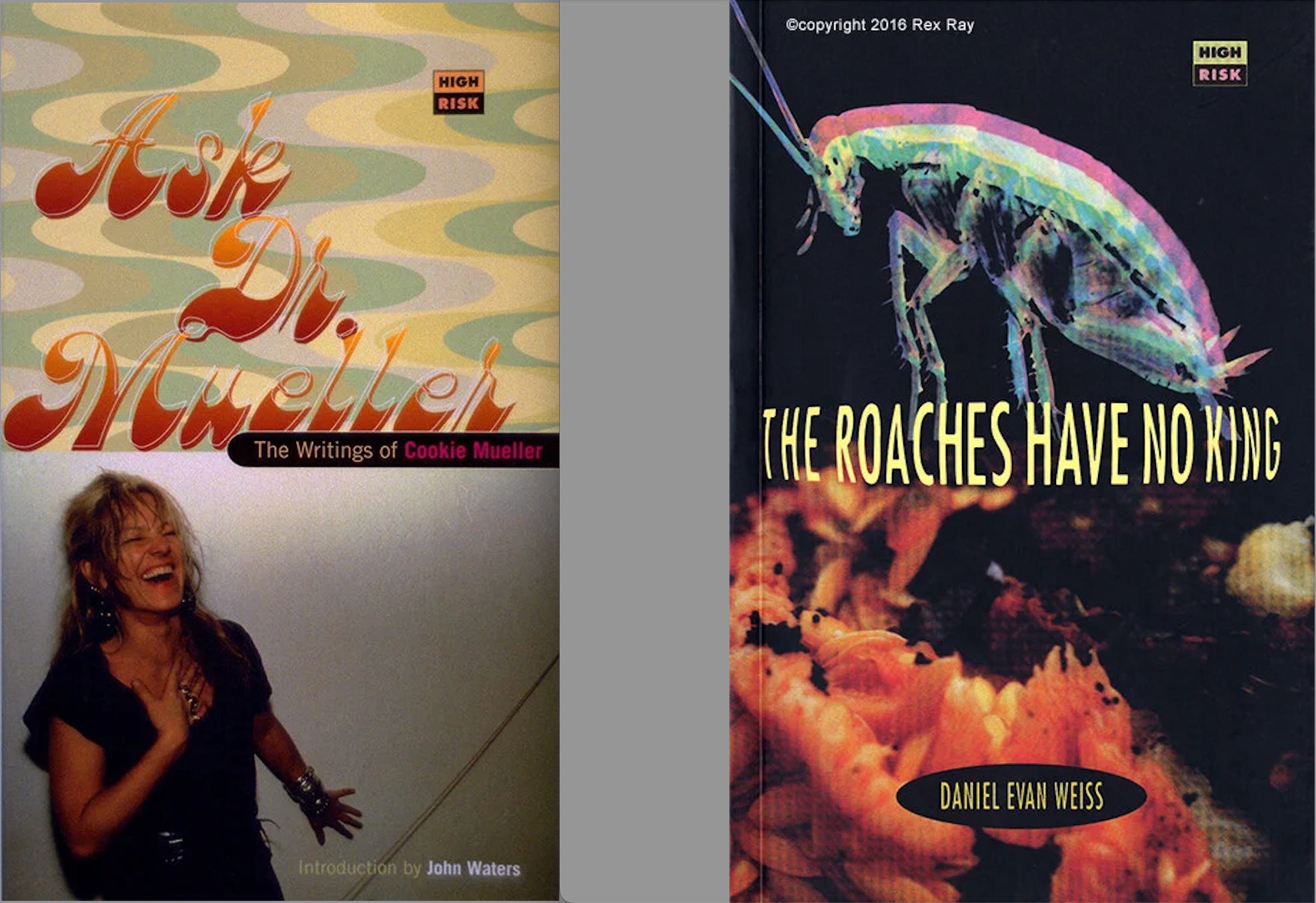
In some cases it’s fine to judge a book by its cover. For example, if you are lucky enough to come across the 1994 edition of To the Friend Who Could Not Save My Life published by High Risk that I read, you can tell immediately what you’re in for.
Like many other of the press’s books, it was designed by Rex Ray, who also produced gorgeously garish, axiologically ’90s looqs for books for City Lights, lots of Bay Area queer ephemera, tons of concert posters, and album covers for Diamanda Galas and David Bowie (and, inexplicably, shred god Joe Satriani). The guy was an early Mac adopter, according to his bio, both a sign and facilitator of a futurism that resulted in feverishly processed, ghostly monochromes and cutouts, and bold typography—a little spooky and a little dangerous, an imaging of how that era perceived the techno-unconscious.
Ray loved a strong horizontal split, so much that a top half and a bottom half became the primary template for High Risk. That choice arguably says something about the notions of mainstream and underground so salient in the 1990s, when the dialectic’s reinforcing contradictions reached a final intensity before flaming out and leaving the steaming garbage dump we all pluck through to find our books, music, reality shows, TikTok reels, et al. today.
A little Scott for the road.
The way Guibert discusses the vaccine, I did wonder if there was some translation error, or some fundamental confusion by Guibert about how they function, since taking them after you have already contracted a virus is too late. The idea at this still-early stage in understanding the virus seems to have been that if your T-cell count hadn’t dropped below a certain level, HIV’s activity could have been paused, though I’m still not quite sure that’s what he was thinking.
No posts
Comments
Nothing yet. Say the first thing.
Sign in to join the conversation.