
On Sunday, I made my weekly trip out to the local farmer’s market. I grabbed my usual goods: freshly baked sourdough bread, fresh vegetables, pastured eggs, some of the best homemade salsa I’ve ever had (one with a real kick of jalapeño heat and a milder but still delicious pico de gallo), local honey, veggie dumplings, and a silly amount of olive tubs.
Farmer’s markets draw crowds that can be staggering at times. This weekend was so packed despite the sweltering weather I felt like I was on a convention floor. It got me thinking about what magic they work that pulls people into them despite all the supermarkets with AC around. They answer some kind of yearning, and not just for the health-forward crowd, but people from all kinds of life stages and lifestyles. And because it’s me, I turned the thoughts away from shopping and into stories. Is there a creator whose work had a similarly simple artistry that drew in a huge audience, despite more fast-paced and readily accessible alternatives? What work was the narrative equivalent of a farmer’s market?
Studio Ghibli instantly came to mind.
The Background
Studio Ghibli is a Japanese animation studio founded in 1985 by Hayao Miyazaki, Isao Takahata, and Toshio Suzuki. The studio would become synonymous with Miyazaki, who chose the studio’s name “ghibli” from the nickname of an Italian aircraft, named after desert wind. Likewise, he aspired to breathe fresh air into the animation industry with his work. (Fun fact: though Nausicaä of the Valley of the Wind is often considered a Ghibli film, it was actually produced by Topcraft before the studio was founded. However, it’s critical acclaim paved the way for the studio’s future.)
My history with Studio Ghibli, much like the films they make, is simple and poignant: I watched Spirited Away when I was young and it became my favorite film. Before I began watching movies on my own, my decade-older sister made sure to give me a thorough education of her American teen classics: The Breakfast Club, Grease, Ferris Bueller’s Day Off, Back to the Future, She’s All That, plus her own animated favorite, The Last Unicorn (to this day, whether we’re 6 and 16 or 26 and 36, every time we rewatch it together we will belt the opening song.) But Spirited Away was unique in being a film I would seek out to re-experience over and over completely by myself, for many years to come.
Spirited Away has roots in folklore, and I love fairytales to the extent I studied them in college and continue to seek out all kinds of retellings, so for a while I assumed it was because of that. I also appreciated that the spirit world had both teeth and kindness. My go-to order for my stories is warmth with a shot of the dark and the weird and topped with a thick foam of sincerity; Spirited Away serves this in a beautiful cup. Chihiro was also a refreshingly thoughtful protagonist. She is cautious and bold in equal measures, something I related to a lot as a kid.
But as I began to explore other Ghibli films, a similar feeling kept coming up. Even when they weren’t reaching the level of Spirited Away for me, I felt so drawn to them. Sometimes the pacing was off, or the writing—in translation—not particularly sharp. Even still, they provided satiety for a hunger I didn’t fully understand I had.
Which led me to my current understanding of how the films answer a universal yearning for what is simple and real.
The Deep Dive
First, I want to direct you to an Animation Obsessive post from back in 2021 about what makes the storytelling of Ghibli feel unique. This goes into the concept of kishōtenketsu, which I recommend learning about if you are a fan of anime/manga, Japanese literature, rakugo, or just want to learn more about a unique cultural storytelling structure!
Below is my more instinctual take on what makes these stories stand out.
Studio Ghibli films tend to be consistent in their many themes. Nature is the heart beating true beneath the false promises of civilization. Friendships between men and women can grow into something beautiful without the yoke of romantic expectation. Food is more than fuel, but a gift worth taking the time to prepare, admire, and enjoy. All of these themes are focused around depth and connection to something.
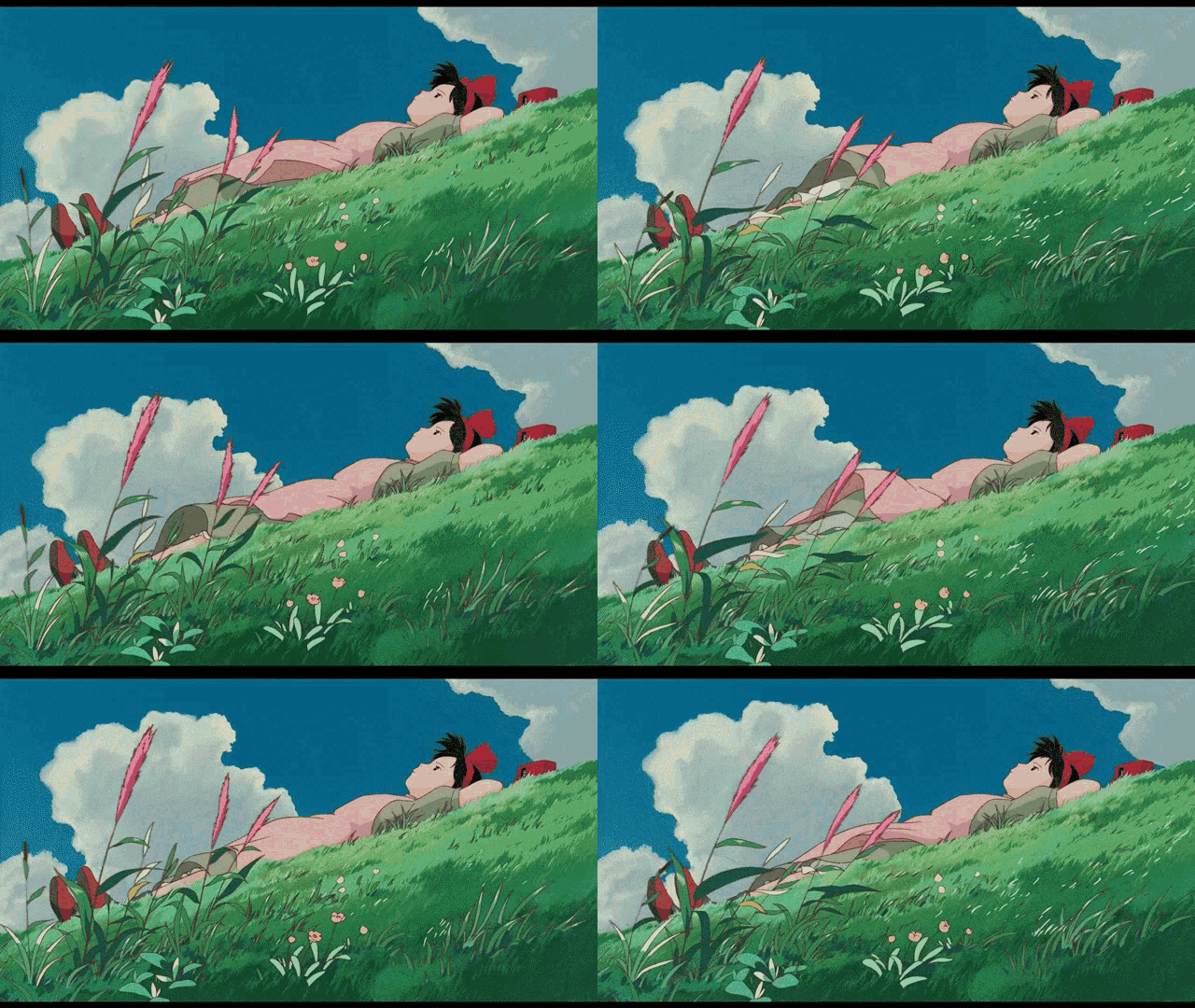
Likewise, Ghibli films prioritize quality over quantity. A new film only comes out every few years. But as a result, they feel fresher, like the ripe unbruised fruit you can find at the market that hasn’t sat in crates for weeks to get to you.
I’ve had many discussions with fellow writer friends about the ability of non-writers to discern quality from cheap content. While media literacy in today’s world is its own topic, I think generally, humans have an instinct towards knowing when something is crafted with love and care versus churned out to gobble up time and generate money. This applies to fiction, food, gifts, almost anything that can be given to someone else. And many people are drawn towards the more “connected” product—connected to someone’s passion, or connected to nature, in a purer state from the dilution of most modern conviencies.
Studio Ghibli isn’t even a stranger to adaptations or re-using IP, two of the go-to safety tactics modern media use to ensure an audience. But that has never felt like a decision made from a lack of confidence in its ability to sell. The Howl’s Moving Castle novel is fantastic on its own, but it offers a new perspective in its movie adaptation. Another one of my favorites from their studio, The Cat Returns, is a spin-off of Whispers of the Heart. The characters are almost all different, and feels more like wandering into another corner of a rich world to discover what’s happening there then picking up and forcing a new narrative onto old and tired (in and out of the story!) characters.
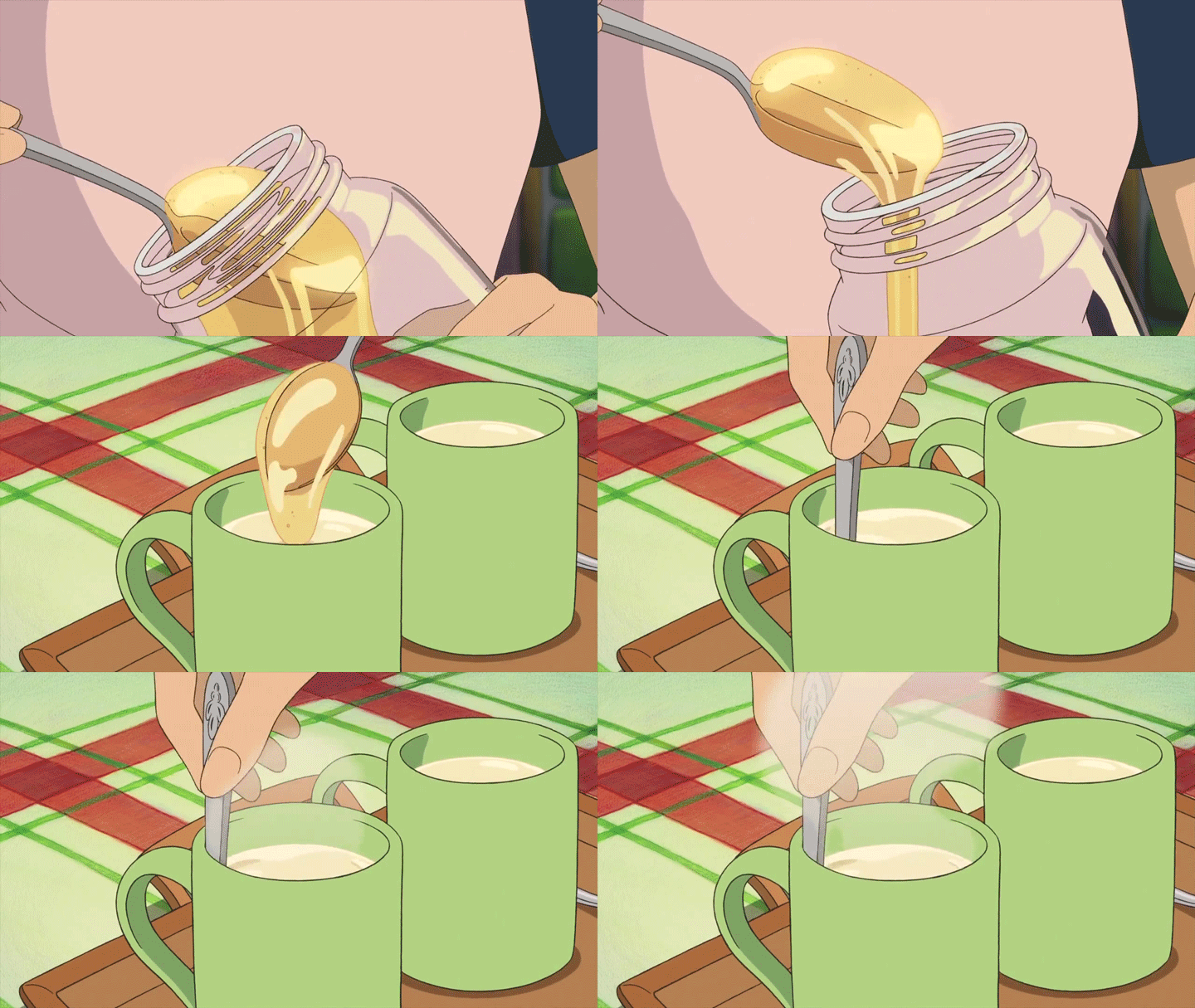
It was the focus on food in particular that first helped me draw the connection between the appeal of Studio Ghibli and the appeal of farmer’s markets. For me and many others, bringing home your finds to use in home-cooked meals is one of the greatest joys of a market trip. I’m a huge foodie who absolutely loves to cook and bake, but I don’t have a ton of time for it when work gets especially busy. Still, I always allow myself the weekends to get creative with culinary projects and practice the slower, mindful style of eating. Ghibli likes to linger on these simplest of pleasures, making you wait for the meal to “cook” in real time with slow detailed frames, and build up a real-life appetite for food that is just as lovingly prepared.
Of course, I’ll still have times when a protein bar is the best meal I can manage as I jump between commitments, or a day at the pier with friends is made perfect with a hot slice of pizza from beachy staple Pizza My Heart (Prima for me, always). These aren’t habits I’m looking to change, in the same way I would never just want to watch Studio Ghibli films and nothing else. But the opportunity to drop into a more authentic style of living is something I deeply value, whether it be in my food or in my fiction.
Studio Ghibli’s brilliance isn’t in breaking narrative ground. The world-building is lush, the animation is gorgeous, and the writing is strong in a standard professional way, but none of those things are what really struck me about their films. What the studio truly excels at is a gentle and competent simplicity. It nourishes an ancient and endless yearning to savor of the world around us, and I sincerely hope this integrity is maintained for the studio’s future.
Today’s Tea: “The Dozy Dormouse’s” chamomile flower blend by The Fancy Accent Tea Company, with a good spoonful of local honey stirred in. A farmer’s market find felt appropriate for today; this one I picked up alongside a few others when I lived up in Bellevue, WA during the first half of this year. I highly recommend checking out Fancy Accent if you want to support a small business and add some new teas in lovely packages to your collection!
Tea Drinking Stats: I got to the bottom/it got cold/I went back for a second cup (this one is easy to drain and refill, but I still typically tap out at two. Back when I lived abroad, my British partner of the time would regularly drink four or more cups in a few hours. The UK tea quaffing stereotype is well-placed.)
No posts
Comments
Nothing yet. Say the first thing.
Sign in to join the conversation.