
Sometimes a story is so excellent, you start an entire blog dedicated to fiction because of it. Such a story is Worlds Beyond Number, Book 1: The Wizard, the Witch, and the Wild One, which began in 2023 and reached it’s conclusion this month.
The Background
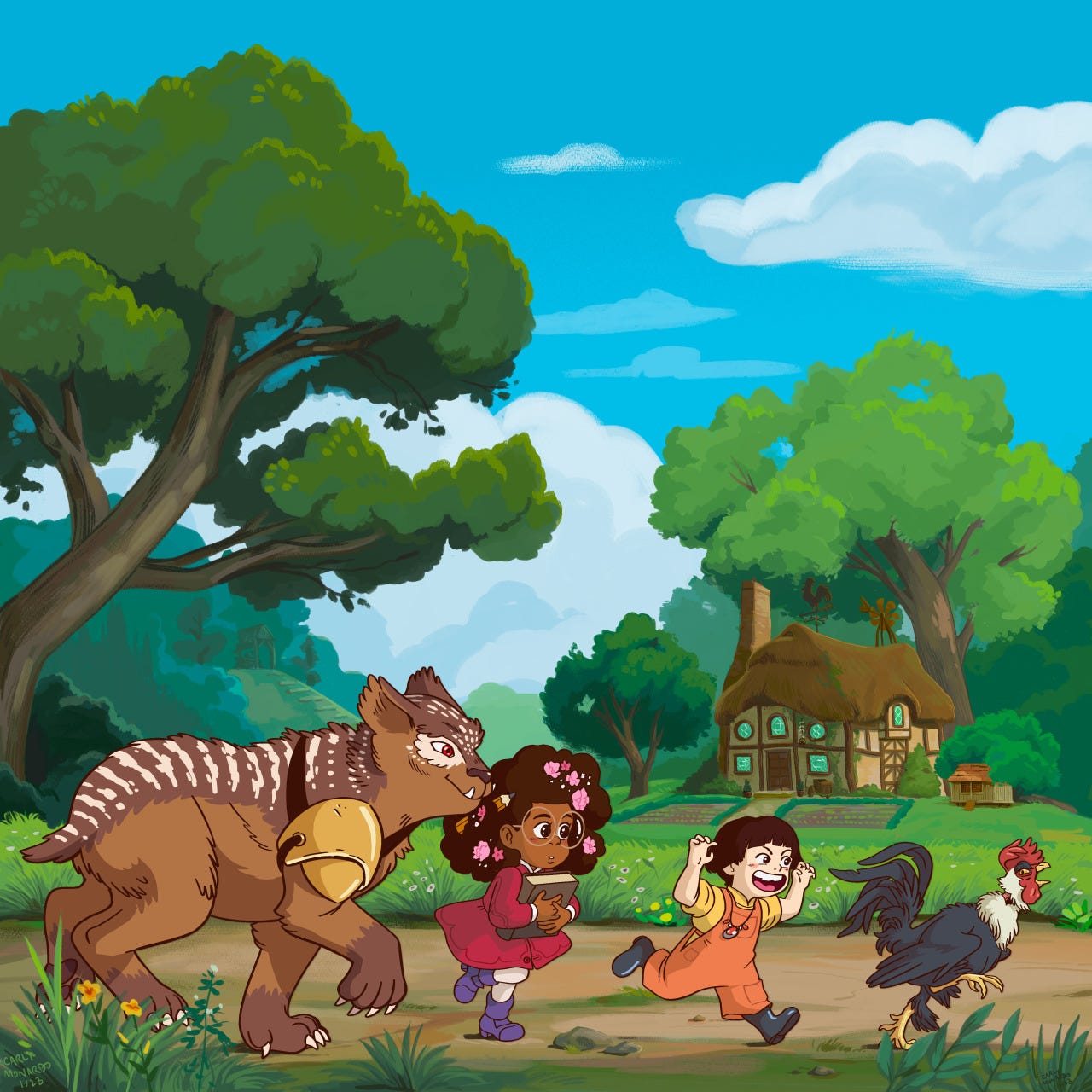
*Spoiler-free section*Worlds Beyond Number is an actual-play adult fantasy podcast using the DnD 5e system with a hefty dose of homebrew innovation. Brennan Lee Mulligan is the DM, and Erika Ishii, Aabria Iyengar, and Lou Wilson are the players. Book 1 features three protagonists from different corners of the setting, Umora, brought together during a wild summer they shared in their childhood (“The Children’s Adventure”, a prelude story run to develop the characters collaboratively rather than independently before the campaign.) One member of the party represents the wizards who study the art of magic under the dominant Empire (and by extension, the humans/mortals of Umora), one represents the spirits who are immortal and as morally complex as the Greek pantheon, and one represents the witches who are born with latent magic and live somewhere between what is mortal and what is spirit. The trio are true friends, and even though their loyalties are endlessly tested throughout the campaign, their love for each other is always triumphant.
If I had to describe the literary tasting notes of Worlds Beyond Number, I would call it deep, hilarious, and heartfelt. But even those words feel too small for the heights it can reach when it really shines.
Here is a wonderful animatic featuring the witch Ame and her familiar, the Fox, as a preview of the kinds of interactions you can expect:
For a little background on myself, I’m a massive TTRPG fan with a great love for actual play content and improv. Nearly a decade ago, I got hooked on listening to The Adventure Zone: Balance, which got me through apartment solo living chores and served as my gateway drug into the world of tabletop gaming. Since then, I’ve become a player in a 5 year+ long ongoing campaign with some of my closest friends, and enjoyed more weird and wonderful actual-play shows like Not Another D&D Podcast, Dungeons and Daddies, and the show slate of Dimension 20.
(I have not actually cracked into Critical Role yet. Perhaps I will be persuaded, someday…)
When I learned Brennan—my vote for one of the best storytellers and comedians of our time—was going to be running a new podcast with other Dimension 20 cast members, I knew I had to tune in.
But I had no idea how this piece of fiction would weave it’s way through my ribs and take hold in the deepest halls of my heart. I had no idea that every single episode would be so rich that there was only “filler” in how absolutely stuffed with thoughts my brain felt after listening to each. And I had no idea that of all the stories I’ve ever loved, I would be choosing Worlds Beyond Number as the piece of fiction I’d tell people to experience if they wanted to understand me as a person better.
The Deep Dive
*We are entering spoiler territory up through the finale of Book 1. If the background intrigued you, I highly recommend you check it out yourself before reading any further.*
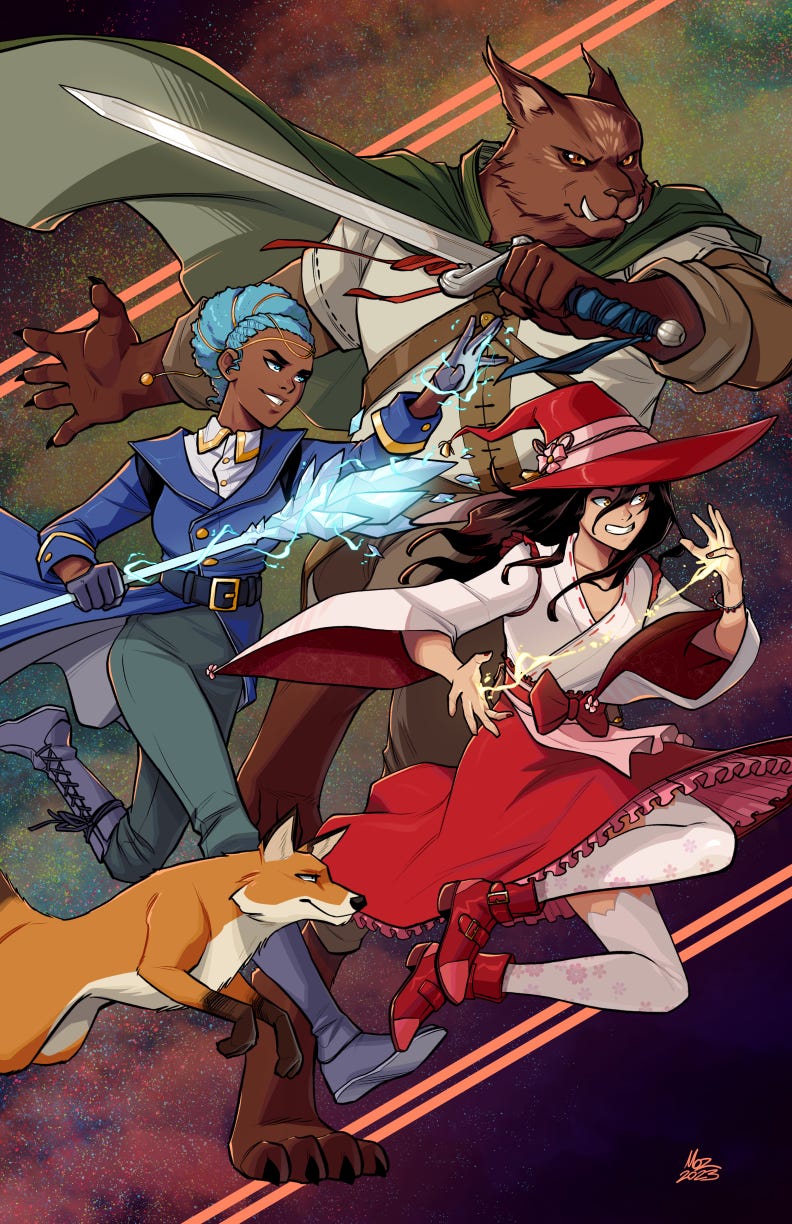
I’m about to practice some very impressive restraint. There are so many elements of this podcast that I want to discuss, but if I were to walk through each episode picking up all of the gems, I would have a novel, not a blog post. So I’ll leave aside my love for Naram and Orima’s romance, for Kalaya’s endless loyalty to her brother, and for Eioghorain’s surprising sensitivity and badass combat prowess. Instead, let’s spend this dive focusing on our “Titular Bitchulars” (thank you, Youtuber Athena P, for the handy phrase), the trio uniting the three facets of this world who are narratively connected by a unique concept: they are chosen ones who chose themselves.
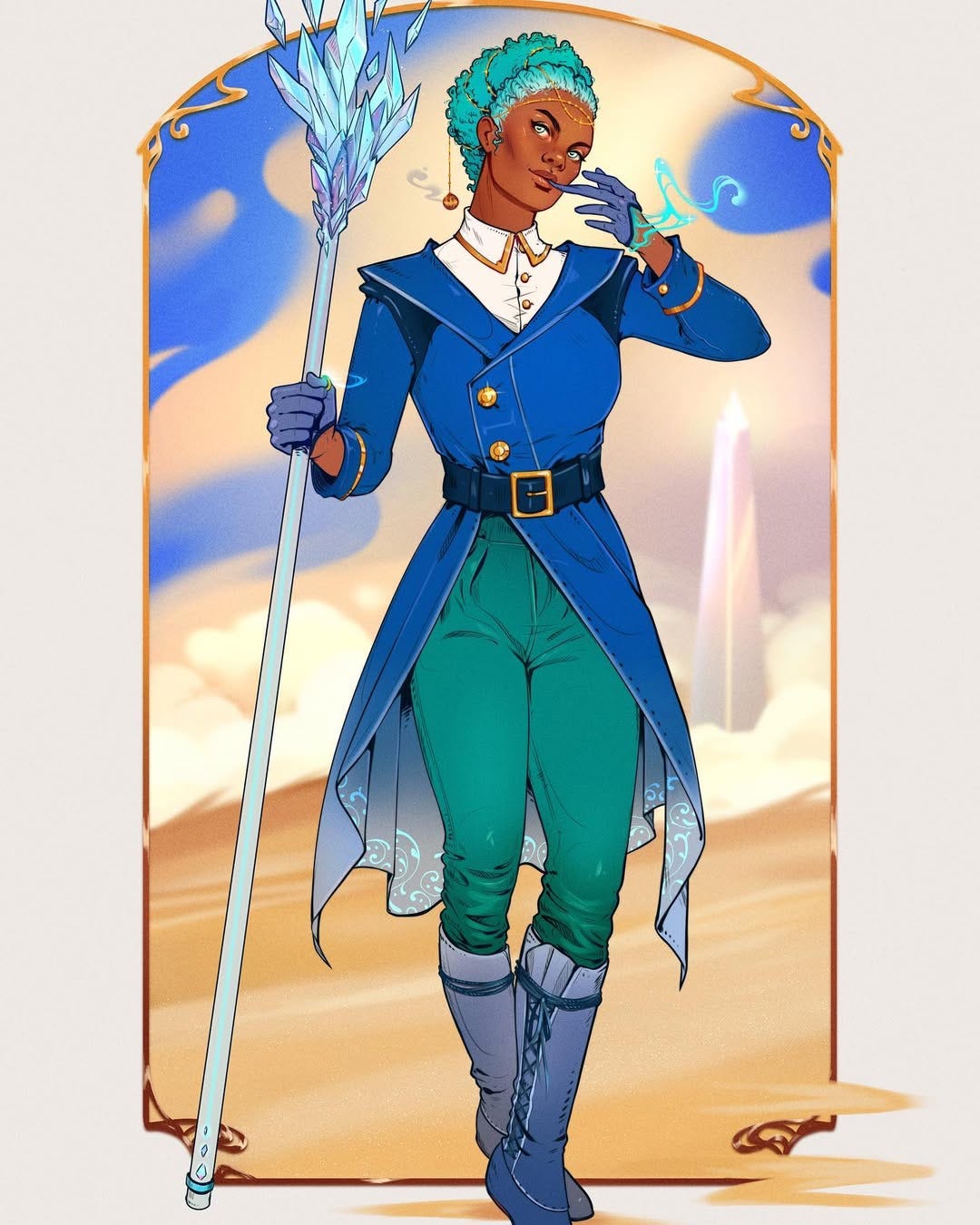
Starting with the Wizard, Suvirin Kedberiket/Sky. Suvi is a golden child of the Empire’s wizarding nexus, the Citadel. I understand the distinct pressures of being born in the cradle of progress. I grew up in the Silicon Valley, where in elementary school we got rewards for how quickly we could complete a typing course on Alphasmarts. I remember many drives past an ad for a maternity ward somewhere between the Facebook and Google campuses with a smiling clapping baby displayed above the caption “Born for Success”. Suvi thoroughly describes the way the pressure of her environment affected her when confronting her adoptive mother, Steel, on their trip back from the battleground of Twelve Brooks. But for Suvi, this pressure wasn’t just ambient; it was personal. Suvi was chosen by the Sword of the Citadel herself to inherit her grand cult-like vision of a new world where mortals have power over spirits. No one else is worthy in Steel’s perspective, not even her biological children—Suvi’s prodigious talent and aptitude for magic are too great to be squandered. If she couldn’t change the mind of Suvi’s birth mother, she would shape the mind of Suvi herself.
(Sidenote from a relisten to The Children’s Adventure: to covertly kill a kid’s parents and then have the gall to tell them you’ll adopt them and that you “have good snacks” in your household is diabolical. Steel is the sort of villain you have to comb back and listen to with the new context of her moral corruption to really appreciate what a monster Brennan created.)
In the finale, Steel attempts and fails to force Suvi back onto this chosen path in a very literal manner. Ironically, beyond her raw intellect, I believe it’s Suvi’s nuanced understanding of how to have a conversation with magic rather than dominate it that gives her the remarkable aptitude that Steel perceives in her. But Suvi’s values don’t align with the new world that Steel would give up anything to see created. In the end, Suvi chooses herself over the gilded but corrupt path laid out for her.
(In the finale’s retrospective, Aabria even mentions that she never wanted Suvi’s success to be the result of her being a “chosen one” long before she knew the truth about her parents and Steel; it’s awesome how the story taking shape around her naturally complemented this above-table goal.)
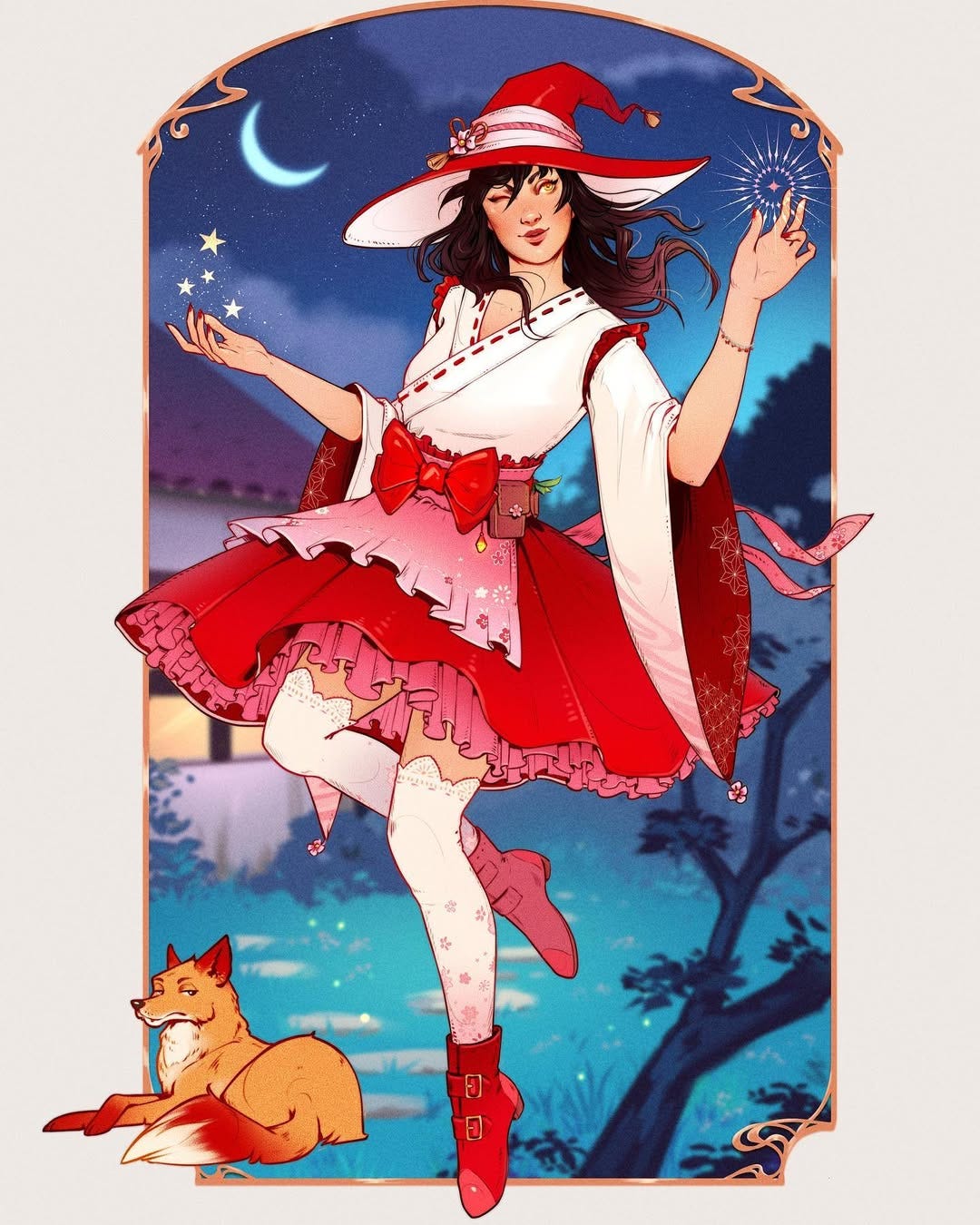
Then we have the witch, Ame. Ame is chosen to be a witch at birth by the magic in her veins, and under Grandma Wren’s tutelage, becomes the next Witch of the World’s Heart. Wren teaches Ame what it means to represent this station: be kind to all humans and spirits and serve as a point of communication between them. When Ame acts out, Wren has her write the phrase “Be Kind” as a repetitive reminder. But kindness costs Wren her life. And Ame learns that this is not the exact path she would choose for herself, as reflected in the familiar she attracts (the Fox) and the fox spirit magic that saves her when her well-meaning actions nearly get her killed herself. Crucially, Ame doesn’t reject kindness. A more inexperienced storyteller would glamorize the idea that Ame needs to be hardened by Wren’s death and her own near-death. But kindness was never the issue; rather, it was the expression of it that Wren had chosen to teach Ame. Wren’s kindness was too raw and underdressed, leaving her vulnerable to those who refuse to be moved by it. But when Ame changes the repeating “Be Kind, Be Kind” to “Be Kind, Be Cunning”, she finds the perfect garment; a way to enrobe kindness in cleverness and use her wit to win the most compassionate outcome among friend and foe alike. I love how reminiscent this solution is to classic fairy tale rules. Trickery can play just as well for the side of good. This is an approach that Ame discovers by herself. Like Suvi, she chooses a path that wasn’t set for her by her guardian, but informed by her own experiences and values.
I also must mention one of my favorite quotes in the entire podcast is directed at Ame. It’s the sort of quote that resonates so deeply with listeners who have this kind of disposition and our experiences navigating the world. I was knocked clean off my mental feet from being so seen just as Erika was, and I found myself wishing someone had given me this level of self-insight when I was younger:
Brennan: And talking to Mr. Callum in this way, Ame, you realize you're a creature of the deep end of the pool, and you are constantly starting deep conversations in a way that, to lots of people, will be really distressing.
Brennan: Your glib invitation for this Tamori to have a panic attack existential crisis, is because there's no part of the universe you don't feel interested in looking at. And that, suddenly you realize, is an immense gift, it's a superpower, you're tough, and your heart is strong, and there's lots and lots of people who will never want to join you there. Is that good for a 24?
Aabria: Goddamn.
Erika: Brennan Lee Mulligan. That was for my character, that 24.
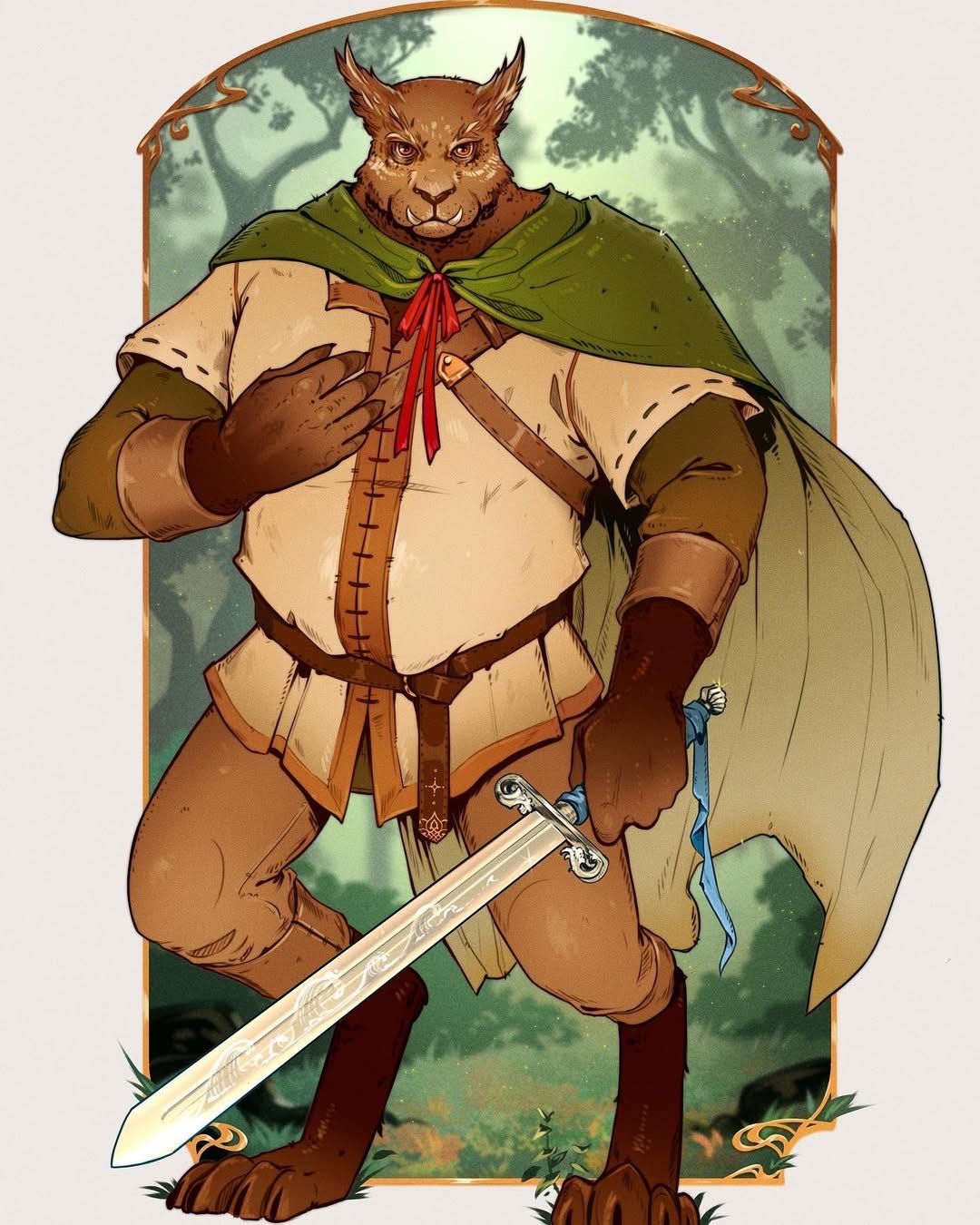
And finally, the wild one, Eursulon. Eursulon, the spirit of freedom who became one of my favorite characters across fiction over the course of this podcast. He’s introduced as a cub in the Children’s Adventure amidst a chorus of rollicking young spirits beneath the languorous steps of the Great Bear
(some of the finest sound design in the podcast, and I’m still tapping on all of Taylor Moore’s windows waiting for him to publish the full OST. Release it, Taylor.) I was immediately endeared to Eursulon’s unadulterated enthusiasm and curious heart. His fascination of human knighthood reminded me of my obsession with all things medieval as a kid, as did his desire to embark on a quest. And when he was way-shadowed, I felt for him so deeply—I think we’ve all had experiences where we wanted to go “home”, but felt we forgot the way to get there. His reunion with Kalaya might be called bittersweet, but the tenderness of the moment overwhelms the inherent sadness. “I lived a life of mortals, and you were always on your way!” is the first time I cried during this podcast, and it still consistently makes me tear up if I think about it too hard.
Eursulon is a Chosen One in the most direct sense, yet still not in the way you’d expect. He wasn’t chosen to be a benevolent hero. He was chosen by The Man in Black, one of the most powerful and dangerous spirits in Umora, to wage war against humanity. Specifically, Eursulon is asked to become his champion and wield his personal sword against the Citadel and the mortals in accordance with a prophecy. Sitting opposite of Steel, The Man in Black views all humans as short-lived worthless beings. Eursulon asks if Suvi and Ame would have to be killed should he accept this offer to fight for the spirits. When The Man in Black confirms they would, Eursulon is so disgusted that he throws the sword as old as Umora itself to the ground. I find it fascinating that Eursulon’s “refusal of the call” is in response to an antagonistic force trying to push him onto a twisted hero’s journey where humans would be his enemies, and it’s in this refusal that his real journey begins.
In the finale, Eursulon has won his way back “home” to the Spirit World: but to return there is no longer what we wants. What he truly desires, and by extension, how he defines the heroic path he’s chosen for himself as a champion of humans and spirits, is to bring the essence of home to others. Brennan described it gorgeously in another of my favorite quotes (delivered in the midst of a war-torn landscape, when Eursulon first earned his title as a spirit of freedom):
”Brennan: You know what freedom is. There are sorcerers in the ashen wasteland and wizards in the sky who believe in a word that they call freedom, but by which they mean power, the freedom to control, to own, to bind. Your freedom is full bellies for everyone. Play and chase and trust, for truly, while any yet are captured, how can any be free?”
Worlds Beyond Number is a story with so much to love, it was initially difficult to decide where to focus this post. High fantasy tropes are explored, honored, and taken apart with great care. My own loyalties as a listener were constantly shifting, and in a mark of truly masterful storytelling, I discovered that by the finale I had at some point rooted for every possible side in the world’s conflicts. And the final line of the podcast made me so giddy in its perfection that I had to lie in bed with a huge smile for many minutes after.
I find myself echoing the sentiment of a Youtube comment I saw for Worlds Beyond Number: how do you explain to others that amidst your shelves of beloved books and drawers of timeless DVDs, your favorite story of them all is something you can’t hold? To which I say it’s a side effect of our digital era…or perhaps, a grand return to our earliest fireside storytelling traditions.
Like a loaf of freshly baked bread, this is the kind of tale that’s most delicious when shared. I expect this is due to the collaborative nature of the story itself. I’ve analyzed it at length with other writers, and now, I’ve written this post to savor a bit of this show’s brilliance alongside you.
The world of Umora is so rich that an entire book of adventures over many years feels like a spoonful off the top of it (and the warmly hilarious Twelve Brooks interlude more of a long inhale that makes your mouth water.) Of course, a podcast called Worlds Beyond Number would be remiss not to explore other foreign lands, so we’ll be leaving Umora for Book 2. I’m still in the process of mourning, but as I often say at the conclusion of a tale that stirred my soul: there will always be other stories. In a world of so many uncertainties, this is a truth we can all find comfort and delight in.
Thus concludes For the Lore’s inaugural post. Thanks for stopping in!
Today’s Tea: I went with my early day workhorse for writing this post: Yorkshire Gold with a little oat milk. Worlds Beyond Number feels like coming home in podcast form, so I wanted to go with something so familiar it’s practically second nature to sip. Shout out to my time spent living abroad in the UK for starting the habit!
Tea Drinking Stats: I got to the bottom/it got cold/I went back for a second cup
No posts
Comments
Nothing yet. Say the first thing.
Sign in to join the conversation.