
On June 22nd, 2025, U.S. bombs fell on Iranian soil for the first time. For many Americans, there was confusion. They didn’t understand why this was happening. Then some legacy news anchor got up and told America that it was a preemptive strike. We had to strike them before they could strike us. It wouldn’t be but a few months after that it turned into war.
The Trump Administration told us Iran was so close creating nuclear bombs, and that they would kill us if they had a chance. That they’d been enriching uranium. It’s the same thing Israeli Prime Minister Benjamin Netanyahu has been repeating for over 30 years.
February 2026 — without a formal Congressional declaration of war — the U.S., alongside the Israeli military, scattered 900 bombs over Iranian cities.
For those in Iran, the sky began to fall between 7:00 and 9:45 on a Saturday morning, Tehran time. In Iran, Saturday starts the week. So for the people who live there, their workweek was just starting, schools hallways filled with friends and stories of the weekend.
I want you to put yourself in their shoes. You’re driving to work, the light is stuck on red and you’re mindlessly thinking about the upcoming day. Everything goes dark, and you wake up finding yourself trapped under a crumbling building, pain shooting through your lungs with each breath.
On day one, some of the very first victims of the undeclared war were children. The U.S. unleashed an airstrike on the Shajareh Tayyebeh Elementary School in Minab, Iran, killing over 150 people, including 120 children. Most of the deaths were young girls between the ages of 7 and 12.
Do you remember what it’s like to be that young?
When your adolescent, your world is small. Your biggest concerns are recess and homework. You don’t think about geopolitics, military strategy or corporate profit margins. Hell, you don’t even know what most of those words mean.
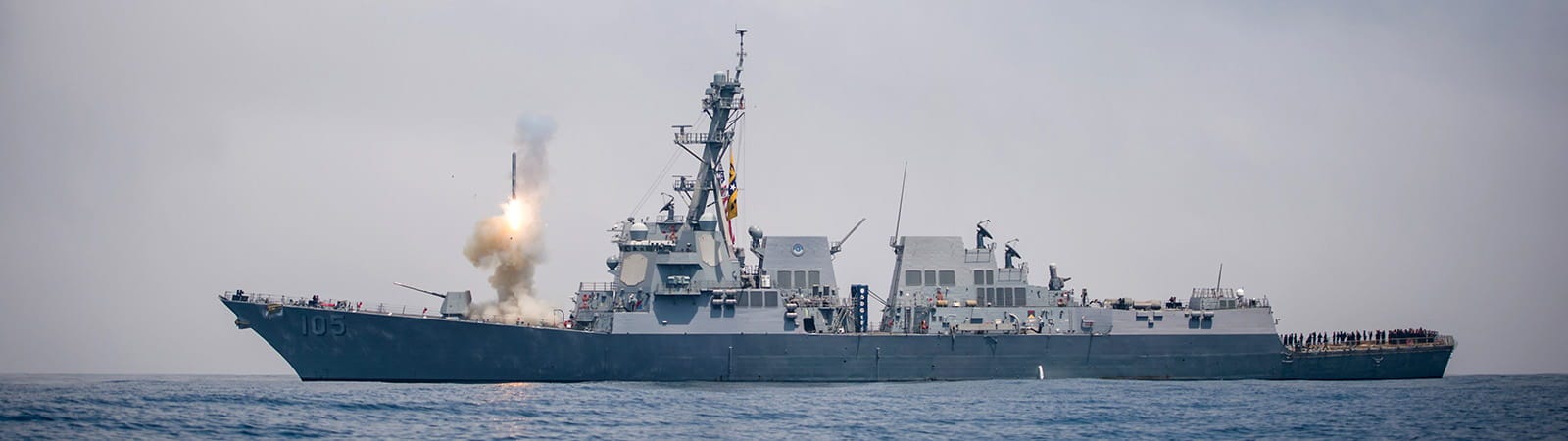
Initially, the United States denied having anything to do with this. On social media and news networks, we were told that it was a failed Iranian bomb that had fallen back on the school. The truth later came out that it did, in fact, come from the United States. Video analysis, open-source satellite mapping, and recovered munition fragments confirmed that the school was hit by BGM-109 Tomahawk Land Attack Missiles.
This bombing was made possible by RTX Corp (Raytheon) who is the primary manufacturer of the BGM-109 Tomahawk Land Attack Missiles used to decimate the children’s school. These missiles were originally designed and produced in the 1970s by General Dynamics, and production was later shared with and eventually taken over by McDonnell Douglas, before ultimately becoming a RTX Corp (Raytheon) program.
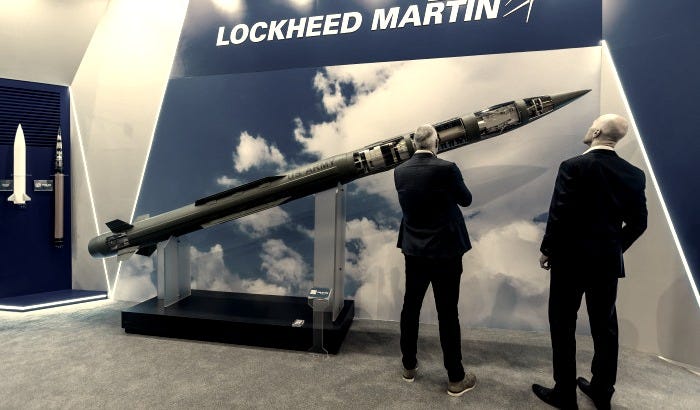
Back in the 1970s, Tomahawk missiles were clunky, hard to use, and expensive. Now they’re loaded with technology to make sure they hit their intended targets with absolute precision. These missiles each have backup after backup built into them including satellite navigation, motion tracking sensors, terrain scanning radar, and target confirming cameras all working together so nothing throws them off course. The newer, more expensive models can be redirected mid-flight.
Just one Tomahawk missile costs approximately between $2.2 to 4 million dollars to produce.
6 months ago, RTX (Raytheon) announced a 5-year agreement with the Department of Defense (‘War’) to drastically scale up Tomahawk production to more than 1,000 missiles per year. Every year we’re looking at billions of tax-payer dollars going to instruments of global destruction and death.
A video of the aftermath of the U.S. bombing on the Minab School in Iran on February 28, 2026. Sourced from the Guardian.
The defense contractors and Wall Street capitalists funding these missiles just bought another yacht, or paid off another politician. But for the families? It meant the permanent devastation of losing a child.
Those girls will never get the chance to grow up, to graduate, fall in love, build careers, or become mothers themselves. Their stories ended before their lives had really begun.
And somewhere, thousands of miles away, the people who authorized these bombs will never bother to know any their names. Israeli Prime Minister Benjamin Netanyahu and United States President Donald Trump won’t learn their names.
And neither will the corporations who got richer from it all: Chevron, ExxonOil, Saudi Aramco, Shell, Lockheed Martin, RTX Corp (formerly Raytheon), Northrop Grumman, General Dynamics, and Palantir. Among many others.

Despite the fact that sitting U.S. President Donald Trump campaigned on “no wars,” the United States military is seeing explosive growth. Structural, financial and industrial expansion Americans haven’t witnessed since the historical Cold War.
They’re calling it the Arsenal of Freedom, a surging defense mobilization has already unlocked billions of dollars in fresh government contracts and corporate expansions. The goal to replenish the United States’ missile arsenal.
The initial push for expansion came from the Pentagon, and now corporations that profit from war—including RTX (Raytheon), Lockheed Martin, Northrop Grumman, Oracle, Palantir, and Anduril Industries—are proud to announce they are participating in the Arsenal of Freedom.
On September 5th, 2025, exactly 223 days after Secretary of Defense Pete Hegseth took the helm, Donald Trump signed an executive order authorizing the use of "Department of War" as a secondary title for the Department of Defense. The rebrand itself left US taxpayers footing the costs of an estimated $10 million.
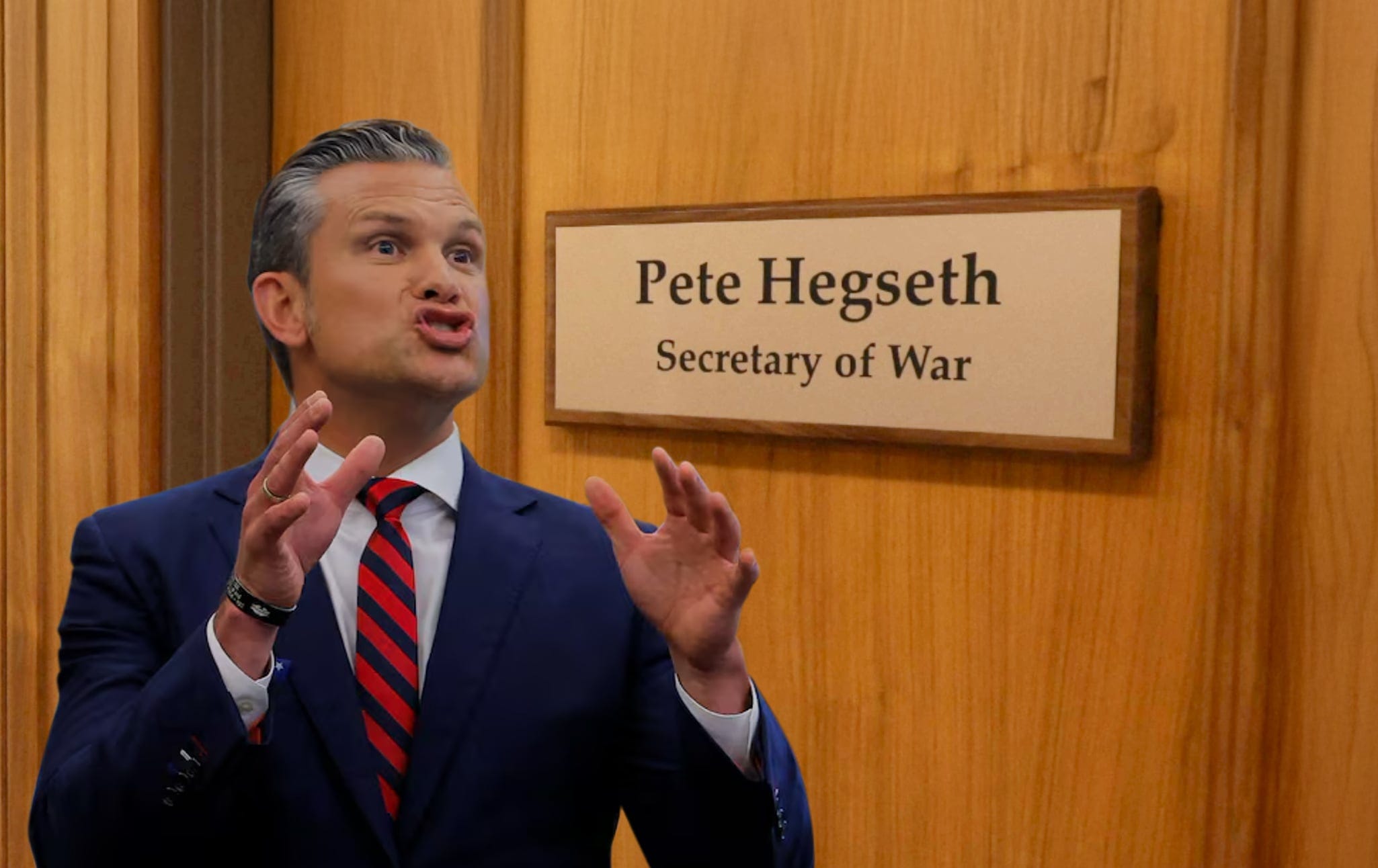
Here’s some history: Back in 1947, the National Security Act renamed the Department of War to the National Military Establishment (NME) as part of an effort to merge the Department of War and Department of the Navy together. Prior to the merger, they were separate cabinet-level departments. In 1949, they changed the name again—from the National Military Establishment (NME) to the Department of Defense—because they realized NME sounds like enemy. The Department of Defense and their trillion-dollar budget want you know they’re not the enemy; they’re protecting you. Don’t pay any attention to the fact they failed every single audit they’ve ever had.
By November 2025, the now re-branded Department of Defense quietly posted a 39-page document titled “Acquisition Transformation Strategy” launching their military augmentation plan and the Arsenal of Freedom.
The United States government orchestrated the Arsenal Freedom Initiative based on the heavy depletion of the US missile arsenal. Over the last few decades, the United States has manufactured thousands upon thousands of missiles.
So what happened to them all? These million dollar missiles don’t sit in a warehouse. They get sold and shipped overseas through the foreign military sales (FMS) program. A program is brokered by the Pentagon, with oversight coming from the Secretary of State. Under the second Trump administration, oversight of the FMS program comes from Secretary of State Marco Rubio.
The US government sells missiles, jets, tanks, artillery shells, rockets, and even nuclear-powered submarines to foreign countries from Saudi Arabia to Germany.
The profits from these sales are paid directly to the defense contractors who manufactured the weaponry, creating an on-going cycle of profitable conditions. When the arsenal is empty, it needs to be replenished. The same contractors are given the contracts to make more.
But it isn’t just sales to foreign governments depleting the American missile arsenal. It’s the president and his convoluted idea of charity.
Using the “presidential drawdown authority” loophole, the executive branch has bypassed all congressional oversight to funnel domestic military stockpiles to foreign countries. In recent times, the U.S. has even begun pulling the trigger themselves themselves.
When Israel and the United States dropped 900 bombs over the Iranian skies, Iran fired back. Over 650 missiles were flew through the skies to Israel leading to massive structural damage in places like Tel Aviv. In response, the United States used 80% of its interceptor missile arsenal — both THAAD and Patriot interceptors — to protect Israel from further attacks.
US officials say the Iran war is to blame for this shortage. And while technically, it is because of the Iran war. They frame the war as a necessary means to protect Americans.
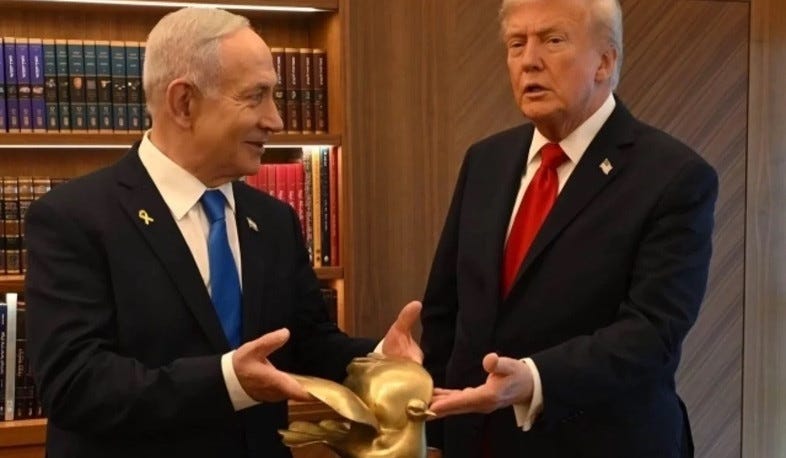
Meanwhile, the American arsenal was systematically liquidated to service a client state whose leader has spent more than thirty years relentlessly lobbying Western governments to wage a kinetic war against Iran. America gutted their arsenal to execute the decades-old geopolitical obsession of a foreign prime minister.
The United States domestic defense grids have been left compromised by these actions. Americans are not any safer because of it. And now the war profiteering networks have been instructed to churn out missiles, both — offensive and defensive — as quickly as possible. Or else.
Donald Trump signed an executive order in January warning defense contractors that are ‘underperforming’ in missile production, they’ll be punishing by being prohibited from buying their own stock to inflate its value and enrich shareholders. Wall Street calls it a buyback.
In both March and June 2026, Donald Trump and senior government officials hosted executives and representatives from some of the world’s largest defense contractors at the White House. BAE Systems, Boeing, Lockheed Martin, Northrop Grumman, RTX, Honeywell, and L3Harris. Both meetings were to address the speed at which the missiles were being pumped out. And what the U.S. government could do to ensure it happened.
Between January 2025 and August 2026, the Pentagon funneled an astronomical $108.36 billion in major new and expanded mega-contracts directly into the hands of Lockheed Martin, RTX, and Northrop Grumman. Prior to this 19-month surge, these three contractors operated at a combined baseline of approximately $136.7 billion in annual Department of Defense contract revenue.
Combining their established $136.7 billion annual baseline with these $108.36 billion in new mega-awards pushes the total taxpayer funds funneled into these giants to $245.06 billion.
The ‘arsenal’ will continue to grow under the National Defense Authorization Act (NDAA) of FY27—the Department of Defense’s budget bill for the upcoming year. They’re requesting $1.15 trillion dollars with $750 billion set aside to expand military manufacturing capabilities and procure weapons.
In official documents from the United State House Armed Services Committee, the Arsenal of Freedom and the massive amount of funding the Pentagon is set to gain is presented similarly to ‘America First’ initiatives. Whilst using the same trickle down economics framework as Ronald Reagan, the congressional committee promises that the expansion will help everyday Americans by bringing the war economy home, sharing the $1.15T payday with smaller corporations that profit from war.
FY27 NDAA (H.R. 8800) is not yet law. With a 216–212 vote, it passed the House of Representatives on July 22, 2026 and awaits an unscheduled senate vote.
Democrats: 6 in favor, 205 opposed
Democrats who voted “Yes”: Henry Cuellar (TX), Don Davis (NC), Jared Golden (ME), Adam Gray (CA), Vicente Gonzalez (TX), and Marie Gluesenkamp Perez (WA).
Republicans: 209 in favor, 7 opposed.
Republicans who voted “No”: Josh Brecheen (OK), Tim Burchett (TN), Elijah Crane (AZ), Harriet Hageman (WY), Anna Paulina Luna (FL), Chip Roy (TX), and Thomas Massie (KY).
So with the explosion of weapons development, could this theoretically help Americans? While theoretically sound, history has shown us otherwise. Despite the fact that the United States has anti-monopoly laws, legal loopholes and exceptions for the ultra wealthy allow these large corporations a massive level of obscurity.
This is something obscured from the public eye by using a convoluted corporate infrastructure meant to overwhelm anyone looking at it. This is a tactic used nearly every corporate giant across every industry, and that’s not an exaggeration. Subsidiaries work because they let a parent company wall off risk, taxes, and regulation into separate legal boxes.
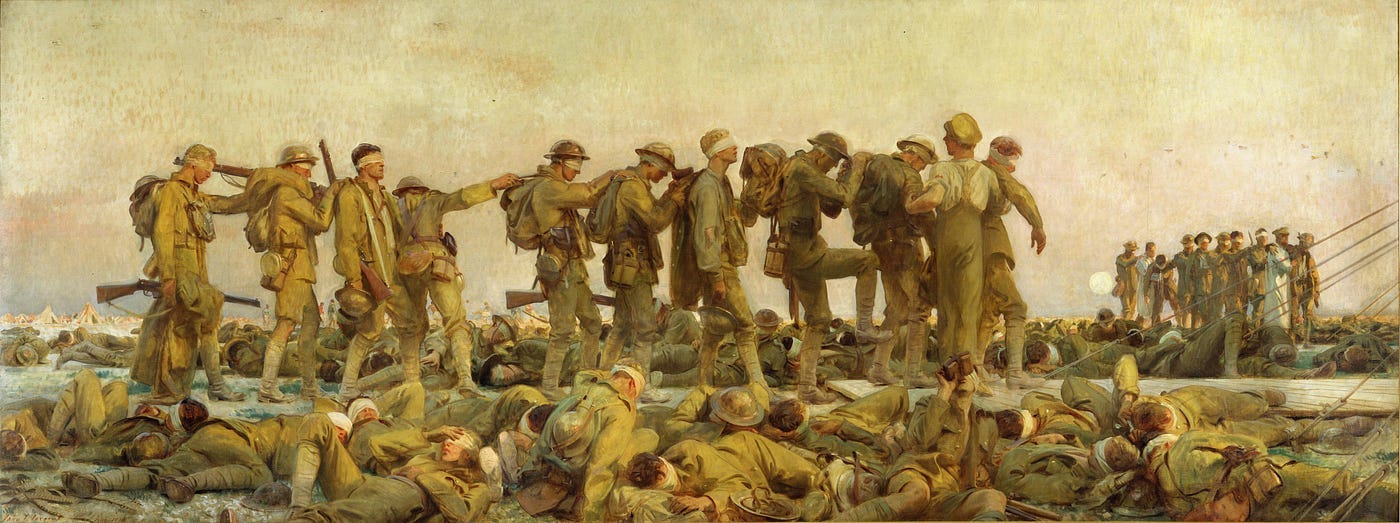
The way that it works is that larger corporations like RTX own a handful of smaller companies called subsidiaries. For example, one subsidiary of RTX is privately-owned corporation Solipsys. RTX and Solipsys are the same company. But corporate law allows them to exist as separate legal entities. If you sue one, the other is protected.
In April 2025, the company was rewarded a $182 million contract by the US Navy for infinite access to for Common Aviation Command and Control System software owned by the company. Which actually means RTX received $182 million.
This is just one example of many. Military contracts are not only awarded to the larger, well known companies but also the smaller companies in their network. The structure works like Russian nesting dolls: each company has another inside of it. Sometimes several.
RTX (Raytheon) owns ~260 separate subsidiary companies.
Lockheed Martin latest SEC filings shows a total 16 subsidiaries across the globe.
Northrop Grumman owns 36 subsidiaries, according to public records.
Case in point: HRL Laboratories, LLC. Reportedly, this is a corporate Research and Development Laboratory that specializes in Defense Advanced Research Projects Agency (DARPA).
HRL was once owned by RTX (Raytheon), General Motors (GM), and Boeing. Three giant companies, one subsidiary. RTX sold it’s ownership in the company in 2007, resulting in 50/50 ownership between GM and Boeing.
Since its founding, the HRL subsidiary has earned at minimum $340 million dollars in government contracts. Between 2014 and 2023, HRL received no government contracts. Breaking a decade of silence, they secured $37 million in new government contracts in 2024.
A new contract wasn't necessary since the existing one could just be modified, which is exactly what happened.
In January 2026, the Pentagon awarded HRL a massive $14M contract modification, bringing the total value of their on-going contract to $25,951,038. By July 2026, the HRL Labs subsidiary was sold for an undisclosed amount to IBM. Corporate giants trade subsidiary companies much like children in the early 2000s traded Pokemon cards.
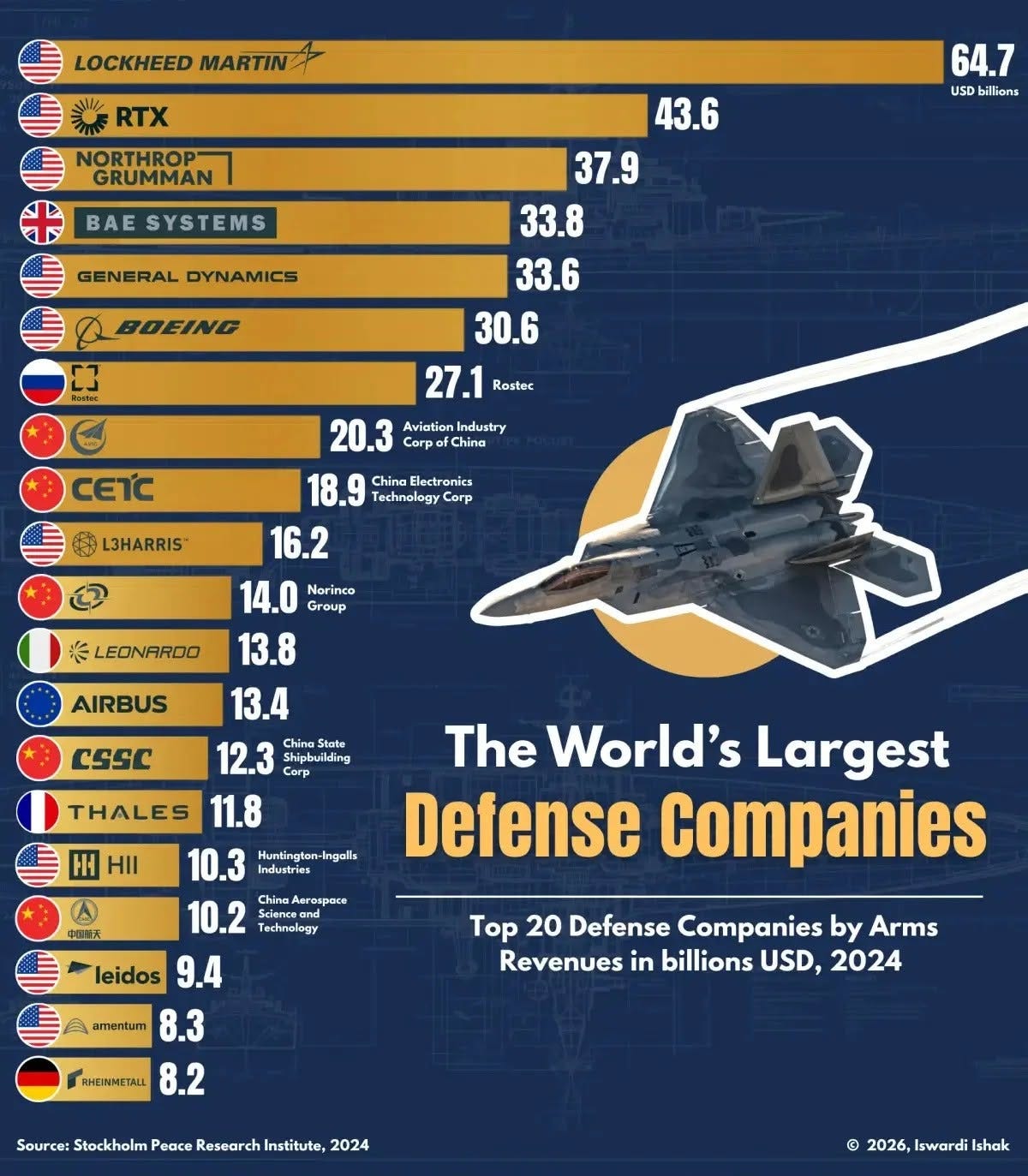
This is the information that’s available to us publicly. The next layer isn’t transparent. RTX (Raytheon), Boeing, Lockheed Martin, Northrop Grumman, General Dynamics. These are all publicly traded corporations making them subject to SEC laws that require them to list their subsidiaries such as HRL labs and Solipsys.
These subsidiaries are separate corporations from their parent companies. More specifically, these subsidiaries are private corporations that are not publicly traded, meaning they are not subject to the SEC’s reporting requirements and have much less oversight.
What this means is that if Solipsys bought five more companies, and each of those companies bought ten companies, all of that information would be private because they are a privately owned corporation. It does not matter that RTX (Raytheon) owns Solipsys as legally Solipsys is its own company. Any profits or subsidiaries owned by Solipsys are not included in the SEC 10-K filings for RTX.
They are intentionally hidden behind corporate privacy laws that allow this structure to exist. The infrastructure of hidden companies is something that corporate giants like Alphabet (Google), CVS, Berkshire Hathaway (Geico), Aetna, PepsiCo (Frito Lays), United Healthcare and many others use. Many of these companies refer to this structure as vertical integration, or a tiered structure.
This means these defense corporations are likely significantly wealthier, with more power and more of a corporate network than most Americans realize.
But in the event that that the militaries ever-growing budget weren’t just trickling down to subsidiaries and the shareholders, it still would not benefit the American people in any meaningful way.
The military-industrial network has existed for over hundred years. It predates the Trump administration by decades. It’s older than Donald Trump himself.
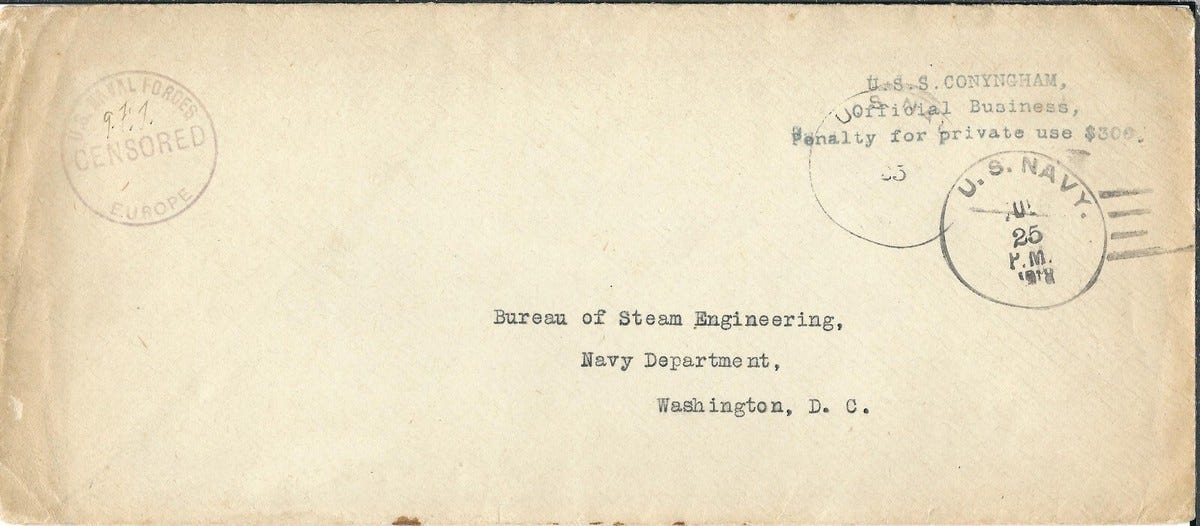
In 1918, Lockheed Martin made their first aircraft sale to the Department of Navy. At the end of World War II, Lockheed was rolling out 23 planes a day and held war contracts worth $2 billion. This was in 1945, $2B at the time is equivalent to $37.11 billion in 2026.
RTX (Raytheon) secured its first major U.S. government defense contract in June 1941. The U.S. Navy paid them to mass-produce the top-secret cavity magnetron vacuum tube and deliver 100 radar systems for Allied naval ships. It was only five short months after RTX scored their first government contract, the United States entered WWII. At the end? RTX (Raytheon) was worth over $150 million.
Northrop Grumman received its first Navy contract to build pontoon boats in 1930. By April of 1931, they were making fighter planes for the Navy. Their aircraft being used in warfare led to being worth $150 million by 1946.
TL;DR? The three largest defense contractors in America — Lockheed Martin, RTX (Raytheon), and Northrop Grumman — began with a Department of Navy contract. All of them are American-based companies. All of them have been around for decades, and the average Americans quality of life is no better for it.
The executives of military contractors aren’t the only corporate interests receiving direct access to the White House.
In January 2026, just days after the U.S. military operation targeting Nicolás Maduro, Donald Trump, Vice President JD Vance, Secretary of State Marco Rubio, and Interior Secretary Doug Burgum convened executives from at least 17 major oil and gas firms in the White House East Room. They sat comfortably among CEOS and representatives from Exxon, Chevron, ConocoPhillips, and Shell among others.
These were friends. Executives who had known Trump for years pouring hundreds of millions of dollars into his campaign and inauguration funds, first in 2017 and then again in 2025.
Oil and gas companies spent an estimated $450 million for Trump during the 2024 campaign cycle. Donald Trump’s 2024 election was funded in part by powerful, ultra wealthy oil corporations. They were making an investment that paid off for many in January 2026.
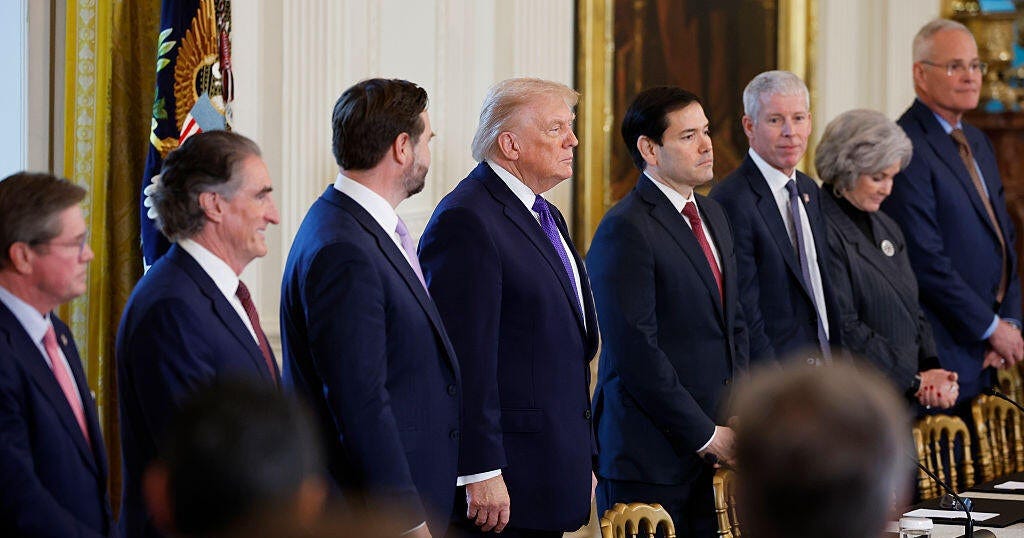
In this meeting, Trump told oil executives about the “tremendous wealth” in Venezuela and all of the lucrative opportunities just waiting for them down in South America. Venezuela holds the largest oil fields in the world. So Trump made a promise to old friends that 2007 — the year Venezuela nationalized their oil — would never happen again.
The sitting president of the United States guaranteed these multinational oil conglomerates profits and protection by the U.S. Military. The United States military, our children, deployed to act as a taxpayer-funded Pinkerton squad for oil executives.
Days later, the U.S. and the new Venezuelan authorities announced an energy deal where the U.S. would “help” sell Venezuelan oil. Six companies were handpicked and given General License 50 by the US Treasury. This license being the golden ticket allowing the select few to export and refine that Venezuelan crude.
Much like Operation AJAX, the United States once again committed a coup against a foreign government. Just one of many illegal regime changes enacted by the U.S. government to enrich corporate interests in the US and UK.
The companies pumping and/or selling Venezuelan crude include BP, Chevron, Shell, Eni. Repsol and Établissements Maurel & Prom SA. As of August 2026, no other companies have been ‘awarded’ a golden ticket.
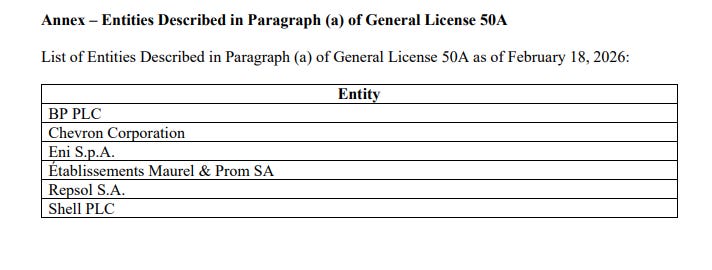
Since Donald Trump took office in January 2025, Chevron’s profit margins have increased by 400%. Exxon, Shell, and BP followed suit with reports of record profits.
These oil companies are some of the largest spending lobbyists in Washington outside of the military industrial giants.
Chevron gave $9 million to Trump’s 250 PAC. They spent $2 million on his 2025 inauguration. They spent some on his 2017 inauguration. They also spent over $9 million in lobbying the federal government in 2025.
Exxon spent $1 million on his 2025 inauguration. They spent $500,000 on his 2017 inauguration. They also spent over $8.5 million in lobbying the federal government.
Exxon originally left Venezuela in 2007 following Chavez’s nationalization of Venezuelan oil. While they didn’t apply for golden ticket, Exxon CEO Darren Woods publicly declared that he is absolutely interested in Venezuela (both their oil and natural resources) but would like to wait until the ‘political climate’ has calmed down before they colonize again.
Shell Oil and British Petroleum (BP) are corporations based in England. These are massive foreign oil conglomerates that spent a combined $10 million lobbying the America government in 2025. By 2026, they were given a seat at the White House and a special golden ticket for drilling oil from America’s latest regime change.
And these companies profit from the US-Israel attacks on Iran war in ways that aren’t obvious at first glance. None of these companies transport their oil through the Strait of Hormuz. Not a single drop.
But 20% of the entire world’s oil supply does travel to the street. It goes to places like China, India, South Korea, and Japan. So when 20% of the entire supply of oil is inaccessible. The price of a barrel of oil goes up. The more scarce a resource, the more a company can make from it.
Which is still much higher than it was before Washington decided to ignite yet another foreign conflict that consequently, pads the pockets of their donor conglomerates from the very two industries that lobby the US government more than any other — oil and war.
Most of America’s oil comes from within its own borders. The oil that comes from outside of Americas borders typically comes from from Canada, New Mexico, and now Venezuela. The United States now imports nearly 800,000 gallons of Venezuelan oil daily. None of these supply routes are affected by the closure of the Strait. At all.
The companies have not had any reduction in supply or availability of their oil, and yet American gas prices are surging with the cost of the barrel. Companies like Chevron, Exxon, BP, and Shell are looking at that skyrocketing global price and raising their prices to match it. But remember… they don’t have to deal with the closure of the Strait of Hormuz.
That strait has nothing to do with their oil. Their supply lines are fine. These companies are knowingly and willingly overcharging Americans. You are footing the bill. They are selling you the exact same oil, pumped from the exact same places, and they are demanding you pay the “Middle East War” premium.
They could technically choose to sell it to you at a fair price based on their actual costs. But then they wouldn’t make record-shattering profits we’re seeing today.

After reading about how deep the corruption runs, it’s easy to feel hopeless, aimless, and afraid. These corporations are massive, and they want you to feel small. There are more of us than them, and change starts with you and it starts with me.
The only way out is community & what you can do locally. When you start small, it makes a huge difference because they don’t expect the ‘little man’ to stand up. Show up to city council meetings. Go to the town halls and public forums your representatives and senators hold.
Start a community garden and hand out food. You could host a free weekly dinner under the Food Not Bombs framework. Put a giving box in your front yard where you and your neighbors can stock it with books, canned goods, and water for those in need.
Support independent media. The people who benefit most from all this own the news networks, they fund the lobbyists working your senators, and they hold stock in the military industrial complex. The same shareholders keep showing up everywhere. Unlike this octopus of corruption, I don’t have shareholders. I only have me, you, and what we built together here.
If you learned something from this article, if it made you feel something, or if it made you want to dig further, subscribe. It’s free. A paid tier helps support the work, and a one-time coffee helps too. But the biggest support is information moving. Give this article a heart. Even if it didn’t make you feel good, help push it out.
Share it on social media or other platforms
Restack it here on Substack
Get it in front of people who haven’t seen it!
Thank you for reading, and I hope to see you in the next one.
Love, Dissent in Bloom

.
Comments
Nothing yet. Say the first thing.
Sign in to join the conversation.