
It's not widely known in history that as Nazi Germany rose to power, a symbiotic relationship formed between corporations and the state. Benito Mussolini’s Italy explicitly based its economy on a concept called Corporatism. They didn’t know it then, but cronyism could not save them in the end.
Those who fail to learn from history are doomed to repeat it.
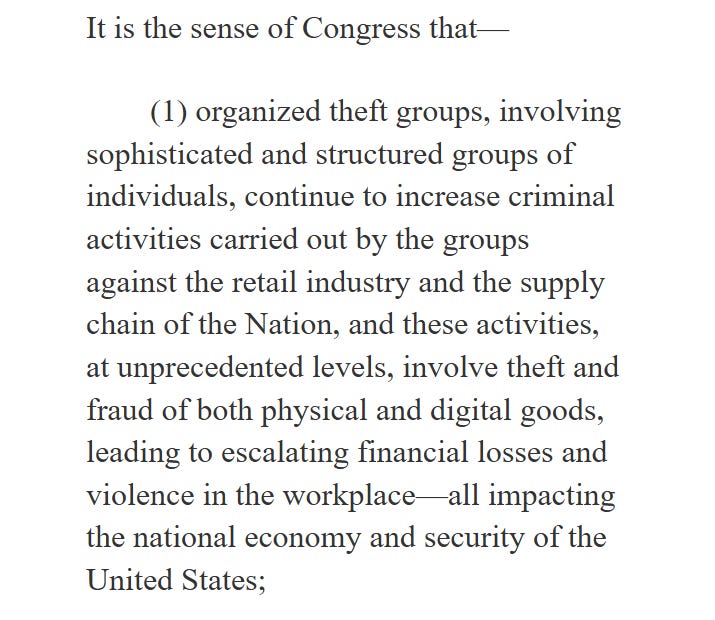
On April 10th, 2025, Ohio Republican David Joyce introduced a bill (HR 2853) dubbed the ‘Combating Organized Retail Crime Act’ (CORCA). The bill co-sponsored by Senator Chuck Grassley, a 92-year-old Senator from a town with a population of nearly 500 in Iowa.
Over a year later, on May 12th, 2026, CORCA passed the house. Now it sits in Grassley’s hands in the U.S. Senate. And soon, it could be quietly amended into the National Defense Authorization Act Bill, commonly known as the military budget bill, for the coming year.
The stated purpose of the bill is to, “target organized retail crime.”
But look beyond the cover, and what you'll find is a corporate-state surveillance merger that hands ICE, DHS, DOJ, DEA, and even the Secret Service direct access to retailers' live CCTV feeds, FLOCK camera data, and even store-wide facial recognition programs. At the heart of it would be a physical facility. A fusion center where retailers sit at the same table as ICE agents.
On November 18th, 2025, over 20 corporations and 69 trade organizations representing hundreds of businesses sent a letter to Congress urging the passage of CORCA. A trade organization sounds nice. It even works a lot like a union. But the difference is, it's a corporation representing other corporations. Never the people who work for them.
It’s a pseudo-polite way to add a layer of obscurity and pull the wool over the eyes. When people read this letter, they will not find Walmart, Target, Macy’s, Levi Strauss, Dick’s Sporting Goods, or BJ’s Wholesale Club. No, instead they’ll see the National Retail Federation (NRF) that represents these organizations and hundreds of other corporate proprietors.
The Board of Directors of the National Retail Federation includes John Furner, President and CEO of Walmart, and Bob Eddy, President and CEO of BJ's Wholesale Club. Walmart donated $150,000 to Donald Trump’s 2025 inaugural committee.
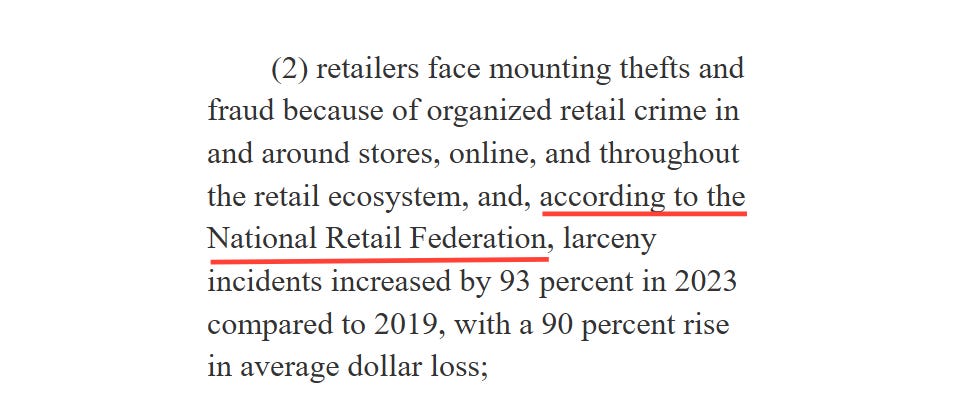
The timeline of executive appointments within the National Retail Federation requires a deeper look when viewed next to the political financial activity of the corporations they represent.
Amazon’s Doug Herrington, Worldwide Amazon Stores CEO, joined the NRF board in January 2025. One year later, Target CEO Michael Fiddelke followed. Then the subsequent routing of $1 million to the 2025 inaugural fund by both Amazon and Target. Walmart donated $150,000 to Donald Trump’s 2025 inaugural committee. Donor records indicate Target’s donation was the first in over ten years. All three donors are NRF members.
Some of the other million dollar inaugural donors include: McDonald’s, Pfizer, Meta, Delta, Visa, and United Airlines. Overall, the Trump-Vance inaugural committee raised a record $239 million with $161 million coming directly from corporations.

However, to truly understand the scope of this, one must look at the interlocking networks behind these corporate monopolies. The executives at the helm of Walmart, Target, and Amazon have not simply limited their influence to bankrolling inaugural committees or occupying board seats at the National Retail Federation (NRF).
The reality is much more insidious.
The NRF is completely run by these massive monopolies, and they’re the ones who not only initially lobbied for the bill, but whose statistics are being cited as statistical fact for Congressional justification.
You’re reading that exactly right. An examination of the prior 2023 legislation for CORCA reveals reveals data laundering operates through congressional levels.
When Sen. Chuck Grassley and Rep. David Joyce drafted the updated 2025 version of CORCA, they did not rely on independent, third-party crime data to justify it but rather statistics that had come from the NRF themselves. The previous legislation claimed the industry had ‘lost $720,000 for every $1 billion in sales during the 2019 fiscal year.’
The figure was not the product of independent economic analysis, forensic accounting, or audited law enforcement records. Instead, the data came entirely from a 2020 NRF provided questionnaire distributed to senior loss prevention and security executives across 164 retail brands who’d been asked to estimate their shoplifting rates.
tl;dr: The company asked the network of corporations to put together a number stated as a definitive statistical metric by our elected members of Congress. And Congress is using that to have ICE agents arresting alleged shoplifters.
The White House using data laundering to engineer policy is not limited to CORCA. Manipulated think tank data from The Center for Immigration Studies, a designated hate group going back to 1985, is frequently cited as a factual verdict against immigrants, through people like Stephen Miller and Kristi Noem.
The NRF has been wrong before, giving statistics that they later walked back. The National Retail Federation claimed that $45 billion dollars a year was lost to retail left. The real number was closer to $5 billion. NRF ONLY walked it back in December 2023 after a reporter checked their math finding that the actual figure was less than 1/10th of what they claimed.
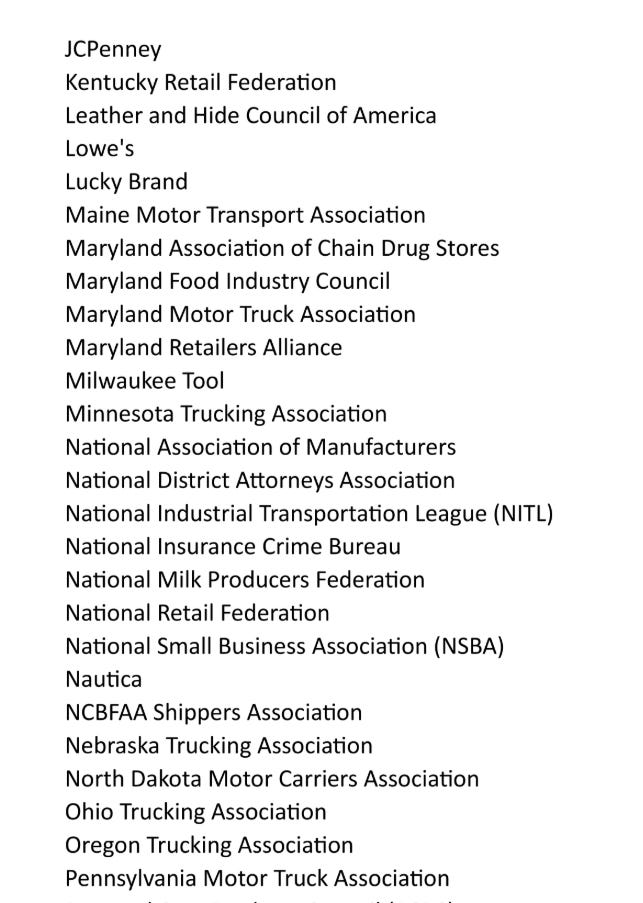
This referenced letter to congress is more than a routine appeal to corporate America. It showcases how thousands of American corporations are ready and willing to align with the Trump administration’s growing surveillance state.
Some of the other trade organizations named reportedly represent companies such as Procter and Gamble, Nike, Crocs, FedEx. Chanel, The Estée Lauder Companies (Maker of MAC, Clinique, Tom Ford Beauty), and more.
This is not the first time Chuck Grassley has tried introducing something like this. In 2023, he and Senator Catherine Cortez Masto (D-NV) co-sponsored a nearly identical bill — S. 140 — that ultimately failed.
It goes further than this. Some of the things named in the bill are already occurring in America.
The ACLU recently discovered that retailers are secretly using facial recognition programs in their stores. Wegmans, a grocer with over 114 stores across nine states, admits to using facial recognition programs to find “persons on interest” that they later turnover to law enforcement. Those on the other side of the camera have no idea.
Those Who Fail to Learn from History…
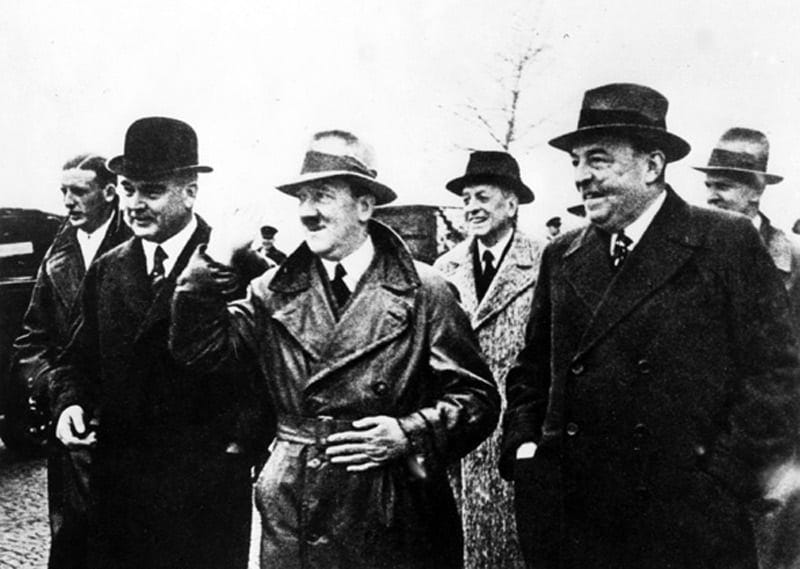
One can’t help but ponder just how long before the CEOs of these companies learn the same lesson as Fritz Thyssen, a credulous man whose capital was commandeered by the Nazi party?
Thyssen was so intertwined with the Nazi’s that in the immediate aftermath of WW2 he was forced to undergo “Denazification” training.
During the rise of the Nazi Germany, Thyssen funded the Nazi Party using money derived from his company, Vereinigte Stahlwerke AG. And his investment paid off. The Nazis crushed unions, purchased his steel, and he became a much wealthier man. It was a win-win.
Or at least that’s what he thought.
In 1938, Thyssen spoke out against the ongoing genocide, and in the blink of an eye his steel empire was snatched from under him. He ended up political prisoner of his own making, spending the remainder of the war in concentration camps (including Sachsenhausen and Dachau) as a high-profile captive of the SS, while the state seized his wealth.
When it comes to increased digital surveillance technology, this grocery behemoth is just one of many suits in the plutocratic sea. Whole Foods, another grocery titan has recently come under fire for using biometric surveillance on shoppers in New York.
In 2023, the Federal Trade Commission banned pharmaceutical giant Rite Aid from using facial recognition tech as their AI would not stop incorrectly identifying thousands of customers, primarily women and people of color, as shoplifters. Rite Aid was made aware of this problem, but store employees were instructed to act on the automated alerts leading to customer harassment and fallacious calls to the police.
In America, dozens innocent people have been arrested after artificial intelligence misidentified them. The concept isn’t theoretical. It’s becomes so much of a problem over 20 cities have banned facial recognition tech in law enforcement.
One of the big issues with CORCA? If federal agents use subpar facial recognition technology from retailers to incorrectly charge you federally, city and state bans on facial recognition will do very little to protect you. Federal charges are held to different standards than state.
Police have used facial recognition for many years. And they’ve used it knowing it’s incorrect “96% of the time.”
In 2018, an unknown individual took several luxury watches from the Shinola Corporation in Detroit. When the company handed Michigan State Police the choppy CCTV footage, it was run against 41 million driver’s licenses and ID photos held the Michigan Department of State’s facial recognition database. The automated biometric identification system looked at an old, expired driver’s license photo of Robert Williams and incorrectly identified him as the culprit.
The DataWorks Plus AI had warned the officers that the poor quality video provided by the retailer made it hard to identify, and it couldn’t be certain if it was Williams, but the Michigan State Police made the decision to ignore this and acted anyway.
They had placed Williams photo among a six others and told security guard make his best guess at which photo was the person he saw on the grainy security footage. The security guard never witnessed the theft in person. He was going off the same degraded CCTV footage it had been flagged as determined by tech itself.
When questioned about this Police Chief James Craig admitted the technology almost never returns match and almost always misidentifies people. His exact framing. He inadvertently admitted that the software would misidentify someone 96 percent of the time.

The police knew that the AI was misidentifying people and still Williams got a call at work telling him to turn himself in, assumed it was a joke, then came home to find police waiting. They pulled in behind his car and blocked him in the driveway. He was arrested in front of his wife and daughters. He was locked behind concrete walls and metal bars — a cell packed with other inmates — where he was wrongfully held by Detroit police for over 30 hours.
When it had came out that he couldn't have been at the store, since he was 24 miles away driving home from work, their case fell apart. If Robert hadn't had that alibi, what could have happened?
After it was proven that Robert Williams was innocent, he didn’t want anything from the department other than an apology. Well the Detroit Police Department refused him that, the ACLU sued the Detroit Police Department on behalf of Williams’ wrongful arrest. They sued under Section 1983, the federal civil rights statute. It led to a settlement in Mr. Williams favor.
Federal agents aren’t covered under Section 1983.
Section 1983 is written in a way that exempts them. That’s why in 1971, a federal lawsuit (Bivens v. Six Unknown Named Agents of Federal Bureau of Narcotics) made it legal to sue federal agents.
But SCOTUS has repeatedly weakened the Biven’s precedent over time. The ruling can only be used specifically in regards to a warrantless home search and unreasonable seizure by line-level narcotics agents under the Fourth Amendment.
Some agencies, like ICE, Bivens does not apply to at all. The Court ruled in Egbert v. Boule (2022) that ICE and similar agencies have "national security" implications and their own internal grievance procedures, the courts cannot interfere.
You can also only sue the individual agent, never the FBI, DEA, or BOP as an organization under FDIC vs Meyer (1994). And if a prison — much like the ICE detention centers — is run by a private contractor like GEO Group or CoreCivic those guards cannot be sued under Bivens according to Minneci v. Pollard (2012).
Over 90% of ICE detention centers are run by private contractors.
In a modern world, one should consider how facial recognition and biometric programs feed into predictive policing programs like Palantir's Gotham, which was 'gifted' to the New Orleans police (among other police departments in different cities) in 2012. Since the software was a 'gift' and not purchased, NOLA PD skirted the law, bypassing regulatory rules to use it on the people of New Orleans. Without notice.
Palantir told police that their program, Gotham, could identify people at ‘high risk’ of committing or falling victim to gun violence by analyzing police reports, social media, and other databases, including jailhouse phone logs. They claimed it used a social network analysis and it would map relationships, look at who you connect with, and assign a risk score to any person in that network. This over a decade ago in 2012.
The CORCA bill would allow ICE, among other organizations, to access data from thousands of retailers with millions of stores across America. Data that would likely be fed into Palantir’s ImmigrationOS, the custom-built AI surveillance program built for ICE using U.S. taxpayer dollars.
This bill classifies organized retail theft as a predicate offense under federal money laundering laws, which permits criminal forfeiture of seized illegal profits and property.
“Predicate” means the original charge can become the doorway to something much bigger. If prosecutors can later produce enough “evidence” to frame an action as part of a broader organized movement, they can start adding on felony charges like money laundering, racketeering, and terrorism.
It also gives them access to expanded powers, such as forfeiture, wiretaps, asset seizures, transaction monitoring, bank subpoenas, and the ability to invoke interstate‑commerce jurisdiction all under the umbrella of an ongoing investigation. This bill also allows unrelated acts can be combined into a single “organized crime” case.
The Trump administration has increasingly tried to portray between leftist activism as organized terrorism, using the term “ANTIFA,” — which is a merger of the words anti-fascist — as though it were a centralized terror organization.
Once political dissent is framed as participation in an organized extremist movement, the act of filing conspiracy, racketeering, financial crimes, and terrorism charges becomes probable. The predicate system has been used against union workers and activists for decades. This is just another tool to do so.
And it continues to happen today. This same approach was used to justify a 30-year prison sentence for Daniel “Des” Sanchez Estrada, a Texas tattoo artist, who the DOJ portrayed as part of an ‘ANTIFA’ terrorist cell after he moved a box of leftist zines from his home into his car in Prairieland, Texas.
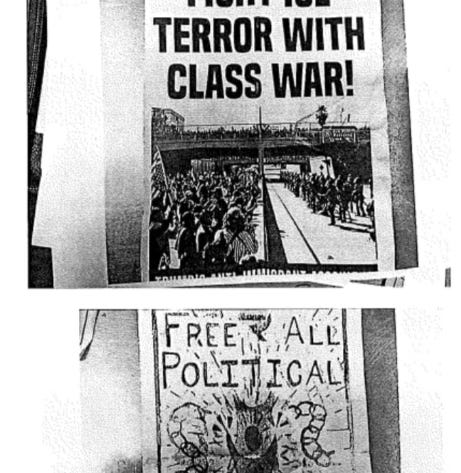
What would look like possession of political literature to the average person was instead folded into a much larger ‘terrorism’ narrative by the Trump Administration. Estrada was one of several arrests made under the national security memo NSPM‑7, signed by Donald Trump in 2025. If someone sells political literature, patches, or protest materials online, an aggressive interpretation could treat them as part of a network.
When DHS, FBI, ICE, CBP, USPIS, ATF, and DEA share intelligence, investigations tend to extend beyond the stated intent. After 9/11, the United States created fusion centers. These centers were originally marketed as a tool of targeting organized crime, such as drug cartels or terrorists.
Now they’re being used to ‘combat theft,’ and in a full “Idiocracy” moment, the American government is inviting the corporations to sit at the table with them.
Between the CORCA bill, Flock Cameras and other automated license plate readers, invasive Graphite spyware contracted by the ICE, and real-time crime centers (RTCC) in places like Atlanta, Detroit, Chicago, and NYC that integrate all of this data.
Facial‑recognition systems exist already in places that scrape billions of images from the open web and place them into law‑enforcement databases, sold as a way to “identify violent offenders” but frequently used in day-to-day investigations.
There are tools like PredPol that use “risk terrain modeling” to create “crime prevention analytics.”
Social‑media surveillance tools like Dataminr, ShadowDragon, and Babel Street that scan social media posts, comments, and connections to flag “emerging threats,” of protests or visible political dissent.
Stingrays mimic cellphone towers to convince your phone to connect so the police can mine metadata.
Originally justified after 9/11 under the guise of counterterrorism that are now used by local police departments with limited oversight. Historically, predicate cases we led to individuals having their bank account seized without ever being charged with a crime. This may not be the listed intent of the CORCA bill it’s structurally possible — even probable since it’s happened many times before.
We can see a perfect example of this in the story of the Hirsch brothers.
In 2014, three brothers who had spent 27 years running a snack and candy distribution business in Ronkonkoma, New York saw their entire operating account seized for alleged “structuring,” despite never being charged with any underlying crime. It took an incredibly publicized lawsuit to for the federal government to return the wrongfully seized $446,651.11.
That October, the IRS stated they would no longer seize money on “structuring” grounds unless agents believed the funds were tied to a crime. Just a few months later, in March 2015, the Department of Justice followed with their own policy change.
But beneath their language of reform, nothing in the law itself had actually ever changed. These were agency promises, not statutory limits. These internal guidelines can be rewritten, reversed, or ignored with a single memo being released telling you otherwise. The underlying authority remains exactly where it had always been.
Just look at the history, you can’t ignore what’s happening now. Once the tools exist, prosecutors skirt the edges, stretch ambiguous definitions, and bend the law to their will. The definition of a criminal changes until it fits whoever the government wants to target. Intentionally ambiguous.
And with the coup of the Department of Justice — as planned in Project 2025 — we must remain vigilant. If the architecture is already in place, and the precedent already established, what next?

Comments
Nothing yet. Say the first thing.
Sign in to join the conversation.