
To wrap up our series of guest articles all about live lessons - we are handing over to Morgan Fail from North East Museum to take us behind the scenes of the very popular Hadrian’s Wall Focus Days.
Over to Morgan…
The annual Hadrian’s Wall Virtual Focus Day is targeted towards KS2 learners at school and home. The event takes place over multiple days, incorporating speakers from across the World Heritage Site. It is organised by me, Morgan Fail, Learning Coordinator for history at the Great North Museum: Hancock.
The coordinating venue is in Newcastle in the North East of England, a university museum, part of North East Museums (formally Tyne & Wear Archives & Museums) with natural history and archaeological collections. I coordinate the history engagement program for schools and groups, thinking about formal and informal learning. Everything we do is in person, bar this one large scale event.
My side role is being a member of the Hadrian’s Wall Learning and Engagement forum. This network consists of professionals from across the wall, coming together to support, problem solve and collaborate all things Hadrian’s Wall. Our collections tell stories of places and people, which can be hard to teach in the classroom due to teacher time restraints for research. This event provides us with a platform to share all of this.
The event began during the pandemic when many venues, like us, had pivoted to the virtual. My venue was delivering virtual days focusing on a topic a day. With some discussions the Hadrian’s Wall Learning & Engagement Forum were up for giving this a go too.
The live event takes place over multiple days. In 2025 it was three mornings long, consisting of 12 x 30 minute workshops. Each session was delivered by a different organisation with a different focus. The sessions are interactive and require audience participation through chat, polls, or encouraging movement and action in the classroom. Speakers incorporate a worksheet, which developed from teacher feedback in year 3. Teachers can select from the 12 sessions and choose as many or few to attend, meaning they can be flexible around their school timetable. Many schools attended all, with some doing a selection, choosing familiar organisations or themes. Roman Mathematics was very popular.
The event has moved from six speakers in year 1 and 2, to 12 in year 4. Most speakers were experienced and had attended before, but some were new and came from linked organisations such as Binchester Roman Fort (a site off of the wall) or Classics for All. All speaker’s sessions have to link to Hadrian’s Wall and have to contain different content or themes to other speakers.
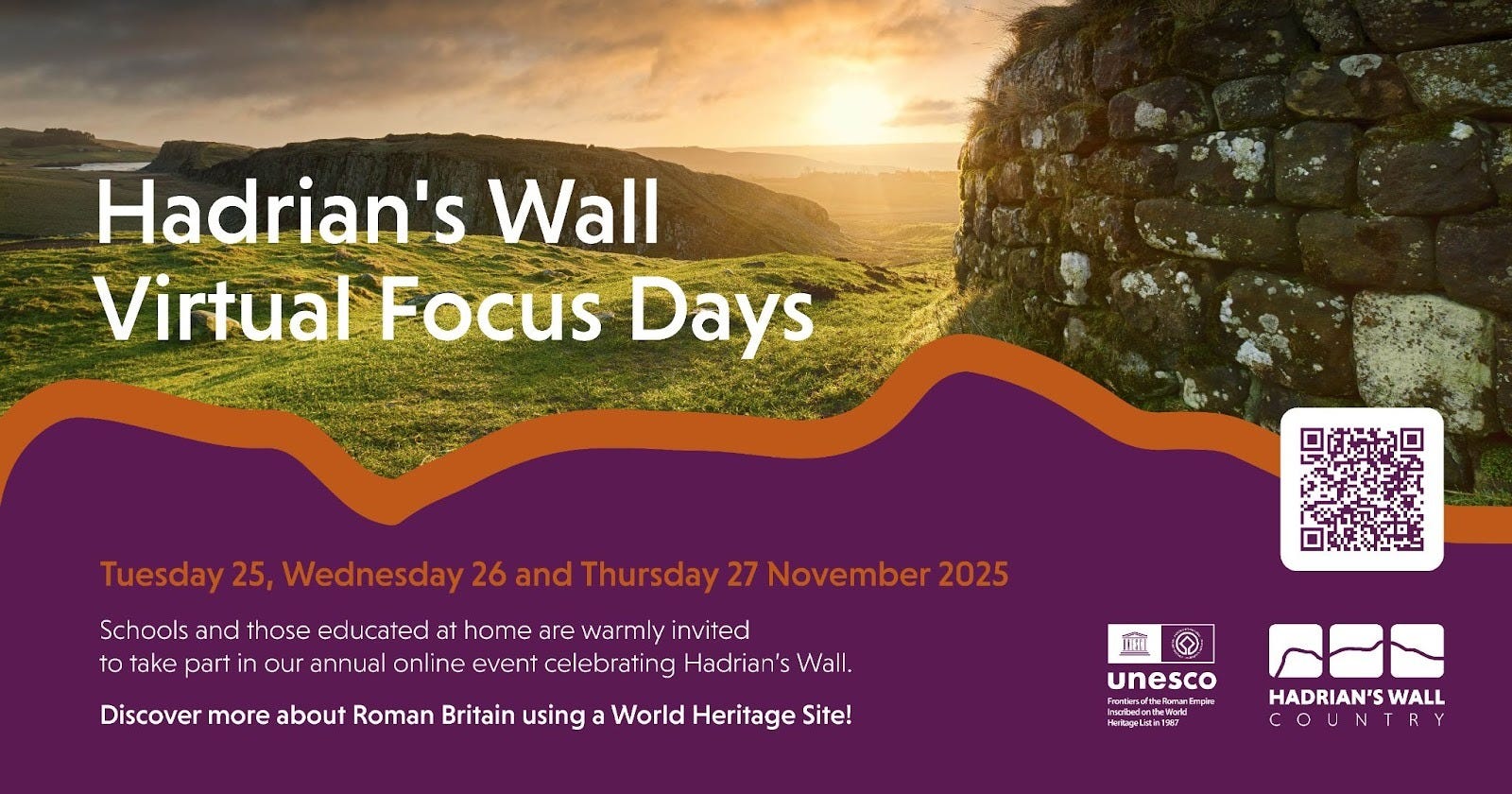
The event is open to Primary age children in schools and other settings (e.g. Home Educated). The event is free, which means that any schools can attend who have the tech in school. Being free was particularly important as many of the speaking venues would usually charge. It takes place in November every year as many Roman sites close for the winter, which then gives those venues a boost in numbers. The event is delivered via Zoom Meeting with a host chairing the sessions, a facilitator or two leading it and background staff ensuring everything is going to plan.
The aims of the event are:
Promote Hadrian’s Wall as a World Heritage Site
Provide access to schools, groups and young people who might find access difficult.
To put museum education on the radar and show how creative and vital we are.
To increase teacher and pupil curriculum knowledge about the wall, its objects and individuals.
The organisations taking part are small and large cultural venues or researchers and organisations who are linked to the topic. At the 2025 event children met professionals from a range of careers from curators to museum educators, archaeologists, digital games designer and university staff which opened awareness to the range of careers in the sector. I don’t require sessions to directly link to the curriculum but instead highlight sites, collections or topics that are important or interesting. Some of our themes have been climate change and the impact on archaeological excavations, or pigmentation of roman altars or even a bit of basic Latin and links to word roots. Teachers are provided with descriptions of sessions and can choose which is most suitable for their group. Those sessions linking to key school topics are more popular, such as Word Roots and Mathematics.
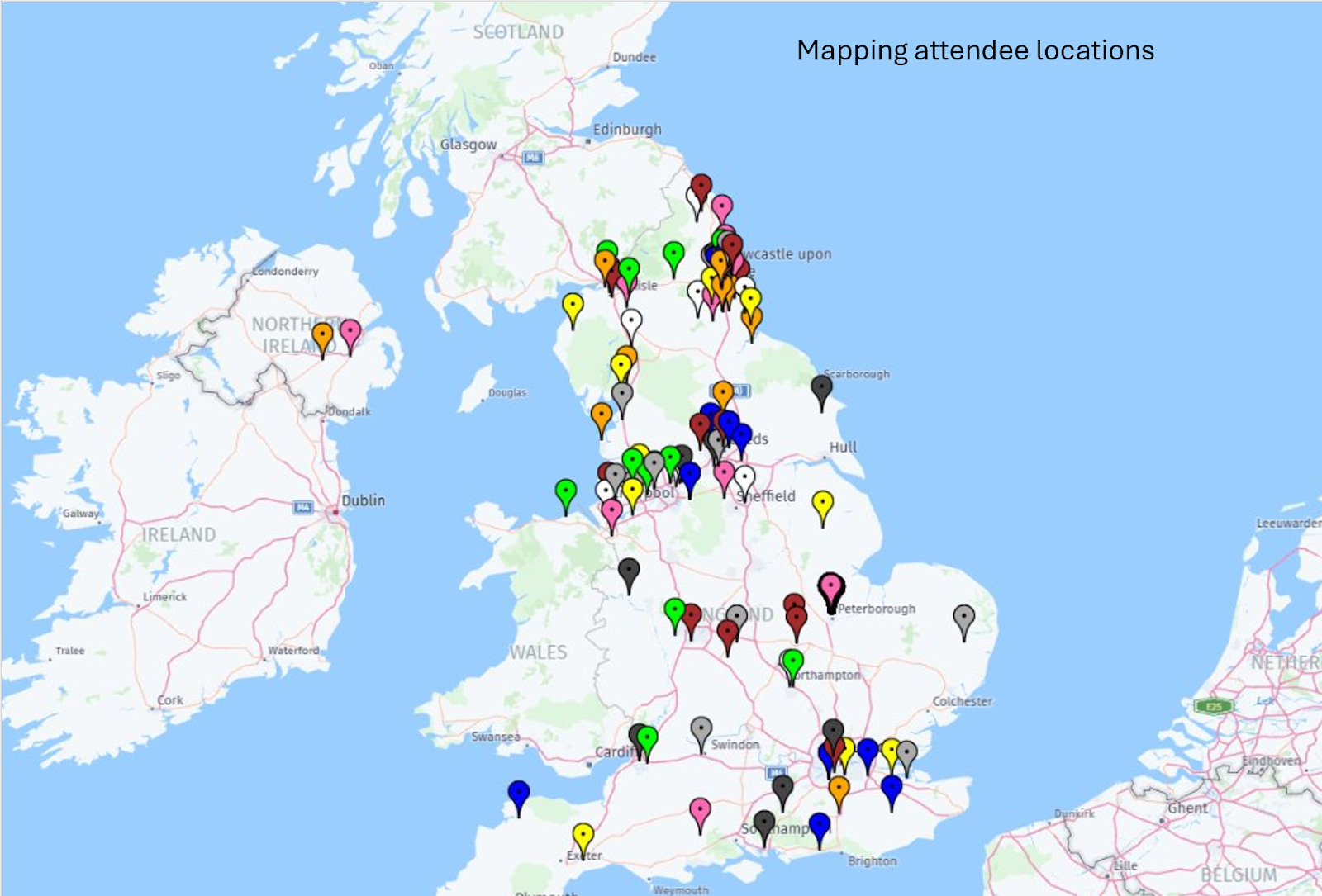
My attendees come from the UK, with a large collection around the North East and North West. In 2025 we even had our first international group from Cyprus, an MoD school.
I have now delivered four years of this event, with it steadily growing each year. Between years two and three the event went from around 4,000 engagements to 16,000, an incredible increase. Word had slowly spread and the right promotional contacts had been made.
Post event feedback gives me three things:
It demonstrates how good the event is
The numbers and feedback show that teachers want this.
It gives me brilliant insights into what works and what needs tweaking.
I’ve had teachers email to say their history curriculum is being moved permanently to match the events date, schools getting in touch early to ask to book and home educated families showing us their appreciation in being able to be part of something like this and given the same opportunities as a school.
Worksheets. Make sure these are offered.
Interactivity. Keep the children’s attention.
Think bigger. Who are the organisations associated with the theme but on the periphery?
Make sure teachers can test their tech in advance. It’s helped retain attendees.
Make space for facilitators to test tech, and nudge them to do so.
Promote. Promote. Promote.
It was October 2024 when I realised I had hit something big. The event was in it’s 3rd year and always had been popular, but there was a week when our figures doubled. Schools really did want this, it worked and I was providing something unique. It took a school history blogger to promote the event and raise its profile on a large scale.
In 2025 the event went bigger again. I hit 19,980 engagements, and had the first international school. Will 2026 creep over that 20,000 mark? It’s the aim, but is it manageable with other workloads and projects? This event is part of our regular program and has no funding.
What are your aims? Do you want to keep that 1:1 personal session with a school or are you open to going bigger? If going big, then aim BIG!
Going big doesn’t mean you lack the personal touch. Speakers can make shout outs to groups, read chat comments and answers or even relate where they are to the groups they know are attending.
Where are your gaps? Who isn’t engaging or what themes aren’t you covering
Who is your network? Who can you collaborate with?
Find your network and collaborate! In the sector we can have a habit of keeping what we do in our silo, but we are such a strong and creative sector, so share. Work together. Get on board with others. The collaborative aspect was one factor that makes our event unique. I’m working with 12 different organisations all with the same aim, to promote this brilliant World Heritage Site and our beautiful part of England. Our venues are brilliant, but our stories are worth sharing on a larger scale and through collaboration on an event of this scale those stories and collections can hit a huge audience.
A huge thank you to Morgan and the team at North East Museums for sharing their wonderful work on these focus days. At DLNET we are excited about the prospect of organisations teaming up and delivering something teachers and students love!
This wraps up our guest series about live lessons, a big thank you to Helen from Blue Cross, Lauren from Chester Zoo and of course Morgan for taking us behind the scenes of their offer.
What are you working on?
We are keen to continue to share more case studies of the fantastic digital learning projects happening out there!
Do you have an interesting event, resource or approach you’d like to share? Please get in touch with Rosie from the DLNET team using the button below.
No posts
Comments
Nothing yet. Say the first thing.
Sign in to join the conversation.