
If you want to see exactly how the food industry tricks us into eating dessert for dinner, look no further than the tomato sauce aisle. We are conditioned to view a jar of pasta sauce or a bottle of ketchup as a savoury, vegetable-based staple. The reality? To mask the acidity of cheap, mass-produced tomatoes and extend shelf life, manufacturers pump these jars full of refined sugar and cheap polyunsaturated seed oils.
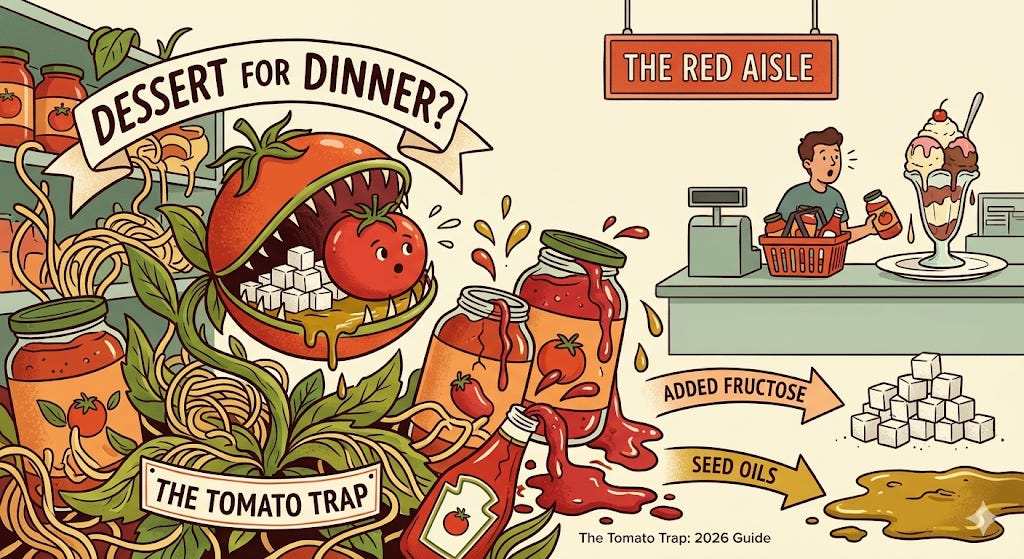
But fear not, sauce seekers! I’ve braved the aisles and crunched the numbers once again. I’ve scrutinized the nutrition panels and ingredient lists of over 450 different sauces, ketchups, pasta sauces, pestos and salsas across our two major supermarkets, so you don’t have to.
The Quest for Pure Tomatoes (The Winners):
If you are looking to completely avoid added fructose and seed oils, your best bet is always going to be products that treat the tomato with respect. Here are some standouts from my research (all data based on analysis conducted in June 2026):
The Passata Purists: When it comes to a base for your bolognese, pure passata is king. Brands like Mutti Passata and Leggo’s Organic Puree boast zero added sugar and absolutely zero seed oils. You are getting exactly what is on the label: crushed tomatoes and perhaps a pinch of salt.
The “Accidentally Clean” Salsas: Finding a clean Mexican salsa is surprisingly difficult, but Old El Paso Salsa is a rare supermarket win. It manages to keep the sugar incredibly low (mostly naturally occurring from the vegetables) and avoids the seed oil trap that catches many others.
The Sugar Watch (The “Savoury” Traps):
Concerned about sugar? You need to be hyper-vigilant here. Some of these savory staples contain more sugar per 100g than a bowl of ice cream.
The Sauce Catastrophe: Standard MasterFoods Tomato Sauce is a masterclass in hidden sugar, clocking in at 25g of sugar per 100g—it is essentially liquid fructose. If you need a squirt on your sausage, look for varieties like Fountain No Sugar Sauce, which drop the count significantly (though be wary of synthetic sweeteners if that’s a concern for you).
BBQ Sauce is Liquid Lollies: Standard BBQ sauces are effectively syrup. MasterFoods Barbecue Sauce hits 46g of sugar per 100g, while Sweet Baby Ray’s Bbq Sauce hits a staggering 53g (fueled by high fructose corn syrup). They are literally half sugar by weight.
The Seed Oil Slick (Pesto and “Premium” Sauces):
Many consumers upgrade to “premium” jarred pasta sauces and pestos, assuming they are getting a traditional, olive-oil-based Italian product. The labels lie.
The Pesto Problem: Traditional pesto is basil, pine nuts, parmesan, and olive oil. However, almost every mainstream supermarket pesto (such as Barilla Basil Pesto) uses sunflower or canola oil as their primary fat because it’s significantly cheaper than olive oil. This pushes the polyunsaturated fat content through the roof.
“Roast Garlic” and “Herb” Sauces: Pay close attention to flavored pasta sauces. Many use seed oils to emulsify the sauce and improve mouthfeel. Always check the ingredients to ensure the fat source is Extra Virgin Olive Oil, not canola or sunflower.
The Full Tomato Compendium:
I’ve compiled a comprehensive searchable database of all the tomato products analyzed, ordered by their sugar and fat content per 100g. This includes everything from squeeze-bottle sauces to premium jarred ragus. This detailed guide is a must for anyone trying to cook a metabolically safe family dinner.
Keep in mind that some brands obscure their fat sources using generic terms like “vegetable oil,” so I’ve made educated assumptions based on the prevailing industry standards. In short, if saturated fat is less than 20% of total fat, it probably contains a seed oil.
Comments
Nothing yet. Say the first thing.
Sign in to join the conversation.