
Blood on the pavement in Melbourne. Random daylight assaults in Adelaide. More and more, the news feels less like a daily briefing and more like a casualty report. We are witnessing a surge in explosive, unpredictable violence, and we don’t have to rely on a “vibe” to prove it because the data is screaming at us.

According to recent Australian Bureau of Statistics (ABS) figures, police proceedings are surging. They jumped 10% in Victoria and a staggering 20% in South Australia in a single year. The most common offence is not theft or fraud. It is “acts intended to cause injury,” accounting for nearly 30% of all offenders.
That is almost 100,000 Australians arrested simply for trying to hurt someone else.
Politicians look at this crisis and offer the same tired snake oil. They promise tougher sentences, more cops, and more prisons. ‘Experts’ point blindly at the economy or “post-COVID stress.”
They are all missing the puppet masters. They are ignoring the insidious, pervasive catalyst that sits in the pocket of almost every person on the street. What if the explosive rage we are seeing isn’t a failure of community values, but a catastrophic, singular failure of our brain chemistry that has been deliberately engineered for profit?
Let’s follow the thread because it connects directly to a crisis I warned about last month.
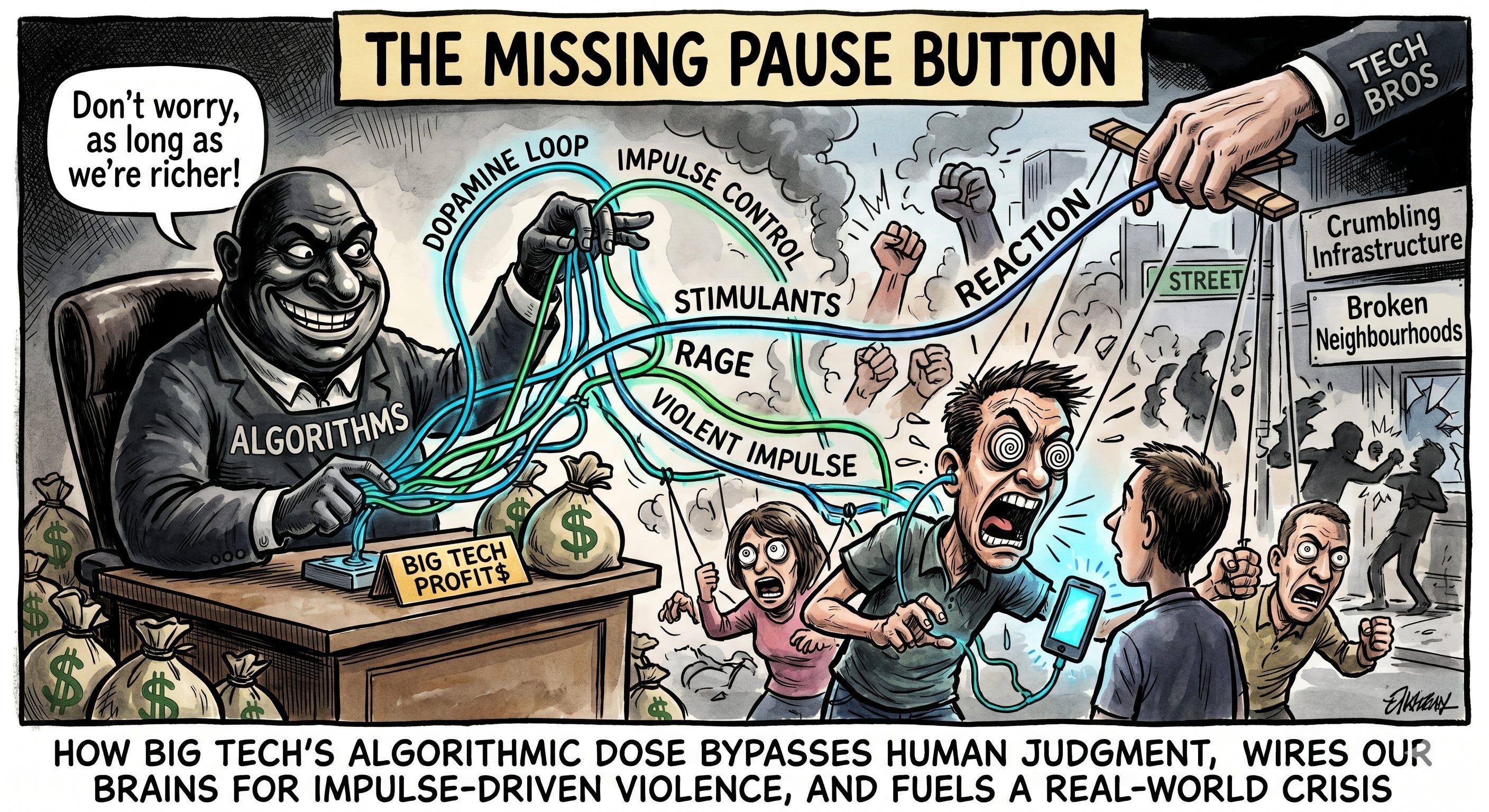
In my recent article, The Tech-to-Meth Pipeline, I detailed the terrifying $11 billion reality exposed by our national wastewater data. I explained how Silicon Valley’s algorithmic dopamine farming has manufactured a society-wide focus epidemic. I broke down how desperate Australians are burning through legal ADHD prescriptions and turning to the black market, resulting in 523 million doses of illicit methamphetamine being consumed in a single year.
But while that piece focused on the endpoint of psychosis, there is a second, equally terrifying byproduct of this chemical collision. That byproduct is the complete annihilation of human impulse control.
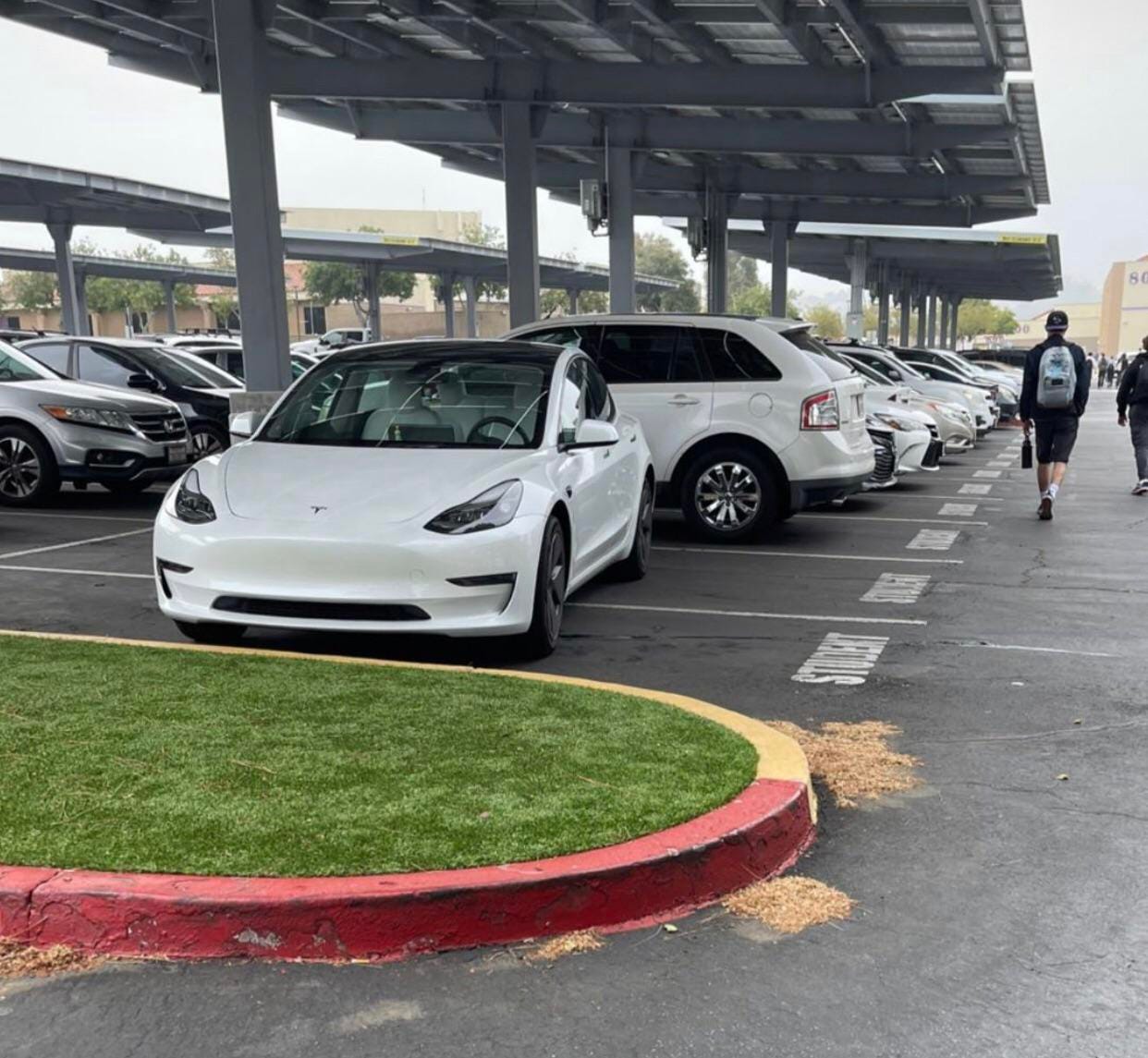
To understand the violence on our streets, turn the mirror on yourself. Are you feeling more irritable lately? Is your fuse noticeably shorter than it was five years ago? Be honest and ask yourself how close you have come to absolutely blowing your stack just because some prawn in a Telsa cannot park properly at Woolies, or because a self-serve checkout scanner threw a minor error.
That low-grade, simmering rage you carry around is not a character flaw, and it is not just you getting older. It is the direct symptom of a brain whose reward system has been systematically redlined by the infinite scroll. We have traded sustained attention for a cheap, rapid-fire neurological hit.
Recent clinical research explicitly categorises excessive smartphone use as an impulse control disorder. Chronic device use physically impairs the frontal lobes, which is the exact area of the brain responsible for response inhibition.
When your brain is conditioned by TikTok and Insta to expect an immediate reward every three seconds, your tolerance for frustration flatlines. That crucial “pause” button, the microsecond of neurological reflection between feeling an emotional trigger and throwing a punch, has been algorithmically eroded.
For most of us, that eroded patience stops at a white-knuckled steering wheel or a yelled obscenity. But hey, as long as engagement metrics hold steady and the oligarchs of Silicon Valley can buy another superyacht, what is a little cognitive collapse among the masses?
Now, take that algorithmically fried impulse control and combine it with the paranoia, the supercharged nervous system, and the hyper-aggression of an individual caught in the 523-million-dose meth pipeline. Finally, drop that individual into a high-stress, everyday friction point.
Ten years ago, someone flipped the bird or yelled an insult. Today, for an individual pushed to the brink by this chemical cocktail, that shortened fuse is the difference between a shouting match and an “act intended to cause injury.”
We see it in the crimes themselves. They lack premeditation. They are explosive, brutally sudden, and entirely disproportionate to the trigger. These are the actions of people who literally lack the neurological hardware to stop themselves. The algorithm stripped their brakes, and the drug market (both legal and illegal) flooded their engine with rocket fuel. It is not a random act of violence. It is a highly predictable chemical reaction.
This does not excuse the perpetrators. But if we actually want to stop minting 100,000 violent offenders a year, we have to recognise the environment creating them.
Treating this requires more than just building bigger prisons. It means recognising the attention economy for what it is. It is the entry point to a biochemical crisis that is spilling blood on our streets. Right now, we are blindly subsidising the astronomical wealth of tech billionaires with the safety of our own neighbourhoods.
The crime statistics and the wastewater reports are two warning lights blinking on the exact same dashboard. If we refuse to hold the platforms accountable for the baseline brain chemistry they are destroying, the fuse we are cultivating online will keep detonating in the real world.
The first step to stopping this violence is taking back control of your own prefrontal cortex before your baseline frustration turns into something worse. If you are tired of feeling your fuse shorten and your focus fracture, you need a strategy to break the algorithm’s grip.
My latest book, The Attention Recovery Plan, is exactly that. It is a practical blueprint to rebuild your focus, reclaim your dopamine, and stop paying for Silicon Valley’s yachts with your own sanity.
Click here to grab your copy and start rewiring your brain today.
Comments
Nothing yet. Say the first thing.
Sign in to join the conversation.