
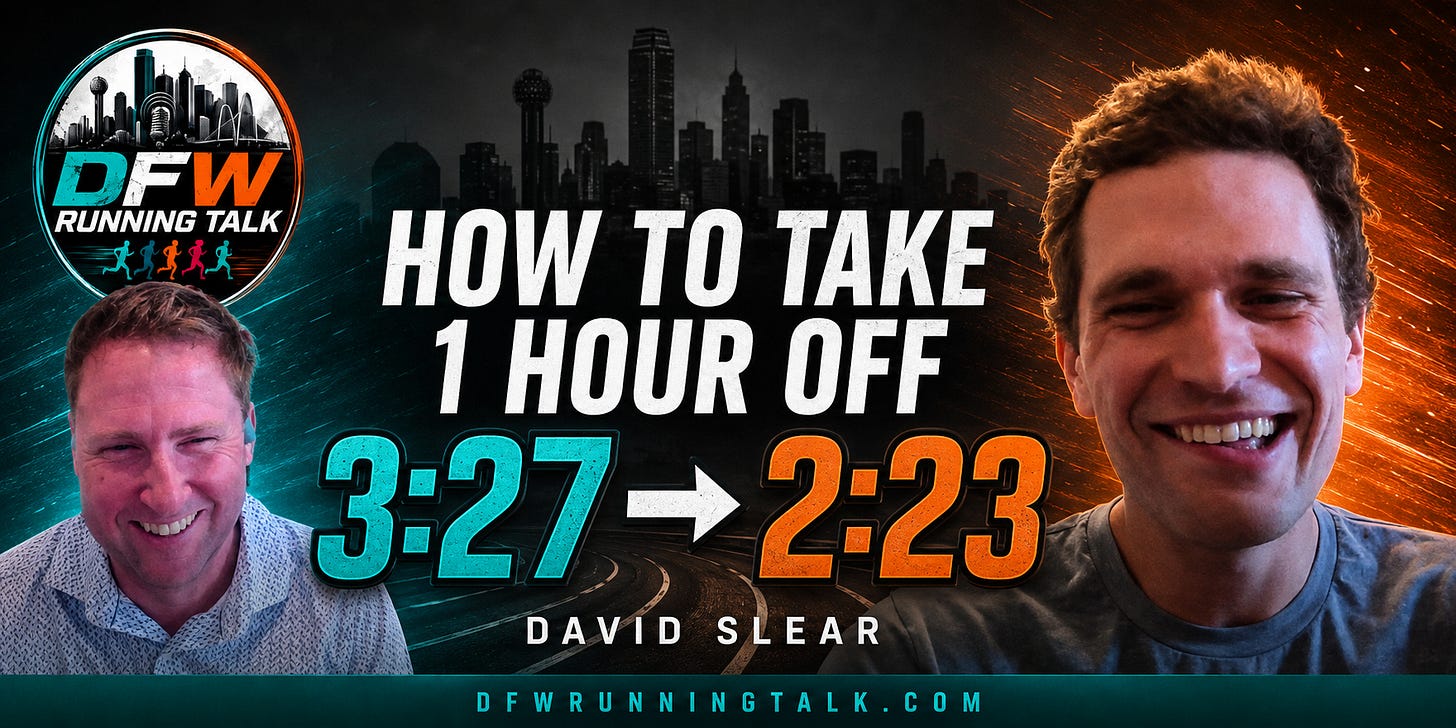
David Slear’s first marathon went wrong in a very familiar way.
He started too fast, had almost no fueling plan and went through halfway in approximately 1:27. By mile 18, he was walking and jogging toward a 3:27 finish.
A few years later, David ran 2:23 at the Boston Marathon—an improvement of more than an hour.
David had years of endurance experience as a Princeton rower, so this was not an overnight transformation. But the changes behind his breakthrough offer useful lessons for runners at every pace.
David trained enough to finish his first marathon, but fitness could not overcome poor execution.
His plan was to occasionally grab a small cup of Gatorade. That was not enough to support the pace he attempted.
Before obsessing over advanced workouts, practice taking fluids and carbohydrates during long runs. A fueling plan should be trained just like marathon pace.
David planned to train alone for his next marathon. Then he found Train Pegasus and connected with other serious runners across DFW.
Running with people chasing 2:30 and 2:40 marathons changed what he believed he could accomplish. He saw their training up close and gained the confidence to pursue faster goals.
His second marathon was a 2:39 victory.
The lesson is not that everyone needs the fastest group in town. Find people who are consistent, supportive and slightly ahead of where you are today.
David eventually reached approximately 110 miles per week, often running 12 miles in the morning and another six later in the day.
That does not mean you should copy his mileage.
David had more than a decade of rowing, triathlon and endurance training behind him. The useful principle is to gradually build enough volume that your body remains durable when the marathon becomes difficult.
At Chicago, David started aggressively and struggled late—but his higher mileage kept the slowdown under control. He finished in 2:28:41.
David no longer wants one number on his watch to decide whether he is having a successful race.
Heat, wind, hills and race-day conditions all affect pace. Training through Dallas summers helped him understand how the correct effort should feel, even when the watch displayed a slower number.
At Boston, he trusted that instinct. He ran the early downhills aggressively, controlled his effort through the Newton hills and finished in 2:23.
David’s final advice was not about mileage, fueling or pacing.
“Find people to do it with. Have fun.”
Running with friends replaced the team environment he lost when his rowing career ended. The competition helped him improve, but the relationships made the daily work sustainable.
That may be the biggest lesson behind his 64-minute transformation:
The best training plan is one you can keep showing up for.
Hear David’s complete story—including his rowing career, first-marathon collapse, triathlon years, 100-mile weeks, Chicago breakthrough and 2:23 Boston Marathon—on the newest episode of DFW Running Talk.
Watch or listen at DFWRunningTalk.com.
Follow DFW Running Talk on Spotify or Apple Podcasts so you never miss an episode.
DFW Running Talk—the stories behind Dallas–Fort Worth’s runners.
Comments
Nothing yet. Say the first thing.
Sign in to join the conversation.