
“This is how we really do it here.”
These words are a GIANT RED FLAG in frontline operations. Variability creates risk. Risk leads to injuries, quality issues, higher costs, and lost productivity. So companies work relentlessly to standardize the work. Every task is documented. Every process is defined. Every step is audited. Consistency is key in industries like manufacturing, transportation, logistics, construction, and healthcare. Follow the process, and the outcome will be the same – regardless of who is doing the job.
But then something strange happens.
A veteran employee retires. An experienced supervisor leaves. A senior technician moves on. Suddenly, cracks begin to appear in the operation. The SOPs are still firmly in place. The training hasn’t changed. Yet problems take longer to solve, mistakes become more common, and performance suffers.
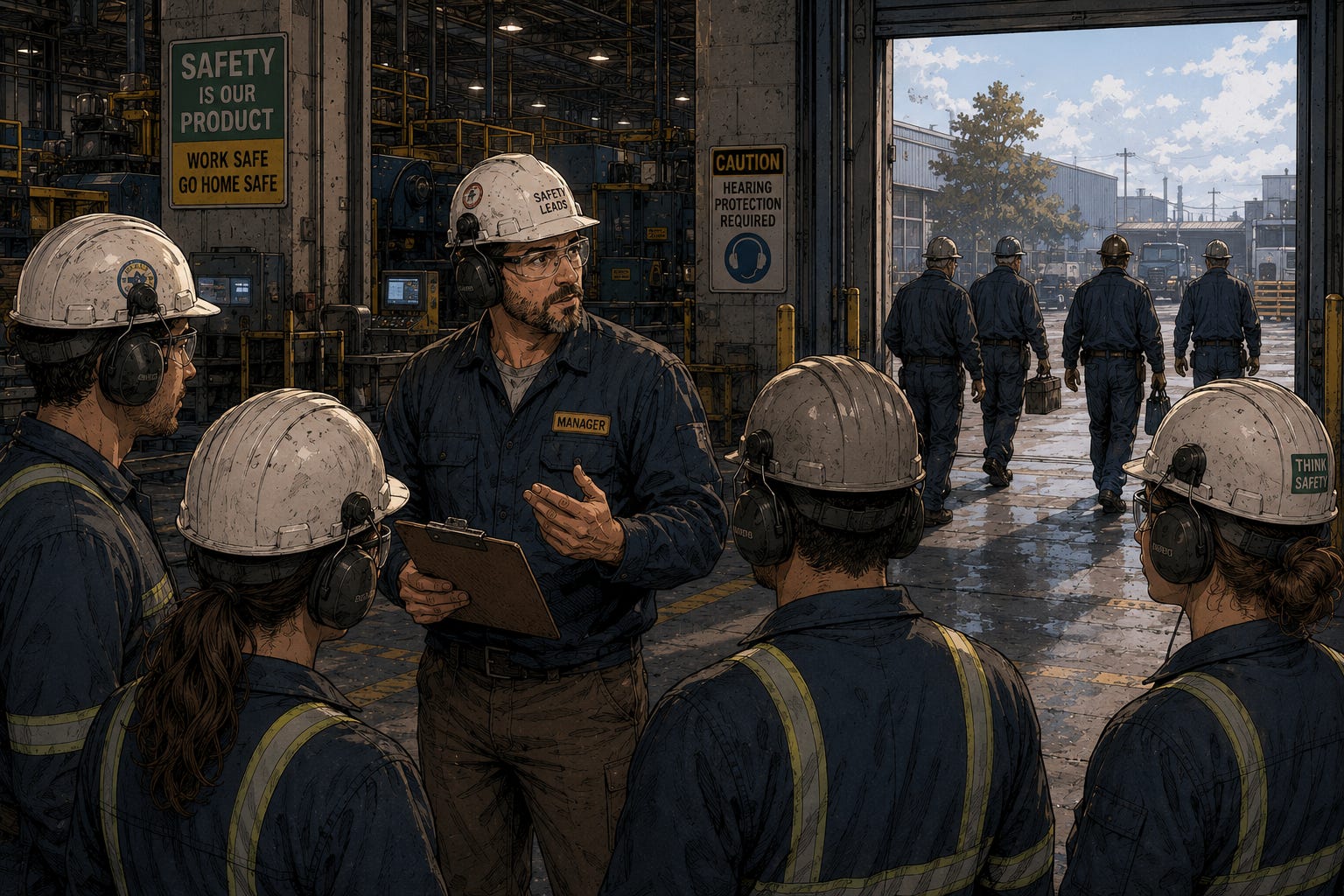
In reality, the job is more than the process. Experienced employees know how to spot problems early, adapt when conditions change, and make smart decisions when the situation doesn’t match the playbook. They aren't taking shortcuts. They're applying years of experience in situations where the SOP isn't enough.
Companies can provide weeks of training. They can require every employee to complete an online course called “Adapting to Changing Conditions”. That doesn’t mean people will have the confidence or skill to handle difficult situations in real life. Those capabilities are built through countless reps dealing with the exceptions, surprises, and edge cases.
It turns out “this is how we really do it here” really is how we do it here.
The situation is rapidly evolving from a talent management issue into a full-blown operational crisis.
For years, organizations have focused on finding enough qualified people to fill open positions. Now, a growing number of industries are confronting a more dire challenge: losing the know-how that keeps their operations running.
Nearly one-quarter of U.S. workers are age 55 or older, according to the U.S. Bureau of Labor Statistics. Research from Deloitte and The Manufacturing Institute projects that manufacturers may need to fill 3.8 million jobs by 2033, with nearly half of those positions at risk of going unfilled. Meanwhile, the National Council of State Boards of Nursing estimates that roughly 1.6 million registered nurses (40% of the workforce) could exit by the end of the decade.
This isn’t just a staffing problem. It’s a capability cliff.
The threat extends beyond retirements. Burnout, frustration, and relentless pressure have pushed many experienced leaders out of frontline operations. During the pandemic, countless managers decided the job was no longer worth the stress and walked away. As a result, many organizations are trying to “do more with less” while relying on leadership teams with far less experience than they had just a few years ago.
Every experienced employee leaves with a piece of the operation. Much of their tacit knowledge is never captured. It existed only in application. The HOWs that drove outcomes never became part of the organization.
Truth be told, we created this situation. Companies optimized themselves into a corner. They streamlined work, reduced headcount, and pushed people to spend every available minute executing. On the frontline, there’s always another shift to cover, another order to fill, another problem to solve. Little time is left to capture expertise, share lessons learned, or preserve knowledge for the next generation.
Now the bill is coming due. Organizations aren’t just losing employees – they’re hemorrhaging skill.
You can’t train your way out of this mess.
No onboarding program or certification course can compress twenty years of lived experience into a few weeks of instruction. Sure, you can teach the process. But expertise is built through practice, and practice takes time. That’s just how people work.
Many stakeholders struggle with this reality because training remains the default response to almost every performance challenge, regardless of the root cause. If people are struggling, create a course. If someone gets hurt, schedule a refresher. If a process changes, make the entire staff “click next to continue” so we know they know about it.
You don’t need more content. You need a way to scale expertise – to identify, capture, and share the knowledge that drives performance so every employee can benefit. This requires rethinking how expertise moves through the organization and creating the time, space, and systems needed to turn individual know-how into organizational capability.
Find expertise. The first step to scaling know-how is recognizing it. Stop relying on job titles, tenure, or performance metrics as proxies for expertise. Look for the people others turn to when problems pop up. Ask employees a simple question: Who makes your job easier? Those are the people whose experience, judgment, and practical know-how can have the greatest impact across the organization.
Recognize expertise. Don’t make this about the company. Knowledge is personal and hard-earned. Many employees tie their value to what they know, so don’t expect them to give it away for nothing. Once you’ve identified your experts, elevate them. It could be as simple as a visible designation, such as a pin or different color uniform to signal expertise. It could also be more significant, like a pay bump or advancement opportunities. The organization benefits from their expertise. They should too.
Scale expertise. People already share knowledge on the job, but conversations on the line or in the break room don’t scale. Create systems that help expertise spread beyond isolated exchanges. For example, I once designated experts in our knowledge base with special profile badges so employees could quickly find help on specific topics. Remember: the goal isn’t to make everyone an expert. It’s to give people practical ways to benefit from expertise when they need it.
You can’t close the retirement gap with a one-time project. Organizations must make knowledge sharing an everyday priority, just like any other essential task. That’s how you keep pace with the business while ensuring expertise doesn’t disappear.
Frontline know-how is difficult to spot. Employees are spread across shifts, teams, and locations. Many of the people keeping your operation running every day are outside your field of view. Even when you identify your experts, getting their knowledge into other people’s hands can be slow, expensive, and difficult to sustain.
This is where AI can help turn the tide.
AI is already helping organizations better understand how their businesses operate by uncovering patterns hidden within mountains of data. The same capability can be applied to human know-how. By analyzing performance data, communication patterns, and collaboration networks, AI can reveal who people turn to for help, what your best teams have in common, and where valuable expertise exists across the organization. This technology can uncover the know-how buried deep within your operation before it fades.
You can also leverage AI-enabled technology to capture and scale capability. Many experts struggle to explain exactly what makes them successful because much of their expertise has become instinctive. Traditionally, uncovering these insights required hours of interviews and observation. By analyzing a range of inputs, AI can identify the behaviors and patterns that separate top performers. These insights can then be applied automatically to improve processes and generate support resources.
Want to see how organizations are using AI to identify, capture, and scale frontline know-how? Contact me at jddillon.com. I have some really cool solutions to share.
This is an example of next-level AI potential – making large, unwieldy businesses feel more manageable.
Aging is predictable. HR has mountains of workforce data. We should have seen this problem coming years ago. Unfortunately, short-term priorities pushed the retirement issue further and further down the list.
Now we’re late to the party.
The good news is that we have a renewed opportunity to act. We have better technology. We have a clearer understanding of how know-how drives performance. Most importantly, we’re finally recognizing that this isn’t an HR problem, a training problem, or a talent problem. This is a business priority.
The organizations that will thrive moving forward won’t simply replace retiring headcount. They’ll elevate the people doing the work, recognize expertise as a strategic asset, and scale the hard-earned know-how that drives performance every shift.
For years, “this is how we really do it here” sounded like a red flag. It was actually an unlock.
I can help you solve your company’s retirement problem before decades of frontline know-how walks out the door. Learn more about my Frontline Enablement Services →
Comments
Nothing yet. Say the first thing.
Sign in to join the conversation.