
Few corporate employees quit on their first day.
They’ve spent months pursuing this opportunity. They’ve completed round after round of interviews. They might have even relocated to take this job. They’re going to stick it out for a while, even if the role isn’t exactly what they expected.
Frontline work is different.
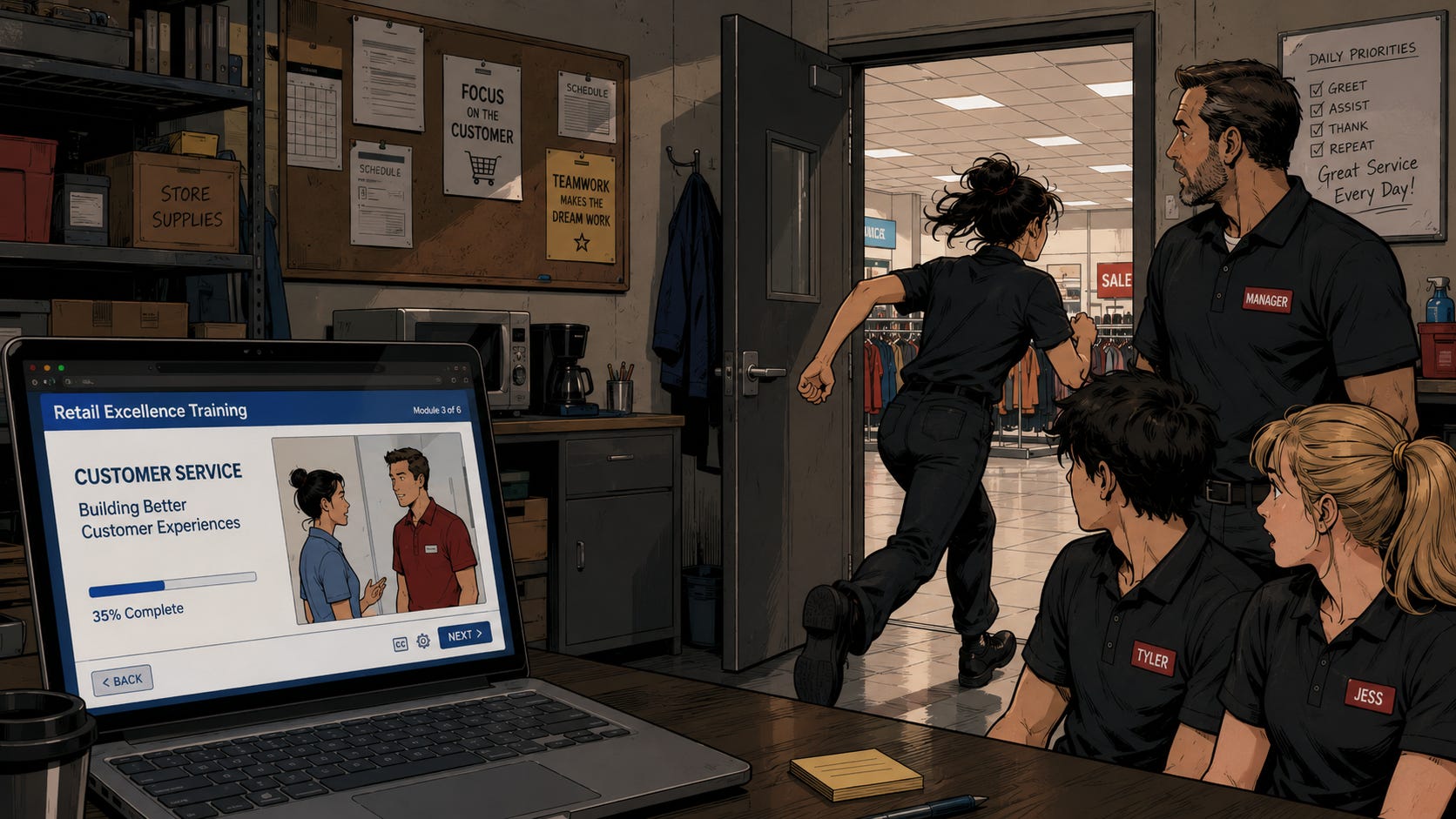
A lot of deskless workers quit during their first shift. Some never make it past their first break. They may have applied, interviewed, been hired, and started within a matter of hours. If the experience doesn’t feel right, there’s another opening just down the street.
Quick quits are a uniquely frontline challenge in industries like retail, food service, hospitality, contact centers, and logistics. With turnover rates at 70+ percent, businesses are trapped in a constant cycle of recruiting, hiring, and training. Managers spend more time filling staffing gaps than running the operation. Experienced employees carry the extra burden, which exacerbates burnout and disengagement. Customer service suffers. Productivity stalls. The operation never has the chance to build forward momentum.
Frontline retention isn’t a 30-60-90 day concept. It starts on day one.
Fixing the quick quit problem starts with understanding why people take the job in the first place.
A small percentage of frontline employees are looking to build a long term career with your company. Most are there because they need a paycheck. They need predictable hours to support themselves and their families. They still want to do good work. But future opportunities won’t keep them clocking in (at least not right away).
Whenever I visit a frontline workplace, I ask employees why they choose to stay. Their answers are always the same:
“I like the people.”
“My manager takes care of me.”
“I feel like I belong here.”
Everyone deserves a living wage. At the same time, many frontline employees are willing to leave a little money on the table to work with people they trust and a manager who has their back. If you want people to come back tomorrow, you must give them a reason to believe they’ve found a place worth coming back to.
Your ability to retain frontline workers ultimately rests with your local teams, especially the managers who hire, coach, and support your employees. But you can set them up for success by structuring your onboarding and enablement strategy to help new hires integrate into the workplace community more quickly.

Here's a shortlist of tactics that are helping organizations reduce quick quits, even in demanding environments like manufacturing and healthcare.
Set clear expectations before day one.
Be upfront about the job, pay, and schedule during hiring. Many quick quits happen because the reality of the role doesn’t match what people were sold. Clarity builds trust before an employee ever starts.
Prioritize connection over content.
Don’t bury new hires in paperwork and online training. Get the required stuff done as quickly as possible, then spend the rest of the first day introducing them to the people they’ll work with. When they go home, you want them thinking about the awesome people they met, not the compliance training.
Meet the manager ASAP.
Require every manager to sit down with new employees as early as possible on the first day. This is the person they’ll rely on, so the relationship should begin with an intentional conversation, not a passing introduction. Make it easy by scheduling the meeting as part of the onboarding process, ensuring managers have dedicated time blocked on their calendars.
Assign a buddy.
Give every new hire an accountability partner who can answer questions, offer encouragement, and help them navigate the workplace. It’s much easier to get to know new people when someone is showing them how things work, making introductions, and sharing the things they won’t find in the SOP.
Manufacture early wins.
Front load simple tasks that allow new employees to experience success quickly. Every accomplishment, no matter how small, builds confidence and reduces the anxiety that comes with starting a new job. End the first day with people thinking, “I can do this,” instead of feeling overwhelmed by everything they still have to learn.
Protect the newbies.
New Disney Cast Members wear an “Earning My Ears” ribbon on their name tags. It acts like an informal force field, encouraging guests and coworkers to give them a little extra patience as they learn the job. Find your own way to protect new employees from being thrown into the deep end too quickly, even when your operation is short staffed or under pressure. Building confidence on day one is far more valuable than squeezing a little more productivity out of the team.
Provide a reliable go-to.
Give new employees a place to find information and get answers without relying on people they don’t trust yet. Whether it’s a knowledge base, job aid, or AI assistant, help should always be easy to find. The easier it is to get answers, the more confident people become that they'll get the support they need.
Every new employee talks about their first day at the new job when they go home. It might be with a spouse. A parent. A roommate.
What do you hope they say?
“I watched training videos all day.”
“I can tell you when the company was founded and who started it.”
“I clicked next to continue so many times!”
Or …
“I met some really cool people.”
“I think I made the right decision.”
“I’m excited for my next shift.”
Organizations often define a successful first day by how many tasks a person completed. New employees define it by how the day made them feel. Long after they’ve forgotten the compliance modules and onboarding forms, they’ll remember the people who welcomed them, the manager who made time for them, and the feeling that they found a place worth coming back to.
Need help solving your quick quit problem? Let’s build a better first shift together →
Comments
Nothing yet. Say the first thing.
Sign in to join the conversation.