
There’s a moment every coach recognizes. Sometimes even parents on the sidelines see it. And frequently a teammate also notices it.
Practice is loud, games are louder. The ball is moving. Teammates are calling for it. Instructions are flying. Parents are watching (maybe yelling). Defenders are flying at you. Maybe there are the challenge of two games going on side by side. And suddenly—there it is.
A player drifts.
They miss a cue.
They’re late to the next action.
Their body language shifts just enough to tell you: they’re not here anymore.
This is usually the moment when voices get louder.
When reminders stack up.
When frustration sneaks into the ton
e.
But this moment?
This is actually where the most important coaching happens. Or from a player’s perspective; a crucial opportunity to reset and get back to the moment of the game.
Soccer is chaos by design. The game demands constant scanning, decision-making, emotional regulation, and recovery after mistakes. Even highly motivated players can lose focus when the environment gets loud, fast, or overwhelming.
Research on executive functioning shows that attention, inhibition, and cognitive flexibility are trainable skills, not fixed traits (Diamond, 2013). And importantly, cognitively engaging physical activity—like soccer—can actually strengthen these skills when supported well (Best, 2010).
For some players—especially those who struggle with attention regulation—that chaos hits harder and faster.
The mistake we make is assuming that when focus slips, effort is the issue.
More often, it’s not effort.
It’s overload.
So instead of asking, “Why aren’t you paying attention?”
The better question is:
“How do I help this player find it again—right now?” Or if you a player, recognize this moment is happening and ask yourself, “What’s Important Now?”
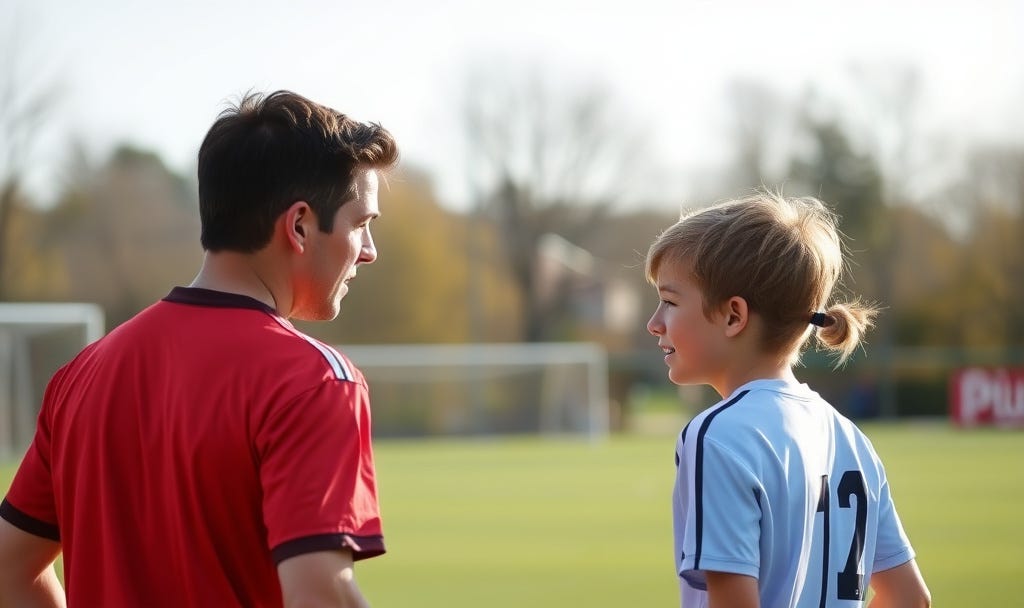
Picture this.
The tempo is high.
The player has missed a couple of reps.
You can see the frustration building.
You walk over—not rushed, not reactive.
Coach (calm, at the player’s level)
“Hey — quick check. Where’d your focus go just now?”
Player
“I don’t know… I just spaced out. Everything got loud.”
Coach
“Yeah. That happens. No problem. Let’s reset it.”
(You pause. You model calm.)
Coach
“Let’s take one breath together.”
(You breathe together.)
Coach
“Alright. Right now—what’s important?”
Player
“…Next action?”
Coach (small nod)
“Exactly. Next action. That’s all we’re asking for.”
Coach
“Here’s your job for the next two minutes:
Scan early. Stay connected on your left shoulder. Win your first movement after the pass. That’s it.”
Player
“Scan early. Next action.”
Coach
“Perfect. And if your attention wanders again—what do you do?”
Player
“Breathe. Reset. Say my cue.”
Coach
“Yes. Then you re-engage. No drama.”
(You tap their shoulder.)
Coach
“Good? Okay—you got this!”
That exchange took maybe 20–30 seconds.
But what it taught the player lasts far longer.
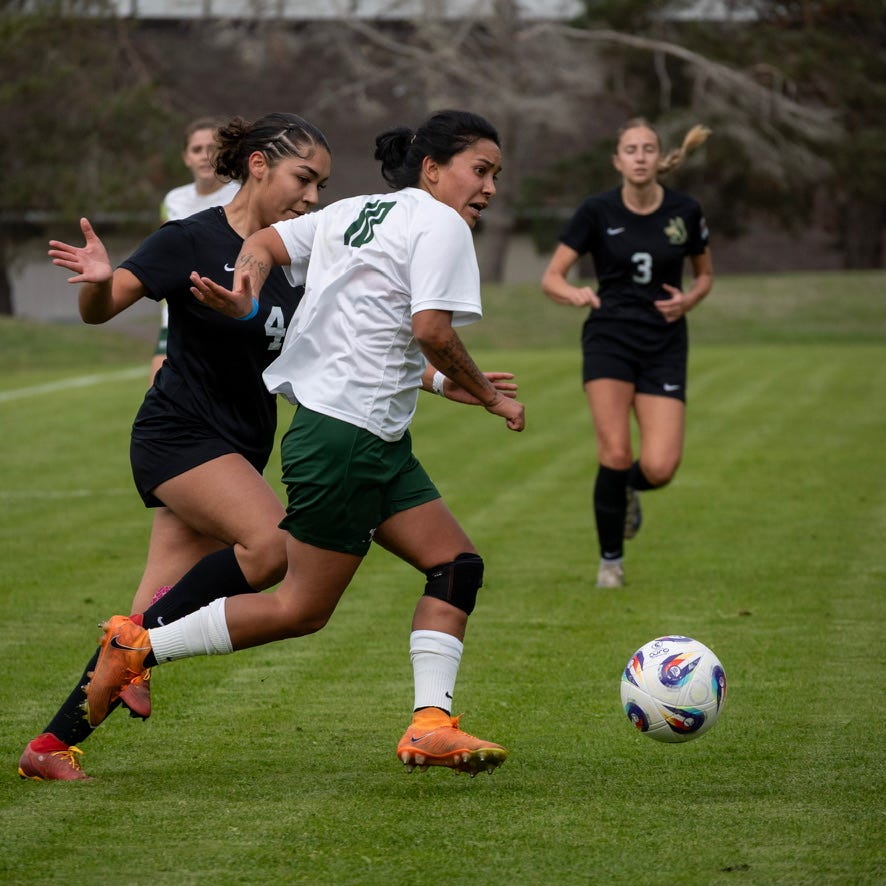
This moment works because it does a few important things—quietly.
It treats focus as trainable, not personal
It normalizes the experience (“That happens”)
It regulates emotion before adding information
It gives the player one cue, one task, one short window for success
This aligns with what we know about attention and emotional regulation: calm precedes clarity, and reducing cognitive load improves decision-making under pressure (Chang et al., 2012).
Most importantly, it leaves the player with a plan.
When my attention wanders, I know exactly how to bring it back.
That’s confidence.
That’s clarity.
That’s a skill.
When focus slips in the middle of the field, the goal isn’t correction—it’s reconnection.
Here’s the simple framework underneath that coaching moment:
“Yeah. That happens.”
This lowers threat and keeps the brain open to learning—a key principle in both sport psychology and ADHD-informed coaching practice (CHADD).
One breath together. Calm before clarity.
Short regulation strategies help athletes regain attentional control more effectively than verbal reminders alone (Gardner & Moore, 2007).
Ask: “What’s important right now?”
Not everything. Just the next action.
Two minutes. One cue. One responsibility.
Clear, concrete tasks reduce overwhelm and improve engagement—especially for athletes who struggle with attention or impulsivity (TrainingPeaks).
“If it wanders again, what do you do?”
Players don’t just learn the task—they learn the recovery.
Let’s be clear:
This approach doesn’t excuse behavior.
It doesn’t lower expectations.
It raises the skill level required to meet them.
Players still compete.
They still work.
They still get coached.
They just learn how to manage their focus when the game gets loud.
Every player will lose focus at some point.
The ones who grow the most aren’t the ones who never drift—
They’re the ones who know how to come back.
When we teach players how to reset, refocus, and re-engage under pressure, we’re not just helping them play better soccer.
We’re helping them trust themselves in chaotic moments.
That’s a performance skill.
That’s a life skill.
And it’s worth training.
Focus & Executive Function
Diamond, A. (2013). Executive functions. Annual Review of Psychology
Best, J. R. (2010). Physical activity and executive function in youth. Developmental Review
ADHD & Coaching in Sport
CHADD — Coaching Kids with ADHD in Sports
Soccer Parenting Association — ADHD & Youth Sports: A Guide for Parents & Coaches
TrainingPeaks — How to Coach Athletes with ADHD
Calm, Regulation & Communication
Gardner & Moore (2007). The Psychology of Enhancing Human Performance
Röthlin et al. (2016). Mindfulness-based interventions in sport
TTN Coaching — Difficult Conversations in Sport
No posts
Comments
Nothing yet. Say the first thing.
Sign in to join the conversation.