
By Jeremi Suri
If the definition of insanity is doing the same thing and expecting a different outcome, then U.S. policy toward Iran belongs in a lunatic asylum. Since November 1979, presidents from Jimmy Carter to Donald Trump have pledged to break the revolutionary regime in Tehran through economic sanctions. Each administration promises to make the sanctions stronger and deliver victory, at last. Presidents since George H.W. Bush have also argued that sanctions will shut down Iran’s nuclear weapons project.
None of that happened. The revolutionary regime in Iran has survived nearly fifty years of ineffective American sanctioning, and it has only grown more radical in recent months. Tehran continues to stockpile nuclear materials, and it is capable of developing a weapon on a short timeline. American sanctions did not end Iran’s nuclear ambitions.
Trump made all these points about the weakness of sanctions when he launched a massive air assault on Iran in February. He promised regime change and denuclearization, at last. His secretary of defense, Pete Hegseth, has repeated those promises in his testimony before Congress.
But none of that happened either. After more than $50 billion in spending and a dangerous depletion of American missile stockpiles, the revolutionary regime in Tehran remains firmly in power. It has replenished much of its rocket arsenal – faster than we have. It has closed the Strait of Hormuz, one of the world’s most important energy transit routes. The U.S. has blockaded Iranian shipping, but we have not dared to challenge Tehran’s unilateral control of the waterway they seized after we attacked them. Our navy is too frightened to combat Iran in that space; lots of Americans will die if we do.
In an interview on Sunday, Texas Governor Greg Abbott said that the “kinetic phase” of this war is done. Yes, that is another way of saying that it failed. Iran did not buckle under the air assault, and Abbott and other Republicans understand that American voters this November do not want to see this war continue. We have lost.
So, what is the Trump administration doing to recalibrate? They are returning to sanctions. Oh, I am sure those will work now.
What Treasury Secretary Scott Bessent announced on Monday would be comical if it were not downright pathetic. After failed sanctions programs called “Maximum Pressure” and “Economic Fury,” now the Trump administration is enacting “Operation Economic Outcast.” This will bring an “economic D-Day” for Iran, Bessent thundered. Yet again, he promised “regime change.”
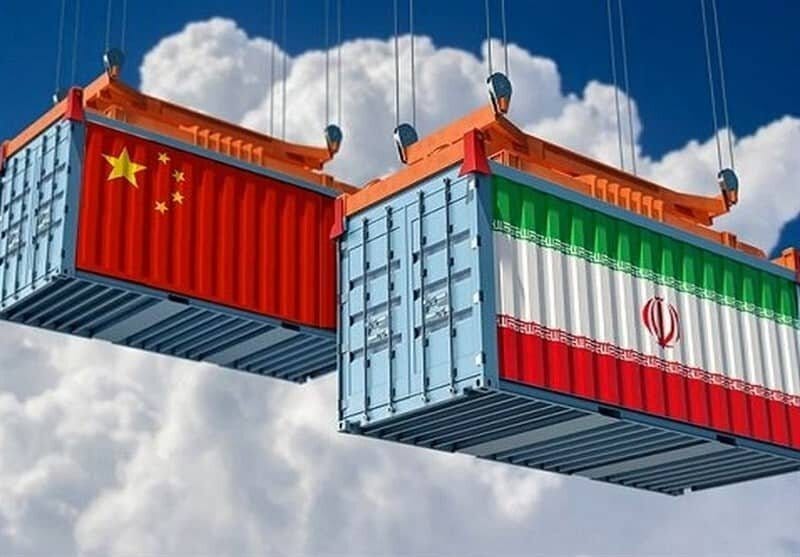
If only words could get the job done, but they won’t. Bessent was clear, when questioned, that the United States would not take decisive action to stop Chinese trade with Iran. Beijing buys 90% of Iranian oil, despite sanctions, and it provides banking and finance to Tehran, also despite sanctions. That keeps the lights on for the revolutionary regime.
Just as the Trump administration will not send our ships into the Strait of Hormuz for fear of Iranian rockets killing Americans, it will not embargo Chinese trade with Iran for fear of Beijing’s retaliation across the supply chains that keep the American economy intact. As before, sanctions on Iran are doomed to fail. Operation Economic Outcast will only add to international perceptions of American weakness and further alienate the allies we pressure to follow our failed policies. We are making ourselves the outcasts.
This is insanity. Neither war nor sanctions are the answer. Iran is ruled by a tyrannical regime that sponsors some of the most violent terrorists in the world. To change this government and make the world safer, the United States must work with its allies to support the people in Iran. Instead of sanctions, this requires more economic and cultural penetration. Instead of belligerence, it means keeping the government at arm's length, but offering incentives for better behavior. For example, foreign investment, which Iran desperately needs, can be tied to human rights and anti-terrorist measures. Some sanctions will still be necessary, but the emphasis should be on opening Iranian society, not isolating and attacking it.
What we know in Iran, and elsewhere, is that bombing a society from the air and cutting off its food only rallies people to the regime in power. Doing more of those things is inhumane and insane. Trying to open a society through targeted incentives is not a silver-bullet solution, but it offers something more realistic.
Communist societies, including the Soviet Union, were not bombed and sanctioned to a violent death. They opened up because their people believed other societies offered a better way of life. We need to make that case in Iran.
So far, the United States looks like just another oppressor, drunk on belligerent rhetoric, expensive missiles, and empty economic threats. Who are the crazy people in this conflict?
Text within this block will maintain its original spacing when published
Also see in:
German, Turkish, Chinese, Spanish

Jeremi Suri holds the Mack Brown Distinguished Chair for Leadership in Global Affairs at the University of Texas at Austin. He is a professor in the University’s Department of History and the LBJ School of Public Affairs. Professor Suri is the author and editor of eleven books on politics and foreign policy, most recently: Civil War By Other Means: America’s Long and Unfinished Fight for Democracy. His other books include: The Impossible Presidency: The Rise and Fall of America’s Highest Office; Liberty’s Surest Guardian: American Nation-Building from the Founders to Obama; Henry Kissinger and the American Century; and Power and Protest: Global Revolution and the Rise of Détente. His writings appear in the New York Times, Washington Post, Wall Street Journal, CNN.com, Atlantic, Newsweek, Time, Wired, Foreign Affairs, Foreign Policy, and other media. Professor Suri is a popular public lecturer and comments frequently on radio and television news. His writing and teaching have received numerous prizes, including the President’s Associates Teaching Excellence Award from the University of Texas and the Pro Bene Meritis Award for Contributions to the Liberal Arts. Professor Suri hosts a weekly podcast, “This is Democracy.”
No posts
Comments
Nothing yet. Say the first thing.
Sign in to join the conversation.