
By Harral Burris
Text within this block will maintain its original spacing when published
Well, shake it up, baby, now
Twist and shout
Come on, come on, come, come on, baby, now
Come on and work it on out…
On August 19, Secretary Scott Bessent announced that the U.S. Treasury Department will increase buybacks of long-dated government bonds from $2 billion to at least $4 billion. On Friday morning, after his announcement proved underwhelming to bond traders, he claimed he could increase the amount purchased, alleging he possesses an extensive “toolkit” to push long rates down.
The Treasury also confirmed on Wednesday morning that the federal debt has passed $40 trillion, a number so large it’s hard to fathom. The two announcements are related, though Bessent would never admit it.
The bond operation, known as a “twist,” attempts to push long rates down by selling long-dated bonds while simultaneously purchasing short-term T-bills. It’s been tried twice for very different reasons, with limited success.
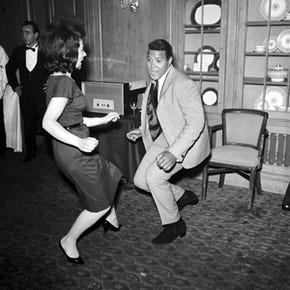
The John F. Kennedy administration deployed the original Operation Twist in 1961. It wanted to shore up a weak economy without pushing down short-term rates. With the dollar still pegged to gold under the Bretton Woods system, any fall in short-term rates would encourage foreign central banks to trade dollars for gold, depleting U.S. stocks. The Federal Reserve sold bills from its balance sheet and used the proceeds to purchase long-term bonds. The name was a nod to the new dance craze sweeping the country. Long rates fell slightly, and gold outflow slowed, but the operation had little lasting effect.
The Fed revived the tactic in 2011 for different reasons. The U.S. recovery from the 2008 recession was faltering, Greece was imploding as the euro debt crisis raged, and the Fed’s short-term rates were already near zero. So the Fed got creative, selling bills to buy bonds while keeping its balance sheet constant. This operation had a measurable short-term effect on the economy by driving down mortgage rates and corporate borrowing costs, but economists debate just how effective the program was.
In 2011, though, inflation was low, the economy was recovering from recession, and corporations were not competing for available debt. With short rates at 0.5%, lowering long rates was the only option.
The new twist operation is different. The Federal Reserve ran past efforts; this one is a Treasury project. There is no global economic emergency calling for immediate rate cuts; in fact, the global economy faces a growing inflation risk, made worse by rate cuts. The pressing need for lower long rates is to aid Republicans in the midterm elections.
When the Fed ran Operation Twist in 2011, it sold bills it already owned to buy long-term bonds, a true portfolio rebalancing that required no new debt. What Bessent’s Treasury is doing is completely different: every bond it purchases and adds to its inventory must be replaced with new bill issuance, thereby increasing the national debt total.
On the surface, this appears to be an off-the-cuff operation with little contingency planning. For one thing, the scale of the purchases is too small to make a difference. The Treasury is buying back $4 billion per operation across the long end of the curve. The U.S. issues roughly $2 trillion in net new debt per year, and the AI-related corporate bond supply is soaking up hundreds of billions more. Against these numbers, $4 billion is a small finger in a very large dike.
The purchase level may be too small to accomplish much, but the operation does manage to put Bessent and Fed Chair Kevin Warsh at odds. Warsh spent much of his last press conference contending that he could keep short rates low and let the long bond appreciate, thus doing the Fed’s work through market action. Weeks later, he finds the administration actively trying to push long rates down through blatant manipulation. Warsh is scheduled to give a much-anticipated speech at the annual Jackson Hole financial conference this Friday. He’s got a lot of explaining to do.
Markets have certainly not given the plan a vote of confidence. The day after the announcement, the U.S. Dollar Index (DXY) fell below 99, while gold rose 4%. For a few hours after the announcement, 30-year yields fell, but by the end of the day, rates had risen back to near where they’d been the day before. The overall impact of the announcement on the bond market had thus disappeared, but weakness in the dollar and strength in gold continued.
The structural forces driving rates higher — AI demand, rising inflation, and fiscal debt at historic levels — are not going to be fazed by $4 billion. The Treasury does not have enough brakes to stop this train. The best Bessent can hope for is to tear up some track and slow the advance.
The simple fact is that this is a blatantly political attempt to push down mortgage rates before the fall election. Mortgage rates follow the 10-year Treasury, so falling long bond rates will reduce borrowing costs for home purchases. The announced buybacks, running from September 9 through November 4, will inevitably be read as fiscal policy deployed in service of Republican political gains, precisely the kind of institutional credibility damage that makes bond vigilantes smell blood.
The bond market delivered its verdict on Bessent’s announcement with brutal efficiency. Markets weren’t fooled; they simply moved on, leaving the Treasury secretary holding a laughably small $4 billion toolkit against a $40 trillion problem. When Kevin Warsh takes the podium at Jackson Hole on Friday, he’ll face the unenviable task of explaining how the Fed can maintain its independence while the Treasury Department actively works to undermine his authority.
A dance craze inspired the name of the original 1961 Operation Twist. The 2026 version feels less like a dance and more like a high-wire act, performed without a safety net.
Text within this block will maintain its original spacing when published
Hal is a retired investment professional with 40 years of experience in money management. The interface between geopolitics and global investments has always been his area of specialization. History has always been one of his interests and passions, in fact, that’s how Hal and Jeremi became friends in Madison, Wisconsin.
No posts
Comments
Nothing yet. Say the first thing.
Sign in to join the conversation.