
This newsletter is a beautiful case study of how to move upmarket as a demand gen leader. Specifically, how Alex Goodwin, Director of DG @ Fingerprint did it, 2X’ing ACV while tripling ARR over 2 years.
This is a slightly longer one, we’ll be covering the 3 core pieces of Fingerprint’s machine:
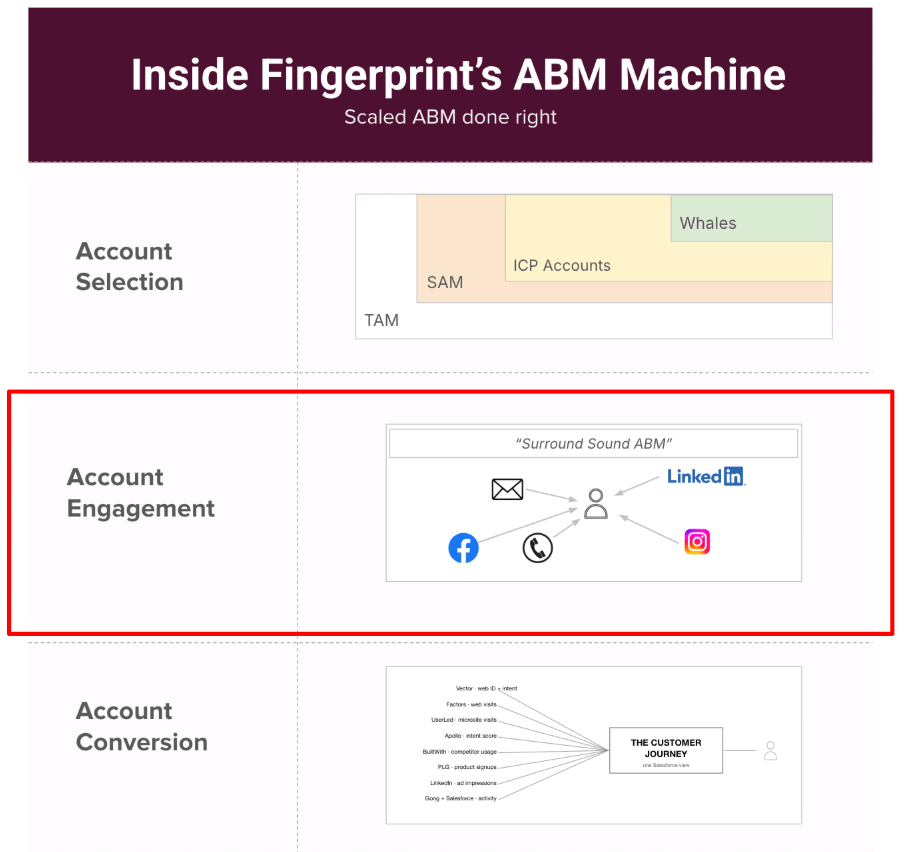
Account selection: Hey they score and prioritize their market into TAM → SAM → Target Accounts & align everyone on the same accounts.
Account Engagement: Which plays we run at those accounts & why.
Account Conversion: Enabling sales, and holding them accountable.
Let’s dive in.

→ Vector - Run ads to your ICP, at the person level, on every channel (meta, reddit, youtube, etc). So you can save money (cut waste), save time (no more manual audience updating), and drive better results (lots of cool stuff you can do). Request a demo here, or use DCREVEAL to get a free month of Vector’s Reveal plan.
→ Docket - the best AI Chatbot & Avatars (these are crazy) to work website leads 24/7. Built on better data, less expensive, and faster to setup than alternatives. Talk w. their own chat yourself here.
→ Wildcard - Book meetings with execs at your hardest-to-reach tier 1 accounts using 1:1 direct mail ABM campaigns that are impossible to ignore (like this, and this), 100% done-for-you. Trusted by teams like Ashby, Chainguard, and Amplitude. Request a demo here.
→ Scrunch - the AEO tool that helps you not just track AI citations, but actually win them.
→ CaliberMind - the marketing attribution platform built for enterprise complexity. ROI-obsessed marketers at co’s like ADP, NetApp, and Siemens trust CaliberMind to give them the confidence to answer, ‘What’s working?’, tell the story of their contribution, and make smarter investments. Request a demo here.
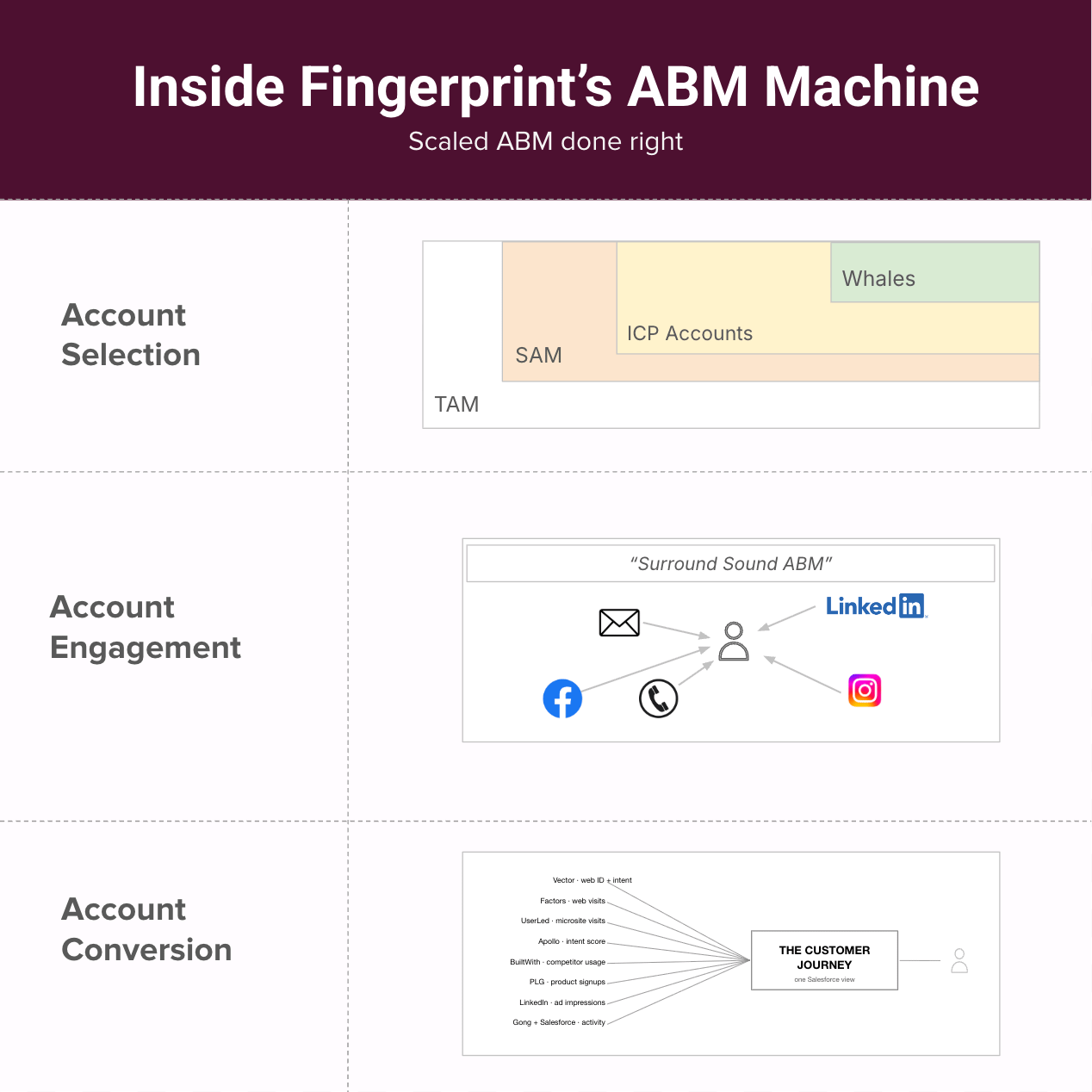
Alex has gone on a 3 year journey building Fingerprint’s “scaled ABM” machine. And it’s clearly worked (2X’ing ACV while tripling ARR over 2 years). My goal with this newsletter is to distill their best learnings so you can take at least one into your day-to-day.
Their learnings fall into three big buckets.
Account Selection: They moved from effectively “spraying and praying” to mapping their entire market, and only spending on accounts they know are a fit.
Account Engagement: Two notable unlocks here.
Spend sizing: They don’t just “market to their whole TAM” they match DG motions to account value. Running lighter lift, scaled demand gen to Tier C accounts, while giving their whales tailored (expensive) 1:1 treatment.
Better plays: Alex is running some incredibly interesting plays using modern tech and unique strategies.
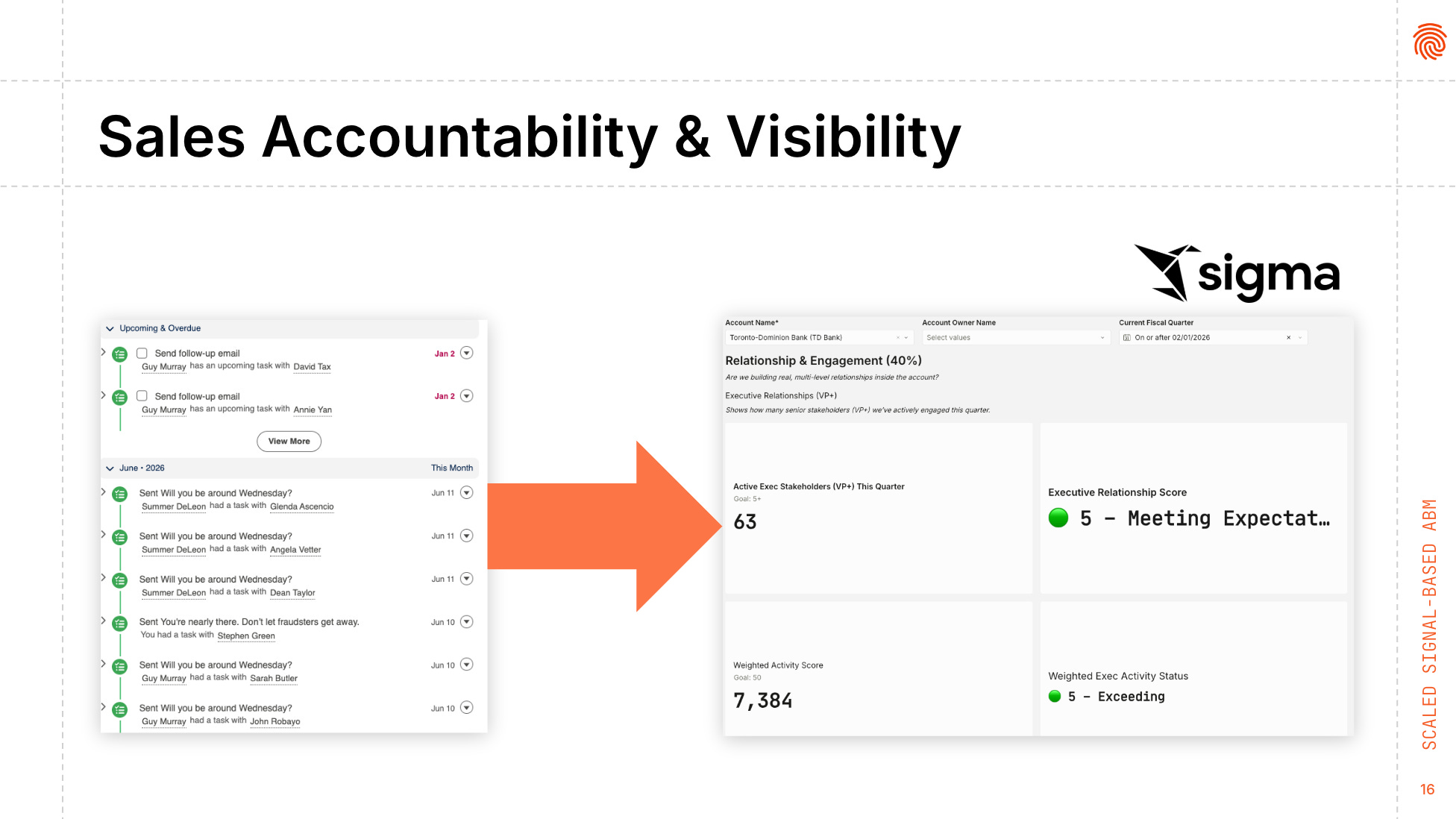
Account Conversion: The more upmarket they’ve moved, the more essential sales buy-in has been. So they’ve built custom tooling to ensure that sales works accounts showing engagement quickly, they’re enabled to work them well, and they’re held accountable to actioning on all the engagement marketing is generating.
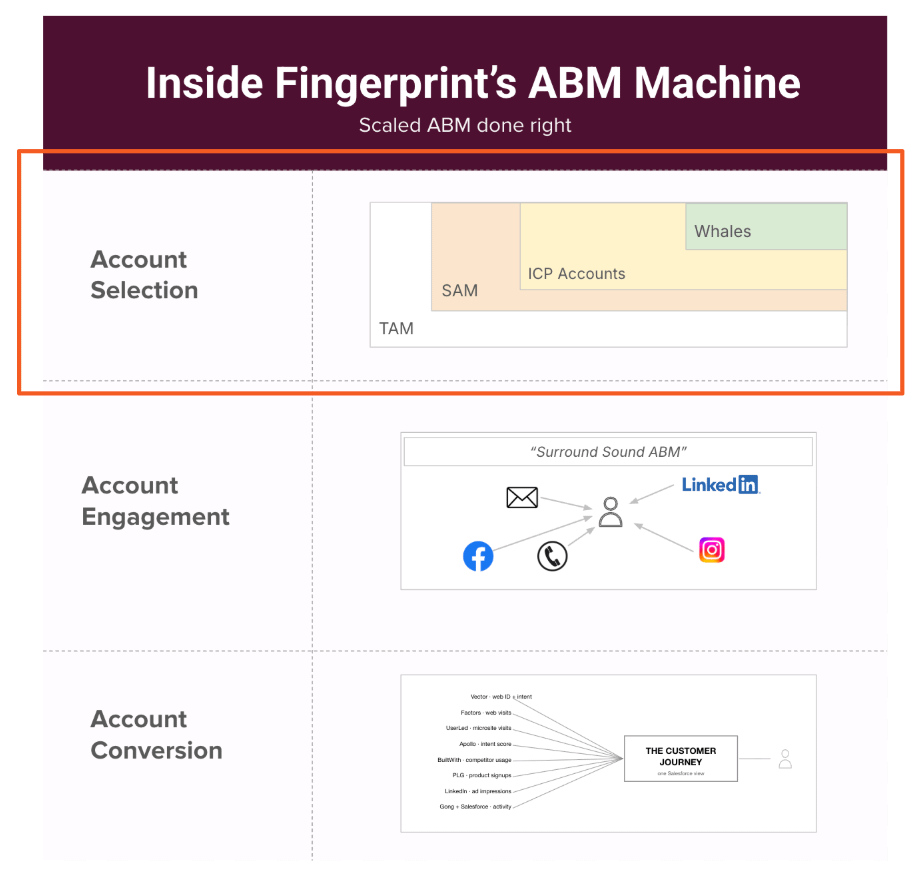
Fingerprint (just like PartnerStack, Datadog, and Nominal) finds every account in their Total Addressable Market and uses AI to score all of them, breaking them out into:
TAM: Everyone they *could* sell to, at some point
SAM: Who they can service right now
ICP Accounts: Who they can best serve, broken out into Tier 3, Tier 2, Tier 1, Whales.
This allows them to cut any wasted spend on accounts that were getting ABM treatment but actually weren’t great fits (bc sales was selecting accounts they could think of, or bad-fit accounts were sneaking into Zoom Info lists), and then allocate spend intelligently to target accounts based on ACV, fit, and value.
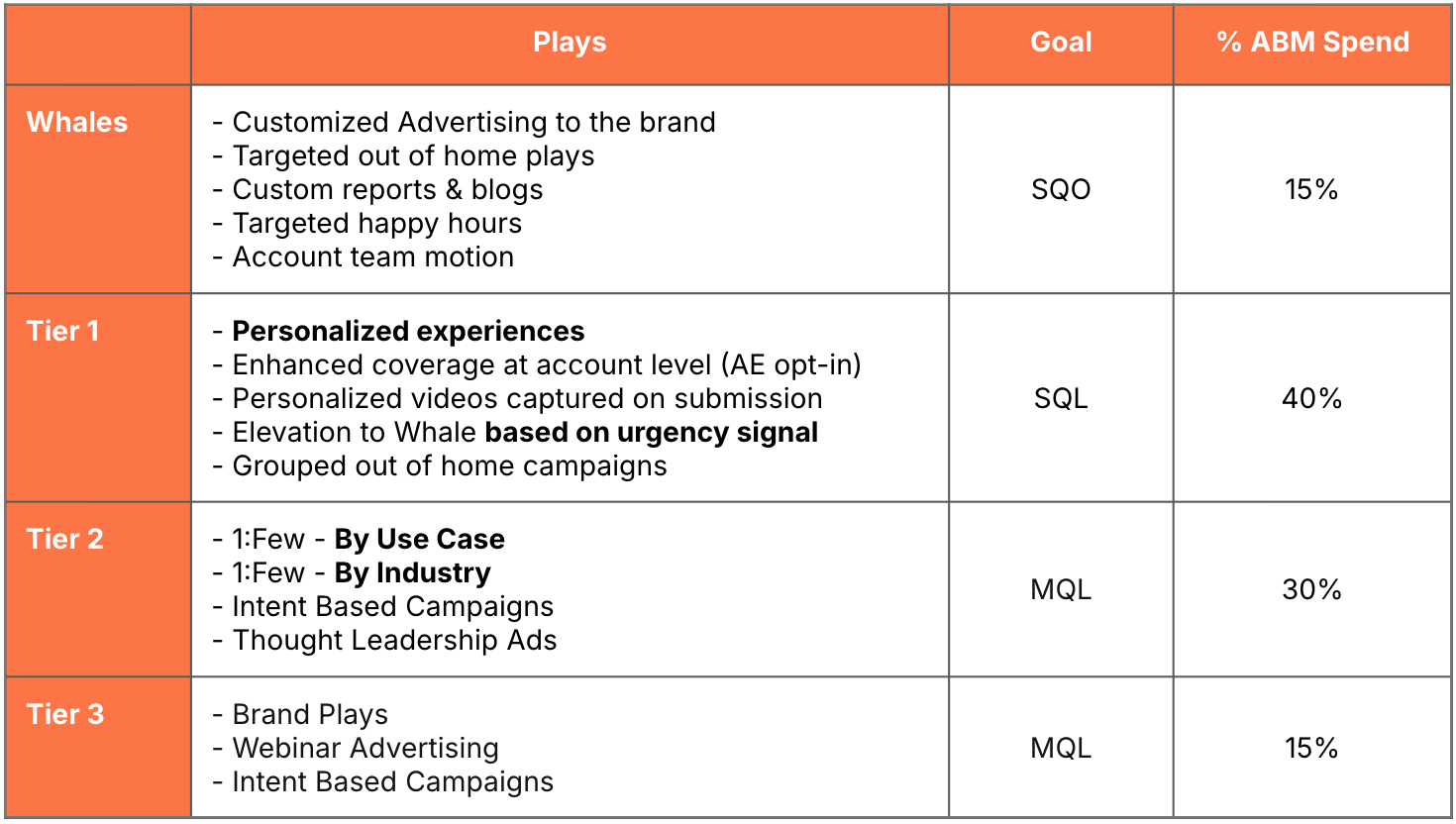
Each account gets a different level of investment and engagement depending on tier.
They use AI to do map their TAM, scoring every account on 2 criteria:
Has the Problem: Do they need Fingerprint?
Size of Problem: How much do they need Fingerprint?
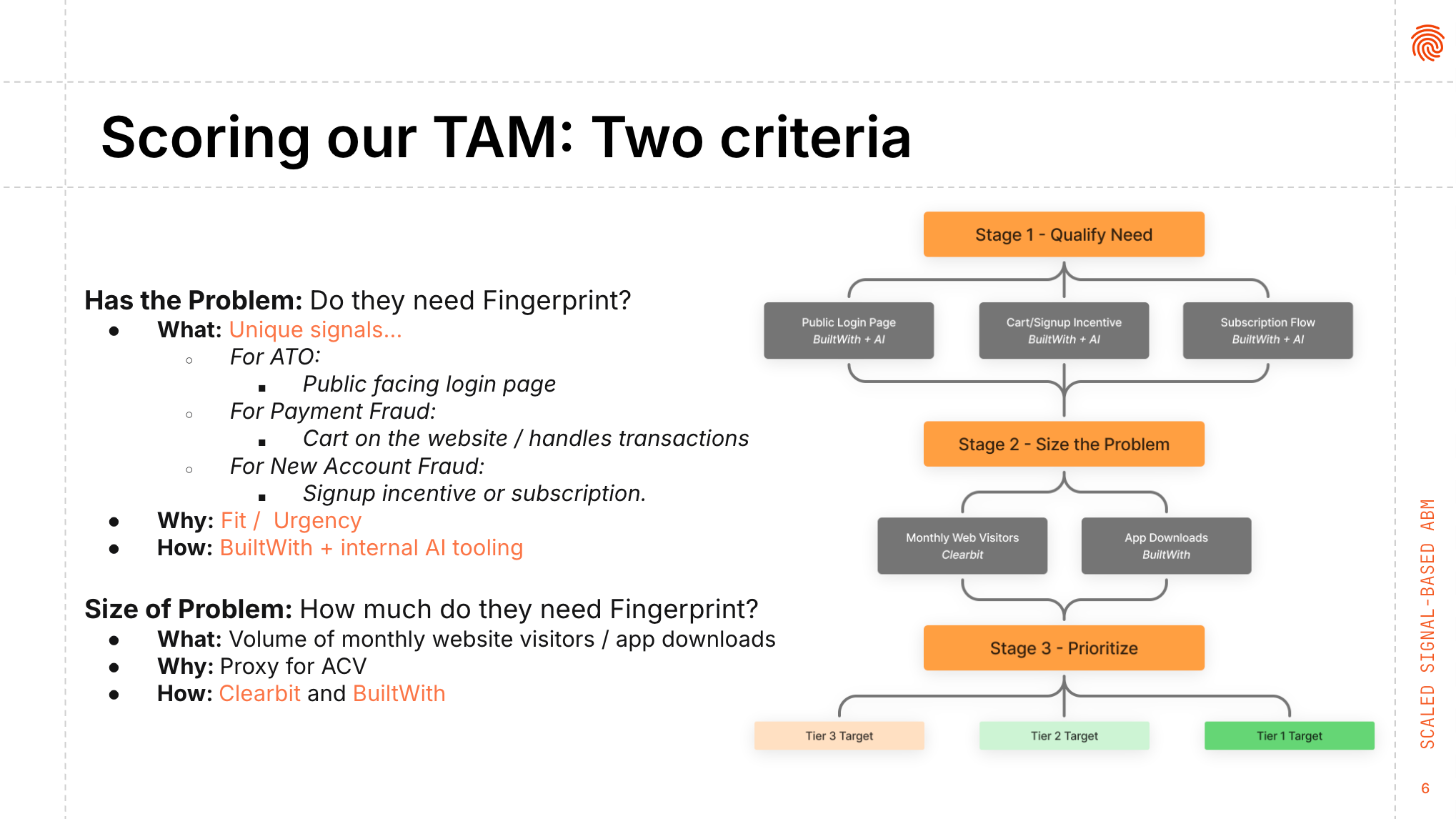
Using AI here lets them find great-fit accounts their competitors might be missing, as well as cut wasted spend on accounts that *look good* but actually don’t have a need for Fingerprint.
They run lots of plays, and are consistently testing new ones. I’ll share a couple here you might be able to learn from:
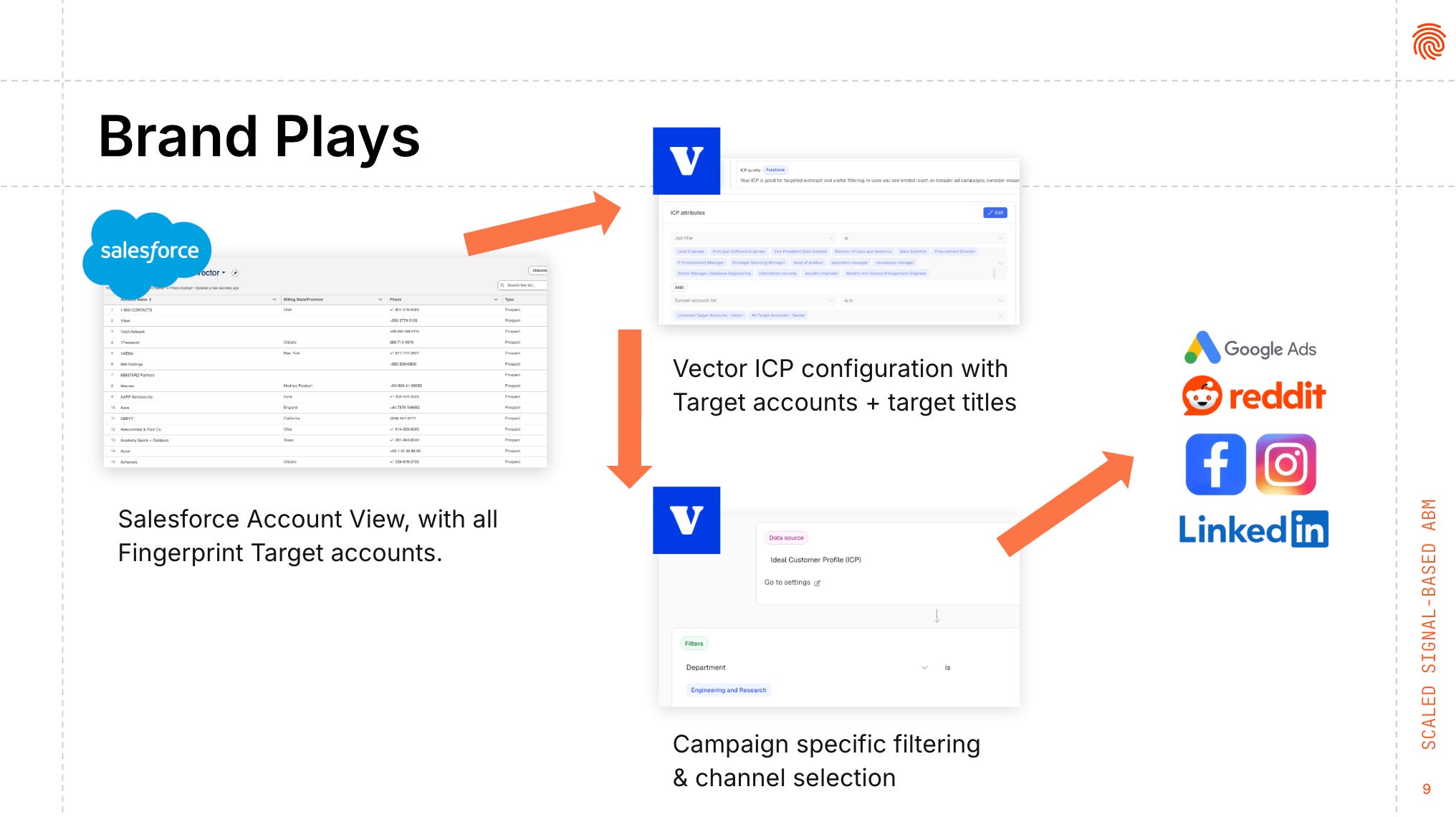
They run brand ads at *all* ICP contacts at Target Accounts, on every platform (google, reddit, facebook, IG, LinkedIn). The use Vector to get person-level targeting on all these channels. Normal, always-on brand advertising focused on building awareness and surfacing engagement from target accounts (Vector-identified web visitors, or ad engagement).
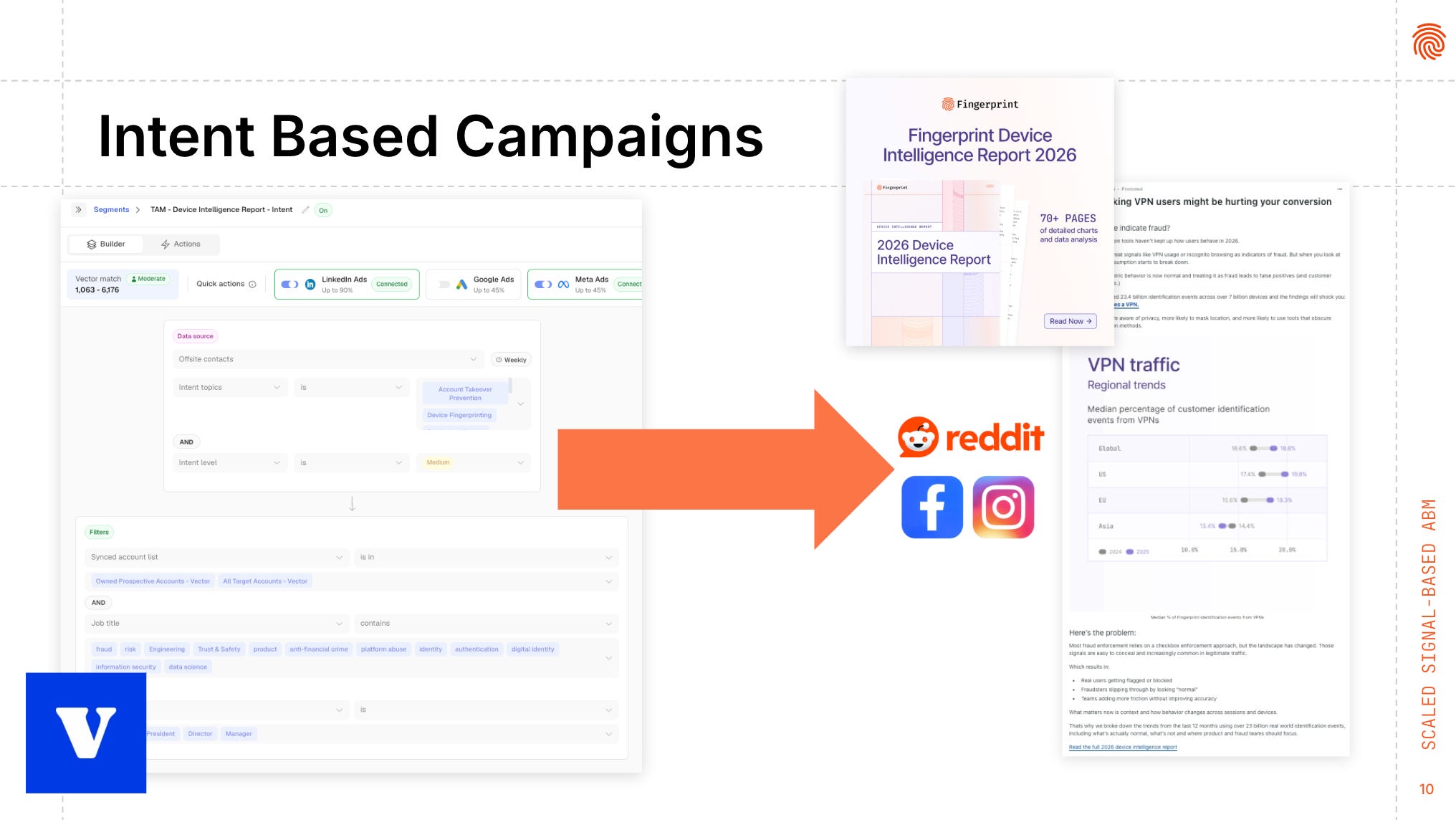
Vector shows them contacts researching high-intent keywords, so they enroll these people (if at non-tier 2/1 accounts) in ad campaigns on Facebook, Reddit, and IG talking about these specific intent topics.
I asked Alex for an example:
“To help Fingerprint scale plays across a wider range of accounts, we segment lower priority targets by related use cases and verticals. Building homogenized plays against these accounts.
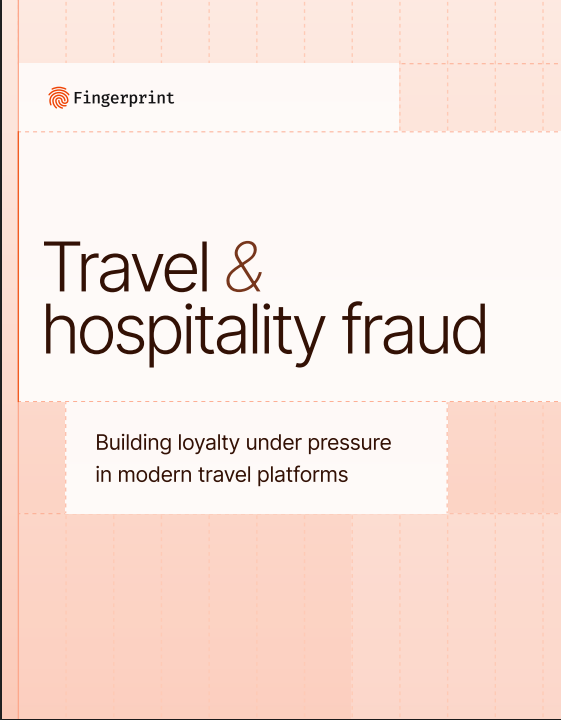
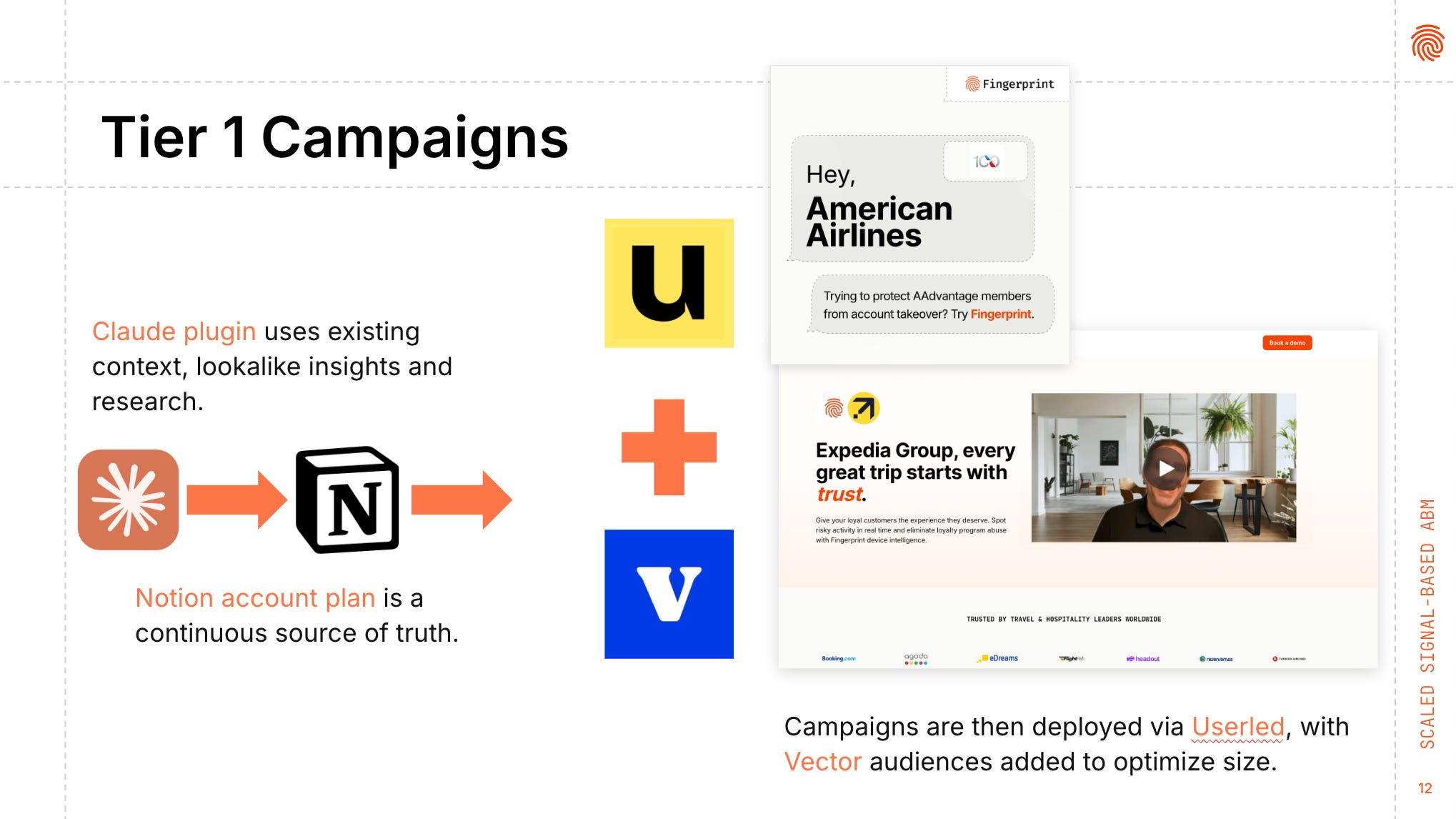
A recent campaign example includes building out a play for Travel & Hospitality, focusing on their peak season challenges of booking fraud. Which includes this thematic website popup, pain point targeted advertising, deep format content to leverage lessons from our existing customers and personalized gifting that leans into the theme - in this case a custom lego plane.”




They get much more white-glove and manually personalized for Tier 1 accounts:
Personalized experiences
Enhanced coverage at account level (AE opt-in)
Personalized videos captured on submission
Elevation to Whale based on urgency signal
Grouped out of home campaigns
Digitally, they run 1:1 campaigns focused with personalized ad creative and landing pages. Alex mentioned 2 big unlocks here:
The landing pages are only as good as the input. So they make sure to use human-vetted account plans created in Notino.
Running these ads across channels, at the person level, using Vector got them much lower CPMs without sacrificing quality.
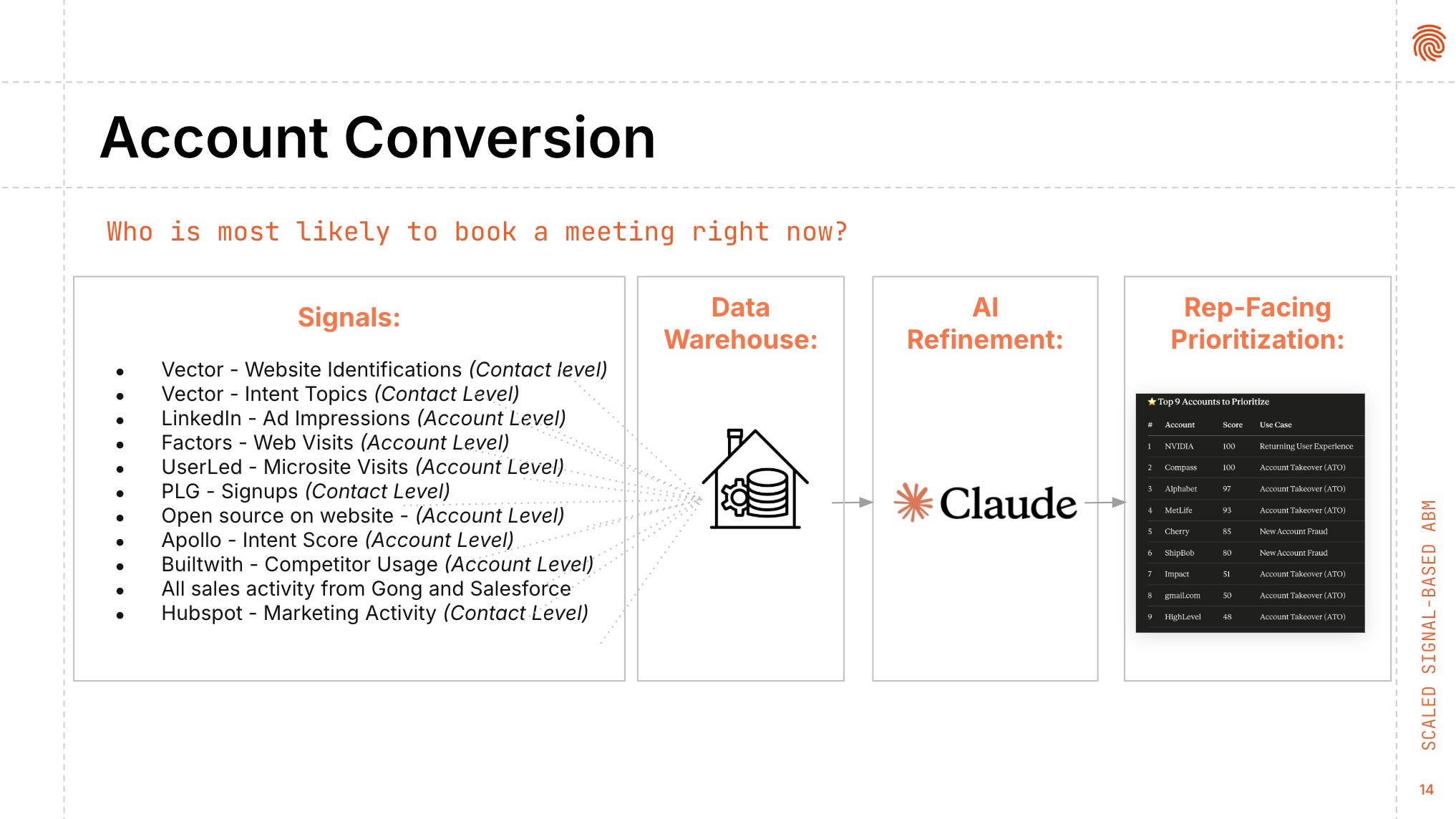
Like Datadog’s ABM Machine, at Fingerprint’s scale, a big focus for ABM is figuring out who is most likely to book a meeting this week and pointing sales at those people.
To do this, they get *all* the signals they can, bring them together in a data warehouse, use AI to refine and clean up rep-facing prioritization and enablement.
Their RevOps team was obviously a huge partner in getting this built. This gives them accountability & visibility w. Sales they never had before.
I think this is such a beautiful case study of scaled ABM (27+ reps) done right. ABM Marketing is so nuanced and there’s no playbook. But hopefully you can steal one or two tactical learnings from what Alex has figured out.
His favorite:
Signal Quality Beats Signal Volume: Especially when getting started, you don’t get two bites of the apple with rep trust. So better to send over fewer *amazing* leads that have them begging for more than to burn trust on a CFO who saw an ad once.
Find the Right First Party Signals: See “signal alpha”.
1 View to Rule Them All: If you want sales accountability and visibility, you need one view that *everyone* is aligned on.
Cross Channel Retargeting Can Cheaply Extend Reach: Use a tool like Vector to surround sound contacts.
Create a Systematic Feedback Loop: The more data they track, they get better and better with every turn of the flywheel. Better targeting, higher converting campaigns, more effective sales alignment.
That’s all for today! I hope you enjoyed this longer read :)
Love you ❤️,
Eric
No posts
Comments
Nothing yet. Say the first thing.
Sign in to join the conversation.