
I don’t have many strongly held beliefs about Demand Gen. But the one hill I’ll die on is that ICP is the most important decision any DG can make, and almost no one cares enough about it.
When PartnerStack fixed their ICP they increased pipeline value by 58%+ while DECREASING cost per dollar of pipe by 35% AND improving NRR, & ACV.
When Ceros fixed their ICP they 2.5X’d conversion in top accounts and meaningfully increased ACV.
Another marketer I talked to a year ago changed nothing else about their LinkedIn ads but their targeting (better-fit ICP accounts) and 2X’d ACV while dropping cost/per opp.
Vista, one of the most successful PE firms in the world ($103b in AUM) operates 90+ enterprise software companies, and they have a 110+ point playbook on how to run companies better. One of the very first things they do when they buy a new company is fix ICP with their CAPD (customer and prospect database).
This is a topic I’ve been a little obsessed about, so this newsletter isn’t a rapid read. Today I’ll be sharing:
Why ICP is so important.
How to operationalize ICP.
And lots of examples of what good (and bad) ICP looks like in demand gen
Let’s dive in.

→ Vector - Run ads to your ICP, at the person level, on every channel (meta, reddit, youtube, etc). So you can save money (cut waste), save time (no more manual audience updating), and drive better results (lots of cool stuff you can do). Request a demo here, or use DCREVEAL to get a free month of Vector’s Reveal plan.
→ Docket - the best AI Chatbot & Avatars (these are crazy) to work website leads 24/7. Built on better data, less expensive, and faster to setup than alternatives. Talk w. their own chat yourself here.
→ Wildcard - Book meetings with execs at your hardest-to-reach tier 1 accounts using 1:1 direct mail ABM campaigns that are impossible to ignore (like this, and this), 100% done-for-you. Trusted by teams like Ashby, Chainguard, and Amplitude. Request a demo here.
→ Scrunch - the AEO tool that helps you not just track AI citations, but actually win them.
→ CaliberMind - the marketing attribution platform built for enterprise complexity. ROI-obsessed marketers at co’s like ADP, NetApp, and Siemens trust CaliberMind to give them the confidence to answer, ‘What’s working?’, tell the story of their contribution, and make smarter investments. Request a demo here.
This means:
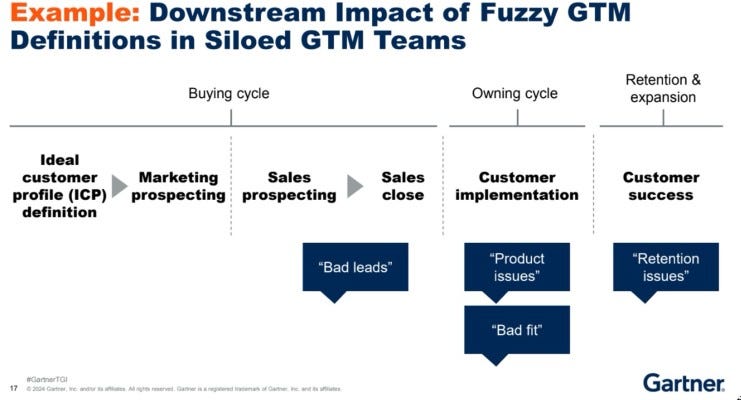
Theoretically, if you run an innovative new ads strategy, but you’re targeting the wrong people, it does nothing. But you can keep your ads exactly the same and double ACV (and probably improve conversion) by fixing ICP if your existing targeting is broken.
It’s the foundation of your “marketing pyramid”.
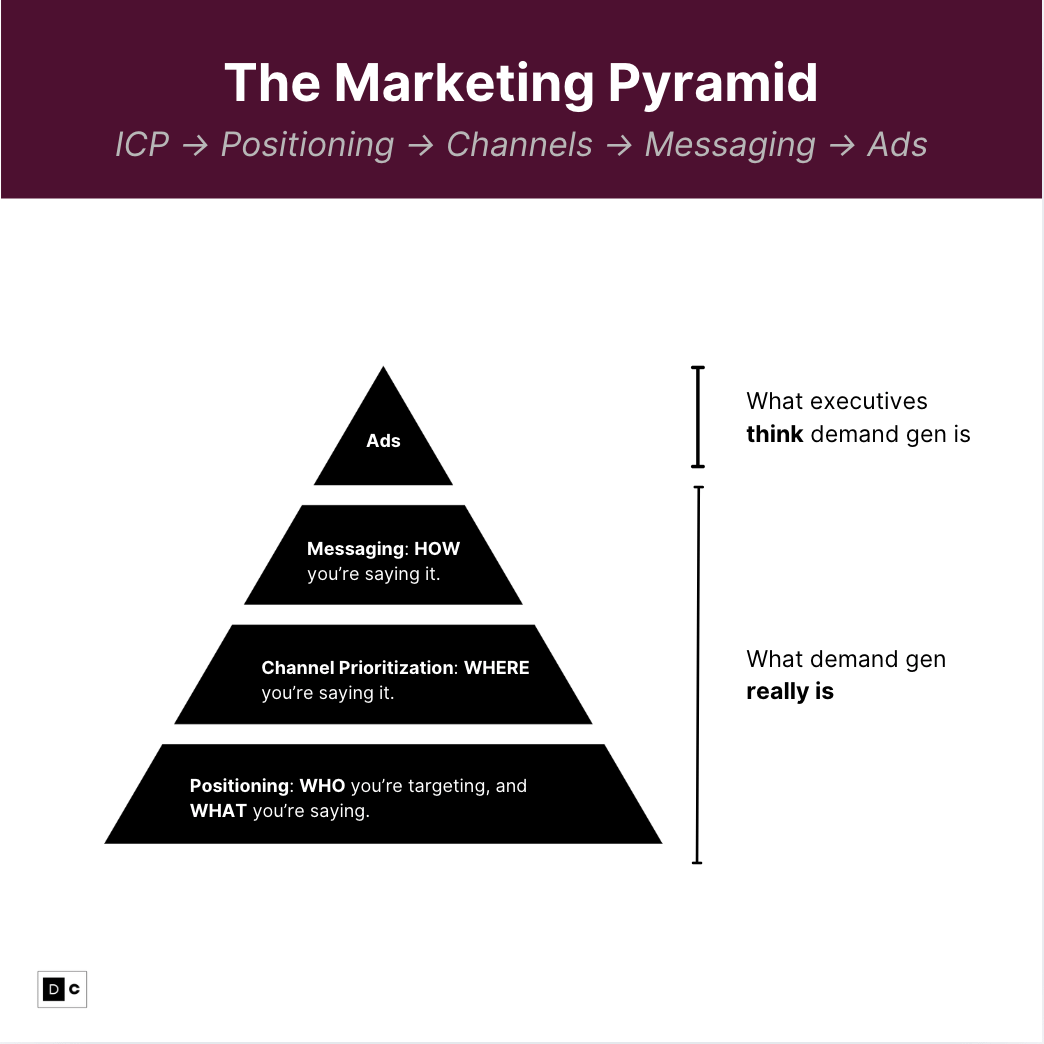
Ads not converting? You need creative that speaks *specifically* to one person’s pain. You can only do that if you have a clear ICP.
Website not converting? You need to make it clear what you do, and how you compare to alternatives. You can only do that if you pick one ICP, with one set of competitive alternatives.
Sales process broken? Sales needs to DQ poor-fit leads, they need better training on how to prove value & business case to good leads, you need air cover to your best deals. You can only do any of that if you have a good ICP.
Events not converting? Are you attending the right ones? You can only know that if you have a clear ICP.
If you’re using native targeting on ad platforms, at least 30% of the people you’re serving ads to are non-ICP. Which means you’re literally lighting money on fire serving ads to people who would never buy your product.
Every outbound touch point to a non-ICP contact is a waste of time.
And if you fix ICP, you get all that spend back to double down on how effectively you’re working truly great-fit prospects.
There’s two steps to operationalizing your ICP. Defining it, and then translating that definition to a scored TAM.
Here’s a great article on defining your ICP.
Once you have a definition, a good ICP is a spectrum. Not “qualified/disqualified”, but a spectrum of fit, from 0-100.
You can think how that ICP applies to your market like this:
Your Target Accounts (ICP) exist on a fit spectrum. From 0 (not a fit) to 100 (perfect fit). For Fingerprint, a fraud detection tool that works by identifying visitors and noticing suspicious activity early, they ICP fit with two criteria:
Do they need Fingerprint: basically, are they in a situation where they care about fraud.
How much do they need Fingerprint: how many users do they have. The more they have, the larger their fraud problem.
They get at these with unique signals, and score their TAM accordingly.
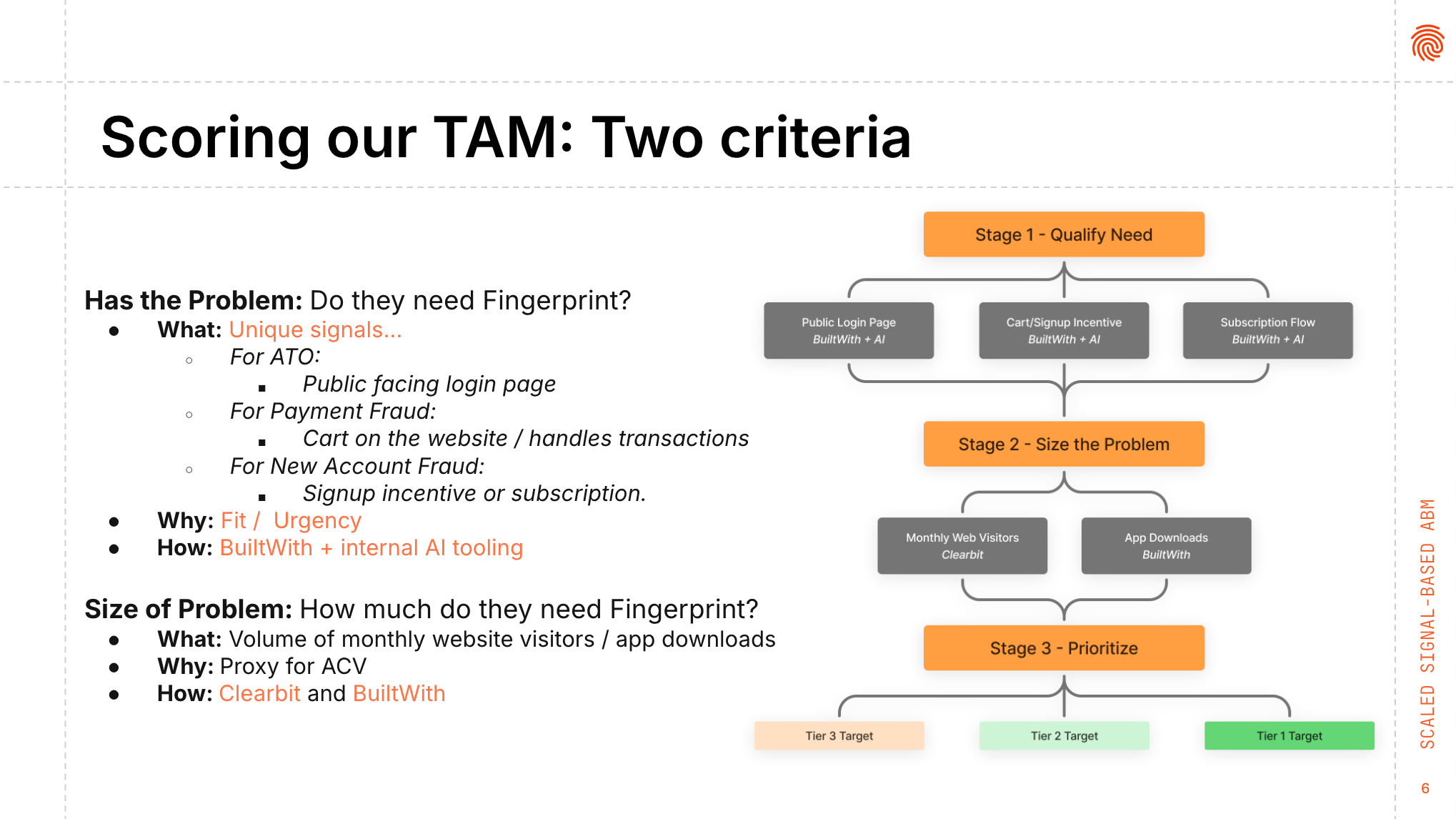
Fingerprint backtests their scoring too – when they apply their scoring to accounts in their CRM they see that disqualified leads score low, and high-NRR accounts score high.
There are many ways to do this. You can use AI (probably Clay) to score your Target Accounts. But at the end of the rainbow you should have every account in your SAM scored from 0-100 and tiered by priority accordingly.
This is a lot. Fingerprint is a big team (27 reps). If you’re just getting started you can just:
Pull a list of your TAM in Clay
Build an ICP Analyst Agent in an afternoon that looks at each account and scores them based on the most important signals you can find (different for each company).
And you’ll have a better account list then 80% of b2b companies I talk to.
The impact comes when your ICP shows up everywhere:
Ad targeting. Using a tool like Vector you only serve ads to ICP accounts, and you bid higher for higher-fit accounts.
Territory planning. You have *fair* territories. Where each rep gets an equal % of As, Bs, Cs, Ds.
Routing. You route according to fit. For example; As go straight to AEs, Cs can go to an SDR to qualify.
Outbound. You only work highest-fit accounts, and don’t waste any rep time working poor fits. Instead of pulling more lists “because we need to work more accounts”, you double down to breaking into your best fit accounts with unique experiences.
MQLs. If you have good ICP Scoring, MQLs actually work wonderfully because the “Q” means something.
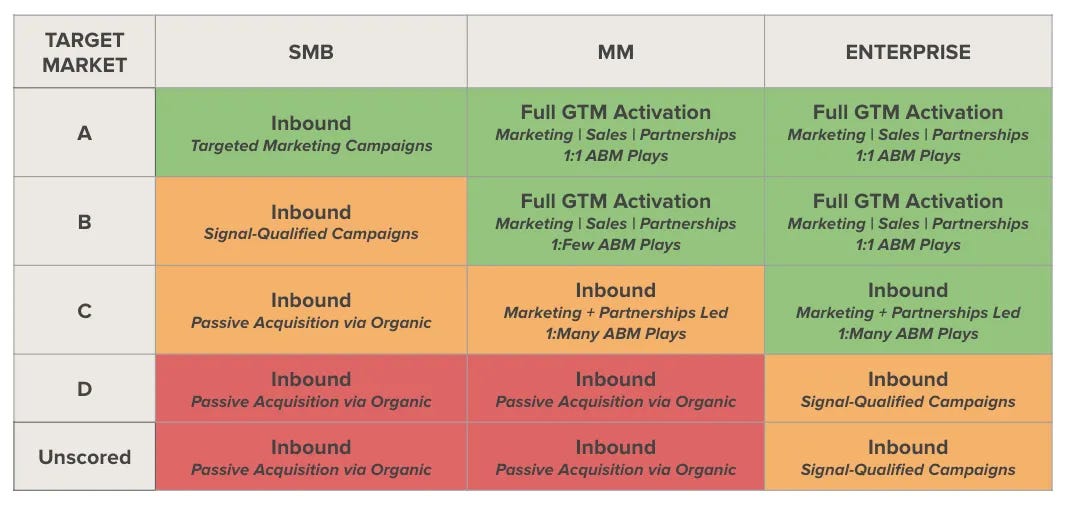
Tyler Calder, CMO @ PartnerStack is one of the best at this that I’ve seen. A couple examples: *Tyler was a customer of Keylay, the company I used to work at. Keyplay no longer exists (which is why I’m full time on Demand Collective now!!). So you’ll have to use a different tool for this like Clay.
They tier GTM investment by ICP tier:
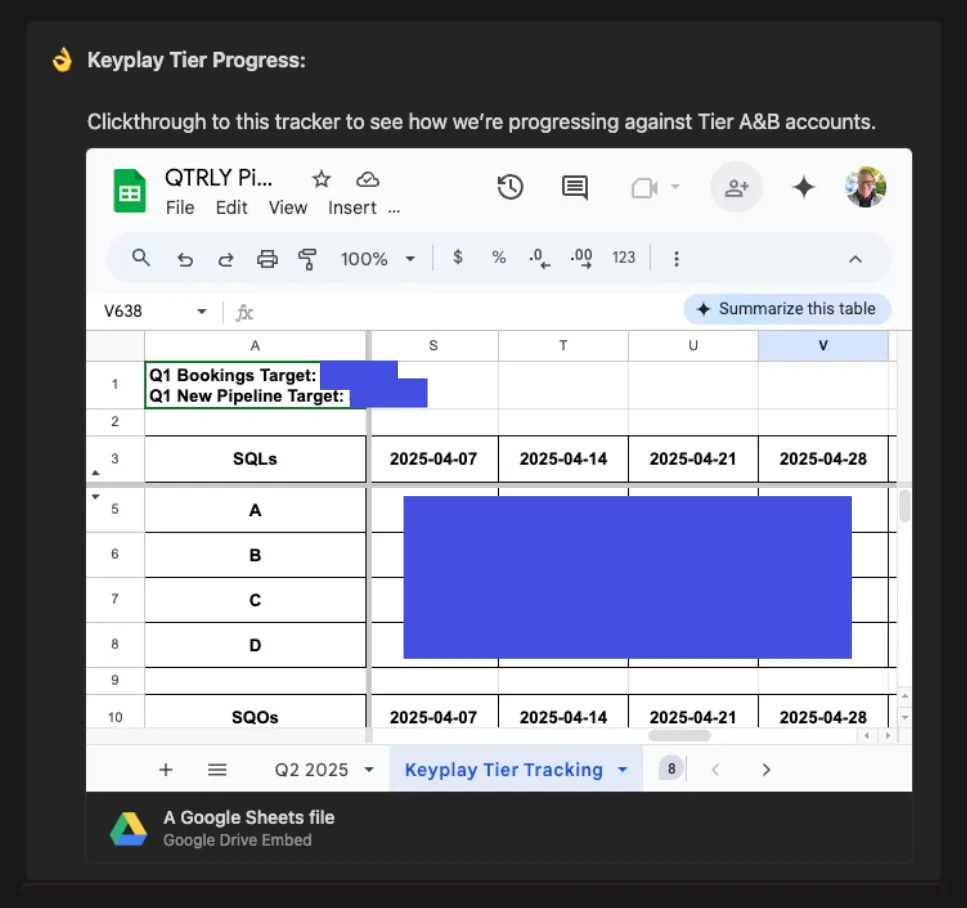
In their weekly pipeline meetings they look at MQLs/SQLs by tier:
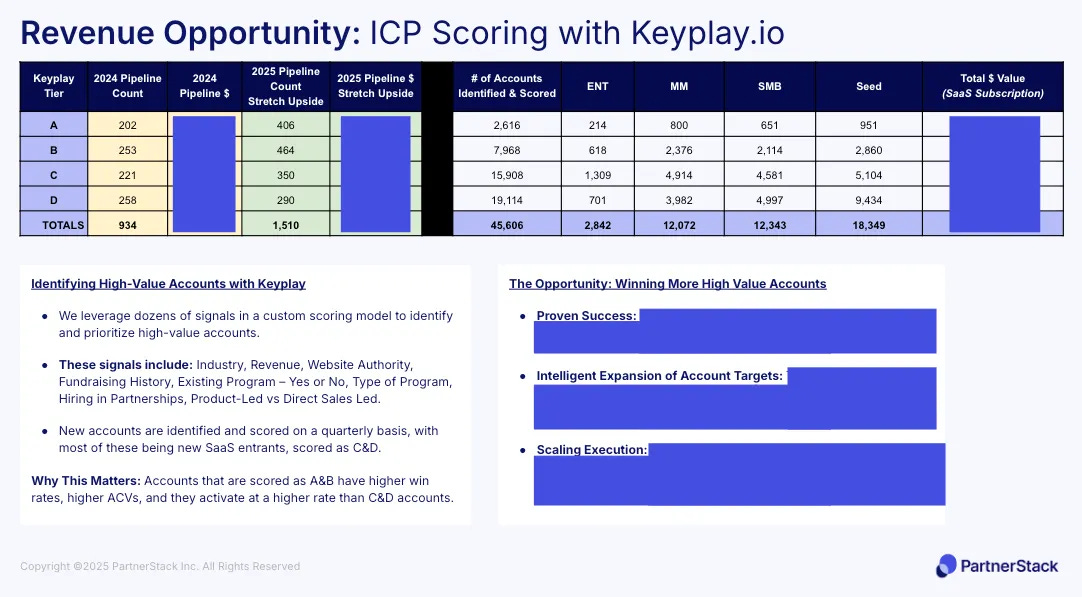
In their external reporting to board/investors, they show their total market opportunity (TAM) and total market penetration, by tier.
I don’t have many strongly held beliefs about Demand Gen. But the one hill I’ll die on is that ICP is the most important decision any DG can make, and almost no one cares enough about it.
It’s so important because it’s literally upstream of everything else you do in demand gen.
And the smartest marketing leaders I know understand this, and so they:
Pick an ICP. They put a stake in the ground on who they’re for and who they’re not for.
Define that ICP. Document clearly what characteristics those people/accounts have.
Translate that definition. TAM, SAM, ICP mapped. With every account in their SAM getting a fit score from 0-100.
Operationalise their ICP. Their ICP scoring shows up everywhere: ad targeting, territory planning, routing, outbound, MQLs, reporting
If you do too, you’ll save the money you were lighting on fire marketing to non-ICP accounts, and be able to reinvest it into winning your best fit accounts, who will close for more, retain, and give you every marketer’s favorite two words in the english language: “case studies”.
Rant over.
Thank you, and as always, I love you ♥️
Eric
ps.
people are loving Demand Collective, our free, private Slack group for in-house demand gen leaders (must be an in-house DDG managing $30k/mo+). You should apply to join here!

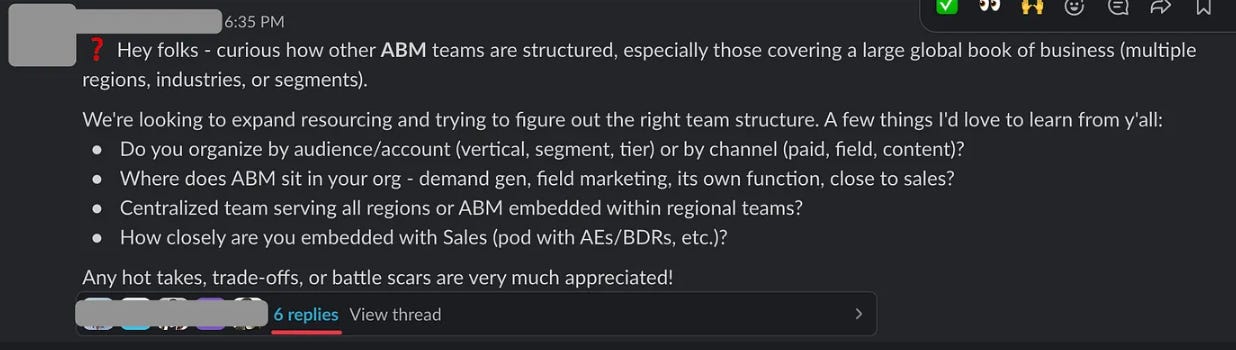
Here’s a sneak peek into our Slack 🙂:




No posts
Comments
Nothing yet. Say the first thing.
Sign in to join the conversation.