
In the theoretical annals of modern evolutionary biology, cladistics is non-negotiable. Ever since Willi Hennig (1966) formalized the principles of phylogenetic systematics, the life sciences have operated under a strict imperative: valid biological taxa must represent monophyletic groups—clades comprising an ancestor and all of its descendants. Paraphyletic groupings, which exclude one or more descendant lineages, and polyphyletic groupings, which aggregate artificially similar taxa derived from separate ancestors, are systematically purged from modern taxonomy.
Yet, as Ian Towle convincingly demonstrates in his synthesis published in the American Journal of Biological Anthropology (Towle, 2026), paleoanthropology remains locked in a state of systematic exception. While paleoanthropologists routinely employ Bayesian inference, maximum parsimony, and geometric morphometrics to reconstruct evolutionary trees, the generic taxonomy used in daily scholarly discourse remains stubbornly grade-based.
The most egregious operational offender is the genus Australopithecus. For over half a century, Australopithecus has functioned as a taxonomic wastebasket—a convenient dumping ground for bipedal, small-brained, thick-enameled homininans that lack the cranial encephalization of derived Homo or the extreme megadonty of Paranthropus. Every rigorous phylogenetic analysis published over the past two decades recovers Australopithecus as explicitly paraphyletic (Strait et al., 1997; Wood and Richmond, 2000; Dembo et al., 2015; Püschel et al., 2021). Taxa such as Australopithecus afarensis, Australopithecus garhi, or Australopithecus sediba are consistently demonstrated to share a more recent common ancestor with Homo or Paranthropus than they do with other species of Australopithecus.
Simultaneously, the diagnosis of our own genus, Homo, has crumbled under the weight of 21st-century fossil discoveries. The classical “Cognitive Rubicon”—a theoretical threshold anchored by encephalization (cranial capacity exceeding 600 to 700 cubic centimeters), obligate stone-tool manufacture, and fully committed terrestrial bipedalism—has been shattered. The discovery of Homo floresiensis (Brown et al., 2004) and Homo naledi (Berger et al., 2015; Dembo et al., 2016), both possessing cranial capacities under 550 cubic centimeters alongside complex postcranial mosaicism (Antón et al., 2014), proved that key features of Homo did not evolve as a package deal.
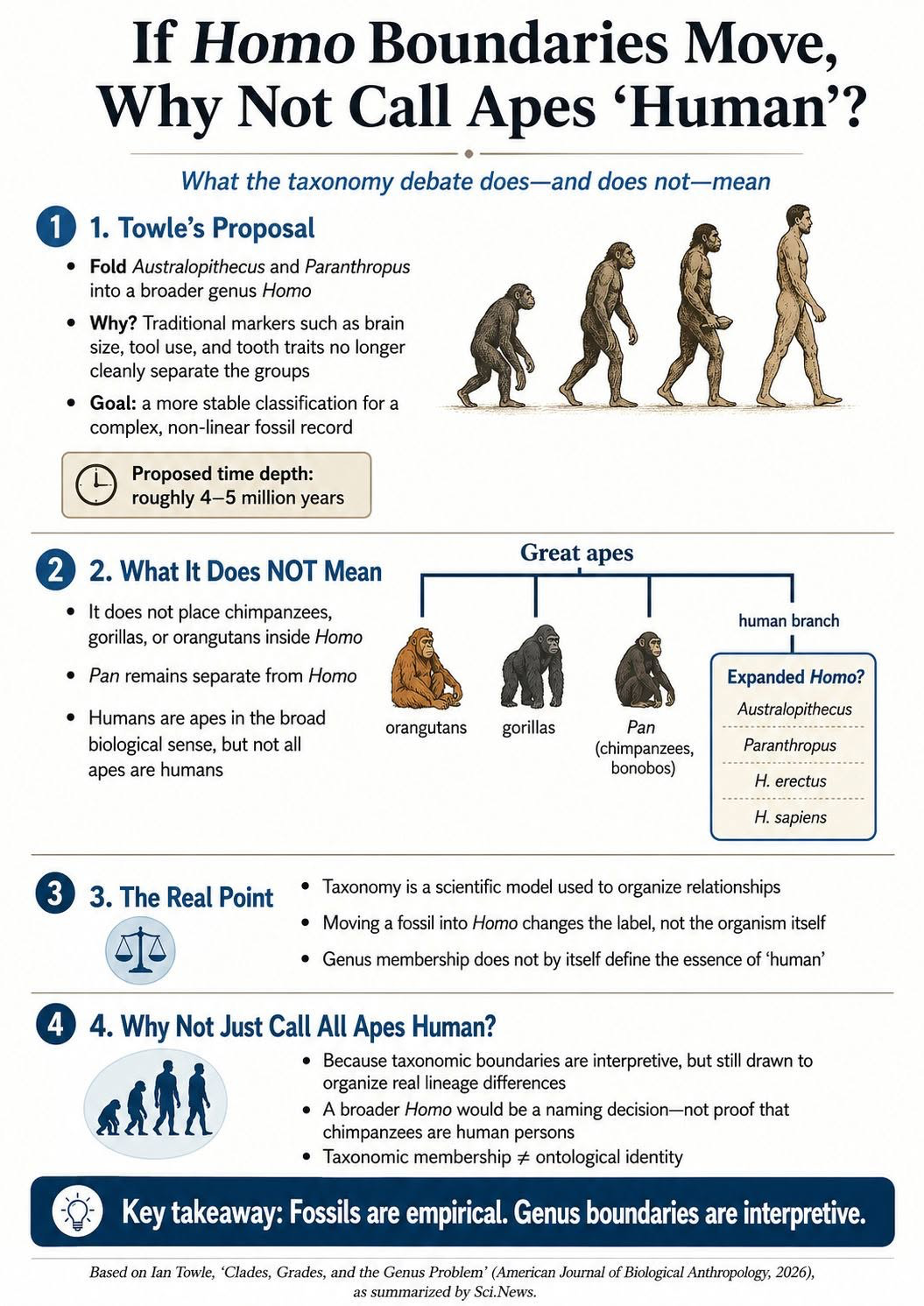
In response to this crisis, Ian Towle (2026) offers a radical, unified solution: subsume Australopithecus, Paranthropus, and Kenyanthropus into an expanded, monophyletic genus Homo spanning approximately 4 to 5 million years, rooted at Australopithecus anamensis. In my view, Towle’s synthesis represents one of the most provocative and necessary structural interventions in hominin systematics in a generation. It forces paleoanthropology to confront a glaring intellectual double standard: do we truly value cladistic rigor, or are we content to maintain an ecomorphological fiction because it feels comfortable?
To understand the depth of the genus problem in homininan taxonomy, one must examine the historical friction between evolutionary synthesis taxonomy and cladistic systematics. In the mid-20th century, modern synthesis architects such as George Gaylord Simpson (1945, 1963) and Ernst Mayr (1950) constructed taxonomic frameworks that prioritized evolutionary grades, adaptive zones, and perceived rates of morphological divergence over strict patterns of common descent.
Mayr (1950), presenting at the Cold Spring Harbor Symposium, made a famous proposal to collapse all fossil hominins into a single genus, Homo, containing just three sequentially evolving species: Homo transvaalensis (australopiths), Homo erectus, and Homo sapiens. Mayr argued that humans occupied such a distinct cultural and ecological niche that recognizing multiple coexisting genera was biologically unjustified. However, Mayr’s linear framework was built on a flawed assumption: that only a single hominin species existed on Earth at any given point in time.
Shortly thereafter, John T. Robinson (1965, 1966) proposed a modified taxonomy based on South African fossil discoveries. Robinson advocated sinking Australopithecus into Homo while retaining Paranthropus as a distinct genus. Robinson argued that Paranthropus represented an entirely separate vegetarian adaptive zone characterized by massive postcanine megadonty and specialized sagittal cresting, whereas gracile australopiths were morphologically continuous with early Homo. While Robinson’s functional intuition was sharp, modern phylogenetic analyses have thoroughly disproven his topology: Paranthropus is nested deeply within the australopith radiation, meaning that keeping Paranthropus separate while sinking Australopithecus into Homo leaves an even more flagrantly paraphyletic structure (Strait et al., 1997; Mongle et al., 2019; Alemseged et al., 2026).
In the late 1990s, Bernard Wood and Mark Collard (1999; see also Collard and Wood, 2015) published a landmark critique that sought to define Homo on strict cladistic and adaptive principles. Wood and Collard argued that a genus must be both a monophyletic clade and an adaptive zone—defined as a group of species possessing similar locomotor, dietary, and developmental strategies. They demonstrated that Homo habilis and Homo rudolfensis failed the adaptive criteria because their body proportions, dental reduction, and locomotor capabilities were more similar to Australopithecus than to Homo erectus. Wood and Collard recommended contracting Homo by removing H. habilis and H. rudolfensis and placing them into Australopithecus.
At the opposite extreme, Ian Tattersall (2017, 2026) has repeatedly championed genus-level splitting. Tattersall contends that the hominin fossil record reflects a highly speciose, bush-like radiation characterized by intense anatomical experimentation. To capture this diversity, Tattersall argues for multiplying generic titles—retaining Paranthropus, Kenyanthropus, and Praeanthropus, while erecting new genera for small-brained or morphologically divergent forms like Homo habilis.
Into this decades-long taxonomic deadlock steps Ian Towle (2026). Recognizing that contracting Homo creates endless wastebasket grades, and that splitting genera produces a chaotic array of monotypic taxa, Towle presents an elegant middle path grounded in comparative primate genomics and temporal standardization.
To evaluate Towle’s expanded Homo proposal, one must analyze the analytical tools currently used in hominin systematics, alongside comparative catarrhine models.
For decades, maximum parsimony was the primary tool for reconstructing hominin cladograms. Parsimony seeks the tree topology that minimizes the total number of character state transitions. However, parsimony is notoriously vulnerable to long-branch attraction and homoplasy—the independent evolution of similar traits due to shared selective pressures rather than shared ancestry.
In recent years, model-based Bayesian phylogenetic inference has largely superseded parsimony in hominin systematics (Dembo et al., 2015; Püschel et al., 2021; Gousset et al., 2026). Bayesian methods utilize explicit models of morphological evolution, allowing researchers to estimate posterior probability distributions for tree topologies while integrating clock models and stratigraphic age priors.
Simultaneously, geometric morphometrics (GMM) combined with Principal Components Analysis (PCA) has become ubiquitous for visual display of cranial and dental shape variation. However, a critical methodological audit by Raskin et al. (2026) revealed that proximity in PCA morphospace fails to recover true phylogenetic structure in up to 42 percent of simulated hominin cladistic nodes. Shape similarity along principal component axes frequently reflects shared functional adaptations (e.g., masticatory strain or facial flattening) rather than monophyly.
A cornerstone of Towle’s (2026) argument is that paleoanthropology applies generic criteria far more narrowly than mammalian and primate systematics. In extant Catarrhini, genera frequently encompass substantial time depths (4 to 6 million years) and exhibit high morphological, ecological, and dietary disparity. For example, generic diversity in Papio baboons accommodates complex hybridization, reticulate introgression, and varied ecomorphs (Disotell, 1994; Fleagle and McGraw, 1999; Rogers et al., 2019), while the discovery and genetic characterization of Rungwecebus underscores the fluid boundaries of cercopithecine genera (Davenport et al., 2006; Zinner et al., 2009, 2018). Similar patterns of generic breadth and ancient introgression are well documented in Asian colobines (Groves, 1970; Roos et al., 2011, 2022) as well as across African and Asian hominoids (Groves, 1986, 2001, 2018; Goodman, 1999; Wildman et al., 2003; De Manuel et al., 2016; Nater et al., 2017; Pawar et al., 2023). When viewed through this broader primatological lens, an expanded genus Homo spanning 4.5 million years aligns squarely with standard vertebrate taxonomic scales.
The core empirical justification for revising hominin taxonomy is that Australopithecus fails the fundamental requirement of monophyly. Every major Bayesian and parsimony-based phylogenetic tree published over the past two decades recovers Australopithecus as a paraphyletic grade.
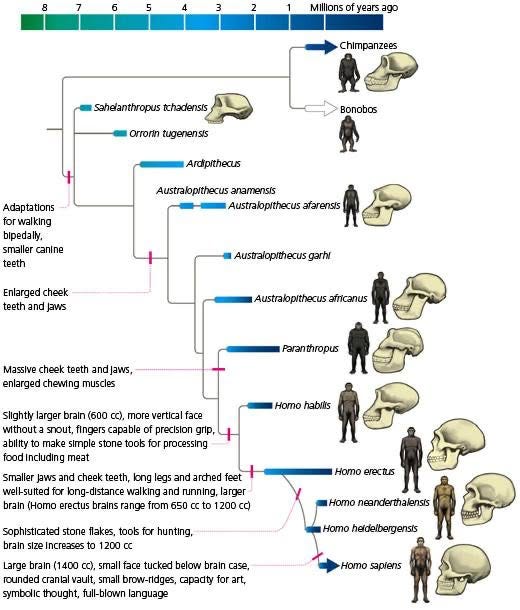
In the consensus topology synthesized by Towle (2026), Australopithecus anamensis (4.2 to 3.9 million years ago) forms the sequential sister taxon to a broad clade comprising all subsequent australopiths, Paranthropus, Kenyanthropus, and Homo. Australopithecus afarensis branches off later, giving rise to regional nodes that split into the megadont Paranthropus lineage in Eastern and Southern Africa, while Australopithecus africanus, Australopithecus garhi, and Australopithecus sediba exhibit progressively closer phylogenetic affinities to Homo (Irish et al., 2013; Dembo et al., 2015; Püschel et al., 2021). If Australopithecus is maintained as a valid genus while Homo and Paranthropus are kept separate, Australopithecus becomes an operational grade defined solely by what it lacks (derived encephalization or extreme megadonty). In modern cladistics, maintaining a genus known to be paraphyletic is unacceptable.
The secondary empirical plank of Towle’s synthesis is the complete erosion of traditional generic diagnostic criteria for Homo. Historically, Homo was defined by a linked suite of behavioral, cognitive, and anatomical adaptations:
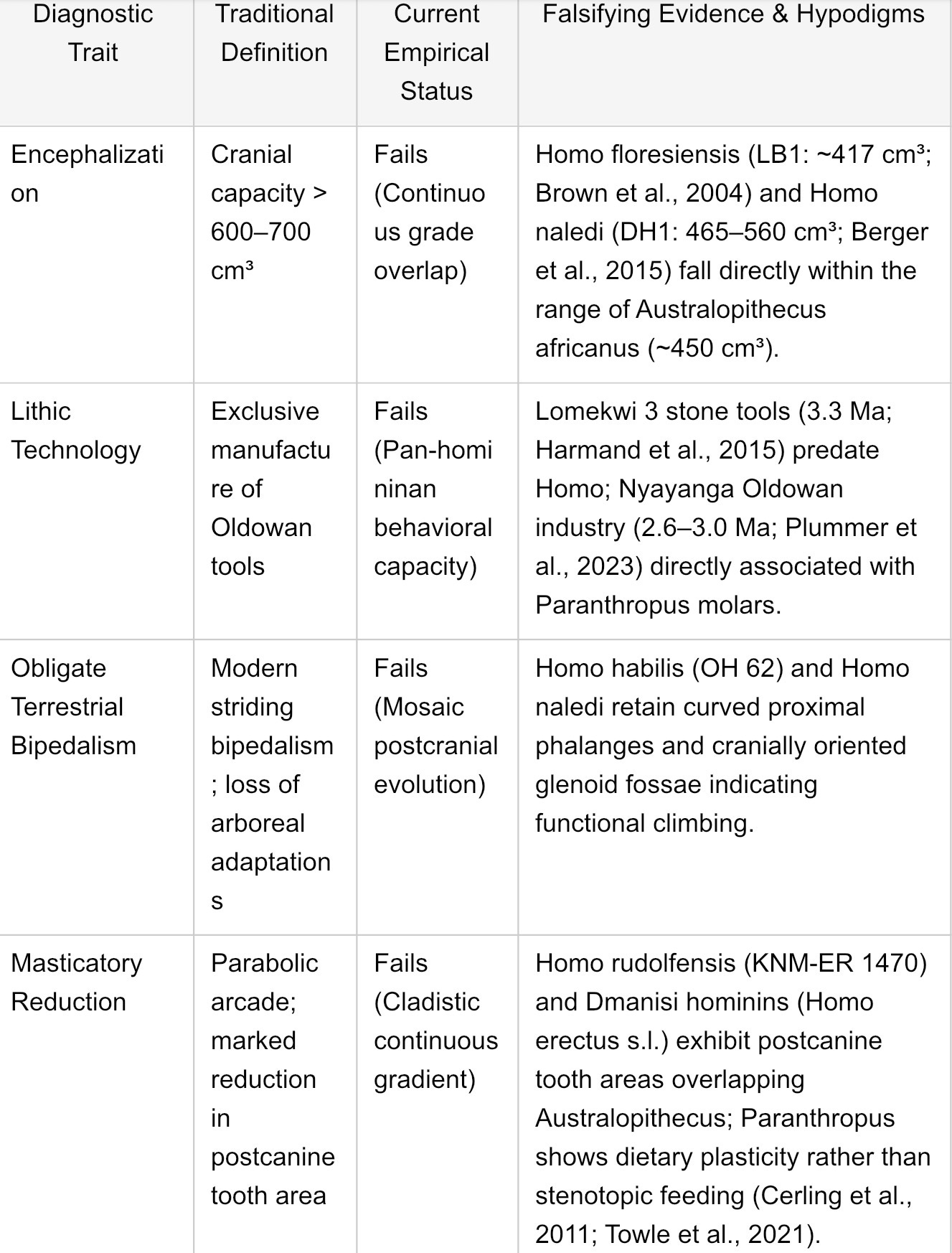
Encephalization: When Leakey et al. (1964) named Homo habilis based on the OH 7 holotype and Olduvai Bed I and Bed II paratypes (OH 4, OH 6, OH 8, OH 13, OH 16), they lowered the cranial capacity threshold of Homo to 600 cubic centimeters. However, the discovery of Homo floresiensis (~417 cubic centimeters; Brown et al., 2004) and Homo naledi (465 to 560 cubic centimeters; Berger et al., 2015) demolished brain size as an absolute generic diagnostic. Homo naledi possessed an endocranial volume identical to Australopithecus africanus, yet exhibited derived cranial vault architecture and modern hand/foot morphology.
Lithic Technology and Tool Use: The premise that toolmaking was the exclusive domain of Homo has been thoroughly refuted. The Lomekwi 3 stone tools from Kenya date to 3.3 million years ago, long preceding the earliest recognized jaw of Homo (NME LD 350-1 at 2.8 million years ago; Harmand et al., 2015; Villmoare et al., 2026). Furthermore, excavations at Nyayanga, Kenya, recovered Oldowan stone tools dated to 2.6 to 3.0 million years ago directly associated with Paranthropus molars (Plummer et al., 2023). Tool manufacture is a pan-homininan (and potentially pan-hominin) trait, not a synapomorphy of Homo.
Masticatory Adaptation and Megadonty: Paranthropus was long defined as an obligate hard-object specialist (durophage) restricted to nuts, seeds, and hard tubers. However, stable carbon isotope ratios (delta-13C) and dental microwear texture analysis demonstrate that Paranthropus boisei consumed a diet dominated by C-4 grasses and sedges (Cerling et al., 2011), while Paranthropus robustus exhibited extreme dietary variability and dental chipping patterns inconsistent with regular hard-object feeding (Towle et al., 2021; Constantino et al., 2026). Megadonty exists along a continuous morphological gradient: Australopithecus garhi possesses postcanine tooth areas larger than many Paranthropus specimens, while early Homo mandibles from Dmanisi and South Africa show variable molar sizes overlapping australopiths (Zanolli et al., 2022, 2026).
To ensure that an expanded genus Homo fits seamlessly into vertebrate systematics, Towle (2026) formalizes a ranked realigning hierarchy for the African ape and human tree:
Figure 6: Proposed higher taxonomy depicting the Pan-Homo clade (Hominini) and revised human lineage (Hominina) spanning stem and expanded Homo. Credit: Ian Towle (2026), modified under Creative Commons Attribution License.
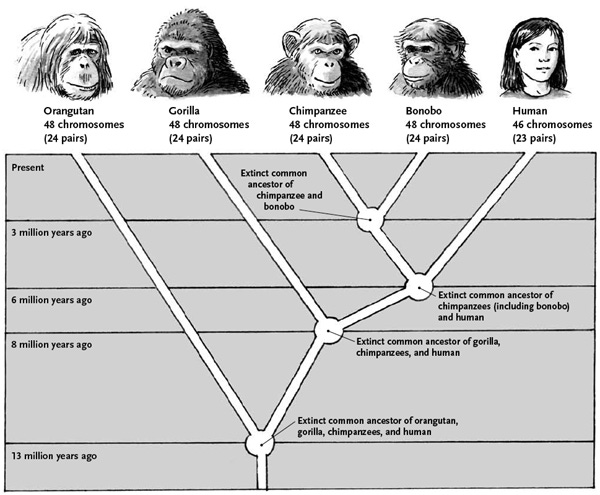
Tribe Hominini is defined strictly as the Pan-Homo clade—the monophyletic group encompassing chimpanzees, bonobos, and humans (Andrews and Harrison, 2005).
Subtribe Hominina is retained as the correct subtribal designation for the human lineage—comprising all species more closely related to Homo sapiens than to Pan troglodytes.
Consequently, species belonging to our branch of the tree should formally be referred to as homininans, reserving hominins for members of the broader Pan-Homo tribe (Strait, 2013; Towle, 2026).
Putative early homininans (Sahelanthropus tchadensis, Orrorin tugenensis, Ardipithecus ramidus) are retained within Subtribe Hominina or evaluated as stem Hominini, but are kept outside the expanded genus Homo (Williams et al., 2026).
The theoretical implications of Ian Towle’s (2026) synthesis extend far beyond nomenclature. By collapsing Australopithecus and Paranthropus into Homo, we force a fundamental paradigm shift in how we conceptualize homininan cognitive and behavioral evolution.
For over a century, paleoanthropology was haunted by a Eurocentric, teleological bias: the belief that human evolution was defined by a singular, heroic crossing of a “Cognitive Rubicon”—a point in time where brain expansion unlocked language, stone tools, and abstract thought, separating “true humans” (Homo) from “ape-like beasts” (Australopithecus).
Towle’s framework thoroughly neutralizes this outdated dogma. By demonstrating that encephalization, tool use, terrestrial bipedalism, and dietary shift evolved as a mosaic of mosaic traits scattered across a 4.5-million-year radiation, the expanded Homo model frames cognitive complexity as an ancestral, widely shared homininan capacity.
Stem Homininans (Sahelanthropus, Orrorin, Ardipithecus; ~7.0–4.4 Ma)
└── Subtribe Hominina / Expanded Genus Homo (sensu Towle, 2026; ~4.2 Ma–Present)
├── Australopithecus anamensis (4.2–3.9 Ma)
└── Crown Clade (~3.9 Ma–Present)
├── Australopithecus afarensis (3.9–3.0 Ma)
│ ├── Kenyanthropus platyops (3.5 Ma)
│ └── Australopithecus deyiremeda (3.5–3.3 Ma)
├── Paranthropus Lineage (2.7–1.2 Ma)
│ ├── Paranthropus aethiopicus (2.7–2.3 Ma)
│ ├── Paranthropus boisei (2.3–1.2 Ma)
│ └── Paranthropus robustus (2.0–1.2 Ma)
└── Australopithecus africanus (3.0–2.0 Ma)
├── Australopithecus sediba (1.98 Ma)
├── Early Homo Grade (2.8–1.5 Ma: LD 350-1, H. habilis, H. rudolfensis)
└── Derived Homo (1.9 Ma–Present: H. erectus, H. naledi, H. floresiensis, H. sapiens)
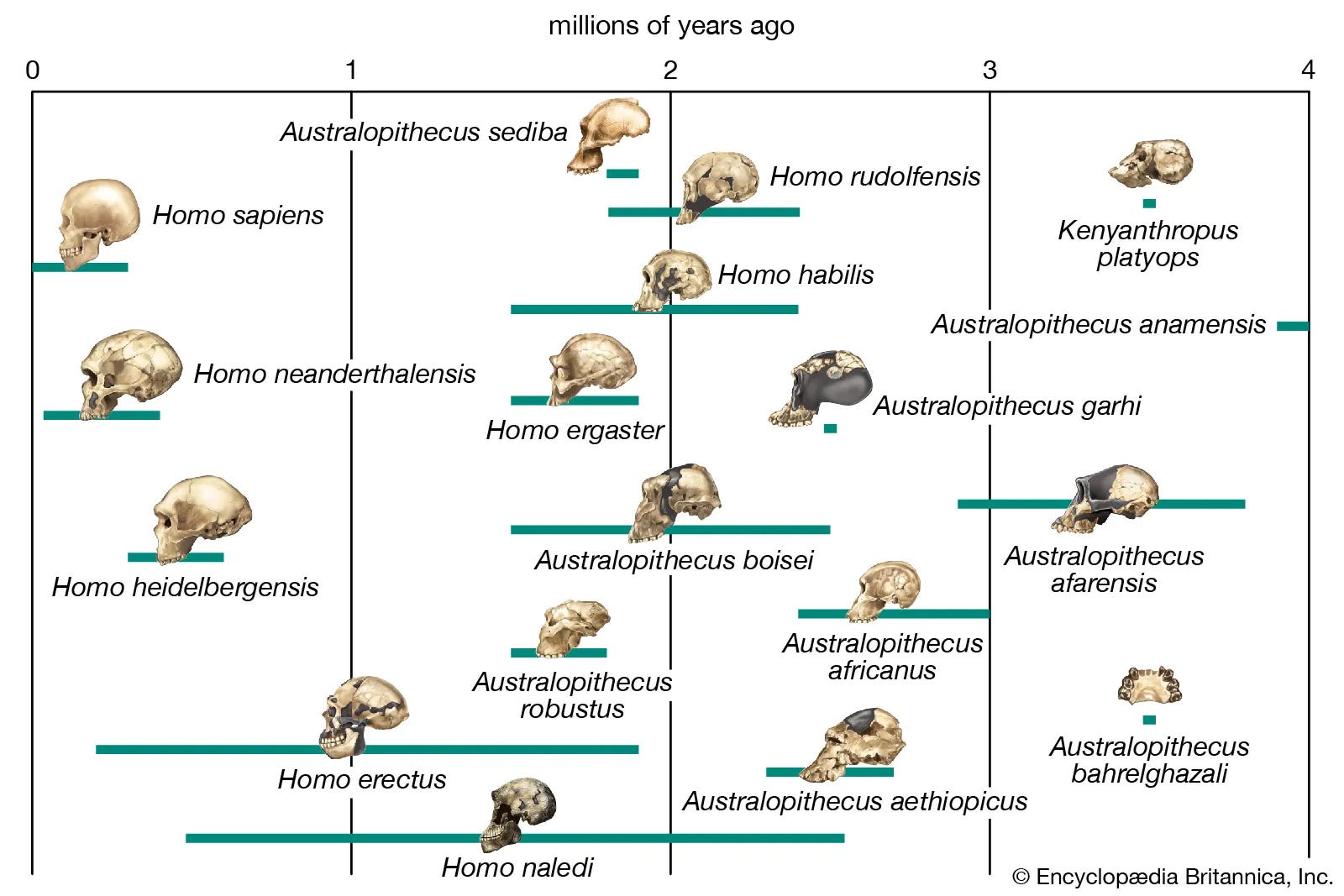
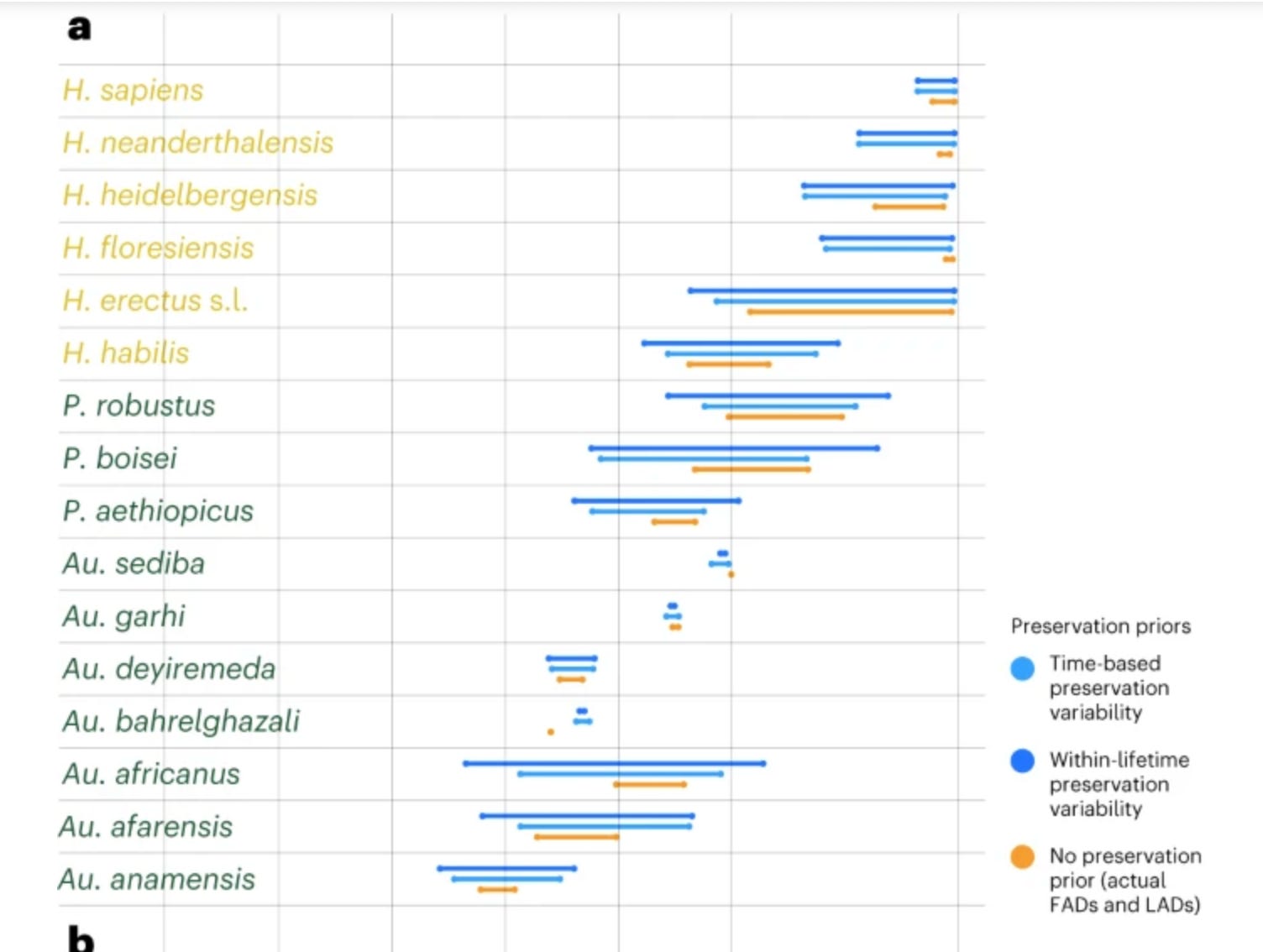
Figure 7: Stratigraphic and evolutionary lineage chart of Plio-Pleistocene hominin species showing phylogenetic relationships over time.
When we observe Oldowan tools associated with Paranthropus at Nyayanga (Plummer et al., 2023), complex spatial navigation and potential mortuary disposal in small-brained Homo naledi (Berger et al., 2015; Hawks et al., 2017), or advanced bone tool manufacture in australopith-grade homininans, we are not seeing “anomalies” that break generic definitions. We are observing the natural expression of a highly plastic, technologically capable homininan adaptational grade that spans 4.5 million years.
In my view, treating all members of the 4.5-million-year Homo clade as part of a single continuous radiation elevates the ethical and scientific status of fossil homininans. Fossil remains are not mere mineralized rocks or lower-grade evolutionary stepping stones to be patronized; they are invaluable biological archives of ancestral homininan populations that navigated dynamic Plio-Pleistocene ecosystems with sophisticated behavioral strategies.
Reframing Australopithecus afarensis as Homo afarensis or Paranthropus robustus as Homo (Paranthropus) robustus dismantles the cognitive hierarchy that has long relegated small-brained or megadont homininans to second-class biological status. It highlights the reality that non-linear, reticulate evolution—driven by hybridization, local environmental adaptation, and cultural transmission—was the norm across human evolutionary history.
Despite the elegance and cladistic consistency of Ian Towle’s (2026) proposal, a rigorous scholarly critique requires evaluating its major limitations, trade-offs, and potential weaknesses.
The most formidable objection to Towle’s synthesis is the complete loss of functional and ecological information conveyed by generic names. Taxonomy is not merely a bookkeeping system for cladistic nodes; it is a vital communication tool for field researchers, comparative anatomists, and paleoecologists.
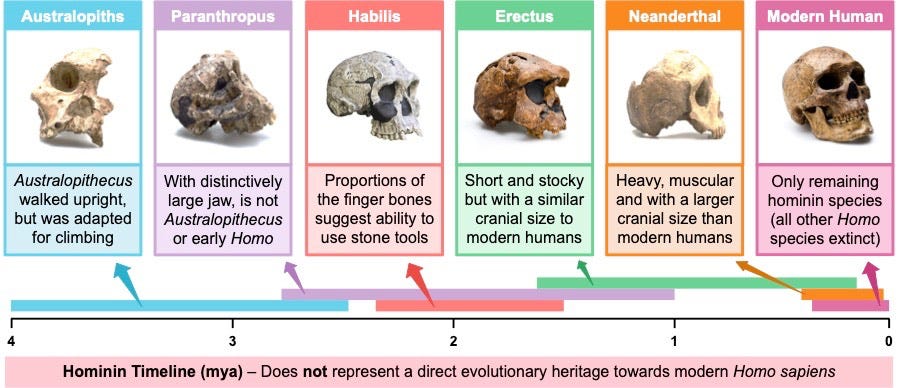
When a paleoanthropologist refers to Paranthropus, the listener immediately understands that the specimen possesses extreme postcanine megadonty, flared zygomatics, a sagittal crest, and specialized masticatory mechanics. When a researcher refers to Homo, it conveys an encephalized, small-toothed, obligate bipedal form.
Under Towle’s expanded Homo framework, the single generic label Homo encompasses organisms ranging from 400-cubic-centimeter creatures with climbing phalanges (Homo naledi, Homo afarensis) to extreme megadont specialists (Homo robustus) to modern space-faring humans (Homo sapiens). Critics will legitimately argue that sinking Paranthropus and Australopithecus “throws the baby (ecomorphological utility) out with the bathwater (paraphyletic grade cleanup).”
Towle acknowledges this drawback and suggests utilizing formal subgenera—such as Homo (Paranthropus) for megadont forms and Homo (Homo) for derived, encephalized forms—or informal species groups (analogous to Macaca or Trachypithecus taxonomy in extant primatology). However, subgenera are rarely used in daily scientific discourse, and critics may view subgenera as merely kicking the taxonomic can down the hierarchical road.
A second major theoretical limitation is the impossibility of defining a clear, unifying morphological or adaptive synapomorphy for an expanded genus Homo spanning 4.5 million years.
If a genus is expected to represent a coherent adaptive zone (Wood and Collard, 1999), what single adaptive zone unites Australopithecus anamensis, Paranthropus boisei, and Homo sapiens that does not also apply to Ardipithecus ramidus?
Habitual bipedalism? Partial bipedal adaptations are claimed for Sahelanthropus and Ardipithecus (Williams et al., 2026), making bipedalism non-exclusive to the 4.5-million-year Homo clade.
Canine reduction? Marked canine reduction is present in Ardipithecus ramidus and convergent in Miocene apes like Ouranopithecus and Lufengpithecus (Koufos and de Bonis, 2006; Zhang and Harrison, 2017).
Thick enamel? Thick enamel is shared broadly across Plio-Pleistocene homininans and several Eurasian Miocene ape lineages.
Without an umbrella diagnostic synapomorphy, an expanded genus Homo becomes a chronospecies-bounded container defined purely by time depth and clade topology rather than biological function.
Finally, sinking Australopithecus into Homo does not eliminate taxonomic boundary friction; it merely pushes the problem deeper in time to the basal Ardipithecus ramidus / Australopithecus anamensis transition (~4.2 to 4.5 million years ago).
The fossil record spanning 4.5 to 4.0 million years in Middle Awash and Turkana remains sparsely sampled. Differentiating stem Homo (Australopithecus anamensis) from derived Ardipithecus relies on subtle dental micro-structural shifts and fragmental postcranial remains. Shifting the genus boundary to 4.5 million years forces paleoanthropologists to fight the exact same taxonomic boundary battles at an earlier, less stratigraphically resolved node in the fossil record.
Alemseged, Z., Spoor, F., Reed, D., Bobe, R., Geraads, D., Wynn, J.G., 2026. Afar fossil shows broad distribution and versatility of Paranthropus. Nature 650, 381–388. doi:10.1038/s41586-025-09826-x
Andrews, P., Harrison, T., 2005. The last common ancestor of apes and humans. In: Lieberman, D., Smith, R.J., Kelley, J. (Eds.), Interpreting the Past: Essays on Human, Primate, and Mammal Evolution in Honor of David Pilbeam. Brill Academic Publishers, Boston, pp. 103–121.
Antón, S.C., Potts, R., Aiello, L.C., 2014. Evolution of early Homo: An integrated biological perspective. Science 345, 1236828. doi:10.1126/science.1236828
Berger, L.R., Hawks, J., de Ruiter, D.J., Churchill, S.E., Schmid, P., DeSilva, J.M., Kivell, T.L., Garvin, H.M., Kleingroot, M.D., Ladkani, C.V., 2015. Homo naledi, a new species of the genus Homo from the Dinaledi Chamber, South Africa. eLife 4, e09560. doi:10.7554/eLife.09560
Brown, P., Sutikna, T., Morwood, M.J., Soejono, R.P., Jatmiko, Saptomo, E.W., Due, R.A., 2004. A new small-bodied hominin from the Late Pleistocene of Flores, Indonesia. Nature 431, 1055–1061. doi:10.1038/nature02999
Cerling, T.E., Mbua, E., Kirera, F.M., Manthi, F.K., Grine, F.E., Leakey, M.G., Sponheimer, M., Uno, K.T., 2011. Diet of Paranthropus boisei in the Early Pleistocene of East Africa. Proceedings of the National Academy of Sciences USA 108, 9337–9341. doi:10.1073/pnas.1102308108
Collard, M., Wood, B., 2015. Defining the genus Homo. In: Henke, W., Tattersall, I. (Eds.), Handbook of Paleoanthropology. Springer, Berlin, pp. 2107–2144. doi:10.1000/978-3-642-39979-4_51
Constantino, P.J., Ungar, P.S., Konow, K.A., 2026. Dental wear and fracture as indicators of Paranthropus tooth function and diet. In: Constantino, P.J., Reed, K.E., Wood, B.A. (Eds.), The Forgotten Lineage(s). Springer, Dordrecht, pp. 215–234. doi:10.1007/978-3-032-05485-2_16
Davenport, T.R., Stanley, W.T., Sargis, E.J., De Luca, D.W., Mpunga, N.E., Machaga, S.J., Olson, L.E., 2006. A new genus of African monkey, Rungwecebus: Morphology, ecology, and molecular phylogenetics. Science 312, 1378–1381. doi:10.1126/science.1125631
De Manuel, M., Kuhlwilm, M., Frandsen, P., Sousa, V.C., Desai, T., Prado-Martinez, J., Hernandez-Rodriguez, J., Dupanloup, I., Campos, P.F., Hallast, P., 2016. Chimpanzee genomic diversity reveals ancient admixture with bonobos. Science 354, 477–481. doi:10.1126/science.aaf4771
Dembo, M., Matzke, N.J., Mooers, A.O., Collard, M., 2015. Bayesian analysis of a morphological supermatrix sheds light on controversial fossil hominin relationships. Proceedings of the Royal Society B: Biological Sciences 282, 20150943. doi:10.1098/rspb.2015.0943
Dembo, M., Radovčić, D., Garvin, H.M., Laird, M.F., Schroeder, L., Scott, J.E., Brophy, J.K., de Ruiter, D.J., Mooers, A.O., Collard, M., 2016. The evolutionary relationships and age of Homo naledi: An assessment using dated Bayesian phylogenetic methods. Journal of Human Evolution 97, 17–26. doi:10.1016/j.jhevol.2016.04.008
Disotell, T.R., 1994. Generic level relationships of the Papionini (Cercopithecoidea). American Journal of Physical Anthropology 94, 47–57. doi:10.1002/ajpa.1330940105
Fleagle, J.G., McGraw, W.S., 1999. Skeletal and dental morphology supports diphyletic origin of baboons and mandrills. Proceedings of the National Academy of Sciences USA 96, 1157–1161. doi:10.1073/pnas.96.3.1157
Goodman, M., 1999. The genomic record of humankind’s evolutionary roots. American Journal of Human Genetics 64, 31–39. doi:10.1086/302218
Gousset, P., Détroit, F., Bardin, J., 2026. Hominin phylogenetics: Methods and insights. Bulletins et Mémoires de la Société d’Anthropologie de Paris 38, 41–67. doi:10.4000/15270
Groves, C.P., 1970. The forgotten leaf-eaters and the phylogeny of Colobinae. In: Napier, J.P., Napier, P.R. (Eds.), Old World Monkeys. Academic Press, New York, pp. 555–587.
Groves, C.P., 1986. Systematics of the great apes. In: Swindler, D., Erwin, J. (Eds.), Comparative Primate Biology, Volume 1: Systematics, Evolution, and Anatomy. Alan R. Liss, New York, pp. 187–217.
Groves, C.P., 2001. Primate Taxonomy. Smithsonian Institution Press, Washington, D.C.
Groves, C.P., 2018. The latest thinking about the taxonomy of great apes. International Zoo Yearbook 52, 16–24. doi:10.1111/izy.12181
Harmand, S., Lewis, J.E., Feibel, C.S., Lepre, C.J., Prat, S., Lenoble, A., Boës, X., Quinn, R.L., Brenet, M., Arroyo, A., 2015. 3.3-million-year-old stone tools from Lomekwi 3, West Turkana, Kenya. Nature 521, 310–315. doi:10.1038/nature14464
Hawks, J., Elliott, M., Schmid, P., Churchill, S.E., de Ruiter, D.J., Roberts, E.M., Hilton, M.C., Berger, L.R., 2017. New fossil remains of Homo naledi from the Lesedi Chamber, South Africa. eLife 6, e24232. doi:10.7554/eLife.24232
Hennig, W., 1966. Phylogenetic Systematics. University of Illinois Press, Urbana.
Irish, J.D., Guatelli-Steinberg, D., Legge, S.S., de Ruiter, D.J., Berger, L.R., 2013. Dental morphology and the phylogenetic “place” of Australopithecus sediba. Science 340, 1233062. doi:10.1126/science.1233062
Koufos, G.D., de Bonis, L., 2006. New material of Ouranopithecus macedoniensis from Late Miocene of Macedonia (Greece) and study of its dental attrition. Geobios 39, 223–243. doi:10.1016/j.geobios.2004.11.008
Leakey, L.S., Tobias, P.V., Napier, J.R., 1964. A new species of the genus Homo from Olduvai Gorge. Nature 202, 7–9. doi:10.1038/202007a0
Mayr, E., 1950. Taxonomic categories in fossil hominids. Cold Spring Harbor Symposia on Quantitative Biology 15, 109–118. doi:10.1101/SQB.1950.015.01.013
Mongle, C.S., Strait, D.S., Grine, F.E., 2019. Expanded character sampling underscores phylogenetic stability of Ardipithecus ramidus as a basal hominin. Journal of Human Evolution 131, 28–39. doi:10.1016/j.jhevol.2019.03.006
Nater, A., Mattle-Greminger, M.P., Nurcahyo, A., Nowak, M.G., de Manuel, M., Desai, T., Groves, C., Pybus, M., Sonay, T.B., Roos, C., 2017. Morphometric, behavioral, and genomic evidence for a new orangutan species. Current Biology 27, 3487–3498. doi:10.1016/j.cub.2017.09.047
Pawar, H., Rymbekova, A., Cuadros-Espinoza, S., Marques-Bonet, T., Xing, J., Lorenzo, C., 2023. Ghost admixture in eastern gorillas. Nature Ecology & Evolution 7, 1503–1514. doi:10.1038/s41559-023-02143-4
Plummer, T.W., Oliver, J.S., Finestone, E.M., Ditchfield, P.W., Bishop, L.C., Blumenthal, S.A., Lemorini, C., Caricola, I., Bailey, S.E., Herries, A.I.R., Parkinson, J.A., Whitfield, E., Hertel, F., Kinyanjui, R.N., Vincent, T.H., Li, Y., Louys, J., Frost, S.R., Braun, D.R., Reeves, J.S., Early, E.D.G., Onyango, B., Lamela-Lopez, R., Forrest, F.L., He, H., Lane, T.P., Frouin, M., Nomade, S., Wilson, E.P., Bartilol, S.K., Rotich, N.K., Potts, R., 2023. Expanded geographic distribution and dietary strategies of the earliest Oldowan hominins and Paranthropus. Science 379, 561–566. doi:10.1126/science.abo7452
Püschel, H.P., Bertrand, O.C., O’Reilly, J.E., Bobe, R., Püschel, T.A., 2021. Divergence-time estimates for hominins provide insight into encephalization and body mass trends in human evolution. Nature Ecology & Evolution 5, 808–819. doi:10.1038/s41559-021-01431-8
Raskin, L.Y., Šešelj, M., Bitarello, B.D., Stroustrup, S., Li, J.K., Huelsenbeck, J., 2026. Principal Components Analysis fails to recover phylogenetic structure in hominins. American Journal of Biological Anthropology 190, e70306. doi:10.1002/ajpa.70306
Robinson, J.T., 1965. Homo “habilis” and the australopithecines. Nature 205, 121–124. doi:10.1038/205121a0
Robinson, J.T., 1966. The distinctiveness of Homo habilis. Nature 209, 957–960. doi:10.1038/209957a0
Rogers, J., Raveendran, M., Harris, R.A., Mailund, T., Leppälä, K., Athanasiadis, G., Schierup, M.H., Cheng, J., Jensen, J.M., Liu, X., 2019. The comparative genomics and complex population history of Papio baboons. Science Advances 5, eaau6947. doi:10.1126/sciadv.aau6947
Roos, C., Zinner, D., Kubatko, L.S., Schwarz, C., Yang, M., Meyer, D., Nash, S.D., Lavrenchenko, L.A., Anderung, C., Xing, J., 2011. Nuclear versus mitochondrial DNA: Evidence for hybridization in colobine monkeys. BMC Evolutionary Biology 11, 77. doi:10.1186/1471-2148-11-77
Roos, C., Matsuda, I., Grueter, C.C., Teichroeb, J.A., 2022. Taxonomic classification of colobine monkeys. In: Grueter, C.C., Roos, C. (Eds.), The Colobines: Natural History, Behaviour, and Ecological Diversity. Cambridge University Press, Cambridge, pp. 3–12. doi:10.1017/9781108347975.002
Simpson, G.G., 1945. The principles of classification and a classification of mammals. Bulletin of the American Museum of Natural History 85, 1–350.
Simpson, G.G., 1963. The meaning of taxonomic statements. In: Washburn, S.L. (Ed.), Classification and Human Evolution. Aldine, Chicago, pp. 1–31.
Strait, D.S., 2013. Human systematics. In: Begun, D.R. (Ed.), A Companion to Paleoanthropology. John Wiley & Sons, Hoboken, pp. 35–54. doi:10.1002/9781118332344.ch3
Strait, D.S., Grine, F.E., Moniz, M.A., 1997. A reappraisal of early homnid phylogeny. Journal of Human Evolution 32, 17–82. doi:10.1006/jhev.1996.0097
Stringer, C., 2012. Lone Survivors: How We Came to Be the Only Humans on Earth. Times Books, Henry Holt and Company, New York.
Tattersall, I., 2017. Species, genera, and phylogenetic structure in the human fossil record: A modest proposal. Evolutionary Anthropology 26, 116–118. doi:10.1002/evan.21532
Tattersall, I., 2026. An identity for the inscrutable Homo habilis. Anatomical Record 309, 546–549. doi:10.1002/ar.70145
Towle, I., 2026. Clades, grades, and the genus problem: A case for revising hominin taxonomy. American Journal of Biological Anthropology 190, e70344. doi:10.1002/ajpa.70344
Towle, I., Irish, J.D., Loch, C., 2021. Paranthropus robustus tooth chipping patterns do not support regular hard food mastication. Journal of Human Evolution 158, 103044. doi:10.1016/j.jhevol.2021.103044
van Holstein, L.A., Foley, R.A., 2024. Macroevolutionary dynamics in hominin evolution. Nature Ecology & Evolution 8, 1024–1035. doi:10.1038/s41559-024-02390-z
Villmoare, B., Delezene, L.K., Rector, A.L., Campisano, C.J., Reed, K.E., 2026. New discoveries of Australopithecus and Homo from Ledi-Geraru, Ethiopia. Nature 650, 374–380. doi:10.1038/s41586-025-09390-4
Wildman, D.E., Uddin, M., Liu, G., Grossman, L.I., Goodman, M., 2003. Implications of natural selection in shaping 99.4% nonsynonymous DNA identity between humans and chimpanzees: Enlarging genus Homo. Proceedings of the National Academy of Sciences USA 100, 7181–7188. doi:10.1073/pnas.1232172100
Williams, S.A., Wang, X., Araiza, I., Guerra, J.S., Meyer, M.R., Spear, J.K., 2026. Earliest evidence of hominin bipedalism in Sahelanthropus tchadensis. Science Advances 12, eadv0130. doi:10.1126/sciadv.adv0130
Wood, B., Boyle, E.K., 2016. Hominin taxic diversity: Fact or fantasy? American Journal of Physical Anthropology 159 (S61), 37–78.
Wood, B., Collard, M., 1999. The human genus. Science 284, 65–71. doi:10.1126/science.284.5411.65
Wood, B., Richmond, B.G., 2000. Human evolution: Taxonomy and paleobiology. Journal of Anatomy 197, 19–60. doi:10.1046/j.1469-7580.2000.19710019.x
Zanolli, C., Davies, T.W., Joannes-Boyau, R., Skinner, M.M., Kullmer, O., Spoor, F., Macchiarelli, R., 2022. Dental data challenge the ubiquitous presence of Homo in the Cradle of Humankind. Proceedings of the National Academy of Sciences USA 119, e2111212119. doi:10.1073/pnas.2111212119
Zanolli, C., Alba, D.M., Caley, T., Macchiarelli, R., Prat, S., Spoor, F., 2026. The early Homo conundrum: Challenges and potential solutions. Evolutionary Anthropology 35, e70043. doi:10.1002/evan.70043
Zhang, Y., Harrison, T., 2017. Gigantopithecus blacki: A giant ape from the Pleistocene of Asia revisited. American Journal of Physical Anthropology 162, 153–177. doi:10.1002/ajpa.23150
Zinner, D., Arnold, M.L., Roos, C., 2009. Is the new primate genus Rungwecebus a baboon? PLoS ONE 4, e4859. doi:10.1371/journal.pone.0004859
Zinner, D., Chuma, I.S., Knauf, S., Roos, C., 2018. Inverted intergeneric introgression between critically endangered kipunjis and yellow baboons in two disjunct populations. Biology Letters 14, 20170729. doi:10.1098/rsbl.2017.0729
Comments
Nothing yet. Say the first thing.
Sign in to join the conversation.