
For more than a century, the dominant narrative of paleoanthropology relegated Neanderthals to the status of hyper-carnivorous megafaunal processors. Bound within the rigid confines of ecological determinism, their subsistence strategies were framed almost exclusively around the caloric yields of prime-age ungulates: Cervus elaphus (red deer), Rangifer tarandus (reindeer), Bison priscus (steppe bison), and Coelodonta antiquitatis (woolly rhinoceros). Within this traditional framework, small animals—and avifauna in particular—were viewed as marginal resources, ignored due to high pursuit costs and negligible caloric returns. When bird bones were recovered from Mousterian horizons, they were routinely dismissed as the background noise of natural cave-dwelling deaths, intrusive raptor pellet accumulations, or the occasional snack of a starving hominin.
Over the past two decades, a profound methodological and epistemological shift has overturned this simplistic view. Across the Middle Paleolithic geography of Eurasia, from the Atlantic coastline of Gibraltar to the limestone massifs of the Italian Prealps, the Crimean Peninsula, and the rolling karst of the Dordogne, zooarchaeologists have documented a compelling empirical pattern: Neanderthals systematically interacted with birds of prey and corvids.
Crucially, the skeletal distribution of anthropogenic modifications on these avian remains defies dietary explanation. Cutmarks, scraping traces, and deliberate disarticulation scars do not cluster on the meat-bearing axial and upper hindlimb elements. Instead, they appear repeatedly, precisely, and almost exclusively on distal wing bones—the carpometacarpus, the radius, the ulna, and the manual phalanges—and on the terminal pedal phalanges (talons).
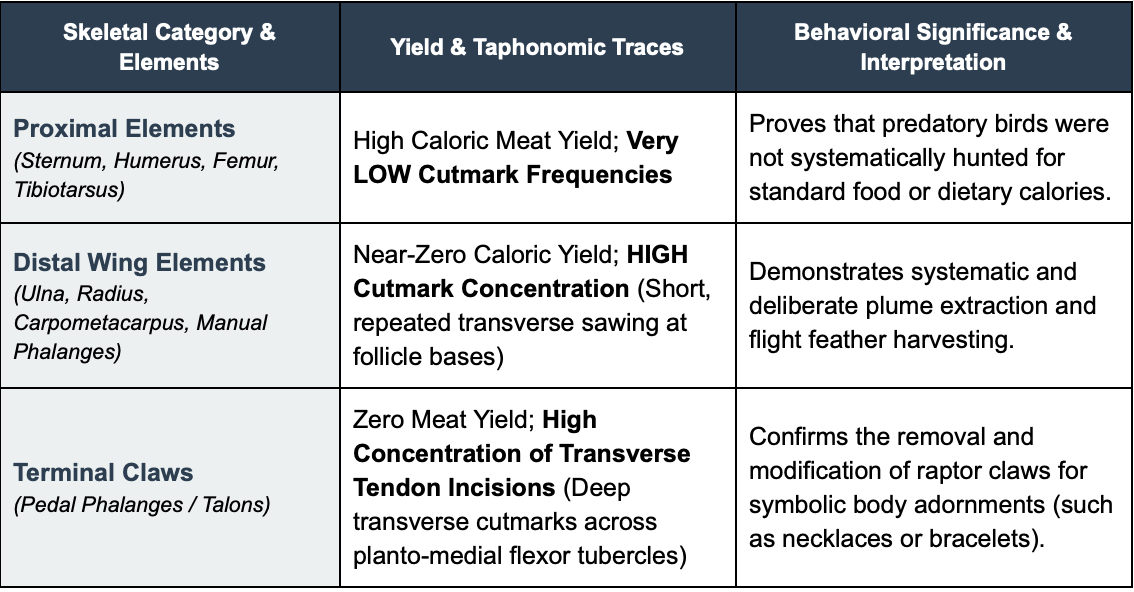
Zero Meat Yield; High Concentration of Transverse Tendon Incisions (Deep transverse cutmarks across planto-medial flexor tubercles)
Confirms the removal and modification of raptor claws for symbolic body adornments (such as necklaces or bracelets).
In my view, the debate surrounding the “Neanderthal Raven” and the exploitation of predatory avifauna represents one of the most rigorous testing grounds for hominin behavioral evolution. It forces us to confront the foundational questions of our discipline: How do we unambiguously distinguish between utilitarian processing and symbolic behavior in the deep-time archaeological record? Can taphonomy provide an objective methodology for identifying the emergence of non-utilitarian intent?
This article investigates the taphonomic, traceological, and anatomical evidence for Neanderthal avian exploitation. Moving past superficial press releases, I analyze the micro-striations, demographic profiles, and skeletal part representations at key Mousterian localities—including Grotta di Fumane, Gorham’s Cave, Rio Secco, Zaskalnaya VI, and Cova Foradada. I argue that the extraction of flight feathers, the intentional engraving of raven bones, and the modification of raptor talons represent intentional, culturally transmitted, symbolic practices that effectively dismantle the outdated “Cognitive Rubicon” dogma.
The evidentiary foundation for Neanderthal avian exploitation does not rest on an isolated, controversial find. Rather, it is anchored in high-resolution stratigraphic sequences excavated with modern micro-stratigraphic and taphonomic controls across Western and Southern Europe.
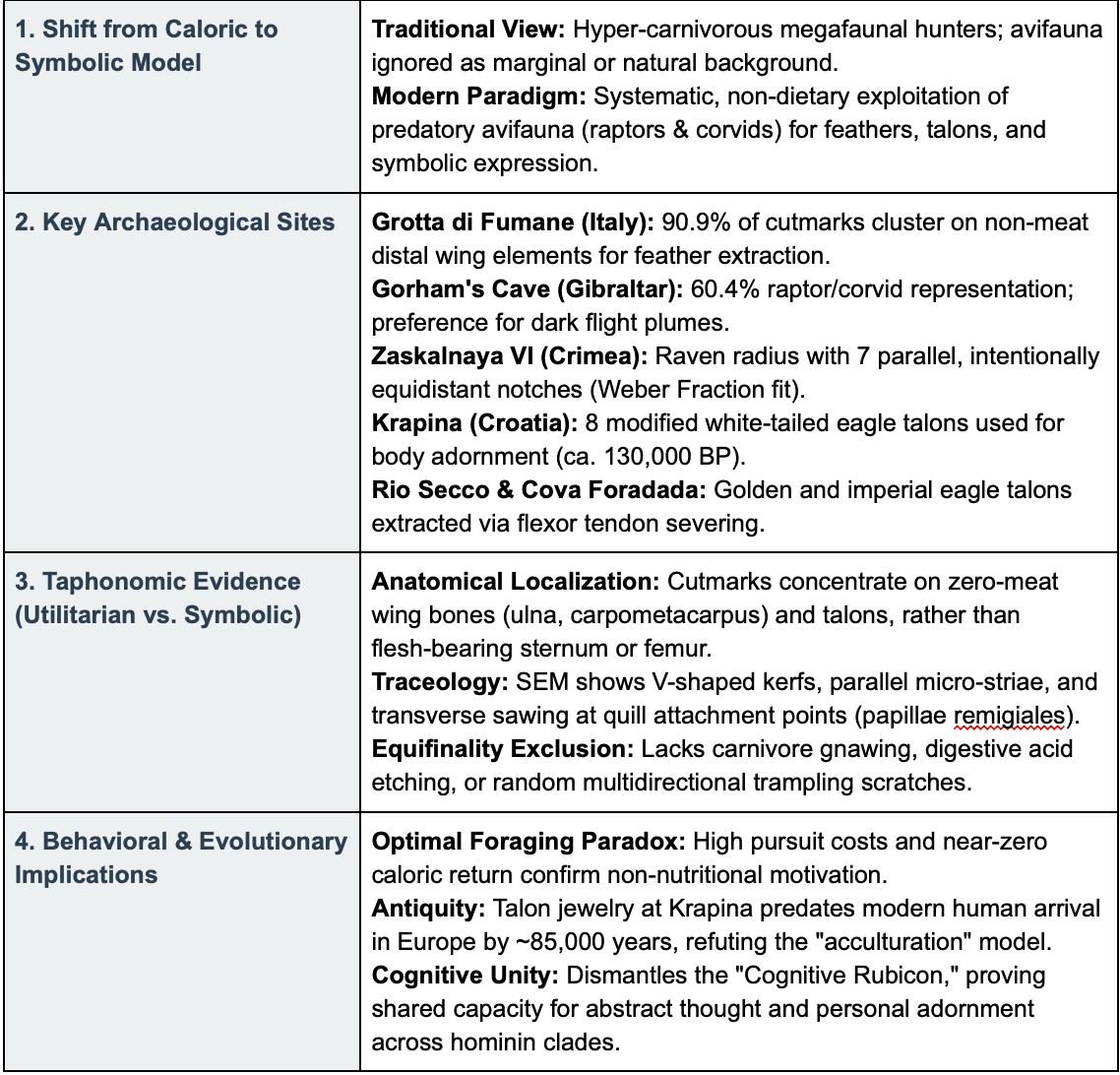
Taphonomic Evidence (Utilitarian vs. Symbolic)
Anatomical Localization: Cutmarks concentrate on zero-meat wing bones (ulna, carpometacarpus) and talons, rather than flesh-bearing sternum or femur.
Traceology: SEM shows V-shaped kerfs, parallel micro-striae, and transverse sawing at quill attachment points (papillae remigiales).
Equifinality Exclusion: Lacks carnivore gnawing, digestive acid etching, or random multidirectional trampling scratches.
Behavioral & Evolutionary Implications
Optimal Foraging Paradox: High pursuit costs and near-zero caloric return confirm non-nutritional motivation.
Antiquity: Talon jewelry at Krapina predates modern human arrival in Europe by ~85,000 years, refuting the “acculturation” model.
Cognitive Unity: Dismantles the “Cognitive Rubicon,” proving shared capacity for abstract thought and personal adornment across hominin clades.
Grotta di Fumane, situated in the Monti Lessini at an elevation of 350 meters above sea level, contains an exceptional late Middle to early Upper Paleolithic sequence. The crucial data emerge from Unit A9, dated by accelerated mass spectrometry (AMS) radiocarbon to roughly 44,000 to 45,000 calibrated years before present (cal BP).
Unit A9 is characterized by typical Late Mousterian lithic assemblages produced via Levallois and Discoid reduction strategies, directly associated with Neanderthal fossil remains. The faunal assemblage from Unit A9 contains a rich avian component consisting of 660 identified bones across 22 species, dominated by alpine and cliff-dwelling taxa alongside open-woodland birds.
Positioned on the eastern face of the Rock of Gibraltar, Gorham’s Cave provides a long stratigraphic sequence spanning the Middle Paleolithic (Level IV) through the Upper Paleolithic and historic periods. Level IV, spanning Marine Isotope Stage (MIS) 3 (ca. 32,000 to 50,000 BP), contains typical Mousterian stone tools alongside dense faunal concentrations.
The avian record here is extraordinary: thousands of bird bones representing marine, wetland, cliff-nesting, and raptorial species. Critically, predatory birds—specifically members of the Corvidae (crows and ravens), Accipitridae (hawks, eagles, vultures), and Falconidae (falcons)—account for an exceptionally high proportion of the total avian taxonomic richness.
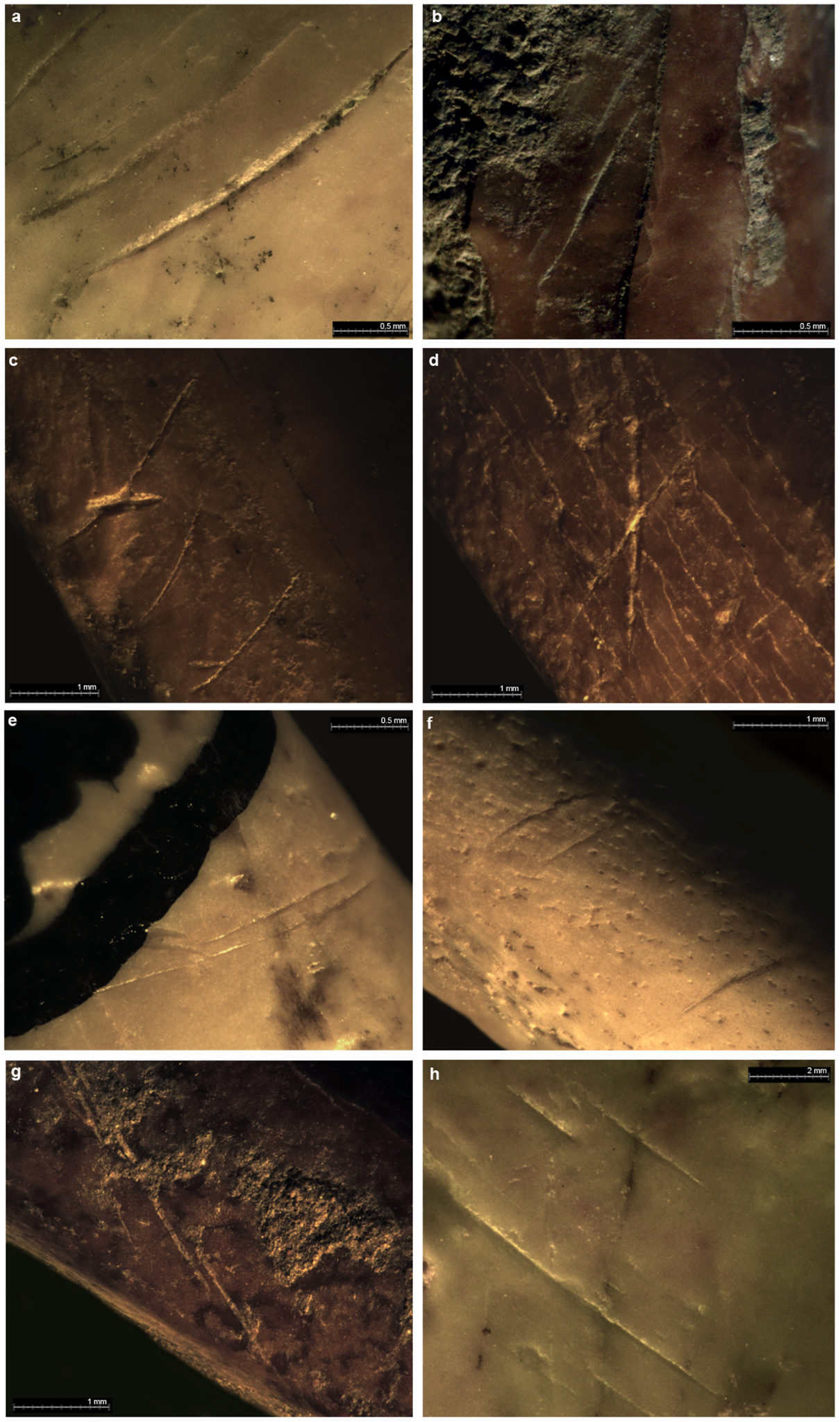
Located in the northern Adriatic region at the base of the Carnic Prealps, Rio Secco Cave preserves a well-stratified Middle Paleolithic sequence within collapsed karst topography. Layer BIO5_4, securely bracketed to roughly 49,000 cal BP, has yielded specialized Levallois lithic technologies alongside an avian bone assemblage that preserves crucial, micro-spatially controlled instances of large raptor exploitation, notably the Golden Eagle (Aquila chrysaetos).
To demonstrate that bird bones were anthropogenically modified—and to decipher whether that modification was driven by calories, tool manufacture, or symbolic ornamentation—requires a multi-tiered taphonomic methodology. Avian osteology presents unique challenges: bird bones are thin-walled, hollow, highly fragile, and subjected to distinctive post-depositional destruction processes compared to mammalian cortical bone
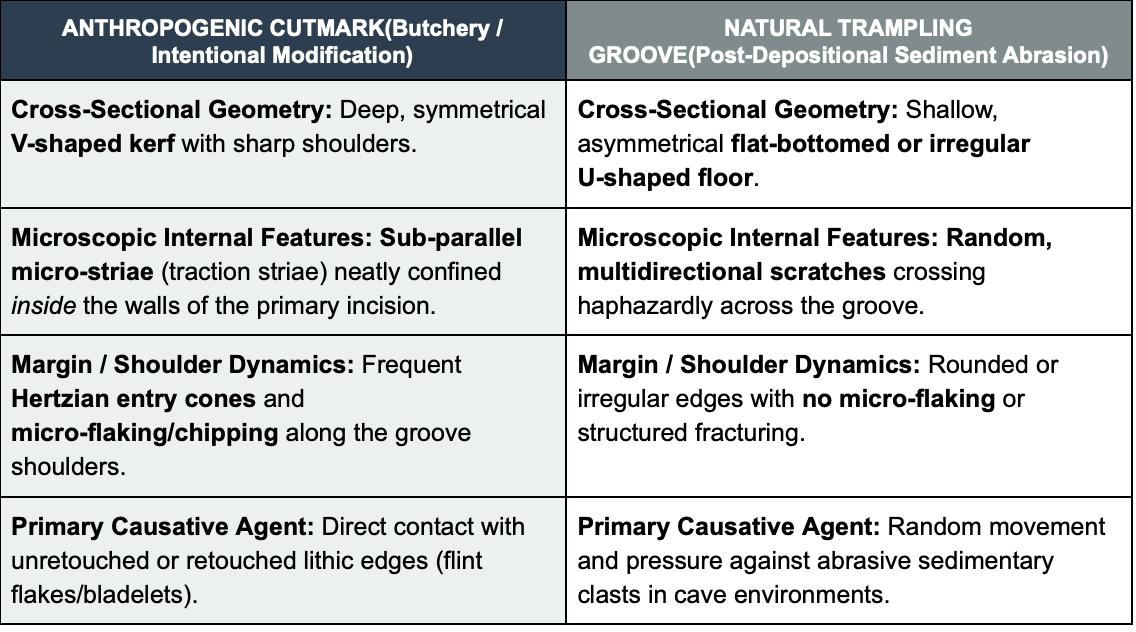
Distinguishing human butchery marks from natural taphonomic agents (such as carnivore gnawing, rodent gnawing, sediment abrasion, and trampling) requires high-resolution surface analysis. The analytical protocol involves:
Reflected Light Optical Microscopy: Initial identification of cortical modifications at magnifications between 10x and 100x to assess groove morphology.
Scanning Electron Microscopy (SEM) and 3D Digital Surface Profilometry: Quantifying the cross-sectional geometry of the cutmark kerf. True anthropogenic cutmarks generated by unretouched or retouched flint edges exhibit characteristic V-shaped cross-sections, distinct internal parallel micro-striations (striae of traction), Hertzian entry cones, and micro-flaking along the groove shoulder.
Equifinality Exclusion: Trampling marks are systematically distinguished by their shallow, flat-bottomed, or irregular cross-sections, multi-directional orientations, and random distribution across the entire shaft. Carnivore tooth scores are recognized by their U-shaped cross-sections, lack of internal parallel micro-striae, and associated crushing or puncture pits.
Avian zooarchaeologists calculate standard abundance indices to identify anthropogenic selection:
NISP (Number of Identified Specimens) and MNI (Minimum Number of Individuals).
Percent MAU (Percentage of Minimal Animal Units): Calculated across distinct functional carcass segments: Percent MAU = (MAU_element / MAU_max) * 100 Where MAU_max represents the highest observed MAU value in the skeletal profile, adapting Lewis Binford’s classic anatomical utility index to the unique myological and skeletal architecture of avifauna. This allows researchers to quantitatively compare the relative representation of the axial skeleton, proximal wing (humerus), distal wing (radius, ulna, carpometacarpus, manual digits), and pedal extremities (tarsometatarsus, pedal phalanges).
The location, angle, and grouping of cutmarks are mapped against avian musculoskeletal anatomy. In birds, the distribution of muscle mass is heavily asymmetrical:
The massive flight muscles (musculus pectoralis major and musculus supracoracoideus) attach to the sternal keel and proximal humerus.
The major leg muscles (musculus gastrocnemius, musculus iliotibialis) wrap around the femur and tibiotarsus.
In contrast, the distal wing (ulna, carpometacarpus, digit major) contains virtually no consumable muscle mass. These bones serve primarily as the rigid anchor points for the primary and secondary flight feathers (remiges primarii and remiges secundarii), anchored directly to the periosteum via the papillae remigiales (quill knobs).
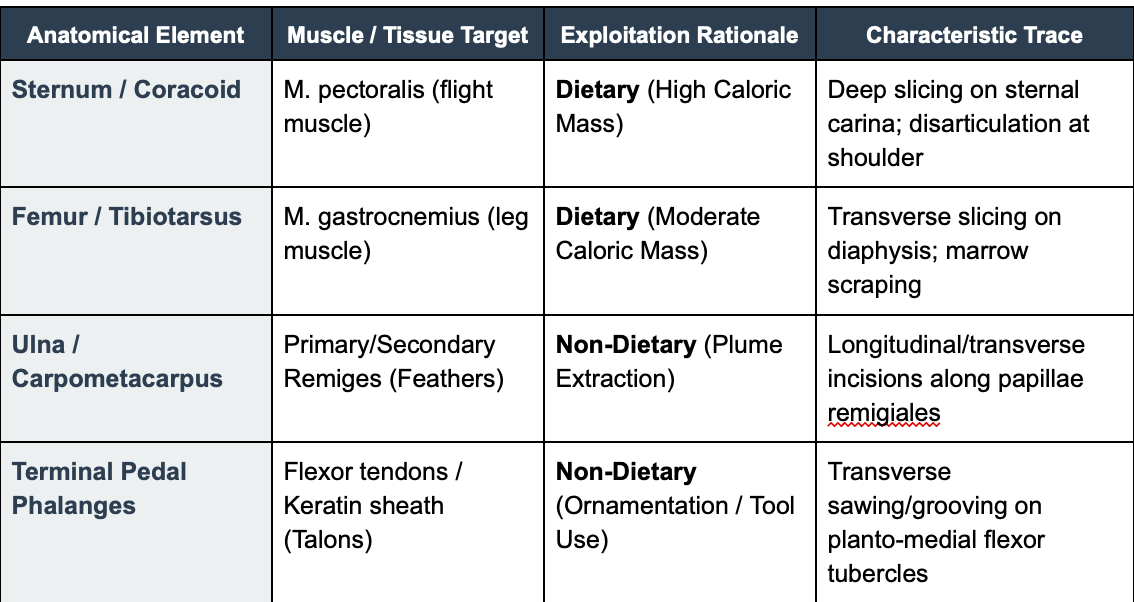
When the methodologies described above are applied to Middle Paleolithic assemblages, the raw empirical data reveal an inescapable conclusion: Neanderthals were not processing raptors and ravens for food. They were harvesting their wings, engraving their bones, and modifying their claws.
At Grotta di Fumane, Peresani and colleagues (2011) identified 660 avian fossil specimens across Unit A9. A total of 44 skeletal elements (6.67 percent of the avian assemblage) bear unambiguous anthropogenic cutmarks. When cross-referenced against the anatomical location of those marks, the distribution shows extreme anatomical clustering:
Anatomical category breakdown showing that 90.9% of cutmarked avian elements are non-meat wing bones targeted for feather/plume harvesting rather than dietary consumption.
Skeletal Element Group & Specific Bone
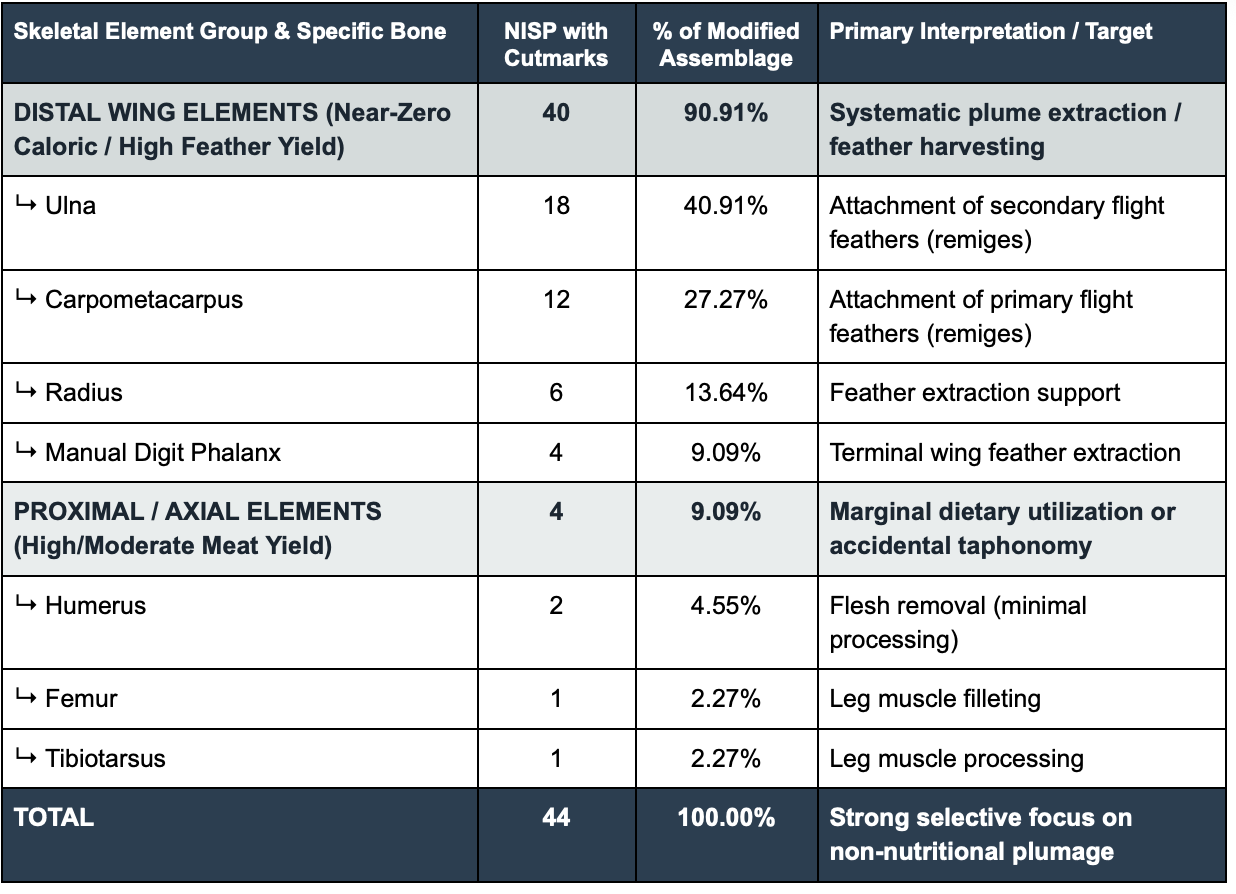
Strong selective focus on non-nutritional plumage
Of these cutmark groups, 90.9 percent (40 out of 44 modified specimens) are located exclusively on distal wing bones that yield zero harvestable meat.
The targeted species are taxonomically specific:
Alpine Chough (Pyrrhocorax graculus): 28 elements modified. The marks consist of transverse and longitudinal cuts located precisely along the ulnar diaphysis and the ventral side of the carpometacarpus, directly where the follicles of the primary remiges anchor into the bone.
Lammergeier / Bearded Vulture (Gypaetus barbatus): 4 elements modified. Specimen FUM-A9-Av-203, a distal carpometacarpus, displays repeated scraping and transverse incisions across the processus extensorius and trochlea carpalis, reflecting the detachment of the entire primary feather fan.
Red-Footed Falcon (Falco vespertinus): Multiple cutmarks along the distal radius and carpometacarpus.
Eurasian Black Vulture (Aegypius monachus): Slicing marks on the proximal carpometacarpus.
Experimental butchery conducted by Peresani’s team using replica flint flakes confirmed that skinning a bird for consumption produces cuts on the sternum, coracoid, and upper leg. In contrast, the only way to replicate the Fumane Unit A9 cutmark pattern was through the deliberate, forceful detachment of the flight feathers, requiring transverse sawing at 45 to 90 degrees to the diaphyseal axis directly across the follicle bases. This specific kinematic motion explains why the archaeological traces appear as short, repeated transverse micro-grooves across the quill attachment points rather than longitudinal filleting slices.
The interaction between Neanderthals and corvids extended beyond plume removal. At the rock shelter of Zaskalnaya VI (Kolosovskaya) in Crimea, Majkić et al. (2017) analyzed an 18.14 mm right radius fragment of a Common Raven (Corvus corax, specimen ZSK-VI-IIIa-Av-1) recovered from Micoquian Layer IIIa (dated to 38,000 to 43,000 cal BP).
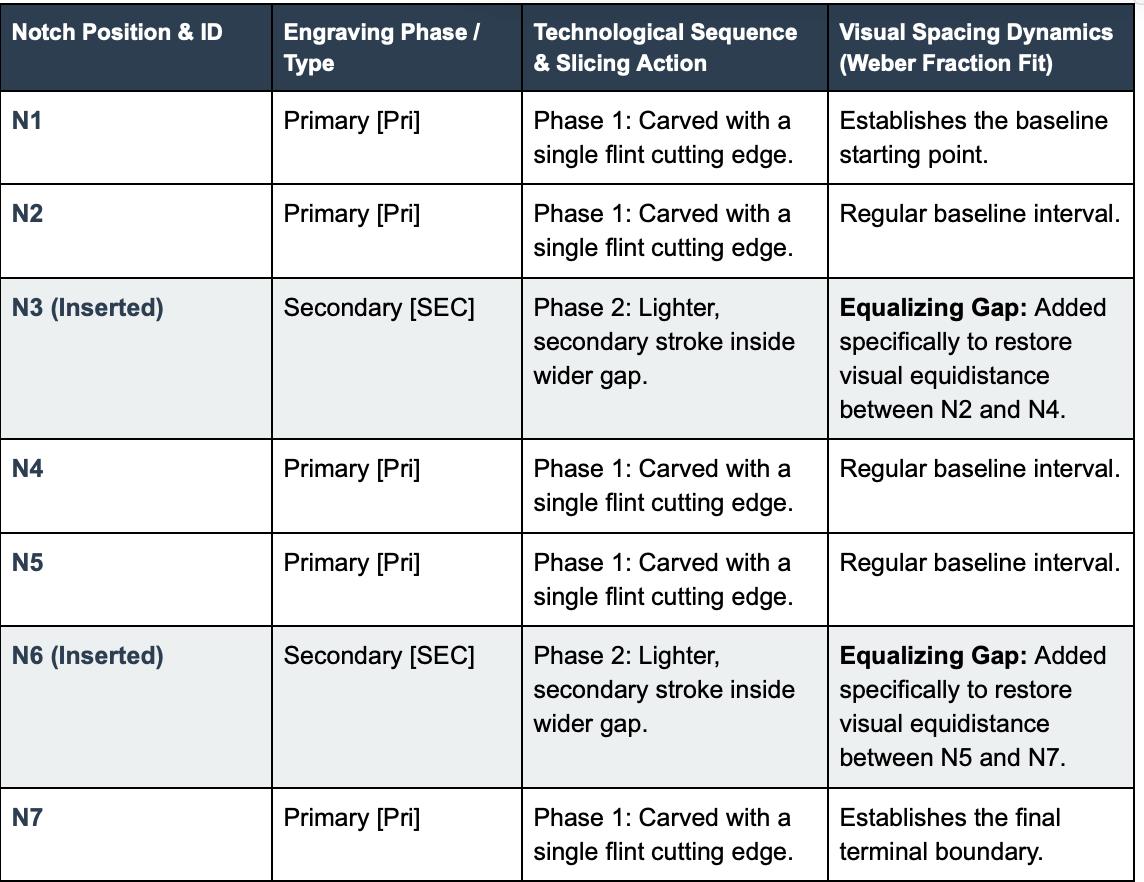
Key Mathematical & Cognitive Takeaways:
Weber Fraction Compliance (K ≈ 0.14): The spatial variation falls precisely within the perceptual limits of human visual symmetry, demonstrating intentional equidistance rather than random slicing.
Cognitive Complexity: Adding secondary notches (N3 and N6) to correct uneven visual gaps proves a structured, self-monitoring symbolic notation system.
Micro-morphometric and 3D profilometric analysis revealed seven parallel, transverse notches on the raven bone:
Technological Sequence: The notches were produced by the back-and-forth slicing movement of a single, unretouched flint cutting edge.
Intentional Visual Spacing: Morphometric analysis showed that five primary notches (N1, N2, N4, N5, N7) were initially carved across the shaft. This left two noticeably wider gaps between N2-N4 and N5-N7. Microscopic inspection revealed that notches N3 and N6 were subsequently added with lighter, secondary strokes inside these wider intervals specifically to restore visual equidistance.
Application of the Weber Fraction: Majkić and colleagues applied the Weber Fraction (constant K approximately equal to 0.14), the constant defining the limit of human perceptual ability to distinguish differences in spatial intervals. The variations recorded on the Zaskalnaya raven bone fall directly within the range of regular, equidistant notch sequences produced by modern humans and Upper Paleolithic bone engravings.
This is direct mathematical and traceological proof: a raven wing bone was deliberately modified not for butchery, but to generate a structured, visually consistent, symbolic notation pattern.
The work of Finlayson et al. (2012) expanded this analysis from individual caves to a continental scale. They compiled a database of 1,699 fossil avian localities across the Palearctic, spanning MIS 3 to MIS 1.
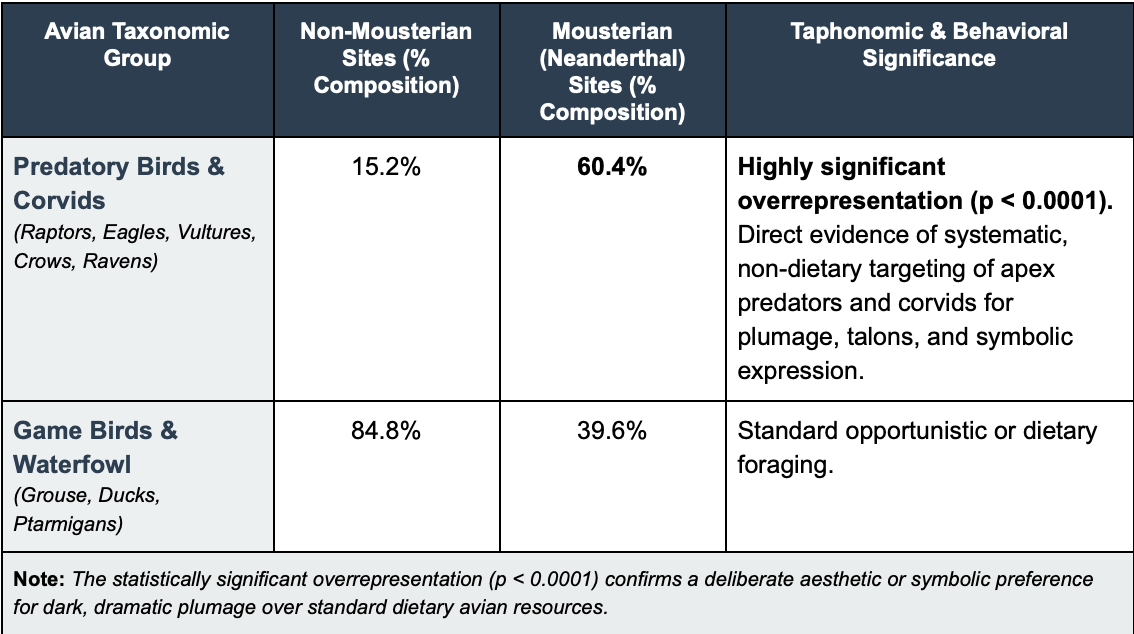
Note: The statistically significant overrepresentation (p < 0.0001) confirms a deliberate aesthetic or symbolic preference for dark, dramatic plumage over standard dietary avian resources.
At Gorham’s Cave, Level IV, out of thousands of avian bones, raptors (Accipitridae and Falconidae) and corvids (Corvidae) constitute 60.4 percent of the total species inventory. The species exploited include:
Common Raven (Corvus corax)
Red-Billed Chough (Pyrrhocorax pyrrhocorax)
Griffon Vulture (Gyps fulvus)
Golden Eagle (Aquila chrysaetos)
Spanish Imperial Eagle (Aquila adalberti)
Taphonomic analysis demonstrated that wing bones are statistically overrepresented among cutmarked specimens (p < 0.001). At Gorham’s Cave, 33.7 percent of analyzed raptor wing bones bear incisions, peeling, or scraping marks.
Finlayson and colleagues also analyzed the plumage coloration of these birds. The species selected by Neanderthals across Mousterian Europe are dominated by birds with dark-colored flight feathers: jet black (Corvus corax, Pyrrhocorax), slate gray, dark brown, and banded patterns (Gyps fulvus, Aquila chrysaetos). White and brightly multicolored birds are conspicuously absent or underrepresented, suggesting a deliberate aesthetic or symbolic preference for dark, dramatic plumage.
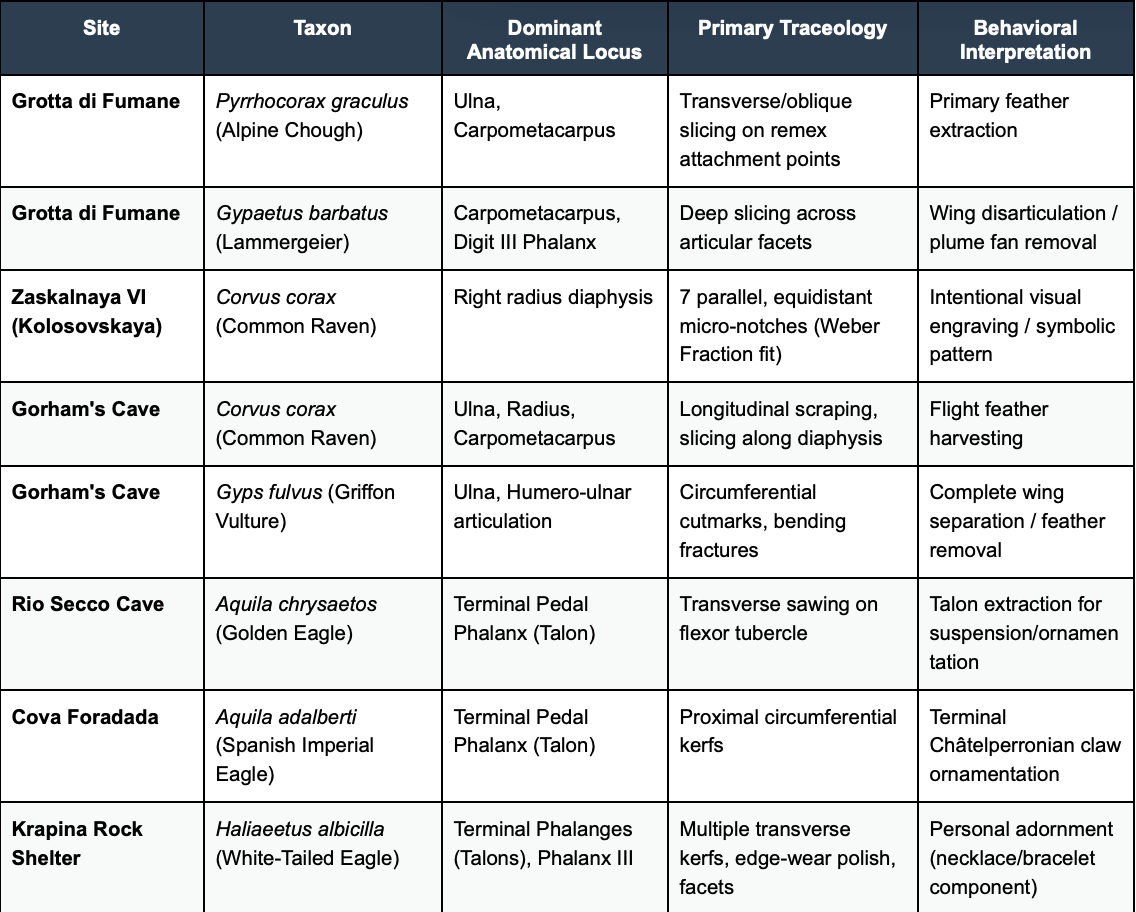
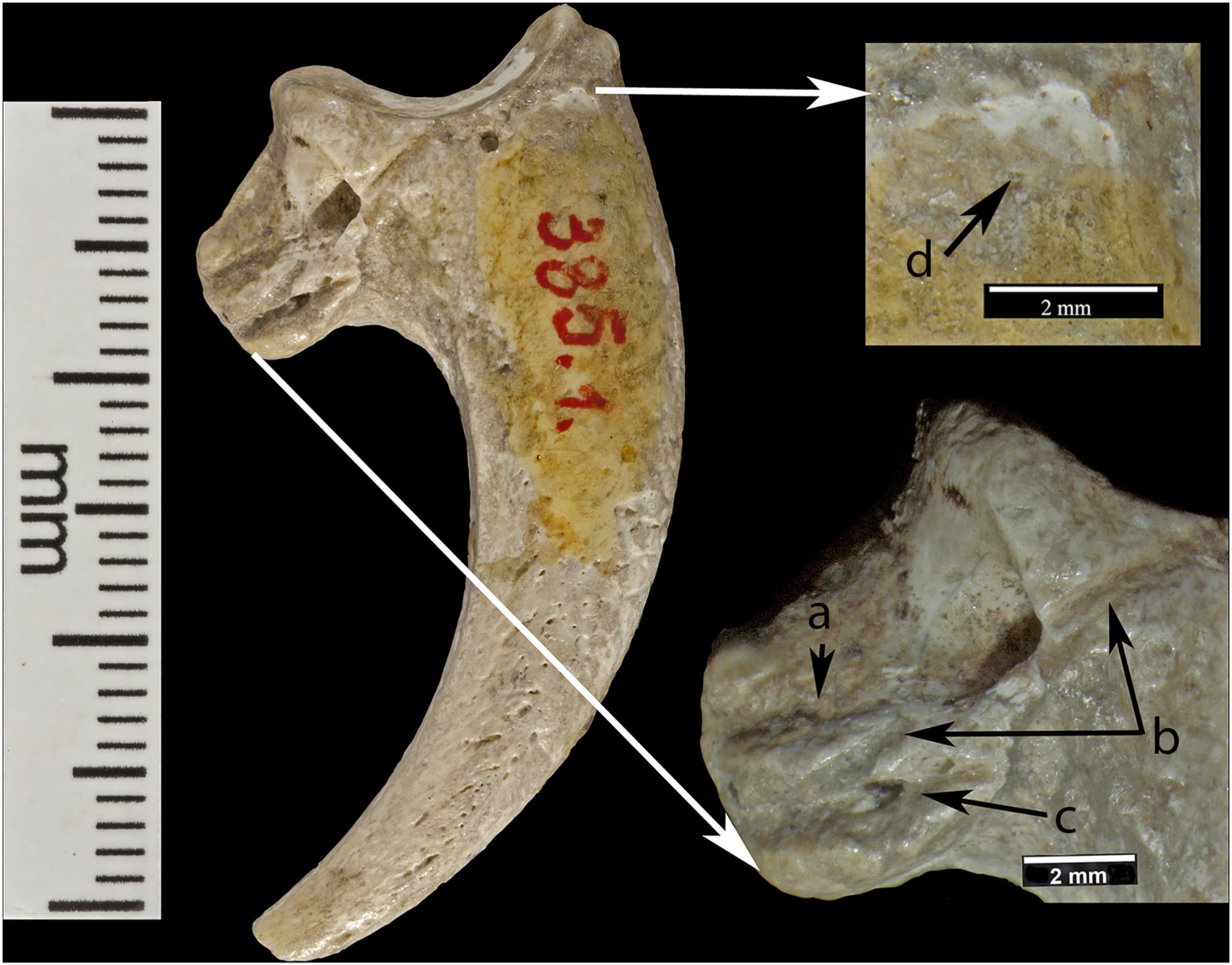
Credit: Radovčić et al. (2015) / Croatian Natural History Museum / PLoS ONE (CC-BY 4.0).The extraction of avian elements was not confined to feathers. Neanderthals engaged in the systematic removal and modification of raptor claws—terminal pedal phalanges—which contain zero muscle mass and are composed of an inner bony core covered by a hard keratin sheath (unguis).
At the Krapina Rock Shelter in Croatia, dated to MIS 5e (ca. 130,000 cal BP), Radovčić et al. (2015) re-examined 8 white-tailed eagle (Haliaeetus albicilla) talons and one associated pedal phalanx. Four of these talons exhibit clearly defined cutmarks with V-shaped cross-sections, and all eight display smoothed, polished facets along their lateral margins. Micro-CT analysis and surface profilometry confirmed that these polishes were produced by repetitive, abrasive contact with neighboring talons or a fibrous binding cord (such as sinew or plant-fiber cordage). The assemblage represents a composite piece of personal adornment—a necklace, bracelet, or rattle—manufactured by Neanderthals roughly 85,000 years before modern humans entered Europe.
At Grotta del Rio Secco, Layer BIO5_4 (Romandini et al., 2014), specimen RS-Av-12—a golden eagle (Aquila chrysaetos) terminal phalanx III of digit II—preserves deep transverse cutmarks directly across the planto-medial flexor tubercle. These cuts were made with an unretouched flint bladelet to sever the deep flexor tendon, allowing the claw and its keratin sheath to be removed intact.
At Cova Foradada in Spain (Rodríguez-Hidalgo et al., 2019), Layer IV yielded an imperial eagle (Aquila adalberti, specimen CF-Av-1) talon dating to the Châtelperronian (ca. 39,000 cal BP). Micro-CT scanning revealed precise cutmarks across the proximal articular surface, matching tendon-severing techniques documented at Krapina and Rio Secco. This demonstrates that the raptor-claw ornamental tradition persisted unbroken from 130,000 BP until the very end of the Mousterian and Châtelperronian cultural complexes.
The zooarchaeological and taphonomic evidence for Neanderthal feather harvesting, talon modification, and bone engraving has profound implications for cognitive archaeology and our understanding of human behavioral evolution.
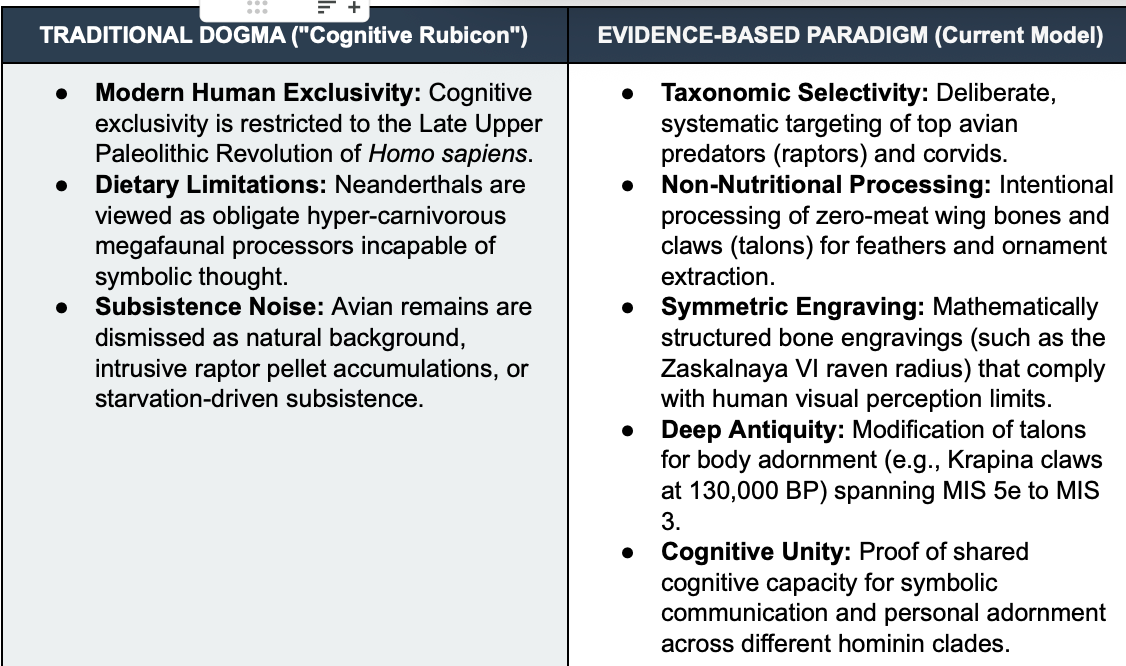
Avian exploitation did not occur in a cultural vacuum. When we evaluate the broader archaeological record of Mousterian Europe, plume harvesting and talon modification emerge as components of a cohesive, multi-material symbolic system:
At Grotta di Fumane, the same Unit A9 containing feather-stripped chough and vulture wings also yielded modified fossil marine shells (Aspa marginata) transported over 100 kilometers from Neogene outcrops and coated in red hematite pigment.
At Pech de l’Azé IV and Cueva de los Aviones, Neanderthals utilized ground manganese dioxide sticks and pigment-stained marine bivalves (Acanthocardia tuberculata, Pecten maximus).
At Gorham’s Cave, the bedrock below Level IV preserves the famous abstract, cross-hatched engraving (”the hashtag”).
Body ornamentation—whether executed through body painting with iron/manganese oxides, shell bead suspension, raptor-claw necklaces, or feathered headwear and cloaks—functions as a visually externalized social language. It signifies group belonging, individual role, and abstract identity across long-distance social landscapes.
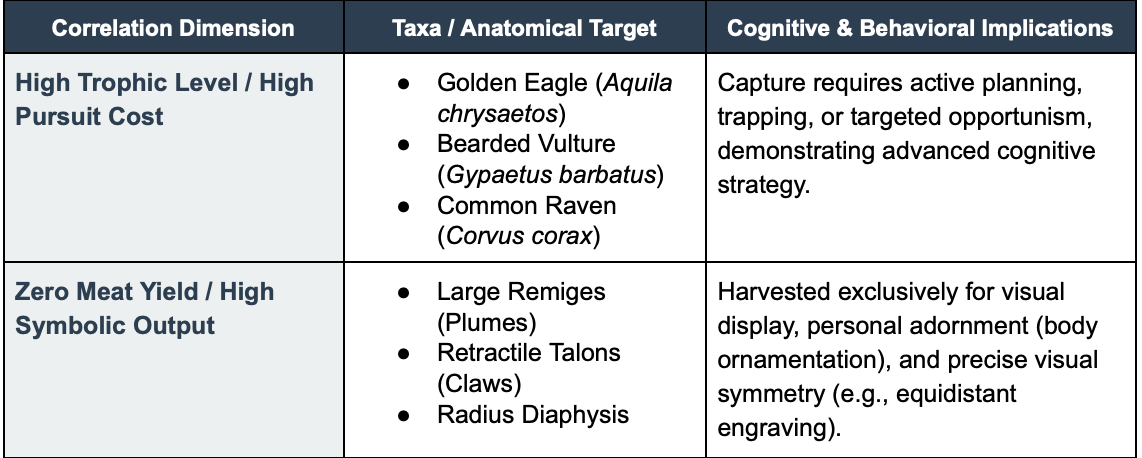
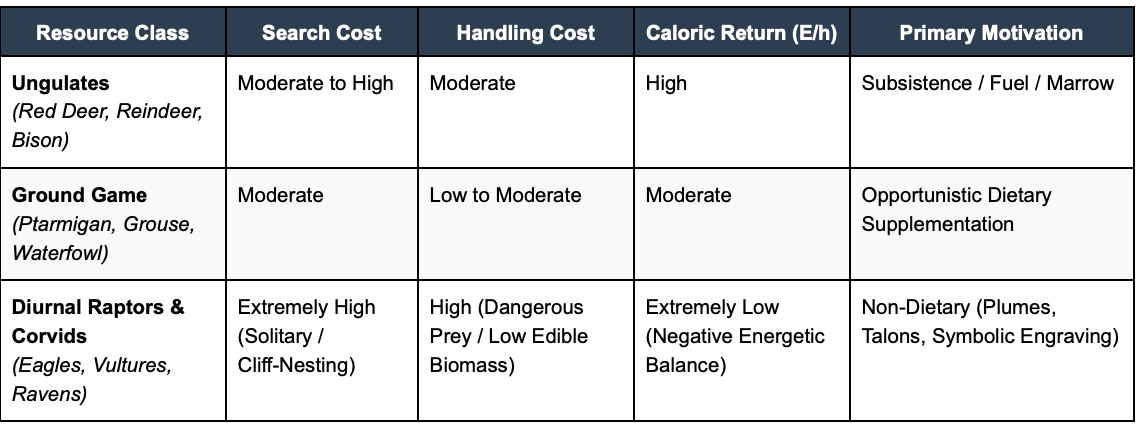
From the perspective of Optimal Foraging Theory (OFT; MacArthur & Pianka, 1966; Stephens & Krebs, 1986), specifically the Diet-Breadth Model, foragers rank resources based on their profitability, defined as net energetic return (E) per unit of handling time (h), or E/h:
Prime ungulates yield thousands of kilocalories for relatively low processing times per kilogram of meat.
Diurnal raptors and corvids possess minimal edible biomass and entail exceptionally high handling and capture costs. Raptors are solitary, nest on inaccessible vertical cliffs, and possess dangerous talons and beaks.
If Neanderthals were targeting birds purely for food, they would have focused on gregarious, terrestrial ground-dwelling birds (e.g., ptarmigan, grouse, ducks), which are easier to trap in bulk and offer far higher fat yields.
The statistically significant overrepresentation of top-tier predators across Mousterian Eurasia directly violates the predictions of purely caloric foraging models. Capturing these birds was motivated by the high symbolic value of their non-edible anatomical components: their dark flight feathers, their sharp claws, and their display elements.
The Krapina evidence demonstrates that talon-based ornamentation dates back to Marine Isotope Stage 5e (ca. 130,000 BP). This chronology pre-dates the arrival of anatomically modern Homo sapiens in Europe by roughly 85,000 years.
This chronological reality definitively refutes the “acculturation” hypothesis championed by early skeptics, who argued that Neanderthals only developed symbolic behaviors by passively copying incoming modern human populations during the Châtelperronian transition. The behavior was indigenous, deeply rooted, and geographically widespread throughout the Neanderthal lineage.
In my view, continuing to view symbolic cognition as a biological mutation unique to Homo sapiens is no longer scientifically viable. The capacity for symbolic expression, aesthetic appreciation, and material abstraction was already present in the common ancestor of Neanderthals and modern humans (Homo heidelbergensis sensu lato / Homo antecessor) or emerged independently in both lineages as an evolutionary response to complex social structures.
A robust paleoanthropological model must subject its conclusions to intense skeptical scrutiny. We must ask: Are there non-symbolic, functional, or taphonomic explanations that can account for the observed patterns without invoking modern cognitive frameworks?
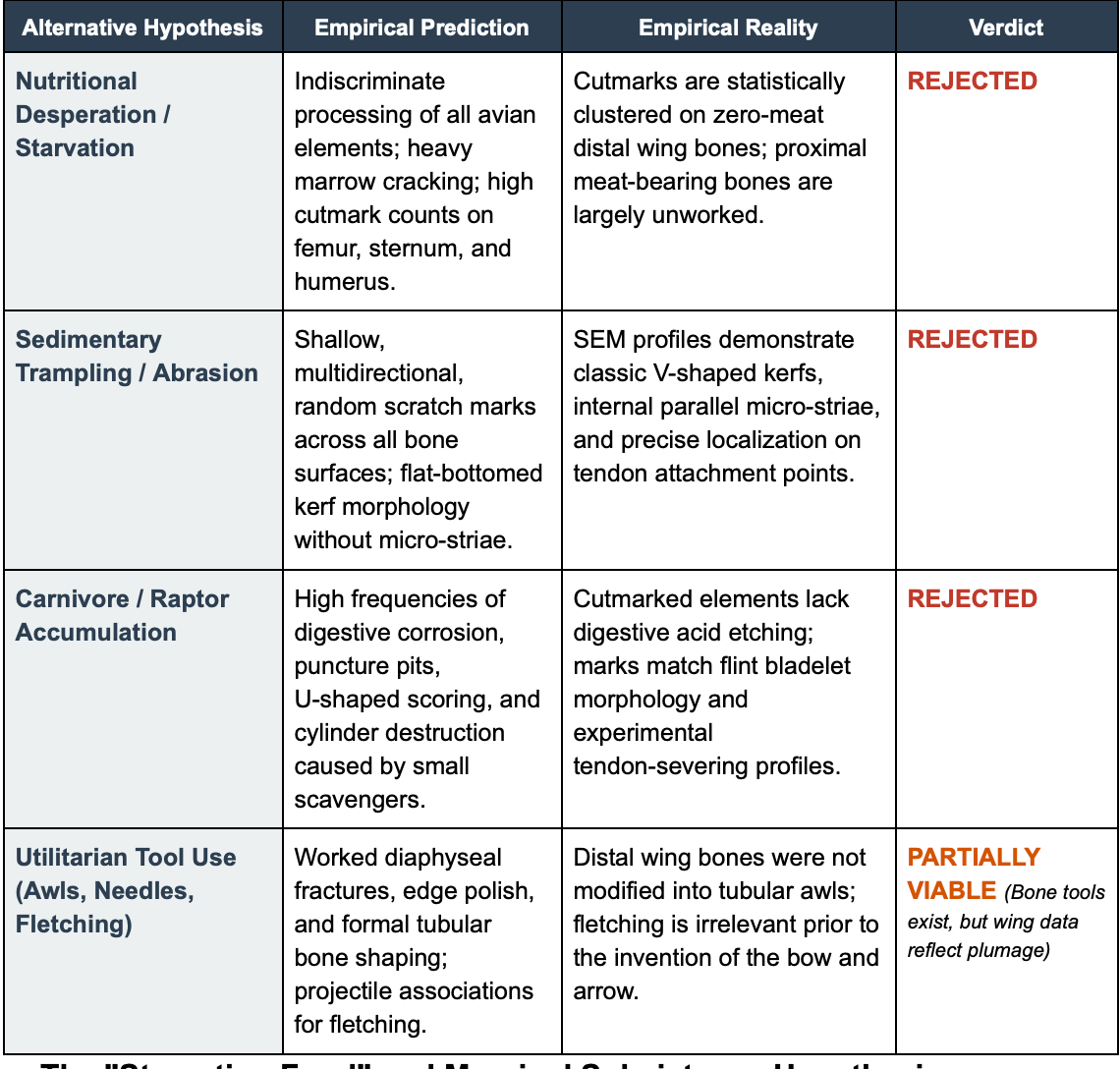
One alternative hypothesis posits that Neanderthals, facing acute caloric stress during harsh winters or interglacial climatic fluctuations, consumed any available biomass, including ravens and raptors. Under this scenario, cutmarks on wing bones might simply reflect desperate attempts to scrape every microgram of periosteal tissue or connective ligament from the carcass.
Why this model fails: If nutritional desperation were the primary driver, we would expect an indiscriminate exploitation of the entire carcass, with cutmark frequencies correlating positively with meat mass. The massive pectoral muscles on the sternum and the dense flesh of the upper thighs would be primary targets.
Yet, as demonstrated at Fumane and Gorham’s, these meat-bearing elements show minimal or zero cutmarks. To suggest that a starving hominin ignored the meat-laden breast of a vulture to systematically scrape connective tissue off the carpometacarpus defies economic logic and optimal foraging theory.
A more serious functional critique argues that raptor wing bones were processed to harvest bird skins for insulation, or that feathers were gathered for utilitarian aerodynamic purposes (such as fletching for throwing spears).
The Skinning Argument: Processing a bird to preserve the entire skin with feathers attached typically requires circular incisions at the extremities and longitudinal ventral slicing. While skinning can produce marks on the distal wing, it also leaves characteristic transverse cutmarks on the cranial bones, the mandibular margins, and the tarsometatarsi. The complete absence of cutmarks on raptor crania and mandibles across these Mousterian assemblages directly contradicts whole-pelt taxidermy or pelt-preserving skinning, isolating plumage-specific removal as the most parsimonious explanation.
The Fletching Argument: Fletching is crucial for stabilizing light, high-velocity arrows, but it is aerodynamically unnecessary for the heavy, thrusting or hand-cast wooden spears (such as those from Schöningen and Lehringen) used by Neanderthals. The use of plumes for fletching during the Middle Paleolithic lacks technological coherence.
Cave-dwelling raptors and corvids naturally inhabit, nest within, and die inside karst rock shelters. Large owls (Bubo bubo) and diurnal raptors regularly accumulate massive bone beds composed of their own prey and natural mortality assemblages. Can natural processes mimic the cutmark distributions observed at Fumane and Gorham’s?
Careful taphonomic traceology provides a clear negative answer:
Digestive Etching: Bones accumulated via raptor regurgitation pellets show diagnostic chemical alteration, including rounding of fracture margins, pitting, and selective thinning of cortical walls due to stomach acids. The cutmarked wing bones and talons cited at Fumane, Rio Secco, Zaskalnaya VI, and Krapina lack digestive corrosion.
Sedimentary Trampling: While sharp clasts within cave sediments can scratch bone surfaces during human or carnivore trampling, these marks are randomly oriented and lack the consistent directional grouping, Hertzian entry dynamics, and micro-flaked borders produced by deliberate flint incisions.
The taphonomic evidence withstands adversarial critique. The spatial, anatomical, and taxonomic patterns observed across these sites are fundamentally anthropogenic, intentional, and non-dietary.
The archetype of the Neanderthal as a purely brutish, megafaunal meat-processor is an outdated historical artifact. The zooarchaeological detective work carried out on the avian records of Grotta di Fumane, Gorham’s Cave, Rio Secco, Zaskalnaya VI, Cova Foradada, and Krapina reveals a deeply nuanced, multifaceted relationship between Neanderthals and the Palearctic avifauna.
Neanderthals did not merely look to their skies for calories. They observed, stalked, and captured the apex masters of the air: golden eagles, lammergeiers, griffon vultures, and common ravens.
With delicate lithic bladelets and remarkable anatomical precision, they severed tendons to extract intact talons for personal adornment, carefully peeled primary flight feathers from the wing bones of ravens and falcons to harvest their dark, iridescent plumes, and engraved raven radius bones with mathematically balanced, equidistant visual notations.
These behaviors were not isolated accidents or the product of sporadic nutritional stress. They were structured cultural traditions, maintained across tens of thousands of years and transmitted across vast geographical distances.
By grounding our conclusions in the unyielding rock of taphonomic science—micro-morphometry, anatomical element representation, and quantitative traceology—we demonstrate that the capacity for symbolic thought, aesthetic appreciation, and material abstraction is not the exclusive domain of our own species. It is a shared heritage of the broader human lineage.
Finlayson, C., Brown, K., Blasco, R., Rosell, J., Negro, J.J., Bortolotti, G.R., Finlayson, G., Sánchez Marco, A., Giles Guzmán, F., Rodríguez Vidal, J., Carrión, J.S., Fa, D.A., Rodríguez Llanes, J.M., 2012. Birds of a feather: Neanderthal exploitation of raptors and corvids. PLoS ONE 7 (9), e45927. DOI: 10.1371/journal.pone.0045927
Lyman, R.L., 1994. Vertebrate Taphonomy. Cambridge University Press, Cambridge. DOI: 10.1017/CBO9781139878302
Lyman, R.L., 2008. Quantitative Paleozoology. Cambridge University Press, Cambridge. DOI: 10.1017/CBO9780511813863
MacArthur, R.H., Pianka, E.R., 1966. On optimal use of a patchy environment. The American Naturalist 100 (916), 603–609. DOI: 10.1086/282454
Majkić, A., Evans, S., Stepanchuk, V., Tsvelykh, A., d’Errico, F., 2017. A decorated raven bone from the Zaskalnaya VI (Kolosovskaya) Neanderthal site, Crimea. PLoS ONE 12 (3), e0173435. DOI: 10.1371/journal.pone.0173435
Morin, E., Laroulandie, V., 2012. Presumed symbolic use of diurnal raptors by Neanderthals. PLoS ONE 7 (3), e32856. DOI: 10.1371/journal.pone.0032856
Peresani, M., Fiore, I., Gala, M., Romandini, M., Tagliacozzo, A., 2011. Late Neandertals and the intentional removal of feathers as evidenced from bird bone taphonomy at Fumane Cave 44 ky B.P., Italy. Proceedings of the National Academy of Sciences USA 108 (10), 3888–3893. DOI: 10.1073/pnas.1016212108
Peresani, M., Cristiani, E., Romandini, M., 2014. The use of raptor talons by Neanderthals: Modern actions for ancient tasks? Quaternary International 350, 31–38. DOI: 10.1016/j.quaint.2014.04.032
Radovčić, D., Sršen, A.O., Radovčić, J., Frayer, D.W., 2015. Evidence for Neandertal jewelry: Modified white-tailed eagle claws at Krapina. PLoS ONE 10 (3), e0119802. DOI: 10.1371/journal.pone.0119802
Rodríguez-Hidalgo, A., Morales, J.I., Cebrià, A., Courtenay, L.A., Fernández-Marchena, J.L., García-Argudo, G., Marín, J., Saladié, P., Soto, M., Tejero, J.M., Fullola, J.M., 2019. The Châtelperronian Neanderthals of Cova Foradada (Calafell, Spain) used imperial eagle phalanges for symbolic purposes. Science Advances 5 (11), eaax1984. DOI: 10.1126/sciadv.aax1984
Rodríguez-Vidal, J., d’Errico, F., Giles Pacheco, F., Blasco, R., Rosell, J., Jennings, R.P., Queffelec, A., Finlayson, G., Fa, D.A., Gutiérrez López, J.M., Carrión, J.S., Negro, J.J., Finlayson, S., Cáceres, L.M., Bernal, M.A., Fernández Jiménez, S., Finlayson, C., 2014. A rock engraving made by Neanderthals in Gibraltar. Proceedings of the National Academy of Sciences USA 111 (37), 13301–13306. DOI: 10.1073/pnas.1411529111
Romandini, M., Peresani, M., Laroulandie, V., Metz, L., Pastoors, A., Vaquero, M., Slimak, L., 2014. Convergent evidence of eagle talons used by Late Neanderthals in Europe: A further assessment on Rio Secco Cave. Quaternary International 359–360, 237–248. DOI: 10.1016/j.quaint.2014.04.032
Stephens, D.W., Krebs, J.R., 1986. Foraging Theory. Princeton University Press, Princeton. DOI: 10.1515/9780691206790
Comments
Nothing yet. Say the first thing.
Sign in to join the conversation.