
Last summer, The BE Hive, a Nashville-based vegan meat company, gifted me several packs of their plant-based deli and breakfast meats to try. Deli slices and bacon might seem like an odd fit for Japanese cuisine, but for me, they made perfect sense. I had all kinds of ideas brewing.
I made a classic bento box staple: “beef”-wrapped green beans glazed in sweet soy sauce. I stuffed yaki onigiri (pan-fried rice balls) with spicy “pepperoni.” And I even made a gorgeous mille-feuille nabe (a layered hot pot dish) with savory plant-based slices. But the very first thing I made was okonomiyaki, a savory Japanese pancake made with cabbage and a flexible mix of other ingredients.
Armed with a package of “bacon” that promised to fry up like the real deal, I was especially excited to revisit this dish. Back when bacon was still on the table for me, I used to fry up a few slices, then cook my shiitake mushroom filled okonomiyaki batter right in the same pan with the leftover grease. (I know. How Mississippi of me.) The crispy bacon slices were then chopped up and sprinkled over the finished dish. Recreating it this way felt like such a fun, nostalgic throwback.
When I posted a photo on Instagram, I got quite a few messages:
“Um, what is that?”
“Can you share the recipe?”
Months later, it’s still one of my most DM’d posts.
If you’ve ever been curious about what okonomiyaki is or how to make your own plant-based version, I’ve created a guide to help you get started.


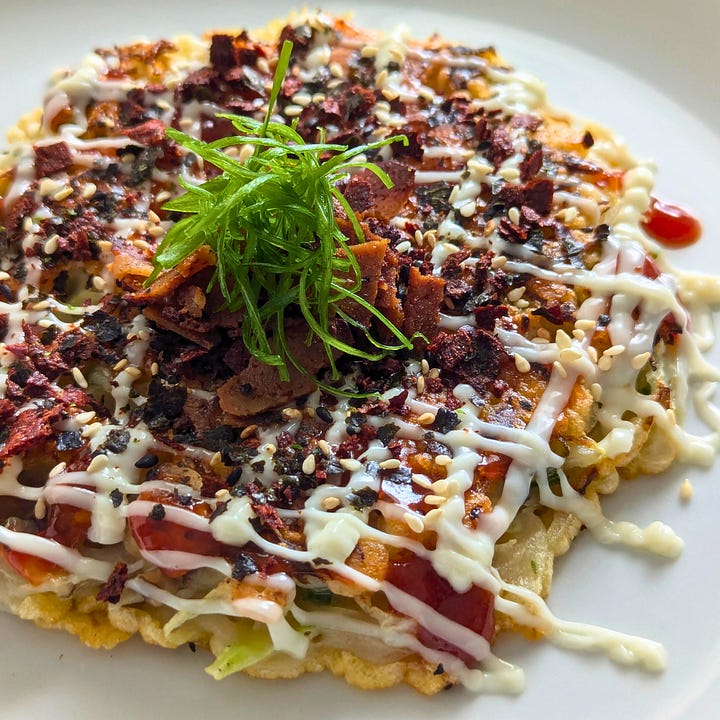
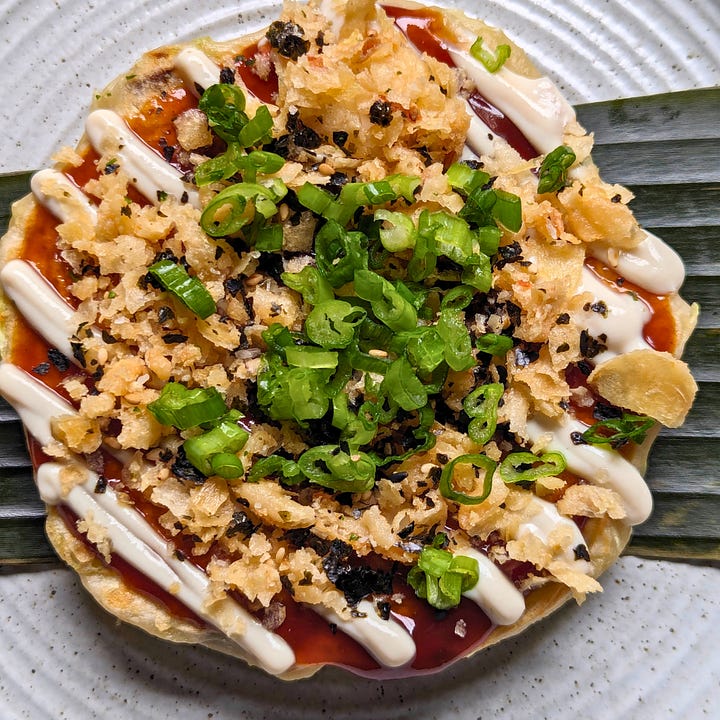
Okonomiyaki (say oh-koh-noh-myah-kee) is a savory pancake-like dish filled with cabbage, slathered with a tangy barbecue-like sauce, and drizzled with Kewpie mayo. It’s often finished with a sprinkle or two of toppings like aonori (dried seaweed), scallions, or chopped pickled ginger.
The name loosely breaks down into two parts: okonomi meaning “what you like,” and yaki meaning “grilled.” True to its name, it’s a dish that’s all about your preferences, which is exactly what makes it so beloved.
There are two main styles of okonomiyaki: Osaka and Hiroshima. The version I’m focusing on is Osaka style. In my opinion, it’s the easier of the two to create at home as the cabbage gets folded into the batter before hitting a hot pan. Hiroshima style, on the other hand, layers the ingredients often with noodles added in. Delicious, but definitely a bit more involved.
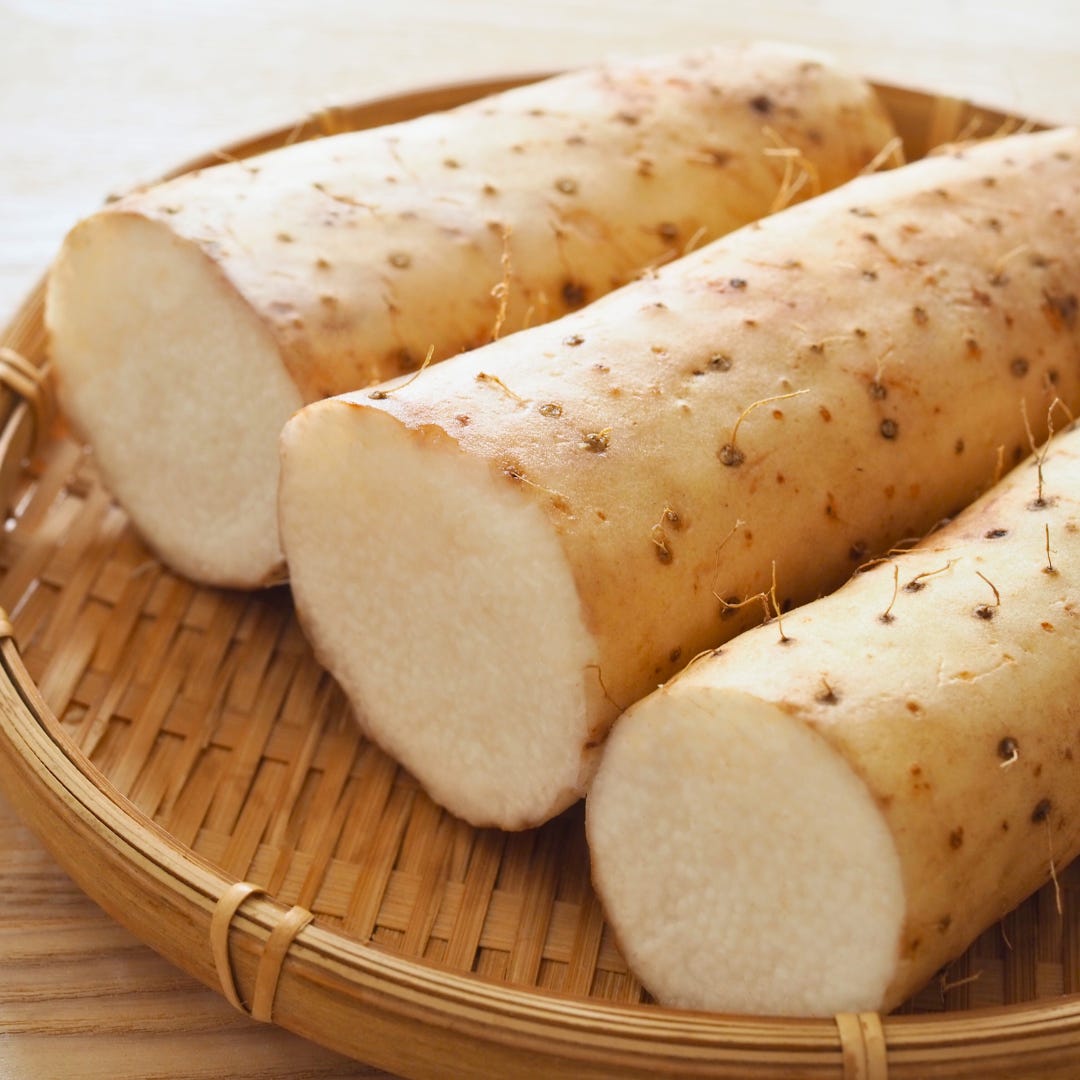
Traditionally, okonomiyaki batter includes a small amount of grated mountain yam (nagaimo), a root vegetable loved in Japanese cuisine for its unique texture. When grated, it turns slippery and gooey, almost like the slimy texture of overcooked okra. This helps create a light, fluffy center in the finished pancake.
You can usually find mountain yam in the produce sections of well stocked Asian markets, sold in long, root-like pieces.
No nagaimo? No problem. If you can’t find this ingredient (I often can’t where I live), you can still make a delicious okonomiyaki. A little extra baking powder will help to achieve a similarly fluffy texture.
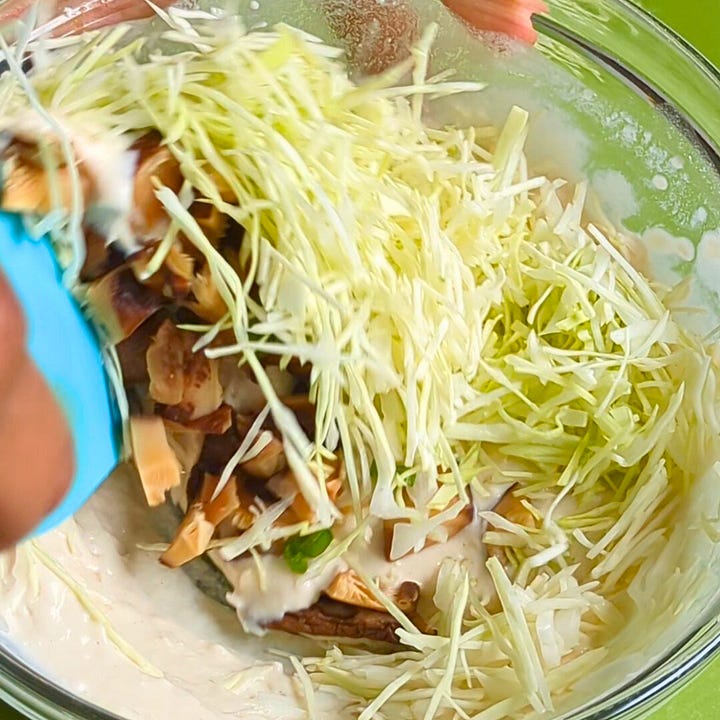
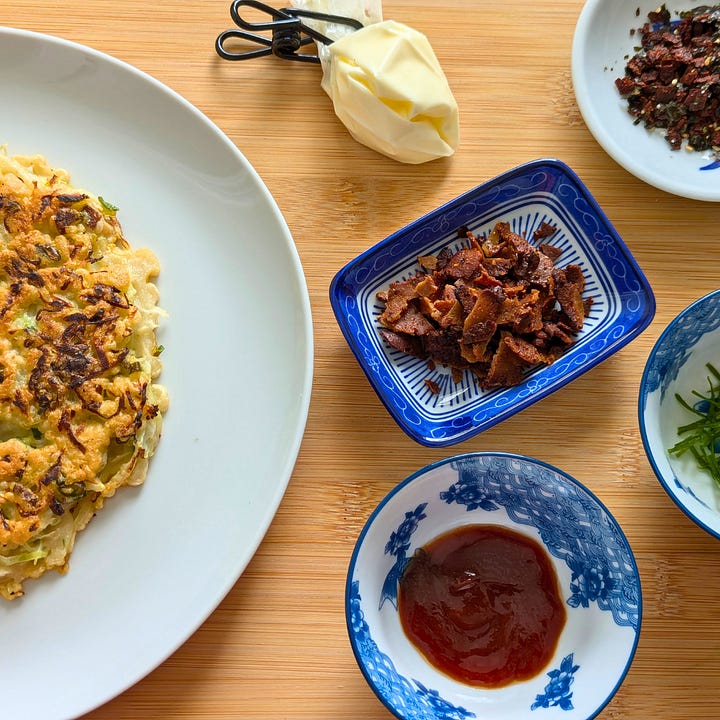
Okonomiyaki is surprisingly simple and straightforward to make. You don’t need a ton of tricks to make it work, but here are three things to keep in mind:
Cabbage is the star. Any green cabbage will do. I’d caution again using red cabbage as it will turn your batter an odd and unappetizing shade of blue. (Ask me how I know that, wink wink.)
Let the batter rest. I like to give the batter a 30 minute rest, but even a shorter 10 - 15 minutes helps the flour hydrate and hold together better when flipping.
Don’t stress the flip. Remember that if you have a small break, it will get covered in a good amount of delicious sauce by the time you’re done.
Ready to give it a try? The downloadable Okonomiyaki PDF Guide walks you through every step.
The guide includes:
Plant-based Okonomiyaki Recipe
DIY Silken Tofu Kewpie-style Mayo
Homemade Okonomiyaki Sauce Recipe
Tempura Flakes Recipe (a popular filling/topping!)
Filling and topping ideas to help you mix, match, and make it your own
If you were making okonomiyaki tonight, what would you toss in? Any special toppings or random fridge finds? I’d love to know!
No posts
Comments
Nothing yet. Say the first thing.
Sign in to join the conversation.