
Hey Marisa,
I’m vegan and absolutely love sushi. But something you mentioned in one of your newsletters totally caught me off guard. You said umeboshi is sometimes pickled with fish?! Those sushi rolls with umeboshi and shiso have always been my go-to, and now I'm wondering if they're truly vegan…and if there are other Japanese foods I should be watching out for!
Sincerely,
Surprised Sushi Lover
Dear Surprised Sushi Lover,
When I worked behind the sushi bar, I always tried to make the dining experience more inclusive, especially for people who didn’t eat seafood. I'd often meet vegetarians or plant-based folks out with sushi-loving friends simply trying to navigate the menu. Almost inevitably, they’d point to something that seemed safe and ask hopefully, “I can have that, right?”
Unfortunately, many dishes, at least in their classic forms, weren't always what they seemed. Japanese cuisine often relies on seafood-based flavorings that add subtle richness, one that’s not as obvious as, say, Brussels sprouts cooked in bacon, where the flavor is clear from the very first bite.
But the great news is that truly plant-based options definitely exist. You just have to know what to look for. Keep reading to discover 5 Japanese foods to double-check when you’re dining out or shopping for ingredients to use at home.
- Marisa
P.S. Got a question of your own about sushi, Japanese ingredients, or my journey? Feel free to ask! I may even answer it in a future newsletter.


Umeboshi (Pickled Plum)
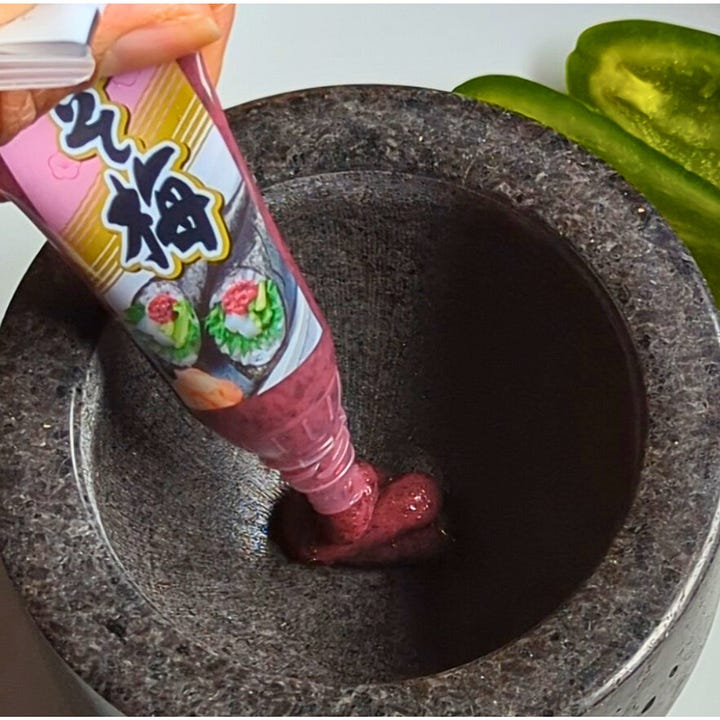
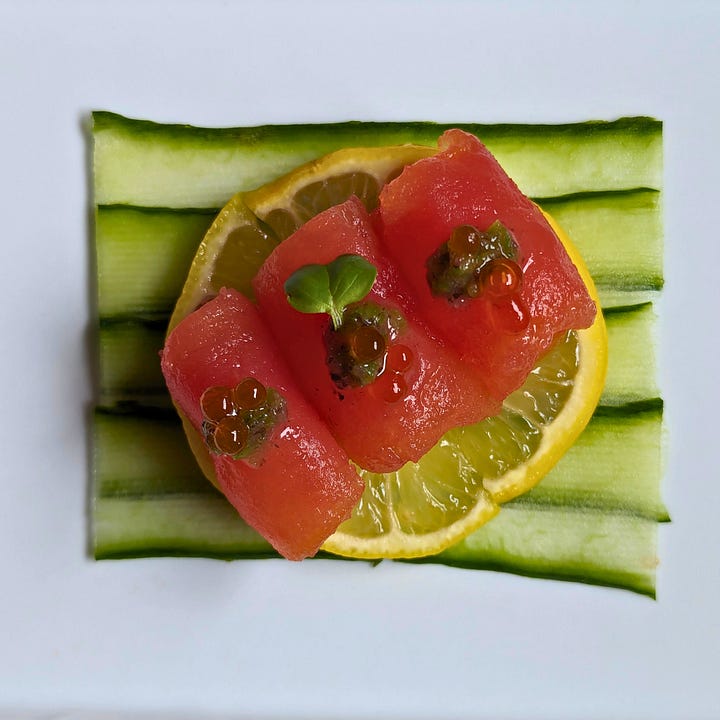
Left: Pickled Plum Paste Right: Tomato "Tuna Sashimi with Umeboshi & Jalapeno Chutney What it is:
A salty, sour pickled plum that’s often tucked into rice balls (onigiri). It’s also available in little tubes that make it convenient for squeezing onto sushi rolls or mixing into cooked rice. And If you were vegan back around 2018, you probably remember when umeboshi had its moment as a plant-based superfood and secret flavor bomb.Why it might not be vegan:
There are several traditional ways to pickle umeboshi, and one of them includes bonito flakes (aka skipjack tuna) for added flavor. While this version is usually sold whole, it’s not out of the question that the same type is used to make umeboshi paste, too. I’m often surprised how many packages of umeboshi paste I find that have bonito listed as an ingredient.What to look for:
Plenty of brands are fully vegan. Just be sure to check the ingredients list, even if it’s a brand you’ve purchased before. If bonito is listed as an ingredient, skip it. If you're eating out, it's worth asking what ingredients are listed on the umeboshi packaging.Miso Soup
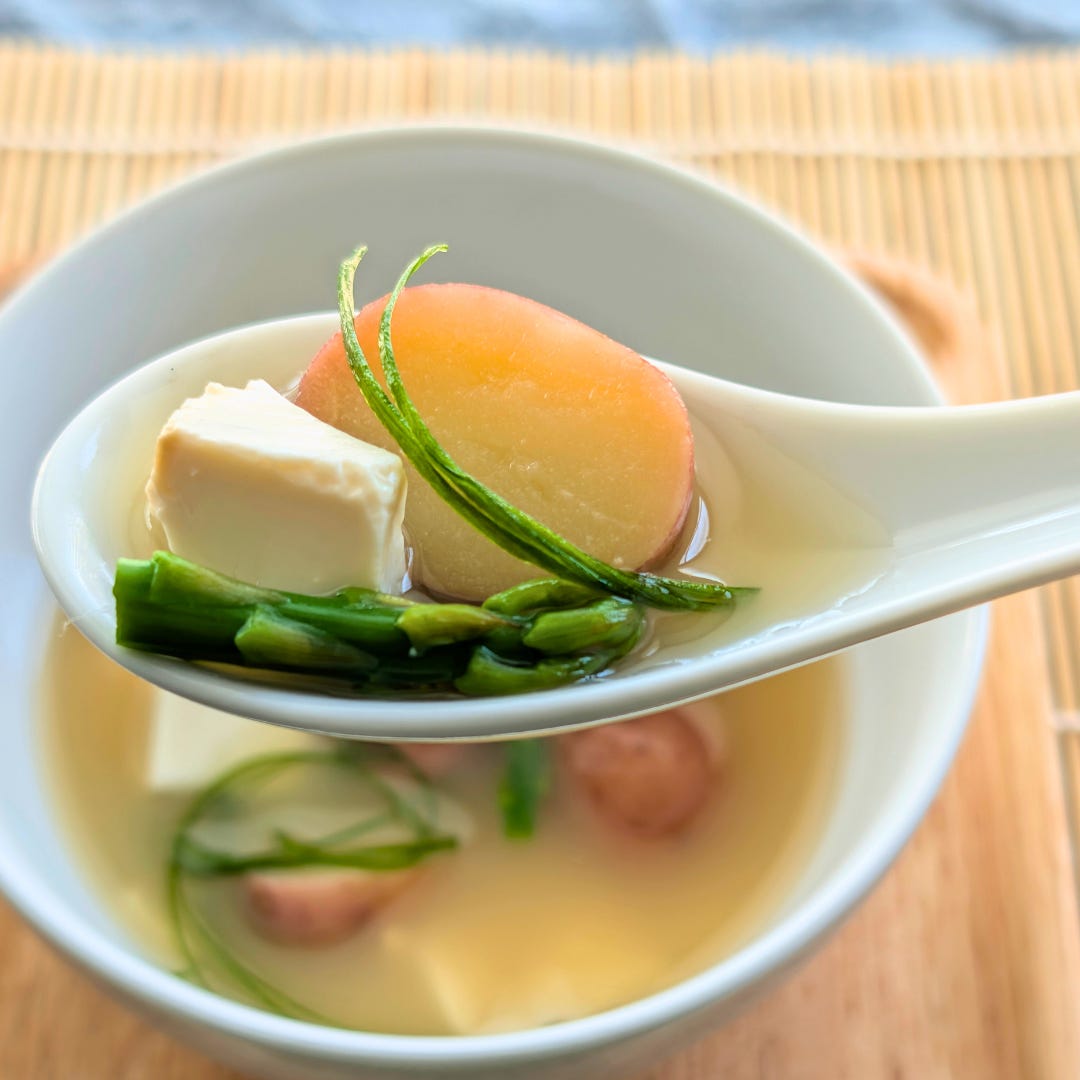
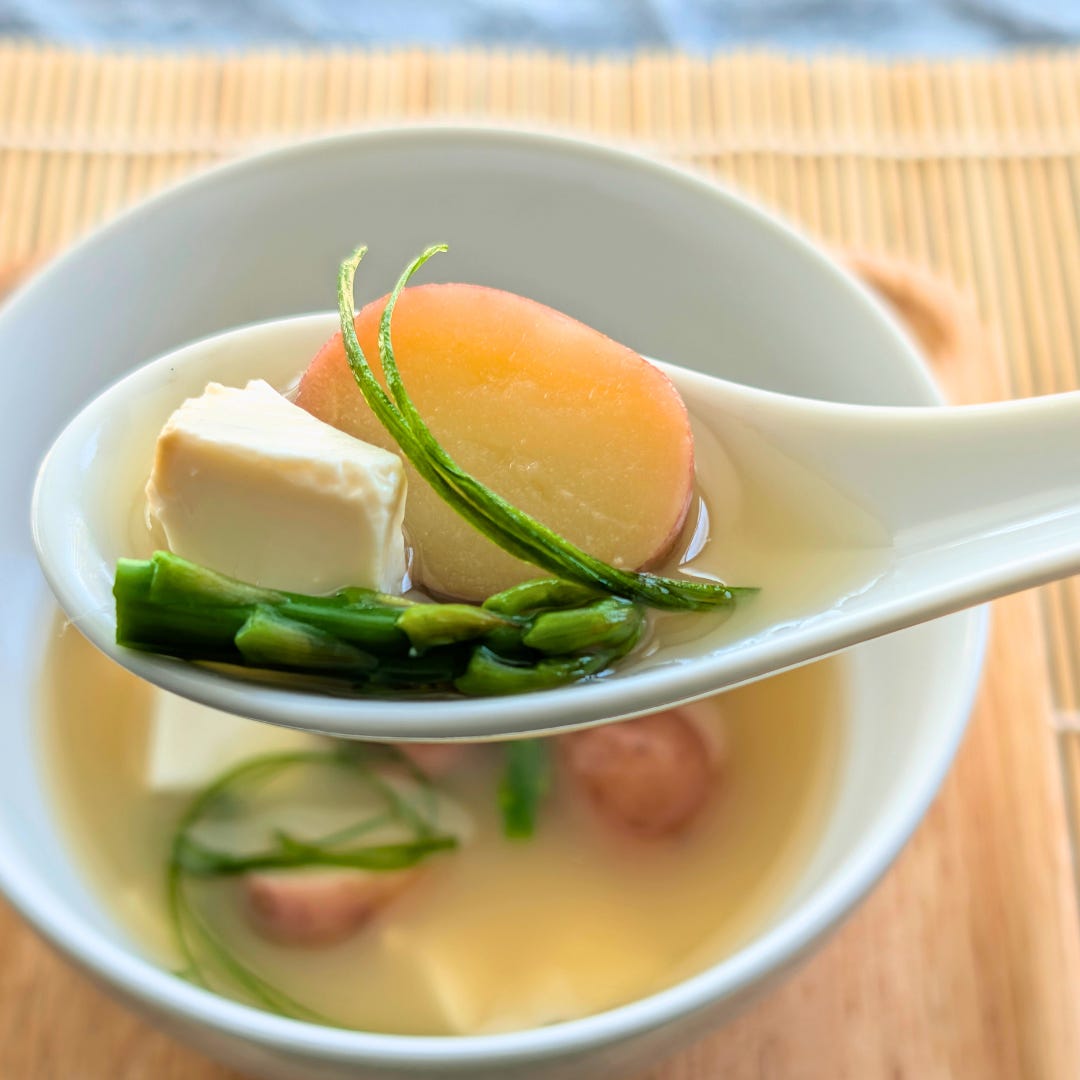
Miso Soup made with a shiitake mushroom and kombu (sea kelp) broth. What it is:
A broth based soup flavored with miso paste typically containing cubes of tofu and bits of seaweed.Why it might not be vegan:
It always broke my heart to tell a vegetarian or vegan that they couldn’t have the miso soup. While the miso paste itself is fine, the issue is the broth. Traditional miso soup is made with dashi, a light stock made with bonito flakes and kombu (sea kelp).As a vegan, if you're familiar with Japanese cuisine, you know anything made with traditional dashi is a no-go. But the menu wording can sometimes make things confusing. I’ve seen miso soup described as “tofu in miso broth” or “tofu and seaweed soup”. Often, there’s no description at all. My guess is that it’s an attempt to keep menus feeling simple and approachable, especially for diners who might get overwhelmed by unfamiliar words. But that simplification can leave out key info like whether the broth is fish based.
What to look for:
When dining out, always ask what the broth is made from. If it’s kombu or kombu-shiitake-based (seaweed and dried mushrooms), you’re in the clear. But if they say it’s just “miso broth,” I’d personally skip it. Chances are, there isn’t a full understanding of what’s actually in it. And if it is made with seafood-based dashi, you likely wouldn’t know from taste or smell alone. The fragrance and flavor of the miso are usually so strong, they can easily mask what’s in the base.Honestly, unless the restaurant is confident in vegan cooking, miso soup is one of those dishes I don’t order out. Miso soup is incredibly easy to make at home.
Ponzu
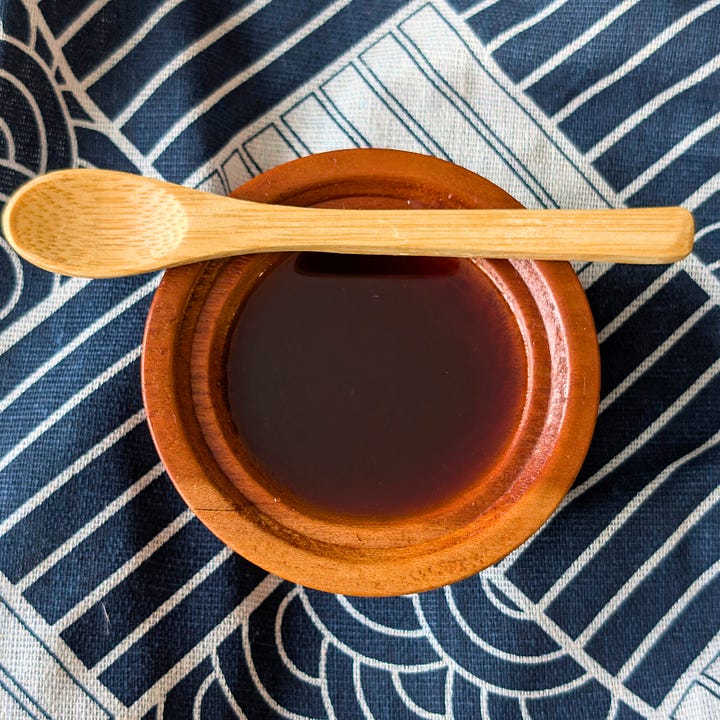
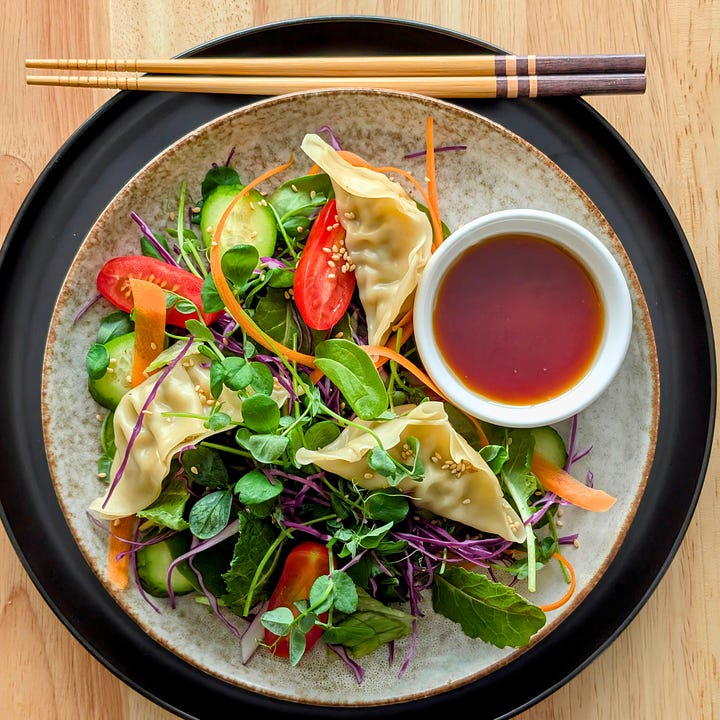
Left: Ponzu made without bonito flakes Right: Dumpling Salad with Ponzu Sauce
What it is:
A bright, citrusy, soy-based sauce used for dipping dumplings and sushi, dressing salads, or drizzling over tofu and cold noodles.Why it might not be vegan:
If a restaurant is taking the time to squeeze all that citrus, chances are they lean more traditional. Traditional ponzu recipes rely on bonito flakes to balance the sharpness of the citrus and soy. Unlike fish sauce, where the seafood influence is unmistakable in both smell and taste, the bonito steeped in ponzu is much more subtle. You’d never know it’s there.What to look for:
It’s always worth asking if the ponzu is house made. If it is, I’d skip it. If it’s pre-made, you might be in the clear. Many brands like Kikkoman are vegan and are commonly used at restaurants. (But definitely still ask about ingredients!) And since brands like Kikkoman are sold in stores, you can buy it for your own use. (Though I still think homemade provides the best flavor. Here’s my fish-free version if you’d like to try it.)Inari
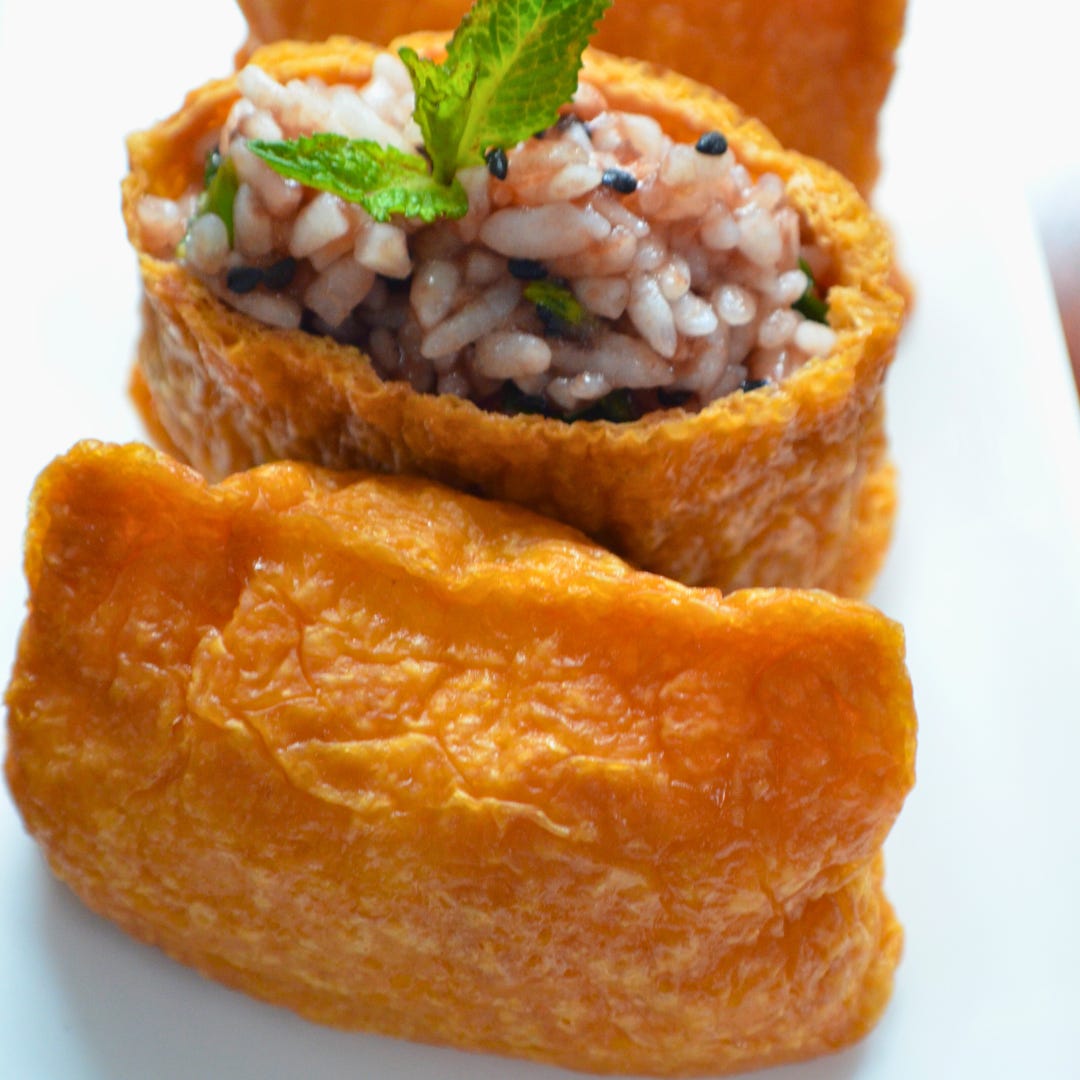
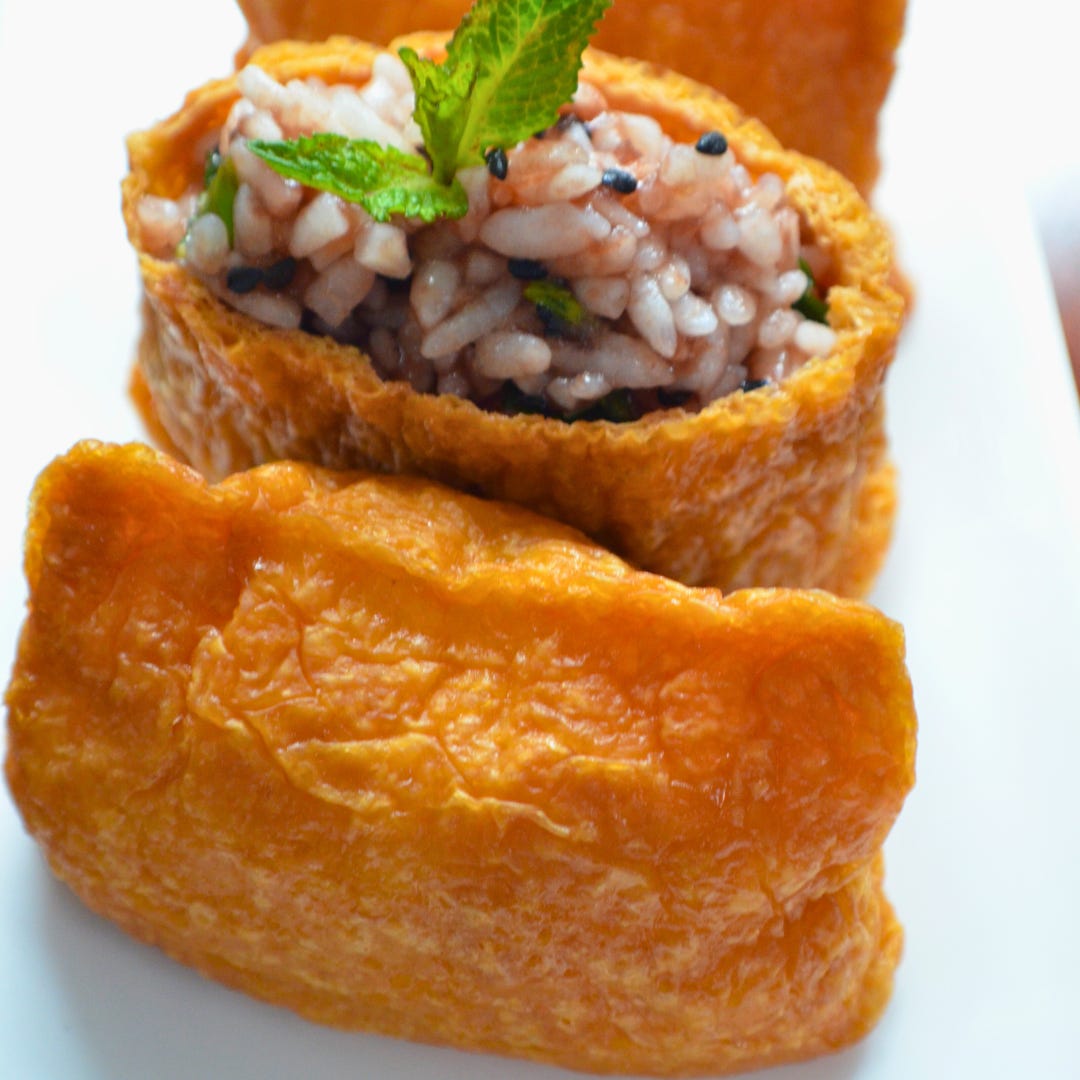
Inari filled with umeboshi (pickled plum) tossed sushi rice
What it is:
Sweet and savory tofu pouches (called aburaage) that are simmered in a seasoned broth. They’re often sold as a grab-and-go sushi option or added to bento boxes. Inari can also be chopped and added to salads, soups, or noodles.
Why it might not be vegan:
The tofu pouches themselves are made from deep-fried tofu, but they’re almost always simmered in dashi. (Sigh.)What to look for:
Because frying, then simmering the pouches is very time consuming, most restaurants and stores use pre-made inari. When dining out, always ask whether the pouches were simmered in dashi. If you’re shopping for inari to make your own creations, check the ingredient list. I’ve come across both fresh and canned versions that are dashi free.Natto

Natto (fermented soybeans)
What it is:
Sticky, stringy fermented soybeans with a strong aroma and a love-it-or-hate-it reputation. (In school, we used to call it snot-to.) It’s prized for its gut-friendly probiotics and is often served over hot rice, topped with mustard, soy sauce, scallions, and sometimes a raw egg yolk.Why it might not be vegan:
The natto itself is usually vegan and it’s easy enough to skip the raw egg yolk. But the challenge comes with the included seasoning packets: one mustard, and one soy based. That little soy-based sauce packet is probably fortified with dashi.
What to look for:
Check the packaging for a full list of ingredients, especially in the seasoning packets. Your best bet is to skip those and season it yourself with tamari, Japanese mustard, and scallions. If you’re dining out, ask for any sauces to be left off, and use soy sauce or tamari from the table instead.One of my favorite parts of writing Dear Sensei is hearing your reactions. Was there anything on this list that surprised you? Or have you run into any of these without realizing? I’d love to hear about it!

July Bonus Edition Recap: Okonomiyaki
Have you tried okonomiyaki, a type of savory Japanese cabbage pancake? This month’s bonus edition was a deep dive into how to create a delicious plant-based version of this beloved dish. Check out the post to learn more about okonomiyaki and get a pdf guide to making it your own.
How to Make Plant-Based Okonomiyaki
·
July 20, 2025
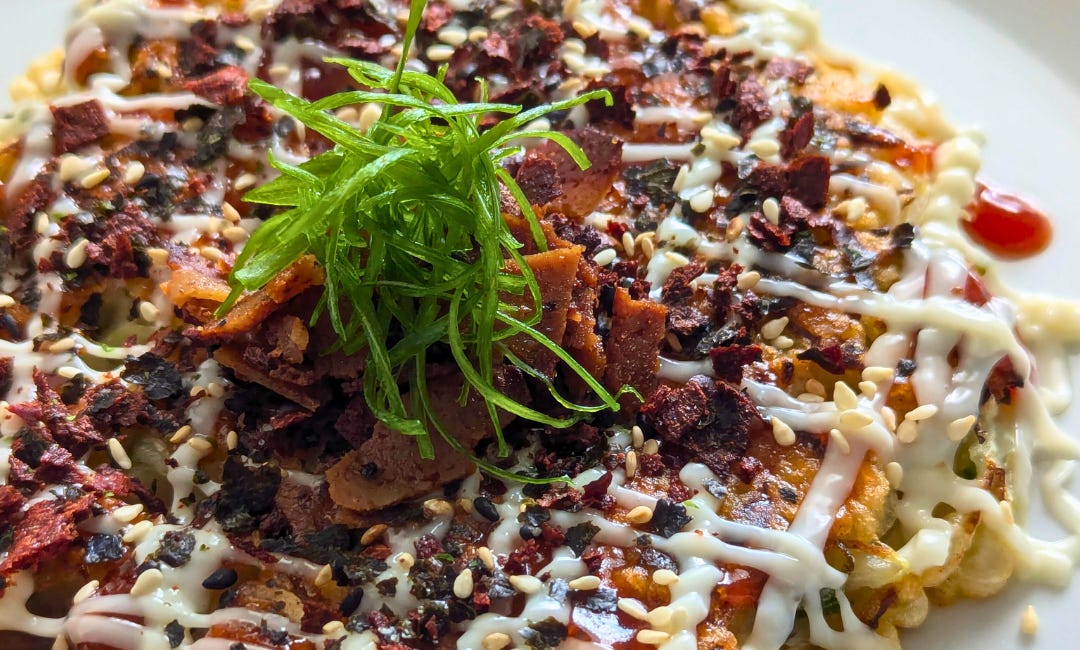
Last summer, The BE Hive, a Nashville-based vegan meat company, gifted me several packs of their plant-based deli and breakfast meats to try. Deli slices and bacon might seem like an odd fit for Japanese cuisine, but for me, they made perfect sense. I had all kinds of ideas brewing.
No posts
Comments
Nothing yet. Say the first thing.
Sign in to join the conversation.