
Confession: I’m always just a little jealous when I run across swanky hand roll bars. These sleek spots seem to be having a moment right now.
At my first real sushi job in Memphis, TN, I tried to make hand rolls a thing. I had stepped into a rare opportunity: the sushi bar was brand new and due to a set of really interesting circumstances, I was the head sushi chef. (How that came to be is a story for another time.) Part of my job was shaping the menu. It was beautifully balanced with classic nigiri and sashimi to satisfy the purists, bold creative rolls for the adventurous, and my pride and joy: a small hand roll section with three carefully crafted options. That section had no overlap with the rest of the menu in an attempt to get people to try something new.
And it worked like a charm. Order after order came in, and I especially loved making them with flair for the customers sitting right at the sushi bar.
And I was just as devastated when servers, or worse the customer sitting right in front of me, returned what felt like nine out of every ten hand rolls to me.
“Can you cut this into pieces?”
Now before you assume Memphis, TN wasn’t ready for hand rolls, I want to assure you that this wasn’t a matter of unsophisticated palates. This was a matter of optics. This particular sushi bar was one of those ambiance-driven lounges where the who's who came to see and be seen. C suite executives. Prominent artists and musicians. NBA players. The occasional celebrity in town filming a movie. And what I quickly learned, as I tried to push my beloved hand rolls, was that no one wanted to fumble with an awkward seaweed-wrapped cone. This crowd wanted to see and be seen eating great sushi…and look good doing it.
I understood. But still, every time I cut one of those hand rolls into pieces, it felt like a piece of my soul died. Hand rolls aren’t meant to be cut. Slicing them destroys their structure and ruins the presentation. I could practically feel Sensei standing behind me, eyes narrowed in disapproval. And then, of course, there were the optics that mattered to me. I was a Black woman running a sushi bar. I didn’t have the luxury of sending out the rolls that way. Doing so chipped away at the pride and precision I brought to my work, along with my desire to be viewed as legitimate.
Taking hand rolls off the menu wasn’t an option. (Try telling a restaurant owner you want to ditch a top seller.) So I made a simple update: Hand roll cutting fee applies. The fee wasn’t there to scare anyone off. It just gave me a little room to make a switch behind the scenes.
Instead of slicing up hand rolls and watching it (and my soul) fall apart, I’d make the roll futomaki-style with all the same ingredients, a version that was more suited to being sliced. The customer got tidy pieces they could manage with chopsticks. The owner saw steady sales and a slight bump in profits. And I got to send out sushi that didn’t feel like a terrible compromise.
Have you ever been at a sushi bar wondering what kind of roll is about to land in front of you? Will it be sliced or served as a cone? Will the rice or the seaweed be on the outside? Keep reading for a sushi roll style primer to help you know what to expect.


Maki is the Japanese word for “roll.” But not all rolls are created the same way. Here’s how to spot what’s minimally filled, meant to be overstuffed, topped with flair, or served taco style.
Hosomaki - The Thin Roll
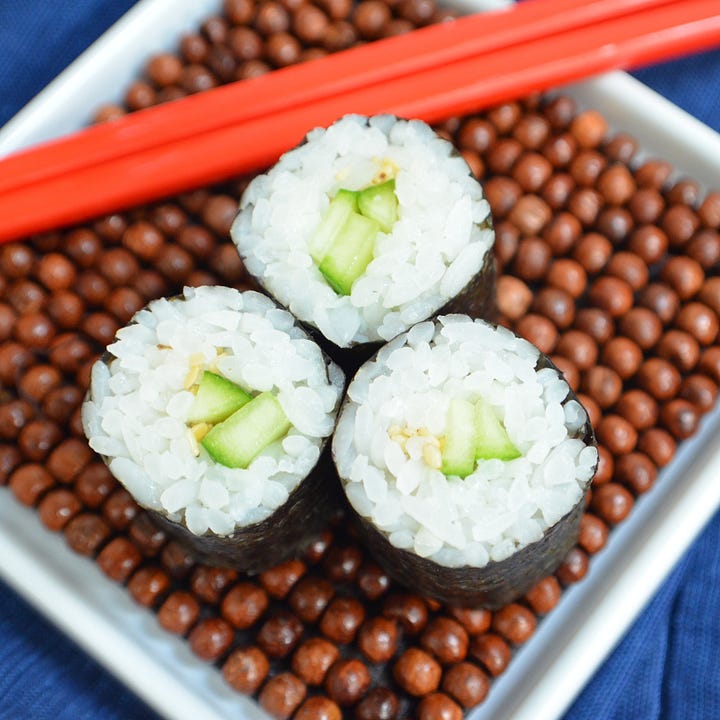
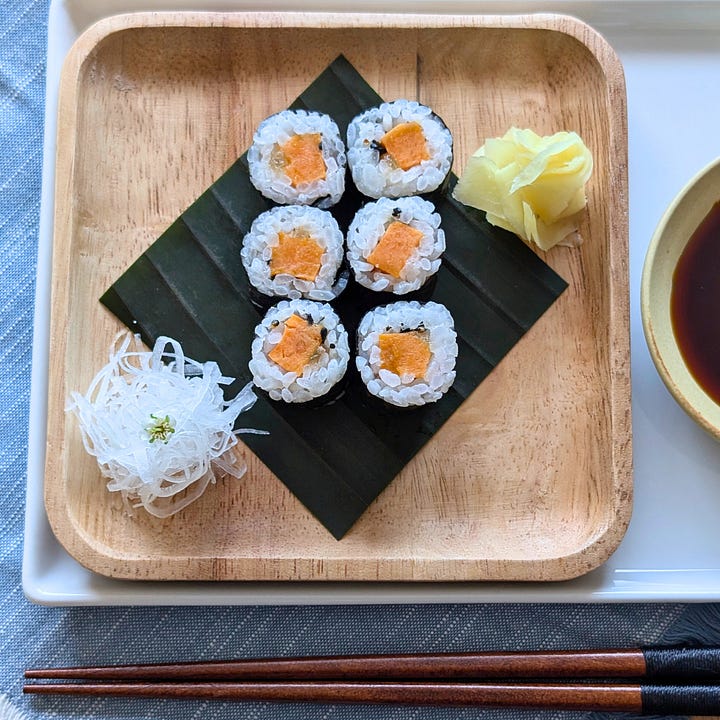
Hosomaki are slender, no-frills rolls typically made with just one filling and a minimal amount of rice, wrapped with nori on the outside. They’re clean, compact, and very traditional. Thin rolls are often sliced into six bite-sized pieces.
Despite their simplicity, hosomaki are also the most difficult type of roll to master. There’s no room to hide. Every element from the tightness of the roll to the balance of rice and filling has to be just right. These rolls rely on restraint: the point isn’t to dazzle with volume, but to let one ingredient shine.
Examples include Kappa Maki (cucumber), Ume Shiso Maki (pickled plum paste and shiso), and Tekka Maki (tuna).
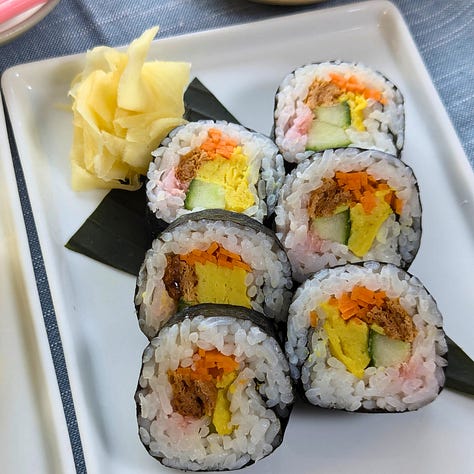
Futomaki – The Thick Roll
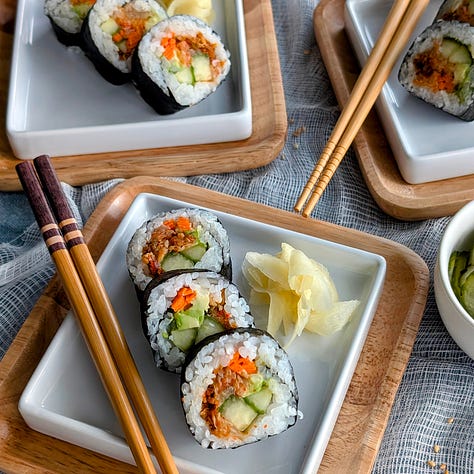
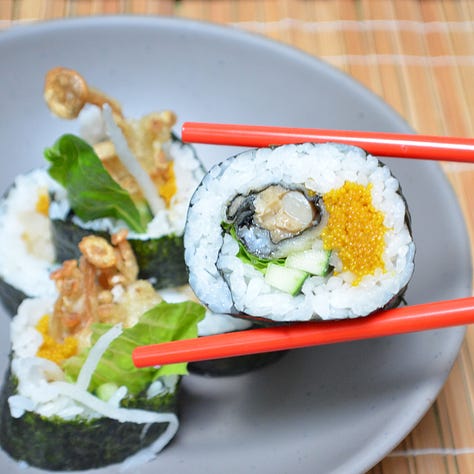
Futomaki are thick rolls. They are hearty, colorful, and usually filled with five to seven ingredients (though as many as nine isn’t unheard of!). These rolls feature the nori on the outside, which helps compact everything into manageable bites, even with such a generous filling. They’re typically cut into four or five pieces.
What makes futomaki special is that more really can be better. These rolls can include crisp vegetables, pickled or cooked ingredients, tamagoyaki (Japanese omelet), and sometimes even a touch of something sweet. Every cross-section is like a small edible mosaic.
Classic versions are often vegetable-based and may include fish roe or omelet. They can also get more elaborate, like the sushi bar staple Spider Roll, which includes an entire tempura-fried soft shell crab with the legs extending beyond the roll. (My plant-based version uses crispy mushroom “crab” legs for the same dramatic effect.)
If you’ve ever thought about making sushi at home, I always recommend starting with futomaki. They’re surprisingly forgiving and very easy to roll. (See my Futomaki 101 deep dive for techniques, tips, and recipes.)
Uramaki – The Inside-Out Roll
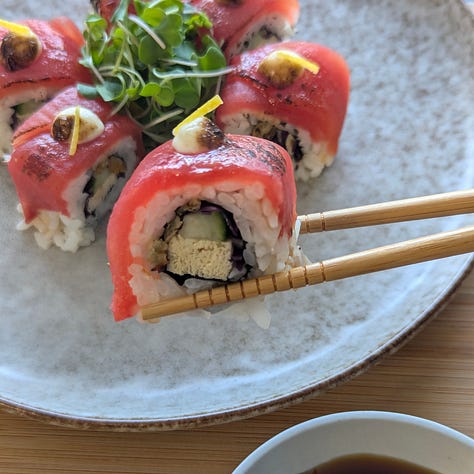
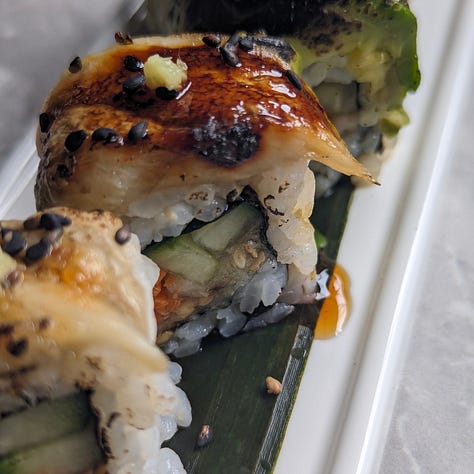
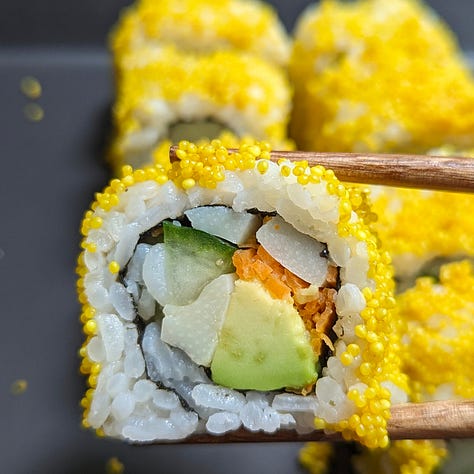
If you eat sushi in America, you’ll no doubt recognize this style. Uramaki are inside-out rolls, with the rice on the outside and the nori wrapped around the filling inside. These rolls are typically cut into six to eight pieces and have become a staple at most sushi bars.
Uramaki often include about three ingredients to maintain structure. What makes these rolls so fun is their ability to be topped with flavorful, eye-catching ingredients. Thin slices of avocado, fruit, caviar, or crunchy tempura flakes add color and flavor without compromising the roll’s integrity.
Examples include California Rolls, Spicy Tuna Rolls, Caterpillar Rolls, and nearly every creatively named roll on your local sushi menu. (Here’s looking at you, Godzilla Rolls.)
Temaki – The Hand Roll
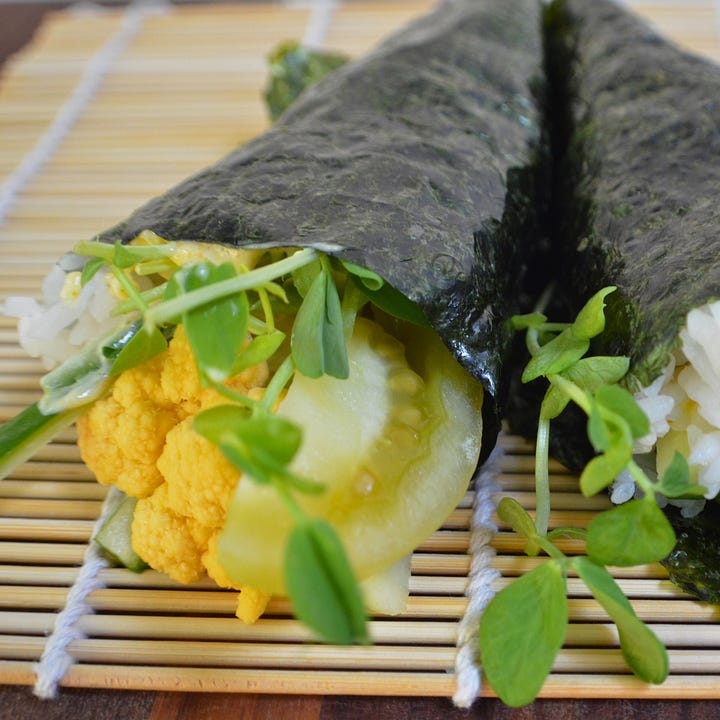
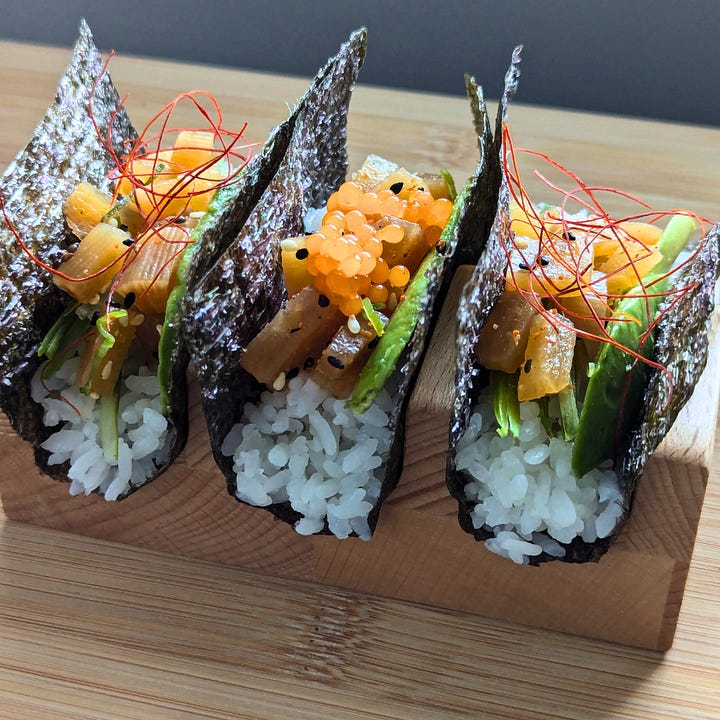
Temaki are sushi simplicity: roll, eat, repeat. As the name implies, these rolls are shaped entirely by hand. No bamboo rolling mat is involved. The sushi chef layers rice and toppings onto a sheet of nori and rolls it into a loose cone or cylinder, depending on the style. No slicing, no bite-sized pieces. You simply pick it up and eat it as-is.
Hand roll styles vary. When I was trying to make hand rolls a thing at my first sushi job, the classic cone style was the standard. These days, at the cool kid hand roll bars, you’ll often see them served open-faced, like sushi tacos. (Still mildly jealous.)
There’s no strict ingredient count, but temaki are especially well suited to fillings that might get soggy or fall apart in a cut roll. Think saucy ingredients that seep or crispy components that snag during slicing. Hand rolls are meant to be eaten immediately. Nori loses its crispness fast, and half the joy of a hand roll is a little crunch with the first bite.
Gunkan Maki – The Battleship Roll?
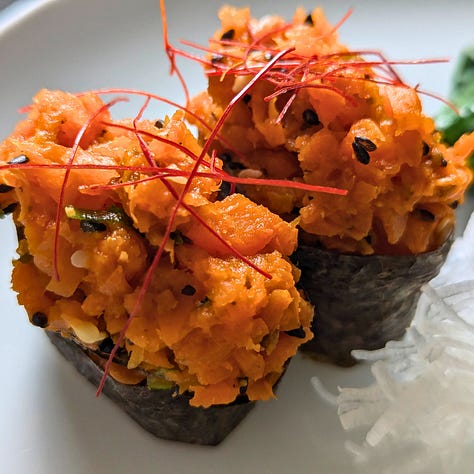
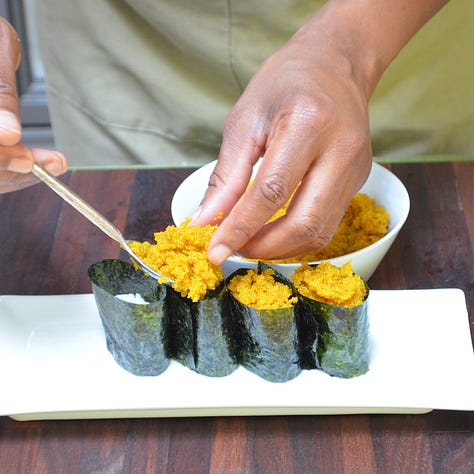
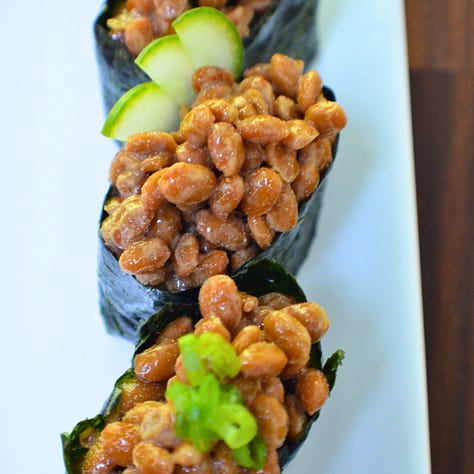
Gunkan maki, which means “battleship roll,” are named for their shape. What sets gunkan apart is the nori wrap. It creates a little wall around the rice, making it perfect for ingredients that wouldn’t hold up in a traditional roll. Examples include roe, minced seafood, or chopped vegetables.
Even though maki means “roll,” you’ll almost always find gunkan maki listed on the nigiri menu right alongside other bite-sized pieces of rice topped with a single featured ingredient.
I’d love to hear from you. Which of these styles have your tried? And do you have a favorite?
No posts
Comments
Nothing yet. Say the first thing.
Sign in to join the conversation.