
Tell me if this has ever happened to you. You stumble across a recipe concept and suddenly you’re down a rabbit hole of Instagram photos, YouTube videos, and blog posts, wondering how you ever lived without it.
That was me a few years ago with eggplant unagi, a veggie-friendly take on eel cooked in a sweetened soy sauce glaze. At the time, I was looking for something else to do with eggplant besides baba ghanoush. (I ADORE baba ghanoush!) I had been keeping kosher for years, so it felt like ages since unagi even crossed my mind. Before that, unagi was something I made and enjoyed almost every week. The idea of bringing it back to my table in vegetable form was exciting. Very exciting.
So I stocked up on different varieties of eggplant, grabbed my notebook, and started experimenting. Turns out, it was simple to make and absolutely delicious. It doesn’t taste exactly like the real thing, but it certainly scratches the same salty-sweet itch. What delighted me most was how seamlessly it worked in sushi. Nigiri. Rolls. Hand rolls. You name it. I just wish you could have seen me happy dancing across the kitchen. Blow torch in hand, I was caramelizing those glossy slices just like I used to with unagi behind the sushi bar.
Keep reading to learn how to make it, so you can enjoy it simply over rice or with your own sushi creations.


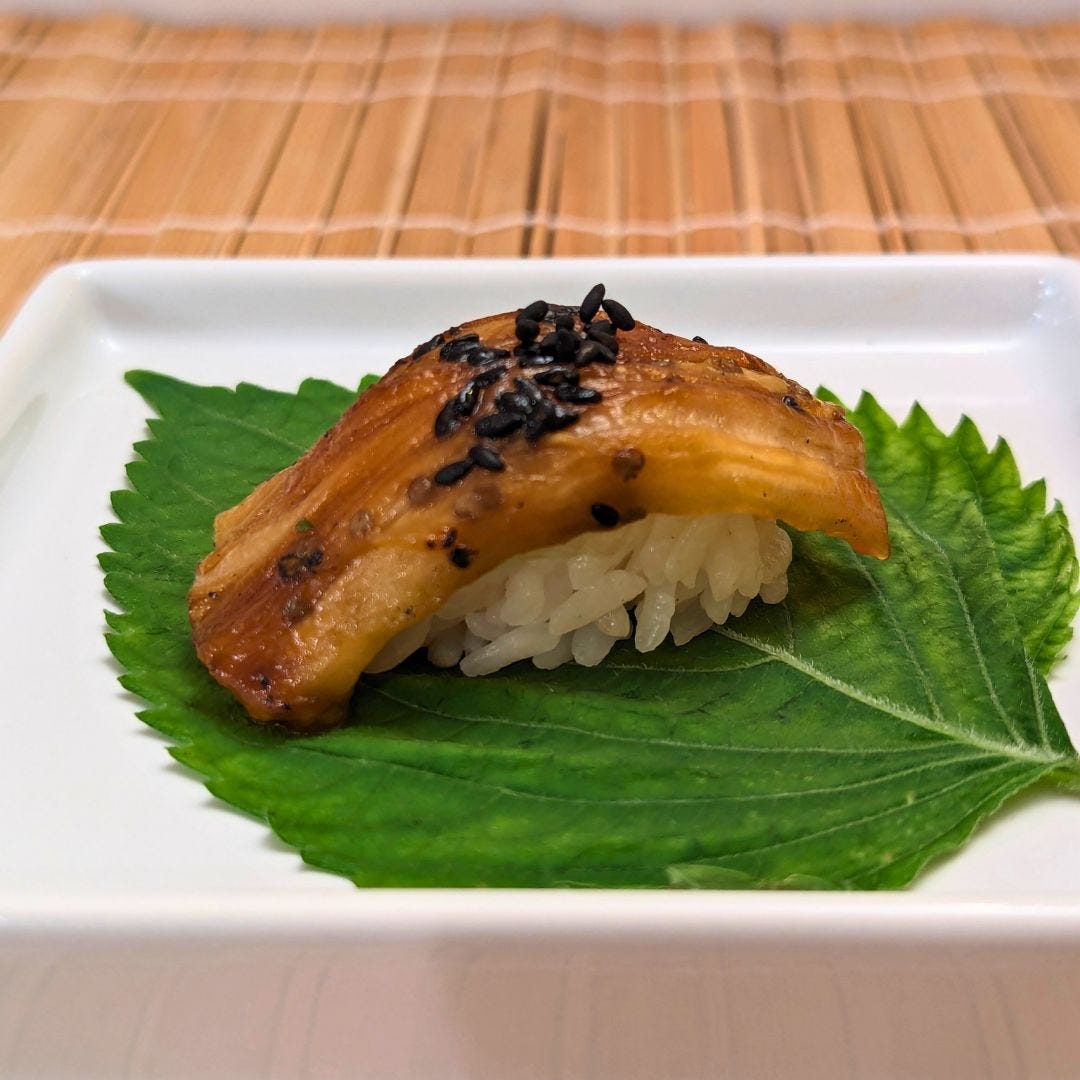
When I first experimented with this recipe, I tried just about every kind of eggplant I could find. The truth is, any variety will work here, but I especially love using Japanese or Chinese eggplants. Their slender shape gives you slices that look the most like unagi. If you’re working with larger varieties, just peel and cut them into bite-sized pieces before cooking.
Eggplant Unagi (Serves 2)
Ingredients
2 Chinese eggplants, peeled and sliced on the diagonal into ¼-inch pieces*
¼ cup soy sauce or tamari
2 Tablespoon sugar
¼ cup water or kombu dashi
2-3 teaspoons neutral oil (just enough to coat the pan)
*If you’d like to serve the eggplant whole (for rice bowls, for example), simply butterfly it lengthwise instead of slicing.
Method
Cook the eggplant. Heat a little oil in a skillet over medium heat. Add the eggplant and cook until it’s tender all the way through. (You’re softening it here, not frying for crispiness.)
Make the glaze. Stir together soy sauce, sugar, and water in a small bowl.
Glaze it. Pour the mixture into the pan with the eggplant. Let it bubble and reduce for about 1 minute, turning the eggplant so every piece is coated.
Serve. The eggplant unagi is best enjoyed warm.
Serving Suggestions
Serve the eggplant unagi over hot rice for a simple, comforting bowl. For extra flavor, drizzle with sauce. (You can use the leftover pan sauce for drizzling, or use store-bought unagi sauce. Despite the name, many brands like Kikkoman don’t actually contain eel.) Finish with a sprinkle of sesame seeds and scallions if you like.
The glazed slices also make a great filling for sushi rolls or a topping for nigiri. Cucumber and avocado pair very well with eggplant unagi.
Storage and Reheating
Eggplant unagi is best enjoyed the day it’s made, but you can keep leftovers in the fridge for up to 1 day. Beyond that, the eggplant tends to get too soggy. For the best texture and flavor, reheat before serving. A toaster oven works wonderfully; heat the pieces just until warmed through and a little crisp on the edges.
And if you feel like being a bit extra…
Inside-Out Sushi Rolls: Place slices of eggplant unagi on top of your rolls. Drizzle with sauce and hit it with a blow torch. Chef’s kiss!
Nori Accent: For extra texture (and a look that mimics the skin side of unagi), tuck a strip of nori the same size as your eggplant unagi against one side just before serving.
I enjoyed plenty of this eggplant unagi simply over hot rice with a sprinkle of sesame seeds. But the sushi chef in me couldn’t resist pushing it further just to see what all it was capable of. Here are some of the creations that made it to the table.
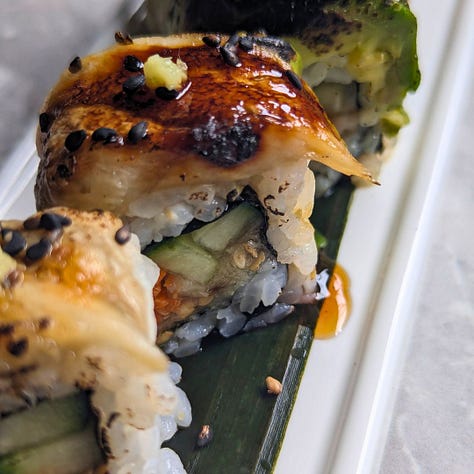
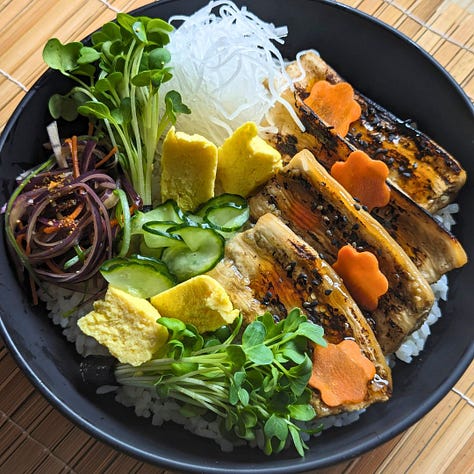
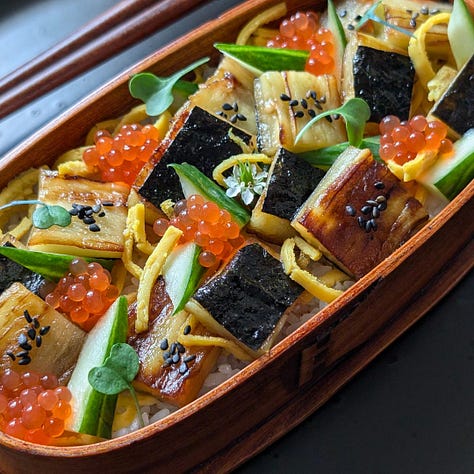
Left: Sushi rolls filled with cucumber, carrot, and eggplant unagi. For fun, I topped them with avocado and more eggplant unagi, then gave them a quick blast with the blow torch.
Center: A modern sushi bowl with eggplant unagi, carrots, shredded daikon, daikon sprouts, quick-pickled cucumbers, plant-based egg, and a little eggplant skin salad.
Right: A chirashi sushi bowl with eggplant unagi, cucumber, plant-based egg shreds, and ponzu carrot “caviar.”
I’d love to know if eggplant unagi makes you do a little happy dance, too. How would you serve it up in your kitchen?
No posts
Comments
Nothing yet. Say the first thing.
Sign in to join the conversation.