
Having been on a cooking competition show, one of the most common questions people ask me is “Is the time clock real?”
Oh, yeah. It’s real. Very real.
But before going on Morimoto’s Sushi Master, I wasn’t 100% sure yet if the time clock was real. To err on the side of caution, I decided to test out how much time I could shave off a few of my go to recipes. I guess you could say it was practice drills of sorts.
This, by the way, is the exact opposite of my favorite mode in the kitchen, which is to take my time to experiment and develop new things. I had recently developed a version of the then-viral Japanese-style sweet potato creme brulee: a roasted sweet potato topped with a shattering layer of caramelized sugar, giving way to a silky custard beneath. And I desperately hoped I’d get a chance in a challenge to make one.
But was that really feasible? Normally, that recipe could take up to an hour. Turns out, with a microwave and a few tweaks, I was able to shave it down to 12 minutes. So I was confident I could pull that out of my back pocket if a chance presented itself.
That chance came during the bento box challenge, where I ended up featuring the sweet potato as the dessert element. And just like the infamous time clock, I suspect there are other little tricks producers use to dial up the drama. Case in point: the microwave, which in every challenge before had lived conveniently close to my station, was suddenly and very mysteriously relocated to the far end of the sound stage the moment I grabbed sweet potatoes. I found myself sprinting back and forth, weaving between cameras, jumping over cords, and dodging other contestants just to get to it, all while trying to keep the rest of my station under control. By the time my potatoes were done, I was in a full sweat. Just thinking about it still raises my heartbeat.
In the end, my sweet potato creme brulee turned out just as I had planned. (Pats self on back.) Some of the judges’ positive commentary, which unfortunately didn’t make it into the final cut, had a few cast mates asking what did I do with those sweet potatoes?! So I made a batch back at the hotel for everyone to try.
Post-show, I reimagined the recipe into a plant-based version. What I love is that it still has all the flavor notes and balance of the original: a humble sweet potato shell holding a silky custard subtly flavored with vanilla, a touch of ginger, and the tiniest hint of mandarin. And while you won’t be dashing across a soundstage or racing the time clock, you can still create these delicious sweet potatoes in surprisingly little time.
Want to try it yourself? The recipe’s just below.

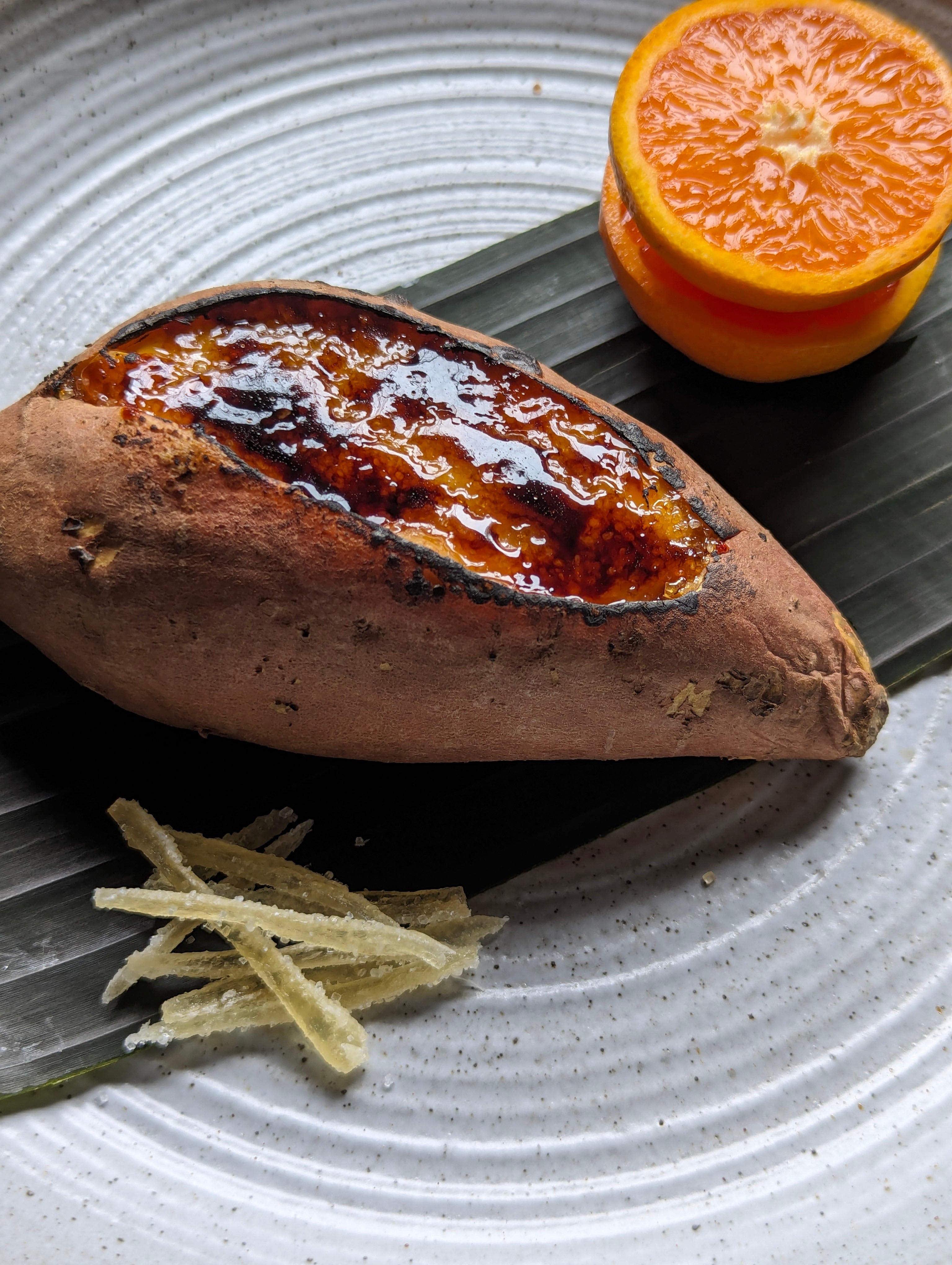
At first glance, a Japanese sweet potato creme brulee looks like a simple roasted sweet potato with a charred top. But once you dig in, you find the shell holds a silky custard that’s subtly sweet and fragrant.
Most recipes for this dessert create two layers: the custard on top, and the sweet potato below. I prefer to fold some of the sweet potato flesh into the custard itself. The result is a smooth, cohesive bite where the sweet potato flavor comes through naturally and doesn’t feel separated from the custard. My version also differs in its flavoring: instead of just vanilla, I use a little freshly grated ginger and mandarin orange zest to enhance the custard.
If you don’t have access to Japanese sweet potatoes, making this dessert isn’t off the table. While their slight natural sweetness and dense texture are wonderful here, you can make this with just about any sweet potato variety you like. When I can’t get my hands on Japanese sweet potatoes, I sub local sweet potatoes. And they work just beautifully.
Japanese Sweet Potato Creme Brulee
Makes 2
Ingredients
2 medium Japanese sweet potatoes, cooked whole with skin intact
¼ cup cornstarch
⅓ cup sugar
1 cup coconut milk
1 teaspoon orange zest (Mandarin is my favorite, but any variety works.)
1 teaspoon freshly grated ginger
1 teaspoon vanilla extract
For caramelized topping: 2 teaspoons sugar (I like to use turbinado sugar.)
Method
Cut the tops off the cooked sweet potatoes and hollow out the centers, leaving about ¼ inch of flesh intact. Hang on to ¼ cup of the scooped-out sweet potato for the custard. (Save the rest for something else!)
In a heatproof bowl, whisk together the cornstarch, ⅓ cup sugar, and coconut milk until smooth. Stir in the orange zest, grated ginger, and vanilla extract.
Set the bowl over a pot of simmering water to create a double boiler. Stir constantly until the mixture thickens to a pudding-like consistency.
Blend the reserved ¼ cup sweet potato into the custard until completely smooth. Spoon the custard into the hollowed sweet potato shells.
You can move to the next step right away, or cover and chill the filled potatoes in the refrigerator for up to 1 day before serving.
Just before serving, sprinkle the tops with about 1 teaspoon sugar each. Caramelize with a kitchen torch until golden and crackly, or place under the broiler at 500°F for 1–2 minutes, watching closely to avoid burning. Serve immediately.

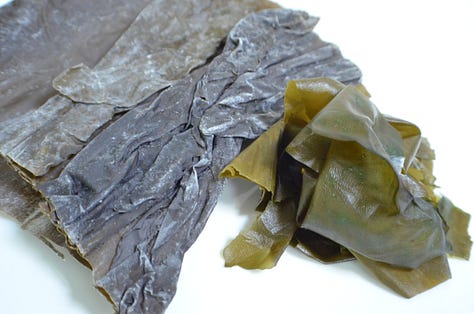
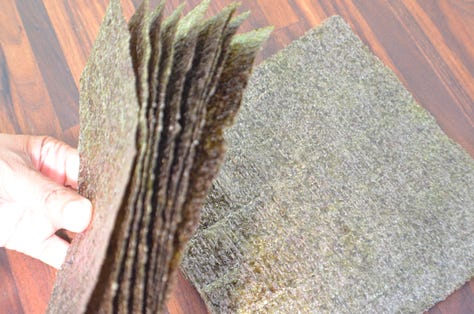
The September Bonus Edition, coming Sunday, September 21st, is all about seaweed! We’ll dive deep into Japanese seaweed, looking at 5 common varieties: what they are, how to use them, and the best ways to store them. You’ll also get a downloadable PDF with recipes for each type, so you’ll have a handy guide to keep in your kitchen.
Dear Sensei Bonus Editions are my gift to readers, but soon they’ll be available only to paid subscribers. If you’d like to support my work and keep enjoying extras like this, consider pledging your support today.
No posts
Comments
Nothing yet. Say the first thing.
Sign in to join the conversation.