
It’s no secret that I’m just a little obsessed with making my own furikake, or Japanese rice seasoning blends. At any given time, you’ll find at least 3 versions hanging out in my pantry. In previous posts, I’ve walked through the basics of furikake (tucked at the end of this sushi school story) and shared a corn version inspired by a summer trip to Whidbey Island.
And then there’s dessert furikake…
This version is a little unconventional, a little playful, and a fun little experiment I kept to myself until last year, when my friend Kevin let me convince him to host a vegan dinner at his newly opened restaurant, Kitchen Laurel.
Kevin, by the way, is a chef in Memphis, TN and one of my closest friends. We go back more years than I care to admit. We met when I was a pastry cook saving for sushi school and he was scrubbing dishes as a teenager. Over the years, he earned his stripes all the way to chef and restaurant owner. I can’t count the gigs, ideas, and kitchen (mis)adventures, many of them sushi-related, we’ve shared since. (Remind me to tell you about the time I convinced him to move to Mississippi and help me open a hotel sushi bar.)


So naturally, when I floated the idea of a vegan dinner at his new place, he agreed. The veggie-forward part was an easy sell. Who doesn’t love well-prepared vegetables? Kevin even pointed out that some of his favorite restaurants served vegetable sides that were often better than the entrées. I had to agree with him there.
But the idea of ending our spectacular meal with a vegan dessert took more convincing. “Vegan dessert?” Kevin groaned. “Risa, this can only go one of two ways: It’s either gonna be really good, or it’s gonna be something we talk about - one day.” And by one day, he meant long after we’d recovered from the trauma. He was leaning toward the latter and suggested we might be better off calling it a vegetarian dinner. We could always charm people with a sweet send off filled with butter, eggs, and cream.
I tuned it all out. Because in my mind, I could already taste my “told you so” moment.
So I pulled out all the stops: an elegant sweet potato tart, bananas caramelized in Japanese whisky (Suntory, to be precise) with a touch of miso, which I froze and spun into a dreamy vegan ice cream (the dairy-free kind often called “nice cream”). Then I drizzled everything with soy sauce caramel and finished it off with a hefty sprinkle of the experiment I’d been keeping under wraps: dessert furikake.
Kevin watched curiously as I lined up little containers of each component and plated a dessert just for him. I wanted him to taste every layer: the tart, the whisky-miso ice cream, the soy sauce caramel, and finally, the (very dramatic) sprinkle of dessert furikake over the top. He took a taste, nodded, and immediately went in for another bite. Told you so moment achieved.
But honestly, it was the dessert furikake that stole the show. We couldn’t stop talking about it or sneaking handfuls straight from the container. We even started tossing around ideas like how we might use it in other desserts, or the many variations we could dream up.
Ever since, dessert furikake has simply become another welcome addition to my furikake obsession. Curious? Read on for the recipe and ideas for making it your own.


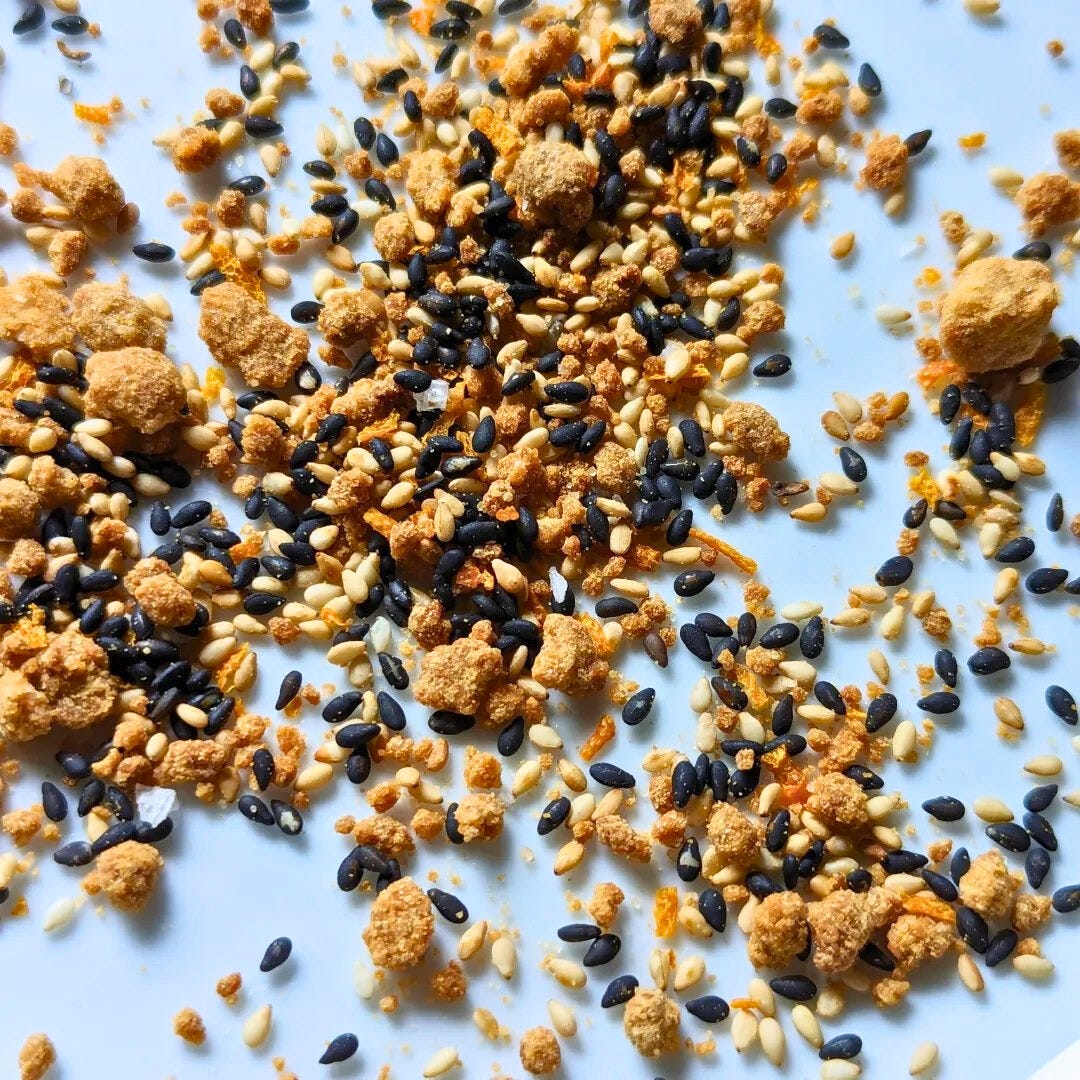
Classic furikake usually starts with seasoned seaweed mixed with sesame seeds, salt, and sugar. It’s an umami-packed sprinkle meant for rice, noodles, vegetables, or anything that needs an instant flavor boost. My first experiments with dessert furikake included a sweetened seaweed base, but in the end, a blend with a purposeful dessert anchor turned out to be my favorite.
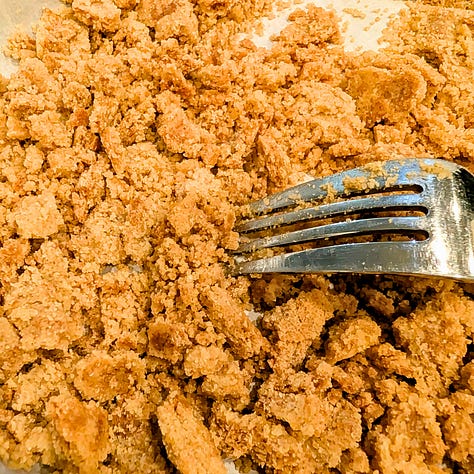
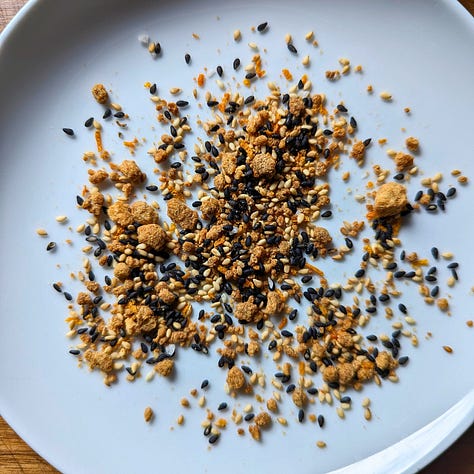
That anchor was crunchy kinako crumbles: golden bits made from roasted soybean flour, baked until crisp, and broken into small, toasty nuggets. Seasoned with a touch of soy sauce, they bring a balanced sweet-and-savory flavor that sets the tone for the whole blend. From there, I toss the crumbles with dried orange zest and much of what you’d expect in a classic furikake mix:
Black sesame seeds
White sesame seeds
Flaky sea salt
Coarse sugar
And that’s just the base. If I’m in the mood for something sweeter, I’ll toss in white chocolate shards. If I want a little bite, I’ll toss in some crystallized ginger. Each tweak gives the mix a new personality and can turn something as simple as a bowl of ice cream or a piece of fruit into something that feels much more special.
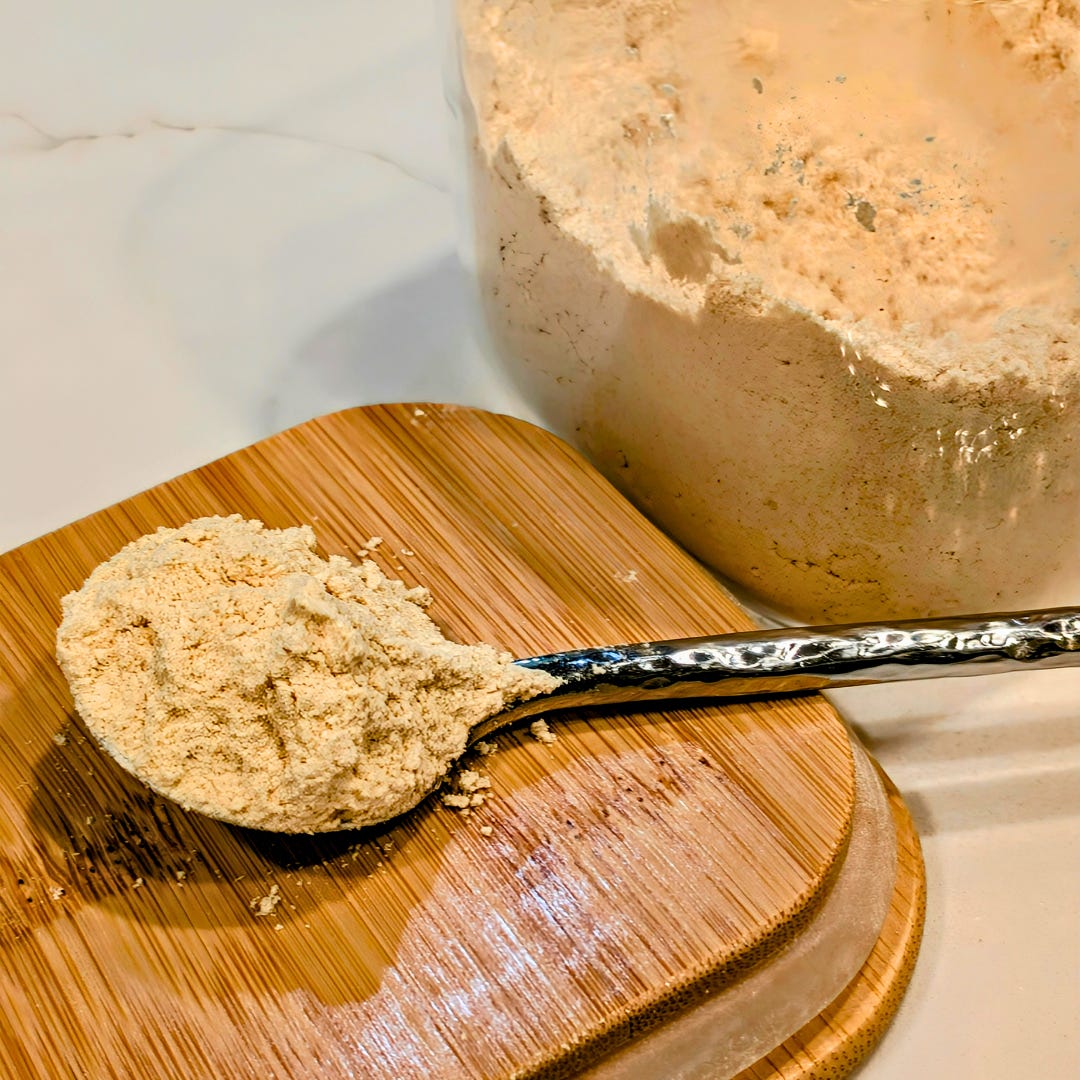
Kinako is roasted soybean flour, which means (unlike standard flour) it can be eaten raw. The flavor reminds me of a mix of toasted sesame seeds with a slight peanut undertone and browned butter notes. It’s often used in sweets: dusted over mochi, blended into drinks, or swirled into cookies and cakes.
And yes, since it’s made from soybeans, it’s naturally gluten free.
You can find kinako in the baking section of Japanese or Korean markets, or online.
A note on baking with kinako
When used for baking, kinako works best when mixed with other flours. As a general rule, replace up to ¼ of the all-purpose flour in your recipe with kinako for extra flavor and a tender crumb. In the recipe for dessert furikake, I use equal amounts of kinako and all purpose flour. This works because we’re making crumbles but I don’t recommend this ratio for other applications.
Once you’ve made the kinako crumbles, the rest of the dessert furikake is as simple as stirring everything together. The amounts listed are just a guide. Feel free to add more of what you love or scale back on what you don’t.
Step 1: Make the Kinako Crumbles
Ingredients
¼ cup kinako (roasted soybean flour)
¼ cup all-purpose flour (or 1 to 1 gluten-free baking flour, if needed)
¼ cup sugar
2 Tablespoons neutral oil (such as avocado or canola)
2 teaspoons soy sauce (or tamari, if gluten-free)
pinch of salt
Instructions
Preheat oven to 325°F. Line a baking sheet with parchment.
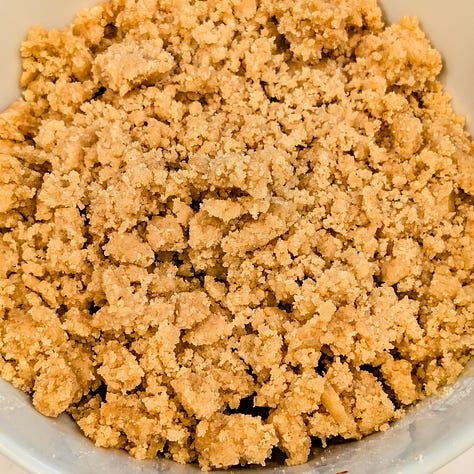
In a medium bowl, whisk together kinako, flour, sugar, and pinch of salt. Drizzle in oil and soy sauce, then mix well. The mix will be somewhat dry and you may need to use your hands to get it mixed well. When given a squeeze, the mixture should form loose clumps.
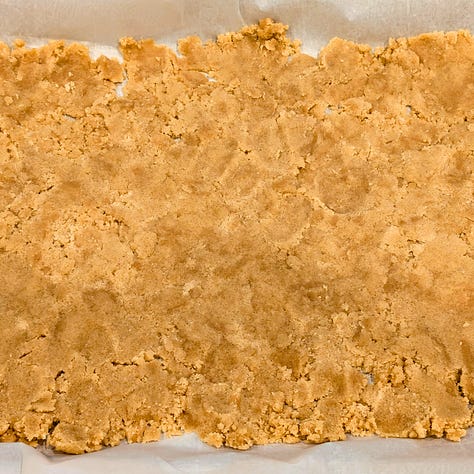
Spread thinly on the prepared baking sheet. It doesn’t have to be perfect. The key is to spread it so that you’ll have pieces to break up.
Bake for 15–18 minutes, until golden and fragrant.
Cool completely, then break into small pieces. (A fork works great.)
Step 2: Make the Mix
Ingredients
For every cup of kinako crumbles (from Step 1)
1 teaspoon dried orange zest
1 ¼ Tablespoon black sesame seeds
1 ¼ Tablespoon white sesame seeds
¼ teaspoon toasted sesame oil
2 Tablespoons coarse sugar
1 teaspoon flaky sea salt
Optional add-ins
Start with about 1 tablespoon of any add-in and adjust to taste. Try one, or mix and match:
White chocolate shards
Crystallized ginger
Freeze-dried strawberries or raspberries (crushed)
Cocoa nibs
Toasted coconut flakes
Candied nuts (finely chopped)
Dried fruit bits (like apricot or mango)
Or any other flavor tweak you’re craving
Instructions
In a medium bowl, toss together the kinako crumbles, zest, sesame seeds, sesame oil, salt, and sugar.
Add optional extras if desired. Taste and adjust as you like.
Store in an airtight container at room temperature for up to 1 week.
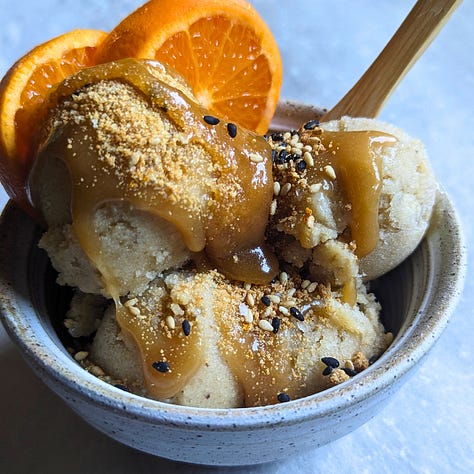
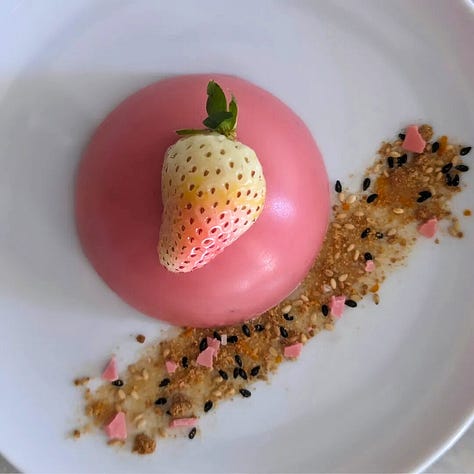
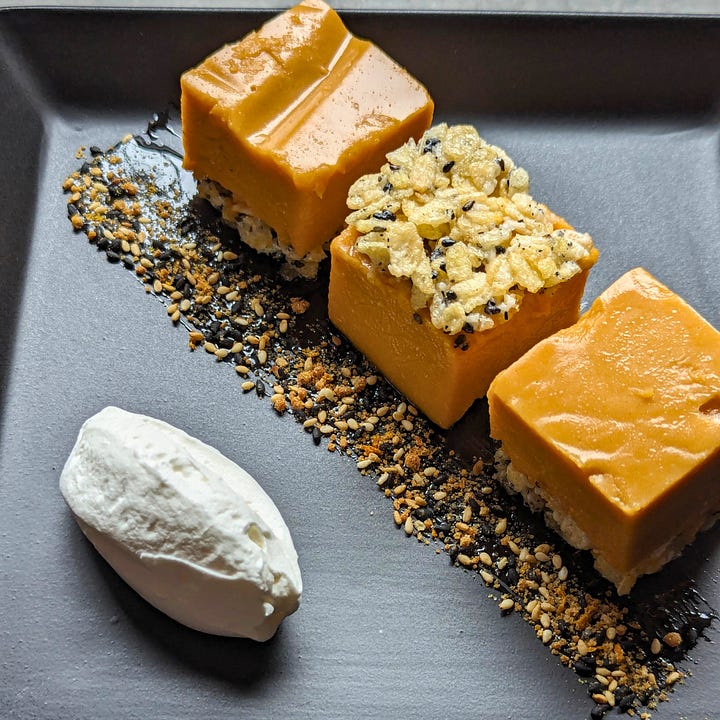
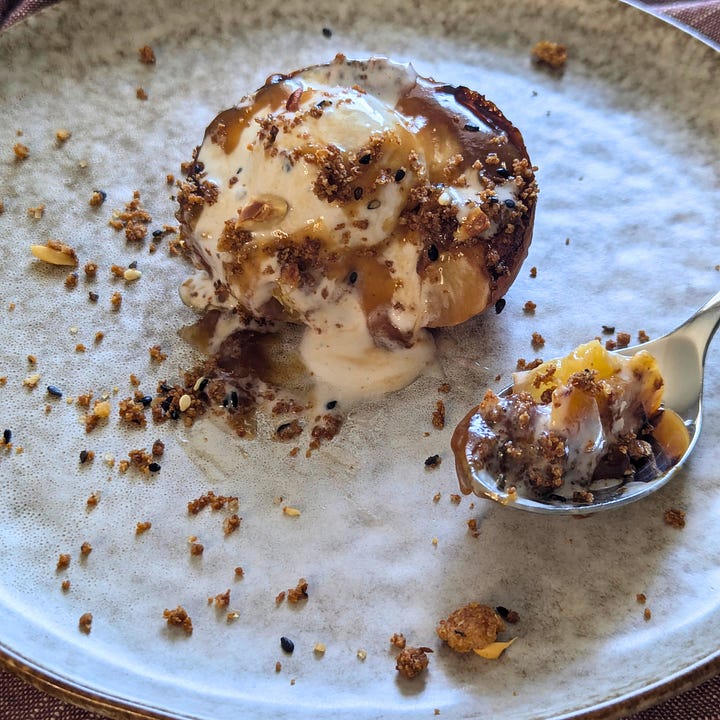
More often than not, I just end up eating little handfuls of this straight from the container. But my favorite way to enjoy it is sprinkled over ice cream. Here are some other ways to try it:
Rice pudding – Sprinkle on just before serving.
Fresh fruit – Any of your favorite fruit will work. I love it with banana slices.
Yogurt – It’s like a fun granola.
Cakes and cupcakes – Sprinkle on frosting.
Cookies or brownies – Press a little onto the tops before baking.
Popcorn – Toss with freshly popped popcorn.
Would you try this Dessert Furikake? Where would you sprinkle it? Share your favorite ideas in the comments. I’d love to try them.
No posts
Comments
Nothing yet. Say the first thing.
Sign in to join the conversation.