
There’s one thing I’ve always known about greens:
They take a long time to cook.
In my grandmother’s tiny Mississippi kitchen, a mess of greens (Southern for a whole lot) was a year-round staple. If they didn’t come straight from her garden, they probably arrived in an enormous garbage bag from a friend or neighbor’s harvest. Those were the ones I dreaded most. A bag like that meant spending what felt like forever on the back porch, legs dangling over the edge, pulling thick ribs from stubborn leaves. One at a time.
And once that was done, the leaves had to be washed: meticulously rinsed, swished, rinsed again. And then picked one last time. Only then would they end up in a ginormous pot that seemed to simmer nonstop for hours with a smoky bit of meat until the leaves were very tender and swimming in plenty of potlikker to be sopped up with cornbread.
This is how I’ve always known and loved greens.
Sure, I’ve had success using minced collard greens in place of cabbage for gyoza, but for the most part, I have lived by the “cook ‘em long and slow” rule.
Until recently.
If you’ve been keeping up with me this year, you know that I’ve been on a serious tsukemono (Japanese pickles) kick. Recently, while tumbling further down that rabbit hole, I came across takana or Japanese mustard greens pickled in a soy sauce brine. Not only was I fascinated by the idea of something I never thought to pickle, I couldn’t get over the fact that I could potentially process edible greens in under an hour. (Yes, I know. Raw collard wraps and salads are a thing. But I’m still on the fence about whether I’d call them edible. Probably just my Mississippi talking…)
I just had to try my hand at pickling greens. My local market didn’t have actual Japanese mustard greens, so I improvised. I grabbed a few bundles of fresh collard greens instead and very skeptically implemented a simple soy sauce quick pickling method. Less than 1 hour later, 40 minutes if we’re being exact, I was staring into a glass container of what looked to be lightly blanched collard greens.
After a bite, I was pleasantly surprised. They tasted good. In fact, they were downright delicious.
While long-simmered greens will always have a place on my table, you can bet a mess of these quick-pickled collards will be making regular appearances from now on.


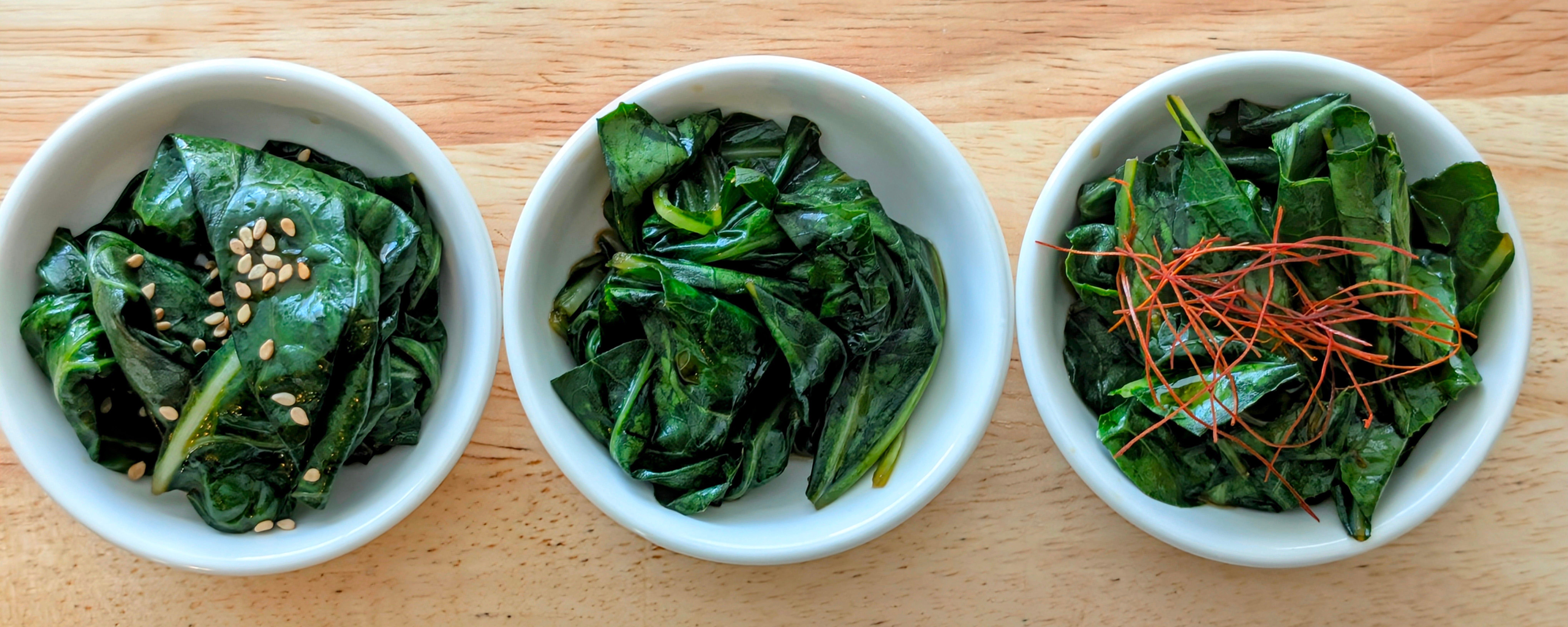
Takana is a traditional Japanese pickle made from Japanese mustard greens, preserved in a soy sauce–based brine. While soy is the base, you'll often find added flavor from ingredients like chili or sesame oil. These pickled greens are often chopped and cooked into dishes like fried rice.
While fresh Japanese mustard greens can be hard to come by, takana is often available pre-pickled at well stocked Asian markets. You’ll typically find it packaged in bags or cans, and it’s also easy to source online.
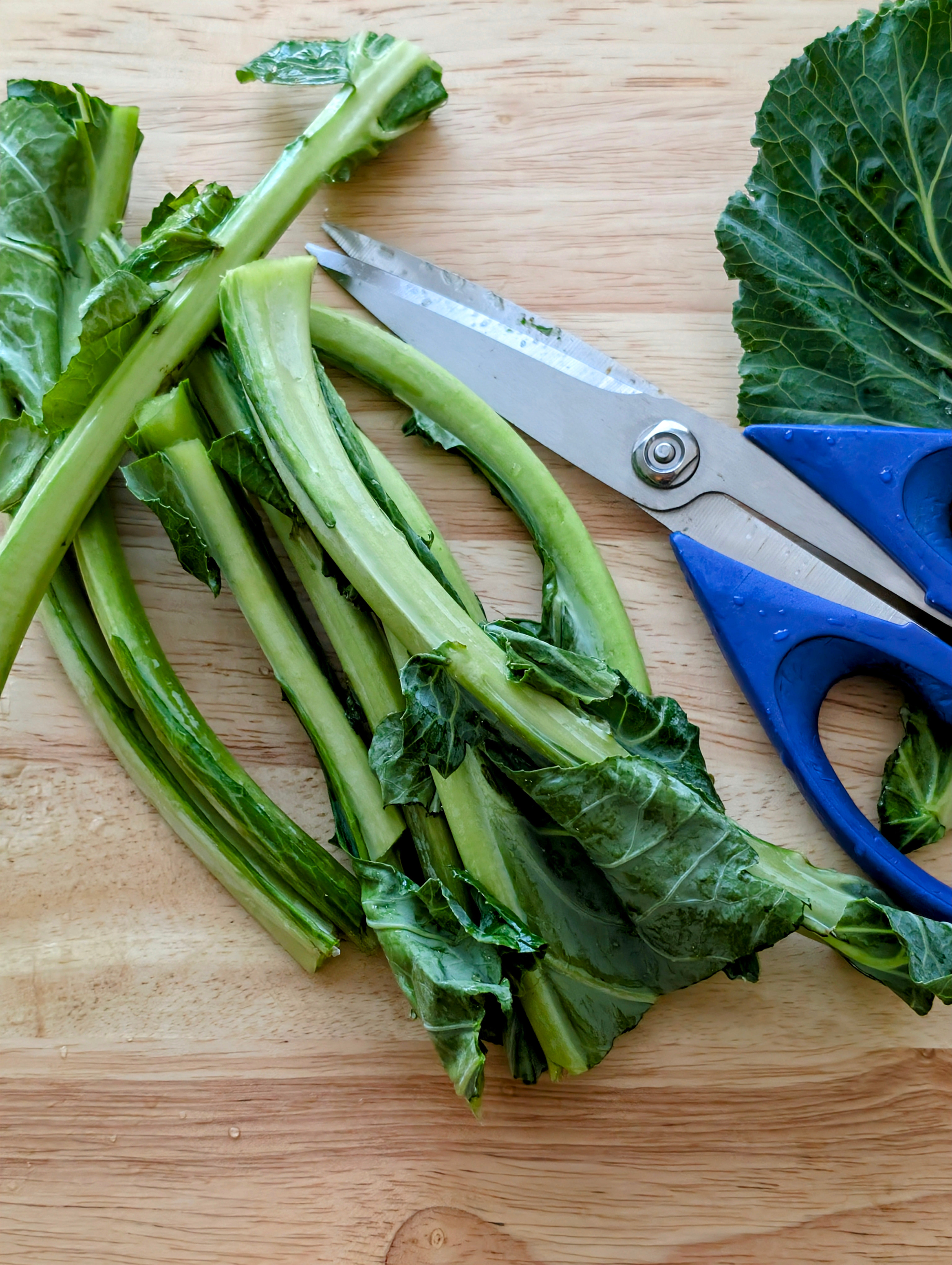
I couldn’t find fresh Japanese mustard greens, but I really wanted to try my hand at pickling greens. While Japanese mustard greens tend to be thinner and more tender, American-style greens like collards have a sturdier texture and earthier flavor. Still, they pickle beautifully. Just be sure to remove the tough center stems, which don’t soften up much in a quick process like this.
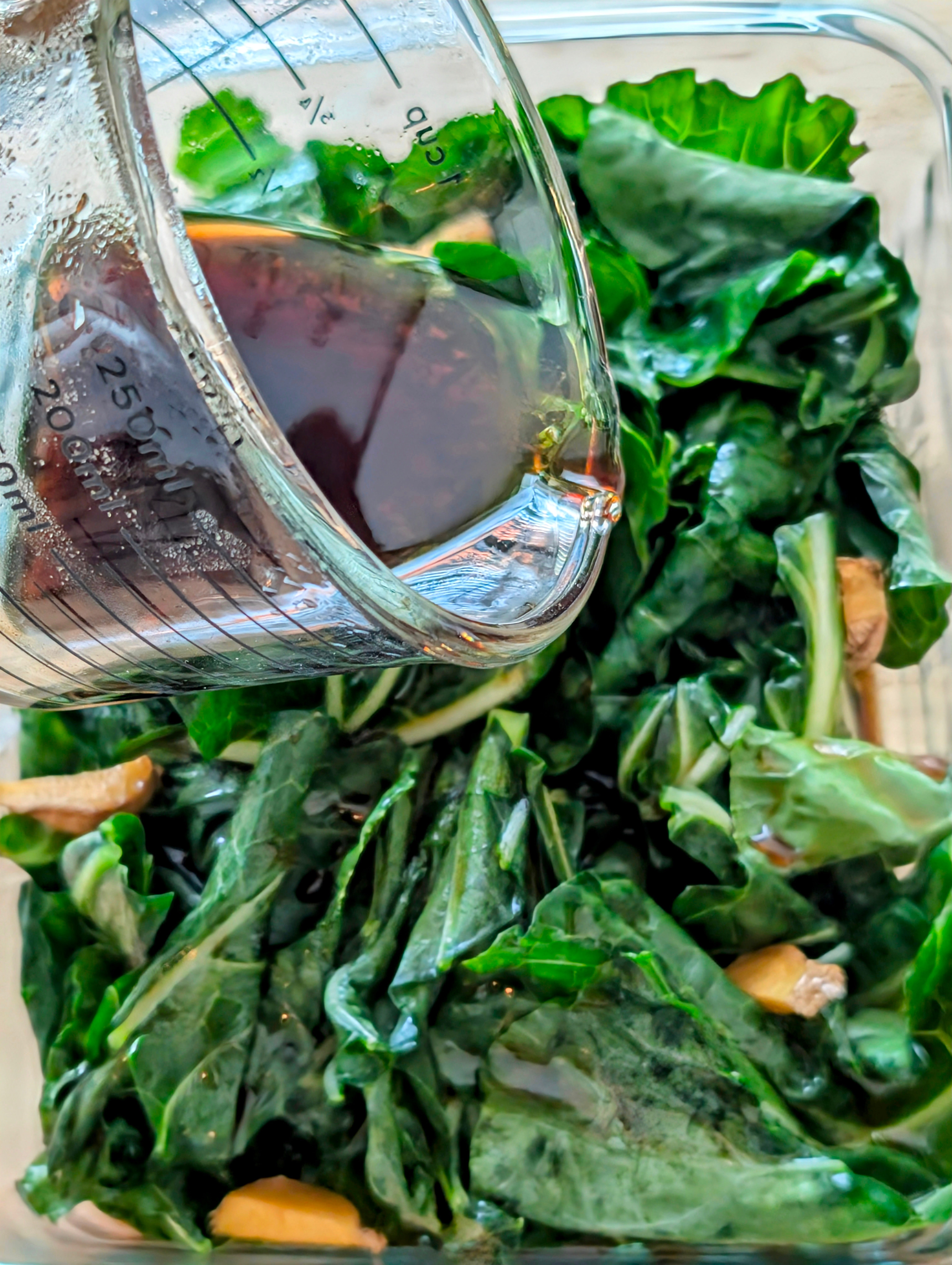
Shoyuzuke is a quick pickling method that uses soy sauce as the base of the brine. After salting the greens, all that’s required is a soak in the salty-sweet brine that seasons and tenderizes the greens in under an hour.
Good to know:
You probably already have the ingredients for the brine in your pantry. Soy sauce, rice vinegar, and sugar are all you need! If you want to spice it up, check the recipe below for optional add ins.
Because there’s no fermentation involved, these pickles need to be stored in the refrigerator and enjoyed within a few days.
Use your favorite variety of greens - mustard, collard, and even kale. Just be sure to trim away any thick stems.
By the way, the shoyuzuke method isn’t limited to greens. The same method works beautifully with sliced cucumbers, daikon, or carrots. It’s a minimal effort way to add brightness and punch to whatever produce you’ve got on hand.
This soy sauce brine is easy to scale up or down depending on how much you’re pickling. You’ll want make sure there’s enough to fully submerge your greens for even flavor and tenderizing.
1 pound bunch collard greens
1 ½ teaspoons salt
½ cup soy sauce
½ cup rice vinegar
½ cup water
¼ cup sugar
Prepare the greens:
Wash the collard greens thoroughly and pat dry. Remove the thick stems and chop the leaves. I cut mine into about 1 inch lengths, but you can chop them more if desired.Salt the greens:
Place the chopped greens in a bowl and sprinkle with the kosher salt. Gently massage the salt into the greens for about 30 seconds. (The salt should no longer be visible.) Let sit for 10 minutes. This will draw out excess moisture and begin tenderizing the greens.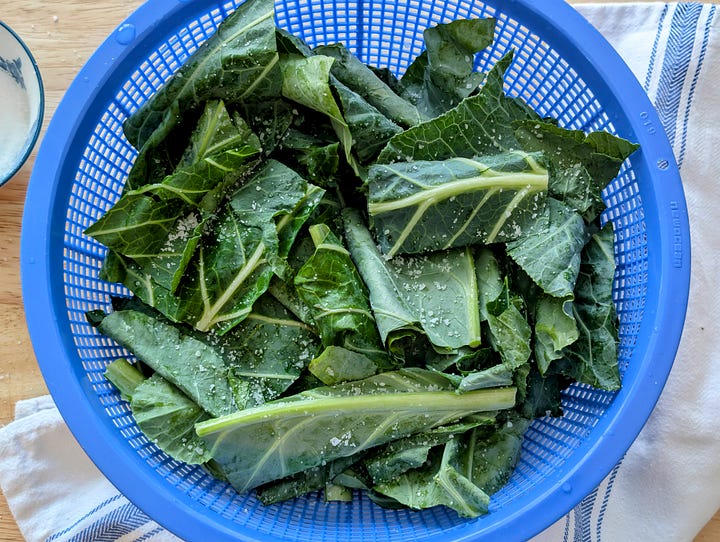
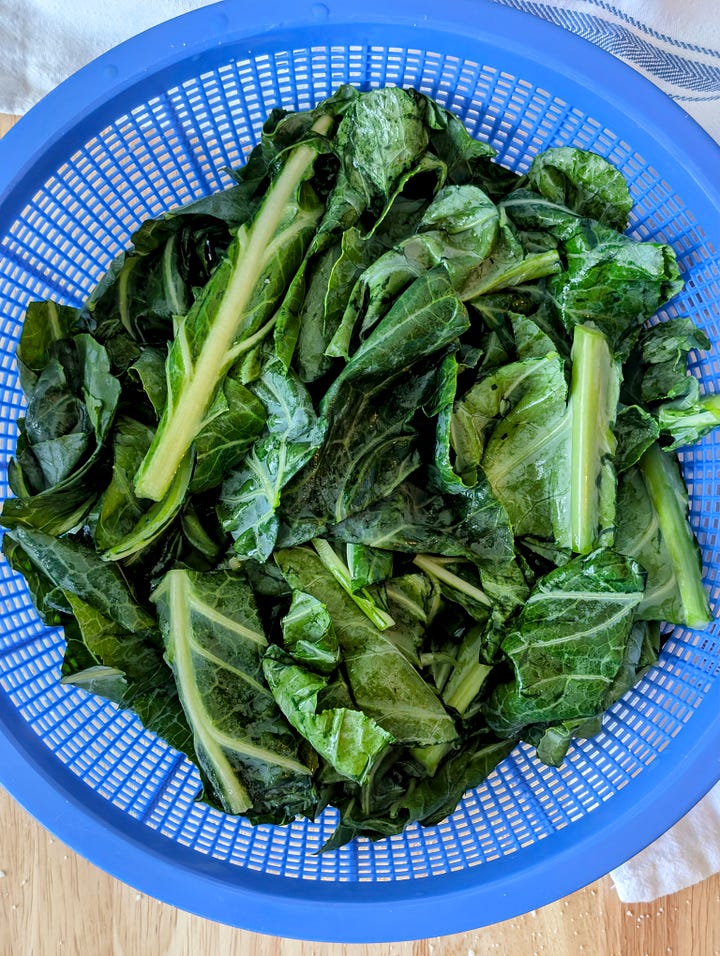
A little salt goes a long way. Left: Just salted. Right: Ten minutes later, wilted but still vibrant. Rinse and drain:
Rinse the greens under cold water to remove excess salt. Squeeze out as much water as possible and transfer to a clean non metal bowl or container.Make the brine:
In a small pot, stir together the soy sauce, rice vinegar, water, and sugar. If using add ins (see below), add those now. Heat gently and stir until the sugar is completely dissolved.Pickle:
Pour the brine over the greens. Cover and let sit for at least 30 minutes. Sitting at room temperature is fine for up to 45 minutes. After that, you’ll want to place them in the fridge. Enjoy room temperature or straight from the fridge.
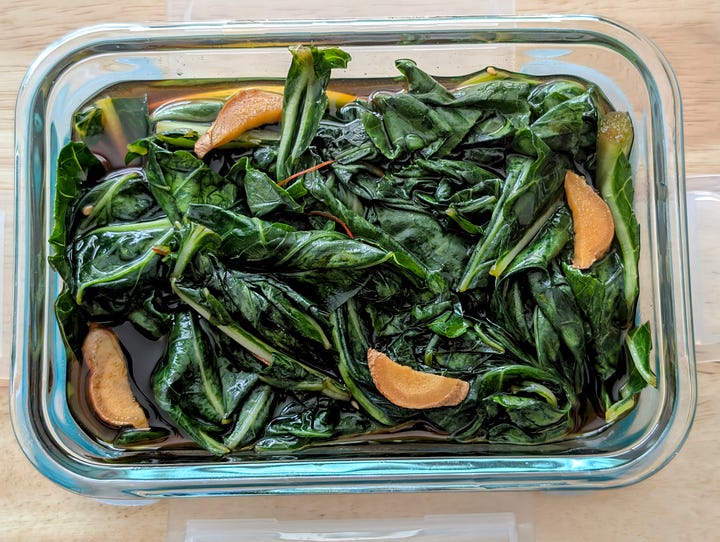
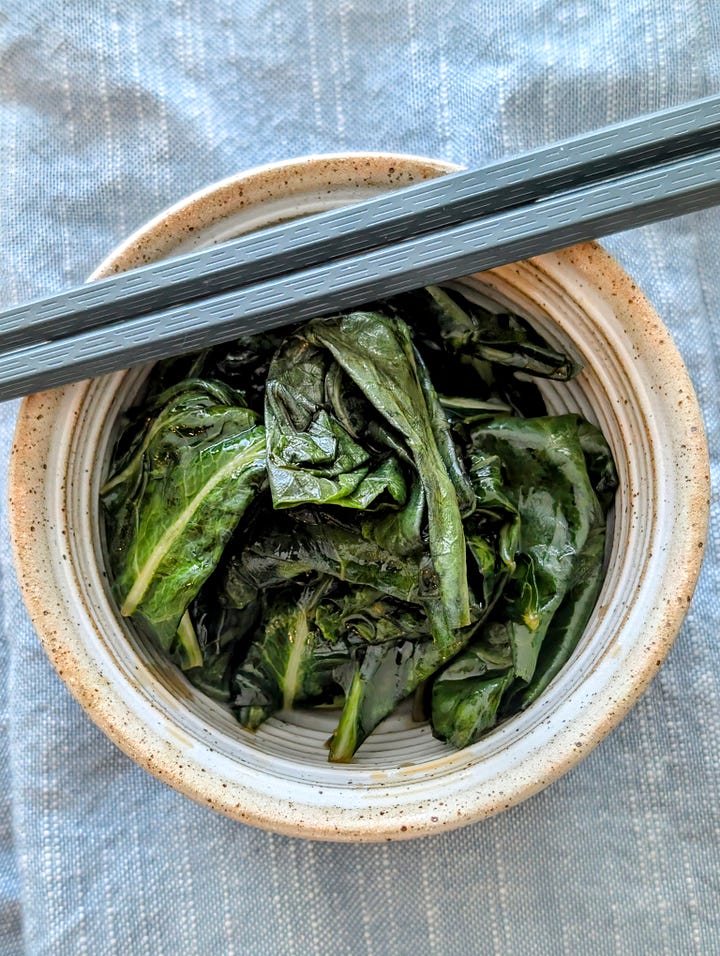
All it takes to customize your pickles is to add an aromatic or two to your brine. Ginger and garlic are my favorites. Try stirring in one or more of the following when preparing the brine:
Slices of fresh ginger
Cloves of garlic, smashed
A small dried chili pepper or a pinch of red pepper flakes
A strip or two of citrus zest (Orange is very nice.)
A teaspoon (or more to taste) sesame oil
Let the add-ins steep in the brine for a few minutes before removing them, or leave them in for a more pronounced flavor.
So far, I’ve been mostly eating these straight from the container. I’ve also been topping small bowls of them with sesame seeds and a little chili for a quick, flavorful bite. But there are plenty of other ways to enjoy them:
Serve as a side dish with rice and your favorite protein.
Stir into miso soup for an unexpected, tangy pop.
Chop and use as a filling for onigiri.
Sauté into fried rice or stir-fries.
Have you ever tried pickled greens? What would you add to your brine? Ginger? Garlic? A little heat? I’d love to know!
No posts
Comments
Nothing yet. Say the first thing.
Sign in to join the conversation.