
Last Sunday I forayed into Eton through the dreary damp and dank and was greeted by the flat red brick standing stern against the grey. Head down, I scurried through the rain and the big wooden door of the museum, feeling like a bit of an impostor. Once inside, rather than boys in tailcoats I found lots and lots of families with toddlers. The museum is only open to the public on Sundays, from 14:30 - 17:00. It was founded in 1875 by the Science Masters, and an information board by the entrance tells me that in those days it was simply referred to as ‘The Boy’s Museum’. In fact, the first thing the museum greets me with is a series of panels about Etonian men, each telling me what’s what and how great they are. Some, like John Bennet Lawes, don’t seem to have anything to do with the museum. Still, he flanks the entrance and tells me he invented fertiliser. Bully for Lawes.
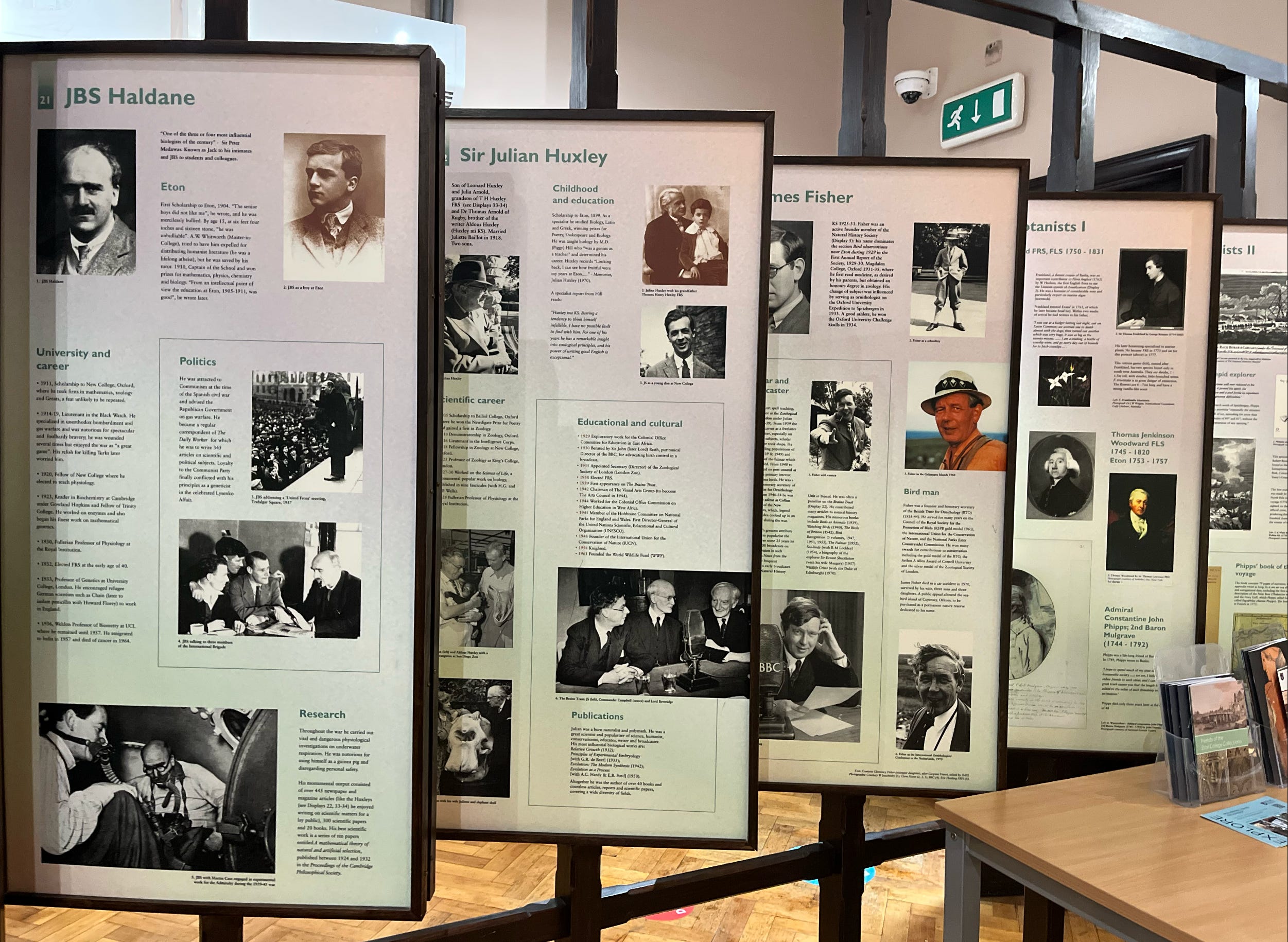
I wonder what it’s like to walk in as a boy currently studying at Eton and be reaffirmed that you too will probably do something panel worthy someday. Even if you don’t, you’ll be part of a clan of alumni of men who were.
Once I finish listening to all the ‘old boys’ tell me about themselves, I decide to have a look at the actual museum, and I find that the zoological displays are really, really, good. The first proper case starts off by trying to explain what a species is. It uses the Ernst Mayer definition: “Species are groups of actually or potentially interbreeding populations which are reproductively isolated from other such groups.” and goes on to explain the potential problems with it. I realise it’s the first time I’ve seen a museum do this, and it draws me in. The displays go on to talk about polymorphism and polyphenism, competition, food chains, symbiosis, biodiversity, and more - using mostly British species as examples throughout. It’s incredibly thorough, and does a better job of explaining zoological studies than most natural history museums I have been to, which tend to focus on the spectacle of the specimen. The density of information can make for quite a dry visit at times, and a LOT of reading, but the museum provides benches in front of the more text heavy cases, so you can sit and have a good ponder. I felt like I learned a lot, which, surprisingly, I don’t feel I do in most museums.
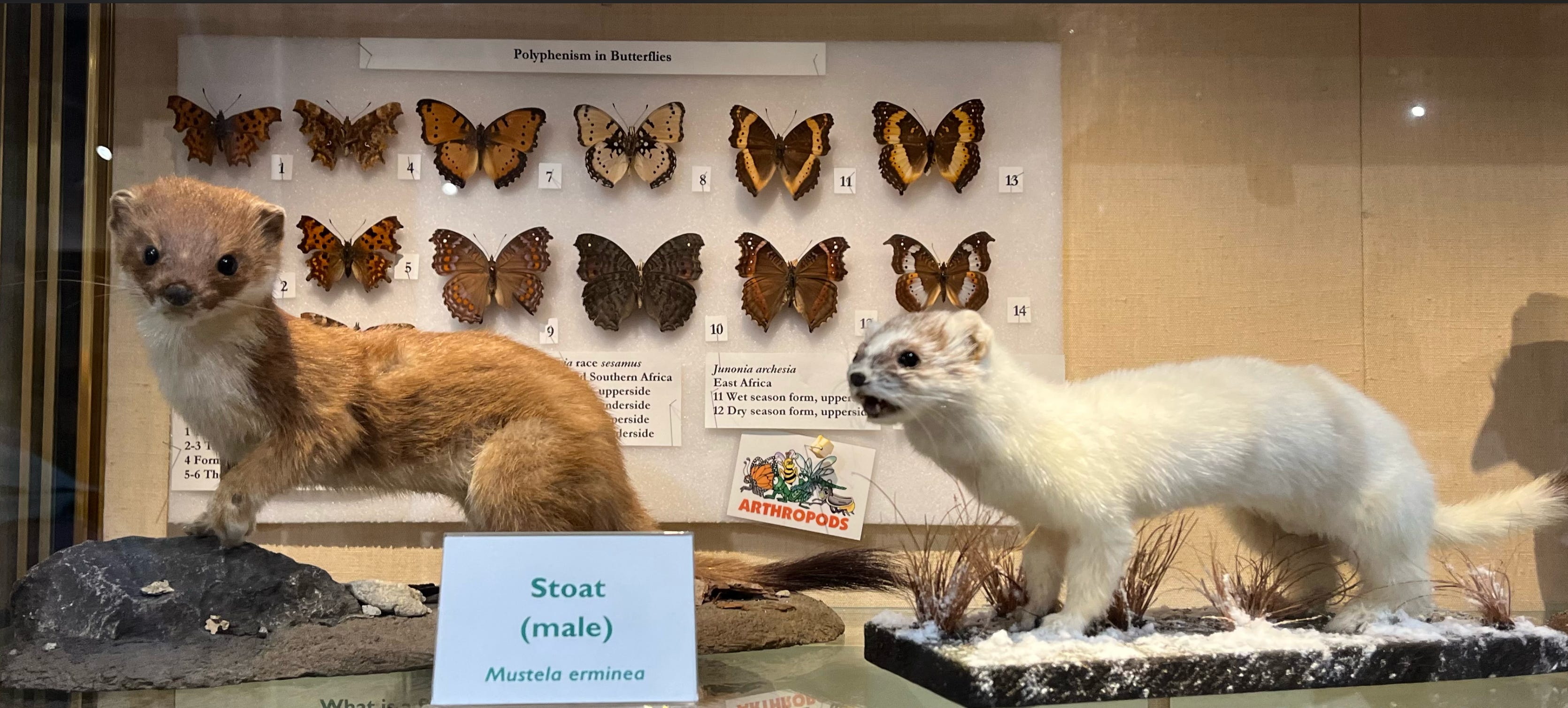
I found Niko Tingbergen’s idea of the Search Image particularly interesting. A type of polymorphism, the theory goes that if a species of prey is variable, they are more protected, because predators are hampered from forming a search image for their hunt. There was also an interesting tidbit in the section on habitat related ecotypes, speaking about the Mottled Beauty variation of a British moth, which has many forms. “The form nigrita is an ancient dark (melanic) form, but has now become more common in coniferous plantations and industrial areas”. I was enchanted by the idea that a dark and ancient form of moth might be resurgent in industrial zones. There’s also two whole cases about the diet of the Heron, and I think its charming to see so much space to devoted to a fairly common bird. I also learn about milkweed butterflies, which store the poisonous alkaloid found in their plant namesake in their exosleletons, making them dangerous food for predators, except, strangely, the cuckoo.
There are some displays which aren’t part of the overarching explanatory narrative - there’s the Thackeray collection of birds and the Newall egg collection. Their descriptions are very ‘Eton’ with panels carrying phrases like: ‘Thackeray was a classics beak (most were in those days)”, and my absolute favourite: “Some birds lay brightly coloured eggs, which are usually distasteful.” On display is also “The Birds of Berkshire and and Buckinghamshire” written by 16 year old Alexander W.M. Clark Kennedy, and is the first bird book to include photographs. The displays refer to it as ‘The Birds of Berks and Bucks’ seemingly incapable of resisting the posh penchant for nicknames.
A focus throughout the museum is on Joseph Banks, and his journey to the South Pacific on the HMS Endeavour with James Cook. They’ve gone as far as to recreate his cabin and stuck it smack bang in the middle of the ground floor, blocking off the visibility of some of the other cases. Banks also sailed aboard the HMS Niger and published the first Linnean descriptions of the plants and animals of Newfoundland and Labrador. He was a friend of Linnaeus’, and it very much shows in his documentation of plants, of which he brought back 30,000 from his travels, 1,400 of them being new species to European scientists. Whilst on the voyage, he worked closely with Daniel Solander, a Linnaean disciple and prolific taxonomist. The Linnean style of illustration is the ‘detailed specimen on white background’, and its ‘creation’ is attributed to George Dionysius Ehret. Although this style is attributed to him, Maria Sybilla Merian was illustrating like this before he was, but was much lesser known.
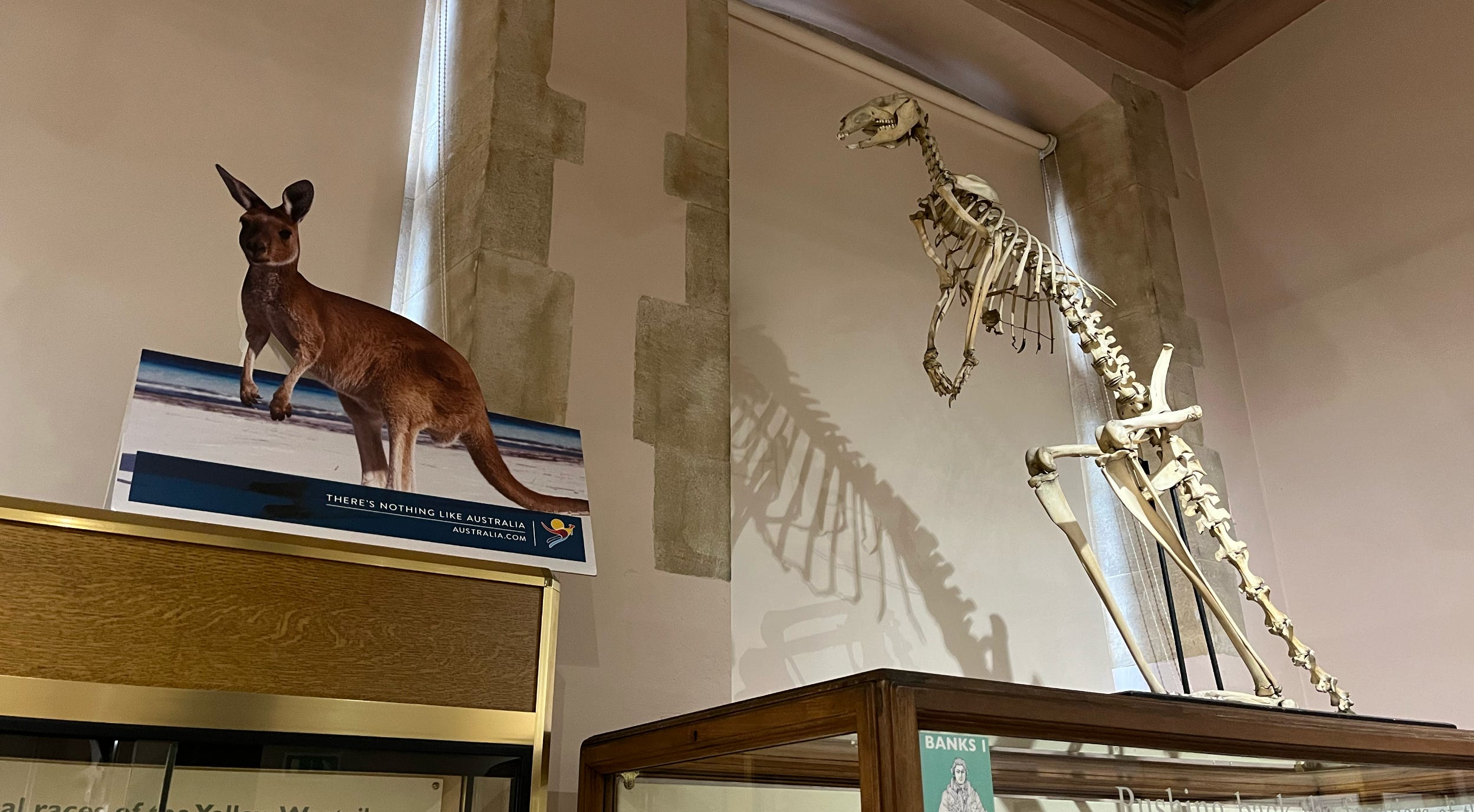
The Eton museum heralds Banks’ accomplishments as a point of pride, and nowhere discusses the wealth of information he learnt from indigenous communities in Australia and New Zealand, nor his tense interactions with them and colonial views. Upon his return to Britain, it was “Banks' reflections on the Indigenous people that the British would use as justification for formal dispossession. Banks himself argued that the Aboriginals were too uncivilised to make proper use of the land, he said that they are 'ignorant to the arts of cultivation, and wandered from place to place',” Instead, the museum chooses to focus on what he was like as a young boy at Eton. Unsatisfied, I had to do more research after visiting to find out what really went on during the HMS Endeavour’s voyage, and found Banks’ transcribed diary of the voyage. One passage describes how upon not being understood by two indigenous men off the coast of Australia when asking for water, they fired their muskets and struck them, and then proceeded to break into their houses and inspect their possessions. A few days later he describes himself as “void of fear [because] our neighbours have turned out such rank cowards”. Through an article published by the Natural History Museum I also found out about the ‘secret mission’ James Cook was on to stake Britain’s claim for Australia. The crew landed in what we now call Botany Bay, named after Banks’ prolific collecting, which was the home of the Eora people (described in Banks’ journal mentioned above). “Despite this area being populated, Cook declared the east coast of Australia Terra Nullius - 'nobody's land' - and claimed it for Great Britain.” Years of indigenous dispossession were to follow. Instead of discussing any of this, the museum places a display of a cardboard cutout kangaroo from an Australian travel agency next to a skeleton Banks brought back from his voyage. The word Kangaroo itself is indigenous, and was stolen by Banks.
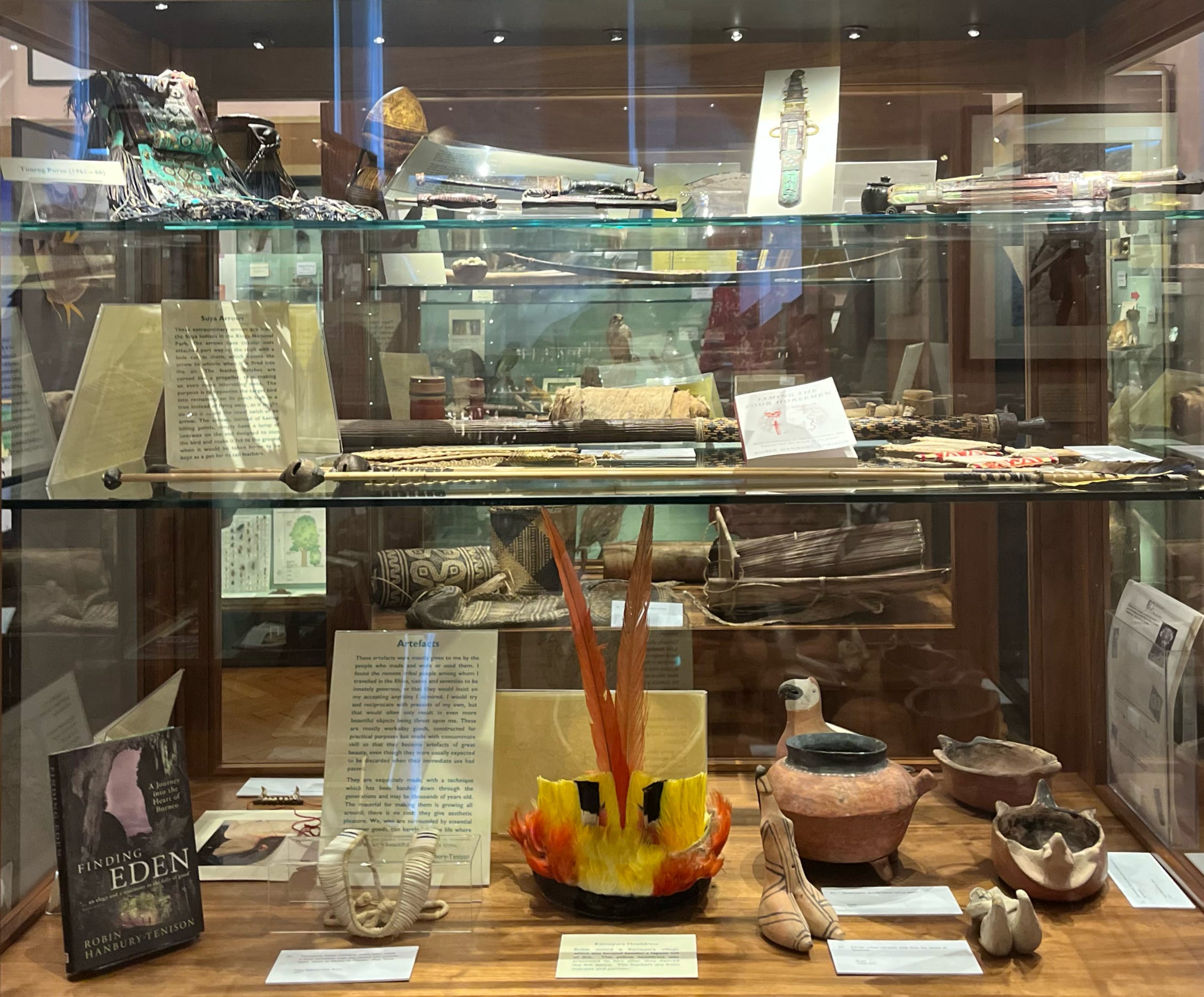
To finish, there is the anthropological collection of Robin Hanbury Tennison, another Eton boy, which is given no explanation and shoved in between cases about British fauna. The collection features gifts given to him by indigenous communities in Borneo and Brazil -specifically members of the Penan nomadic group, the Mentuktire community, the Yanomani group, the Nambiquara group, and the Suya group. The museum brochure reads like a Victorian curiosity advertisement : “See the famous whistling arrows of the Suya people, marvel at the blowpipe from Borneo which fired poison tipped darts, listen to the nose flutes from the Nambiquara Indians…” Roll up, roll up! I cringe. Only one sentence on a panel mentions the doubtful futures of these communities because of deforestation. After 10 cases about British biodiversity, the display of indigenous objects as ‘curiosities’ sits very badly. It makes me wonder what other unsavoury artefacts are in the collections but deemed irrelevant or unsuitable for display. It seems Tennison gets a pass because he has and OBE and is more contemporary (20th century). I know I’ve argued for the inclusion of anthropology in natural history museums in the past, but I don’t think this is a way to do it - it just feels like a bit of an ego trip for a former student.
I think what the Eton Museum has in rich descriptions and beautifully organised displays, it lacks in cultural context and self awareness. It is starkly different from the museums I’ve visited so far because of its lack of self criticism. Instead, it continues to tout the achievements of its ‘boys’ with an unburdened determination that’s unusual in the current climate of natural history. I suppose I shouldn’t be too surprised - it is Eton after all.
Comments
Nothing yet. Say the first thing.
Sign in to join the conversation.