

There’s a new narrative starting to take hold in the business and tech press. Based on everything I’ve seen, it’s one worth exploring. The idea: the true cost of AI, once you strip away the artificially low subsidized pricing everyone has gotten used to paying, makes AI relatively expensive, even given its tremendous capabilities. And with pressure growing on AI companies to actually start making a profit, it’s likely those subsidized prices will eventually go away, leaving everyone with AI sticker shock.
As the original appeal of AI for many businesses was that it was cheap and/or free compared to a human employee, that could be a major problem for the AI industry.
Travel back with me to late 2022/early 2023. ChatGPT had just launched, and around the world, corporate bosses were salivating at the idea of harnessing free or low-cost work cycles from something that -- at first glance -- seemed able to mimic human output.
That’s where a lot of the early issues with AI come from. Before it was tested, before it was ready, we raced to deploy it in customer or consumer-facing roles because it was free/cheap. The quality of AI output, especially in those early days, kinda sucked, but it’s hard to beat free.
Interestingly, it feels like some of the negative associations people have with AI come from those early hallucination-filled days, when ChatGPT and others told people to eat rocks and glue cheese onto their pizzas. The current quality of AI output, especially in the higher-end frontier models from Claude, Gemini, etc., is a world away from the error-prone 2022/2023 versions. But that’s today, when many people have already soured on the promise of AI.
I was personally involved (against my will) in a couple of those early examples of poorly deployed AI. First at CNET, where the brand was widely dinged after AI-written personal finance articles were posted online, many needing corrections or updates. Second, at Gizmodo, when upper management published a particularly egregious error-filled AI slop article behind the backs of the site’s editorial staff, including myself, the then-Editor-in-Chief. Both news orgs have wisely stayed away from AI-generated content since. (Both have also been subsequently sold to new owners.)
The reasoning behind these early AI content experiments was simple -- to compete on cost and speed and see if there was a way to cheaply crank out the kind of SEO-chasing listicle or explainer content that kept many news websites afloat for years. Since then, AI has ironically eaten the traffic those articles used to generate, with easy AI Overview answers from Google leading to a massive drop in organic traffic to websites. AI gives, and AI takes away.
But AI news writers and editors are only a drop in the bucket. When it comes to AI costs, it’s coders and engineers who are going to eat up most of your tokens. And what happens when, as an Nvidia exec recently said, “The cost of compute is far beyond the costs of the employees?”
With tokenmaxxing (the idea of spending as many AI tokens as possible as a benchmark of how productive you are) gaining popularity while AI providers like Anthropic are cutting or restricting usage under some plans, we’re already starting to see the economics of AI bump up against the realities of labor costs. Whether you’re on a $20/month plan for personal use or a $200/month plan for professional use, you’re still paying your AI provider far less than it costs them to give you access to that level of AI.
No one is under the illusion that AI usage will get cheaper, especially as frontier models demand ever more compute. One alternative is for companies to spin up their own local models, run AI on their own hardware, and keep everything on-site. That’s great for data security, training custom models for specific use cases, and removing an external subscription cost. But even the best local models are behind cloud-based models powered by massive data centers, especially in key areas like coding.
All this means we’re rapidly approaching the point where, for some jobs, going back to human workers will be cheaper (if not necessarily faster) than using AI. That’s going to be especially true as more platforms move to per-token pricing vs. a monthly subscription.
We’re rapidly approaching the point where, for some jobs, going back to human workers will be cheaper (if not necessarily faster) than using AI.
But what does that say about companies like Meta, which is planning to cut 8,000 employees (and close 6,000 open roles), or Microsoft, which is offering early retirement for the first time in an effort to cut expensive long-term employees, all in order to invest more into AI infrastructure?
The ironic thing is that we could see tech companies continue to cut huge numbers of human workers just as the cost of running AI replacements outpaces those very humans. Will this lead to a rapid reversal where humans are rehired en masse, not necessarily because they’re better than AI, but because they’re cheaper? I remain convinced the era of cheap AI is coming to a close, and we’ll have to reexamine a lot of the preconceptions we’ve formed about AI and work for the past few years.
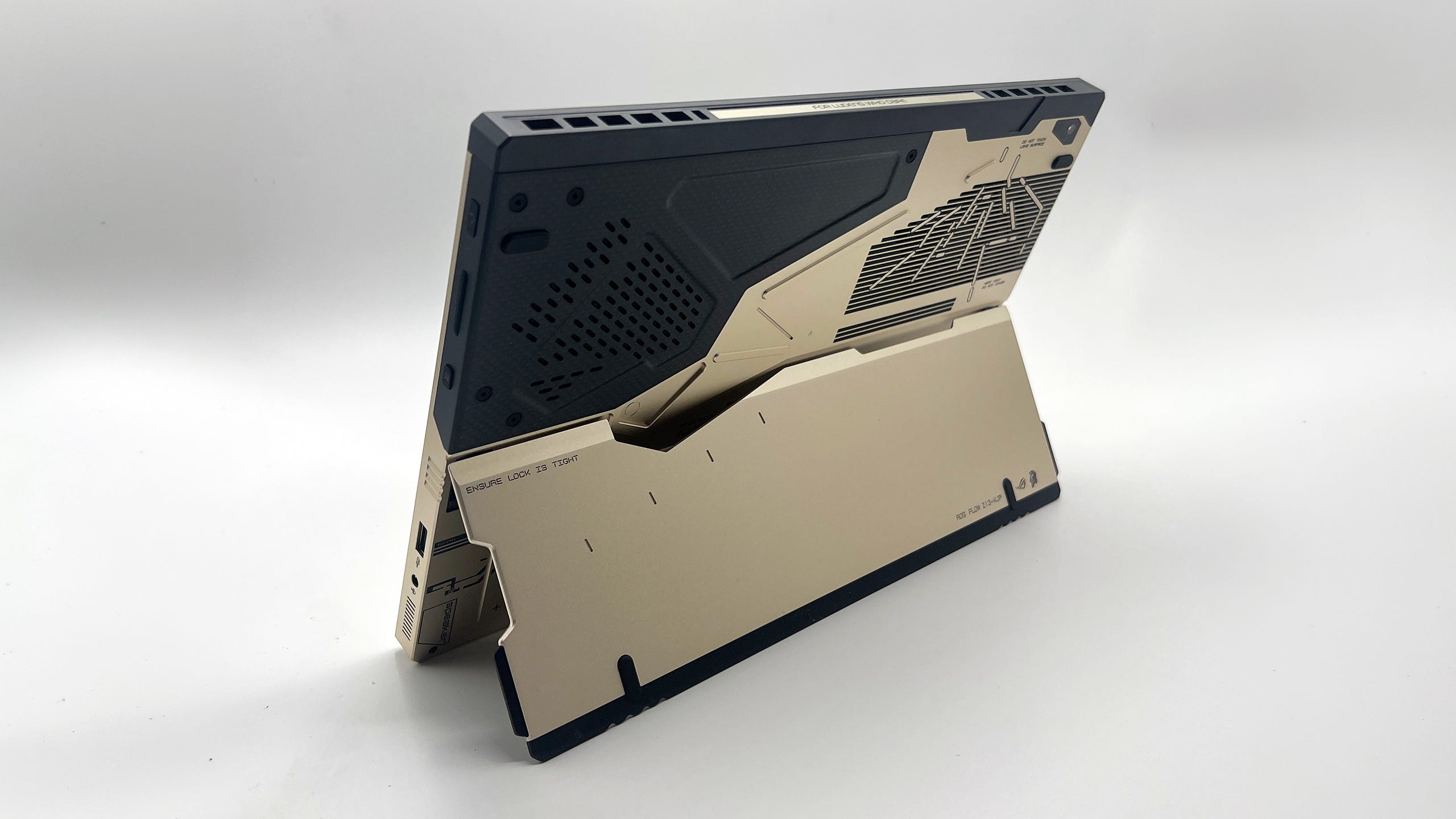
I finally had a chance to play around with one of the buzziest new PCs from CES 2026. It’s the Asus ROG Flow Z13-KJP Edition. That KJP stands for Kojima Productions, the company founded by legendary game designer Hideo Kojima, of Metal Gear Solid and Death Stranding fame. And what a delightfully unusual system this is!
The Flow Z13 is an existing Asus product -- it’s a 13.4-inch Windows gaming tablet, making it an unusual beast already. Like other Windows tablets, it connects to a folio-style keyboard cover and has a built-in kickstand; together, they deliver a very laptop-like experience.
The Kojima version of the Flow Z13 makes a lot of visual changes to the stock version, adding gold accents, some subtle ribbing to the sides, and sci-fi-looking text and iconography. The keyboard cover gets a slightly wider shape, along with a new color scheme with white keys against a black background, plus gold WASD keys. There’s also a companion mousepad, mouse, and audio headset, as well as a briefcase-like carrying case, as part of the Kojima lineup from Asus.
But that’s not what struck me as most interesting about the new Z13. It’s that this is closer to an AI workstation than a gaming machine. That’s because it runs an AMD Ryzen AI 395+ CPU, paired with 128GB of RAM. That’s very similar to the incredibly powerful HP Zbook I reviewed last year. Using LM Studio, I was able to run mid-size Gemma 4 and Qwen 3.6 models at 50-60 tokens per second, which is an excellent speed.
For gaming, considering this has integrated AMD 8060S graphics, rather than a traditional discrete GPU, it ran smoothly, giving me 30fps in Cyberpunk 2077 at medium ray tracing settings with frame gen turned off, and 55fps on medium settings without ray tracing, with FSR frame gen turned on.
It’s an incredibly capable high-end machine, albeit one for a very niche audience. An unboxing video is below, and you can read my full hands-on at Micro Center News soon.
Read my NYT-reviewed gaming history book: The Tetris Effect
Play my tabletop game, Techlandia!
Threads: threads.net/@danack
Bsky: danackerman.Bsky.social
LinkedIn: linkedin.com/in/danackerman
TikTok: tiktok.com/@danacknyc
YouTube: youtube.com/danackerman
MC News: microcenter.news
New app! 3Dbookmark.app
New app! ShelfYourself.app
Comments
Nothing yet. Say the first thing.
Sign in to join the conversation.