In this weekly feature for Andelman Unleashed, we continue to explore how media of other nations view America and the rest of the world, bringing to bear 60 years of reporting from 90+ countries. We cover lots of ground—diving each week through 30+ newspapers & 100+ websites on every continent. You may not want to read it all, but it’s all here for you!
We can all learn from what others say about us, around the globe.
To accomplish this mission for you, I pay for a host of global media—newspapers, magazines, websites, television—so you all can become better informed about the world…A (lightly) paid, even Founder subscription would help if you are able…and allow you to participate to the fullest in our adventures.
BULLETIN UPDATE
The far-right candidate backed by Donald Trump won the presidency of Colombia. [Scroll down to Elections….]
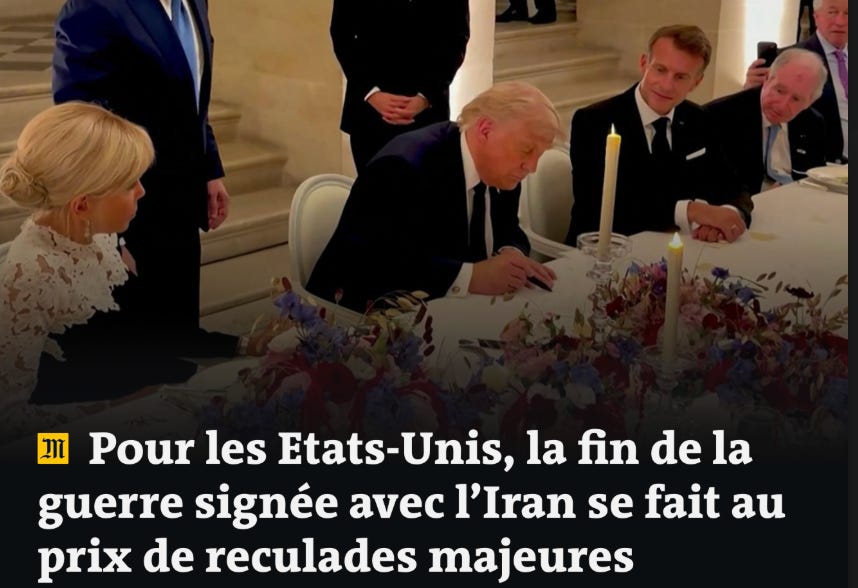
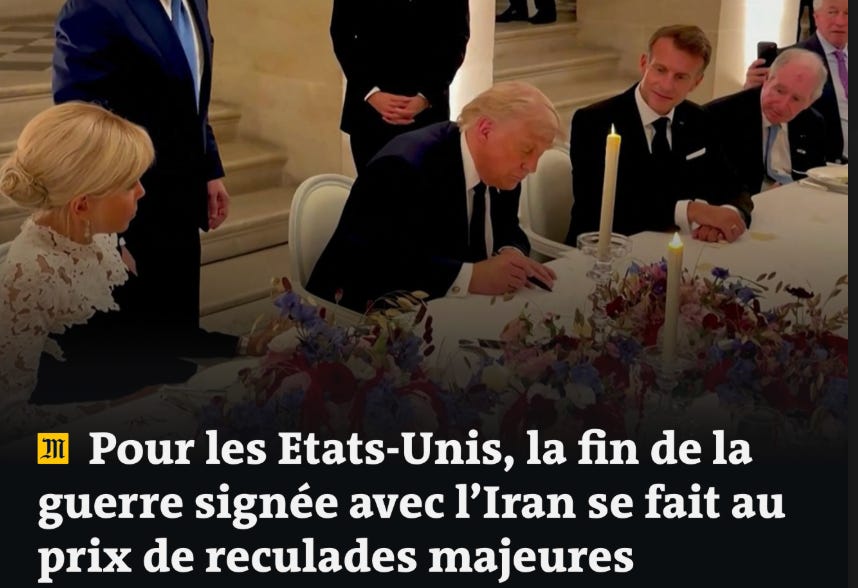
The irony of Donald Trump signing the Memorandum of Understanding with Iran in the Hall of Mirrors at Versailles was likely hardly lost on his host at dinner this past Wednesday—French President Emmanuel Macron being a devoted student of history. But even the Germans who, very much under duress, signed the Treaty of Versailles ending World War I—perhaps the most renowned surrender document in history—did not want their action preserved on film. So it was left to President Woodrow Wilson alone pictured putting his signature to a document that, as I detailed in A Shattered Peace: Versailles 1919 and the Price We Paid Today, laid the seeds both for World War II and today’s horrors across the Middle East, even Ukraine.
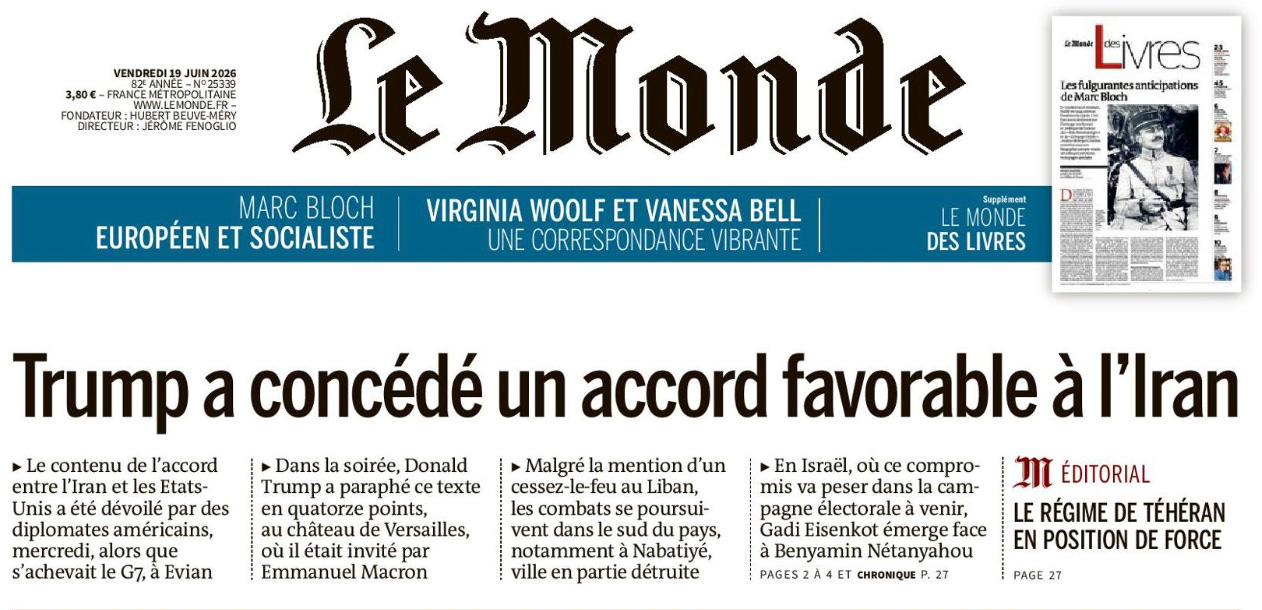
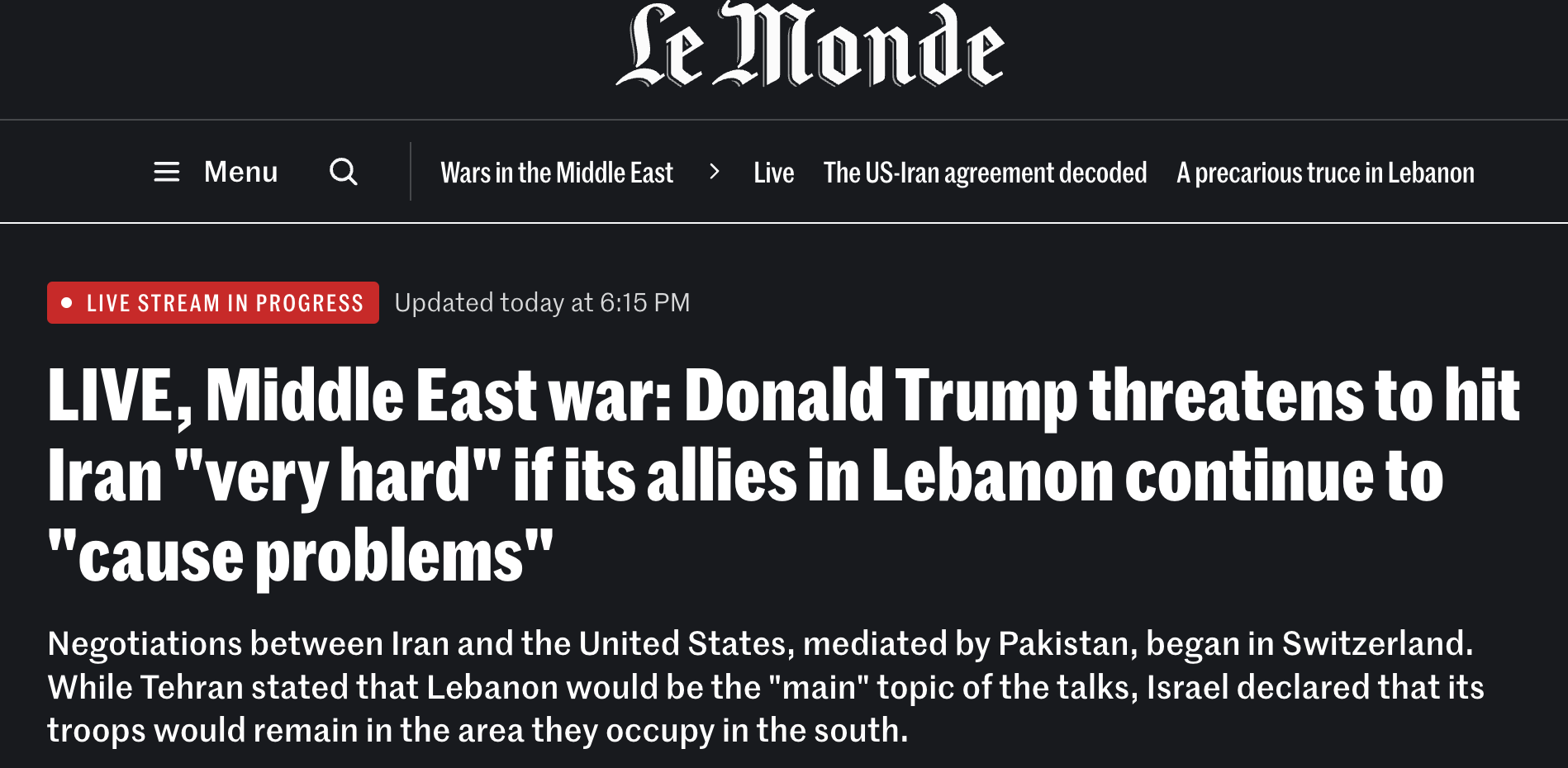
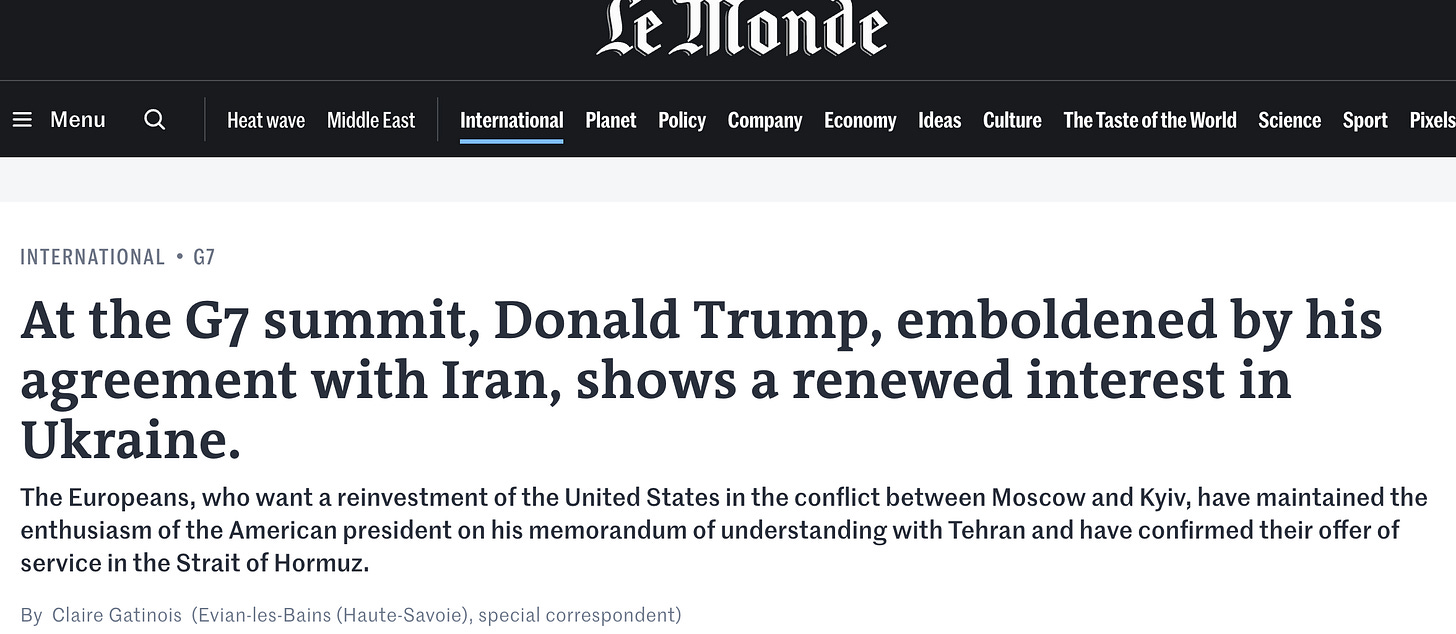
It is quite likely that 100 years hence, historians will be similarly citing the catastrophic errors of the document Trump signed with a flourish in that same room with the same mirrors as witness. And hardly was the Sharpie’s ink dried when it all started coming apart at the seams—Le Monde suggesting in the first instance what likely lay ahead:
As the paper’s front-page editorial affirmed:
The Teheran regime in position of force
The agreement focuses on one objective that has clearly eclipsed all others for Trump: reopening the Strait of Hormuz. It remains extremely vague on the nuclear issue, except to downplay the significance of Iran's stockpile of highly enriched uranium, even though this was presented as a war objective during the conflict. The deal Washington offered to Tehran is a gamble: renounce nuclear weapons in exchange for prosperity that might come with lifting all international sanctions….
But it is not a guarantee of diplomatic success. Both sides entered this process under especially strained circumstances. Israeli and US strikes in June 2025 and February 2026 took place even as negotiations were underway. In other words, the level of trust between the two parties is now at its lowest.
The extremely tight timetable set for resolving complex issues that the Iranians know inside out appears unworkable, even if extensions are considered. Trump’s political calendar, with the US midterm elections scheduled for November, deprives him, for the time being, of the threat of renewed airstrikes, which have already shown their limits. The toll of this war is even more devastating. It has delegitimized the use of force while complicating the return of diplomacy—an apt illustration of a disaster.
Indeed, Iran has long calculated how it might subvert the letter, not to mention the spirit, of the agreement. As Reuters reported:
Iran’s Islamic Revolutionary Guard Corps (IRGC) has set up secretive new cells in Iraq to carry out attacks on Gulf countries that host American forces, bypassing established militia networks to avoid detection.
Iran has always crafted increasingly more loyal networks that will more often than not report directly to them….This is a way for the Iraqis to claim that there is distance between the Shia militias that populate their government. Some may be "disarmed" (they won't...) to distract from what they're not doing. These same Iraqi Shia militias have created almost 100 front groups, now they're going to try and claim that maybe they don't answer to the groups that directly created them.
So what might the world hope for? It had clearly hoped for a restoration of certainty, stability or at least predictability for the world economy. However, Damien Bruckard, veteran diplomat, founder of Geopolitical Strategies and Substack’s invaluable Geopolitical Dispatch, explained for our Unleashed Conversation audience Friday his own—perhaps somewhat more constrained—hopes for America’s global role:
The full hour is below the paywall !
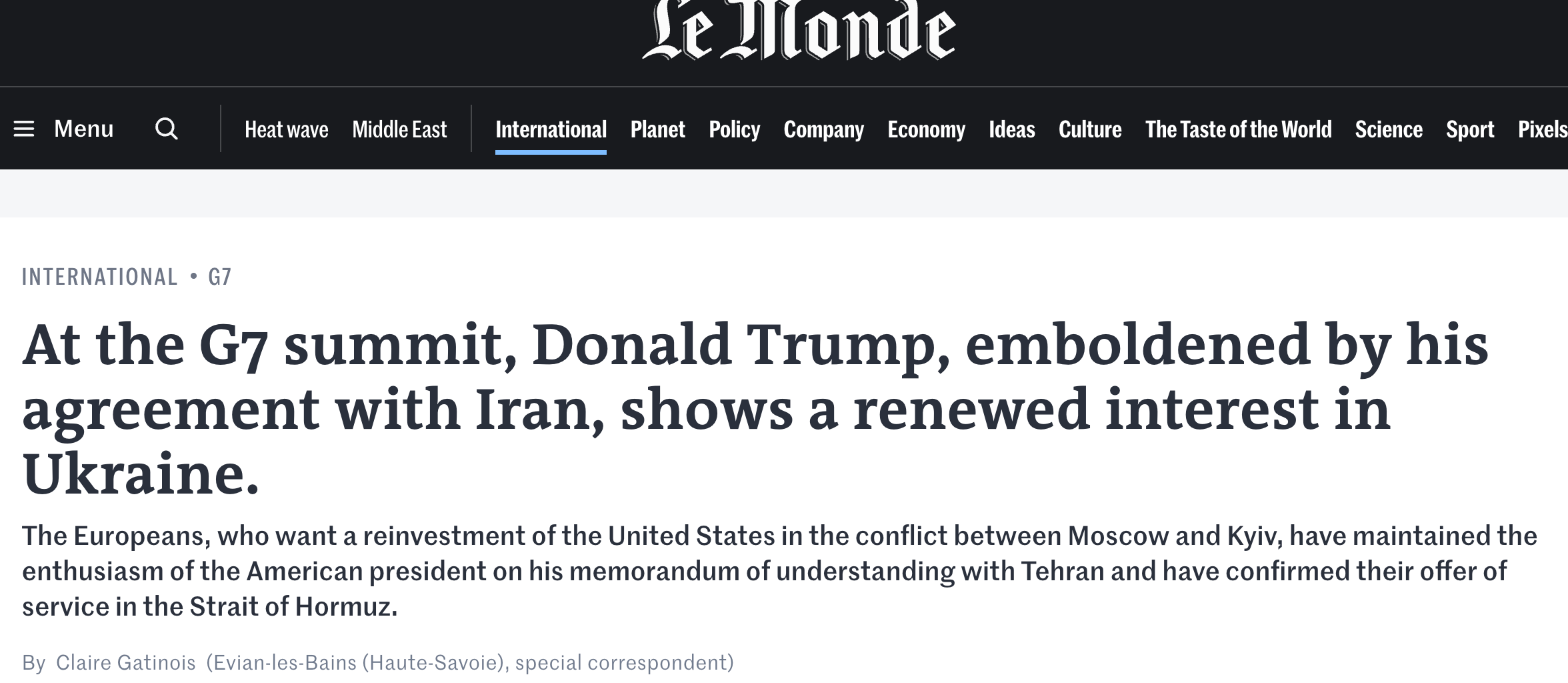
Iranian leaders cannot have failed to take note of this Le Monde headline….
For the United States, the end of the war signed with Iran comes at the cost of major setbacks.
If you’re interested, here’s what they scarfed down as Trump wielded his Sharpie:
White asparagus with lobster and caviar
Chicken roasted with truffles and Gratin Dauphinois
Hot chocolaté pie with vanille ice cream
….Marco Rubio providing the text and a handshake….
Still, Trump could not help but leave behind some bad blood in Europe as he bolted for his overnight flight back to America. The BBC reported:
Italy’s prime minister, Giorgia Meloni, has said she is astonished after President Donald Trump told Italian TV she had “begged” him for a picture with her, in comments that have provoked an open row between the two leaders. Meloni said Trump’s comments were entirely “made-up”, and Italian Foreign Minister Antonio Tajani has cancelled a trip to the US early next week.
The highly public exchange is an indication of how far their earlier close ties have frayed in the months since Trump’s decision to go to war with Iran. Trump has since given a phone interview with Italy’s La7 TV channel in which he alleged: “She begged me to take a photo with her; I felt sorry for her.”
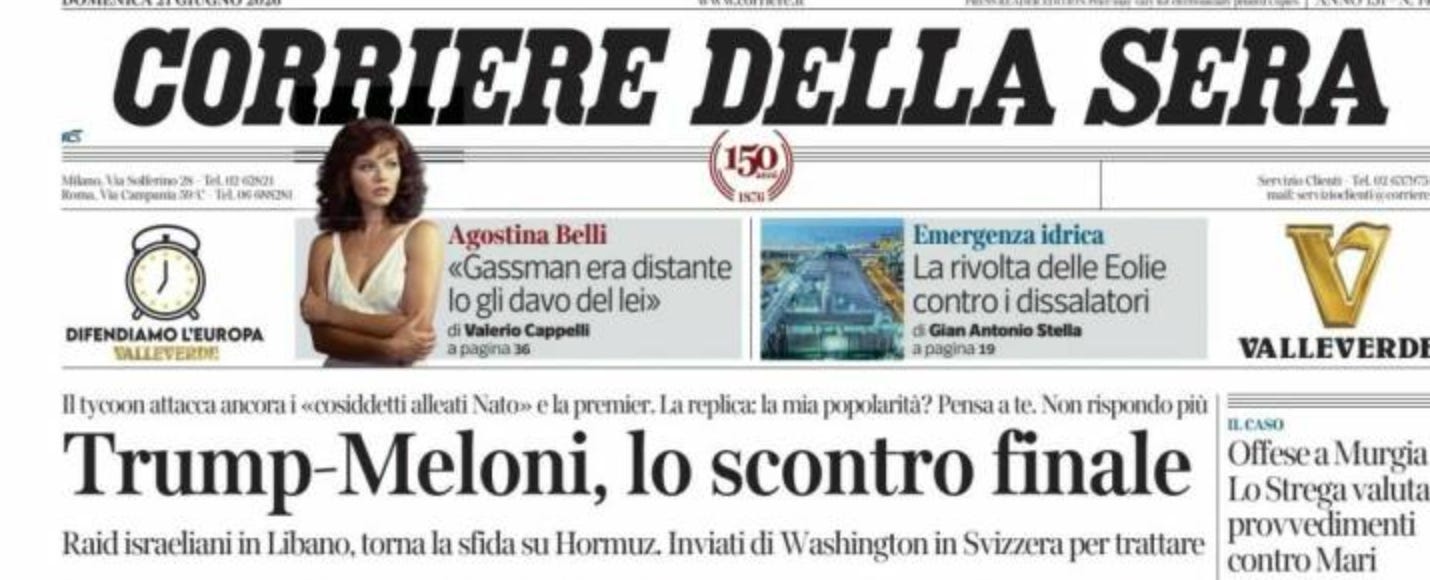
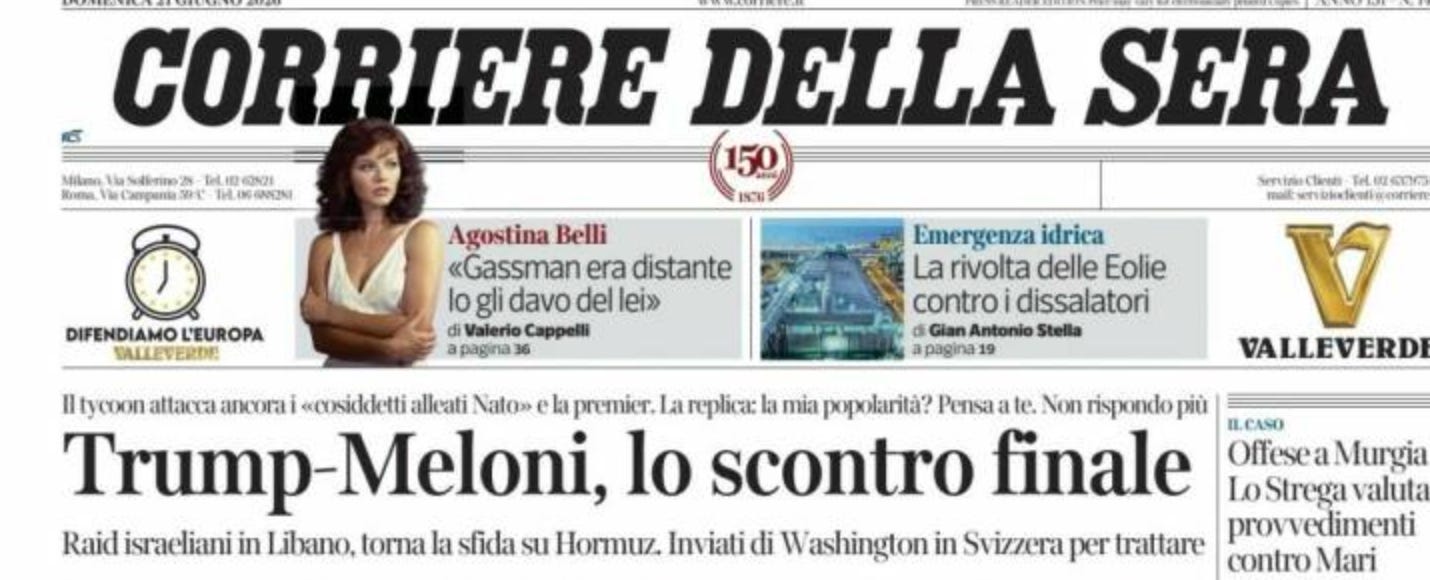
That wound up to be front-page news across Italy:
The tycoon continues to attack the “so-called NATO allies and the prime minister. The response: “My popularity? Think about yourself.”
Trump-Meloni, the final showdown
And then, there’s Israel. Can the US have any influence over Israel any more? As Haaretz reported:
Israel’s Defense Minister, Israel Katz, said the Israeli military will not withdraw from what he called the "security zone" in Lebanon, a demarcated zone in the country's south captured by the Israeli military after fighting with Hezbollah restarted in March. Katz said Israeli troops operating in Lebanon face no restrictions on acting against threats.
At a brief press availability in Bürgenstock, Switzerland, before the first post-MOU negotiations began between the US and Iran with mediators from Pakistan and Qatar, the White House pool reporter, Bloomberg’s Kate Sullivan, reported:
Asked whether he had any message for Prime Minister Netanyahu regarding Israel’s military operations in Lebanon, the Vice President said they had seen “great progress” in the last couple of days and said, “these things are always a little bit messy. There, of course, are going to be sometimes disagreements about precisely how to get there, but I actually feel great about where we are in Lebanon. There's still some additional wood to chop, but we're going to keep on working.”
The Vice President was asked a question about genocide in Lebanon and he said, “I think that the President of the United States and the United States of America have done more to stop the conflict in Lebanon than any government anywhere in the world over the last few months, and we're gonna keep on working towards it. As I think a lot of you appreciate, peace is never easy.”
But The Times of Israel pointed out:
Tehran does not view Sunday's meeting as formal negotiations because the war in Lebanon has not ended as stipulated in the preliminary deal signed by Trump and Iranian President Pezeshkian last week.
And just as the talks got underway, Trump seemed determined to torpedo them:
New threats, new challenges, their antecedents…Plus, an inscribed copy of my book, A Red Line in the Sand. Founding member get my last three books! Along with a weekly portfolio of cartoons…and Friday our weekly live conversation.…with a new Celebrity Guest to decode the universe….On Friday:
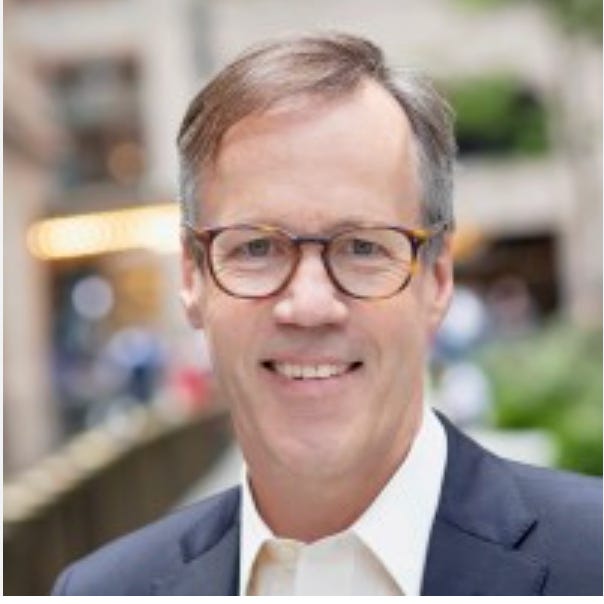
Founder and Managing Partner of consultancy Arbroath Group, Dr. Smart is an investor, scholar and journalist…spending six years in the Obama Administration as Special Assistant to the President at the National Economic Council and National Security CounciL. Earlier, he was Deputy Assistant Secretary of the Treasury, where he desiged U.S. engagement on financial policy across Europe, Russia and Central Asia….then moving to Harvard’s Kennedy School. Following collapse of the Soviet Union, he worked in Moscow, advising Russian government agencies on economic policy. Earlier, he was a reporter in St. Petersburg (FL) and Paris. Smart is author of The Imagery of Soviet Foreign Policy and the Collapse of the RussianEmpire. He earned a BA in History from Yale and PhD in International Relations from Columbia. He speaks French, Russian and some German.
Michal Meidan, Head of China Energy Research at the Oxford Institute for Energy Studies. Earlier, she headed cross-commodity China research at Energy Aspects and headed China Matters, an independent research consultancy providing analysis on the politics of energy in China. She is fluent in Mandarin and French.
Moscow-Beijing-Pyongyang
As the Institute for the Study of War observed:
Kim is likely exploiting North Korea’s increased geopolitical value for the two major powers [China and Russia] to maximize benefits for North Korea—increasing its revenue generation through trade with both the People’s Republic of China and Russia by leveraging its heightened geopolitical importance for the two major powers.
North Korea appears intent on expanding civil and economic exchanges in addition to diplomatic and military engagement with the PRC and Russia. The new bridges over the Tumen and Yalu Rivers will enhance previously restricted cross-border logistics capabilities. The four-lane New Yalu River Bridge, in particular, will increase transport capacity significantly compared to the existing single-track and single-lane road structures. North Korea increased its strategic importance for Russia by exporting military equipment and deploying approximately 14,000 troops to support Russian war efforts.
The rapid consolidation of the North Korea-Russia alliance conversely diluted the PRC’s influence over North Korea, prompting the PRC to attempt to restore its leverage by resuming high-level exchanges with Pyongyang. The PRC has largely avoided sensitive topics, including denuclearization, during conversations with high-level North Korean officials, focusing heavily on traditional bilateral friendship.
Indeed, one might ask whether America has become obsessed with Iran as a potential nuclear power, overlooking a real and present danger, as ISW has pointed out:
North Korea may be seeking to counter the deterrence effects of a South Korean or US decapitation strike during a nuclear escalation scenario by projecting credible retaliatory threats and institutionalizing a decentralized nuclear command-and-control structure in the constitution. It may be pursuing a more decentralized architecture to ensure its increasingly dispersed nuclear forces remain effective.
North Korea’s 2026 constitutional amendments cemented the regime’s strategic posture…abandoning its constitutional goal of reunification with South Korea and instead defined North Korean territory as bordering South Korea, treating South Korea as a foreign state. Kim Jong Un used the revisions to codify the centrality of nuclear weapons to North Korea’s defense, sever any basis for engagement with South Korea, and free himself from the ideological constraints of Kim Il Sung’s and Kim Jong Il’s legacies.
Russia-Ukraine
If there was any recent week where the tide seemed to be turning toward the good guys, though, this might have been it, as the Institute for the Study of War reported:
Russian authorities and energy companies are increasingly restricting the sale of gasoline and diesel in Russia as Ukraine’s long-range strikes against Russian oil infrastructure cause shortages.
Russia will likely continue to struggle with fuel shortages throughout the summer due to increased demand. Russia reportedly recently extended its decision to allow some refineries to release substandard gasoline and diesel to the domestic market due to the ongoing shortages.
Meanwhile, Ukrainians are reveling in the latest string of failures accumulating in Putin’s backyard, The Kyiv Post cataloging just a snatch of this week’s victories, with the possible exception of the latest from an eternally-feuding EU:
Trump’s perception of Ukraine is said to have taken a turn. According to Macron, Trump initially expected Ukraine to lose in 2025 upon his return to office, which might explain the pressure on Kyiv. However, Ukraine’s progress in holding its ground has reportedly earned Washington’s backing for a renewed peace push, with terms leaning more toward a freeze along the contact line than toward whatever Russia is proposing.
Finland’s war-monitoring Black Bird Group reported Russian ground forces captured barely 63 square miles of territory between February and May, in contrast with 444 square miles in the same period last year.
Europe-America
Gather ye rosebuds where ye may…aka—Don’t look a gift horse in the mouth:
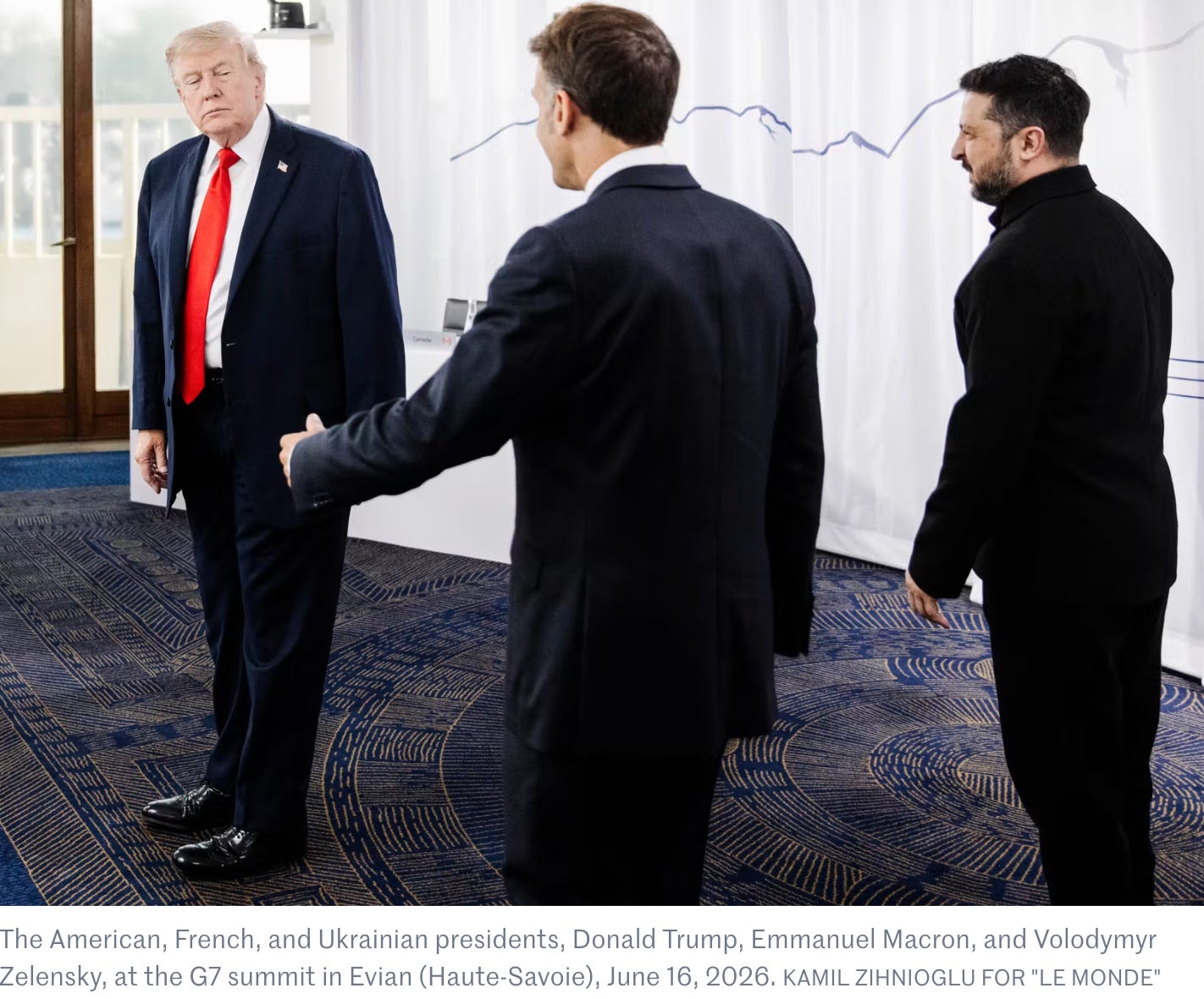
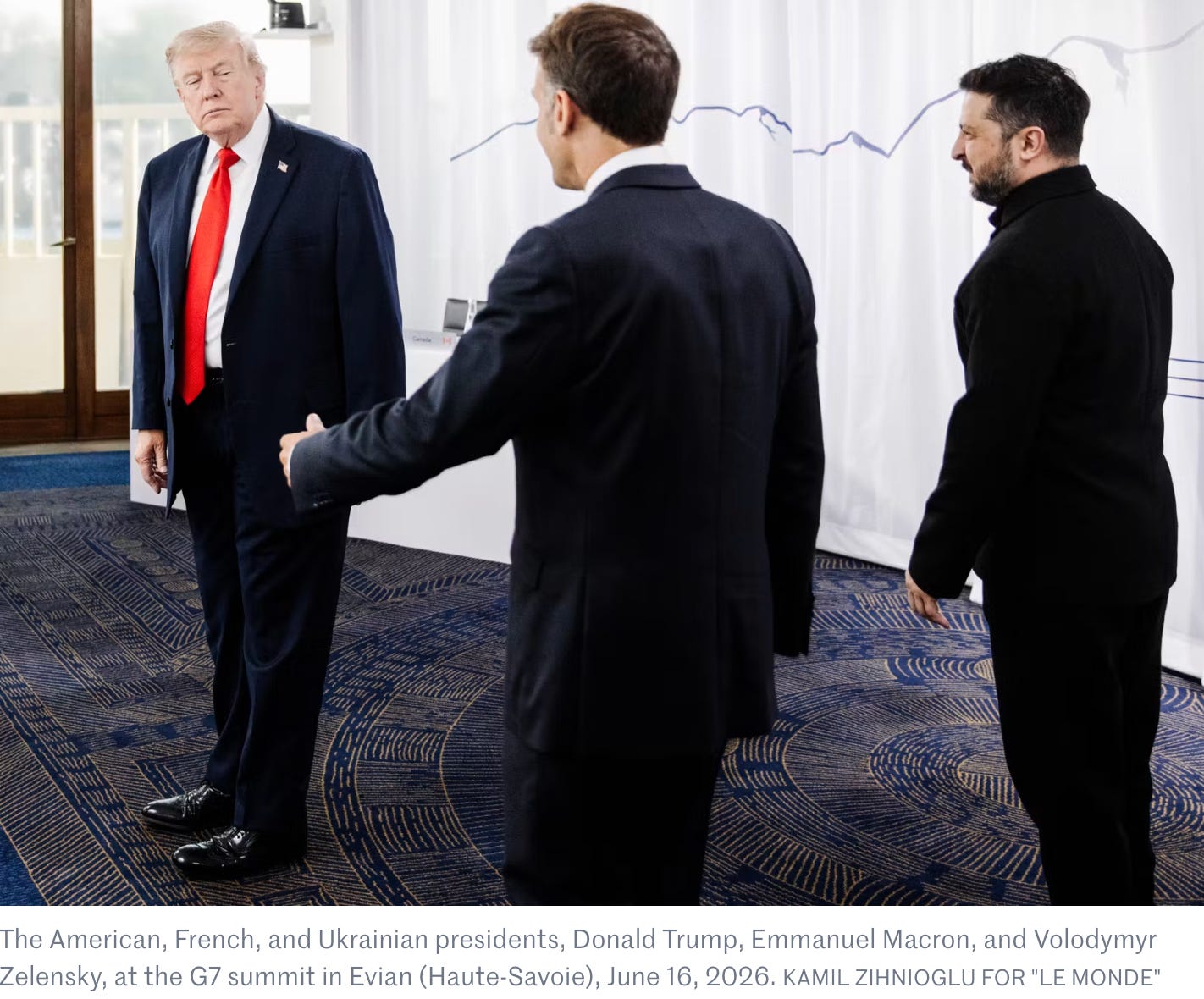
At no point did Donald Trump seem to tire of recounting what he considers a success. At the Hôtel Royal in Evian-les-Bains, where the G7 summit is being held, bringing together representatives from Germany, Canada, the United States, France, Italy, Japan, the United Kingdom, and the European Union, the American president repeated to everyone that his "deal" with Iran was "magnificent.” Emmanuel Macron had invited Ukrainian President Volodymyr Zelensky to Evian, promising to arrange a one-on-one meeting with the White House occupant.
The two men spoke for about twenty minutes on the sidelines of a plenary session devoted to Ukraine and were scheduled to meet again that evening at the dinner for heads of state. “I showed some photos of the attacks and the fires, as well as how our men heroically extinguished the blaze,” the Ukrainian president explained to the press, referring to the Dormition Cathedral in Kyiv, a jewel of Ukrainian Orthodoxy, which was targeted on Monday by two Russian drones .
The images, more than words, reportedly moved the American president, who, according to a diplomat, changed his attitude toward Kyiv. The American president also pledged to reinstate sanctions on Russian oil, which had been suspended during the Iran-Iraq War to ease oil prices. “We’ll be able to do that because the oil is flowing freely now,” he reiterated.
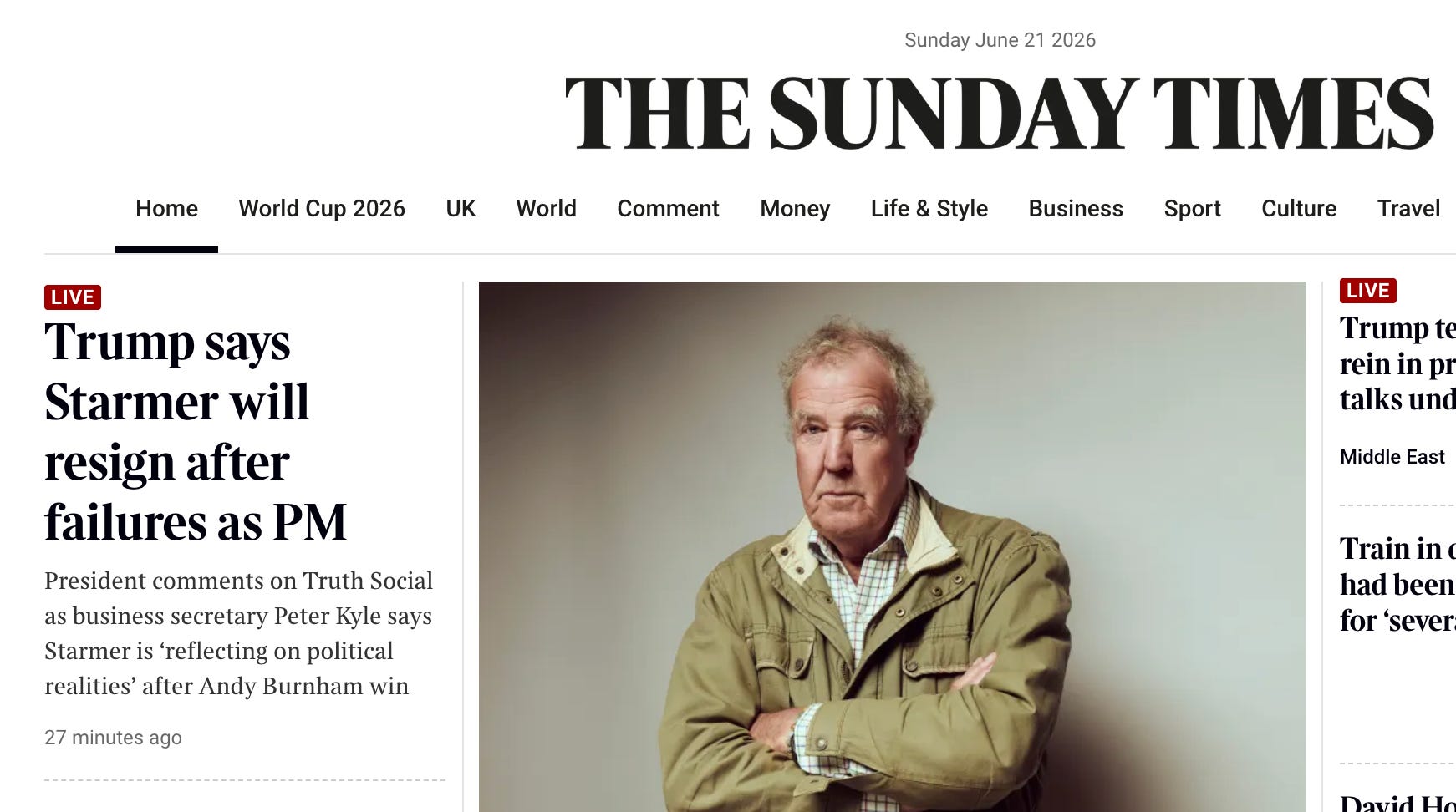
As if picking a fight with Meloni wasn’t enough, Trump began kicking his longtime friend, British Prime Minister Keir Starmer when he was down. Apparently forgetting the role Starmer played in arranging his state visit with King Charles III with all the pomp and gilt designed to send chills of joy up any autocrat’s spine, The Sunday Times of London led with the news:
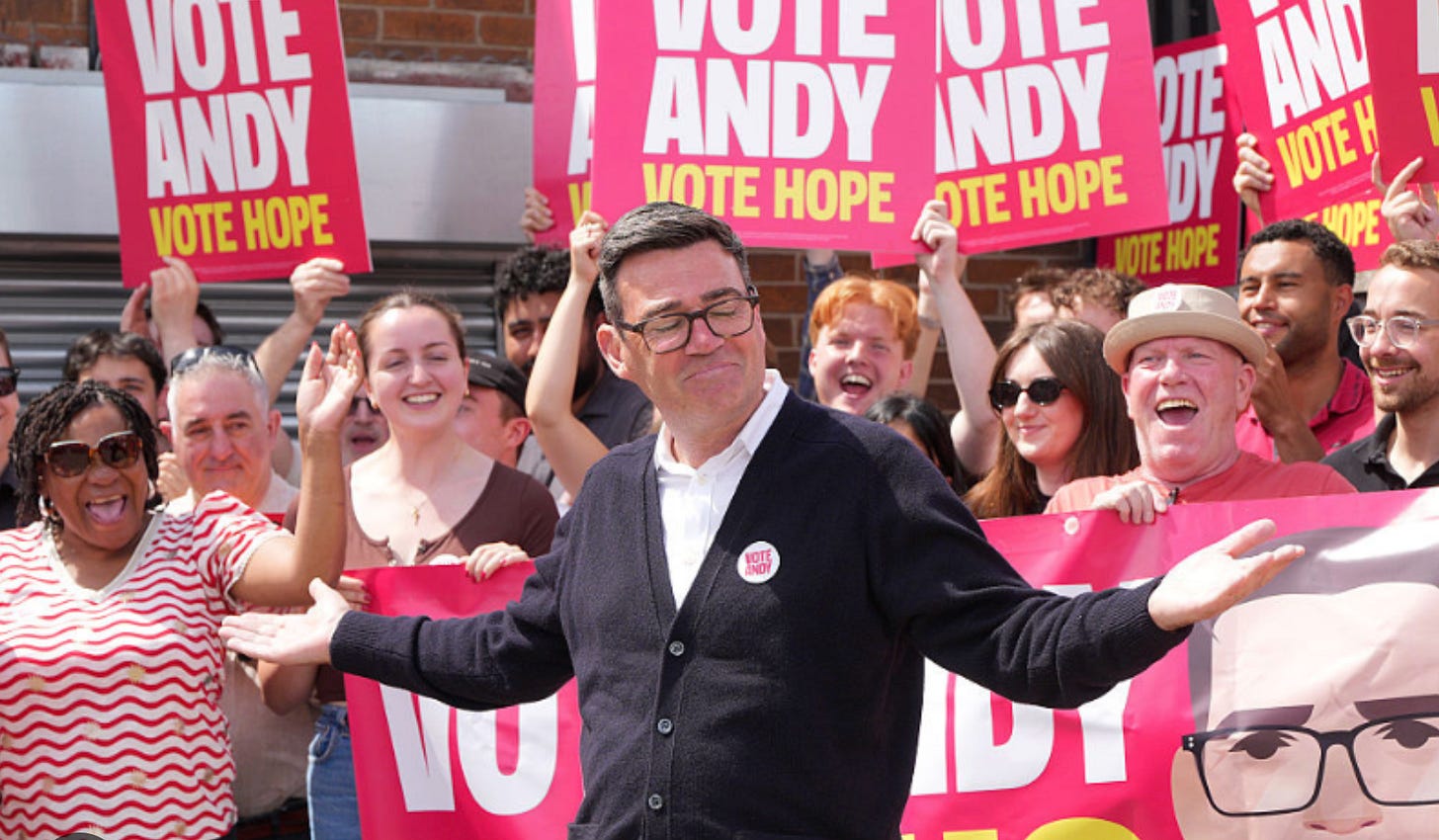
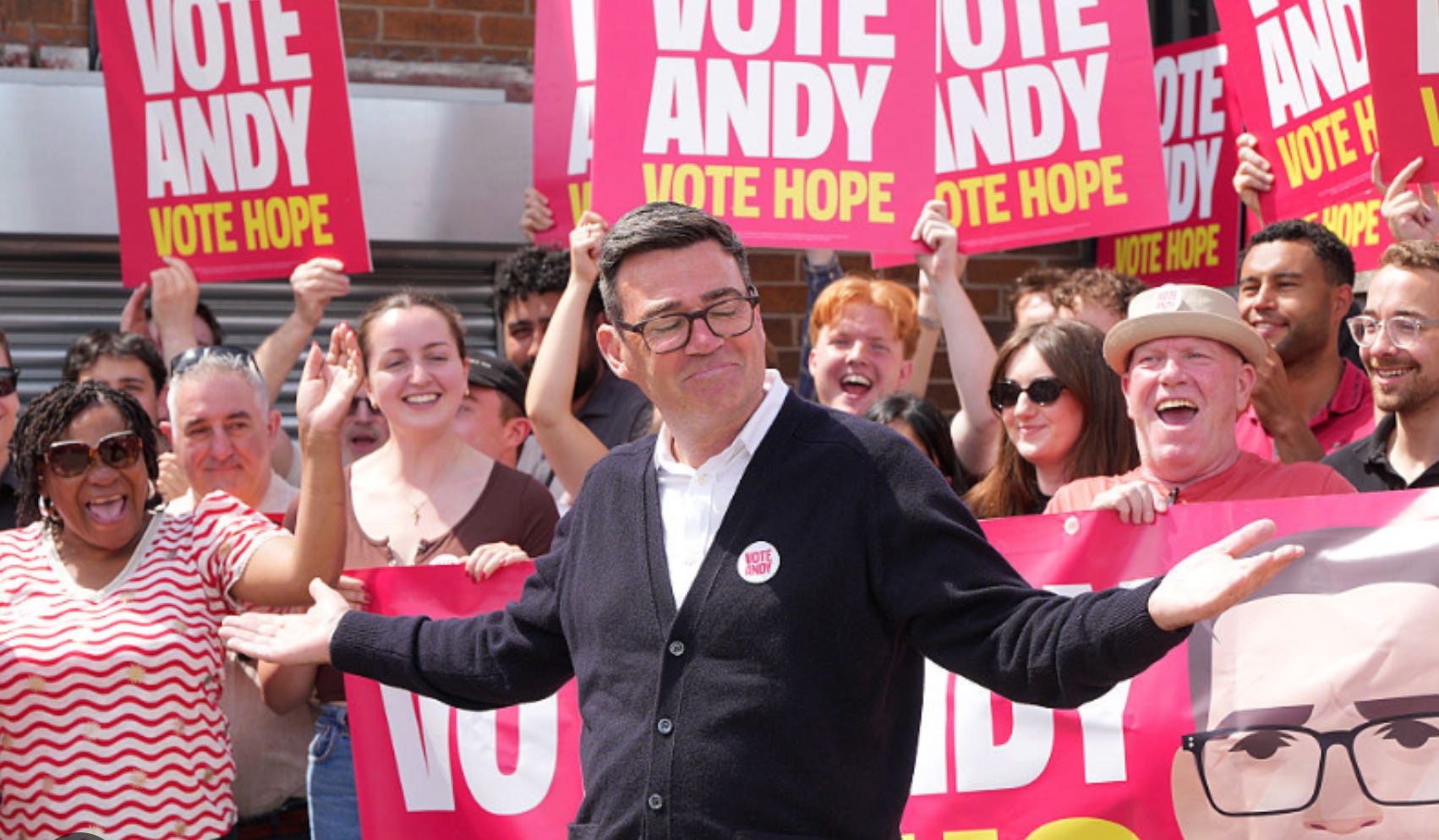
Andy Burnham indeed. While we don’t generally chronicle local elections around the world, it was hard to ignore last week’s by-election that could have quite a bearing on Prime Minister Keir Starmer’s future—which appears likely to conclude with his resignation on Monday, as the Financial Times chronicled, this Starmer-challenger carrying the day:
Andy Burnham secured 24,927 votes, while Robert Kenyon of Nigel Farage’s [far-right] Reform UK party came second with 15,696. Rebecca Shepherd of Restore Britain was third with 3,111 votes.
Andy Burnham outlined his vision for Britain following his resounding victory in the Makerfield by-election. The Labour leadership hopeful promised an end to trickle-down economics and vowed to bring down utility bills, while also cautioning against the politics of division.
Sir Keir Starmer renewed his plea to Burnham not to plunge Labour and the country “into chaos” by launching a leadership coup, urging him to focus instead on the upcoming by-election for the Greater Manchester mayoralty.
The prime minister has been urged by transport secretary Heidi Alexander to set a timetable for his departure, in the first sign of cabinet unity fracturing after Andy Burnham’s momentous Makerfield by-election victory.
More than 100 Labour MPs have called on Starmer to resign since the party’s dire results in local and devolved elections last month.
Not surprising where Trump placed all the blame for Starmer’s downfall, as The Telegraph reported the American president writing:
“He failed badly on two very important subjects – IMMIGRATION AND ENERGY (OPEN NORTH SEA OIL!). I wish him well! President DJT.”
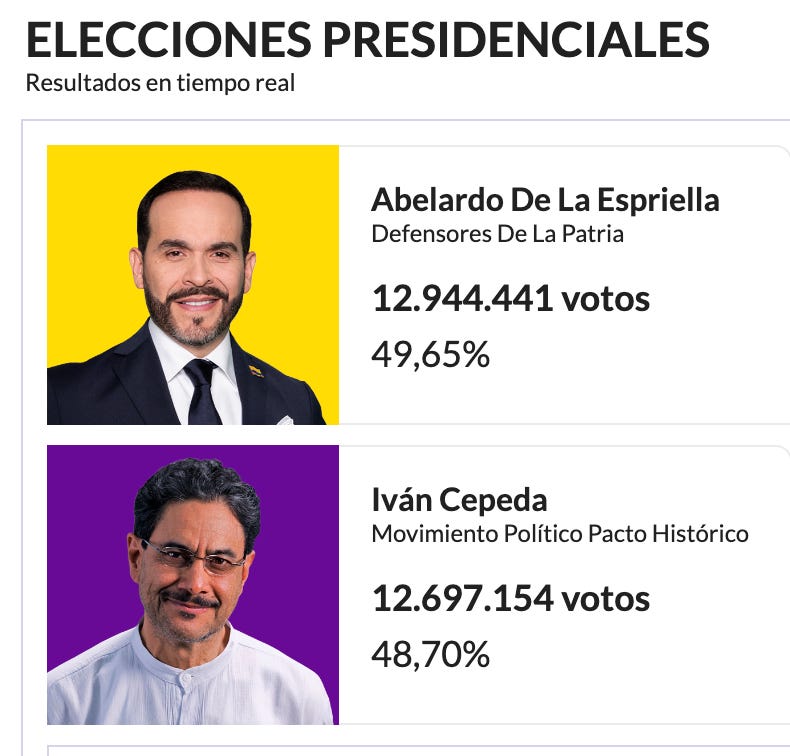
UPDATING: It was a squeaker, but two hours after the polls closed, Abelardo de la Espriella, endorsed by Donald Trump, won the second round presidenital balloting edging out leftwing senator Iván Cepeda, backed by the outoing president of Colombia. The margin—less than 250,000 votes out of more than 25 million cast….
EARLIER: As chancy as a Trump endorsement has been at home during this primary season, across Latin America, it’s been golden—from El Salvador and Argentina to Honduras, Costa Rica, Chile, Bolivia and Ecuador. Now, Colombia’s threatening to fall into line with the leading candidate adopting a playbook ripped straight from the master, as The Guardian pointed out:
Colombians are going to the polls in a presidential runoff expected to trigger a dramatic shift in the country’s decades-long armed conflict, now at its most violent point since the landmark 2016 peace agreement between the government and most of the Revolutionary Armed Forces of Colombia (Farc).
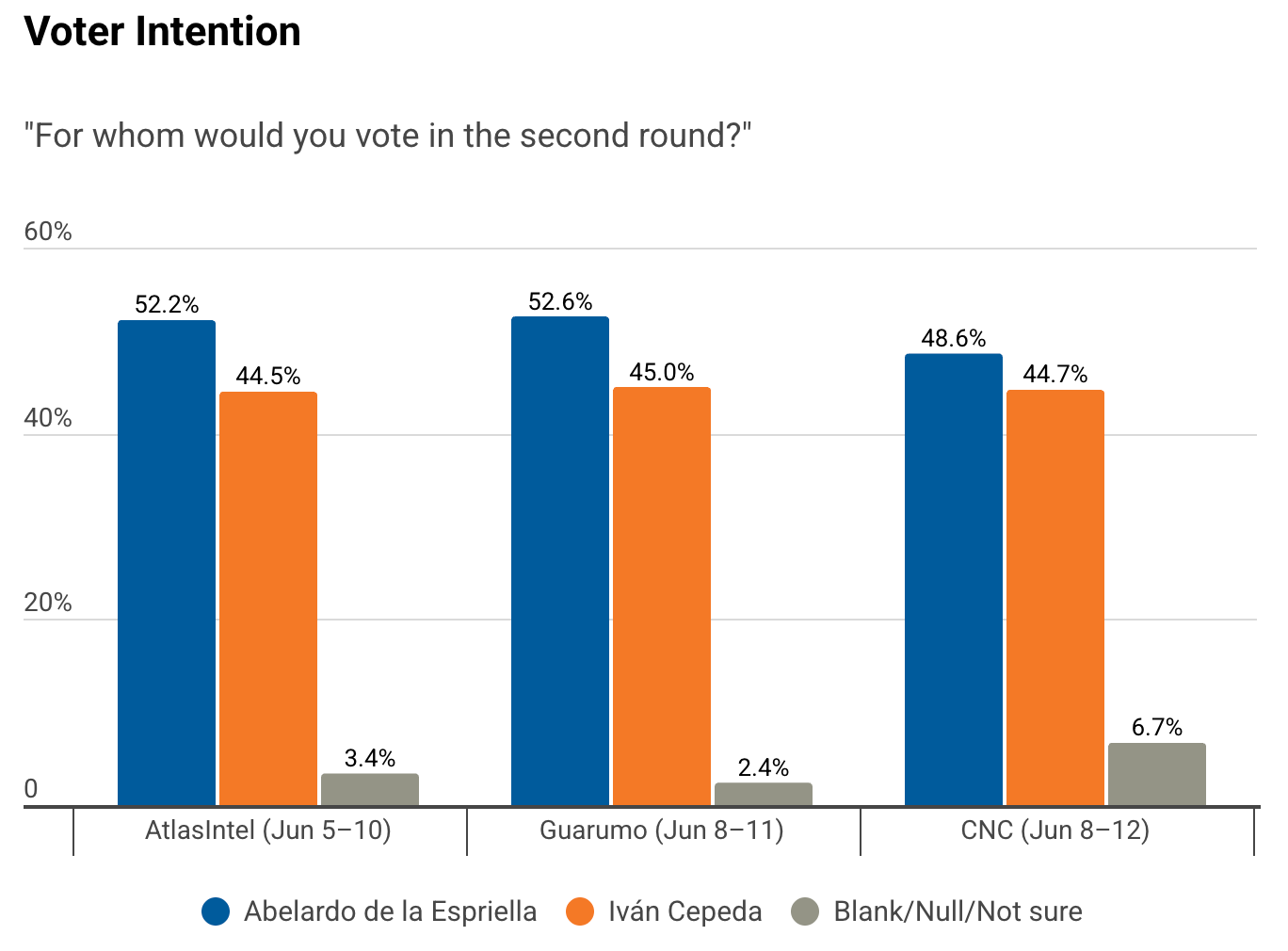
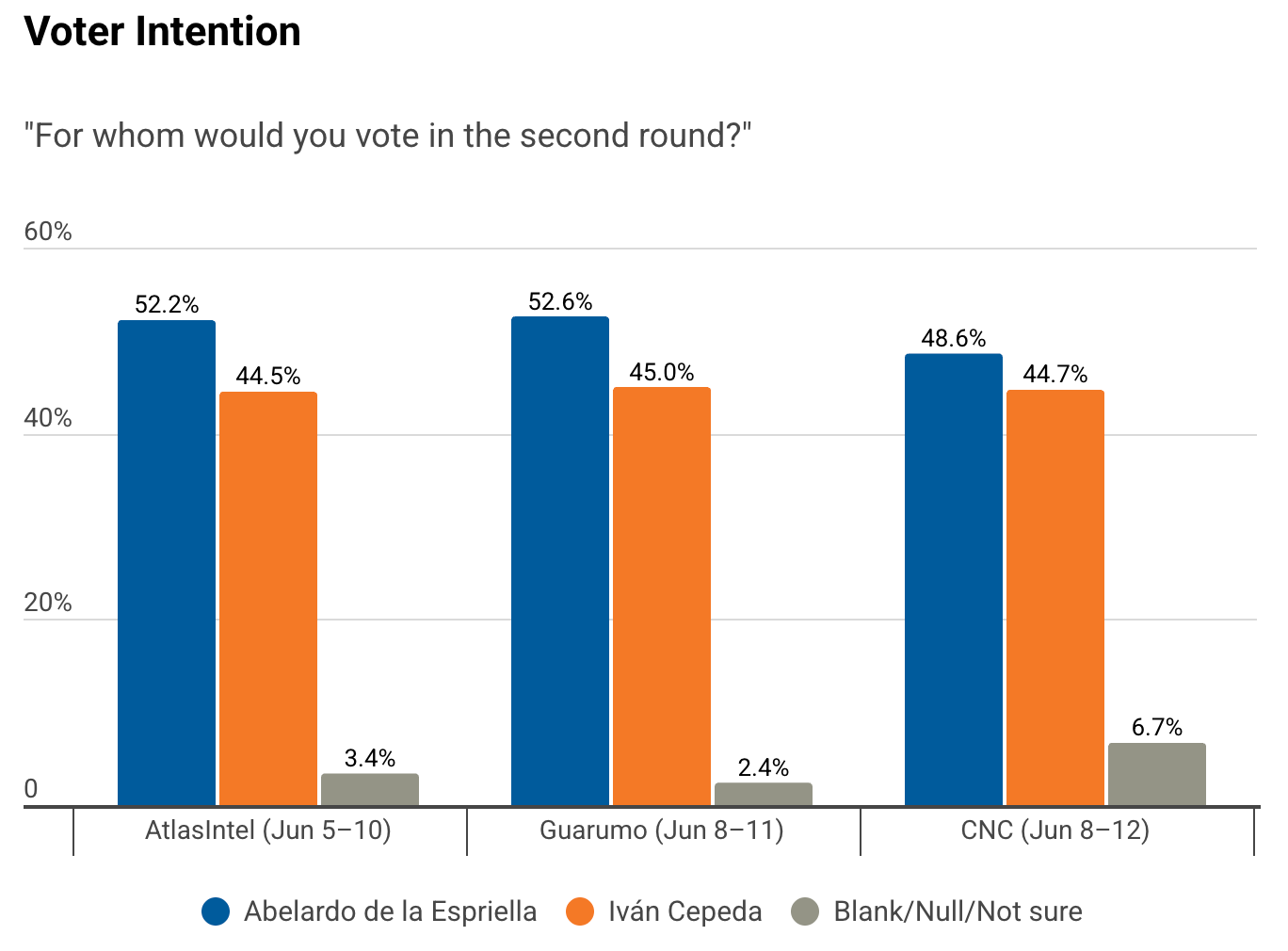
Polls show the frontrunner is the Trump-admiring far-right lawyer and millionaire businessman Abelardo de la Espriella, who has vowed to abandon President Gustavo Petro’s “total peace” plan of negotiating the disarmament of all criminal organisations, instead return to full-scale military confrontation with armed groups.
De la Espriella’s opponent in the ballot will be Petro’s chosen successor and the main architect of “total peace”, the leftwing senator Iván Cepeda, who argues for the continuation of the plan, with “necessary changes.” Cepeda led the polls throughout most of the campaign but was defeated in the first round three weeks ago and has since struggled to attract centrist voters.
At the opening of polling stations, Petro displayed his ballot showing a vote for Cepeda, urged Colombians to “vote, whatever their choice”, and said he rejected “interference by foreign leaders”—a reference to US president Donald Trump, who this week again endorsed De la Espriella while describing the progressive candidate as a “radical left Marxist”.
Petro also announced that, as he controversially did during the first round, he would not accept the preliminary vote count released by the National Civil Registry, the independent public body responsible for organising Colombia’s elections, which are expected a few hours after polls close at 4pm local time. Instead, Petro said he would only recognise the outcome of the official scrutiny process, which is expected to take about two more days. Three weeks ago, the president alleged fraud in the preliminary count without presenting evidence.
Stand by for late results by refreshing this update or come back next Sunday for the full denouement.
For our highly valued, but lightly paid, members…The full hour of Unleashed Conversation withDamien Bruckard … plus a look at the next war: a trade war Europe vs China … And our weekly portfolio from the world’s greatest Cartoonists.

Comments
Nothing yet. Say the first thing.
Sign in to join the conversation.