
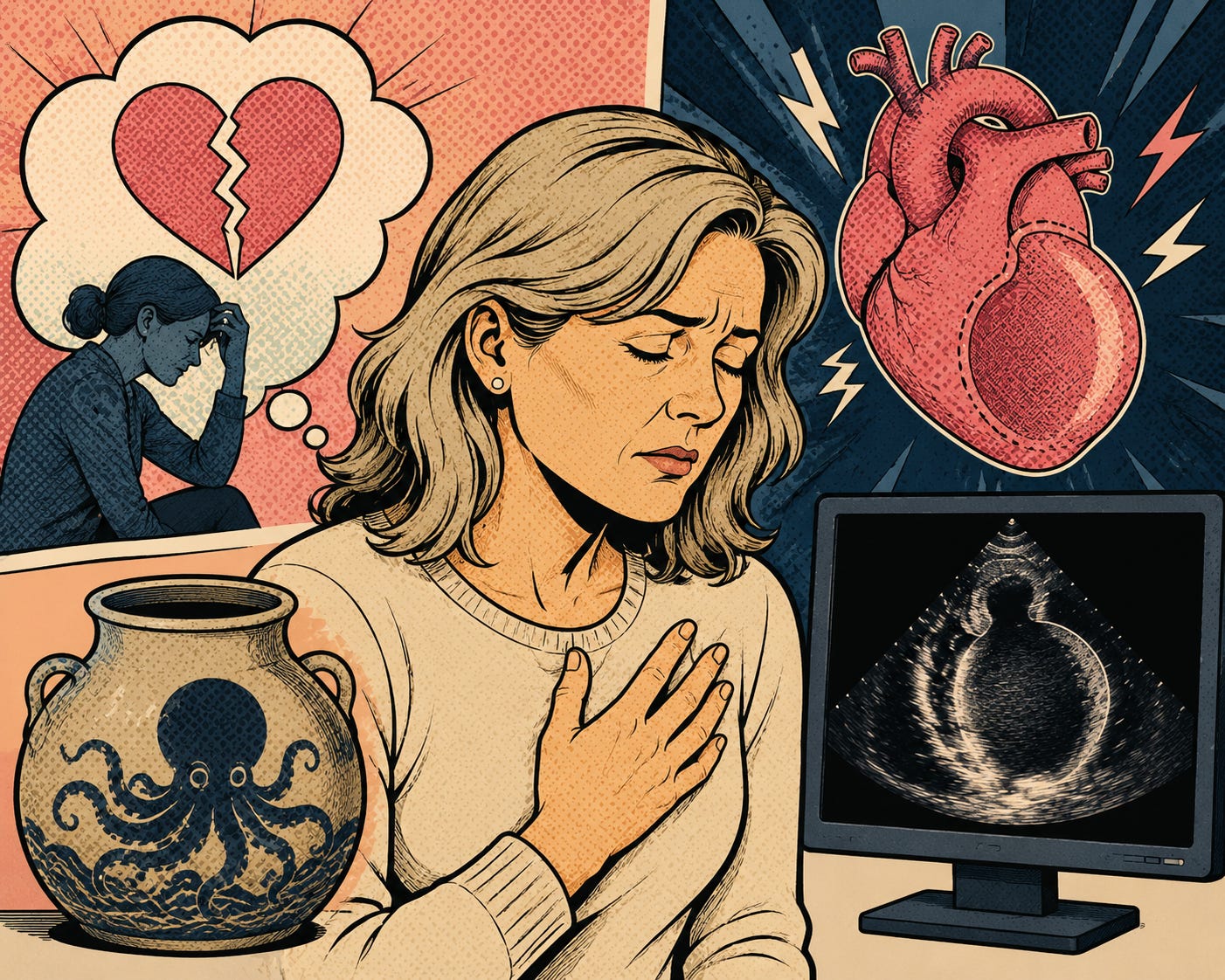
There’s a real medical condition called Takotsubo syndrome, better known as broken heart syndrome, and it’s not a metaphor. A sudden, devastating loss, a death, a divorce, a job gone overnight, can trigger an actual cardiac event in a woman whose arteries are completely clear. The heart itself temporarily changes shape, weakening in a pattern doctors can see clearly on an echocardiogram. It even has an unusual origin story, the name comes from a traditional Japanese pot used to trap octopus, because that’s the shape the heart takes on during an episode.
It strikes almost exclusively postmenopausal women, and the reason comes down to estrogen. Before menopause, estrogen calms the heart’s response to stress hormones, it keeps a surge of adrenaline from overwhelming the heart muscle. Once estrogen drops, that protection goes with it, leaving the heart more reactive to exactly the kind of shock that grief delivers.
For years this was treated as a strange but harmless curiosity, something dramatic that resolved on its own. It isn’t harmless. It carries real mortality risk, and long-term outcomes can rival a heart attack, a detail that surprises most people the first time they hear it.
I want women to know this exists, because it reframes something we don’t talk about enough. Grief isn’t only an emotional experience. It has a measurable, physical effect on your heart, especially once estrogen is no longer buffering that response the way it once did. If you’ve been through something devastating and you’re having chest pain or shortness of breath, that’s not something to explain away as stress or grief alone. Take it seriously enough to mention it to whoever you see.
This Saturday, I’m sharing a real patient case that brought this condition into focus for me, along with what the research shows about why this happens to women so disproportionately, and what role hormone therapy may play in protecting against it.
No posts
Comments
Nothing yet. Say the first thing.
Sign in to join the conversation.