
Climate change isn’t just raising temperatures. It’s rewriting the rules we have long taken for granted.
Scientists are discovering that restoring a lost sea could prevent hundreds of millions of tons of carbon emissions. Cities are learning that resilience depends not only on stronger infrastructure, but on stronger connections with one another. Governments are forging new partnerships to accelerate climate research, recognizing that no nation can tackle this challenge alone.
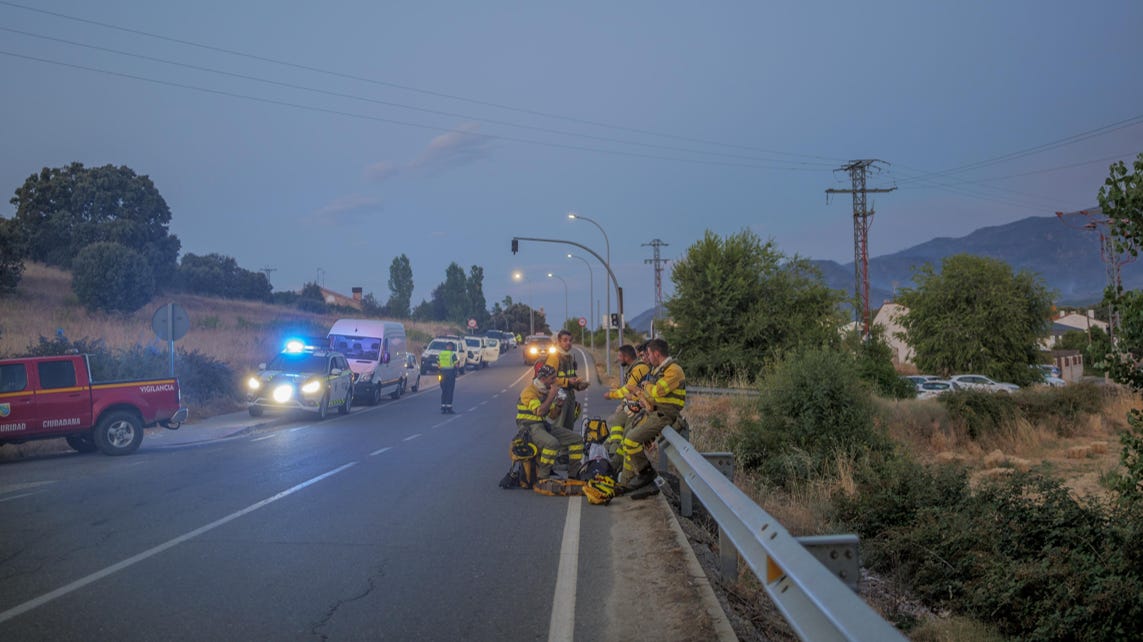
At the same time, the consequences are becoming impossible to ignore. Europe’s droughts, heatwaves, and wildfires are growing more destructive. Insurance companies are questioning what can still be protected. Beekeepers in Kashmir are watching livelihoods disappear as flowering seasons shift. Even the world’s biggest sporting event is being reshaped by rising temperatures, while forests once expected to absorb more carbon are revealing new limits in a warming world.
This week’s stories reveal a simple truth: climate change is no longer changing only the weather. It is reshaping ecosystems, economies, infrastructure, and everyday life, forcing societies everywhere to adapt to a future that has already begun.
Thanks for reading Climate Tech Venture Review! This post is public so feel free to share it.
“The study reveals that sediments exposed by the retreat of the Aral Sea have released 748 megatonnes of CO₂ into the atmosphere since 1960. At the same time, the researchers found that a substantial amount of carbon remains buried within the former lake bed and that reflooding the system could prevent the release of a further 605 megatonnes of CO₂—roughly equivalent to almost three years of Spain’s current human-caused greenhouse gas emissions.” (Phys.org)
“Under the agreements, China and the EU will jointly fund collaborative research projects between 2025 and 2027 under two major initiatives on “Food, Agriculture and Biosolutions” and “Climate Change and Biodiversity.” The initiatives will support cooperation among universities, research institutes and enterprises from both sides to carry out practical research and development projects, according to the report.” (Global Times)
“Traditional resilience planning for extreme weather focuses on reinforcing municipal boundaries and internal infrastructure. Now, a study demonstrates how a city’s socioeconomic and physical ties to external urban networks act as a critical catalyst for intra-city mobility resilience under extreme rainfall.” (Nature Climate Change)
“Scientists say climate change is making destructive events such as droughts, floods and heatwaves more frequent and intense, and that Europe is the world’s fastest-warming continent. Last month was the hottest June ever recorded in western Europe, the Copernicus Climate Change Service said, with a brutal heatwave causing thousands of excess deaths.” (France 24)
“Certain locations and perils cannot be covered as we would wish them to be covered,” said Guenther Thallinger, who sits on the management board of Allianz, in an interview. “We cannot help it.” Heat, floods, storms and wildfires “could become so frequent that they challenge traditional insurance models,” he said. “Risk-adequate pricing would not be affordable any longer.” (Los Angeles Times)
“Beekeepers across Kashmir say erratic rain and temperature swings have sharply reduced honey production this season. Some producers reported losses of up to 90%, with the valley’s important acacia bloom badly disrupted. Experts say the decline is linked to climate change, pesticide use, cold spells during the bloom season and the stress of seasonal hive migration.” (DownToEarth)
“Three out of eight matches were played in cities with daily highs above 82.4°F (28°C), the threshold at which heat can begin to affect athletic performance. All three of those matches were played in climate-controlled stadiums. Two out of eight matches had kickoff temperatures above 82.4°F (28°C), based on observations from the nearest weather station. Both of those matches were played in climate-controlled stadiums.” (Climate Central)
“It is often assumed that faster warming strengthens carbon sinks in colder regions. However, the study shows that the strongest carbon sinks occur in the western and southern parts of Northern Eurasia, whereas carbon sinks progressively weaken toward the colder northeastern regions. Although these vast cold regions are experiencing some of the fastest warming on Earth, their forests are generally less productive and more susceptible to disturbances such as wildfires.” (EurekAlert)
“Forests with a high bonitet rating, already carrying substantial carbon stocks, end up doing most of the heavy lifting for the region’s overall carbon sink. Lower-quality forests barely respond to warming at all, even in the places heating up the fastest. In other words, cranking up the temperature doesn’t magically turn a weak, unproductive forest into a strong one, no matter how many degrees get added to the average.” (Earth.com)
“These weather extremes are interconnected as dry and hot conditions fuel worsening flames, particularly in France and Spain. Roughly 330,000 people there have been forced to flee their homes this month—one of the largest evacuations in Europe since World War II. So far this year, wildfires in southwestern France have burned through about 287,000 acres. In the southwest Gironde region, one blaze alone has scorched an area four times the size of Paris, triggering widespread evacuations near Bordeaux, the wine capital of the world.” (Inside Climate News)
Thanks for reading Climate Tech Venture Review! This post is public so feel free to share it.
No posts
Comments
Nothing yet. Say the first thing.
Sign in to join the conversation.