
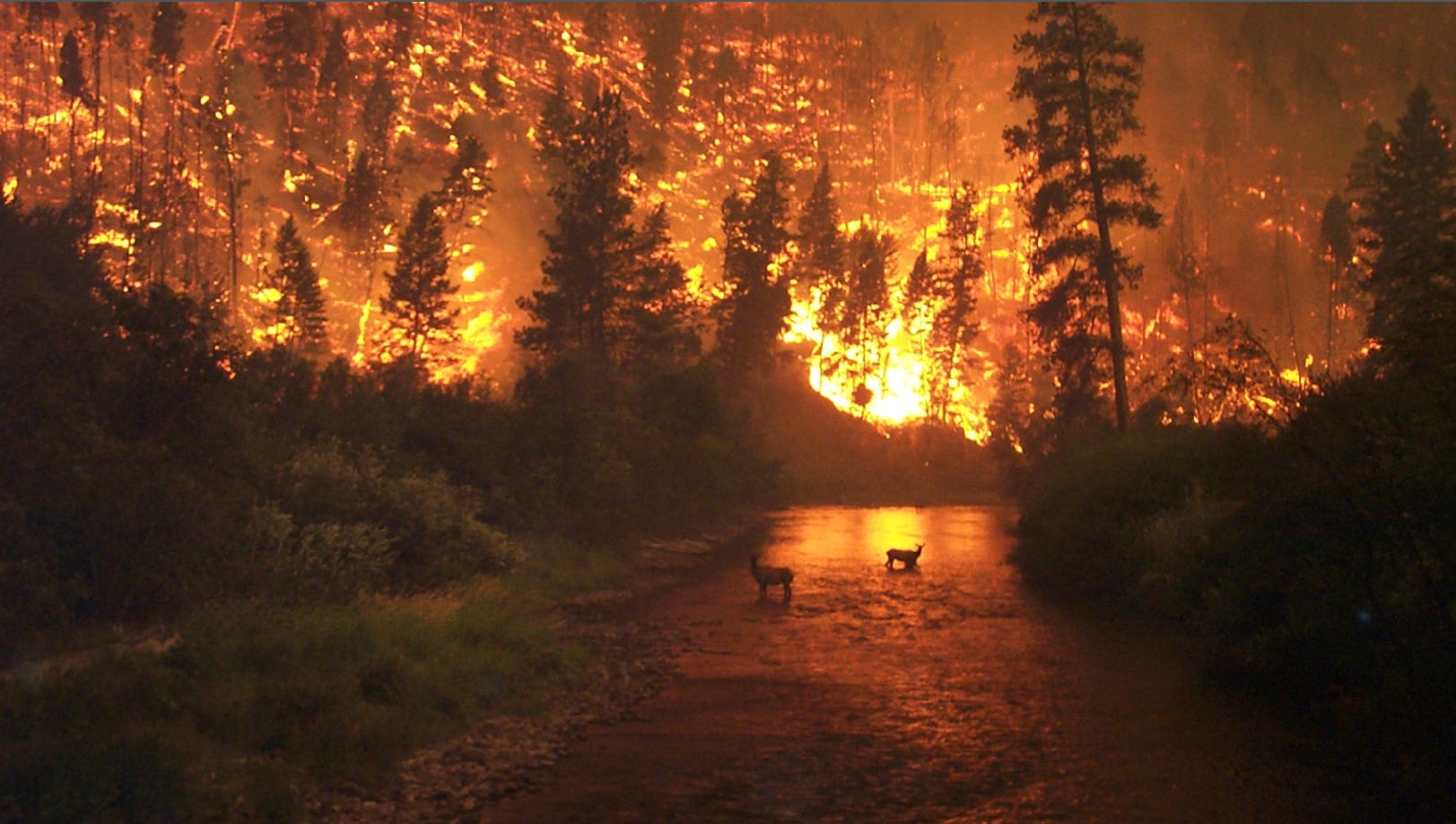
Alastair Marsh | Bloomberg
For years, climate tipping points were viewed as distant scientific possibilities. Today, they’re becoming a real financial concern. From pension funds to global asset managers, investors are beginning to ask what happens when irreversible climate shifts stop being hypothetical and start affecting the value of real-world assets.
Climate tipping points are moving from scientific theory into mainstream financial risk management as investors seek to understand how irreversible environmental changes could affect long-term asset values.
Large pension funds and asset managers are expanding climate scenario analysis beyond gradual warming to include low-probability, high-impact events that could trigger abrupt market repricing.
As climate science evolves, investors are increasingly recognizing that resilience and adaptation may become as important to long-term portfolio performance as traditional financial metrics.
Climate tipping points are becoming an investment issue, not just a scientific one. Institutional investors managing hundreds of billions of dollars are beginning to model scenarios once considered too remote for financial planning. Standard Life plans to introduce tipping-point analysis across its £317 billion portfolio, while firms such as AllianzGI and Legal & General are also incorporating these risks into long-term investment strategies.
JPMorgan describes climate tipping points as potential “black swan risks”: low-probability but extremely high-impact events capable of permanently altering markets. Rather than focusing solely on gradual warming, investors are increasingly evaluating abrupt, irreversible changes that could trigger widespread asset repricing. “When change accelerates, systems can be pushed toward thresholds faster than society and markets can adapt,” said Sarah Kapnick, JPMorgan
Some climate thresholds may already be approaching — Scientists have identified more than a dozen tipping points, including the collapse of coral reefs, irreversible melting of the Greenland ice sheet, Amazon rainforest dieback, and weakening of the Atlantic Meridional Overturning Circulation (AMOC). Once crossed, these changes may unfold over decades but become effectively irreversible.
Climate scientists argue that once investors believe a tipping point has been crossed, markets may begin repricing assets immediately rather than waiting decades for the physical consequences to unfold. As Tim Lenton observed, investors may choose to “bring the future into the present” by adjusting valuations as soon as irreversible change becomes likely.
The UK’s Prudential Regulation Authority has instructed banks and insurers to consider climate risks that are non-linear and irreversible, warning that historical data alone is no longer an adequate guide for future financial risks. The shift signals that climate uncertainty is increasingly becoming a core component of financial supervision.
Experts suggest that insurers, who price physical risk before many other financial institutions, may provide an early indication of where climate-related asset repricing begins. As extreme weather becomes more frequent and costly, changes in insurance availability and pricing could ripple across real estate, infrastructure, and investment markets. “It will be the insurability and financial tipping points... that really garner mainstream attention,” said Mark Wade, AllianzGI.
Unlike wars, financial crises, or pandemics, climate tipping points involve irreversible changes that cannot simply be reversed through recovery or rebuilding. The challenge for markets is no longer determining whether climate change matters, but how to value assets when the timing of irreversible change remains deeply uncertain.
For years, climate scientists have warned about tipping points. Now, investors are starting to ask what happens if they’re right.
At CTVR, we’ve explored how climate change is reshaping water systems, energy infrastructure, and the businesses that depend on them. This article marks another important shift: financial markets are beginning to treat climate risk not as a distant possibility, but as a reality that demands preparation. The conversation is no longer just about protecting the planet. It’s about protecting the systems that underpin our economies and everyday lives.
The biggest investment risk may no longer be climate change itself, but waiting too long to prepare for it.
No posts
Comments
Nothing yet. Say the first thing.
Sign in to join the conversation.