
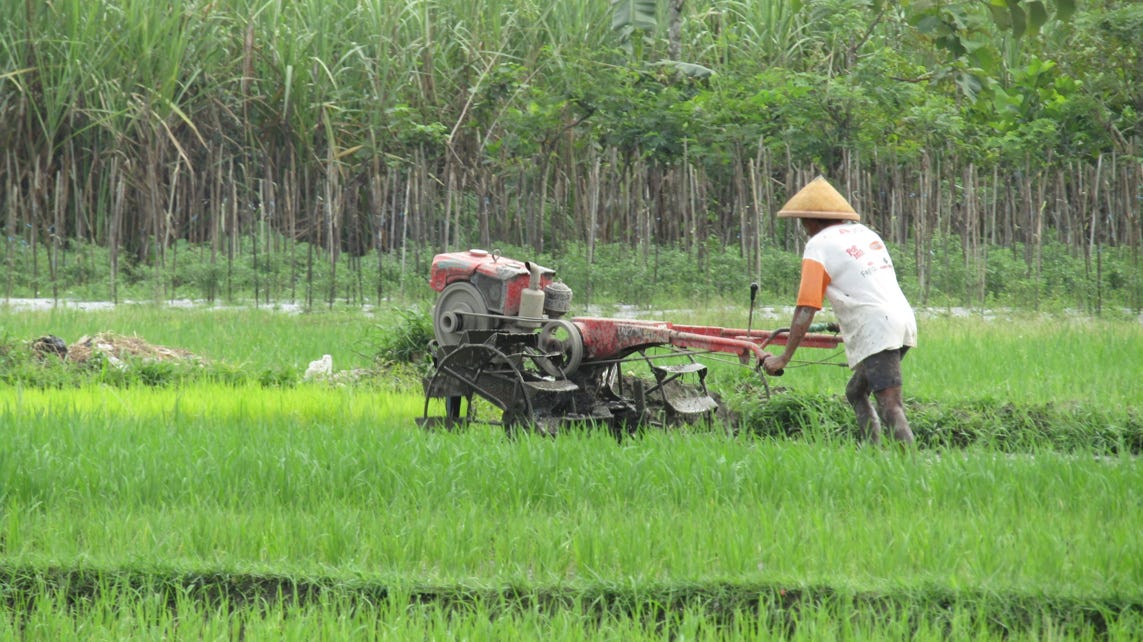
Climate change is increasingly showing up not as a distant threat, but as a disruption to the systems we depend on every day. Farmers are turning to soil sensors and other technologies to make better decisions. Scientists are watching vegetables, butterflies, mountain plants and regenerating forests respond to a warmer world. Governments and courts are wrestling with who should be responsible for emissions, while cities confront the difficult question of how much carbon removal is enough. And on the ground, drought, extreme heat and shifting seasons are already affecting food, health, livelihoods and economies.
This week’s updates offer a snapshot of that transition: technology is helping us adapt, science is revealing how deeply ecosystems are changing, policy is struggling to keep pace, and the impacts are becoming harder to ignore.
Thanks for reading Climate Tech Venture Review! This post is public so feel free to share it.
“Charles Fossay farms near Starbuck and is a director at Keystone Agricultural Producers. He has been farming for more than 50 years, and grows a lot of wheat, barley, oats, canola and soybeans. He says while farmers can sometimes get overwhelmed by data, an innovation like a soil probe can be a very useful tool, especially for irrigation farmers. “Like, if you’re in irrigation, the idea of having a soil probe that will tell you how much moisture is in the soil, how deep down that moisture is, how deep the roots are growing — because that’s a very good indicator how much nutrients the plants using — has sort of an indication towards the size of the crop you might be harvesting,” he said. So, some of that data can be very useful.” (CBC News)
“Growing more vegetables alone is not enough. We also need to grow a greater diversity of vegetable species,” says Eric Schranz, professor of biosystematics at Wageningen University & Research. “Much of the vegetable biodiversity we need can still be found in traditional varieties and their wild relatives. We urgently need to safeguard this diversity and connect conservation with breeding, use by farmers and healthier diets as the climate changes.” (Phys.org)
“The results show that warmth-associated plant species are now more common in many places than they were at the beginning of the monitoring program. At the same time, temperatures on the summits studied have risen. Surprisingly, however, the extent of thermophilization at a monitoring plot could be explained only to a limited extent by the warming measured there.” (Phys.org)
“The increasing volume of Sargassum has created environmental and economic problems along affected coastlines. When large quantities accumulate on beaches, decomposition can reduce oxygen levels in coastal waters and block light reaching seagrass beds. The process can also release gases and produce strong odors. Researchers are studying additional risks. A 2026 University of Miami study found that stranded Sargassum can transfer arsenic into surrounding sand, leachate and the atmosphere during decomposition.” (Colombia One)
See also our story Seafields: An Innovative Ocean-Based Nature-Enhancing Solution To Climate Change
“Species are not static objects. In principle, they can respond to their environment through adaptation or evolutionary change,” says Ashe-Jepson. “However, in the butterflies I studied, I found little evidence that their capacity to thermoregulate or their heat tolerance had adapted to different climatic conditions.” (Phys.org)
See also: The Birds aren’t Just Disappearing—Their Decline is Accelerating
“Out of thousands of tree species in the Amazon, a small group of 15–25 species do most of the work in regenerating forest and storing carbon when farmers and landowners leave, Fernando Elias, a researcher at the Emilio Goeldi Museum of Pará, told AFP on Saturday. “It’s fantastic because the forest is resilient. These species give the forest a new chance” after the “complete rupture” with the environment that happens when trees are felled, Elias said.” (Phys.org)
“Models allow us to understand which communities could be affected by an outburst flood,” said Karl Lang, an assistant professor in the School of Earth and Atmospheric Sciences. “They also help us estimate how long floodwaters will remain on the landscape. In many places, prolonged flooding can be just as devastating as the initial event because it can damage infrastructure, disrupt livelihoods, and contribute to public health risks.” (Phys.org)
“Legal analysts said the outcome of this case could have significant consequences for the regulation of interstate commerce, particularly given previous U.S. Supreme Court precedent. Lawyers for the energy companies said the Clean Air Act protects entities from being involved in lawsuits regarding emissions that span across state lines.” (The Georgia Virtue)
“While there are no specific professional obligations on solicitors relating to climate matters, in-house solicitors share the same core professional duties to their internal clients as private practice solicitors, including duties of care, warning, disclosure and professional competence. The Guidance notes that climate change increasingly engages the wider professional ethics framework, particularly where climate change may present core business risks, and these broader duties should be kept in mind at all times as in house-solicitors advise on climate change matters.” (Burges Salmon)
“Leading European cities race to reach net-zero emissions, but residual emissions are tied to easier-to-abate sectors and temporary, land-intensive carbon removal for compensation. To keep climate neutrality credible and fair, policy must tighten expectations on cutting emissions and set clear rules for carbon removal and credits.” (Nature Climate Change)
"Speaking at the SADC People’s Summit 2026, researcher and ecofeminist scholar Dr Melania Chiponda argued that the regions’s efforts to end child marriage can no longer focus solely on legal reform. Instead, she called for a new regional framework that links child marriage prevention, climate justice and accountability for extractive industries, warning that mining expansion and climate shocks are creating new vulnerabilities for girls across Southern Africa.” (Africa Science News)
“The drought and resulting disruption to energy supplies have also left some Hungarian towns struggling with shortages of drinking water. In a room inside Szentendre’s tourist information office, thousands of bottles of water are stored ready to be distributed, particularly to elderly and vulnerable residents.” (The Guardian)
“Climate change means shoppers may need to adjust their expectations about purchasing food. Crops may ripen earlier or later than usual, harvests may be smaller, and fruits and vegetables may not always look picture perfect. Buying “imperfect” produce and remaining flexible when seasonal crops are delayed can help farmers reduce waste and recover more of their production costs.”(Cleveland.com)
“Record heat and droughts this summer, which scientists say are exacerbated by global warming, wreaked havoc in power production, shipping and public health systems, while this wildfire season is on track to be Europe’s biggest ever. Together, the hit to the region’s economy can already be measured in the hundreds of billions of euros, economists and academics estimate. But they warn this is just the beginning, as costs are set to rise faster than temperatures.” (Billings Gazette)
“More than 70 people in attendance at the Tacos and Tequila Festival were treated for heat-related illnesses, including at least seven who were hospitalized after “experiencing serious symptoms of dehydration and/or intoxication,” according to the Colorado Springs Fire Department, which declared the festival a “mass casualty” “event.” (Colorado Newsline)
“Higher temperatures accelerate ripening and produce grapes with a higher sugar content, making it harder to preserve champagne’s flavour and acidity. This summer the Champagne Committee (CIVC), the industry’s governing body, which determines harvest dates by monitoring grape maturity, advanced the official start date to August 12 — more than a week earlier than last year’s August 20.” (Reuters)
“El Niño, the Pacific climate shift that comes around once or twice a decade, is back this year — warming tropical oceans and triggering various consequences worldwide. We know to expect these, and they don’t usually reach full strength until December. But this year’s El Niño is already huge — and affecting the planet well before it is done growing. Scientists say the world should brace itself for some major weather extremes.” (The New York Times)
“Whilst the UK has experienced wildfires and drought over the summer, it is still less exposed to climate change than many of its global suppliers of healthy staple foods Of the top 20 countries the UK imports fruit and vegetables from most, 18 (90%) are moderately to severely vulnerable to climate change. Of the UK’s nine most purchased fruits five can be grown in the UK (apples, strawberries, blueberries, raspberries, pears) — but we remain under 40% self-sufficient for four of those and could be growing more at home(2) . Imports are needed for the whole supply of some fruit, such as citrus fruits and bananas .” (The Food Foundation)
Thanks for reading Climate Tech Venture Review! This post is public so feel free to share it.
No posts
Comments
Nothing yet. Say the first thing.
Sign in to join the conversation.