
A bit ago, I was chatting with my friend, Jennifer S. Brown (who has a hilarious Substack that makes me wish I had a single funny bone in my body), after we met up at an Author’s Guild event. Her daughter is learning Italian, and she asked what language tools I use. I wrote about this years ago, but times are always changing, and I thought it was a good time for an update.
I’ve been learning Italian for the better part of the last fifteen years. It’s a lot of work and not so easy to do as an adult. But when I’m in Italy, I can converse without switching to English, and that comes with a whole bunch of perks when I travel. But I have to keep it up between visits, or all my conversation quickly goes by the wayside.
If you are serious about learning another language, you might also benefit from some of these tools that have helped me study, memorize, and move further along the path toward fluency (and yes, it’s a long path). Note that all these services allow you to learn languages other than Italian.
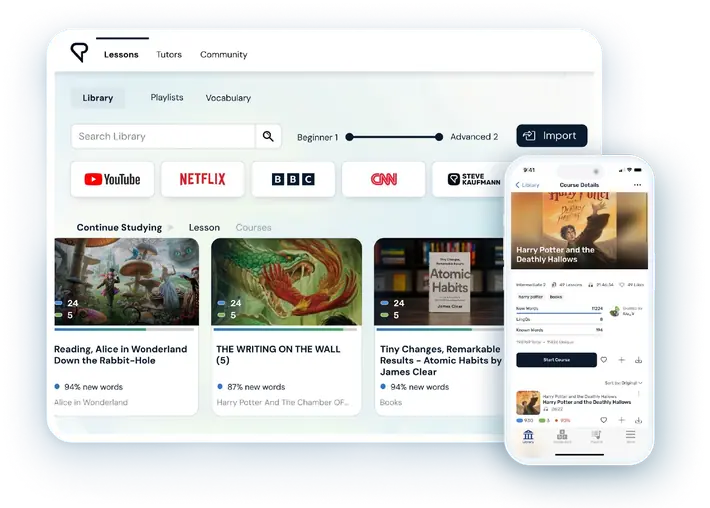
I’m loving LingQ, which lets you pull in text from public-domain books, podcasts, YouTube, Netflix, and other sources. It has 52 languages and tailors really well to various levels. What I love about it is that it helps you understand words in context. It’s a lot more immersive, and it covers reading, listening, and speaking. As you can imagine, I learn best by reading and absorbing information, so this is super perfect for me. I’m getting a lot of world news now by reading Italian in LingQ.
Anki is an amazing—AND FREE—flashcard system that allows you to practice virtually anything because you can customize it. There is a desktop app, a phone app, and the ability to use AnkiWeb to sync it all to the web. So basically, you can practice from anywhere.
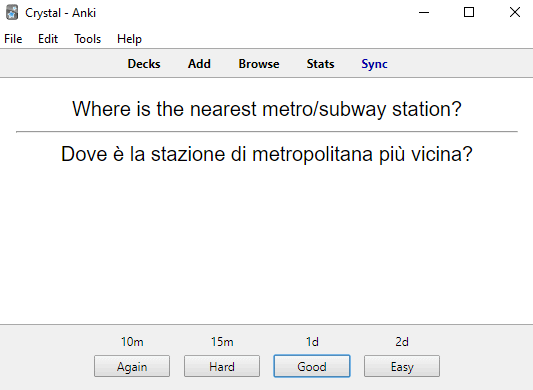
You can also download decks created by others, which I have found helpful. One of my faves is a deck that helps you test yourself on the various regions of Italy. My Italian tutor (she’s from Milan) even finds this hard!
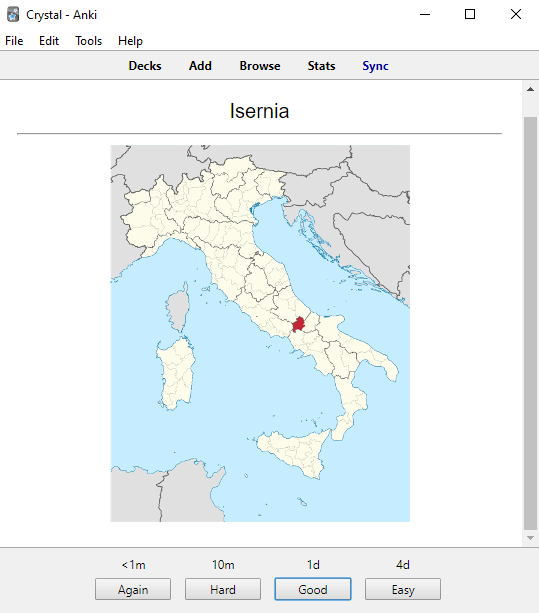
Hands down, this is the tool that has helped me the most when learning Italian on my own. It employs a great refresher system too, which I love. Note that you can also use these flashcards for anything...learning science vocab, memorizing things, etc. It’s free on desktop and Android. The iOS app syncs with your desktop app, and costs a one-time $24.99 fee, which helps fund the entire project.
Clozemaster is an app I’ve only recently discovered, and I wish I had known about it years ago. It’s purely for learning vocab. You’re presented with a sentence and have to fill in the gap. There are all sorts of collections, ranging from the most-used vocabulary to verbs to specific themes. You’re also drilled on words that are most commonly used in the language, ordered by frequency, so you're more likely to memorize vocabulary you’re more likely to use. I love the retro 1980s style of the interface. You can use it daily for a quick refresher with 30 free sentences a day, and you can upgrade to unlimited sentences for $13 a month or $70 a year.
These next two apps can also be put into the spaced repetition section, but they are specific to verbs. I still have a lot of trouble conjugating verbs. I have no problem when I am reading, but when I have to speak on the fly, I often completely stall out. Italian is particularly difficult because it has tenses that we don’t have in English and all sorts of irregular verbs. I found I need to go back to the basics and focus more specifically on conjugation.
Conjuu quizzes you on over 900 verbs. You’ll be working with full conjugation tables, sorted by tense and regular vs. irregular, with usage notes and audio. Conjuu is available as a free download on iOS, Android, and macOS, offering basic tenses and a limited selection of verbs. To unlock all verbs, advanced tenses, and full features, you can fork over a one-time fee of $7.99 for a permanent lifetime upgrade.
Verbare is a flashcard app specifically for verbs. There is audio, and it runs offline without ads. The free version covers 110 verbs in two tenses, which is enough if you are just starting out. The upgrade opens up 500 verbs across all fifteen tenses.
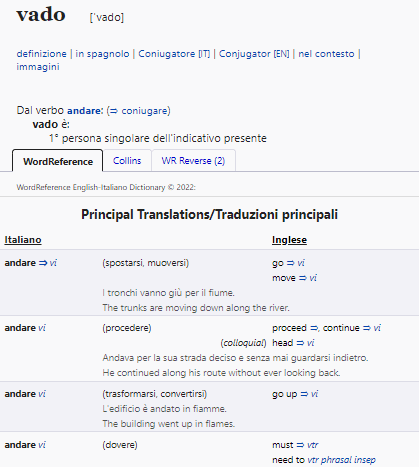
One of the best online language dictionaries on the Net, WordReference also has forums that enable language learners to ask questions and find answers. The forums are fantastic and excellent for helping you understand idioms or how to write a formal letter or translate a certain phrase. What I love about the dictionary is that it gives examples and helps you determine which version of the word you want. For example, here is a small section on the word “vado,” which, in its simplest form, means “I go.” You can choose either the WordReference dictionary or the Collins dictionary. I’ve chosen Collins in this example:
Reverso is a language translator, but it also has a bevy of tools (both free and paid) for language learners. I love the context part of the site, which helps you understand how words might render in sentences. I use this far more than I do Google Translate.
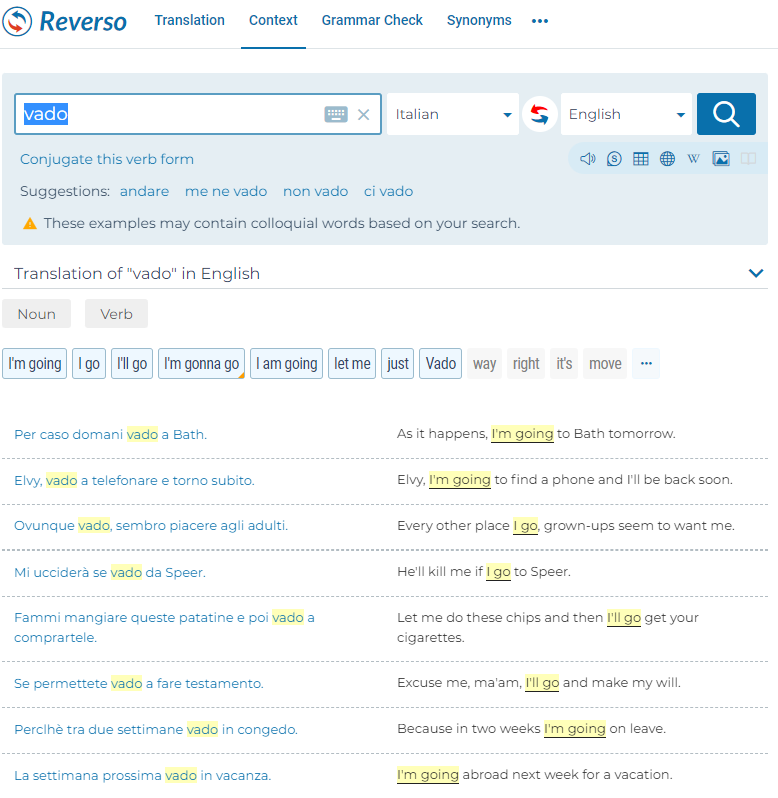
You can also check synonyms, grammar, and play language games. You can download it for Windows and translate documents on the fly, or install it for use with Netflix and YouTube! I try not to use it for translation as much as I do for checking words, but it is very powerful for anyone looking to translate from a slew of languages.
Forvo is a site for pronunciation, which may seem a bit odd, but when you are trying to learn a language and are practicing on your own, it’s common to run across words that you aren’t sure how they sound. That’s where Forvo comes in. Search the database for a word, and voila, you can click a button to listen. If you want to know more about the dialect or region the speaker is from, you can click through to see.
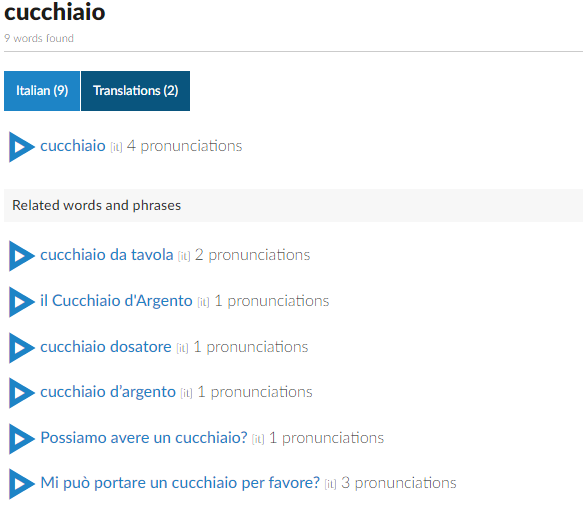
You can also vote for Forvo pronunciations as good or bad. If you can’t find a pronunciation, you can add it to the Forvo database, and usually within 24 hours someone will have pronounced it for you. You can also choose to help pronounce words in your own language and add them to the database. I’ve found this tool incredibly useful, especially as I was just getting started and trying to understand the nuances of pronunciation. One downside is that the site has become riddled with ads in recent years, which is unfortunate.
If you are just beginning your language learning journey, a great place to start is with a language learning site such as Babbel or DuoLingo. Babbel is best for more serious users, IMHO. The lessons run 10 to 15 minutes, and they’re built around dialogue you’d actually use rather than the bizarre phrases DuoLingo comes up with. The grammar is also explained very explicitly, whereas other sites teach you more through repetition and osmosis. Definitely better for learning real conversation rather than collecting a highly gamified streak aimed at incrementally nickel-and-diming you to learn. There is also an AI component in the app, which is useful for practicing your speaking. There’s no meaningful free tier, though. It runs about $15 a month on a three-month plan, closer to $8 a month if you pay for a year, and there’s a lifetime option that goes on sale often, and it’s worth snapping that up if you see it.
Duolingo has grown in popularity over the years because of its fun, slick interface and easy-to-use learning approach. It tests and retests you on particular items, and you can earn rewards for completing learning streaks. It’s definitely a beginner’s site; however, it wouldn’t take more than a couple of months to reach what they call “fluency.” I’ve used it on and off, but recently gave it up because I was more focused on getting a streak and staying on the leaderboards than on learning, which, for me, isn’t good. It’s fun, though, and better than doing nothing at all.
On Lingopie and YABLA, you can watch all sorts of videos, ranging from instructional videos to television shows to music videos.
As you are watching the video, you’ll have the choice of viewing subtitles in the language of your choice or in English. You can slow the speech down, pause it, loop sections over and over, and when you click on a word in the subtitle it gives you a definition and then automatically adds it to a flashcard list for later. I like how it helps you get a sense of the accents, the cadence, and the diversity of the language in a way that is difficult to do through other materials.
Lingopie hooks into Netflix and YouTube as well as other channels. It covers fifteen languages and runs about $12 a month or $65 a year, with a family plan and a lifetime option.
I still love Yabla, which has been around longer and does something similar with shorter clips: television, music videos, interviews, instructional material. Roughly $13 a month or $100 a year. I got deep into a cheesy romantic cop show (although sadly full of typical Italian misogyny) that ran from 2009-2011 called Il Commissario Manara (Commissioner Manara).
When I was commuting regularly, News In Slow Italian was a wonderful audio way to learn the language. It’s not inexpensive, but it’s such a great way to really hear the language at a pace that is understandable. The website and mobile app serve as a companion to the audio, and I love turning to them after I’ve listened to the week’s news to look up the words I didn’t know. You can use this online or in the downloadable mobile app.
I try to read primarily in Italian and use the dictionary to figure out words I don't know (if you read Italian books on Kindle, you can buy an Italian dictionary and load that to look up words as you read!). But every once in a while, it's nice to try and read material side by side to understand a translation. ITALY magazine has a great dual-language section. Bilinguis has a couple of classics such as Alice in Wonderland and The Hound of the Baskervilles.
I also greatly loved Jhumpa Lahiri’s book, In Other Words, which details her decision to move to Italy and write a book in the language. She wrote the book in Italian and had it translated back into English, and you can read them side by side.
There are a million tools out there, and none of them replace talking to another person. I don’t meet with a tutor regularly now, but I try to meet up with people I know who speak Italian as often as I can. During the first 15 years of my study, I met with a tutor or a tutored group nearly every week for at least an hour, and it helped me improve exponentially.
Finding one is easier now than when I started. If you can’t find a local tutor or class, italki is still the standard. You book lessons one at a time, no subscription required, and you choose between community tutors, who run $8 to $20 an hour and mostly just talk with you, and certified teachers, who cost more and help you develop a plan for your learning. You can try different tutors before committing to one.
If you’re someone who needs a bit more accountability, Preply works the same way but bills you weekly whether you show up or not. Sometimes the guilt trip about wasting money can be a great incentive.
And if you are struggling to find someone to speak with or the idea of it seems daunting, the best AI tutor app I’ve seen is Praktika. This is far better than just having a conversation with Claude or ChatGPT. Instead, you’re talking to an animated avatar that answers what you say. It also creates a guided path for you as you learn. It’s not better than a human, but it’s pretty darn good. $8 a month, though they want three months or a year up front. The good thing is that one subscription covers all the languages they offer.
Having all these tools at your fingertips is really only the tip of the iceberg, though. Not a single one of these sites will help you unless you first make the time to practice. Fifteen minutes a day will go far toward helping you absorb as much of the language as you can. Watching Italian movies or television and reading Italian magazines and newspapers are great additions to the above tools. But again, it goes back to taking the time to practice. Make it a priority and be prepared to make it a priority for years to come, unless you have the extreme fortune of living for a time in the place where the language you are learning to speak is spoken—then it may come a bit faster!
Always love me a bit of Puddles Pity Party, but especially throwing Gilligan’s Island into the mix.
More nostalgia.
If you love food and love Italy, and haven’t read IN THE GARDEN OF MONSTERS, THE CHEF’S SECRET, or FEAST OF SORROW, click the links to learn where to buy your copy! And now you can order my latest, THE HAPPINESS COLLECTOR!
Follow me here: Website | Instagram | Facebook | Threads | Bluesky | TikTok
Comments
Nothing yet. Say the first thing.
Sign in to join the conversation.