
During the year my book came out, in 2017, I was part of The Debutante Ball, a group of debut novelists who banded together to blog about the process and what inspired their books. I think the Ball has been around for the better part of twenty years now. My year consisted of authors Amy Poeppel, Tiffany Jackson, Jenni Walsh, and Lynn K. Hall, all women who are incredibly talented. When I think about what we’ve all accomplished since 2017, I’m blown away. At the time, though, we were all pretty new to the process, being debut authors, and we often struggled to figure out what to talk about since we were expected to blog so often.
I decided to reach out to an author who had inspired me for years, and whose novel, The Confessions of Young Nero, was coming out around the same time as my novel, Feast of Sorrow, the celebrated author, Margaret George. I’d been in radio, PR, and marketing for much of my working life, and reaching out and talking to famous people was something I’ve done dozens upon dozens of times. But talking to an author whose works had inspired me so much, I was quite nervous at the time. But I had no need to be. She is one of the kindest, most generous people in the book world. We bonded over our books and our writing, and I have considered our ongoing friendship since then to be one of the highlights of my bookish career.
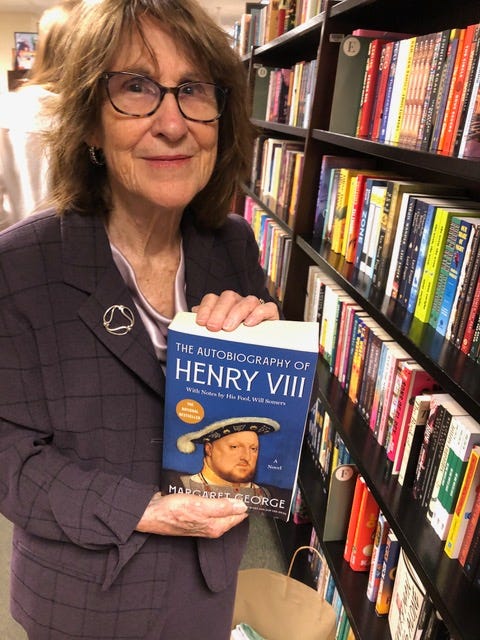
She’s known for so many of her books, but especially for The Autobiography of Henry VIII: With Notes by His Fool, Will Somers: A Novel. This novel is a tome, clocking in at 960 pages, but I promise you once you start reading, you can’t put it down. The characters are incredible. The history is so meticulously researched. You feel as though you are stepping into this individual's life. Nearly 30K almost 5-star ratings on Goodreads can’t be wrong.
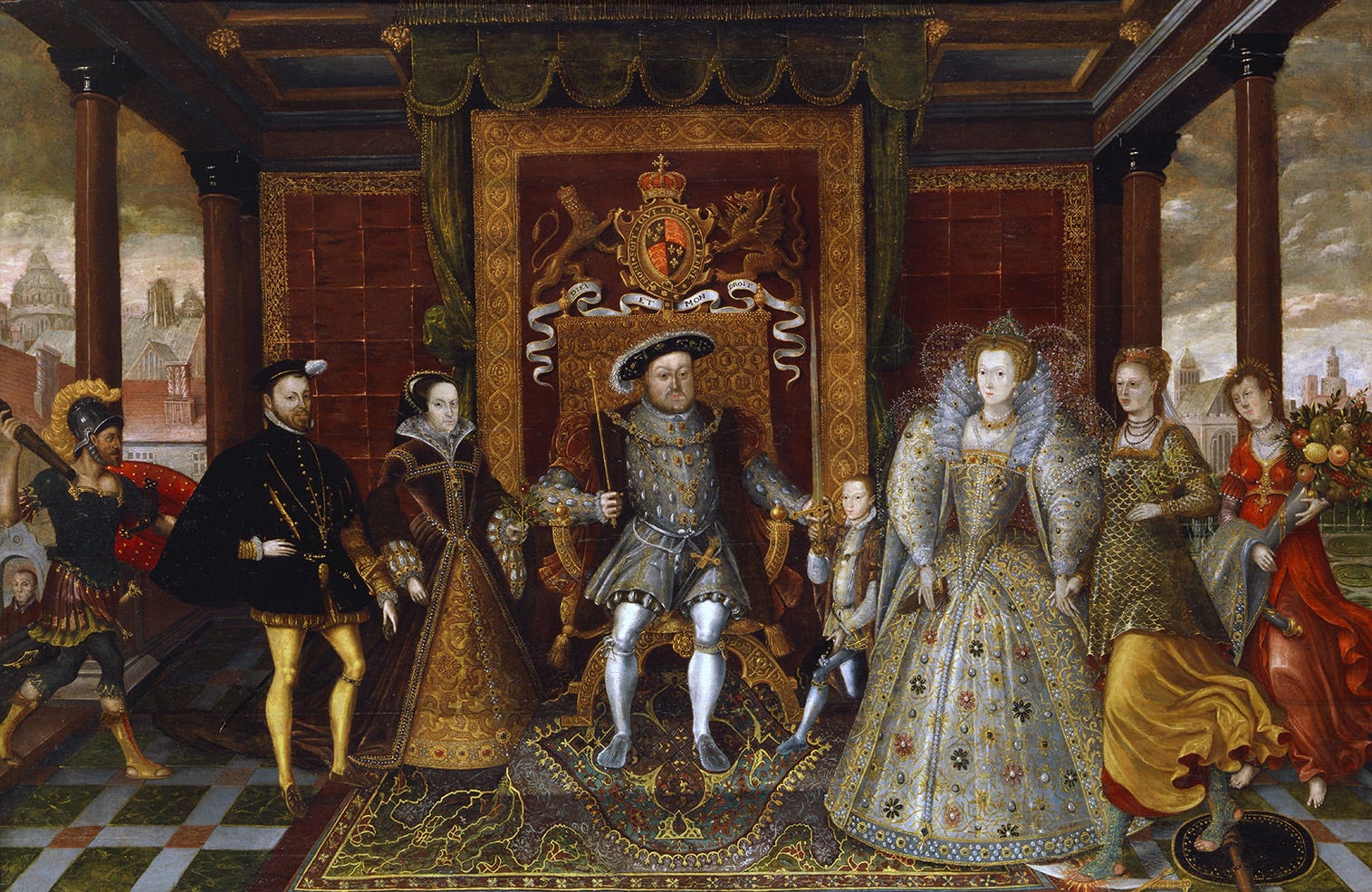
I was personally interested in this novel because I am a direct descendant (my 13th great-grandfather) of Sir Francis Bryan, the Vicar of Hell (and the betrayer of Anne Boleyn), as Margaret quickly reminded me in the most teasing way. The book is celebrating its 40th anniversary, and of course I had to reach out and do another interview with her because I want to know all about how this book came about.
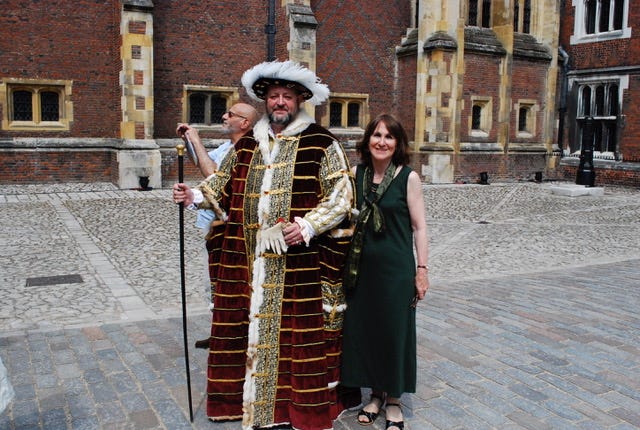
You started this book around 1972, as a science writer at NIH, and it took fourteen years and five handwritten drafts to reach publication in 1986. What convinced you, in the early seventies, that the world needed a 950-page novel sympathetic to Henry VIII when no one had ever written one, and what kept that conviction alive through a decade of other people not seeing it?
I was very naïve about the publishing world. Although I was always a reader, I never stopped to think about how the books were selected that ended up being published. Like a lot of young writers, I was so caught up in my excitement about my project that I focused only on that. I assumed that once it was ready and the veil was lifted, its audience would be waiting! Now, in 1986, that was far more likely than it sounds because a lot fewer books were published back then. I’ve heard the figure was around 400,000 a year, and now it’s 3.5 million.
The subtitle tells the reader something crucial about the book: Henry is the author of his own story, but Will Somers gets to talk back. When did you realize the king’s account needed a heckler in the margins? It’s interesting that this is an “autobiography,” and yet someone else is helping him tell the story.
I was influenced by Gore Vidal’s “Julian”, a best seller in 1964, with a Roman emperor’s memoirs analyzed and criticized by his old tutor and a historian. It made the story 3-D.
What physically changed between the various drafts? I’m curious what a handwritten draft of a book that size even looks like (and this was on a typewriter, I’m guessing?). What did you learn about Henry between these versions that you didn’t know when you started?
I wrote it all by hand with a #2 pencil on wide-spaced yellow 3-ring notepaper. I had written other novels (never published) that way, from the time I was 12 and didn’t have a typewriter or know how to type, so it just seemed the natural way to do it. But once I was finished, I then had to type it, as it wouldn’t really exist for the outside world until it was in a readable format. I used that as a way to edit it. But it was so time-consuming to do that, by the time I was halfway through “Mary Queen of Scots,” I had to reluctantly switch to writing on the typewriter (then on the computer). It was hard to get used to, and to this day I still write emotional scenes by hand.
Mainly, what I learned between drafts was cleaning it up and getting a second chance to add or subtract something.
In a recent letter to me, you described the world this book was born into, radically different from today, when there was no self-publishing or celebrity book clubs, and we communicated via a telephone plugged into a wall. Walk me through what the launch of a 950-page debut actually looked like in September 1986. What was it like working with St. Martin’s? I imagine it was much different from what it is today.
Oh, what a different world it was. I was unusually lucky for a debut author, because St Martin’s lead author was James Herriot (“All Creatures Great and Small”), but it just happened that he didn’t have a book that year and St. Martin’s needed a lead one. They decided to feature Henry at the Frankfurt Book Fair in 1985, and that shone a spotlight on the book, and the publishing house got excited about it. After that, they featured it at the American Book Association annual meeting, and here is the key thing—they gave away a thousand ARCs there, which made their way into many hands. They also sent ARCs to a lot of famous authors in hopes of blurbs, and two big names in the Tudor historical novel world, Carrolly Erikson and Victoria Holt, said nice things about it. The History Book Club took it as a selection.
St Martin’s also made a press kit for the print media. Back then, there were newspapers in every city and small town, and they all had book sections. Henry got reviews in over 100 newspapers, partly because there were so many cartoons with Henry VIII that they had ready-made visuals to go along with the review. Also, back then, it was a bigger deal for someone in the community to publish a book, so I was interviewed on local TV shows.
All in all, there were many more opportunities to reach a potential audience directly back then than it is now. And it would be an audience that had less competition for their attention.
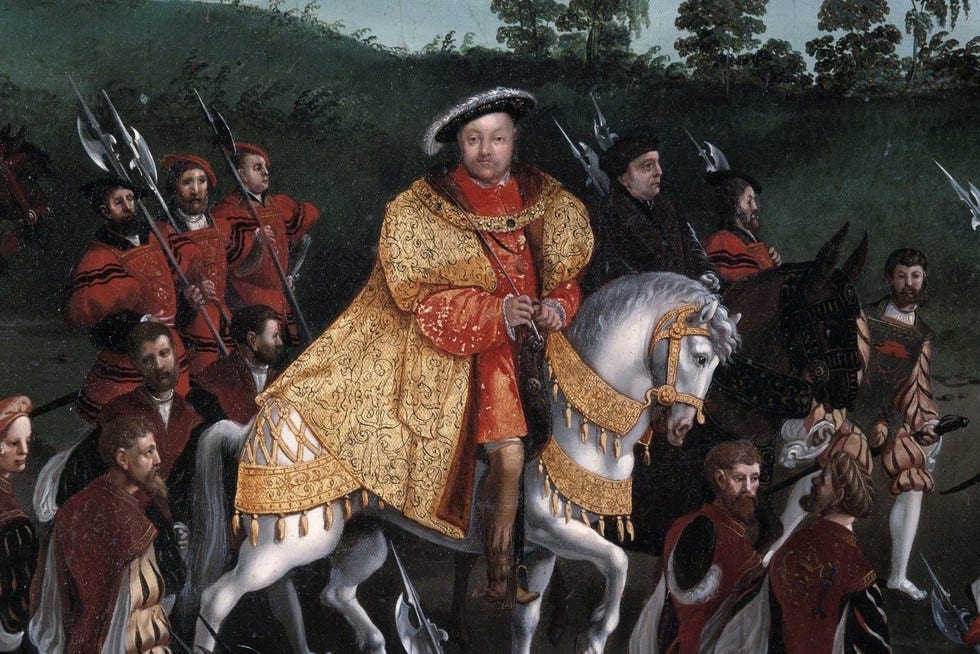
The book attracted many readers and became a bestseller, but being sympathetic to Henry was provocative at the time, and many critics weren’t keen to extend him any charity. Forty years later, do you think the culture has moved toward your version of Henry or further from him? Do you think Hilary Mantel’s Cromwell-eyed Tudor world changed how new readers arrive at your book?
Well, it’s been a disappointment that I haven’t moved the needle much on Henry after all. I think the rise of the #MeToo movement didn’t help him any! Musicals like SIX! in which all of his wives compete to see which one was the most mistreated make him back into the comic figure that Charles Laughton did, and novels like “The Beheading Game” make sport of him. But people are still fascinated by him, and continue to buy my novel, perhaps because it’s the only one, so far, that covers his entire life. When I started out I realized that all of the Henry novels, movies, and plays concentrate on one phase of his life (usually the Anne Boleyn one). But that is not the way you measure or understand a lifetime.
When your book came out in 1986, historical fiction was far more popular than today. Michener and Auel were stars on the bestseller lists, and your own books rested there for the next two decades. But today there has been a big shift, and the lists are mostly romance and fantasy. I can attest to the fact that publishers acquire historical fiction much more reluctantly, and mostly when following specific trends. A novel like yours would probably be a hard sell these days. When did you first see that things were shifting? What do you think that historical fiction readers found in the books back then versus today?
Probably there was something in the wind about the time I published “Elizabeth I”, my sixth novel, in 2011. There was less attention paid to historical novels, and about that time there were fewer historical movies, meaning that public interest was turning elsewhere, the last really big league ones being “Troy” with Brad Pitt in 2004, close on the heels of “Gladiator” with Russell Crowe in 2000, and “Elizabeth: The Golden Age” with Cate Blanchett in 2007.
Historical fiction, by definition, is escapism into another world, although still a real one. Now interest in the real past seems to have waned, replaced by fantasy pasts, almost a reversion to medieval folk tales, complete with dragons, magic, and supernatural heroes. And perhaps real history junkies have decamped for nonfiction.
You wondered in your letter whether Anya Seton’s Katherine would be too hard for today’s average reader, and whether Michener would be too long. Ask that question of your own manuscript: if you submitted The Autobiography of Henry VIII today, exactly as you wrote it, what happens to it? And if an editor asked for cuts, what would the shorter book lose that the reader would never know to miss?
Today, it would not be selected by an editor because of the length. Even back in 1986, it was a whopper. I suggested to my editor that we break it into two volumes, but she said no, because people wouldn’t buy the second volume, as Henry was old and sick and sad by then. So we kept it to one volume, and she said there was no point in cutting parts of it, because even so it would still be around 700 pages, but it would be choppy and harder to read than the longer version. I do think a lot would be lost if it had been drastically cut.
You shared a theory with me about why dual-timeline novels dominate historical fiction these days. Modern readers know so little about history that they need a guide—a character who can help translate the past for them. You’ve never had that in the same way. You’ve never done that. You drop your readers straight into the time frame and expect them to navigate the story on their own. Do you consider this guide figure a courtesy to contemporary readers or a concession to them?
A friend of mine suggested that about the dual timeline novels. I think the guide is both a courtesy to readers who need a little help, so in that way it’s a concession to them. But also, as pure historical novels have faded in popularity, hybrids have arisen to take their place, among them the dual timeline novel, the historical detective novel---think of Lindsey Davis and Steven Saylor---historical thrillers, historical fantasy, historical feminist revisionism, historical horror, historical erotica, and alternate history. Whew!
In our recent correspondence, you suggested that reading will become a niche pursuit, like folk dancing, lace-making, or horse-keeping. I’ve been thinking about that. What do you think happens to an art when it becomes so niche? Is niche a stable enough place for a novel to live, or is it just a stop on the way out?
Only time will tell if the niche will stabilize and the novel will live on, but with a reduced audience. Art is different from those other things (like folk dancing) in that it’s not physical but mental. Different types of art are popular in different times. It struck me that poetry was the choice for expressing the essence of WWI, novels the essence of WWII, and movies the essence of Vietnam. Each described the horrors of war with a different art form. We do still have poetry, but it is not the cultural center it once was. The novel may be joining it, while the visual power of movies takes the novel’s place.
You also said the way to raise a reader is to create a house where grownups read all the time, and there is enough quiet to allow it. What was your house like when you were growing up? What advice would you give to parents trying to build a reading household now, in homes where quiet and boredom have become scarce resources?
I do think reading is an endangered species today. Once it was the center of culture but today there is the constant hum of bread and circuses to distract us. A household with adults working and children with sports and social media is hardly the soil from which will grow a love of reading. And don’t forget streaming TV and texting. A few outlier families may still have quiet time and little outside pressures, but they are rare birds.
My own household was one of those, partly because my father was in the Foreign Service and we lived overseas, far from the hullabaloo of “The Land of the Big PX” as expats called the United States. We spent a lot of time reading, our only problem was running out of books. That was when I started to write my own, as a kid. Once I started, I never stopped!
But I haven’t answered your question. The only solution is that the parents have to consciously make it a goal to have a quiet house and encourage reading, by example and making opportunities for their children to read, and to make reading part of their recreation, attending library events and joining book clubs. Maybe encouraging them to write their own books, and to meet authors.
You were researching long before the internet. You had to talk more directly with historians, spend time in libraries, and gather all your facts by hand. A writer working on a book like yours today could assemble your 15 years of research over the course of several years, or ask an AI to summarize it in 15 minutes. What do you think doing it the slow way puts into the book that the fast way can’t?
These new methods are very good tools. But the problem is, once the research is assembled, no matter how it is done, how do you siphon it into your head? Because it isn’t any good if it’s not in there, you can’t call on it as you write unless it’s already embedded and doesn’t need to be looked up. A friend once said I had “marinated myself in Henry VIII and then stewed it in a long slow cooker.” That was a really good description. That is what the privilege of time can give, unfortunately for writers today it is a luxury. And for me, remember, I didn’t have any deadline for Henry, no one was waiting for it, because no one knew either I or it existed! Later I did have deadlines, but they were much more generous than the ones writers get today.
Between the Margaret George waiting for publication day in September 1986 and Margaret George answering these questions forty years later, what do you now understand about the relationship between a book and its readers that younger Margaret didn’t?
The main thing is that back then the book had to speak directly to the reader, and the author was more or less invisible. A few writers were public figures, like Ernest Hemingway, but the rest were mainly elusive personas. A writer was not expected to have personal relationships with readers. Readers could only reach them by writing to their publisher, which would dutifully forward the letters. Sometimes you might meet them if there was a public reading or event, but in the days before book tours those were rare.
Now, with social media, the relationship with the author overshadows the book itself. Woe to the writer who isn’t comfortable selling him or herself, or trying make them like him or her in order to buy their book. The personality of the author, which in fairness should have nothing to do with the book itself, can determine its fate.
Oprah’s Book Club, started in 1996, upended the traditional way books were discovered, and how bonds between readers and authors developed. Instead, the bond was with the celebrity. I wondered why an Oprah’s book club choice would be eagerly bought, but the next book by the same author wasn’t. Someone said it was because people bought the first book to be ‘close’ to Oprah. Maybe they thought someday they’d be sitting next to Oprah in waiting room and they’d have something to talk about? Weird!
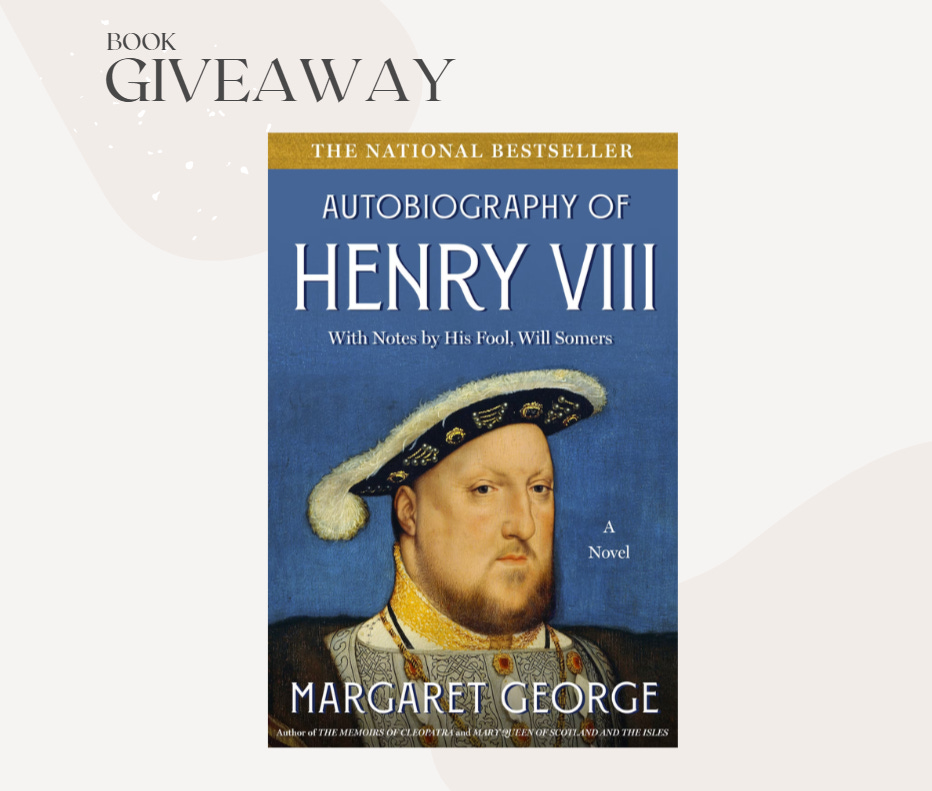
I’m happy to be giving away a copy of this incredible novel!
To sign up for the giveaway, you can fill out this form. Your name will be thrown into the hat for a shot at a paperback copy. This giveaway closes at midnight ET on Wednesday, 08/12/26. Winners will be notified within 48 hours of the giveaway closing and announced in a future newsletter/post.
Important to Note: You must be 18+ and a United States resident (pesky international laws make it tricky to do giveaways worldwide). If you are someone who loves to read the rules, you can find the obligatory info here.
In the spirit of today’s post, I have to share this silly song that I loved growing up. Note the video gets the spelling wrong…the band is talking about Henery.
This site, MapCrunch, will take you to a random spot in Google and let you explore. The first place I went was a magnificent beach in Wales! Then a boat in the frozen Atlantic, a forest in Poland, and a valley in Greece. You could play with this site for hours.
I always find joy in a little Elbow. This is one of my favorite songs. I hadn’t seen this version, though, clearly filmed during the pandemic.
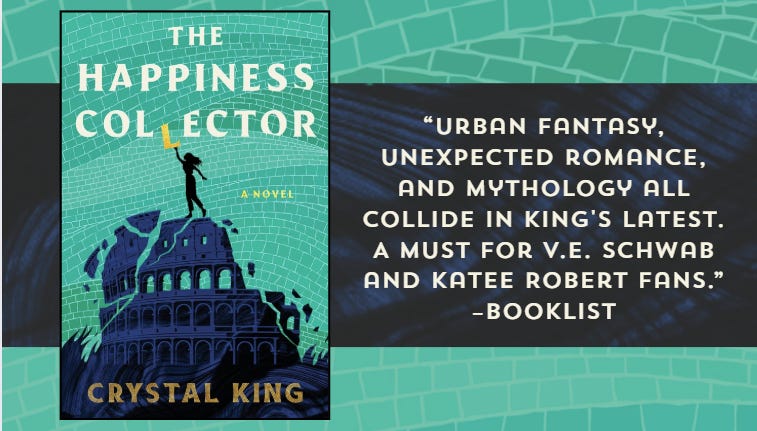
If you love food and love Italy, and haven’t read IN THE GARDEN OF MONSTERS, THE CHEF’S SECRET, or FEAST OF SORROW, click the links to learn where to buy your copy! And now you can order my latest, THE HAPPINESS COLLECTOR!
Follow me here: Website | Instagram | Facebook | Threads | Bluesky | TikTok
Comments
Nothing yet. Say the first thing.
Sign in to join the conversation.